Interview
Barbara Bitondo
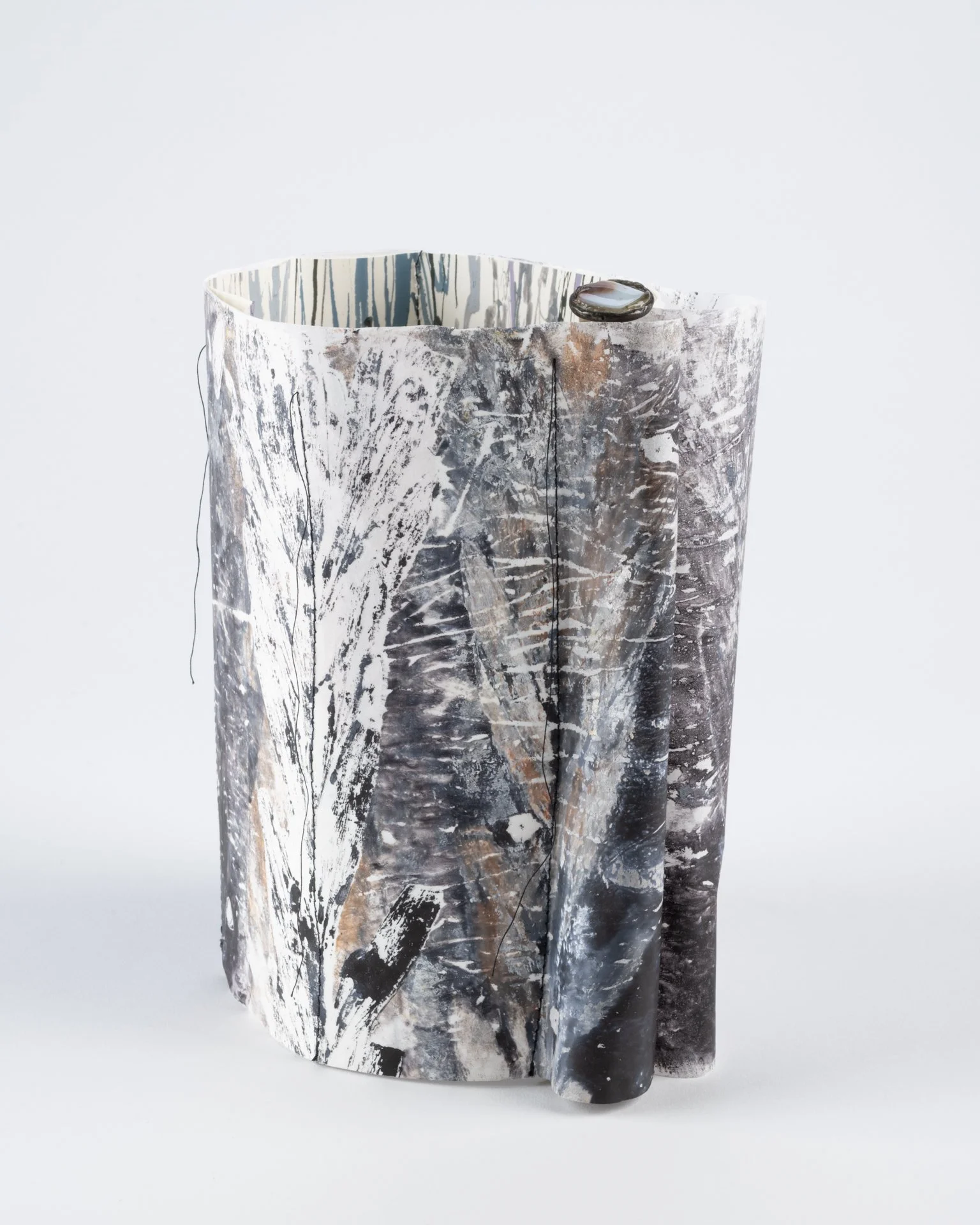
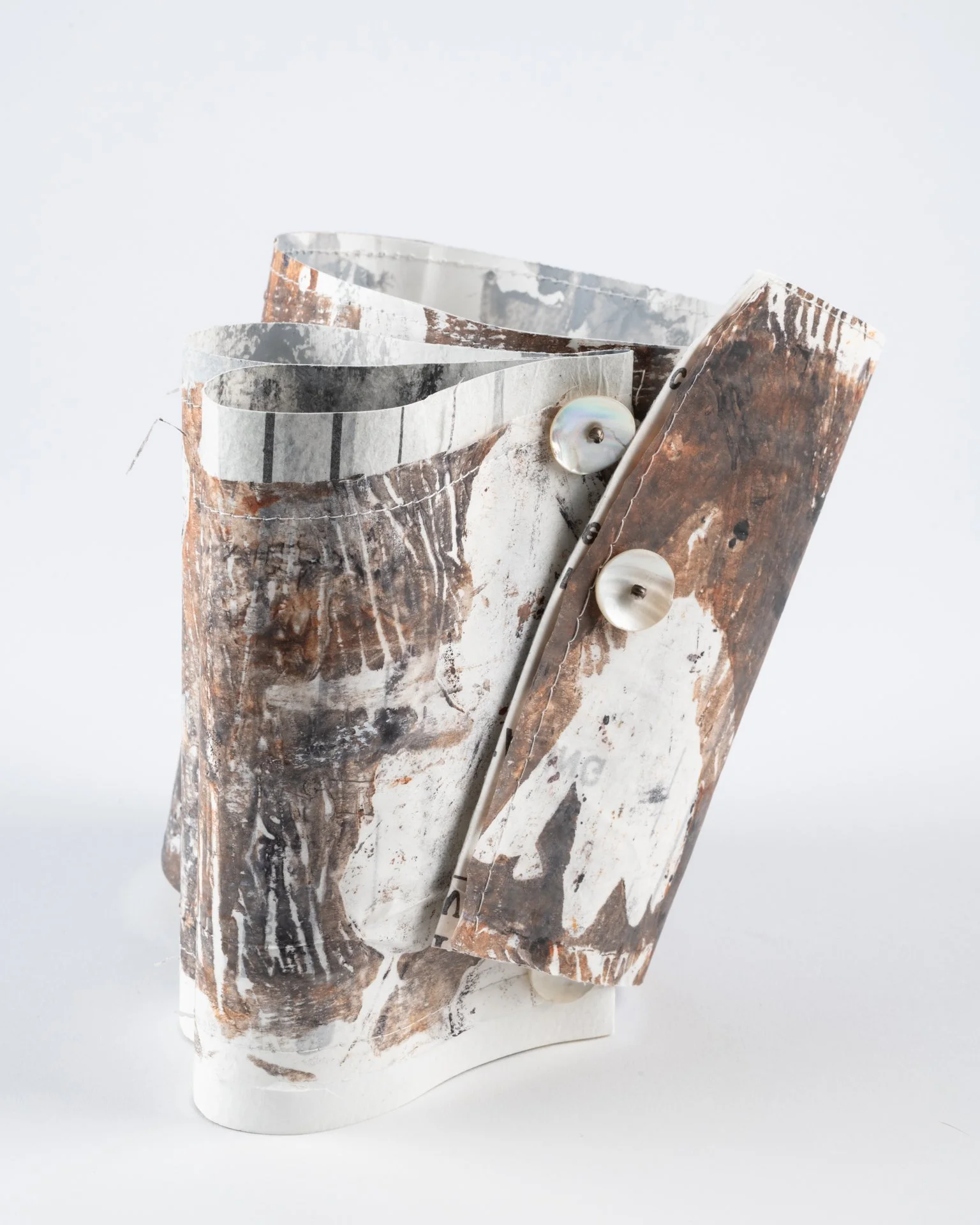
Barbara Bitondo was born in 1968 in Abidjan, Côte d’Ivoire, and grew up in Kinshasa, Jakarta, Tunis, and Rome. She has lived and worked in London, Tokyo, Barcelona and Washington, DC. Although photography was her primary medium in the early part of her career, she has for last decade focused on fiber and textiles — applying traditional techniques, cross-disciplinary practices, experimental processes, and material innovation. Bitondo creates work in three main categories: Tableaux, Tapestries, and Texts. Her creations using paper, fabric, or a combination, are sculptural in nature. They are typically multi-layered, double-sided, and three-dimensional.
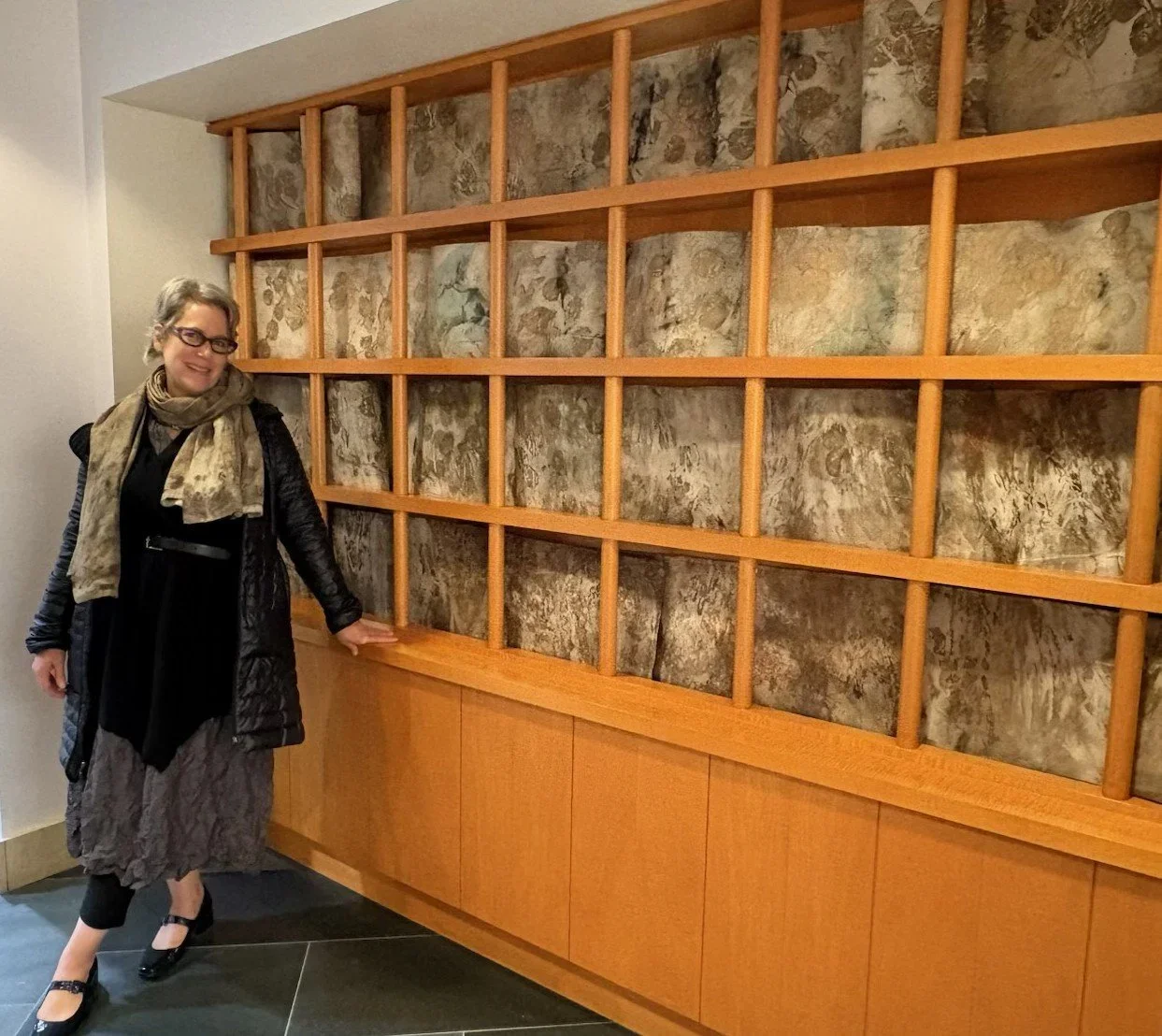
Her pieces often depict inner and outer landscapes that seem at once to capture the present, consider the past, and/or conjure the future. For her, the process of making art is an inquiry, and the product is a record of the exploration. Bitondo’s work often incorporates elements related to travel, including horizon, flight, and boundary lines, as well as references to specific places and spaces. She integrates materials, poetry, songs, and prayers from around the world, reflecting her diverse upbringing and international experiences.
What is your background and how did you start your journey in the art world?
“I was born in 1968 in Abidjan, Côte d’Ivoire, and grew up on several continents. I have lived and worked in Washington, DC for several decades now. Early on photography was my primary medium, but over the last decade my practice has shifted toward fiber, textiles, and printmaking, using experimental and cross-disciplinary approaches. For me, the process of making art has always been an inquiry, and the work itself is a record of that exploration.”
What does your work aim to say? Does it comment on any current social or political issues?
“My work explores inner and outer landscapes and how they exist across time—capturing the present, reflecting on the past, and sometimes gesturing toward the future. Rather than addressing social or political issues directly, my practice is rooted in observation, movement, and lived experience. Elements such as travel, horizon lines, boundaries, and specific places appear frequently, reflecting the many environments that have shaped me. I also integrate materials, poetry, songs, and prayers from around the world, which speak to cultural memory and interconnectedness.”
Do you plan your work in advance, or is it improvisation?
“I like to believe that my work balances intention and chance - I begin with a conceptual direction and allow the materials and processes to guide the outcome. Techniques such as botanical monoprinting introduce unpredictability, which is an important part of my practice. The process unfolds through layering, testing, and responding, rather than following a fixed plan from start to finish. As I do more site-specific installations more planning and measuring is required but the experimental nature of my process is central to the work.”
Are there any art world trends you are following?
“My practice is less about following trends and more about engaging with experimental processes and material exploration. I am particularly interested in approaches that expand the boundaries of printmaking and surface design, especially work that merges traditional techniques with textiles, sculptural form, and non-traditional materials. This kind of cross- disciplinary experiment fascinates me.”
What process, materials and techniques do you use to create your artwork?
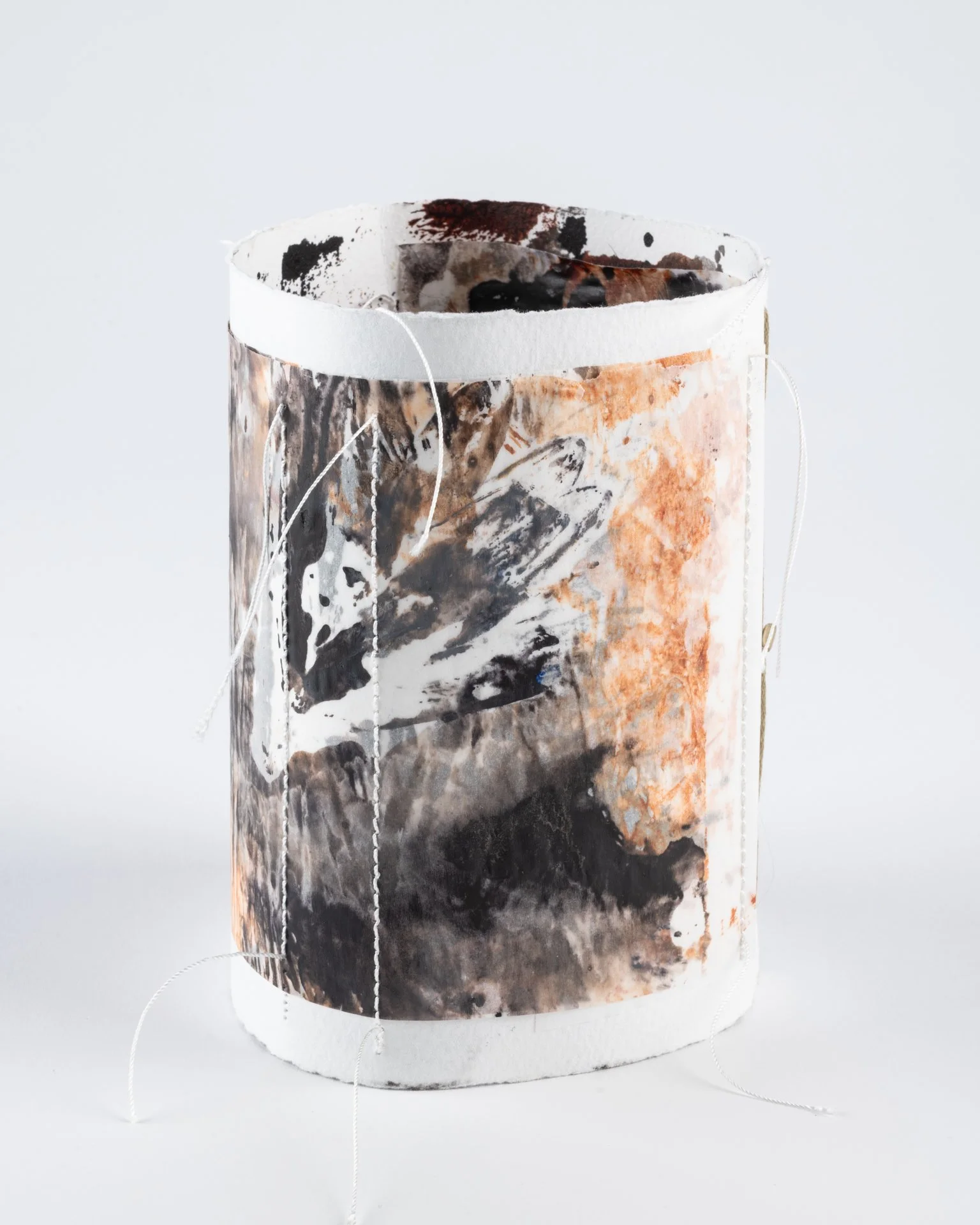
“My artistic practice is rooted in experimental printmaking, including monotype and botanical monoprints. I create plant-based inks from local plant materials, charcoal, and water-soluble graphite. I mix tints and tint pastes with various gums and glues and transfer images onto textiles and paper. I often layer these with translucent found materials—such as plastic or parchment paper—and finish the works with thread, synthetic inks, and paint. I enjoy working with found objects and materials to interact with and document the natural elements that capture my attention and am currently using the left-over oil-based paints my late father’s garage for a large-scale stitched project.”
What does your art mean to you?
“For me, art is an ongoing inquiry. The act of making is as important as the finished work. Each piece serves as a record of exploration—of materials, place, and process. My practice allows me to remain attentive to the world around me and to translate those observations into layered, tactile forms.”
What’s your favourite artwork and why?
“I don’t have a single favorite artwork. Instead, I am continually inspired by artists whose practices engage deeply with material, process, and persistence. Some of my favorite artists include Hessie, for her quiet rigor and devotion to repetition and labor; Richard Serra, for his physical engagement with space, weight, and gravity; Eva Hesse, whose work remains profoundly influential in its vulnerability, experimentation, and resistance to fixed form; Olga de Amaral, for her transformative use of fiber as structure, surface, and light; and Anna Maria Maiolino, whose work resonates through its material sensitivity and disciplined exploration. Together, their approaches affirm my belief in process as a way of thinking and making meaning.”
Have you had any noteworthy exhibitions you'd like to share?
“A recent exhibition I found particularly noteworthy was Bernadette Bour’s exhibition at Galerie Arnaud Lefebvre in Paris. I was deeply struck by the way her work engages material, surface, and process with such rigor and restraint. The exhibition foregrounded painting as a physical and temporal act, where thread, paint, and paper operate as both structure and language. Experiencing the work in that context reinforced my own interest in processdriven practices and in the quiet intensity that emerges when materials are allowed to assert their presence over time.”
Website: barbarabitondo.com
Instagram: @studio_b.2
Other links: www.washingtonprintmakers.com/exhibits/engaging-the-wild