Interview
George Seyffert
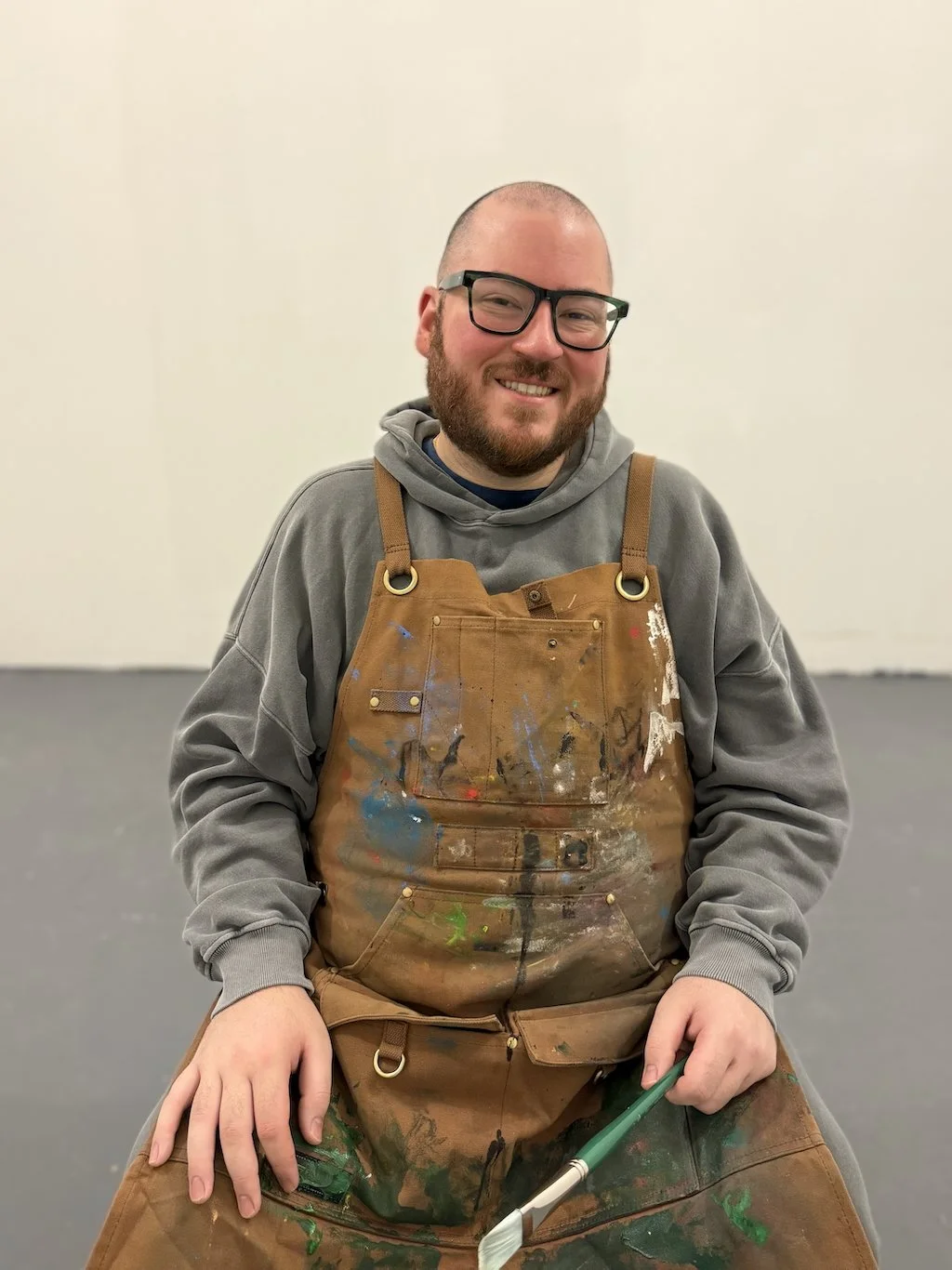
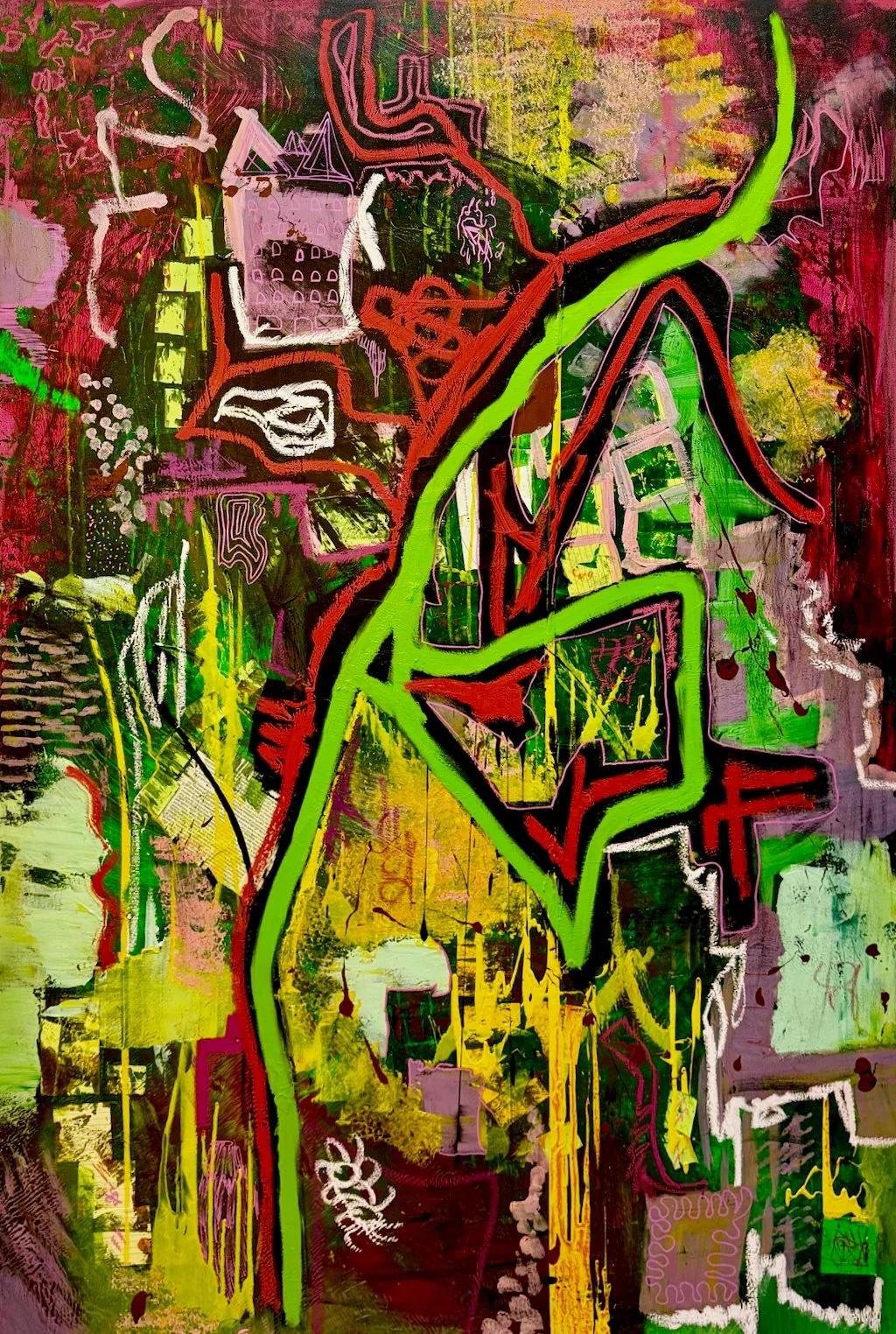
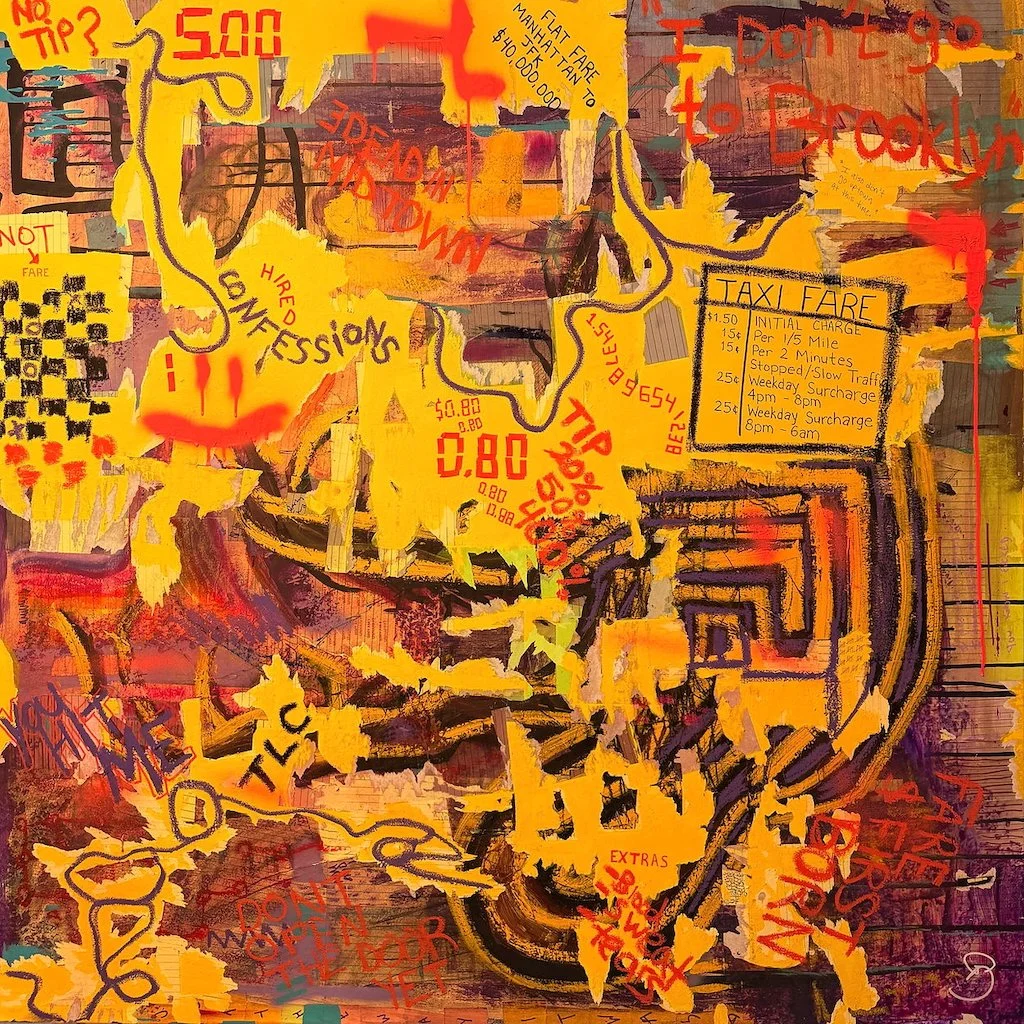
George is a Brooklyn-based artist and attorney working from his studio in Dumbo. As a New York City native of Puerto Rican and Irish descent, his firsthand life experiences — including nearly a decade of practicing law — continue to steer everything he creates. He received an undergraduate degree from SUNY Binghamton and a law degree from Brooklyn Law School. Regarding formal education in the arts, George has taken several classes across schools and studios in NYC, but he remains largely self-taught. His work is mixed media on large-format canvas: oil, acrylic, charcoal, ink, pastel, built over layers of case law pages, receipt paper, sticky notes, and other materials pulled from the systems he’s examining.
What is your background and how did you start your journey in the art world?
“You see, questions like this one are tough for me, mostly because I examine everything with a fine-tooth comb. I guess it’s part of the curse/blessing of being an attorney. What defines one’s entry into the art world? If it’s the first time talent is realized, then I would say elementary school. In the 3rd grade, I entered a district-wide drawing competition and won first place. I remember entering several artist competitions while attending P.S. 110 in Greenpoint, Brooklyn. I’ll credit my parents here, as they both are/were artists in their own right. My mother has a passion for creating, whether it’s sewing, painting, drawing, or crafting small trinkets. My late father was a carpenter. His ability to build, remodel, and fix was undefeated. A true master of his craft. You would think this would be enough for me to pursue a career in the arts early on, but no. Somehow, this translated to law school. However, if we are defining my journey into the art world as when I first decided to take my skill seriously, then I would say 2024. My love for creating has zigzagged across my life to date, coming and going like the tide. Higher education and what I thought was the pursuit of happiness prohibited me from tapping into my potential. Not until I began taking my mental health seriously did I finally invest in myself. You will hear a lot about my internal conflict as I describe my process and within the descriptions of my work. Attorney versus artist. Law versus art. Structure versus chaos. These dueling concepts have birthed a unique creative process. One that channels inner thought and emotional freedom into deliberate expression on canvas.”
What does your work aim to say? Does it comment on any current social or political issues?
“In my view, it would be both a moral defeat and an ethical wrong not to connect my experiences as an attorney with my art, or comment on current issues. There is rarely a clear objective when I begin a piece—rather, raw emotions tied with my legal knowledge align to express my discontent with societal failures. While my work is typically not tied to a single issue or movement, my currently ongoing collection entitled ‘Revolution is When You Figure it out for Yourself ’ attempts to show my grievances with the current U.S. administration.”
Do you plan your work in advance, or is it improvisation?
“Completely improvised. My legal work is structured and organized, so I seek the opposite as an artist. Keeping my art process spontaneous prevents overlap between the two professions. Improvisation keeps my mind sharp and my process unique. Each piece’s direction is unknown until it's done, and sometimes I revisit completed works. Here, mistakes are part of creation.”
Are there any art world trends you are following?
“Not at all. When I signed the lease for my first studio, I told myself that I would not cater to the traditional art world, including creating pieces that are ‘trendy.’ My primary focus is authenticity. Getting caught up with industry standards, trends, and what everyone else is doing or wants is exactly what I focused on when starting my legal career. My art is mine. It’s what I envision from inside. This is not to say I am out of touch with what is going on. I remain curious and open to what is happening in the art world, but it’s nowhere near a priority of mine.”
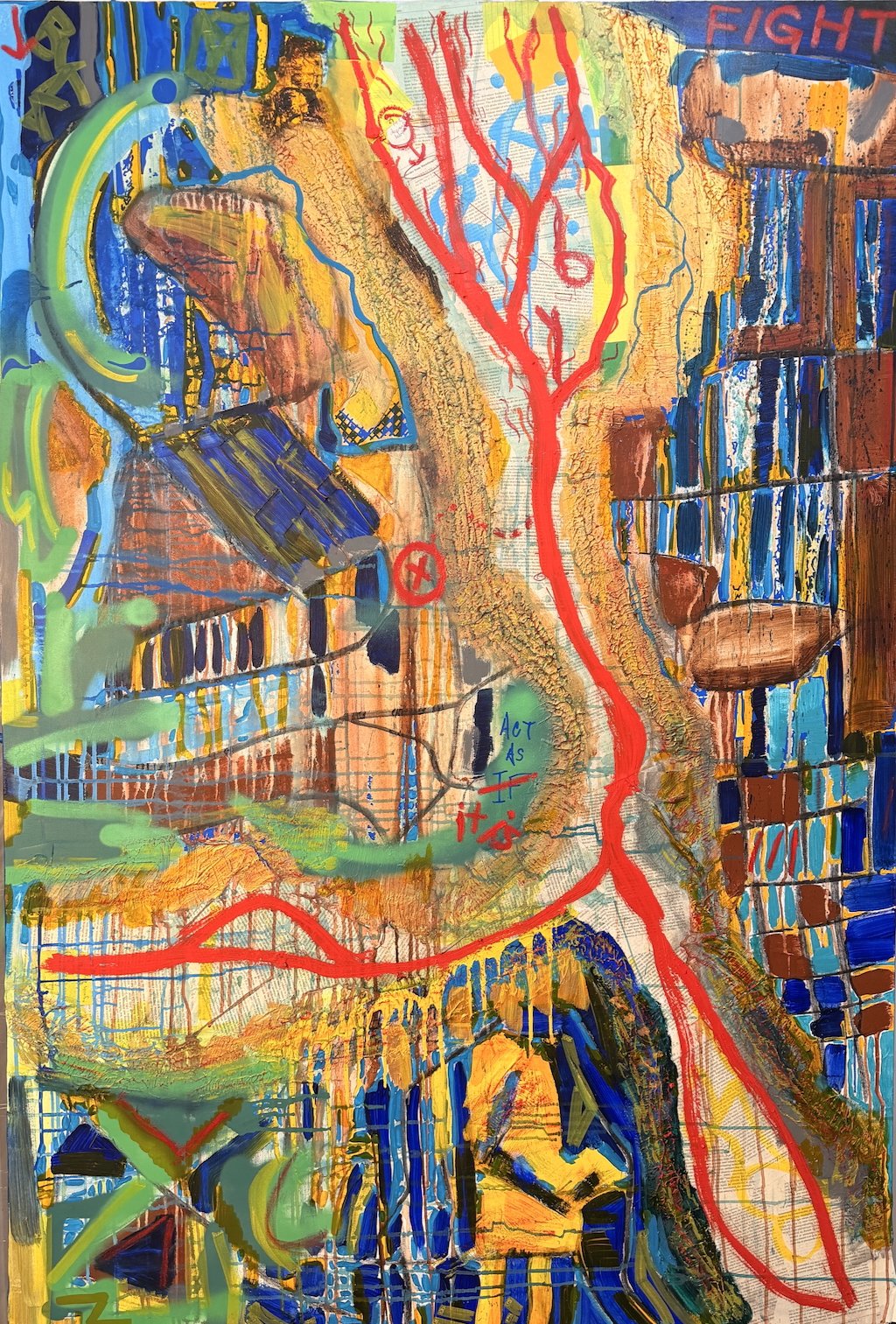
What process, materials and techniques do you use to create your artwork?
“Well, I thought you would never ask! Not too long ago, while moving some furniture years after graduating from law school, I stumbled upon my old caselaw textbooks. When I looked inside, I was hit by a burst of color. You see, I used to color-code my case briefs, as most law students do. Each part of a case was highlighted with a different color. Green was used for material facts. Blue for a precedent case. Orange, dissent. Yellow, legal analysis. Red ink was used to scribble important notes mentioned during the lecture, and blue ink was used for my personal notes from the night before. Seeing these pages jump-started my creative process. What else am I to do with outdated caselaw books? They were collecting dust and were never going to be read again. So, I started tearing them out and throwing them on a paperboard. Soon, I quickly realized I needed a stronger base, and that’s when I switched to cotton canvas. Fast forward two years, and I now incorporate old caselaw, sticky notes, and legal notepad pages into almost every one of my pieces. These add incredible layers of texture to my work and have helped develop early signs of what may be considered my ‘style.’”
What does your art mean to you?
“Progress. It’s evidence that we can change. We are not limited to any one pursuit. We can be and do so much more. Seeing what I have created continues to inspire me. What’s next? Who will I cross paths with? Where will I go? These questions pop up every time I catch myself scrolling through my portfolio. I fear routine. It’s what freed me from the scary life of corporate America. My art defines who I am. An individual not interested in conformity or structure, but one that invites chaos.”
What’s your favourite artwork and why?
“Hardest question by far! I will not say one of mine because that would be false. Over the past few years, one artist who has really inspired me is Kandy G. Lopez. Her work focuses on the use of yarn and other similar fibers to recreate depictions of members of the Afro-Caribbean diaspora in America. I must credit her with my first jaw drop at an art show. I remember being truly mesmerized by her use of yarn and ability to capture light effortlessly in her medium. It’s what helped me build up the confidence to tackle mixed media and look at non-traditional mediums. Paint is just one of thousands of ways to express a concept artistically.”
Website: www.georgeseyffert.com
Instagram: @george.seyffert