Interview
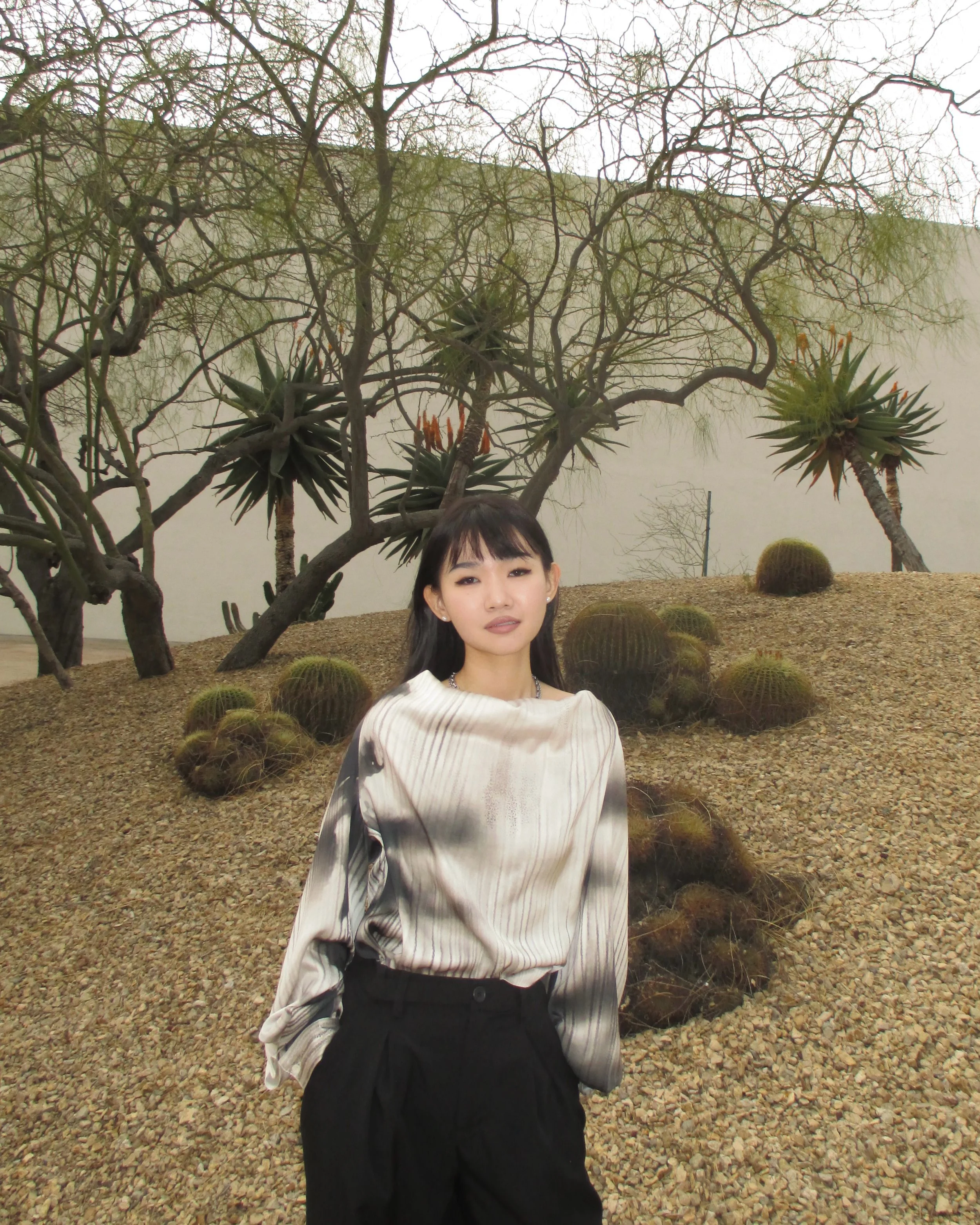
Zhiyu You
Zhiyu You is a Chinese-born illustrator and visual artist based in New York. She received her BFA in Illustration from the School of Visual Arts (2022). Her practice combines fine art sensibilities with contemporary illustration, often exploring psychological tension, identity, and subtle emotional narratives. Her work has been commissioned by clients including The New Republic, Zócalo Public Square, Shenzhen Press Group Publishing House, and Tbaar. Zhiyu’s illustrations have received international recognition from organizations such as Communication Arts, the Society of Illustrators, the London International Creative Competition, Creative Quarterly, and 3×3 Illustration. In 2022, she won the $5,000 grand prize in the Christmas at Tbaar Cup Sleeve Art Contest.
Her work has been exhibited at the Society of Illustrators in New York, Bobblehaus (NYC), and in group exhibitions across the United States and China, including Liminality: Visual Art Exhibition of Asian Artists in America and The Other World in Beijing. Her illustrations have been published in Communication Arts Magazine, The New Republic, Shenzhen Press Group Publishing House and Zócalo Public Square, and featured by Creative Boom, Communication Arts, Voyage LA Magazine, Bold Journey Magazine, Al-Tiba9 Contemporary Art Magazine and major Chinese media outlets including Netease and Sohu.
What is your background and how did you start your journey in the art world?
“I’m a Chinese-born illustrator and tattoo artist based in New York. I received my BFA in Illustration from the School of Visual Arts, where I developed a more conceptual and narrative-driven approach to image-making. My journey in the art world grew out of the process of finding my own visual language. During school, I became increasingly interested in using imagery to explore psychological tension, identity, and subtle emotional states. After graduating, I began working as an illustrator while also expanding into tattooing, which felt like a natural extension of my practice. Tattooing allows me to translate my drawings into something more intimate and permanent, creating a direct connection with people. Over time, my work has evolved into a blend of fine art, illustration, and tattooing, where I’m constantly exploring how personal and symbolic imagery can exist both on paper and on the body.”

What does your work aim to say? Does it comment on any current social or political issues?
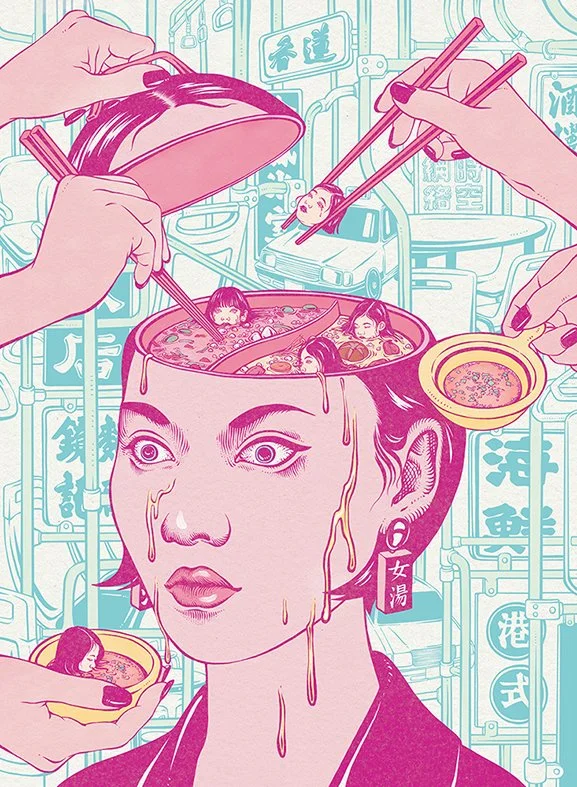
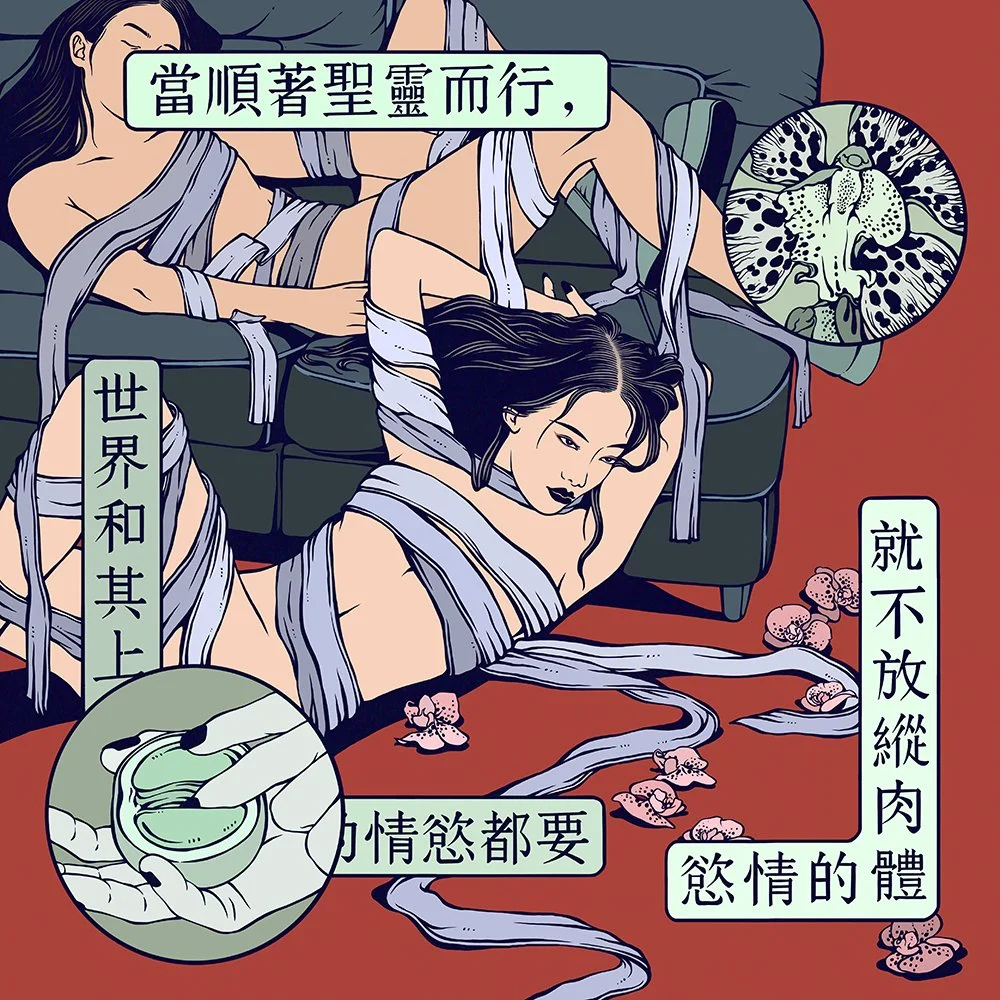
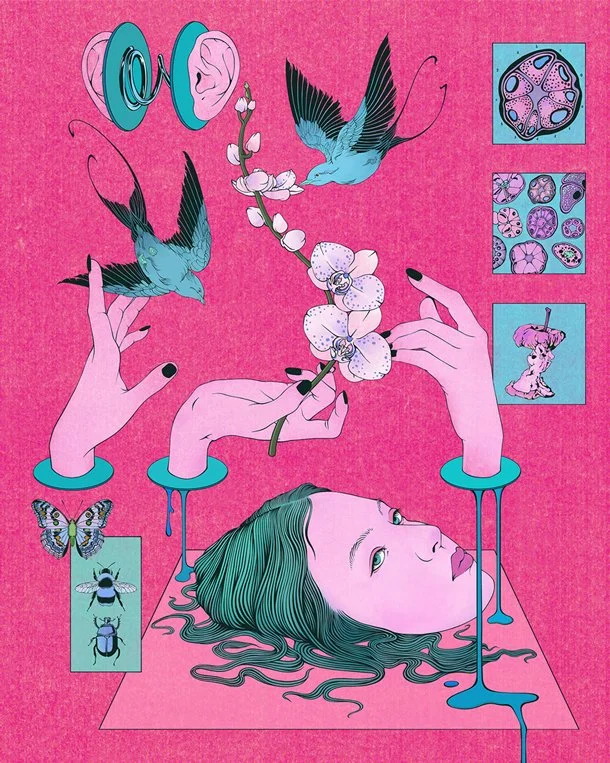
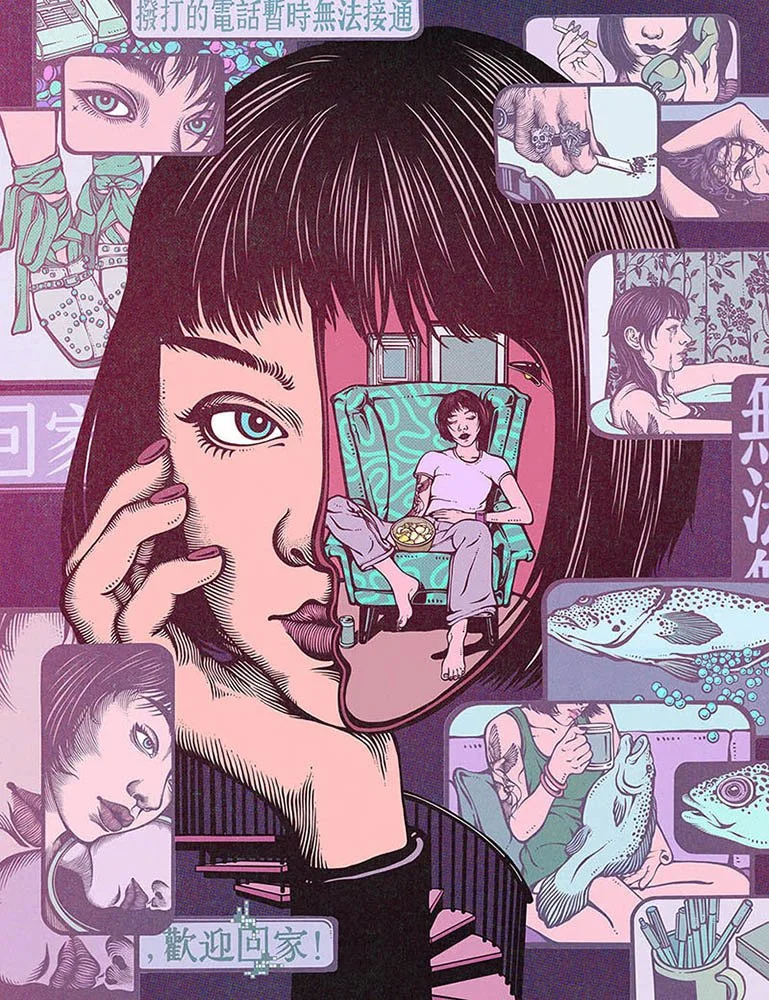
“My work doesn’t try to speak loudly. It leans more toward creating a quiet space—something closer to a feeling than a statement. I’m drawn to moments that are subtle and often overlooked: small tensions, fleeting emotions, and the in-between states that are hard to name. The images often come from everyday life, but slightly altered—where something feels suspended or just a little unfamiliar. I’m interested in that fragile space between reality and imagination, where personal memories, emotions, and subconscious thoughts begin to overlap. Rather than directly addressing specific social or political issues, the work reflects the atmosphere of the present—how it feels to move through the world today. Themes like distance, pressure, and self-awareness naturally emerge from that. In a quiet way, it becomes a reflection of contemporary life, but one that leaves room for ambiguity and personal interpretation.”
Do you plan your work in advance, or is it improvisation?
“My process usually sits somewhere between planning and improvisation. I often begin with a loose idea or a certain emotional atmosphere rather than a fully fixed concept. From there, I sketch and let the image develop gradually through drawing. There is a level of structure in how I think about composition, spacing, and balance, but I try not to over-determine the outcome too early. I’m interested in allowing small changes—shifts in line, form, or rhythm—to guide the direction of the work. In that sense, improvisation plays an important role. It keeps the process open and responsive, and sometimes the most meaningful elements come from those unexpected moments. At the same time, I continue refining the image carefully, so it becomes a balance between intuition and control.”
Are there any art world trends you are following?
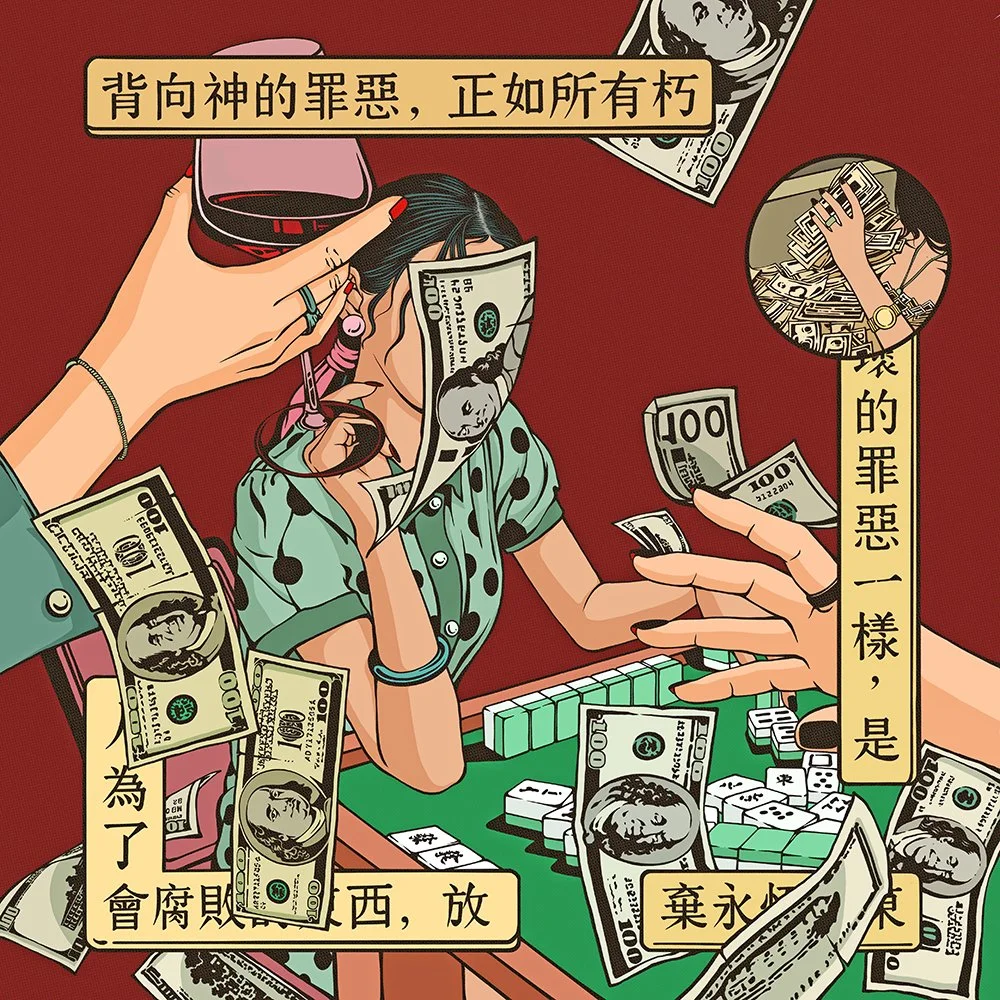
“I’m very aware of the shifts happening around me. Recently, I’ve been interested in how boundaries between disciplines are dissolving—illustration, fine art, and tattooing are starting to overlap more fluidly, and artists are moving more freely between mediums and contexts. I’m also drawn to the return of more intimate, tactile qualities in image-making. Even within highly digital environments, there’s still a desire for work that feels personal and sensitive—whether through line, texture, or the presence of the artist’s hand.
At the same time, I think it’s important for artists to develop their own visual language. But in today’s context, promotion has also become an essential part of the practice. I see more artists consistently sharing their work across different platforms and documenting their process through short-form videos, which creates a more immediate connection with viewers. I’m interested in doing more of that myself—continuing to share my work, recording my process, and finding ways to more actively present my practice. I’m also interested in expanding how I approach image-making by working across different mediums, including exploring simple animation as a way to extend my visual language over time. Rather than following a specific trend, I’m more interested in observing these shifts while staying grounded in my own voice and remaining open to new possibilities.”
What process, materials and techniques do you use to create your artwork?
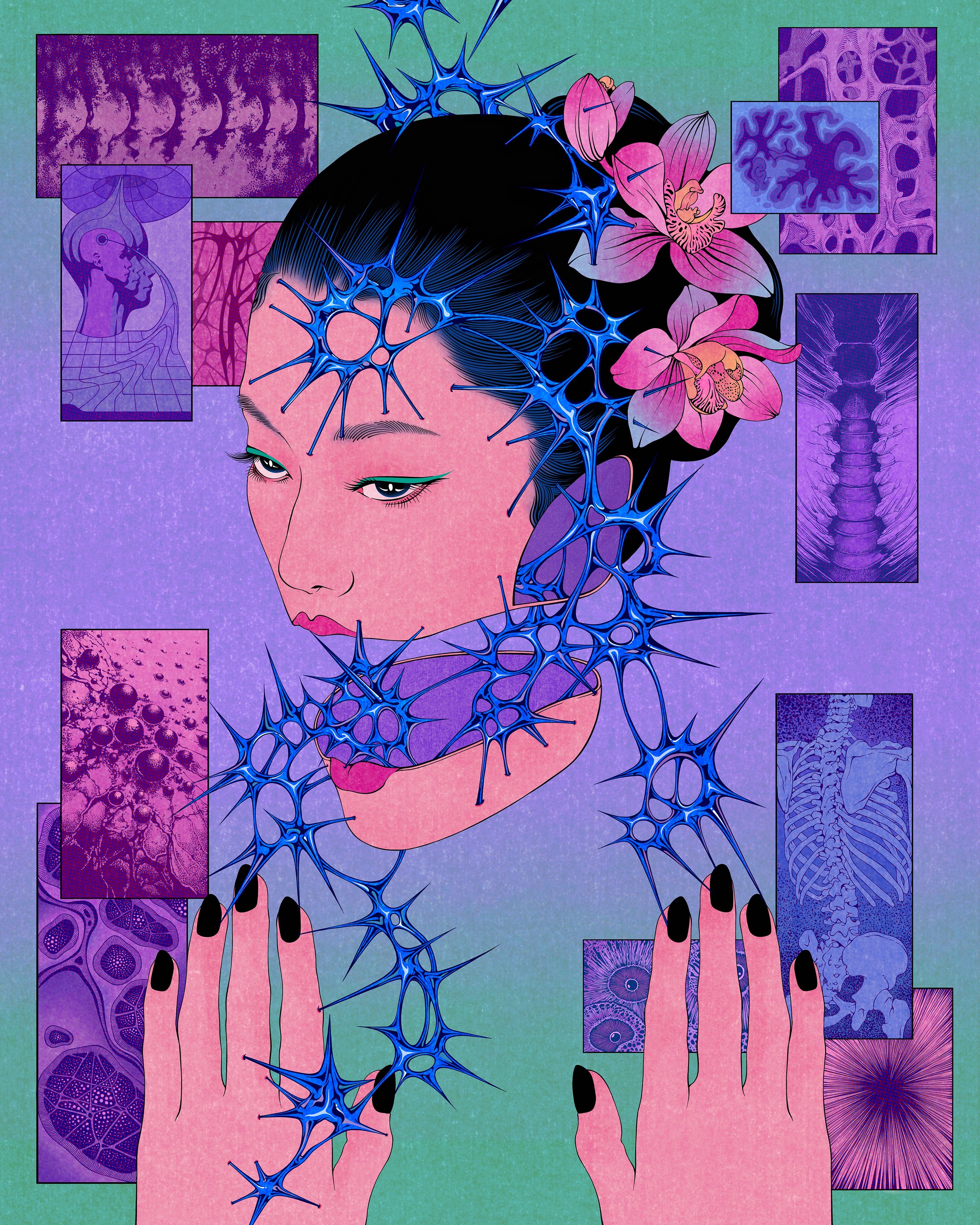
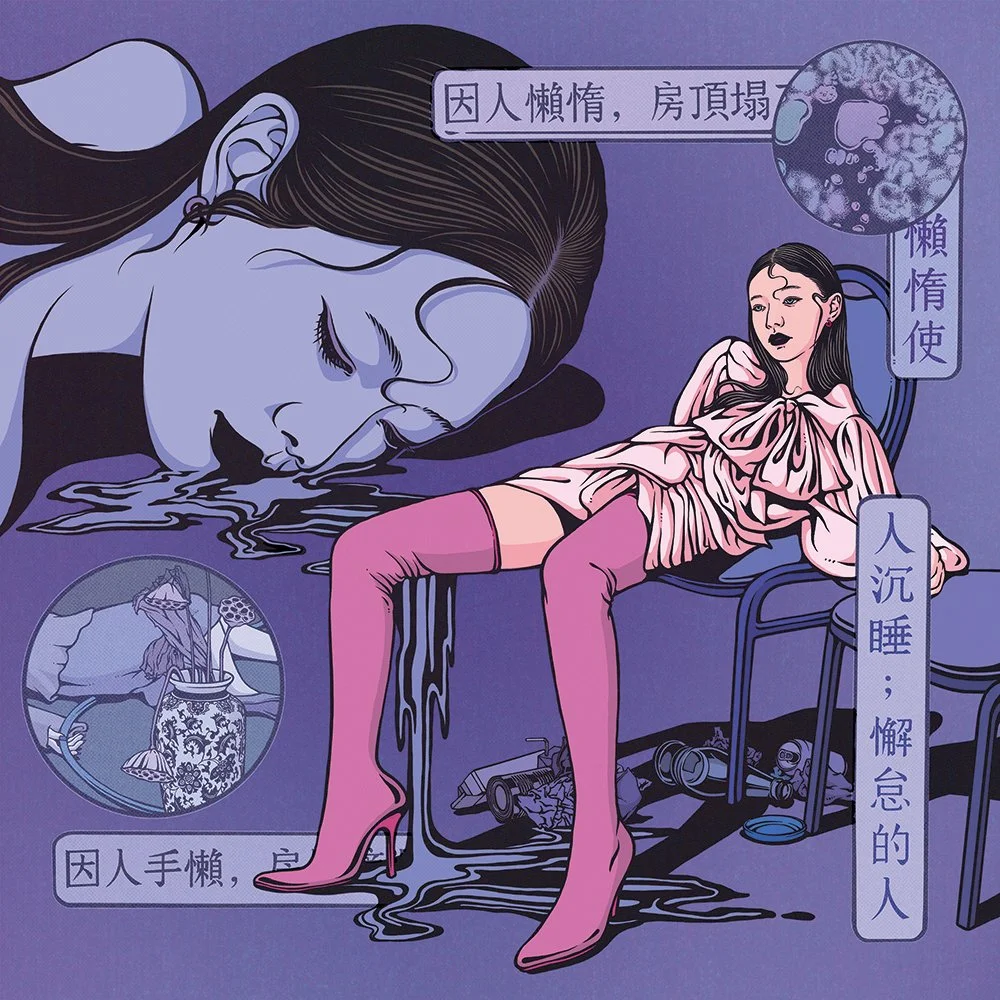
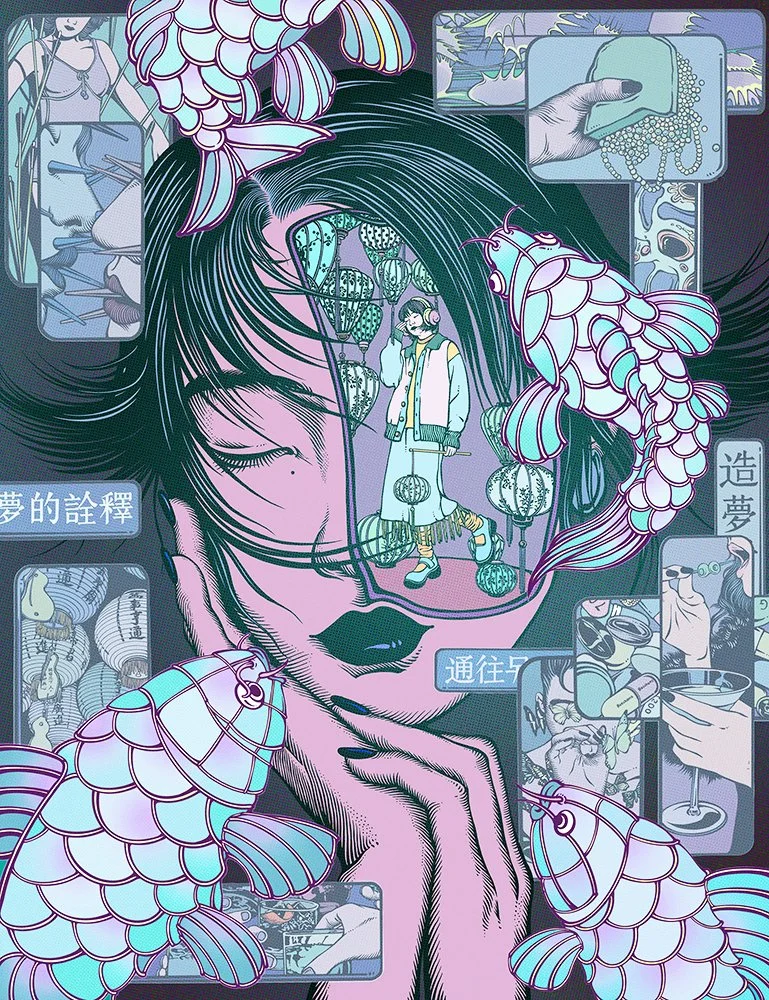
“My process usually begins with drawing. I start with quick sketches using pencil to explore composition, structure, and spatial relationships. At this stage, I work quite intuitively, allowing forms to develop through line before refining the image. In terms of medium, I primarily work digitally,especially when I am taking commissions. Using an iPad with Procreate, along with Adobe Photoshop for further refinement. Recently, I’ve been focusing more on digital drawing and painting, as it allows me to make adjustments more easily and continuously develop the image throughout the process. I often build my drawings in layers, gradually refining composition, line quality, and tonal balance. Line is central to my practice—I pay close attention to variations in weight, density, and rhythm. I construct images through layering and repetition, using subtle shifts in line to create tension and depth. Even within a digital workflow, I aim to preserve the sensitivity of hand-drawn marks, maintaining slight irregularities to keep the work feeling organic. Occasionally, I introduce solid black areas to establish contrast and guide the viewer’s focus. Overall, my illustration process is quite controlled but still open—focused on precision and restraint, while allowing small variations in line and form to shape the emotional tone of the image.”
What does your art mean to you?
“For me, making art is a way of understanding things that are otherwise difficult to articulate. It’s not so much about delivering a clear message, but about holding onto a certain feeling. Drawing becomes a way to give visual form to emotions that language cannot fully capture. A lot of my work comes from small emotional moments or internal tensions that don’t always have a clear narrative. Drawing allows me to slow those moments down and give them a form. In that sense, the process feels almost like translating something from an internal state into a visual language. Over time, art has also become a way for me to stay attentive—to my surroundings, to people, and to myself. It’s a continuous process of observing, absorbing, and reinterpreting. I don’t think of it as something with a fixed meaning. Instead, it’s more like an open space, where both I and the viewer can project different experiences and find something personal within it.”
What’s your favourite artwork and why?
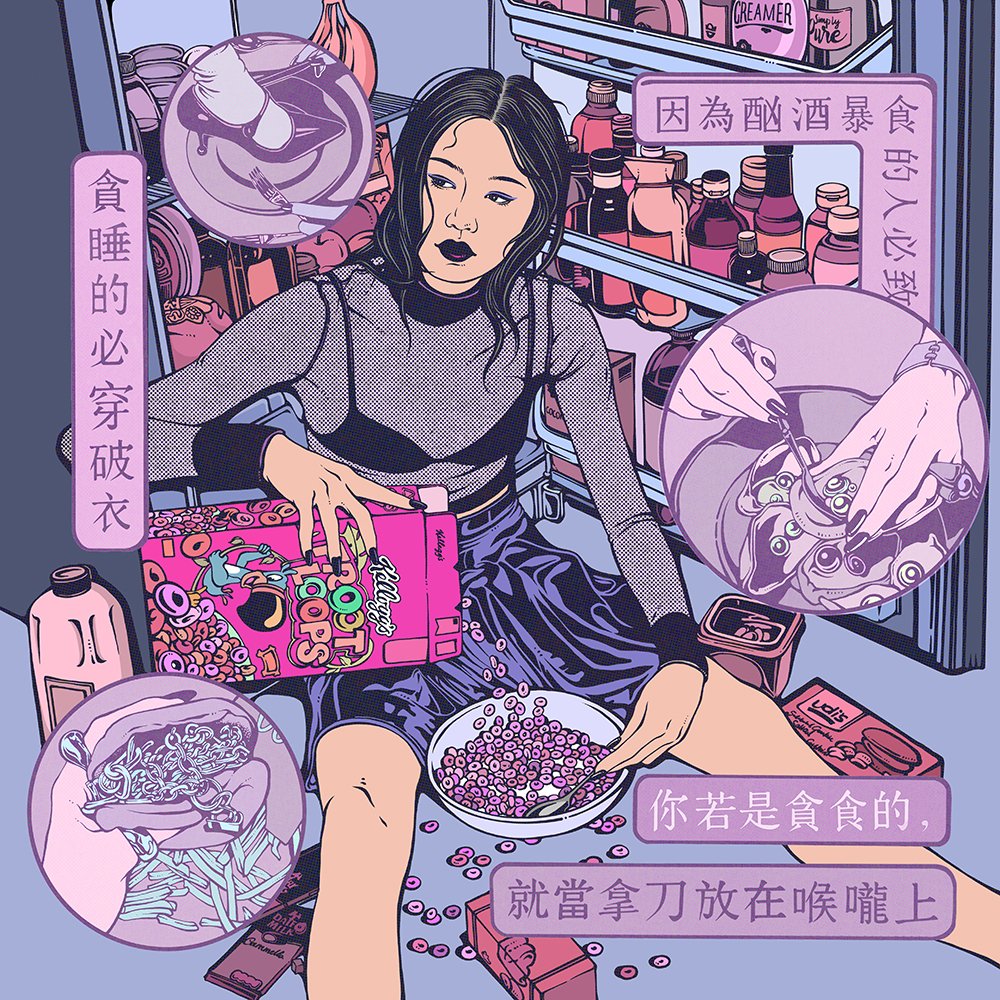
“I don’t think I have a single favorite artwork—there are so many incredible works out there, and it’s difficult to choose just one. I do, however, have artists whose work I return to often. In art history, I’m especially drawn to Egon Schiele and Käthe Kollwitz. Their work carries a strong emotional intensity, but in very different ways—Schiele’s raw, expressive line and psychological tension, and Kollwitz’s quiet but deeply empathetic portrayal of human suffering. Both of them show how powerful restraint and sensitivity can be. I’m also very influenced by my instructors from college, including Yuko Shimizu, Marcos Chin, Sam Weber, and Mu Pan. Each of them approaches image-making differently, and learning from them really shaped how I think about storytelling, composition, and developing a personal visual language. Their guidance had a lasting impact on how I approach my own practice. More broadly, I’m drawn to works that feel quiet yet emotionally charged, where something subtle is happening beneath the surface. I’m interested in images that hold tension without fully resolving it, leaving space for interpretation and personal projection.”
Have you had any noteworthy exhibitions you'd like to share?
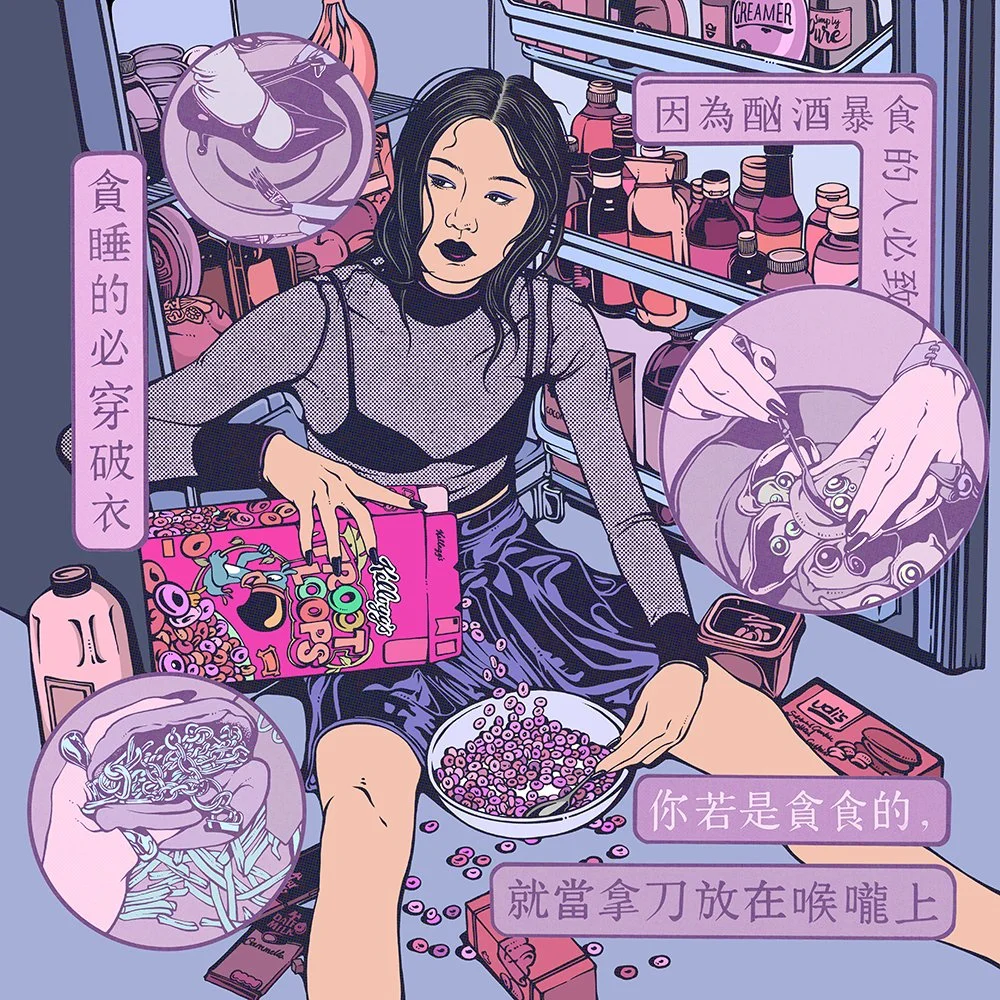
“I’ve had the opportunity to participate in several group exhibitions, both in New York and internationally, which have all been meaningful in different ways. One that stands out to me is exhibiting at the Society of Illustrators in New York, including The Art of the Folio exhibition. It was a special experience to see my work in dialogue with such a wide range of illustrators, and to be part of an institution with a long history in the field. I also participated in the Otherworld exhibition in 2022 at Xiansheng Gallery in Beijing’s 798 Art District. The show brought together a group of emerging artists working across digital drawing, printmaking, and other media, each presenting a distinct and self-contained visual world. For me, being part of this exhibition was not only an opportunity to show my work, but also a moment to recognize how each artist constructs their own visual language through image-making. Overall, exhibitions have been an important way for me to step outside of the studio, to see the work physically in space, and to connect with audiences in a more direct and immediate way.”
Website: www.zhiyuyou.net
Instagram: @zyuyou_art