Interview
Stefanie Woschek
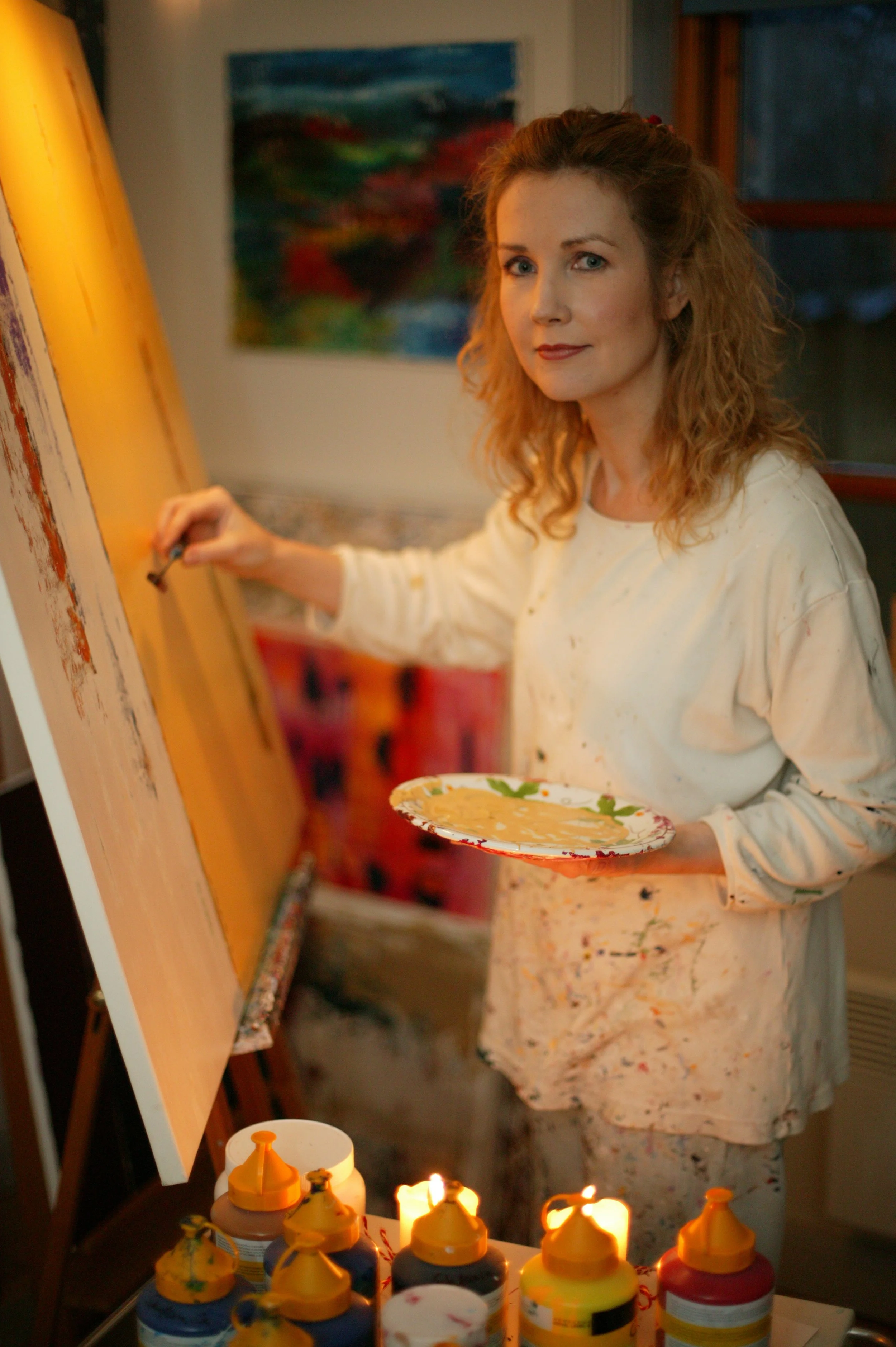
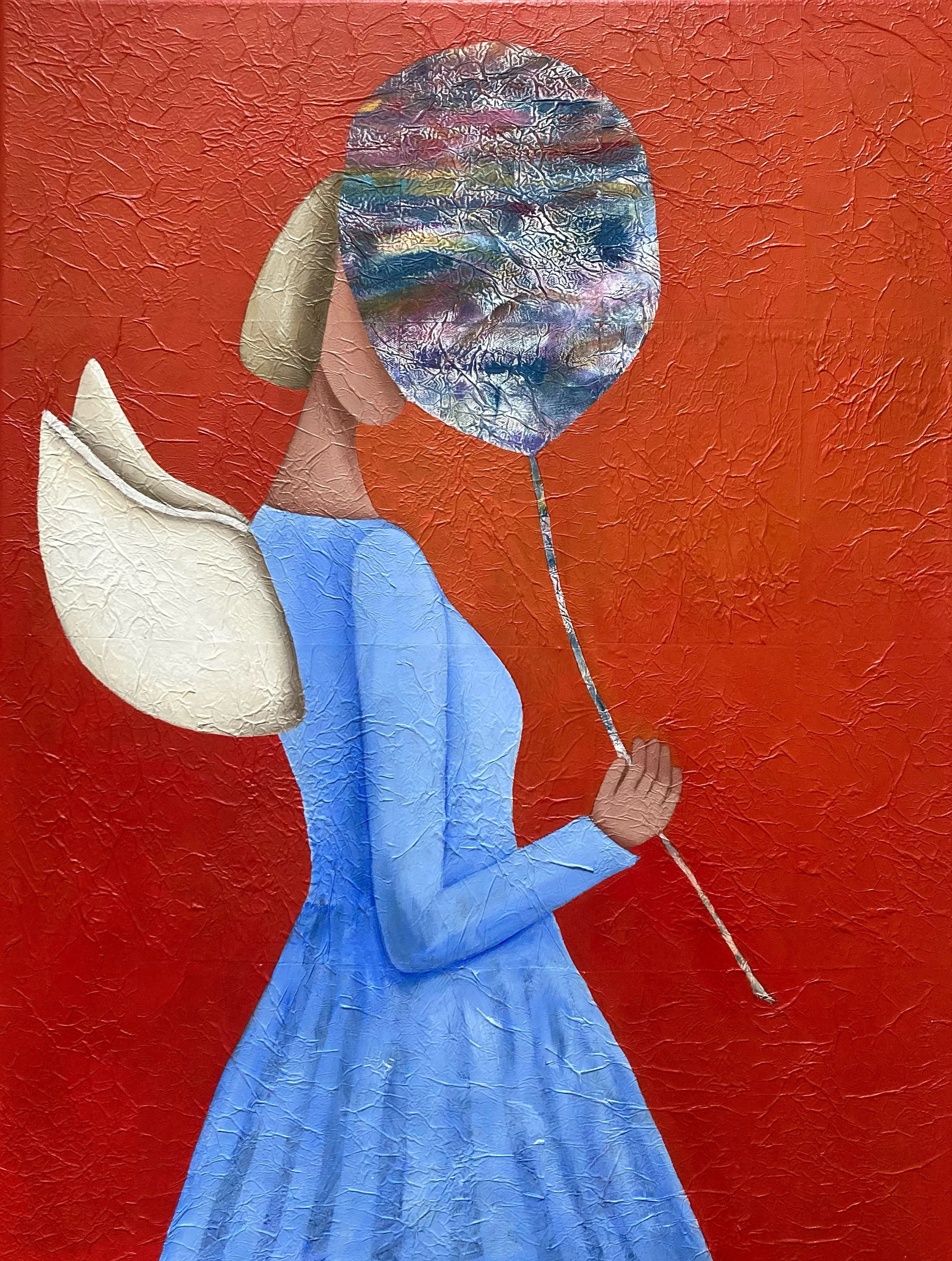
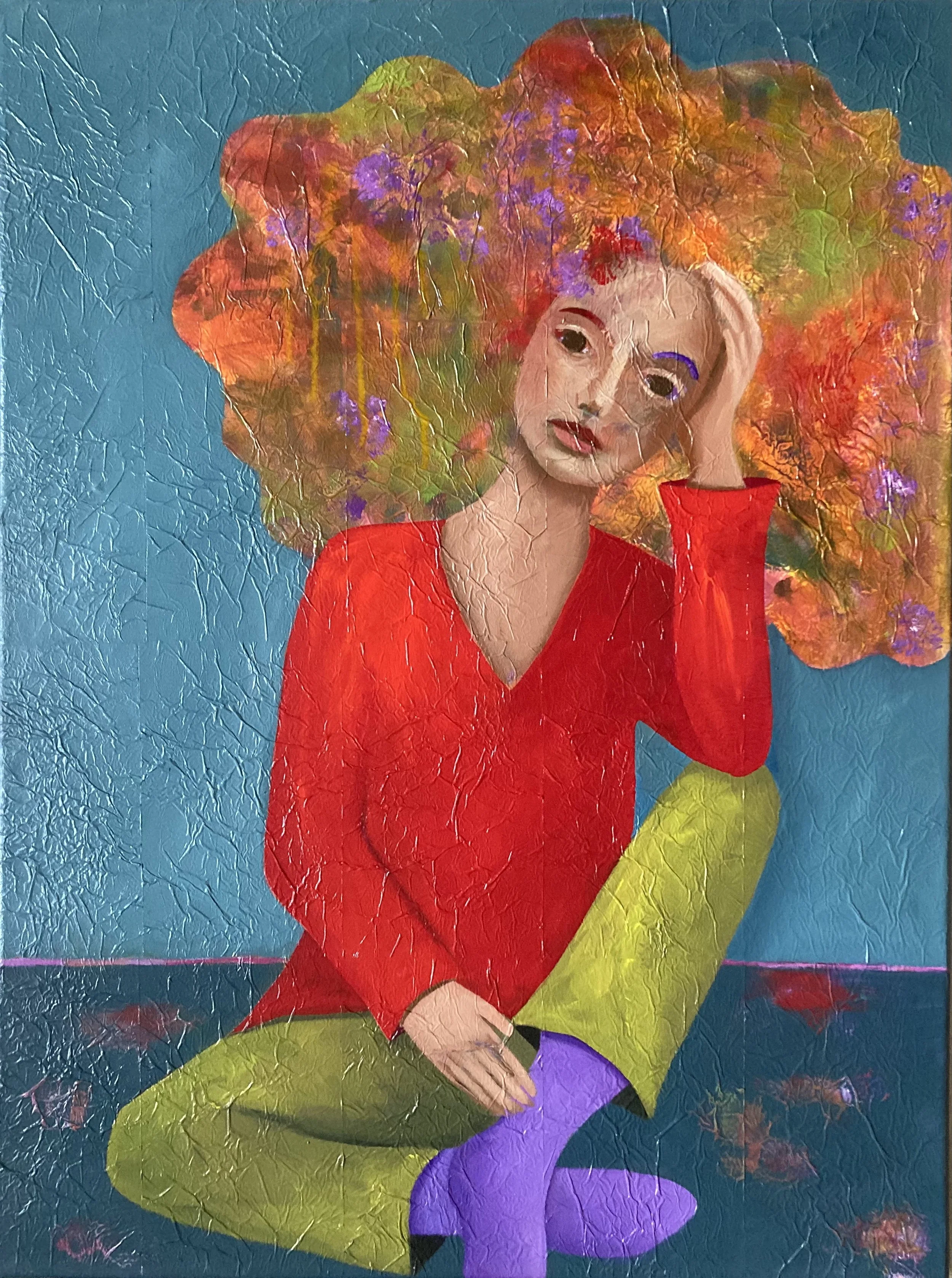
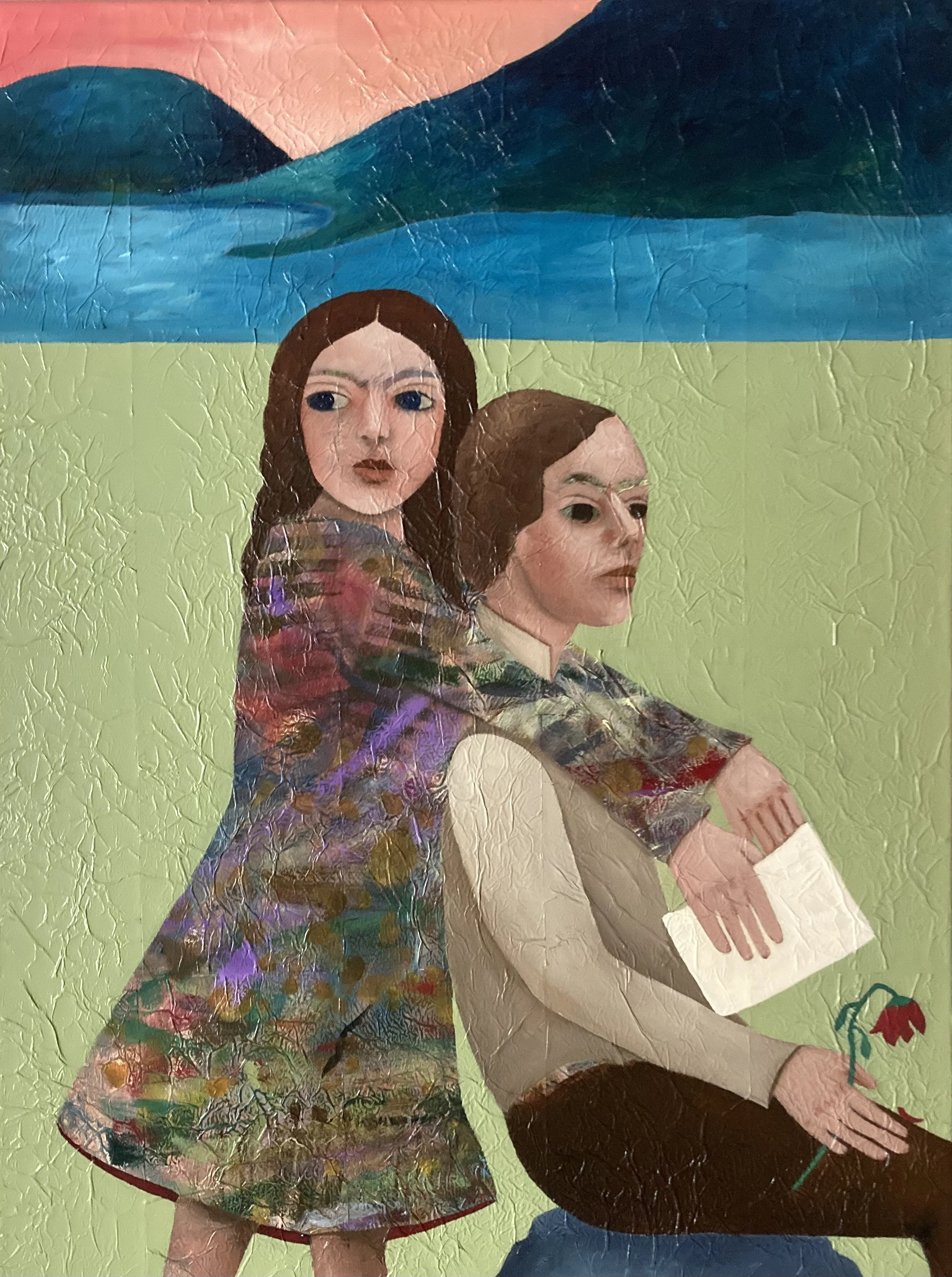
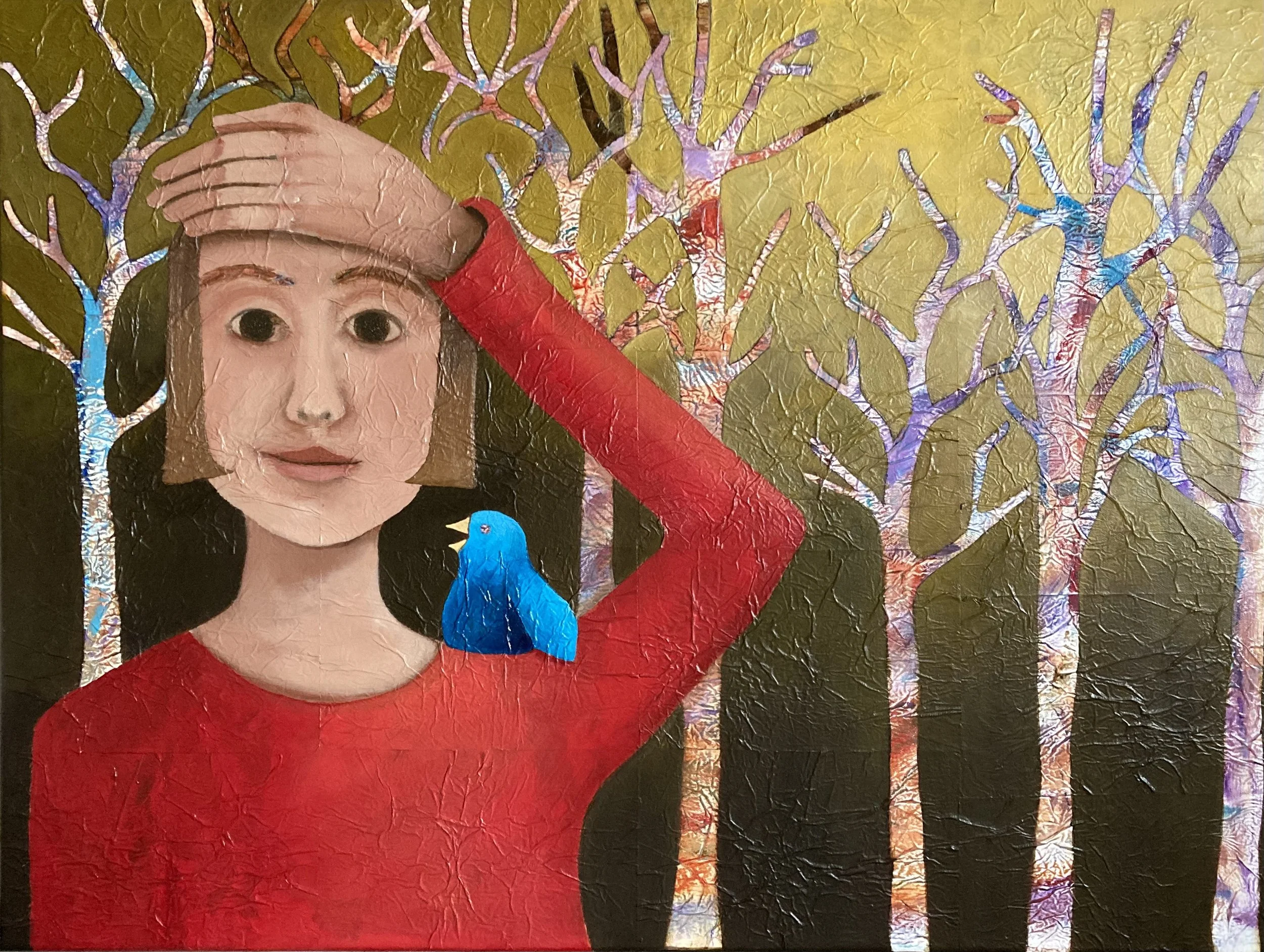
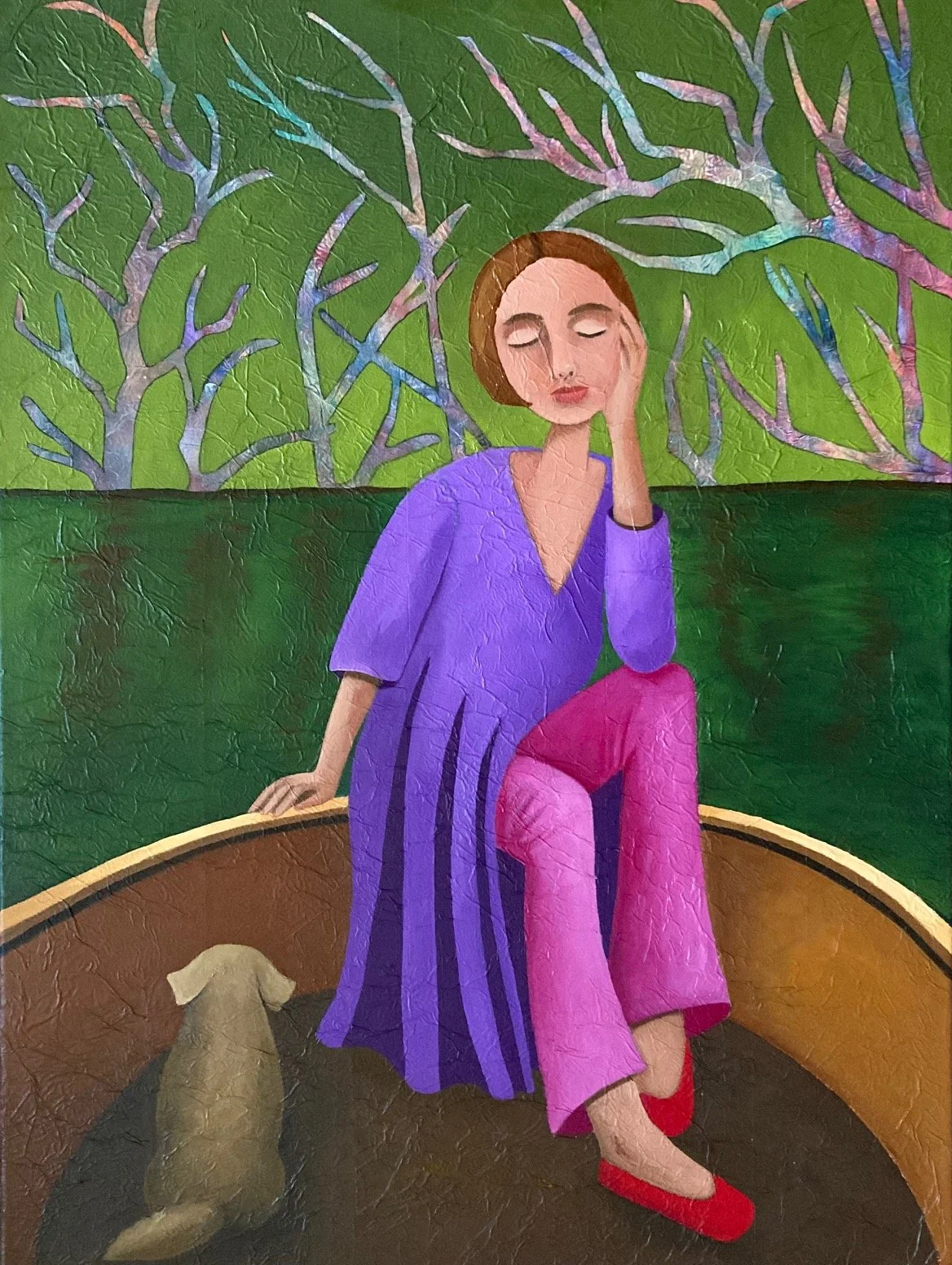
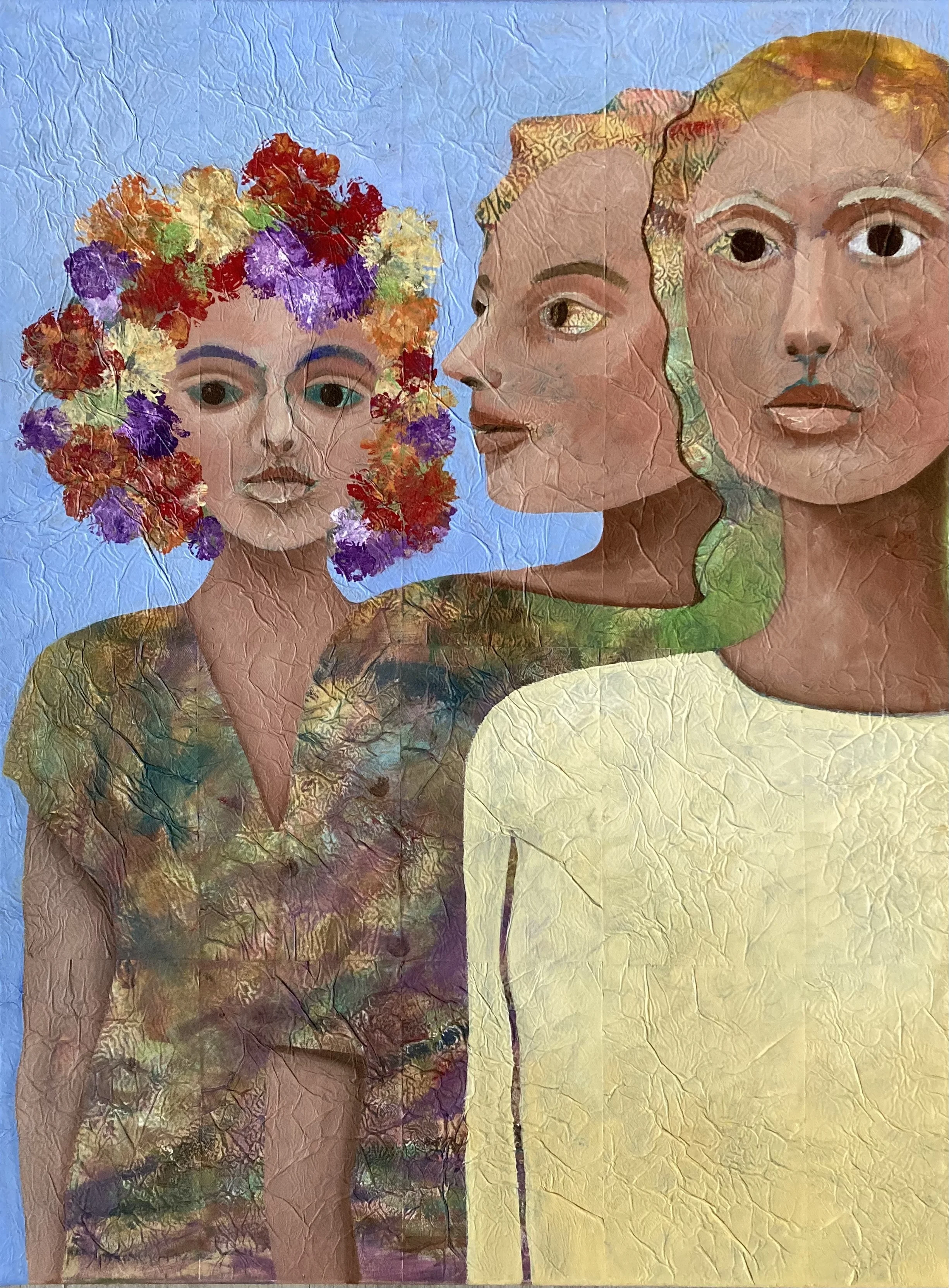
As an artist, Stefanie is self-taught. Her images are profound and all contain a message. Storytelling is an important part of her work. Since she started painting again in 2022 after a long break, her paintings have shown a clear evolution, conveying authentic and spiritual messages. Portraits and female figures now define the scene; they tell her story as a freedom-loving, highly sensitive artist who embraces who she is, processes everything she has experienced and observed through her paintings and arrives at the conclusion: Life has exactly the meaning that each individual gives to their own life. Our thoughts shape our reality. Choose wisely.
What is your background and how did you start your journey in the art world?
“As an artist, I am self-taught. I've painted all my life. I had a great art teacher at school; he supported me in my creative development even though art held no status at school back then. My father took me to exhibitions and I loved the smell of oil painting. I was fascinated by the light and the effect the artists were able to create with colors; I wanted to do that too. My parents wanted me to complete a commercial apprenticeship and pursue painting only as a sideline. I was very unhappy about that and it was very difficult for me to be in an environment that wasn't creative. I lasted only a few years, then I decided to emigrate to Denmark. I knew the country from vacations and loved the language and the mentality. I felt free in Denmark.”
What inspires you?
“My inspiration comes from everywhere: something I've read or seen or my own thoughts, interests and opinions on a topic, which I want to illustrate and share through a painting. In recent years, I have become more interested in spirituality and have reflected on the nature of being. I have come to understand that I belong to the group of highly sensitive people and that this special sensitivity is a gift, not a flaw. It enables me to better understand other people's behavior and pay attention to my own needs.”
What themes do you pursue? Is there an underlying message in your work?
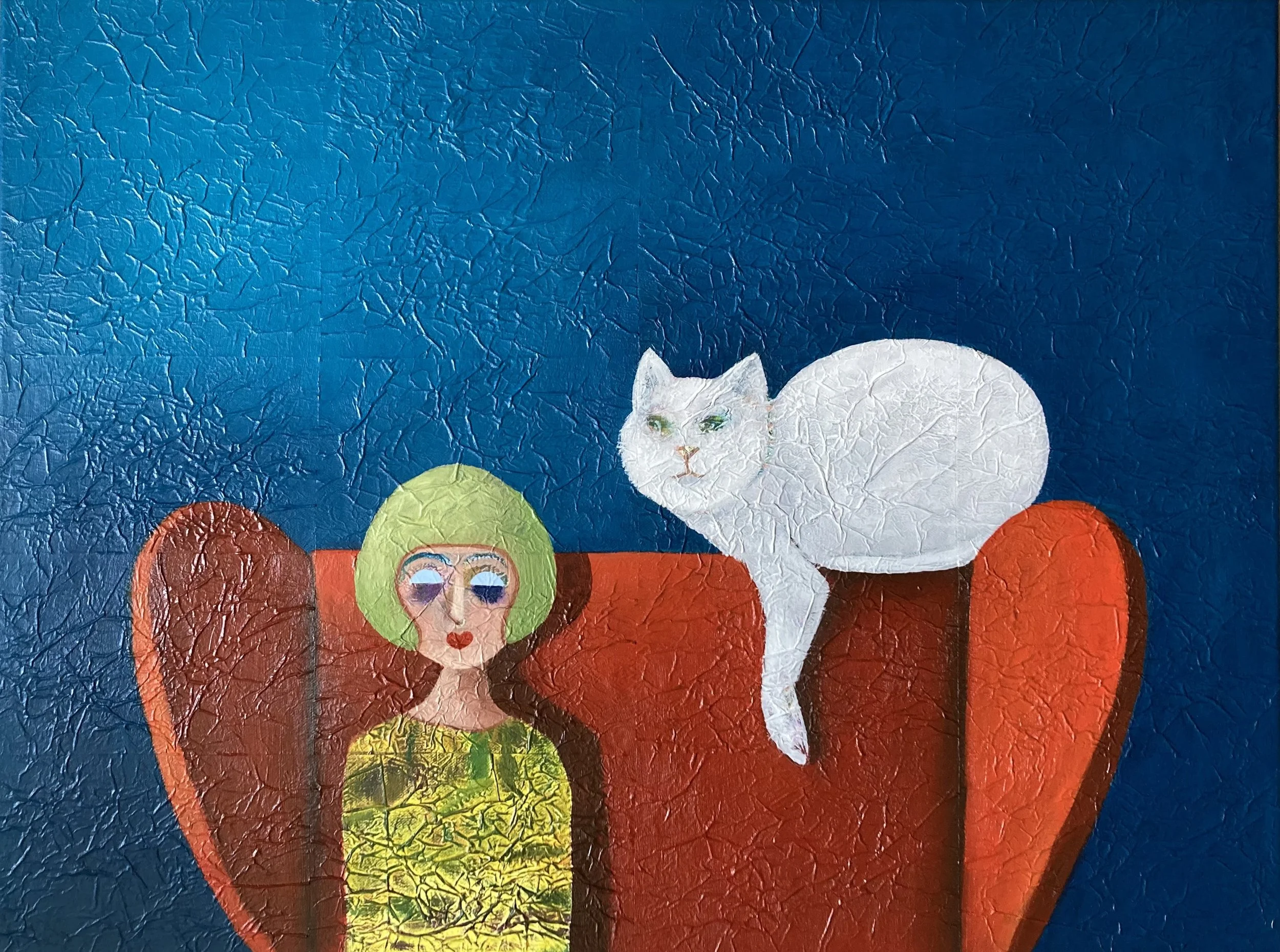
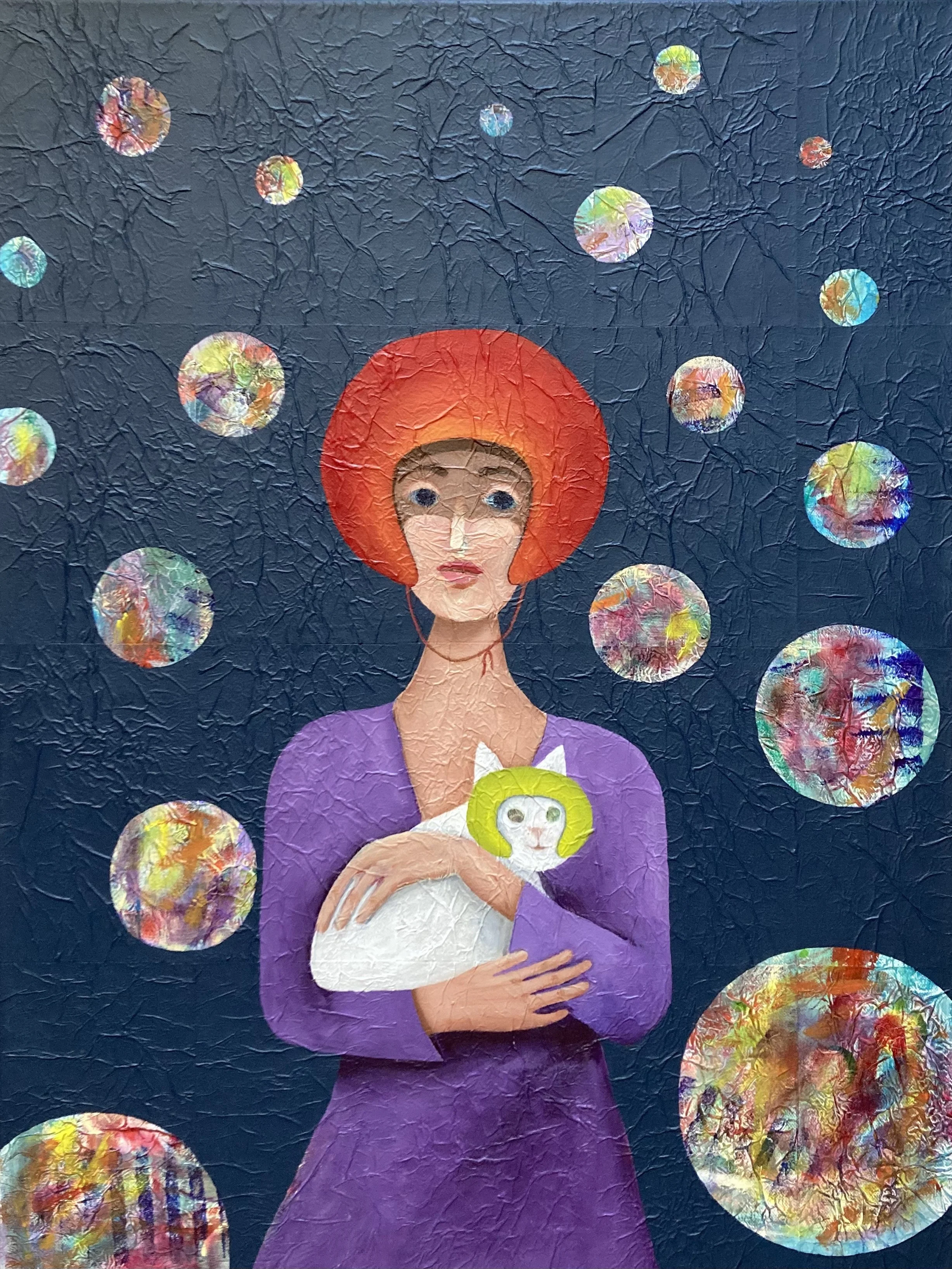
“Definitely yes! Spiritual topics concerning life, and especially the present moment. I am fascinated by the idea that there is no yesterday and no tomorrow—only ever the now. It always comes down to the mind and our intuition. We don’t always have to follow our thoughts; they simply drift by. Our intuition is what matters most, as is observing ourselves. One can only ever paint oneself as the person one is at that moment. In my painting ‘Protect Your Inner World,’ I depict the longing for protection from the many loud influences of the outside world. The colorful spheres represent the influences; they aren't dangerous, just numerous and loud. That’s why the person is wearing a helmet (and the cat is, too).”
How would you describe your work?
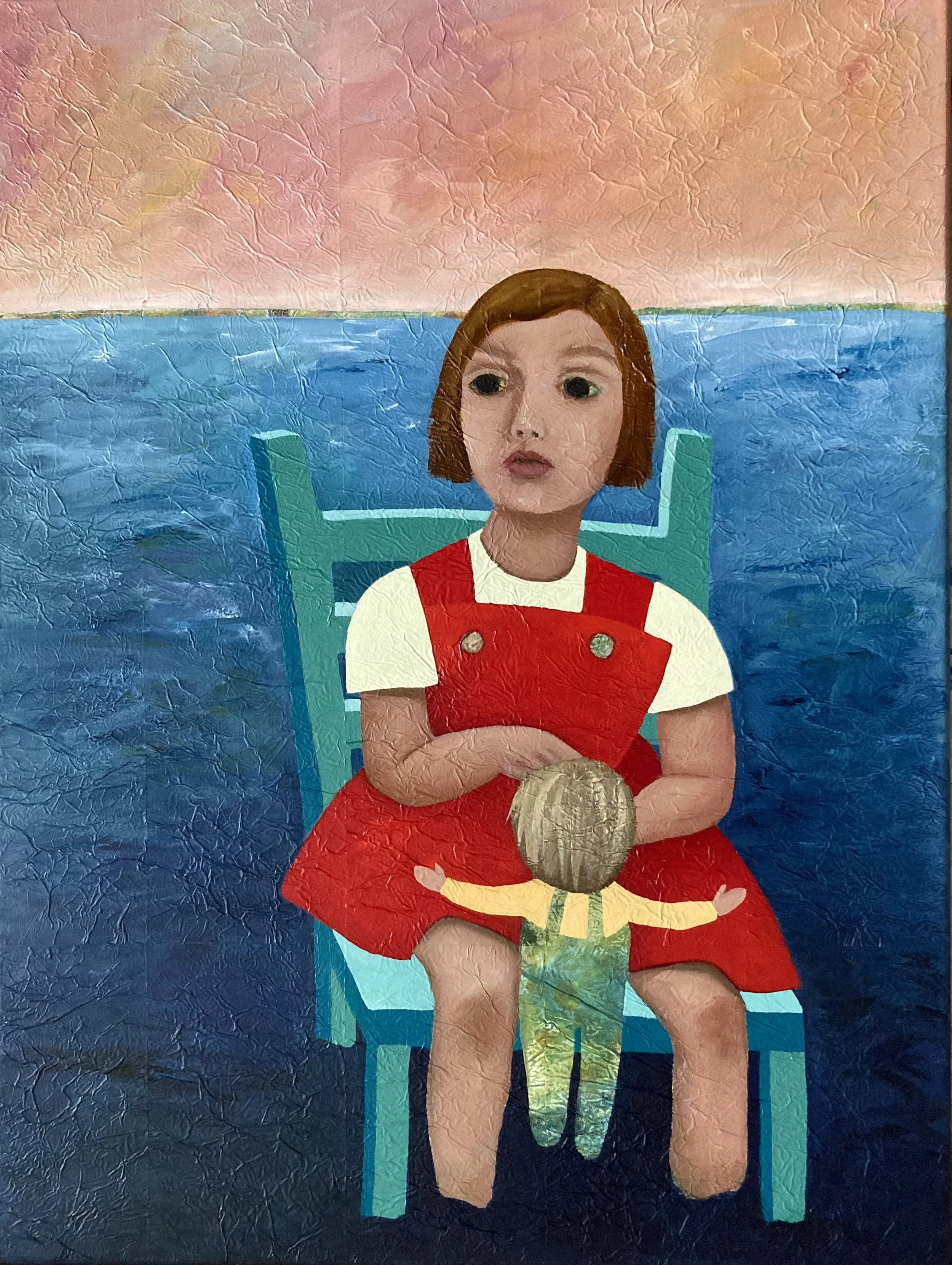
“My work is very colorful. I love to mix different colors and I create color charts so that I can mix the colors again and again. I always cover the canvas with tissue paper first to create a unique texture. I can see a clear evolution in my artworks. In the years from 2000 onwards, I painted about 120 landscapes, houses, towers, fortresses, and castles, but no people at all. I was afraid of painting people. Nowadays, I always paint people—mainly women—and see myself in them. In 2005, I established my own gallery in the north of Copenhagen, where I also lived and worked as an art teacher. I sold almost all my paintings and this was the best time of my life. In 2013, the financial crisis stopped my business and I moved back to Germany in 2014. It was very hard for med to loose my home and my gallery and I stopped painting for nine years. These years weren’t good, I experienced a lot of grief and loss of close family members. It left me gutted. It challenged my entire identity. I had to go back to working in an office and that wasn’t me at all. In 2022, I met a coach and the first thing, he said to me was: ‘You need to paint again.’ I was afraid to start but I did and step by step, I came back to my art and now, I’ve learnt that art is my calling. That’s my motivation, I have to paint to express what I feel. I am sure that many other people feel the same and by this, the connection to my collectors occurs. I followed my heart and it led me back to my real path. What I do now is my entire life. I don't have a single day off, I don't take vacations, and even if I finally had the chance, I'd be painting again. That's what happens when art is life. One of my favorite art quotes are this: ‘Art does not reproduce the visible but makes visible,’ by Paul Klee.”
Which artists influence you most?
“As a child, I was particularly inspired by Emil Nolde. His way of painting the sky with its deep clouds was unique. At exhibitions, I would always step right up to his paintings to see how he managed to create depth in them. Absolutely fascinating! Later is was Paul.Klee, Franciska Clausen, Thomas Kluge, Picasso, Dali, Edward Hopper, David Hockney, Giorgio de Chirico, Vilhelm Lundström, Paula Modersohn-Becker and Helene Schjerfbeck. I discovered Surrealism and Cubism, and I have been captivated by them ever since.”
What is your creative process like?
“Of course, I don’t plan the image in detail, but I do have a loose idea. Usually, it involves a person, and I think about the setting—or the feeling or mood the person is in at that moment. I never start a painting on a blank white canvas. My canvas always already contains the colors from the previous painting because I wipe my brush on it while I work. This creates an interesting underpainting which I use in the next painting. In that way, all my paintings are connected to one another! While painting, I am in dialogue with the image. I use my intuition to listen to what it wants and what it doesn’t. Sometimes I try to impose my will and paint something that ultimately doesn’t work. Then I hear the image laughing at me, and I have to yield. The image is always right.”
What is an artist’s role in society and how do you see that evolving?
“The role of the artist is becoming increasingly significant in today's society. In the past, art might have been viewed merely as wall decoration or an investment; today, it also serves as a mouthpiece for a wide range of societal issues—from politics and religion to lifestyles. Today, an artist is no longer a destitute person painting while hungry; he is a recognized part of society. At the same time, it is important that his paintings convey a message rather than merely depicting a subject. Thanks to social media, it has become much easier to view and discuss art today. Engaging with art is no longer reserved for the wealthy. Thanks to technology, it has also become possible to view and create art from all over the world at any time. I love the craft of painting, but digital art is also an important innovation.”
Have you had any noteworthy exhibitions you'd like to share?
“During my years in Copenhagen, I had many exhibitions, such as: COBRA, art associations like national museum, TV2, Miele, Risö, University of Aarhus, SAS, Ministry of the Environment, Danish Metal, CBS, Ministry of Foreign Affairs, Novo Nordisk, Topdanmark and many more. Represented in the book ‘101 artists.’ In Germany, I had exhibitions arranged by Hamburg Kreativ Gesellschaft.”
Website: www.stefanie-woschek.de
Instagram: @stefaniewoschek