Interview
Debranne Cingari
What is your background and how did you start your journey in the art world?
“I earned my degree in Marketing and Advertising from Endicott College and later went on to earn my master's degree in Teaching from Sacred Heart University. But if I'm honest, my education really began long before college.
When I was eight years old, I received my first camera, a Pentax K1000, along with an enlarger. My mother's pantry became my very first darkroom. Tucked between shelves lined with canned goods, pots and pans, and the pencil marks of my childhood growth chart, it became my own little world where something inside me quietly came to life. Photography quickly became much more than a hobby.
By the time I was 17, I had my first solo photography exhibition. My girlfriend, who was an aspiring musician, played guitar and sang, while one of my guy friends, an aspiring chef, catered the opening, complete with chocolate-covered strawberries. We were all just 17 years old, each of us already beginning to explore our own creative paths. The exhibition nearly sold out. I simply loved taking photographs, creating something of my own, and seeing people connect with the work. That first exhibition quietly planted the seed for what would become a lifetime in the arts.
After graduating from Endicott, I accepted a position with a local real estate company in its advertising and marketing department. Before long, my eye for interior design was recognized, and I was given opportunities to contribute creatively beyond my marketing responsibilities. That naturally led me to architectural photography so I could photograph the very homes I had helped design. Those images eventually appeared in the company's brochures, magazine advertisements, and other promotional materials. By 22, I had opened my own photography studio.
My career soon took me into the social worlds of Connecticut and New York City and gave me the opportunity to photograph events at the Metropolitan Museum of Art. My assignments included Costume Institute galas, exhibition openings, holiday celebrations, and private gatherings. One evening I might be photographing Jackie Onassis or David Bowie, and the next day I could be back in Fairfield County photographing twenty children in doghouses for a Dog Days of Summer magazine cover, documenting an insurance claim after a flood, or photographing a local family. I loved that contrast.
There were certainly glamorous assignments, but for me, it was always about people. Whether I was standing in a ballroom filled with gowns and jewels or in someone's backyard after a storm, every person and every assignment had a story worth telling.
Those experiences became another kind of education. They taught me to stay curious, remain humble, adapt quickly, and recognize that extraordinary stories can exist in very ordinary places. They also taught me something that has remained at the center of my career: meaningful relationships and exceptional personal service matter. I have always built my business one person at a time, through trust, kindness, and genuine connection.
When my daughters were growing up, my priorities naturally shifted closer to home. I redirected my photography toward weddings, bar and bat mitzvahs, anniversaries, and other celebrations. Eventually, that became a thriving special events photography company with a team of seven photographers working with clients across the country. It was a wonderful chapter of my life. I was invited into people's most important moments and trusted to preserve memories their families would carry forward for generations.
My daughters often came with me to public relations events and client meetings, so in many ways they grew up alongside my business. I think they learned early that creativity and entrepreneurship could coexist. Eventually, my career brought me full circle, back to fine art. At 17, I had stood in a room surrounded by my photographs at my first exhibition. Decades later, after a career encompassing advertising, design, photography, teaching, extensive travel, entrepreneurship, and thousands of human encounters, I returned to creating and exhibiting fine art, only now I had a lifetime of stories behind the work.
Today, my work is represented by four major galleries across the country, including Cavalier Galleries in New York City, Nantucket, Greenwich and Palm Beach. My work has been exhibited nationally and internationally, including The Little Words Project European Collection in Italy and at the Grand Palais in Paris. My fine art is held by private collectors and has been installed in corporate, executive, residential, and public spaces. I recently created a campaign around the words Nothing Comes Between Me and My Art® because I didn't know how else to express something that is so deeply personal to me. It isn't simply a campaign or a tagline. It's the most honest way I know to describe my relationship with art.
Of course, photography evolved in ways I never could have imagined. I went from sending rolls of film to Mystic Color Lab and waiting for those envelopes of photographs to come back, to holding a digital camera and seeing the image the instant I created it. I've lived through an extraordinary transformation in photography, and I find that evolution fascinating. The technology has changed enormously, but my curiosity and desire to create never have.
Through every success, every struggle, and every unexpected turn in my life, art has remained the constant. Nothing Comes Between Me and My Art® is personal, intimate, and completely true. It's not simply what I do. It's who I am.”
What inspires you?
“I am always searching for my next muse. Inspiration can come from anywhere for me: a person, a place, an object, an experience, or something completely unexpected. But at the heart of it all is curiosity. I don't wait for inspiration to find me. I go searching for it.
I've always noticed composition and sought the unusual, even as a child. I'm curious about what's around the corner or beyond the obvious, so I leave familiar places and follow instincts—some of the best stories hide where you least expect them. Being an artist means finding your way of seeing and having the courage to follow it. That instinct guided my career. In the early 1980s, I called my business The Art of Photo Narration because I saw myself as a photo narrator—well before documentary and photojournalistic wedding photography were common.
I had a desire to simply watch events unfold as they happened. I wanted to be unobtrusive, almost like a hidden fly on the wall, present but unnoticed. It was important to me that people weren't performing for my camera or changing their behavior because I was there. I wanted to quietly capture everything: the glance between two people, the nervous hands, the laughter happening in the corner, the tiny details and fleeting moments that might otherwise have disappeared. I wanted to tell the entire story without interrupting it. That same instinct still guides the way I see today.
While traveling through Baja, Mexico, I came across toilets scattered along the beach. I found the scene fascinating and began photographing it. Those images eventually became my Throne Series, a wonderful and successful body of work. I love when something completely unexpected opens the door to an idea I hadn't been searching for. People are equally important to me. I've traveled around the world photographing cultures, families, faces, and ways of life. I'm fascinated by human beings and by those brief, unguarded moments when something genuine reveals itself. Sometimes, I may only know someone for a few minutes, yet the photograph and the encounter stay with me for years.
I respect the many extraordinary photographers today, which makes finding my own voice vital. I won't make images just because they're beautiful; I seek unusual, personal subjects that feel unmistakably mine. I want work with the strength to stand alone. Photography has changed—almost everyone has a camera and younger creators work in ways we couldn't imagine. That excites me and pushes me to dig deeper, stay curious, take risks, and evolve. After all these years it's still the search that inspires me: looking beyond the obvious for the person, place, object, or moment that makes me stop—because that pause often signals a story and the start of my art.”
What themes do you pursue? Is there an underlying message in your work?
“The themes in my work have evolved throughout my life, but the thread running through all of them is human connection. I'm interested in our stories, our emotions, the passage of time, and those fleeting moments that can so easily disappear if we're not paying attention. I'm also drawn to the unexpected, finding meaning in people, places, objects, and words that might otherwise be overlooked.
If there is an underlying message in my work, it is to look closer and feel more deeply. Life moves quickly. People enter and leave our lives, places change, moments disappear, and sometimes we don't understand the significance of something until it has already passed. Through my work, I try to hold onto a little piece of that, or at least make someone stop long enough to recognize it. One of the clearest expressions of this is my Little Words Project.
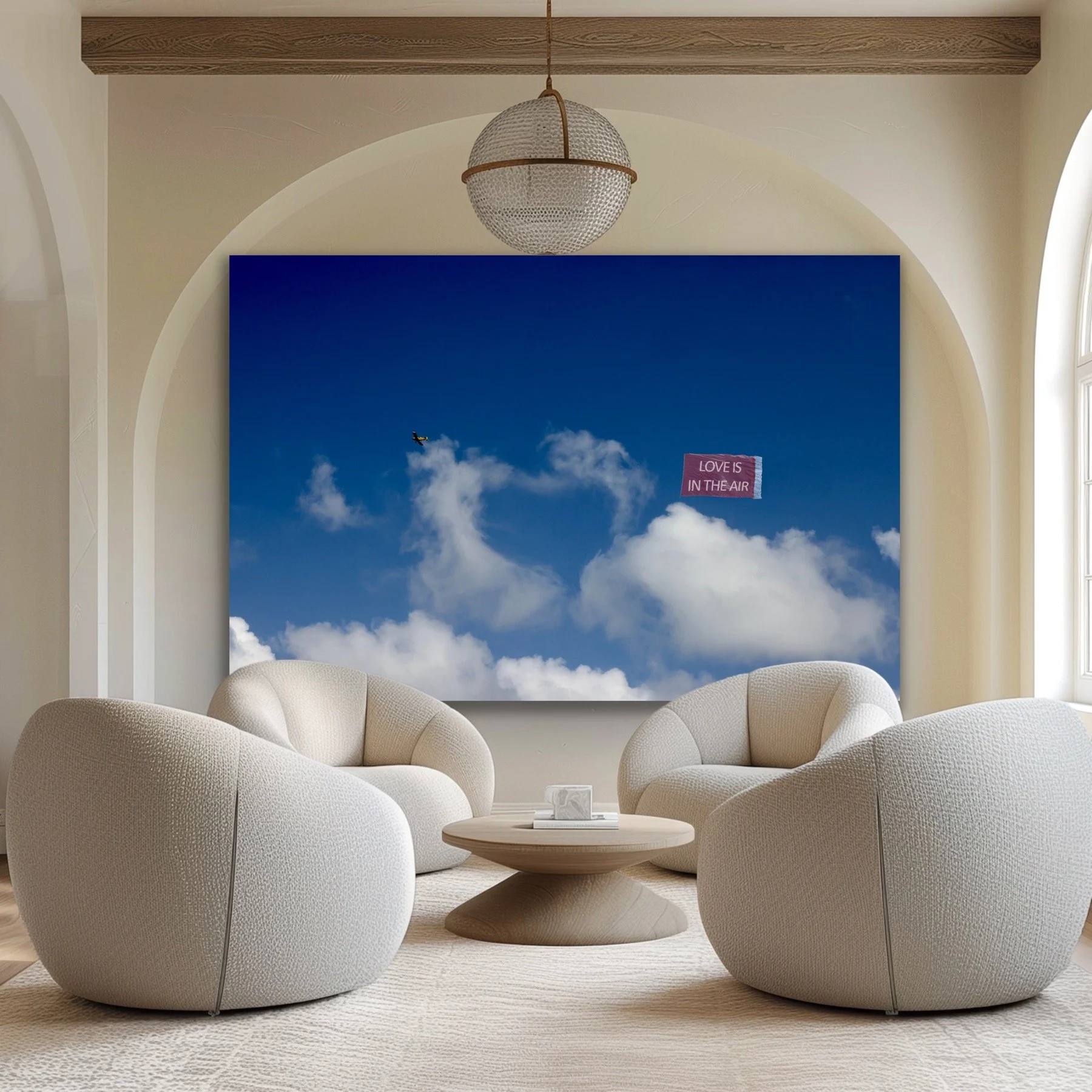
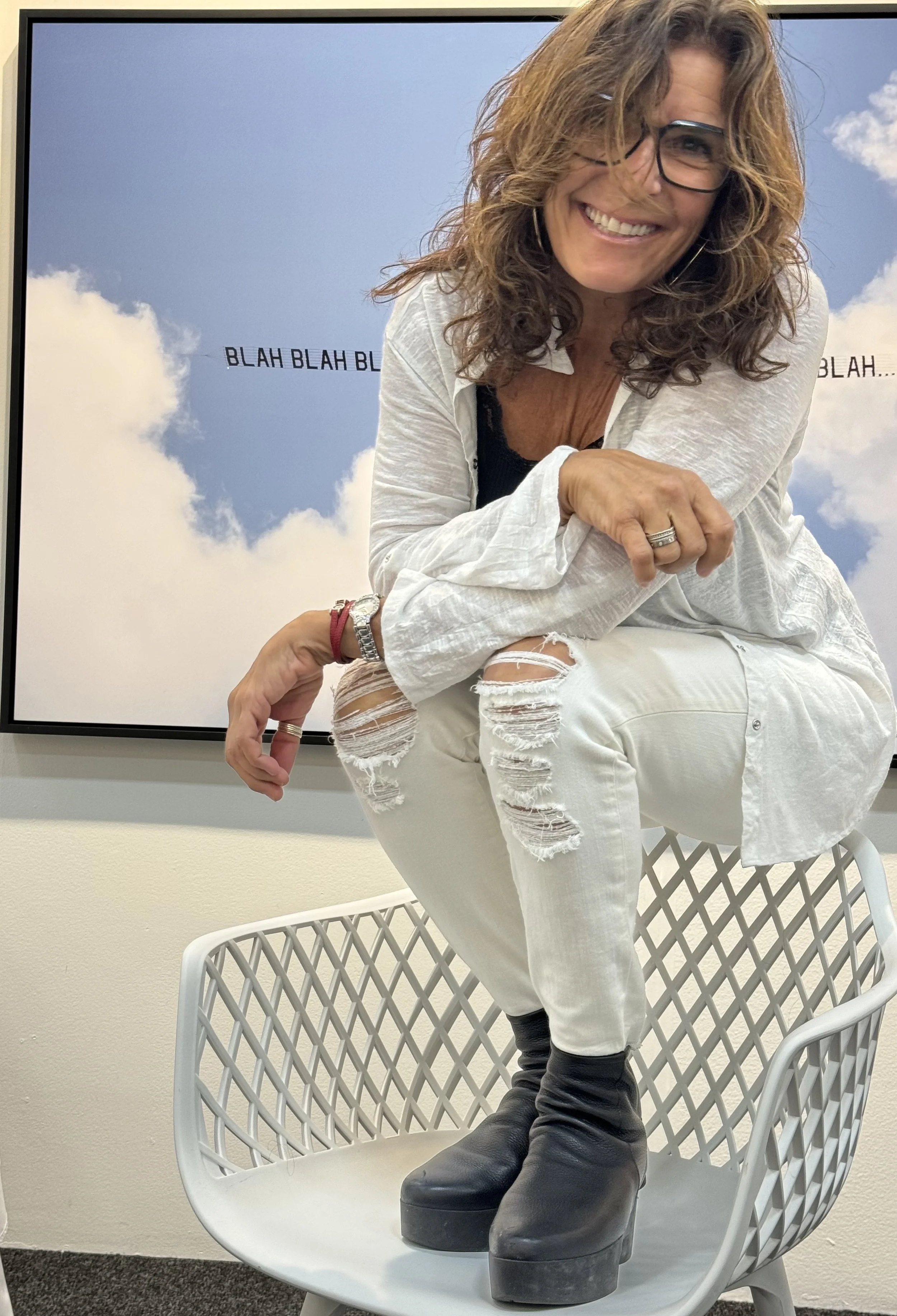
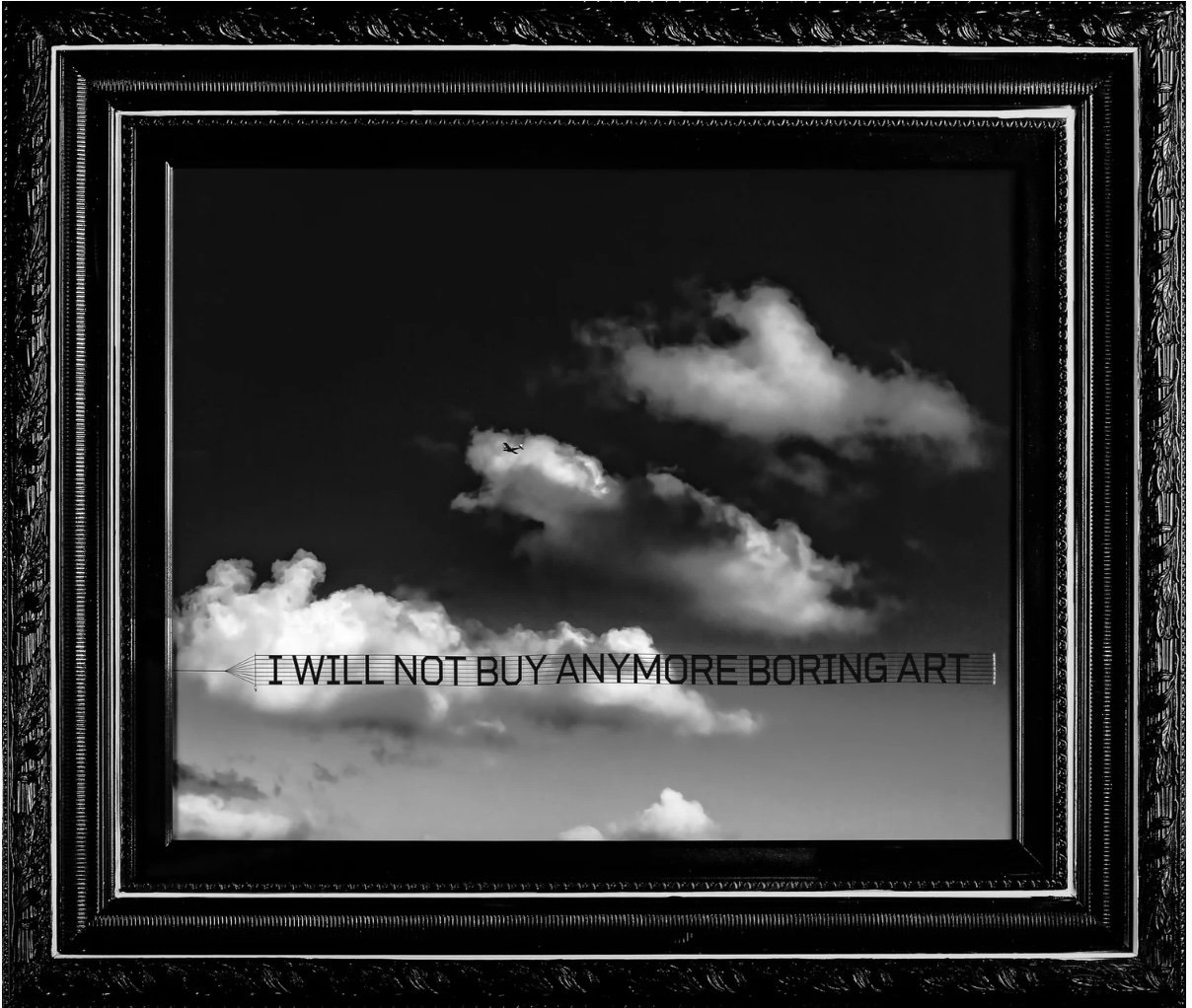
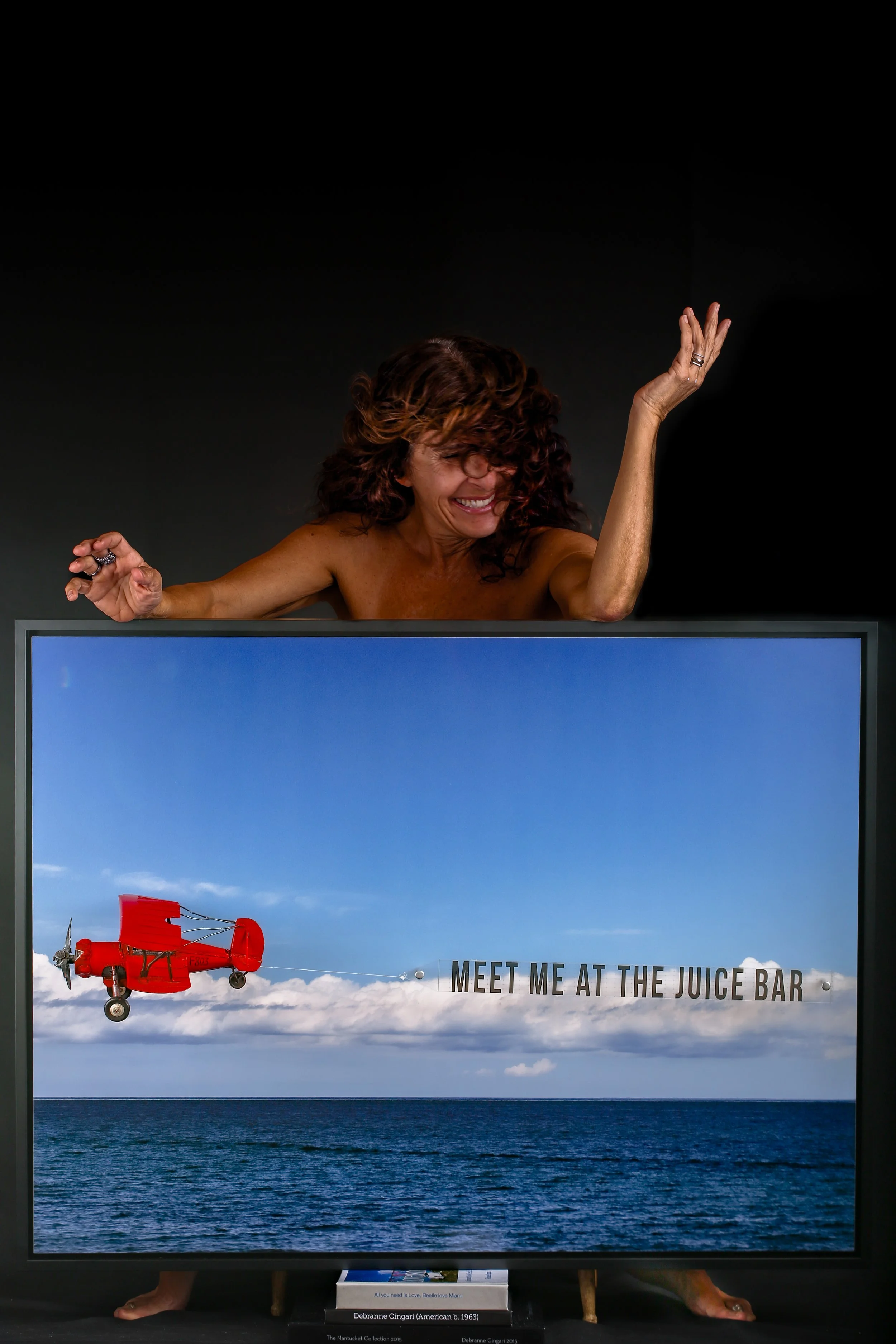
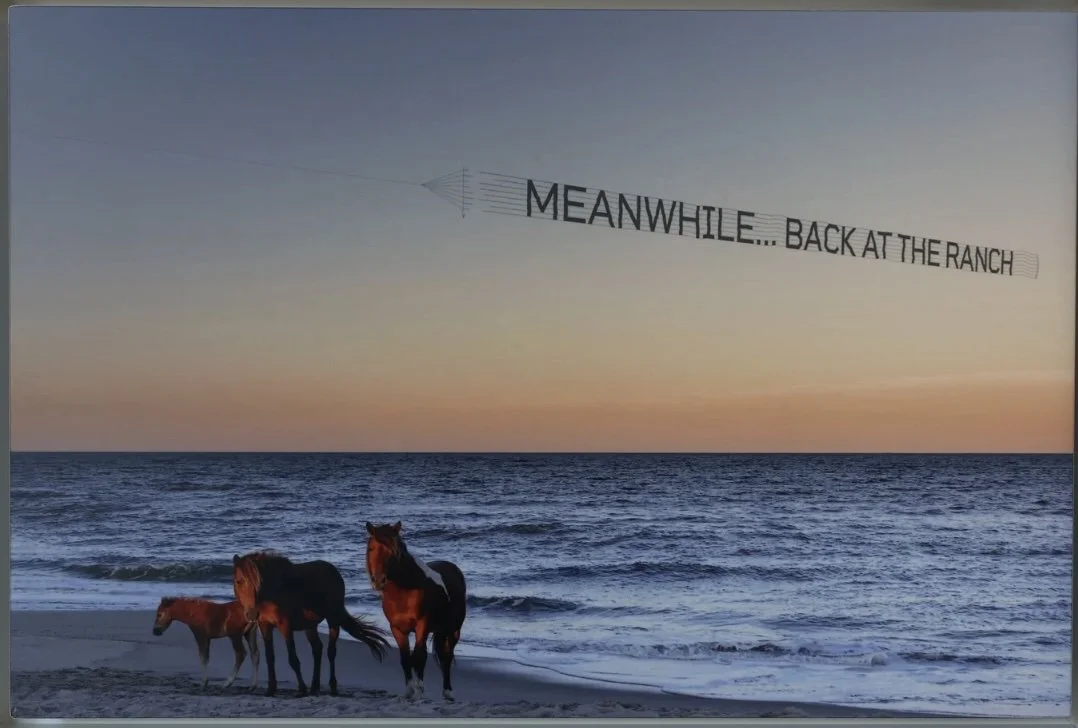
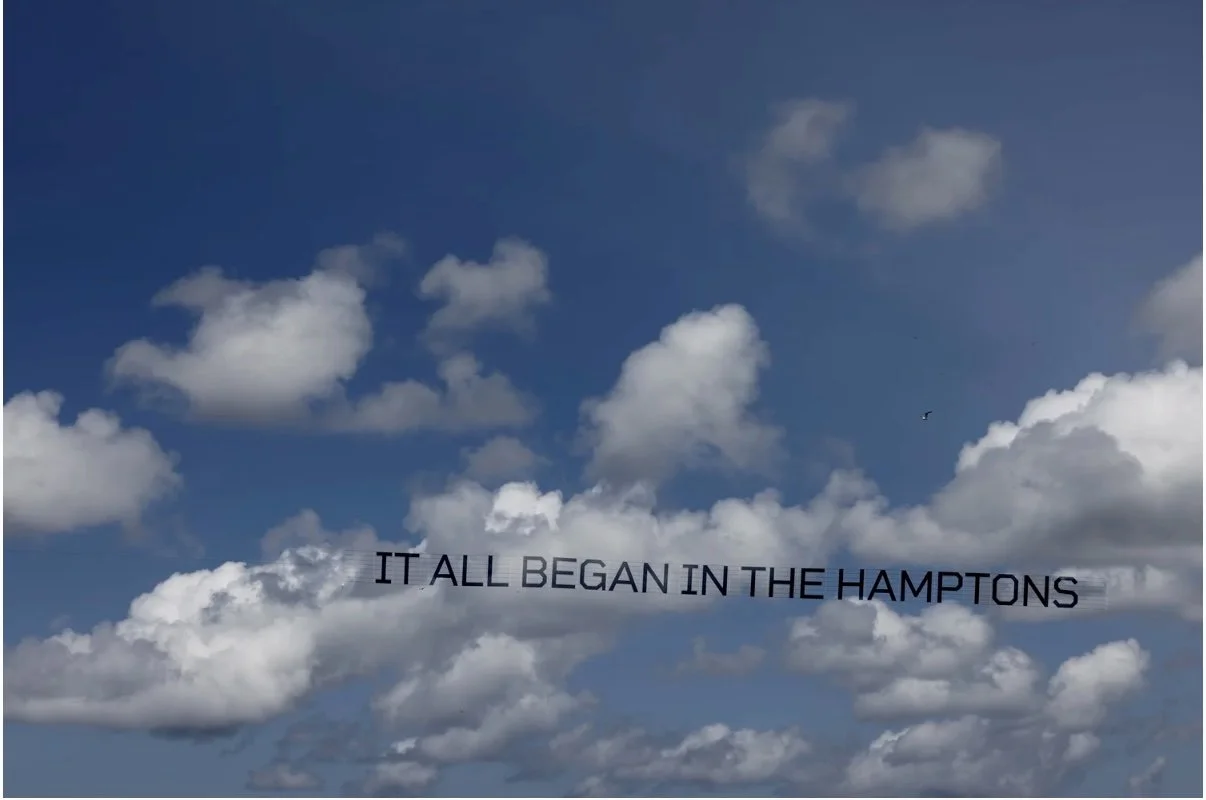
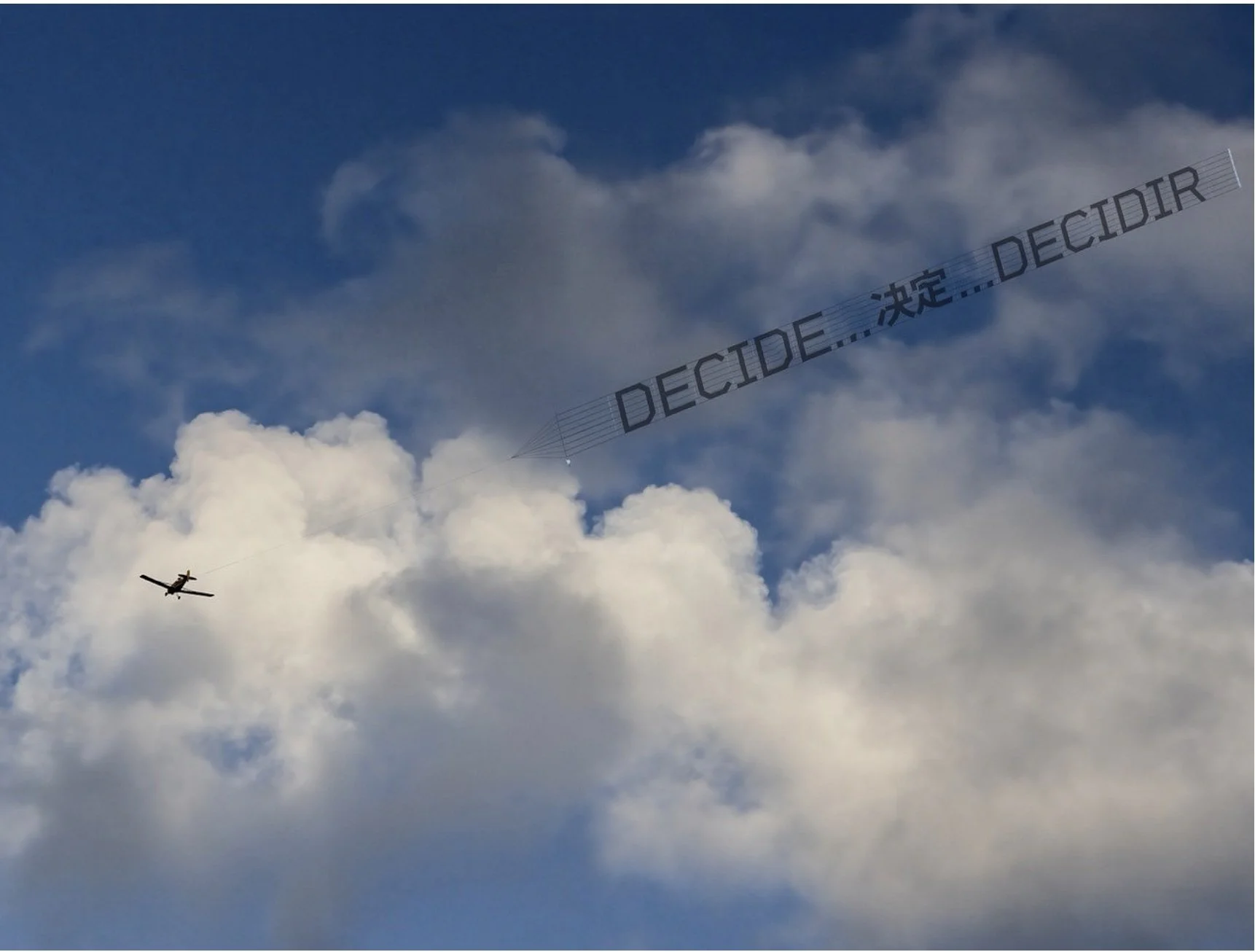
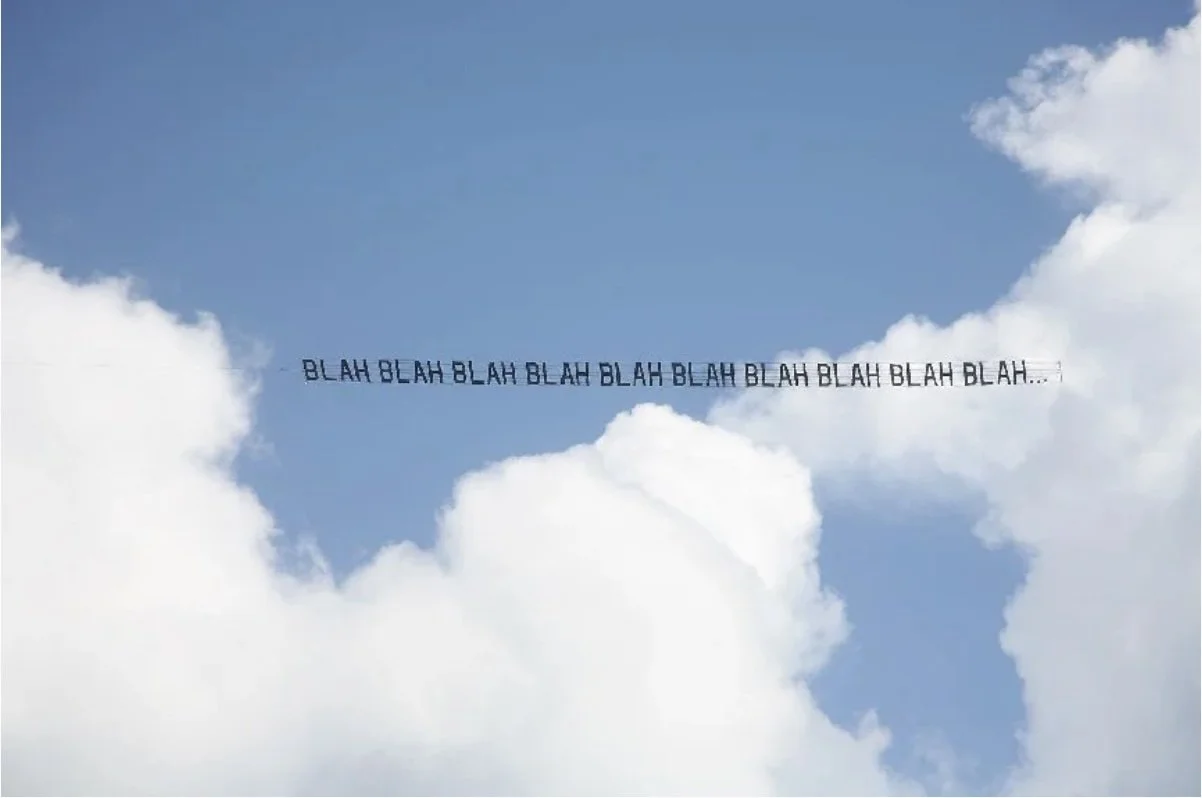
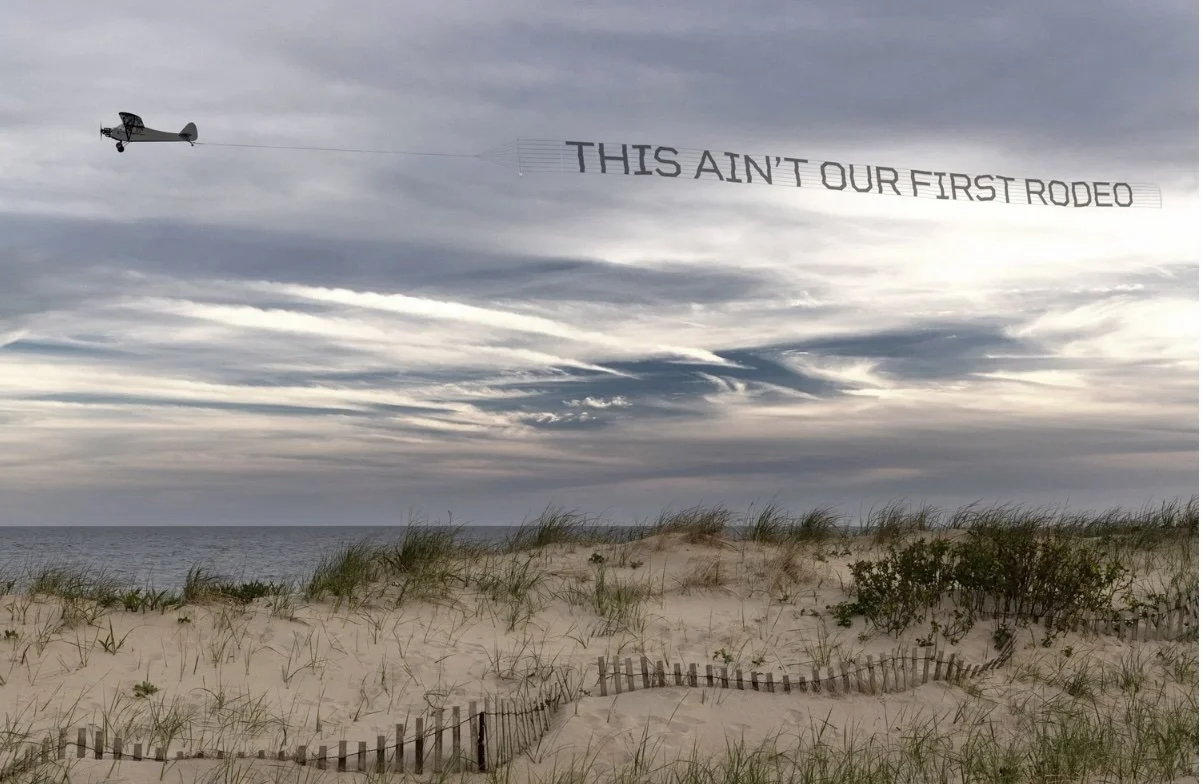
Years ago on a Miami beach I watched planes tow messages across the sky. The idea of the sky as a temporary canvas stayed with me and became my work: airplane banners as medium, words as voice. I’m fascinated by how a few words can be funny, provocative, romantic, hopeful, irreverent, or deeply personal—its meaning shifting with each viewer.
‘Nothing Lasts Forever, So Live It Up’ came from a deeply personal experience in my own life. I knew exactly what those words meant to me, but once I put them into the sky, they no longer belonged only to me. Someone else might read them and think about love, loss, aging, a relationship, an opportunity they almost missed, or simply the importance of living while we are here.
I don't need to tell viewers the origin. Once released, a work lives on its own. My experience starts it; theirs completes it. Little Words Project is evolving: I’m inviting others to answer one question—If the sky were yours, what four words would you send? A thought, feeling, joke, provocation, or something deeply personal. What matters enough to put in the sky? The plane and words will disappear, but they might reach someone. Sometimes four words are enough.”
Which artists influence you most?
“People often ask which artists influenced me. I always answer: no one. With respect to others, I chose early on to avoid outside influence and discover my own vision through curiosity and instinct.
I'm self-taught—no art school or formal photography training. I experimented, made mistakes, learned what worked, and kept going. Those experiments became experience, then knowledge. I learned to trust my eye, my instincts, and myself.
When I began there was no internet or social media—only books, libraries, museums, and galleries. I was immersed in my own creative world, exploring possibilities without comparing myself to others. Years ago I made self‑portraits and a critic likened them to Cindy Sherman; I was surprised because I hadn’t known her work—I’d arrived there by my own exploration. That moment confirmed I must follow my own path.
I still work that way. I love the solitude of creating, disappearing into the studio, experimenting, changing course, making mistakes, and sometimes surprising myself. At 63 I’m still curious and learning—maybe it’s my Aries, my Italian side, or both: stubborn, fiery, and trusting myself.”
What is your creative process like?
“My creative process is very instinctive. I don't have a formula, and I rarely know exactly where something is going when I begin. Usually, something draws me in first. There's an energy or a feeling that connects me to it. I don't always know immediately why I'm drawn to something, and I don't need to. I've learned to trust that instinct. Once that connection happens, my curiosity takes over. I become interested in the story and begin exploring what it is about that particular subject or idea that captured my attention in the first place. From there, I create. I respond to what I'm seeing and experiencing and allow the work to evolve naturally. I don't follow a prescribed series of steps or force myself toward a predetermined outcome. I experiment, change direction when I need to, and follow the work wherever it leads. Emotion is certainly part of my process. What I'm feeling and where I am in my own life inevitably find their way into what I create, sometimes without my even realizing it. I think that's the simplest way to describe my creative process: something catches me, curiosity pulls me in, and instinct takes over.”
What is an artist’s role in society and how do you see that evolving?
“I believe an artist's role in society is to be a storyteller of time. We observe. We feel. We interpret. And we leave something behind. Artists have been telling the human story for thousands of years. From the earliest cave paintings and hieroglyphics to portraiture, painting, sculpture, and photography, art has given us a way to understand people and moments that existed long before us. That's incredibly powerful to me.
Art doesn't always need words. In fact, I love that it doesn't. It doesn't have to explain itself. You can stand in front of a work of art and simply feel something. What I see in it may be completely different from what you see, and neither of us is wrong. We each bring our own lives to it.
As a photographer, I've spent my life capturing fractions of a second that immediately become history. I've always found something extraordinary about that. I press the shutter, the moment passes, and it will never exist in exactly that way again. But I have preserved a little piece of it. I think the artist's role is evolving because creativity has become incredibly accessible. Art and photography are literally at our fingertips now. Almost everyone carries a camera. Anyone can create something, share it with the world, find an audience, and even sell it. In many ways, that's wonderful. I believe there is creativity in all of us, and everyone should have the freedom to explore it.
But I also hope that as creating becomes easier and more accessible, we don't lose respect for the craft behind it. There is a difference between having access to a tool and devoting your life to understanding what you can do with it. I've been creating since I was a little girl, and I'm still learning. A lifetime of mistakes, risks, experimentation, successes, failures, and experiences lives inside the work I make today. I've watched my own medium change enormously, from film and darkrooms to digital photography, smartphones, social media, and now entirely new ways of creating images. I'm fascinated by where it will go next. Artists will adapt. We always have. But I don't think our fundamental role will change. We are here to notice. To interpret. To create. To preserve something of the world as we experienced it. And long after we're gone, perhaps something we created will remain and tell someone who we were.”
Have you had any noteworthy exhibitions you'd like to share?
“I've been exhibiting my work since I was 17, so it's really hard for me to choose just a few. There have been so many different chapters, and one of the things I love when I look back is realizing how one thing somehow led to another. I certainly didn't have any of this mapped out.
My first exhibition will always be special to me. I was 17 years old, and the show nearly sold out. By 19, I was having my second exhibition, a two-person show at B.E.L. Gallery in Westport with photographer Alan Fontaine. I was so young. To be showing alongside an established photographer at that age was pretty extraordinary for me and gave me a sense that maybe I really could make a life doing this.
There were also some completely unexpected chapters. My artwork appeared on the cover of Transgender Magazine, and I was photographing drag performers in Provincetown. Around that time, I was approached by a greeting card company and commissioned to photograph specifically for the lesbian community. I photographed women and relationships between women, and I wanted the images to be honest, intimate, sensual, and beautiful. The work was published as greeting cards, limited-edition posters, and calendars. My models and I would travel together to appearances and signings, and we got to meet the women who were actually buying the work and connecting with the photographs. It was such an exciting time. I even had my own float featuring my photography in the New York Gay Pride Parade, and my work became part of the collection of the Lesbian & Gay Community Center in New York.
That's the funny thing about being an artist. You never really know where your work is going to take you. Something interests you, another door opens, you follow it, and suddenly you're having an experience you never could have planned. I've always allowed my career to unfold that way, and I think that's part of what has kept it so interesting for me.
Showing internationally has been another incredible part of that journey, particularly in Italy. My first exhibition there was Rivers of Air in Vento, Italy. Then, in 2025, I was invited to show at Villa Carlotta on Lake Como, along with three additional exhibitions throughout Italy, as well as at the Grand Palais in Paris. Having my work shown in Paris was pretty spectacular. That was one of those moments when I really did stop and think, wow, look where this has taken me.
Italy means something very personal to me as well. I received my Italian dual citizenship in 2017, so exhibiting my work in the country my ancestors came from felt very full circle. I love knowing that generations after my family left Italy, somehow a piece of me found its way back there through my art.
Art Miami and AIPAD in New York have also been wonderful milestones. Through my galleries, I've had my work hanging alongside photographers and artists including Steve McCurry, Joyce Tenneson, and Harry Benson. Those are moments I don't take for granted.
I've also had a long relationship with the Salmagundi Club in New York, where I've participated in many exhibitions over the years, including its Masters Exhibition, and received awards for both my photography and mixed media work.
Then there are all the experiences that don't fit neatly onto an exhibition list, and some of those are my favorites. My work has been shown at Kips Bay in New York. I've exhibited aboard a yacht. I've collaborated with authors and photographed for published books. My commercial photography career took me throughout Europe on assignment for Cantor Fitzgerald. My work is held in the collection of the Kinsey Institute, along with corporate, commercial, and private collections throughout the country.
When I think about all of it, from that first exhibition at 17 to New York, Miami, Nantucket, Palm Beach, Aspen, Paris, Italy, and all these unexpected places in between, I feel very fortunate.
Sometimes I think about that eight-year-old girl developing black-and-white photographs in her mother's pantry. She certainly had no idea where that camera was going to take her. And the best part is, I still don't know. I'm still creating, still experimenting, still curious, and still looking for the next place my art might take me. I think that's what still excites me the most.”
Website: debrannecingari.com
Instagram: @DebranneCingari