Interview
Patricio Tlacaelel Trujillo y Fuentes
Patricio Tlacaelel Trujillo y Fuentes was born and raised in the Southwestern United States. As a boy, he enjoyed music, dancing, and theater. His mother was a dancer when she was younger, and his father was a musician. Tlacaelel credits his parents with instilling in him the profound love for the arts that continues to shape his life today.
His career has taken both him and his art from the Museum of Modern Art in New York City to El Teatro Campesino in California, and many places in between. His work has been featured in newspapers and magazines, and his art is held in collections throughout the United States, most notably at the Millicent Rogers Museum in Taos, New Mexico.
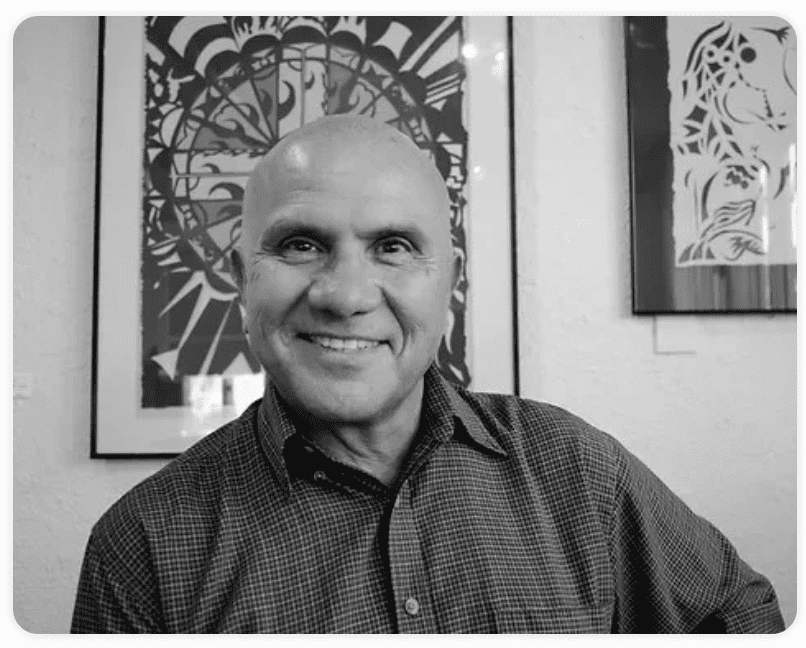
Tlacaelel trained in modern dance at the studios of Paul Sanasardo, Martha Graham, and May O'Donnell. He credits the fluidity of his artwork to his years of dance training. He also performs a one-man stage production titled Yo Soy Joaquín, based on the epic poem by Rodolfo "Corky" Gonzales.
As a result of this performance, Tlacaelel met and befriended one of the leading figures of the Chicano Civil Rights Movement, Enriqueta Vásquez. At age 95, she continues to be a beacon of hope for the Chicano community and has recently been recognized by the Taos News. Tlacaelel draws inspiration from Enriqueta's lifelong commitment to justice and continues to advocate for truth and social justice through his art.
In July 2026, his work will be exhibited in Santa Fe and Española, New Mexico. Of his lifelong dedication to art, he says:
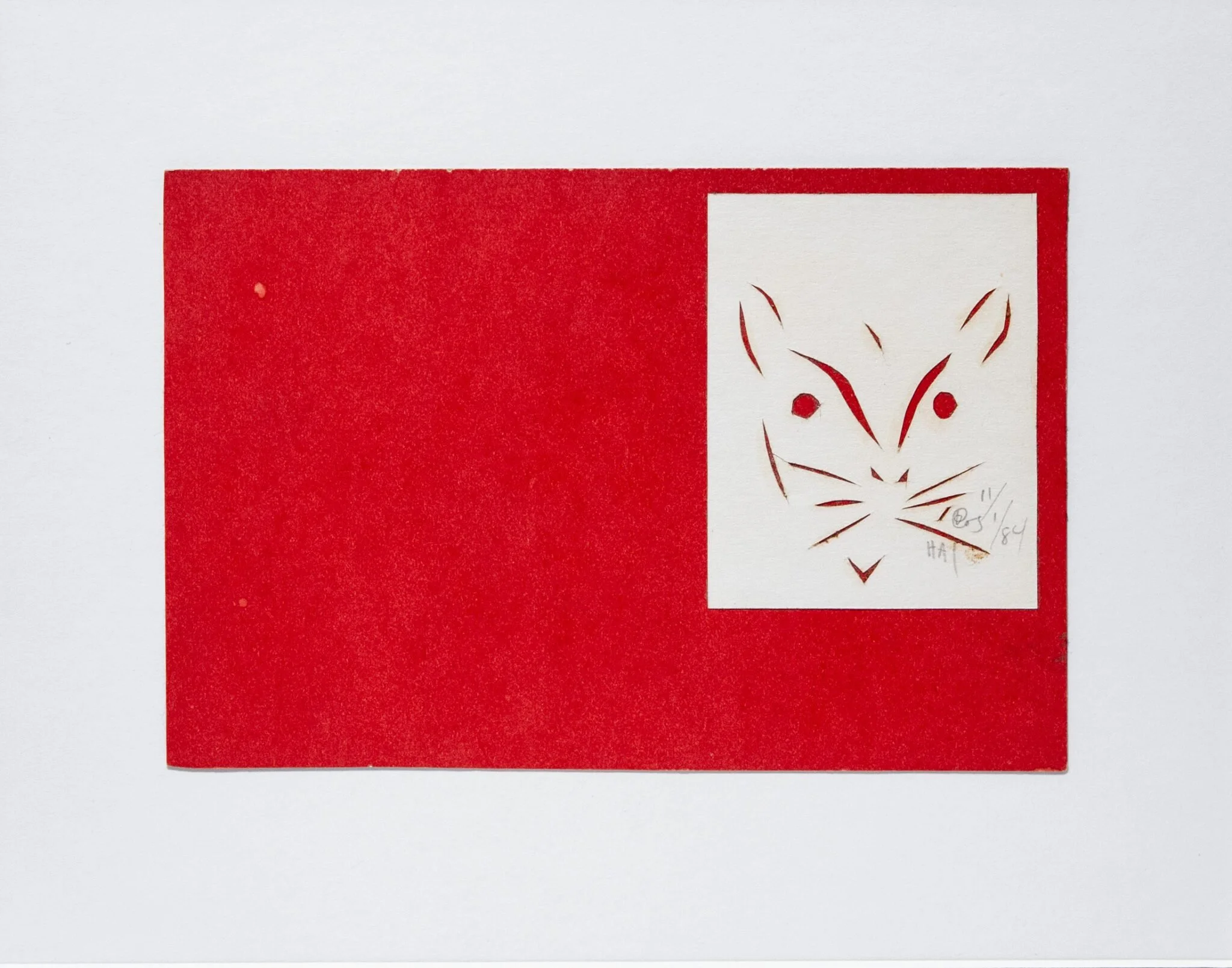
"I will do art until the day, like a little church mouse, they pick me up by the tail and put me to rest."
What is your background and how did you start your journey in the art world?
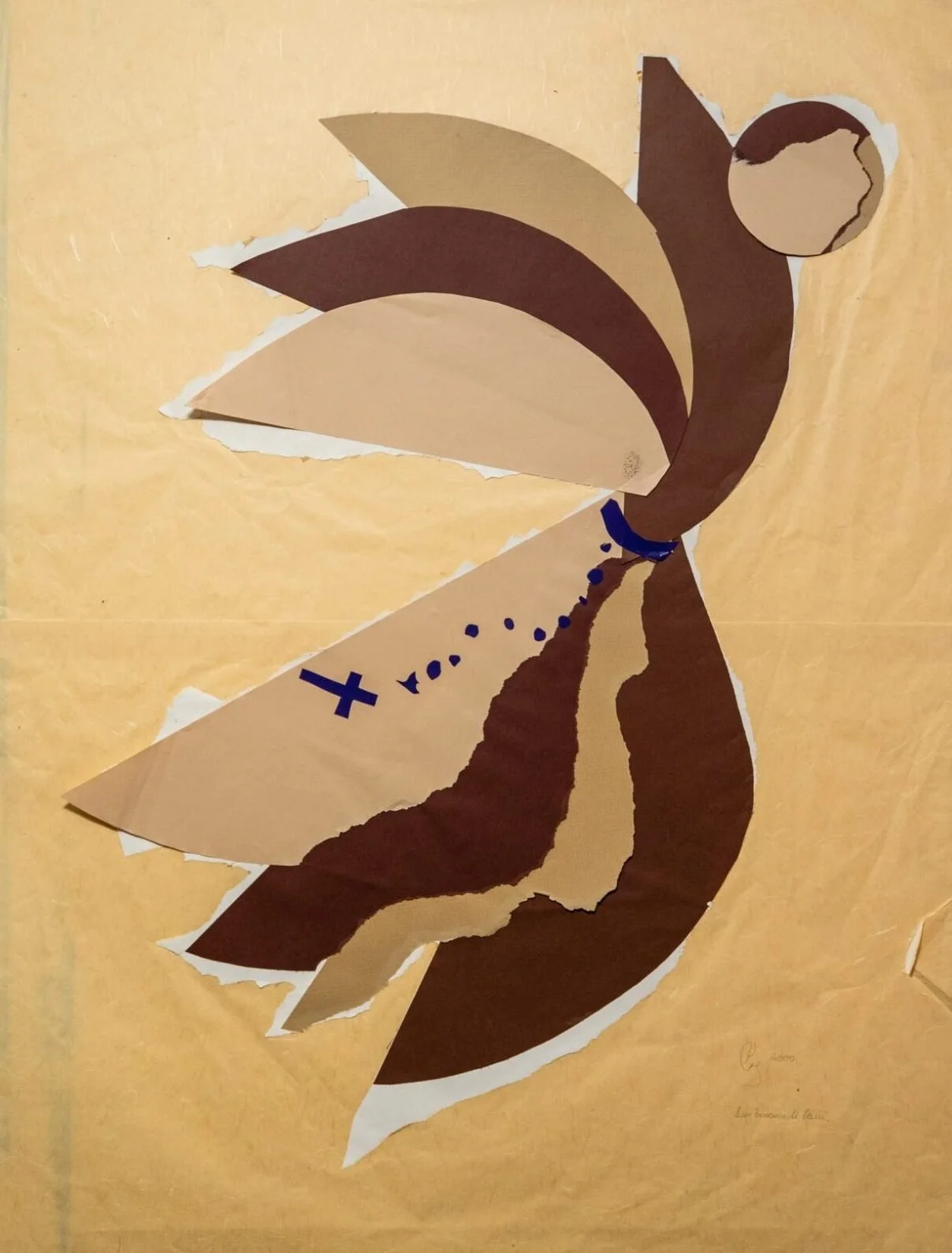
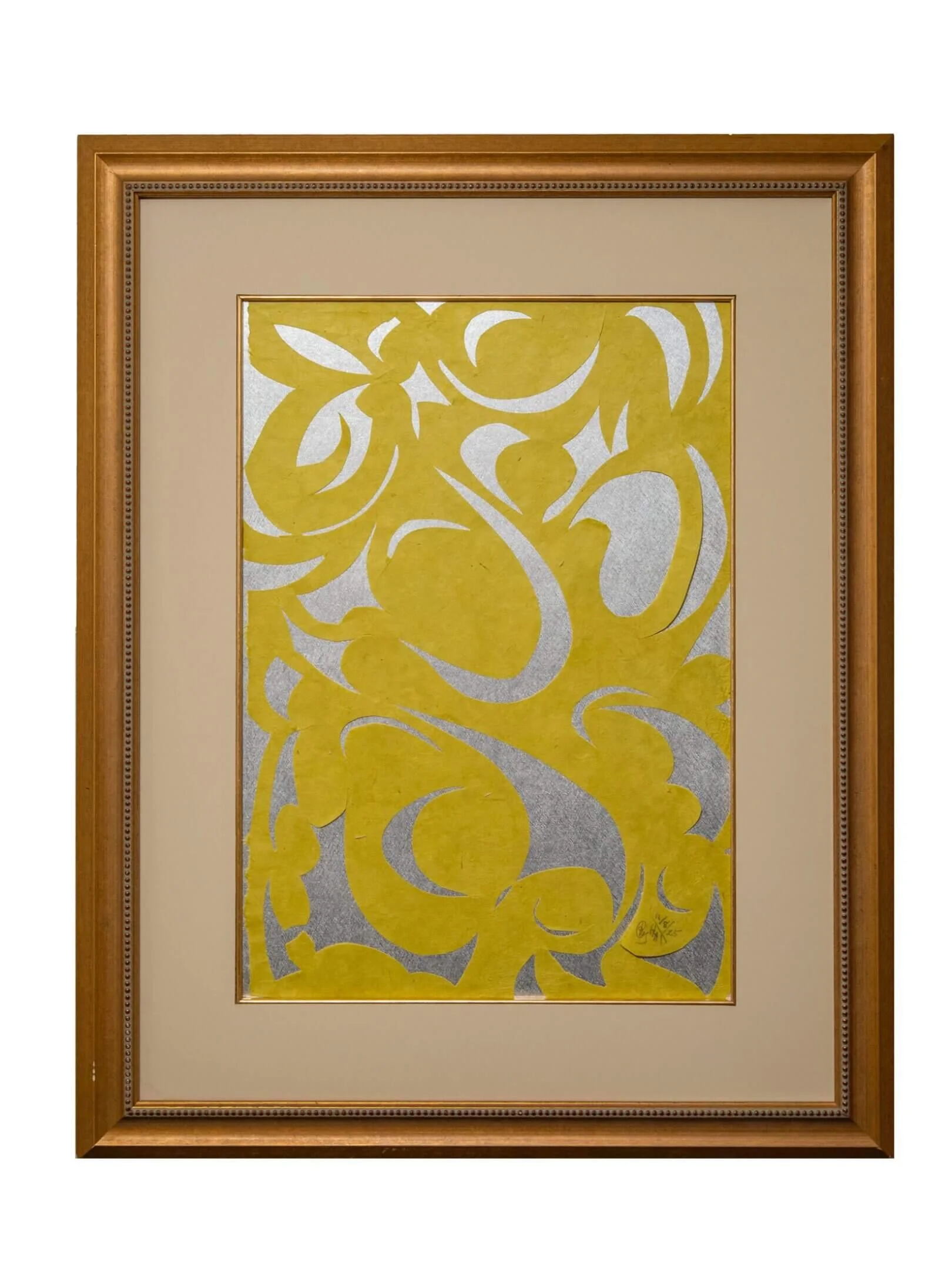
“Growing up in the Southwestern United States as a Mexican-American/Chicano has been both a blessing and a curse. It has been a blessing because, as young as five years old, I became enamored with colored construction paper and the feeling of cutting it with scissors. Today, at 68, paper cutting remains my primary medium of expression. Paper is accessible, sustainable, and comes in countless colors and textures.
It never occurred to me that I was an artist. But as people began responding positively to my work, telling me how much they enjoyed it, I started to think, 'I guess I am an artist.'
The curse is that there are still people who judge me, my culture, and my language. I can't change that, but I can use my art to reflect the beauty of who my people are and where we come from.
For me, cutting paper is my meditation, my prayer, and my refuge during both difficult and joyful times. From those first days of cutting paper to the mature work I create today, my art has been exhibited in galleries, restaurants, and museums. At this stage of my life, I know I will always cut paper, and I will continue sharing it with those who connect with what I create. My journey as an artist is to make art for art's sake and to find joy in the creative process.”
What does your work aim to say? Does it comment on any current social or political issues?
“The current political climate in the United States leaves much to be desired. While I recognize that people around the world experience discrimination and prejudice, my art serves as an expression of my pride, my identity, and my presence.
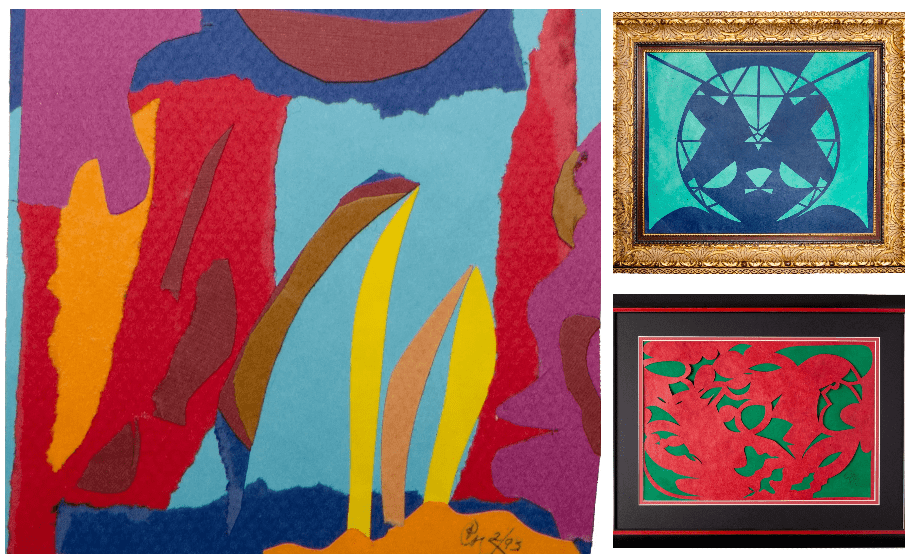
My work is primarily abstract, although it contains subtle references to current events. One only has to look carefully to discover what is hidden within each piece. Most of my works remain untitled because I don't want to direct the viewer toward a specific interpretation. I enjoy hearing what people discover in the work. Often, they point out images or meanings that I never consciously intended, and I find that fascinating.”
Do you plan your work in advance, or is it improvisation?
“I don't typically talk about my work or its process becuase people will begin a conversation as they get engaged by the work. If I start to tell people about my work I feel like I am trying to sell them on the work, or convince one why my art is viable. People who see, and appreciate my work won't need to be ‘sold’ on it. As I begin a new work of art, I don't intend to start out with a particular image or message. Like a jazz musician, I just start cutting paper, and allow one shape, or cut, to influence the next, much like a jazz musician allows one chord or scale to influence another chord or scale. As the work progresses it begins to take on a life of its own, it has a personality. Many artists create art based on an idea, a theme, or a preconceived message or image. My work is almost always improvisational, spur of the moment, or serendipitous. Working that way gives me a sense of adventure, curiosity, or excitment about how the work will turen out. There are many artists who paint with an intention, I tend to cut paper with a feeling. That works for me.”
Are there any art world trends you are following?
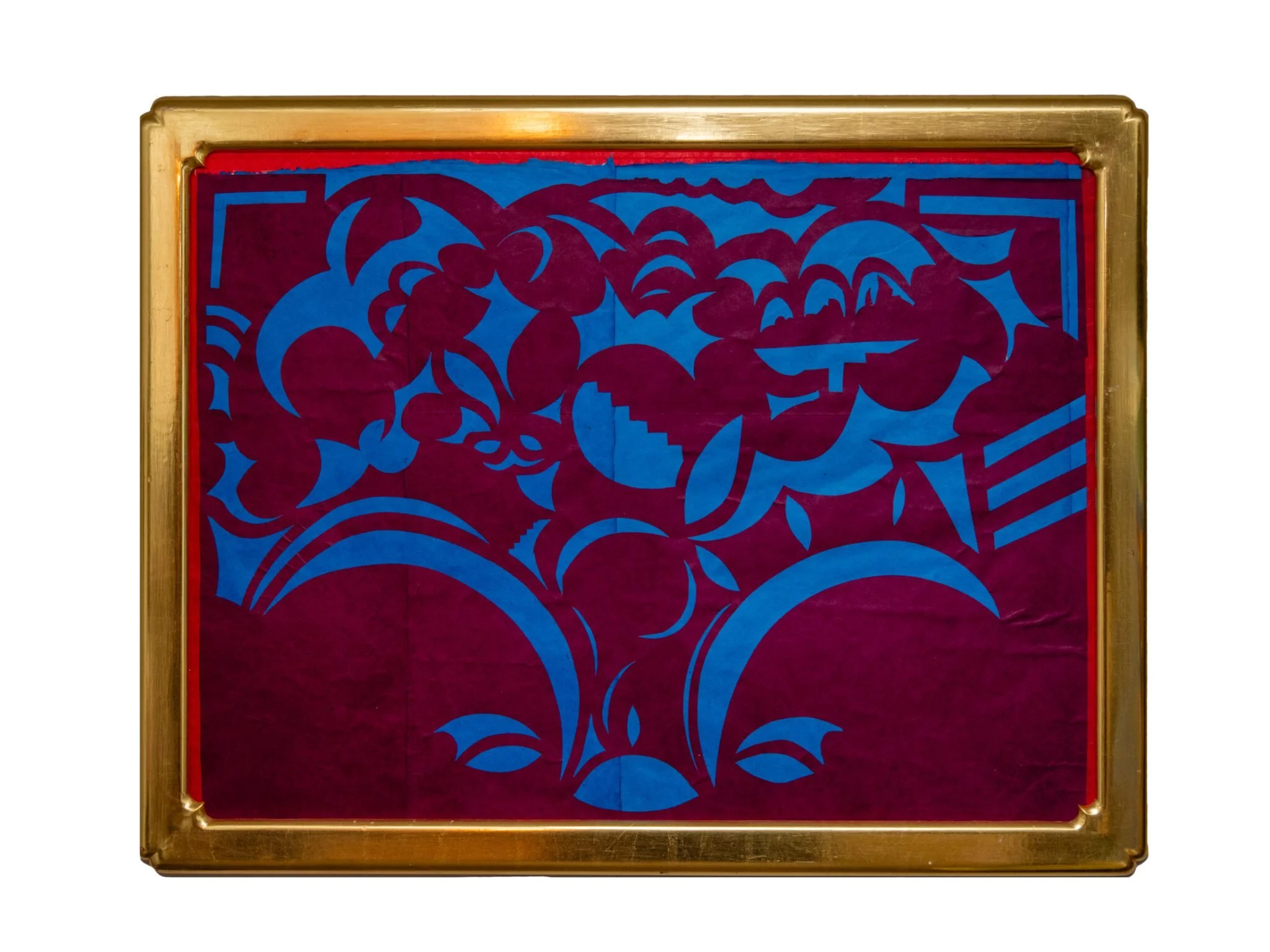
“Lately, I've been thinking about picture frames related to artwork. In our contemporary times artists frame works in simple linear aluminum frames. I have considered the idea of framing new works in ornate vintage frames. How can a vintage frame enhance or influence a contemporary work. This July 2026, I will be presenting my work at Art Santa Fe, in Santa Fe, New Mexico. Art Santa Fe is a art fair that brings people to New Mexcio from all over the world, this includes artists from around the world as well. This will be my third censecutive year participating in the fair and it is interesting to see the mayriad of artists and techniques and mediums employed for making art, and how they present it. This year I may go with ornate vintage frames for presenting my cut paper work. It will be interesting to see what kind of response is generated by having new work in old frames. Who knows, maybe I'll start a trend.”
What process, materials and techniques do you use to create your artwork?
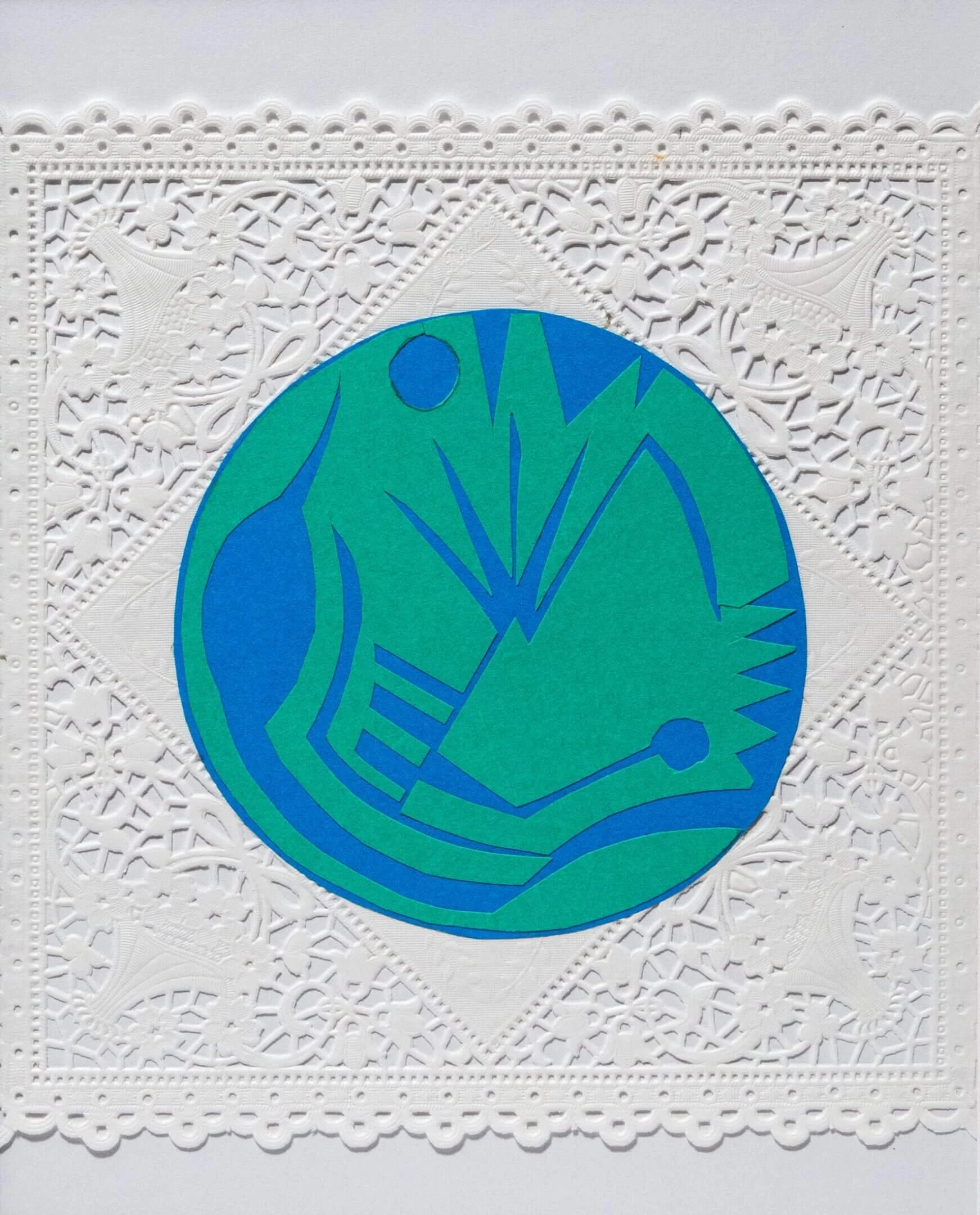
“The Mexican tradition of cutting tissue paper (papel picado) is a tradition I grew up knowing about. It was always fun to see sheets of cut tissue paper strung at parties, festivals and celebrations. The cut tissue paper often depicts images of skeletons on bicycles, playing instruments, dancing, and images of flowers and birds. This tradition of papel picado brings a festive and joyous ambiance to any gathering where people are festive. I always knew I wanted to do cut paper, but I wanted to do my own brand, my own interpretation, my own mindset. There are many artists who do a traditional images of still life, ipressionistic works, or depiction of the human body. For me, the goal is to start cutting paper, at random to see where the final product leads. Seldom to I preconceive of what is to come out of the finished art piece. My tools are paper, lately the paper I use comes from the Lokta bush. The paper is handmade in Nepal and has a texture that is durable and easy to cut. I enjoy using paper because it is sustainable, accessible and comes in many colors and textures.”
What does your art mean to you?
“When creating art, I feel like I am engaged in a prayer, a dance or a ceremony. Cutting paper is my way of dealing with the uncertainties of the current climate in the United States, on which my people resided for hundreds of years before the colonizer arrived. My people grew out of the earth of this part of the world. It's painful when immigrants from Europe tell me to go back to where I came from. This is where I came from, and unlike Europeans, I did not come to a new land that I claim as my own, telling the original inhabitants to leave. This new administration has normalized hate, discrimination and mistruths. My work is my way of finding peace, serenity and harmony in a world that is troubled, at war, and in competition to see who is going to ‘win!’ In my world of art, I am the winner because it it mine, it is of my devising, and in that I don't need to compete, I don't need what others have, nor do I want what others have. Like the song says: ‘God bless the child that can say, ‘I got my own.’ My art is my own, it is a reflection of myself and all that I know and love; my Chicano people. My roots go deep and my art is a reflection of my roots. In a way, like the Lokta bush of Nepal, the branches are my roots, and the leaves are my daily struggles, joys and prayers.”
What’s your favourite artwork and why?
“I don't have a particular favorite work, but I have a work that stands out among them all. The work is titled Ventana Rosa, or Rose Window, because it was recently acquired by the Millicent Rogers Museum in Taos, New Mexico. What artist would not be thrilled to be able to say that their work is in a permanant collection of a Museum. I am also gratified to know that the Millicent Rogers Museum is in an area of the country where my roots are, the southwest. I am proud of my people, my roots, my history, my art. I hope my pride shows in the creativity and integrity of my art.”
Have you had any noteworthy exhibitions you'd like to share?
“About this time last year, I was asked to co-curate an exhibition, by the Millicent Rogers Museum, of Chicano artists from around New Mexico, a invite which I gladly accepted. The exhibition was titled CHICANAO! Caminos Distintos: Chicanao, different paths. The show included artists from around the state, and included artists living and deceased, and reflected the years from the 1970's to today. For me, what struck a note was, the reviewer who wrote a review stated: ‘There are some artists that shouldn't be included in the show.’ Considering again, what is going in in the country, with people being kidnapped off the streets, people being kidnapped from their jobs and homes, because of the sentiment that certain ethnic people need to be ‘kicked out of the country,’ The reviewer was expressing the same sentiments about Chicano artists. At the time we were organizing the exhibition, and Donald Trump was taking back grant money for the arts, a grant was taken back from the Millicent Rogers Museum. The administrative staff suggested we postpone the exhibition. I felt considering we are the targets of attack by the administration, my response was, ‘We need to have this show now more than ever.’ We proceeded with the exhibition and received varied responses to the show. For me, the idea was that we are here, this is the land of our birth and we will always be here. We can not allow the colonizer mentality to make us cower or fear the discrimination put on our people.”
Website: tlacaelelfuentes.com
Instagram: @tlacaelelfuentes
Other links: www.facebook.com/people/Tlacaelelfuentes