Interview
Andre Fila
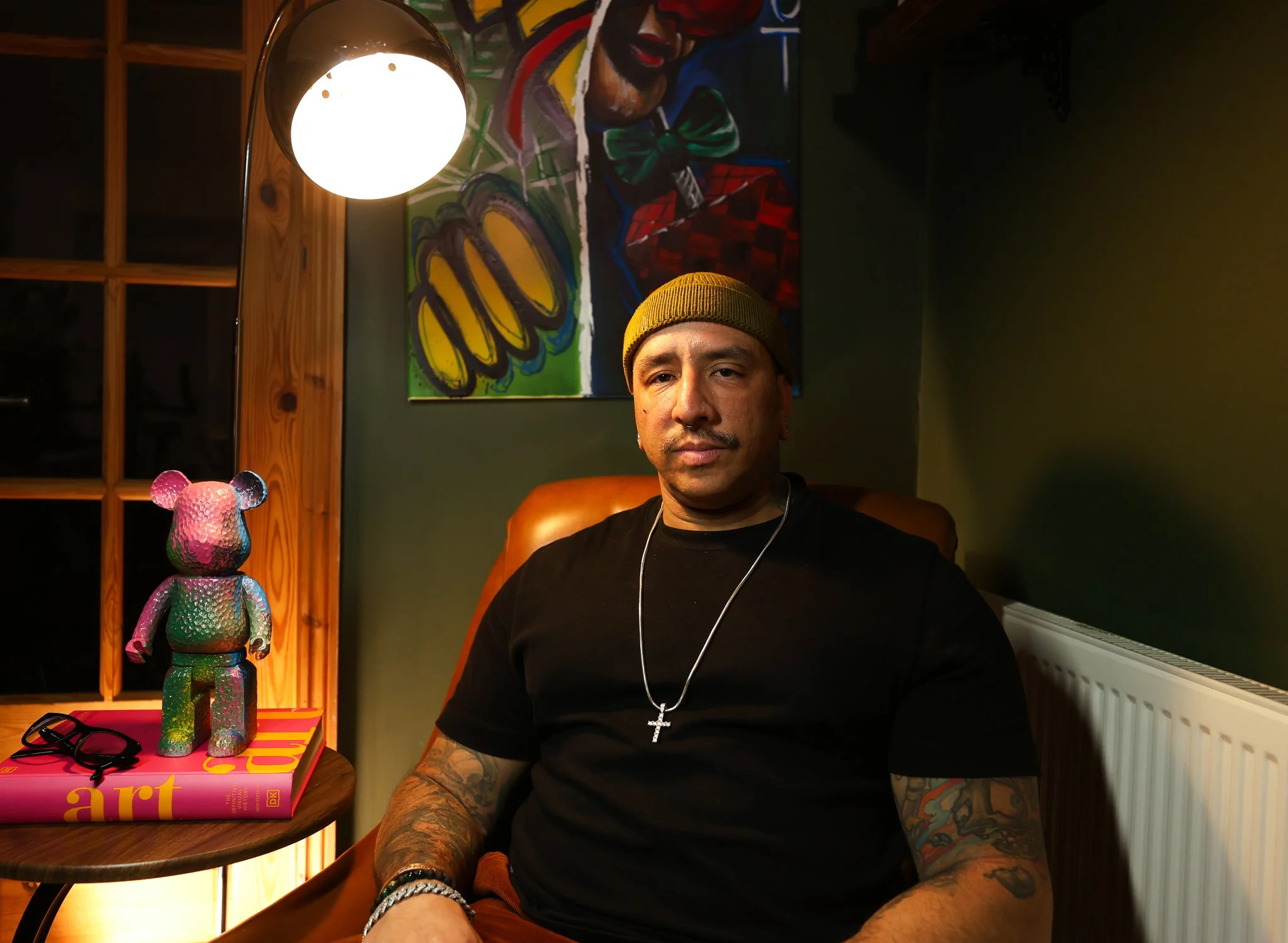
André Fila is a Brazilian contemporary artist whose work merges portraiture, urban influences, and symbolic characters to examine identity, perception, and the complexities of human nature. His paintings invite reflection on the realities that shape who we become.
What is your background and how did you start your journey in the art world?
“I was born in Brazil, and art has been part of my life for as long as I can remember. Growing up surrounded by street culture, graffiti, skateboarding, music, and visual expression had a profound influence on how I see the world. My journey as an artist began long before tattooing. I started by drawing and painting, exploring different surfaces and materials. In my early years, I painted shop signs, vehicles, motorcycles, helmets, murals, and canvas works. I was constantly looking for ways to create and develop my visual language. As my passion for art grew, I pursued formal studies in Fine Arts at university. It was during this period that I discovered tattooing. What initially caught my attention was the challenge of creating permanent artwork on the human body and the level of technical mastery it required.
Tattooing eventually became my primary professional focus, and over the years I dedicated myself to mastering realism, composition, and storytelling through skin. However, painting never disappeared from my life. It remained a fundamental part of who I am as an artist. Today, I balance both practices. Tattooing remains a central part of my creative life, while painting allows me to explore ideas, narratives, and emotions in a different way. Through my contemporary artworks, I combine influences from portraiture, street culture, graffiti, symbolism, and visual storytelling to explore themes of identity, dignity, human nature, and the tension between who we are and who we choose to present to the world.”
What inspires you?
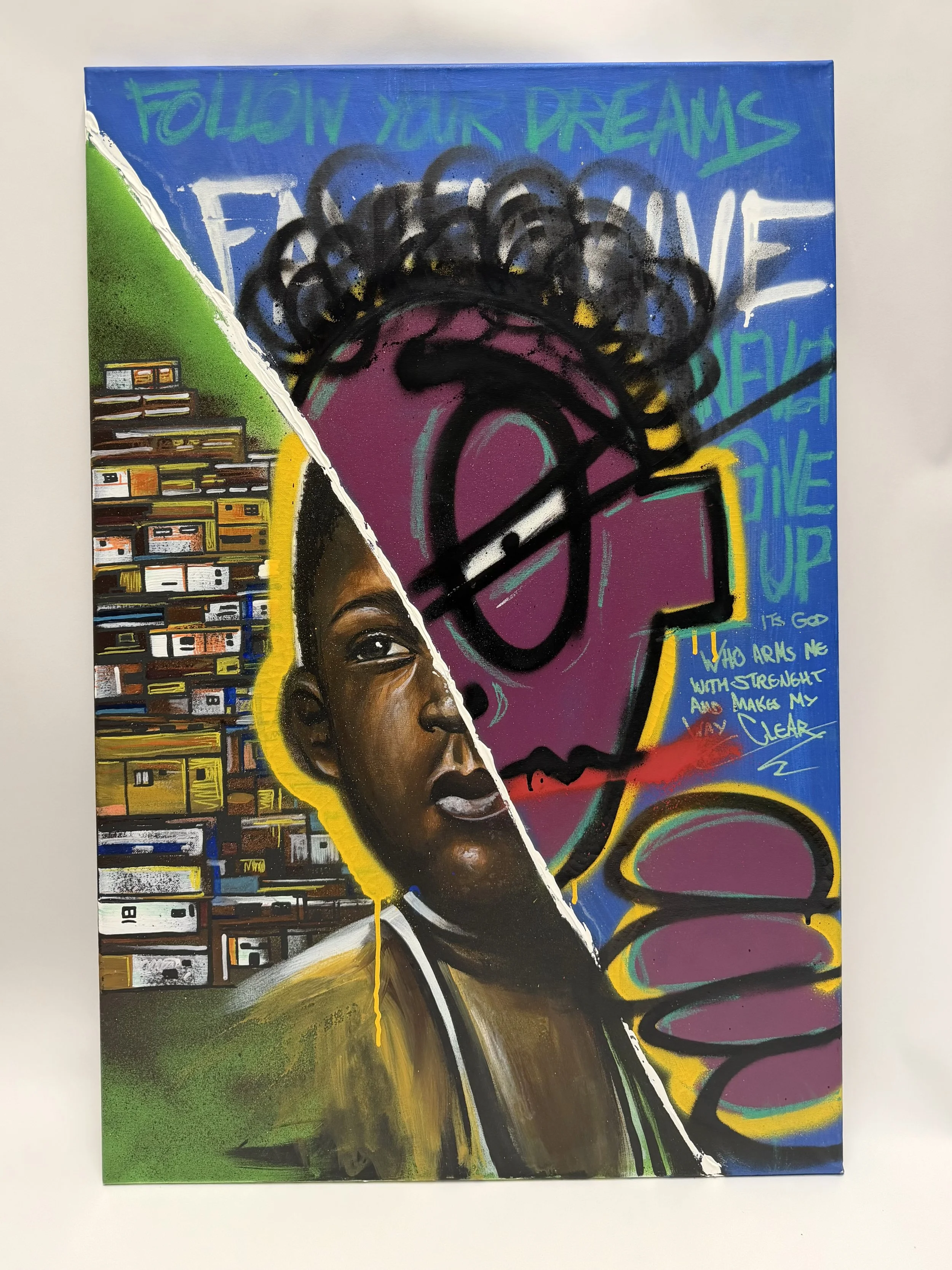
“I find inspiration in the world around me and in the human experience itself. My work is influenced by the places I have lived, the cultures I have encountered, the stories I have witnessed, and the realities that shape people’s lives. Growing up in Brazil and later building a life in the United Kingdom gave me different perspectives on society, identity, opportunity, struggle, and belonging. I am fascinated by how our backgrounds, environments, beliefs, successes, failures, and experiences influence who we become. The world constantly shapes us, and in many ways we learn to adapt by creating versions of ourselves that fit different situations and expectations. This idea often appears in my work through symbolic characters, masks, and visual contrasts. They represent the tension between our inner identity and the image we present to the outside world. I am also inspired by street culture, graffiti, music, faith, history, and the everyday moments that reveal something honest about human nature. Ultimately, my greatest inspiration comes from observing how people navigate the world and how the world, in return, shapes them.”
What themes do you pursue? Is there an underlying message in your work?
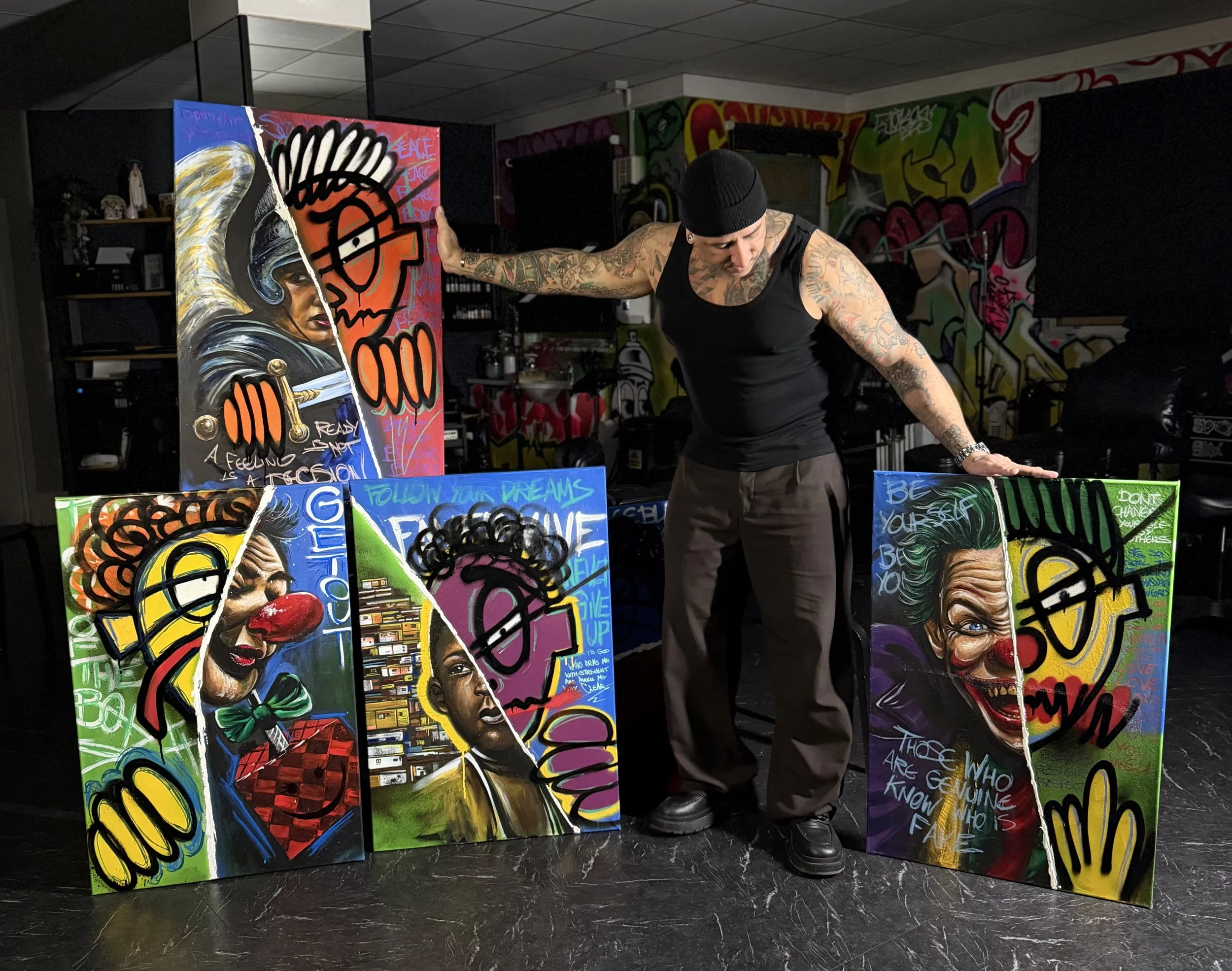
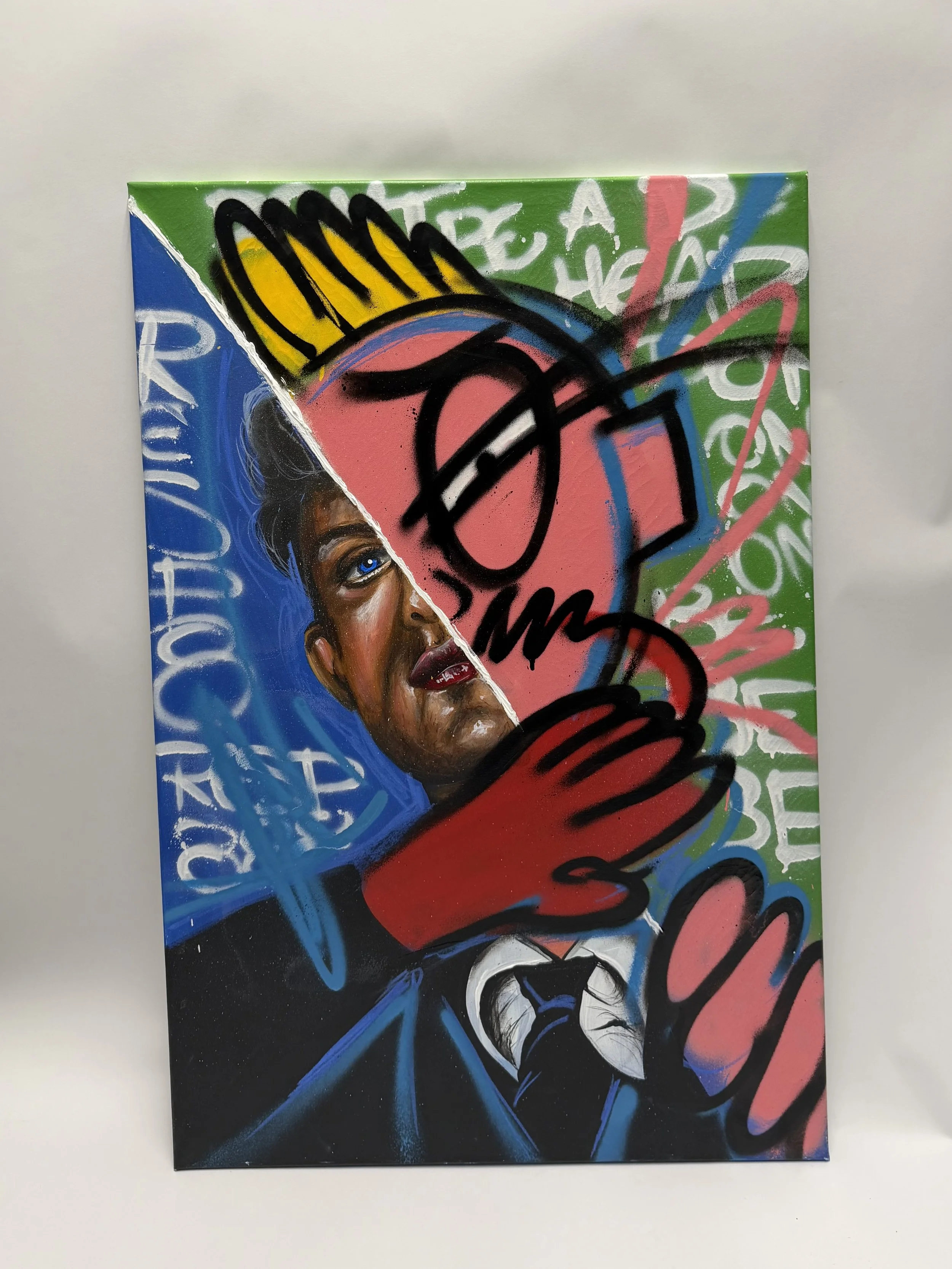
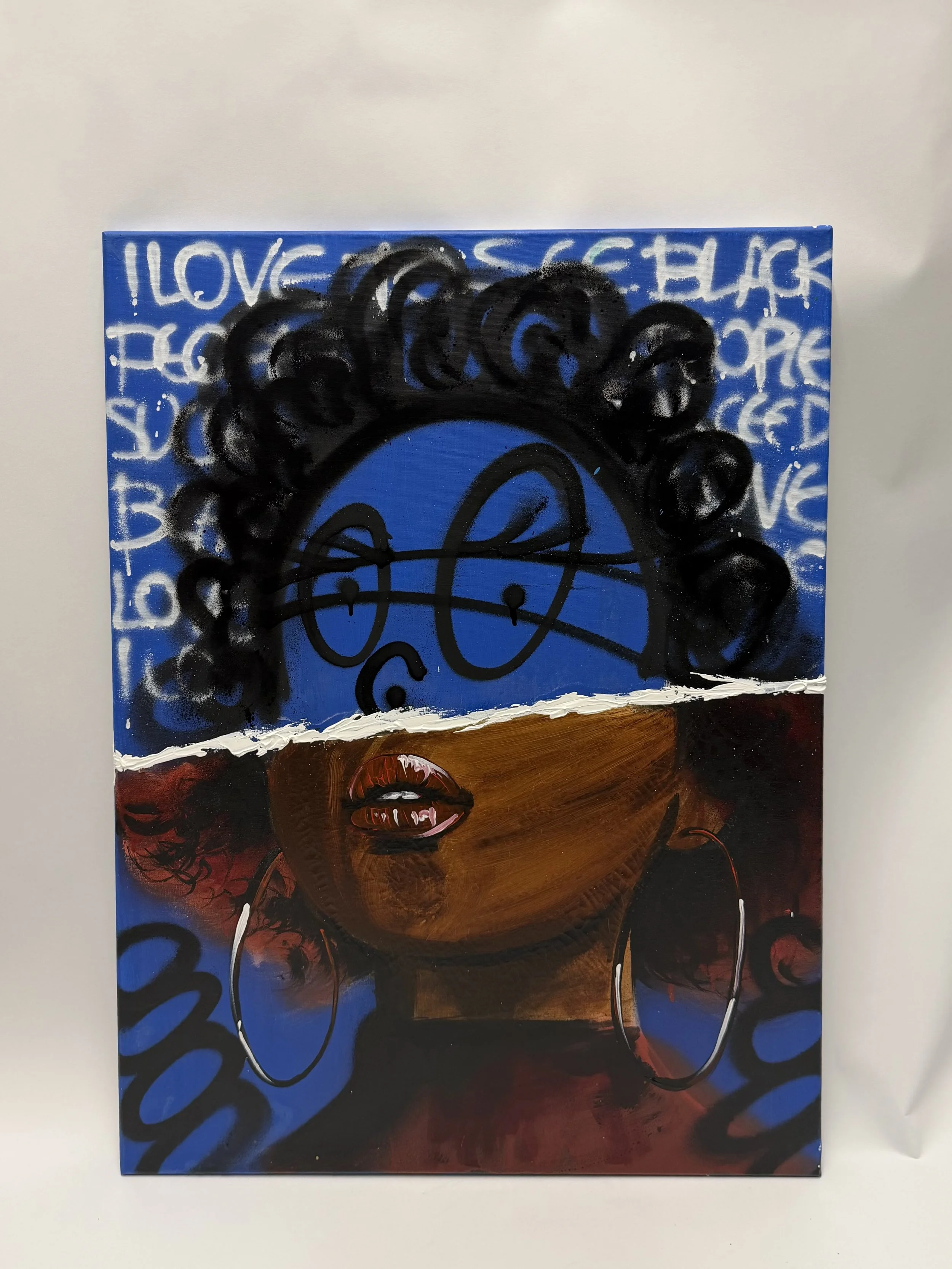
“Identity is probably the central theme throughout my work. I explore concepts such as dignity, authenticity, self-worth, social pressure, race, belonging, faith, resilience, and personal transformation. Many of my paintings examine the contrast between who we truly are and the versions of ourselves that we present to society. The symbolic characters that appear in my work often represent masks, personas, or emotional states. By combining these characters with realistic portraits, I try to create a dialogue between the external image and the internal reality. Rather than giving direct answers, I want viewers to reflect on their own experiences and question the narratives they accept about themselves and others.”
How would you describe your work?
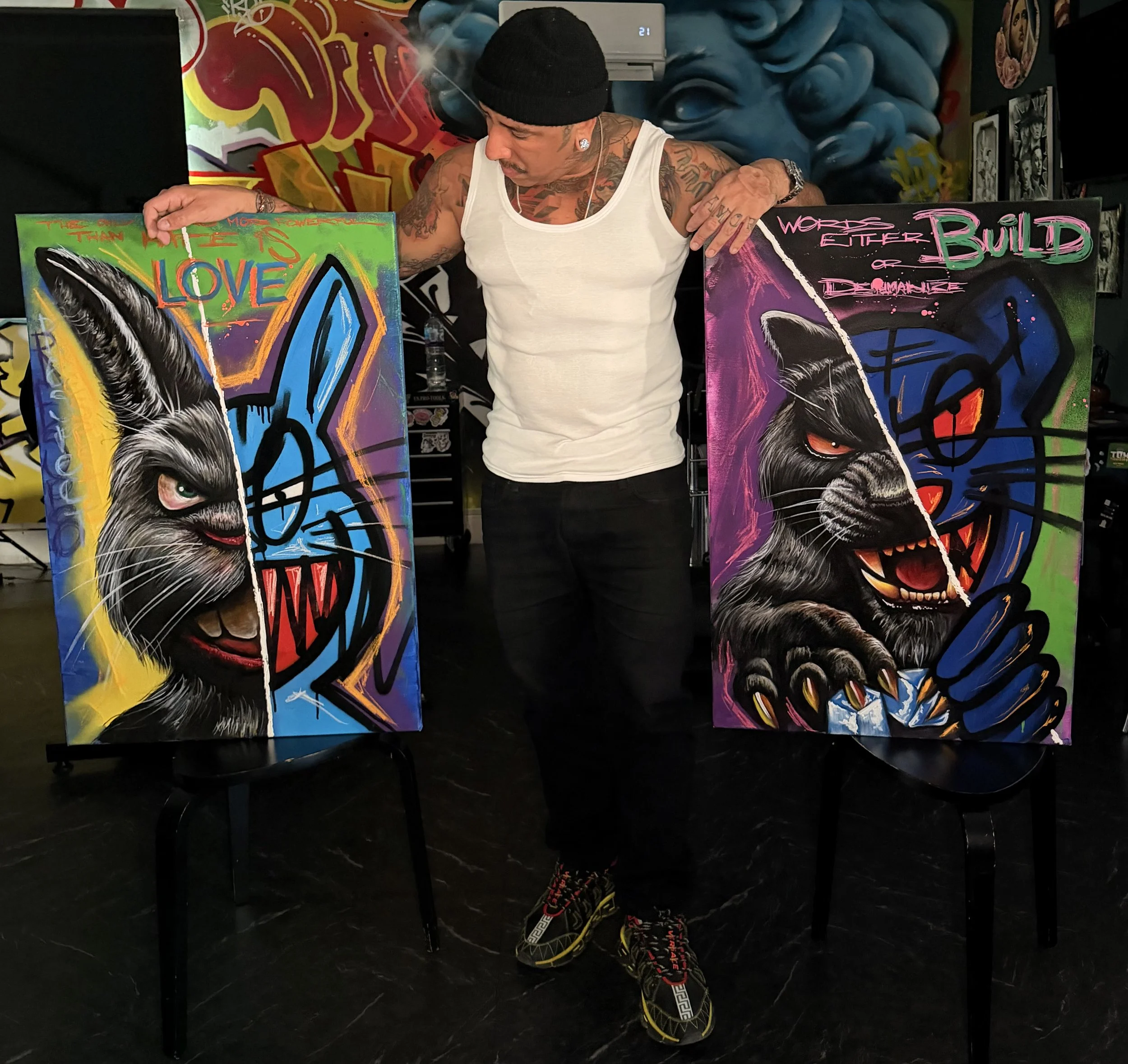
“My work sits somewhere between contemporary figurative painting, street art, and visual storytelling. I combine realistic portraiture with symbolic characters, graffiti-inspired elements, handwritten messages, and bold colour palettes. The result is a layered visual language that feels playful at first glance but often carries deeper emotional and social themes. I am interested in creating paintings that are visually accessible while still encouraging reflection. I want the work to communicate immediately, but reveal new meanings the longer someone spends with it.”
Which artists influence you most?
“Jean-Michel Basquiat has been a major influence because of his ability to combine raw energy with meaningful social commentary. Hirst annd Obey inspires me through his use of symbolism and visual communication. KAWS has influenced the way I think about characters and emotional connection, while Slawn has shown how contemporary street culture can evolve into a powerful artistic language. Beyond contemporary art, I am inspired by classical painters who mastered portraiture and storytelling. I admire artists who can create work that is both visually compelling and culturally relevant.”
What is your creative process like?
“Most of my ideas begin with observation. A conversation, a social issue, a personal experience, or even a phrase can trigger a concept. I usually start by writing thoughts and collecting visual references before creating sketches. From there, I develop the relationship between the realistic portrait and the symbolic character. The interaction between these two elements is often where the meaning of the work emerges. Although I plan the core concept carefully, I leave room for spontaneity during the painting process. Many of the written messages, marks, and graffiti-inspired elements develop organically as the piece evolves.”
What is an artist’s role in society and how do you see that evolving?
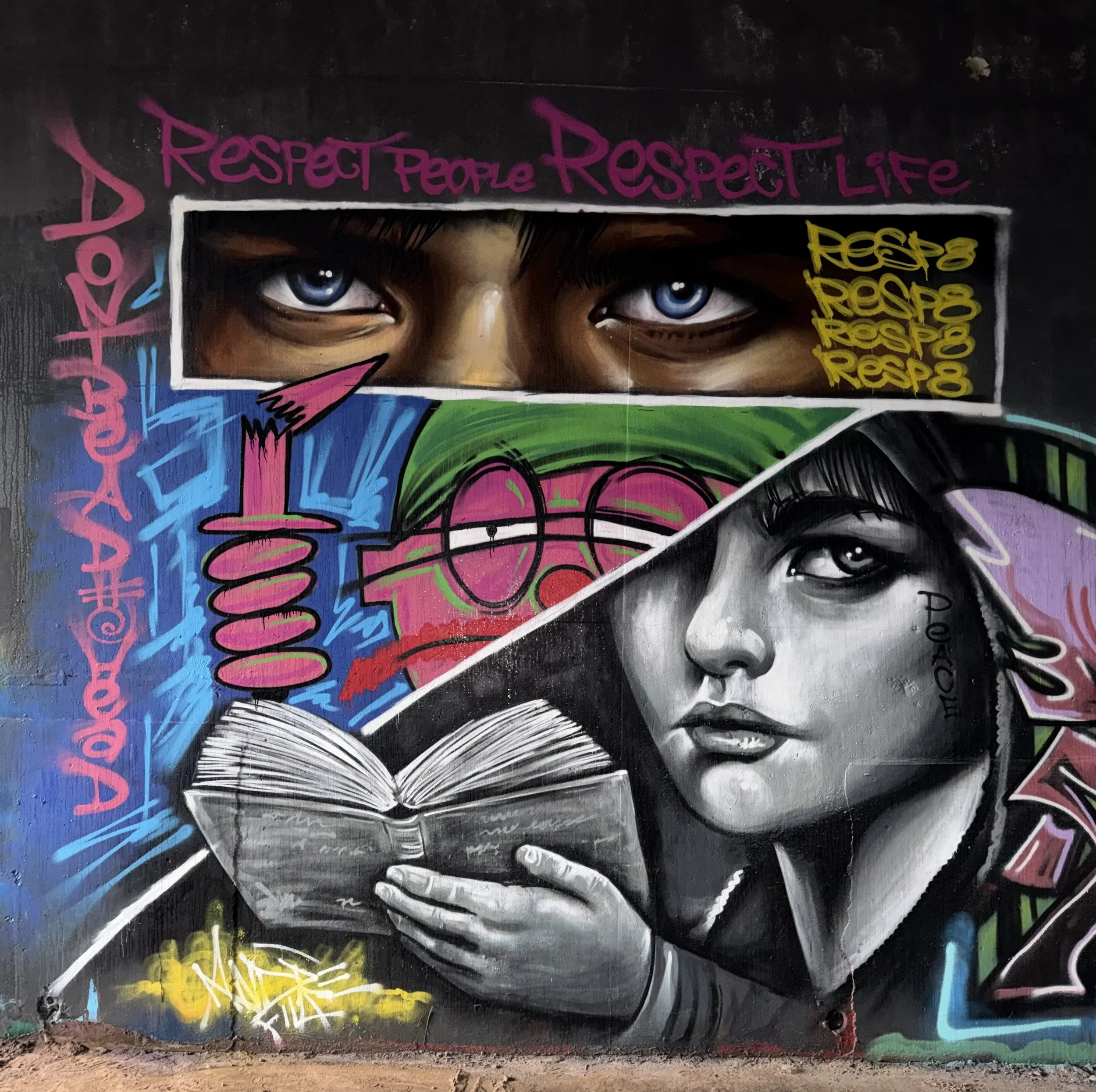
“I believe artists help society see itself more clearly. Art has the ability to challenge assumptions, preserve culture, create dialogue, and encourage empathy. In a world increasingly dominated by speed and distraction, artists can create moments of reflection. Today artists have more direct access to audiences than ever before, which creates both opportunities and challenges. While technology allows greater visibility, it also increases pressure to constantly produce content. For me, the responsibility remains the same: to create honest work that contributes something meaningful to the conversation.”
Have you had any noteworthy exhibitions you'd like to share?
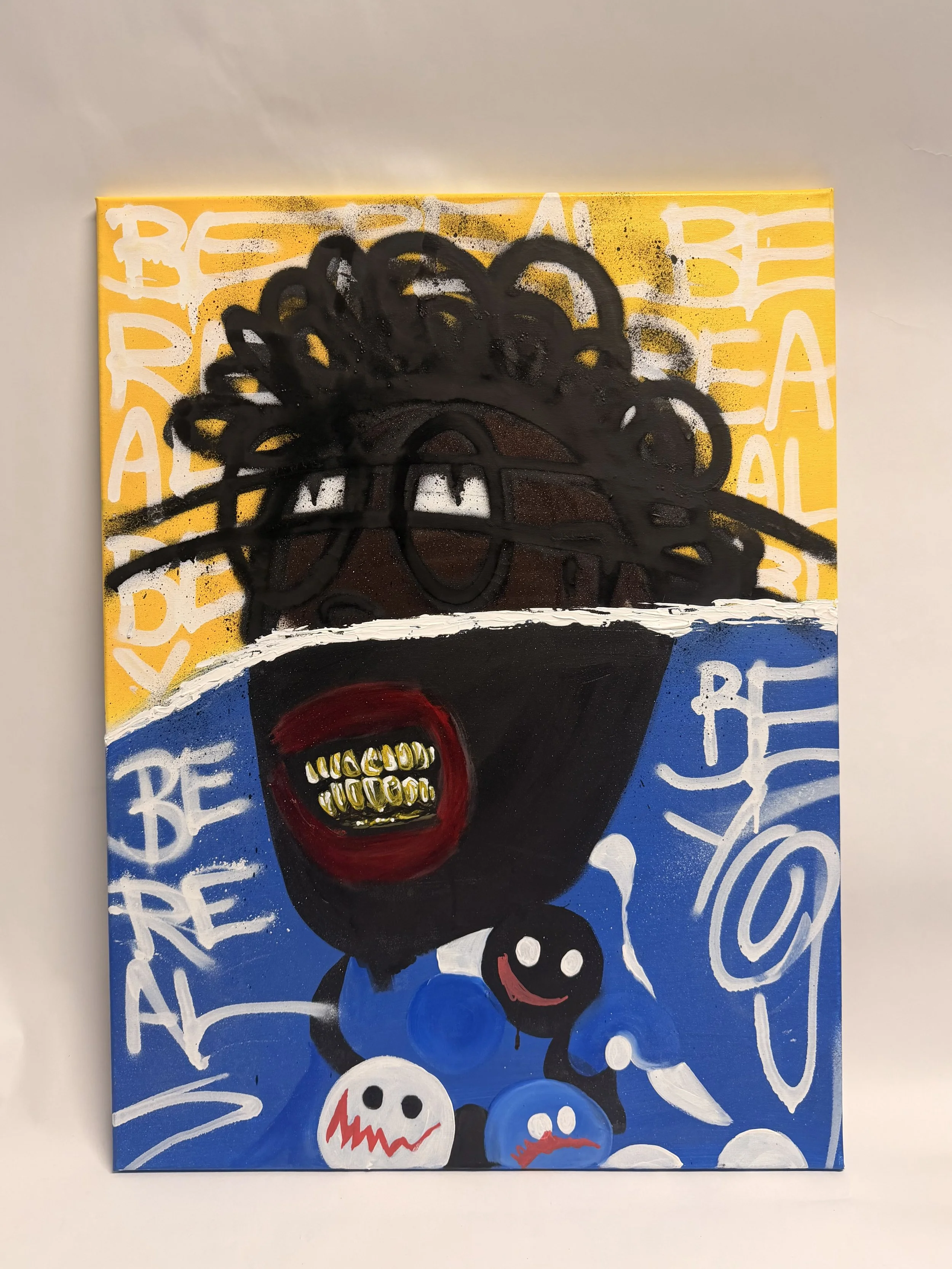
“Throughout my career I have had the opportunity to exhibit work internationally, including exhibitions in Brazil, Dubai, Paris, and London. Each exhibition has contributed to my development as an artist, but what has become most significant recently is the transition from exhibiting individual works to building cohesive collections with a clear conceptual direction. My current body of work focuses on identity, dignity, and the complexity of human experience. This evolution has allowed me to move beyond technical execution and place greater emphasis on narrative, symbolism, and emotional connection.”
Website: www.andrefila.com
Instagram: @andrefila_art