Interview
Nicholas Pelekis
Nicholas Pelekis (b. Athens, Greece) is an abstract expressionist painter based in Melbourne, Australia. Working primarily with acrylic on canvas, he is best known for exploring memory through colour, gesture, and texture. His paintings distil fragments of the past into layered abstractions, where shifting tones and marks create dialogues between personal and collective experiences, often blurring the boundary between the real and the imagined. Pelekis’s visual language is informed by a diverse creative background. He began his career in Europe as a designer and senior art director, developing an acute sensitivity to composition, rhythm, and form across international campaigns. His experience in design continues to underpin his methodical approach to colour and structure on the canvas. Parallel to his practice, Pelekis has spent over a decade teaching design and art history—first in Asia, later in Australia—where he now balances education with his own studio work.
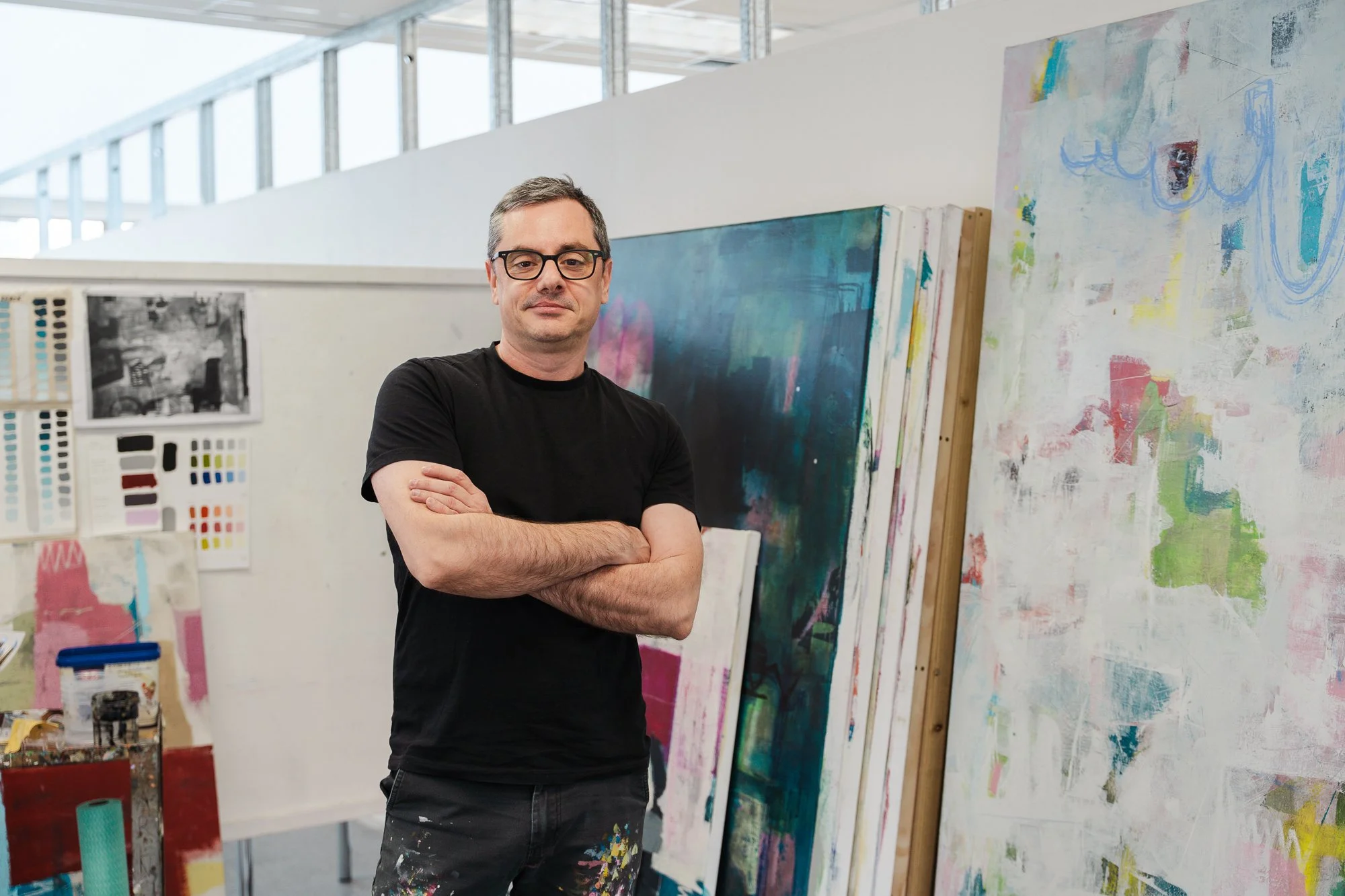
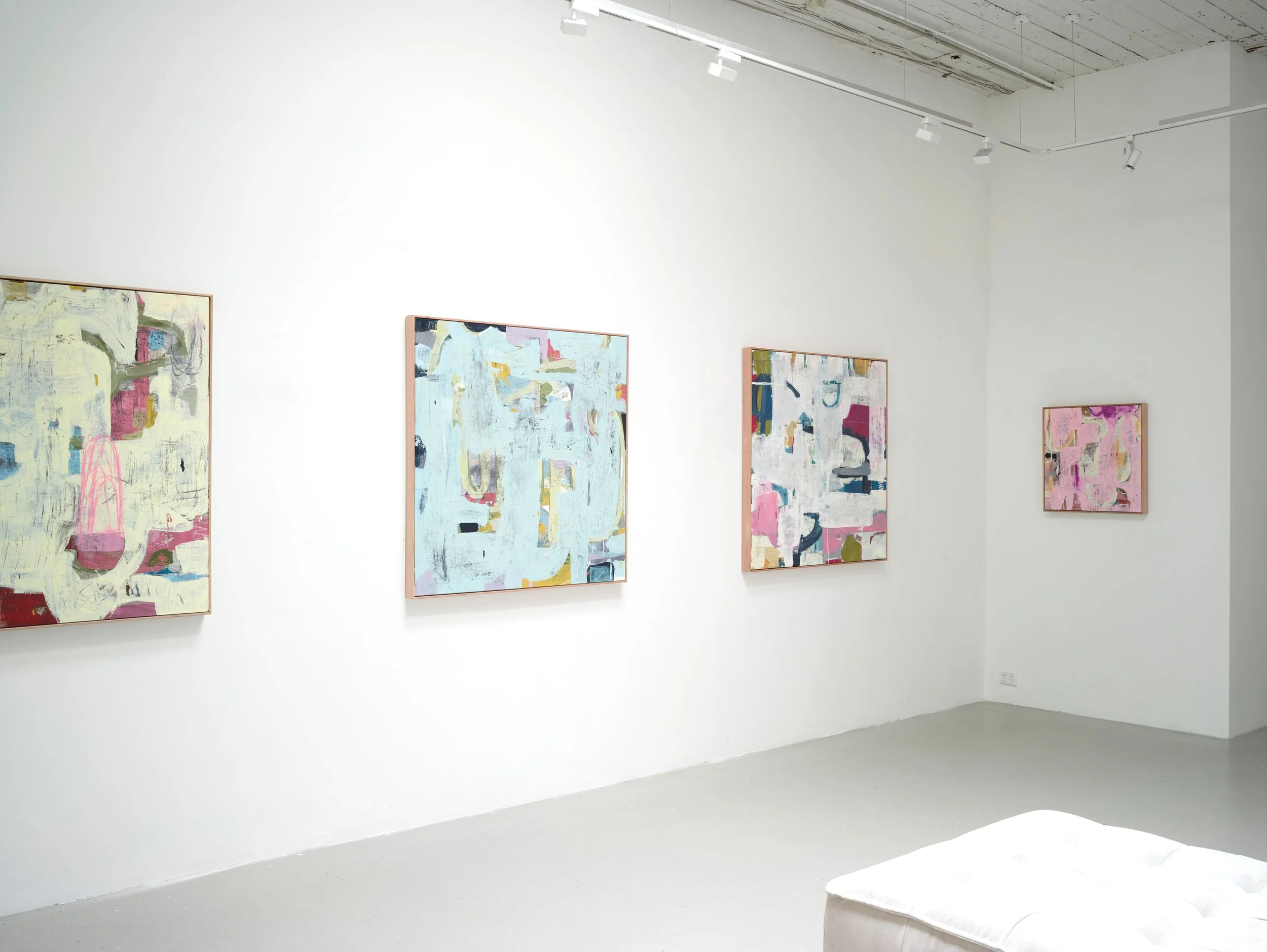
He holds a Master’s degree in Design (Contemporary Art), which deepens the conceptual foundations of his practice. His work has been exhibited nationally, with notable presentations at Brunswick Street Gallery and Red Gallery in Melbourne, and Liverpool Street Gallery and Light Square Gallery in Adelaide. Through abstraction, Pelekis invites viewers to consider memory not as fact, but as shifting narrative.
What is your background and how did you start your journey in the art world?
“I was born in Athens, Greece, but grew up between Greece and Australia, so I was always moving between different environments and ways of seeing. My early connection to art came through school, where a few teachers encouraged me to explore it more seriously. I later studied visual communication in Australia, which gave me a strong grounding in design and composition. After graduating, I worked as a graphic designer and eventually as a senior art director in Europe. Over time, I became a little disillusioned with the pace and constraints of working in design studios and advertising agencies, which then led me to shift into teaching. I spent close to a decade teaching design in Asia, an experience that added another layer to how I think about practice and process. At the same time, I found myself drawn back to visual arts and painting as something more open and less defined than commercial work. It allowed me to explore ideas in a way that felt more intuitive and less outcome-driven. That shift eventually led me to complete a Master’s in Design and Contemporary Art, and since then my focus has been on developing a studio-based painting practice.”
What inspires you?
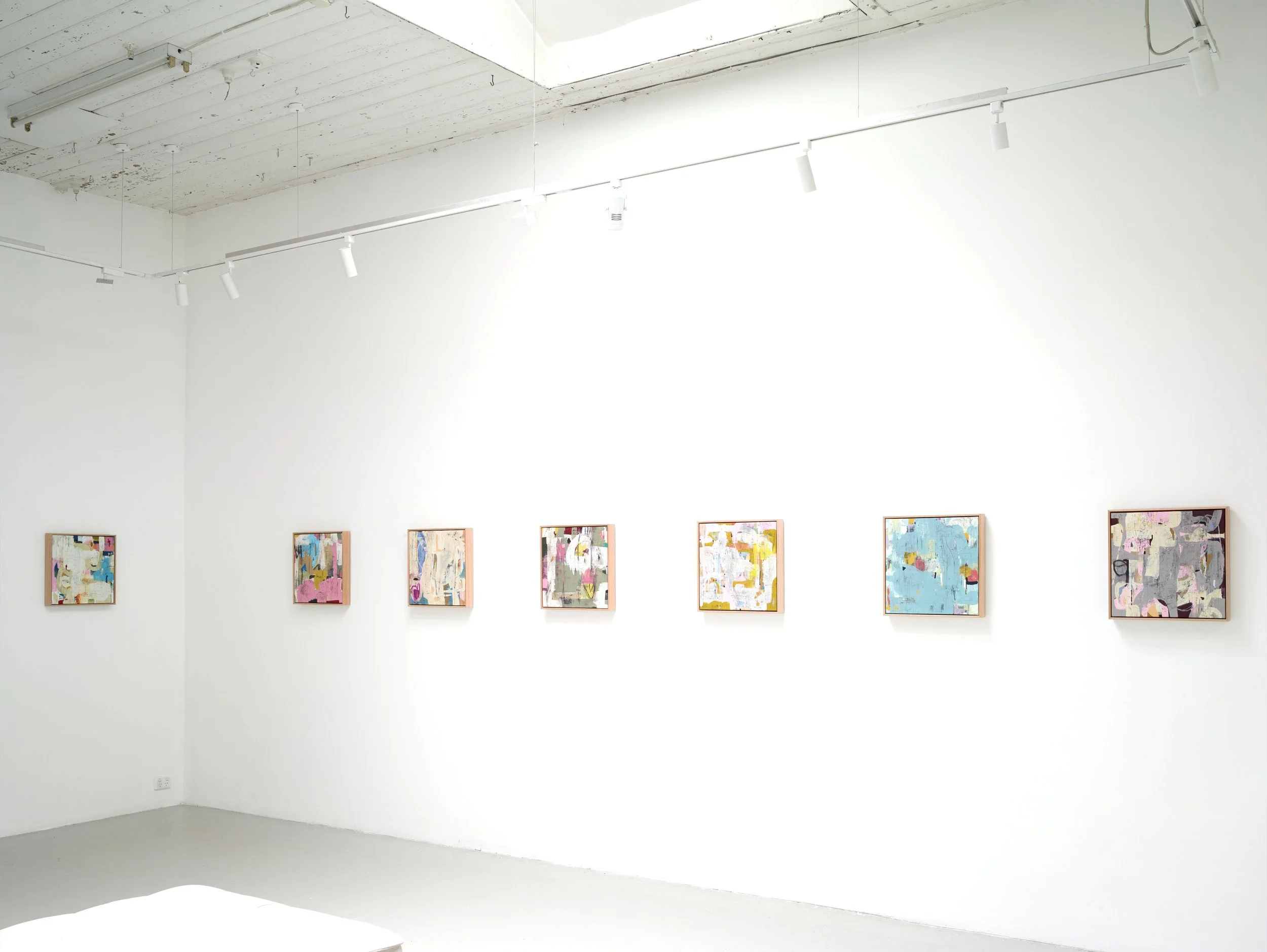
“A lot of my inspiration comes from memory, lived experience, and a sense of nostalgia—how moments stay with us, but never in a fixed or reliable way. I’m interested in how memories shift over time, becoming fragmented, layered, or slightly altered each time we revisit them. My inspiration is often quite unconventional in that it can come from very small, everyday details that people tend to overlook—subtle colour combinations, textures, or fleeting moments. Those fragments tend to stay with me and later resurface in the studio, not as direct representations, but as impressions that evolve through the painting process. In that sense, inspiration isn’t something I look for in a specific place. It’s more about collecting these quiet observations over time and allowing them to filter through the work in a way that feels intuitive and open-ended.”
What themes do you pursue? Is there an underlying message in your work?
“Much of my work centres around the theme of memory and the idea that it is not fixed or reliable, but something that shifts and evolves over time. I’m interested in how we reconstruct the past, how certain details are preserved while others fade, distort, or become reimagined altogether. That sense of instability sits at the core of my work. I don’t approach memory in a figurative way or try to recreate a specific scene. Instead, I use colour as the primary language to explore and represent those experiences. Through colour, the work becomes quite personal—at times even a little secretive—because it doesn’t point to a single, recognisable image or narrative. At the same time, that openness allows the viewer to experience the work on their own terms. They might respond to the shapes, colour, or texture without needing to decode a specific meaning, and that’s important to me. There isn’t a single prescribed message, but rather an invitation to reflect and form individual connections, so the meaning continues to shift depending on who is looking and what they bring to it.”
How would you describe your work?
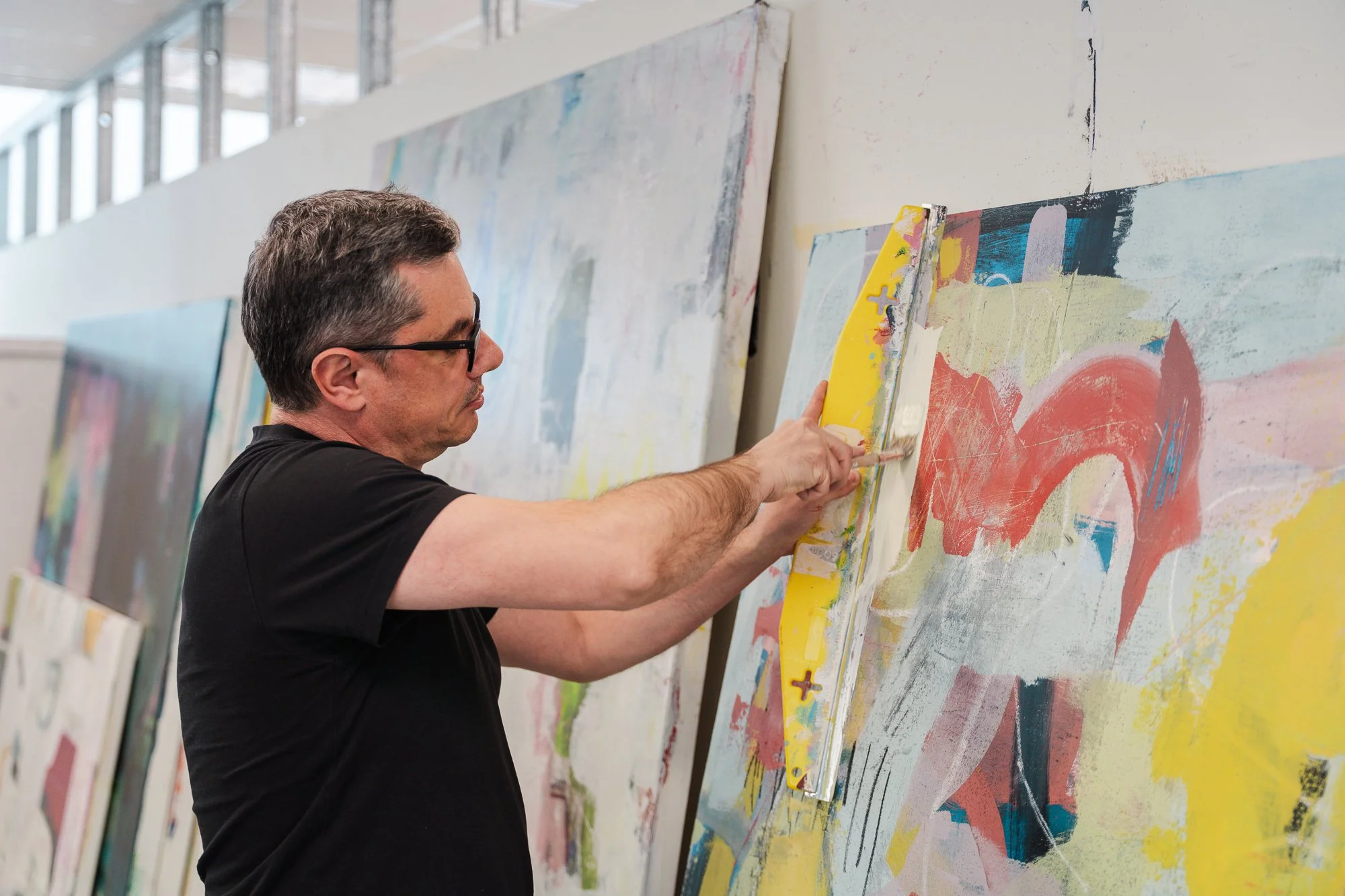
“I would describe my work as abstract, layered, and at times intentionally chaotic, but always held together through a considered use of colour and composition. There’s a constant tension between control and spontaneity—moments where the work feels loose and expressive, balanced by more deliberate decisions that bring it back into focus. Colour, shape and texture play a central role in that process. It’s not only a visual element, but also a way of structuring the work and guiding how it unfolds. The surfaces are built up over time through layers, adjustments, and revisions, allowing the painting to develop in a way that feels both intuitive and resolved. My background in graphic design continues to influence how I approach composition, balance, and visual clarity. Even in the more chaotic passages, there’s an underlying awareness of structure that comes from years of working in design. That combination of discipline and freedom is what ultimately defines the work.”
Which artists influence you most?
“I wouldn’t say I follow specific artists in a fixed or consistent way. My influences tend to shift over time, depending on what I’m exploring in the studio. I don’t approach it in a way where I closely track or study particular artists long-term—it’s more fluid than that. That said, there are artists whose work I find myself returning to at different points. Amy Clark, David Collins, Nicholas Wilton, and Michael Cusack are all artists I’m drawn to for different reasons, particularly in the way they approach colour, composition, and surface. Lottie Consalvo is probably the one artist I come back to the most. There’s a video of her speaking about her process that I find quite mesmerising—it’s not just the work itself, but the way she thinks through painting that resonates. It reflects a kind of clarity and sensitivity that I find both grounding and inspiring.”
What is your creative process like?
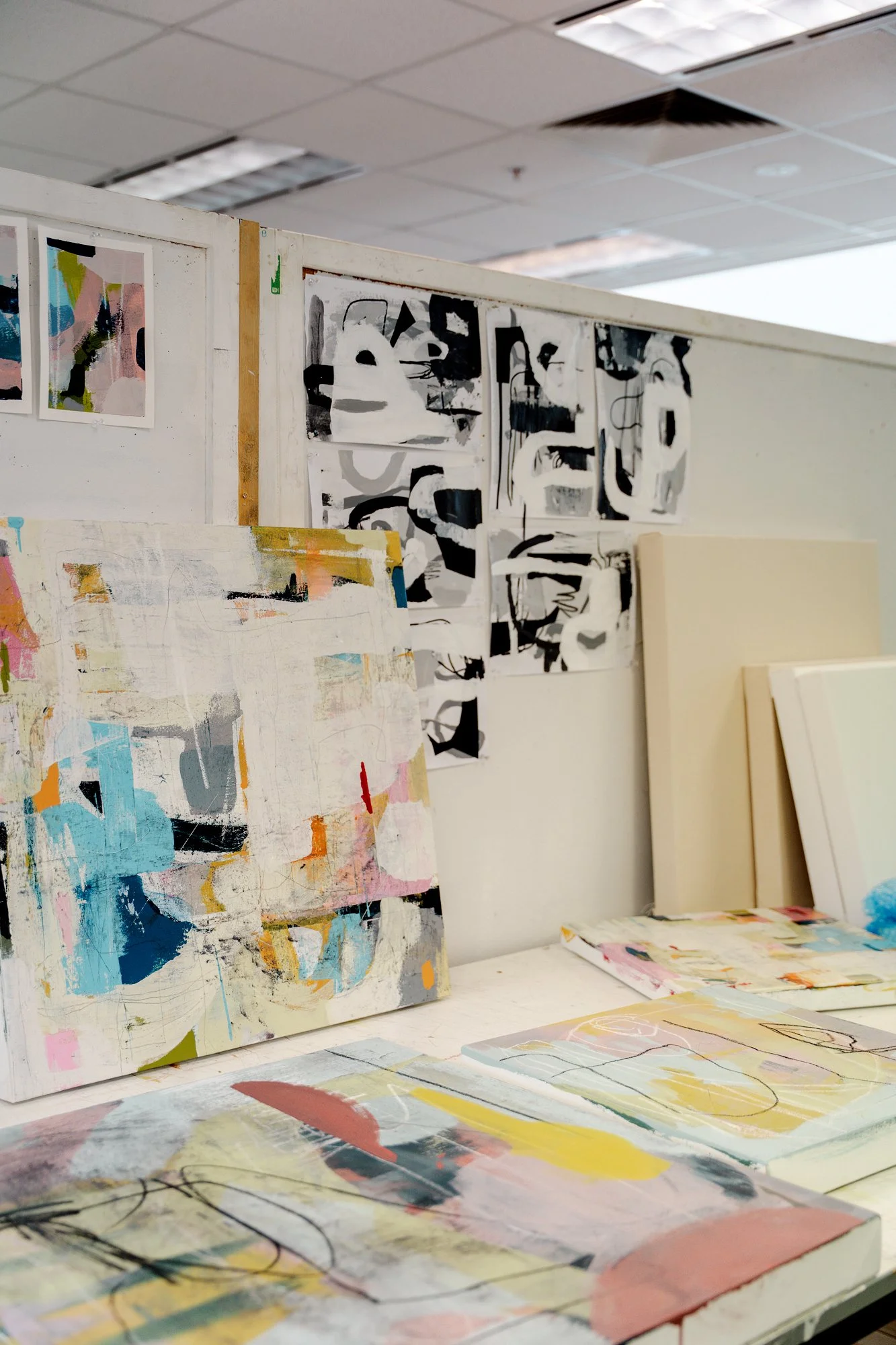
“My process usually begins in a very methodical way before gradually shifting into something more intuitive. Because colour plays such a central role in my work, I often start with a particular memory and try to distil it into a limited palette of around five colours. That number isn’t arbitrary—it’s a way of keeping the process focused. If I give myself too many options, it can quickly lead to overthinking or hesitation, so the restriction becomes a way of moving forward with clarity. Once I’ve identified those colours, I begin working with them quite deliberately. I create them from scratch using primary colours rather than relying on premixed paints, which allows me to understand exactly how each colour is constructed. From there, I break them down into tones, values, and shades, testing different combinations and relationships. This stage is quite analytical, but it gives me a strong foundation to work from and ensures that the painting develops with a sense of cohesion. Over time, this approach has evolved into a kind of personal archive of colour references—almost like building my own set of colour ‘recipes’ that I can revisit and refine. After that, the process becomes much more intuitive. With a memory still loosely in mind, I begin to build the painting through layers—introducing shapes, textures, and marks, and responding to what starts to emerge on the surface. At this point, the work moves away from anything fixed or predetermined and becomes more about instinct and reaction. There’s a constant back and forth of adding and subtracting, covering and revealing, until the painting reaches a point where it feels resolved.”
What is an artist’s role in society and how do you see that evolving?
“I see the role of an artist as both a storyteller and a reflector of the times they live in. Artists have the ability to respond to the current condition of society—sometimes directly, sometimes more subtly—by translating experiences, tensions, and ideas into a visual language. That doesn’t always mean making overt statements, but rather creating work that captures something of the atmosphere or underlying mood of a particular moment. At the same time, I think artists offer an alternative way of seeing. In a world that is often fast-paced and information-driven, art can slow things down and create space for reflection. It allows for ambiguity, for multiple interpretations, and for a more personal engagement that isn’t always possible in other forms of communication. As things continue to evolve, especially with the influence of technology and the way we consume images, I think the role of the artist becomes even more important. There’s a constant stream of content, but not always depth. Artists have the opportunity to cut through that by creating work that encourages people to pause, look more closely, and engage on a deeper level.”
Have you had any noteworthy exhibitions you'd like to share?
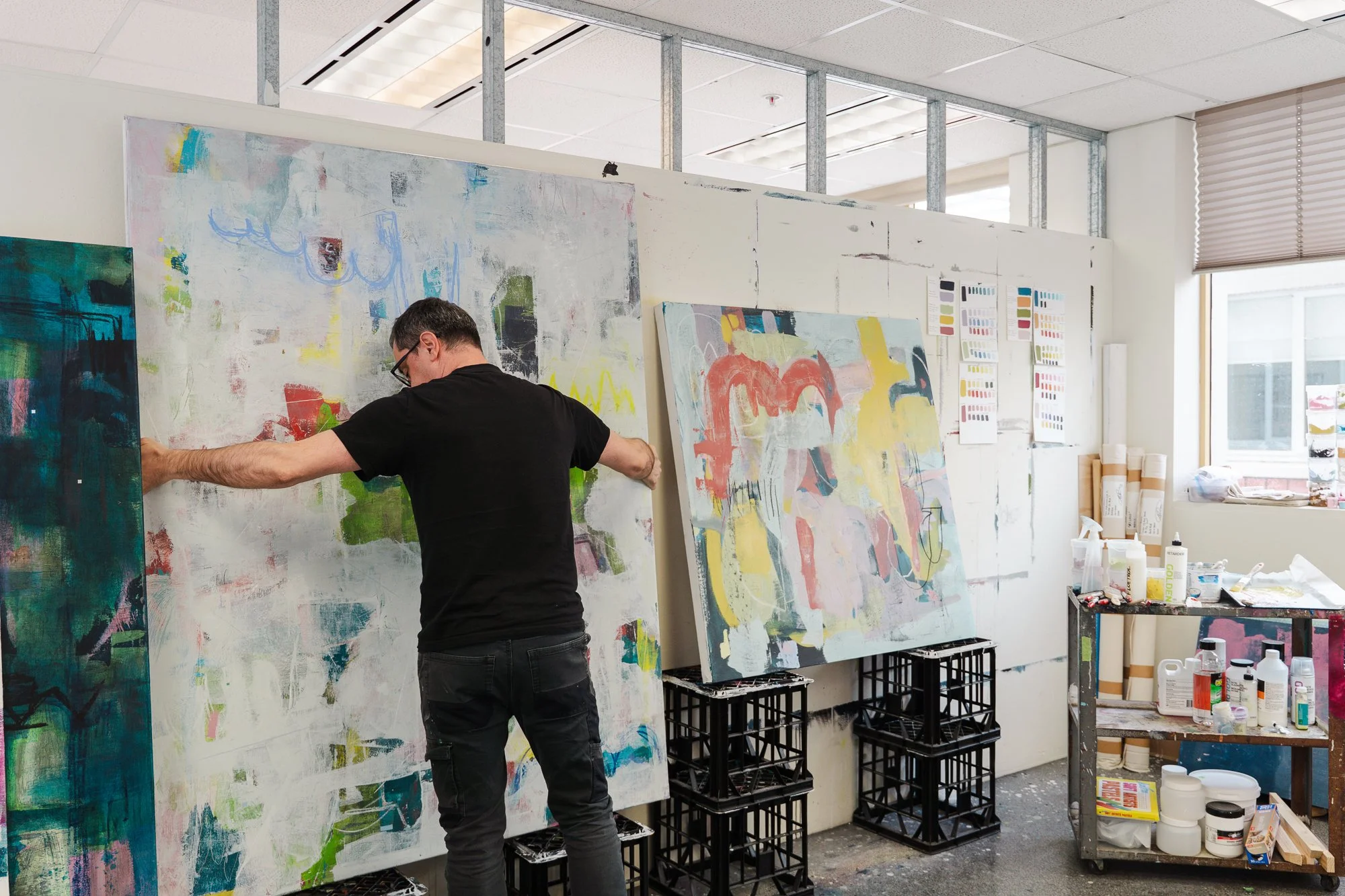
“Last year, I was fortunate to exhibit in a number of group shows across Melbourne, Sydney, and Adelaide, which has been an important part of developing my practice and connecting with different audiences. I also presented a solo exhibition at the end of 2025, which marked a significant step in bringing together a more cohesive body of work. At the moment, I’m preparing new body of work for a gallery and it will be presented at the Affordable Art Fair in Melbourne, which is an exciting opportunity to reach a broader audience.”