Interview
Lorelle Rau
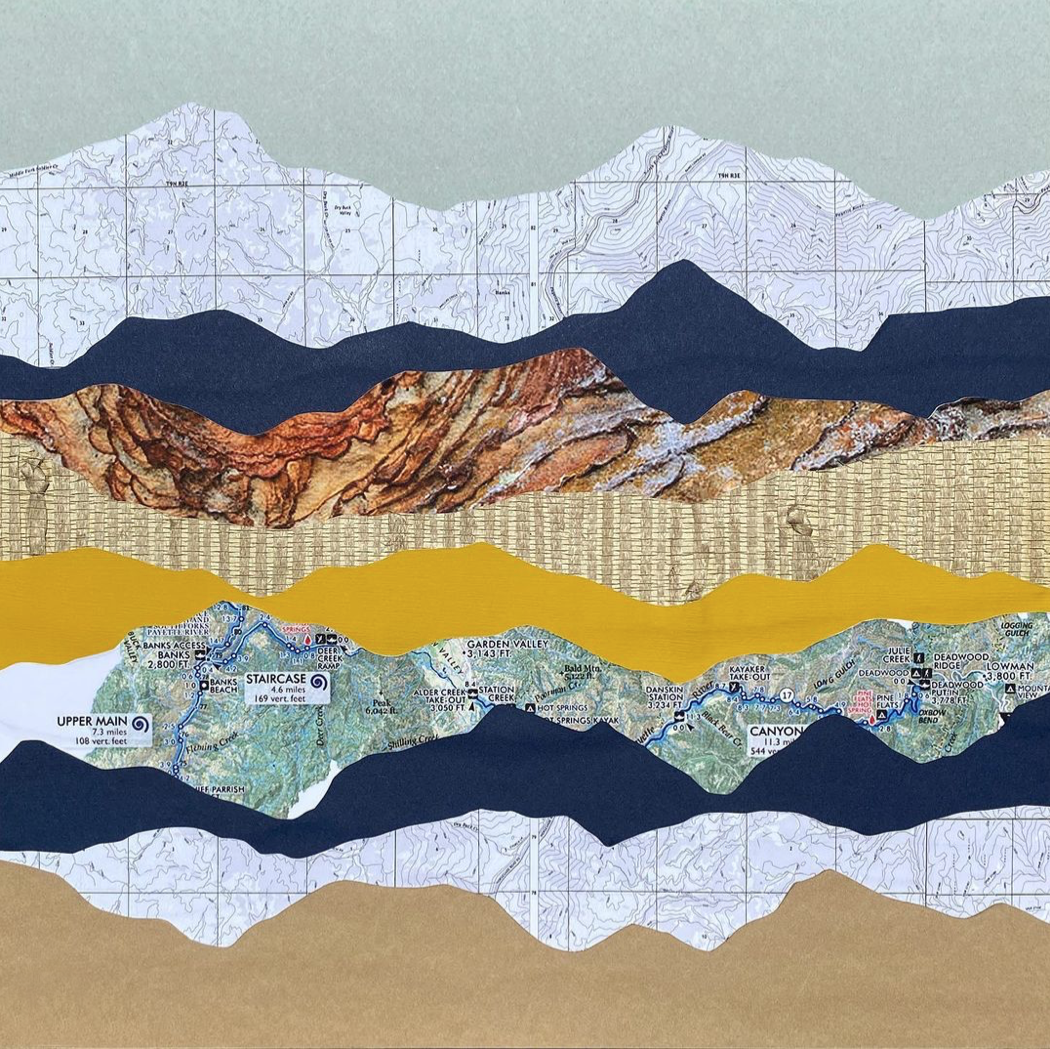
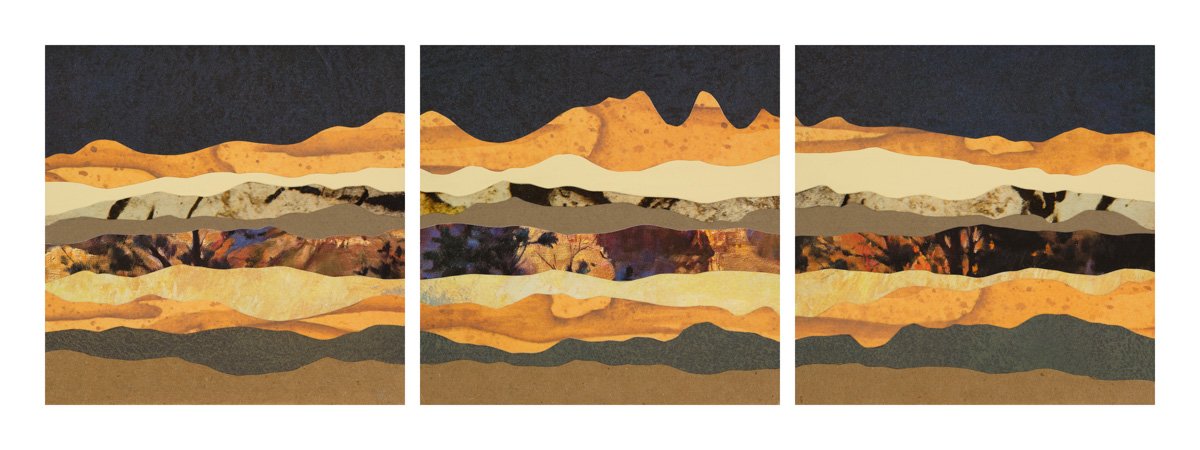
Lorelle Rau is a mixed media, collage artist, who uses cut paper and appropriated imagery to investigate concepts of nature, place, and the environment. Lorelle's harmonious compositions piece together snippets of found paper and captured imagery to create graceful linear vistas and abstract scenes that coordinate color, texture, and shape with balanced intention. Her process is guided by an intuitive context, where the elements come together by adding and extracting forms and expertly bringing line and detail into play within the landscape. Lorelle earned an MA in Arts Administration from the Savannah College of Art and Design in 2015 and received a BS in Art Management and BA in Studio Art from Appalachian State University. She was the recipient of the Alexa Rose Foundation Grant in 2019 and has work in a number of private and public collections throughout the United States. She is currently the Assistant Director of Capitol Contemporary Gallery and works independently as an art consultant where she helps individuals and businesses procure artwork. When Lorelle is not fully immersed in the visual arts, she enjoys hiking in the Boise Foothills and Idaho backcountry with her husband and dog, Tanner.
What is your background and how did you start your journey in the art world?
“I come from a family of entrepreneurs and independent thinkers, with a history of exploration and hands-on creativity. My mother was an artist, and she created large, abstract sculptures using traditional pit-firing techniques. I have always been drawn to art and creative work, but my path into the art world developed through both making and working behind the scenes in arts organizations. I studied Studio Art and Art Management at Appalachian State University and later earned a master’s degree in Arts Administration from Savannah College of Art and Design. Along the way, I became interested not only in creating artwork, but also in supporting artists and helping connect people with art. That led me to work in galleries, art consulting, and nonprofit arts organizations while continuing to develop my own collage practice. My artwork grew out of a love for nature, hiking, and collecting found materials, which eventually evolved into the layered landscape collages I create today.”

What inspires you?
“I am deeply inspired by nature and the experience of being outdoors, especially hiking in the Idaho foothills and backcountry. When I am in those spaces, I become more aware of the colors, textures, patterns, and shifting light in the landscape. I try to capture that feeling of presence and connection in my work. I am also inspired by found materials and imagery. I enjoy collecting papers, maps, photographs, and printed textures, then reworking them into layered compositions that feel both familiar and abstract. The process of cutting, arranging, and piecing elements together allows me to explore ideas of place, memory, and the environment in an intuitive way.”
What themes do you pursue? Is there an underlying message in your work?
“The themes I explore most often are nature, place, memory, and our relationship to the environment. My work reflects the experience of moving through landscapes and noticing the small details that are often overlooked — shifting light, texture, contour, and patterns found in nature. There is also an underlying sense of connection and preservation in my work. By using found papers, maps, and reclaimed imagery, I think about how we document and interpret the world around us. The layering process mirrors the way memories and experiences build over time. While my work is rooted in landscape, it is less about depicting a specific place and more about capturing a feeling of being immersed in nature and encouraging viewers to slow down and pay attention to their surroundings.”
How would you describe your work?
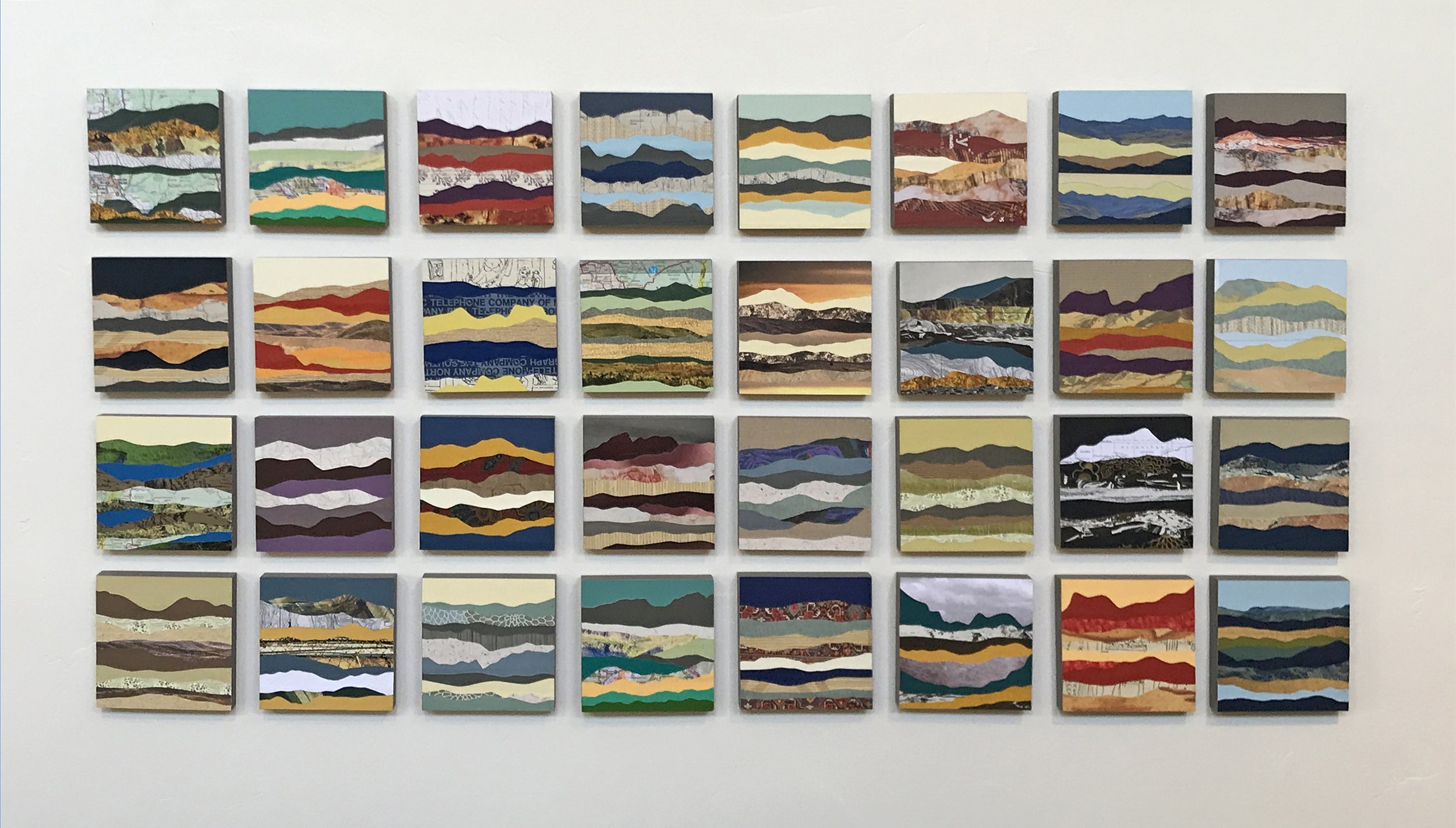
“I would describe my work as layered, intuitive, and inspired by the natural landscape. Using cut paper, collage, and found imagery, I create abstracted environments that explore texture, color, line, and movement. My compositions are often influenced by hiking and spending time outdoors, and I try to capture the feeling of being immersed in nature rather than representing a specific place exactly as it appears. The process itself is very hands-on and organic. I build each piece through cutting, arranging, and layering materials until the composition feels balanced and connected. The result is work that feels both familiar and abstract, inviting viewers to slow down and discover details within the landscape.”
Which artists influence you most?
“Georgia O'Keefe, Helen Frankenthaler, Julie Mehretu, Elaine de Kooning.”
What is your creative process like?
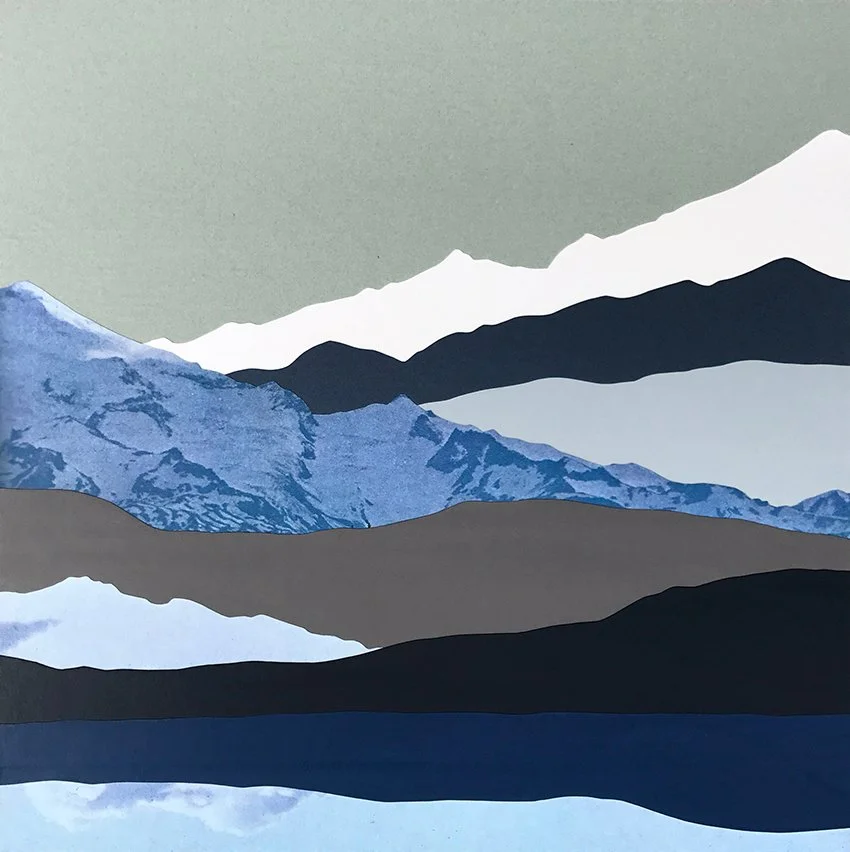
“My creative process is very intuitive, material-driven, and closely tied to nature. I often begin by gathering found papers, maps, photographs, and printed textures that I’m drawn to, then cut, layer, and experiment with them in an open-ended way. The work develops gradually through adding and subtracting elements until the composition feels balanced and resolved. A significant part of my practice also comes directly from time spent in nature. When I’m hiking or exploring the landscape, I often forage for plants that I later use to create handmade paper and natural inks. That process of collecting, transforming, and returning materials from the land feels really important to my work, creating a deeper connection between the subject matter and the materials themselves. I also take photographs while I’m out in the landscape, capturing light, texture, and spatial relationships that later inform my compositions. Maps of the areas I explore often find their way into my work as well, becoming both visual and conceptual layers that reference place, movement, and memory. Overall, my process is slow, tactile, and responsive. I try not to over-control it—instead I let the materials, imagery, and natural processes guide the direction of each piece as it evolves..”
What is an artist’s role in society and how do you see that evolving?
“An artist’s role in society is to observe, interpret, and reflect what’s happening in the world. Art imitates life, but it also helps us understand it by giving shape to experiences and emotions that can be hard to put into words. Art also works as a kind of record. It documents moments in time and how people see and feel the world around them. I’ve always loved to travel, and one of my favorite things to do in any new city is visit an art museum because it provides historical context and helps me understand a place through its visual history. That idea connects back to why art matters more broadly. It helps situate us within time and place. I think the role of the artist is shifting a bit as life gets faster and more digital. Artists can help slow things down and encourage people to really look and think. In that way, art becomes a way to pause, reflect, and reconnect with the world in a more direct way.”