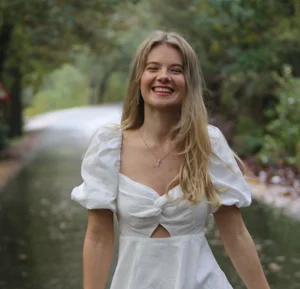
Interview
Jaye Selga
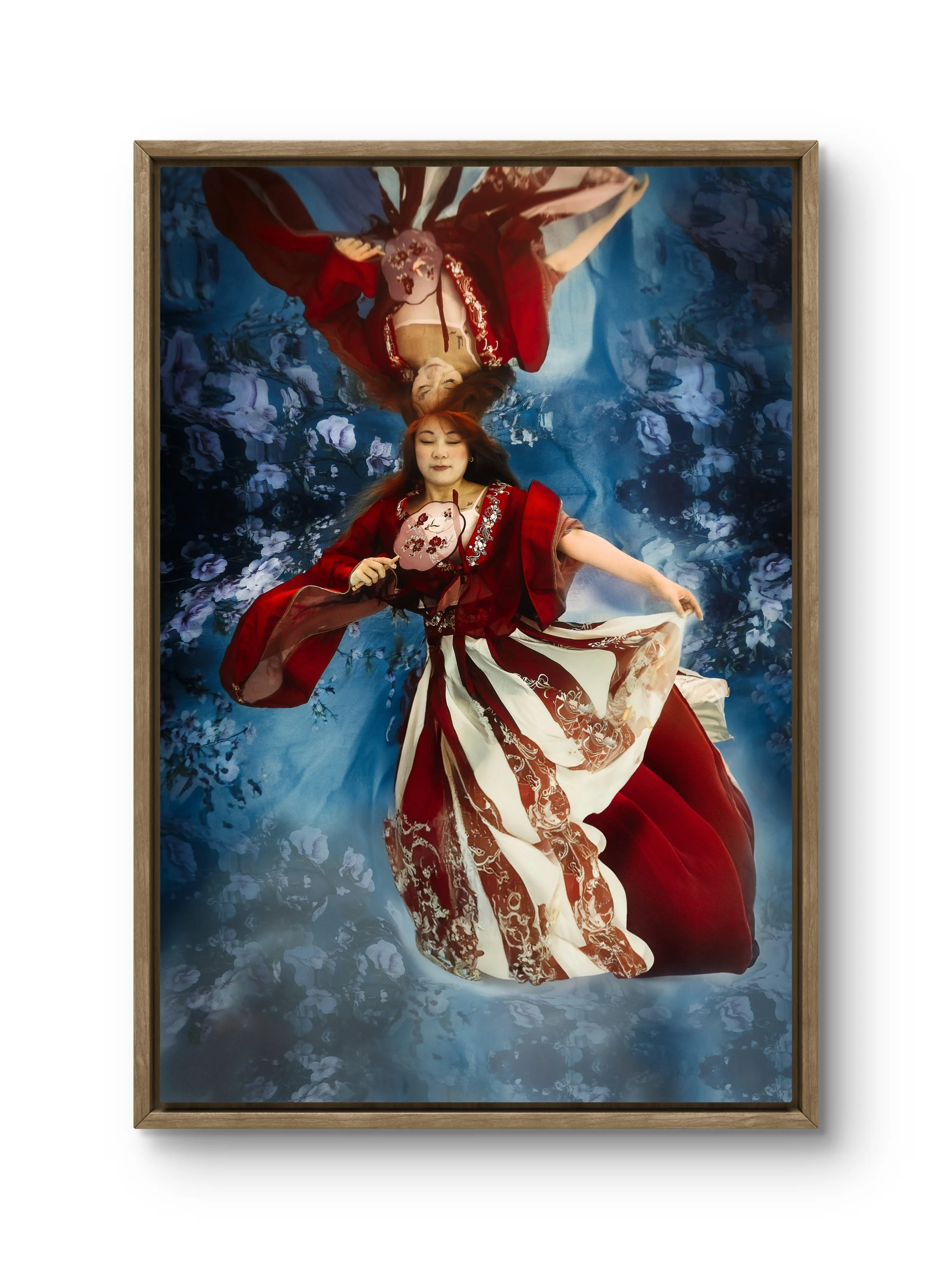
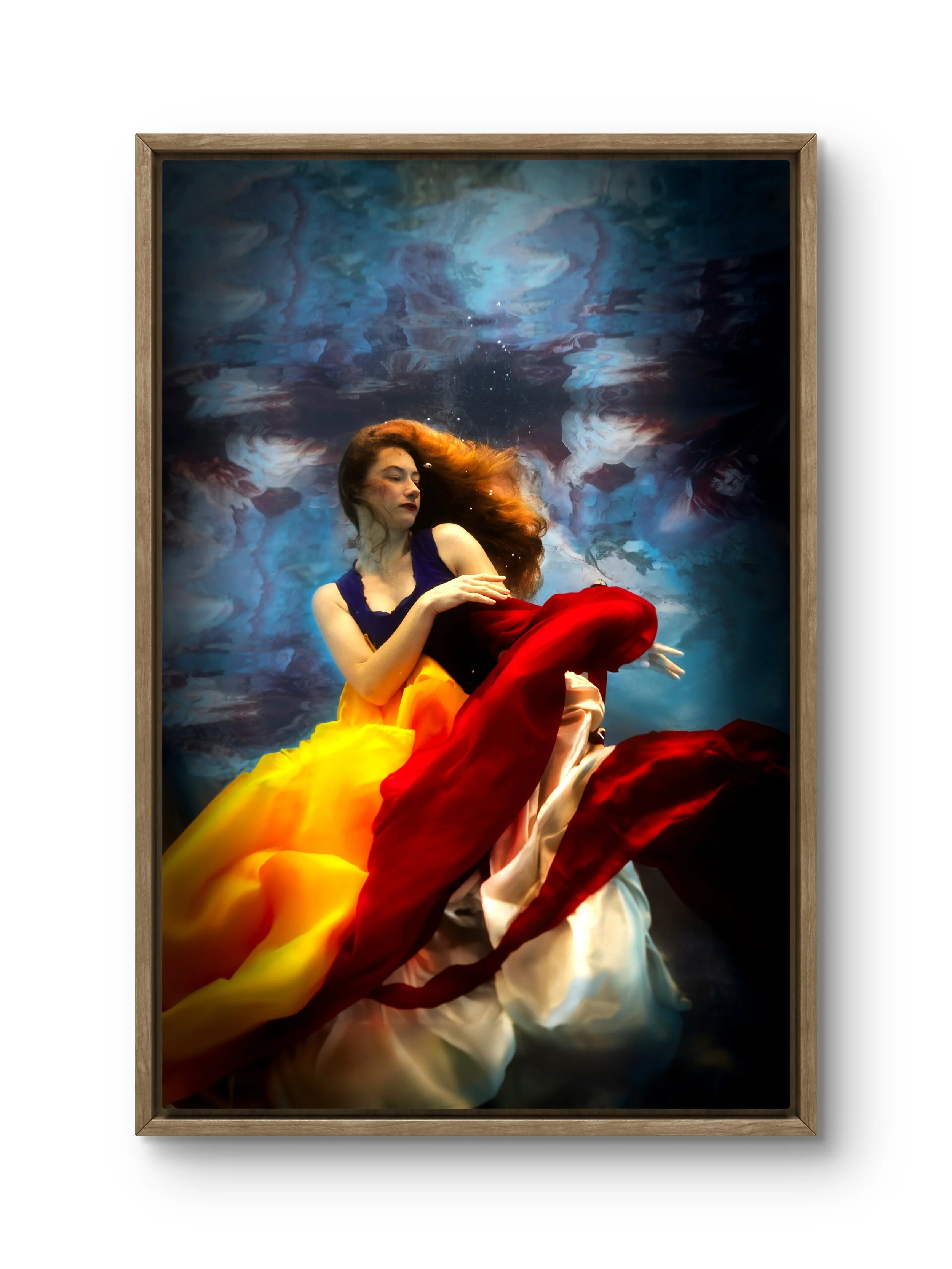
Jaye Selga is a Melbourne, Australia-based underwater fine art photographer whose work is inspired by water, florals, Baroque and Rococo beauty, mythology, softness, and transformation. Working on breath-hold, she enters the water with her muses to create painterly underwater portraits using real fabric, flowers, movement, light, and trust between muse and photographer. Although not formally trained in fine art, Jaye has always been drawn to art and water. She first discovered the camera as a child, and later found underwater photography in 2023 after becoming a mother. What began as curiosity quickly became an obsession, a way of creating images that feel less like traditional photographs and more like paintings. Her current body of work, Bloom, explores what becomes possible when a person feels safe, protected, and free to unfold. The series gently brings awareness to the reality of child exploitation and trafficking, but rather than creating images of sorrow, Jaye creates images of possibility, a vision of what can emerge when the world chooses to care, protect, and pay attention. Selga’s work has been shown digitally in London and Milan through The Arrival Gallery, and she received an Honorable Mention in the WATER Teravarna Art Competition. Her debut exhibition, Bloom, will be presented at Oakhill Gallery in Mornington from June 1 to June 30, 2026. It is her first exhibition where she feels she has stayed completely true to her own voice and vision as an artist.
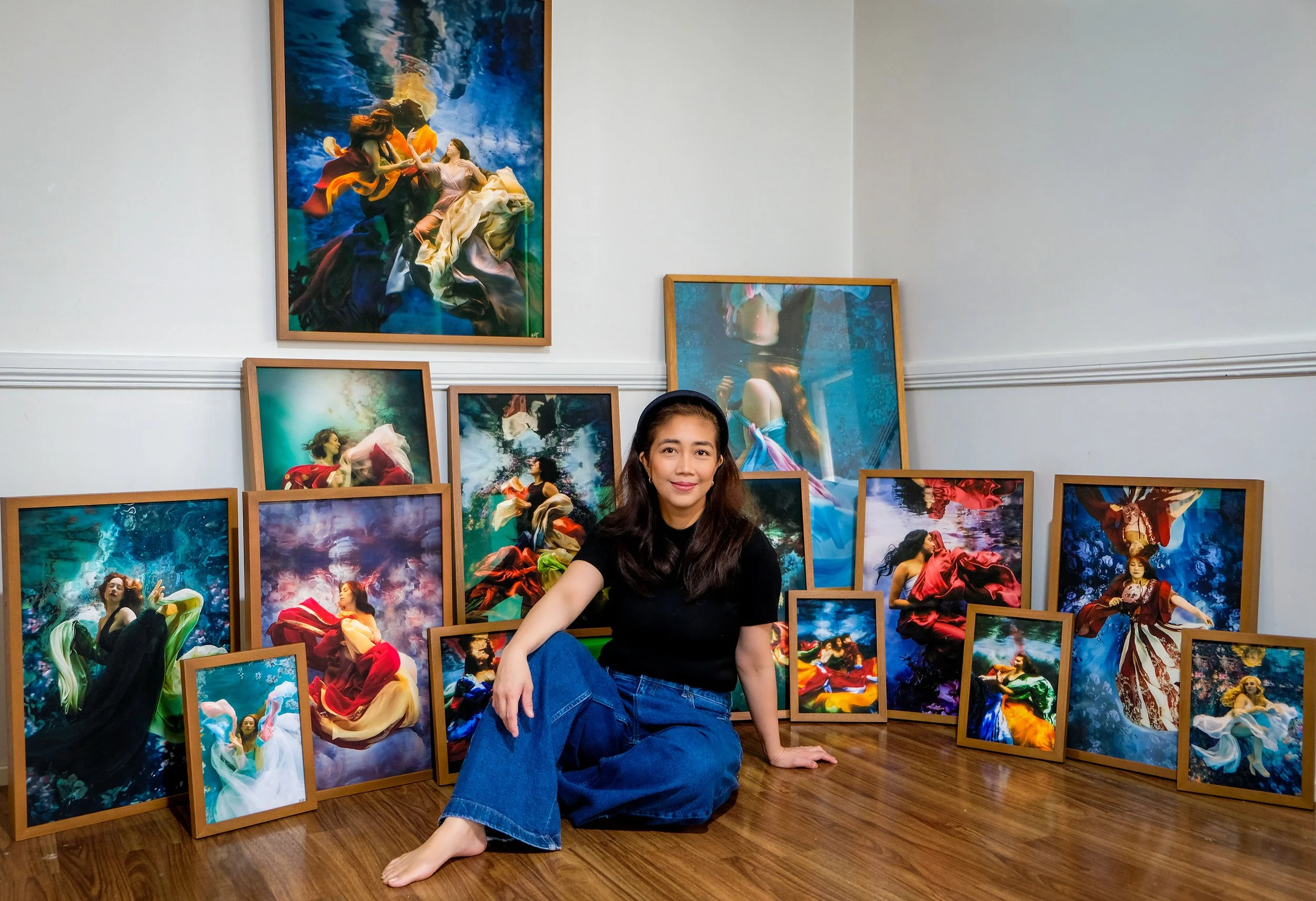
Photographer: Carly Jacoby
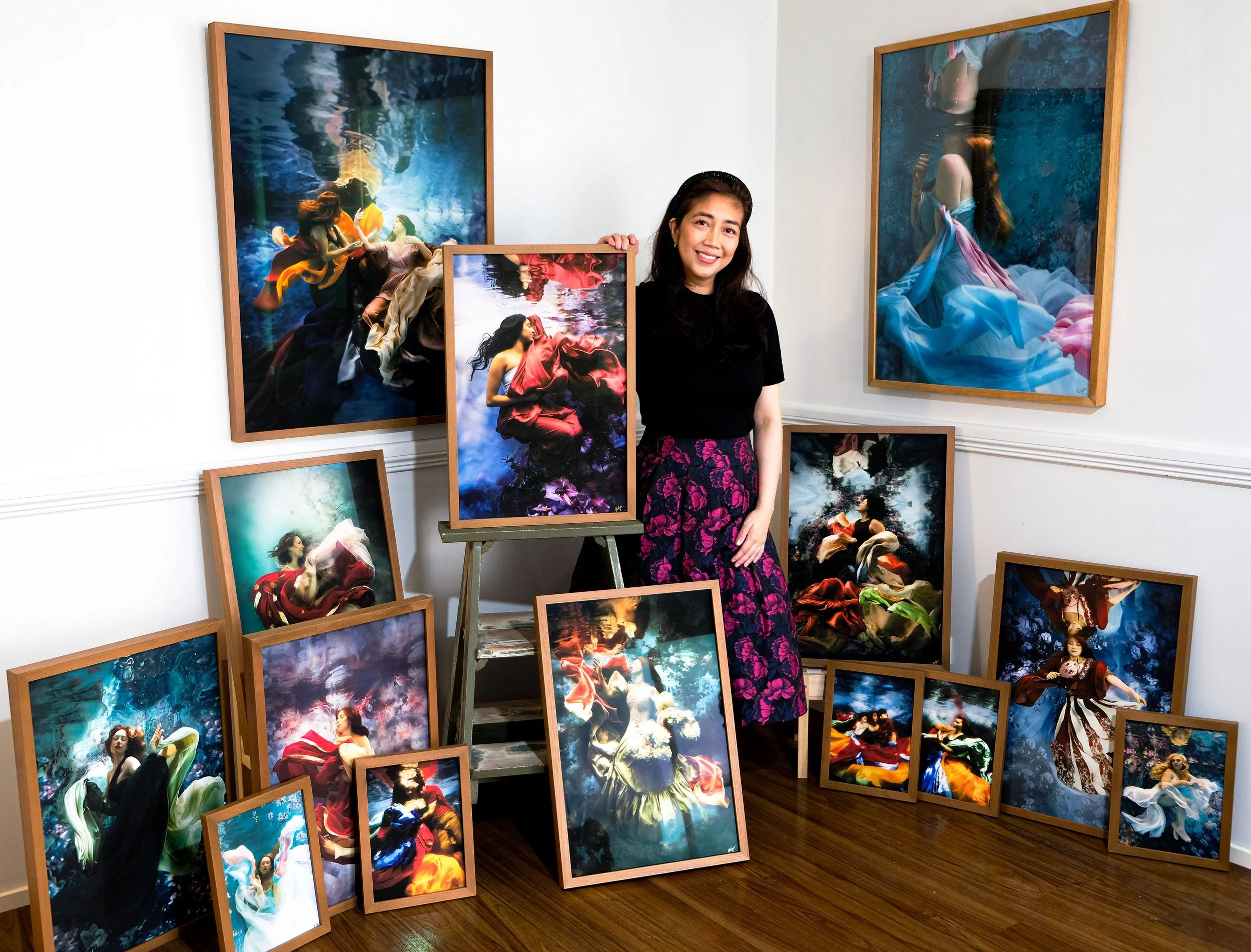
What is your background and how did you start your journey in the art world?
“My background is not a traditional fine art pathway. I am a Melbourne-based underwater fine art photographer and I also work as a nurse. I was not formally trained in any art form, but I have always been drawn to art. At a young age, I fell in love with paintings. I loved the emotion, colour, and beauty they could hold. I quickly realised that painting portraits was not my natural strength, so I painted landscapes, seascapes, and still life instead. Even then, I think water was already present in the way I saw the world. I have always been drawn to water. Since I was young, water has been my happy place, somewhere I felt calm, free, and most like myself. Looking back, it makes sense that my art eventually found its way beneath the surface. I discovered the camera when I was around eight years old. I started playing with it, and from there I kept taking portraits. Photography became the art form that felt most natural to me.
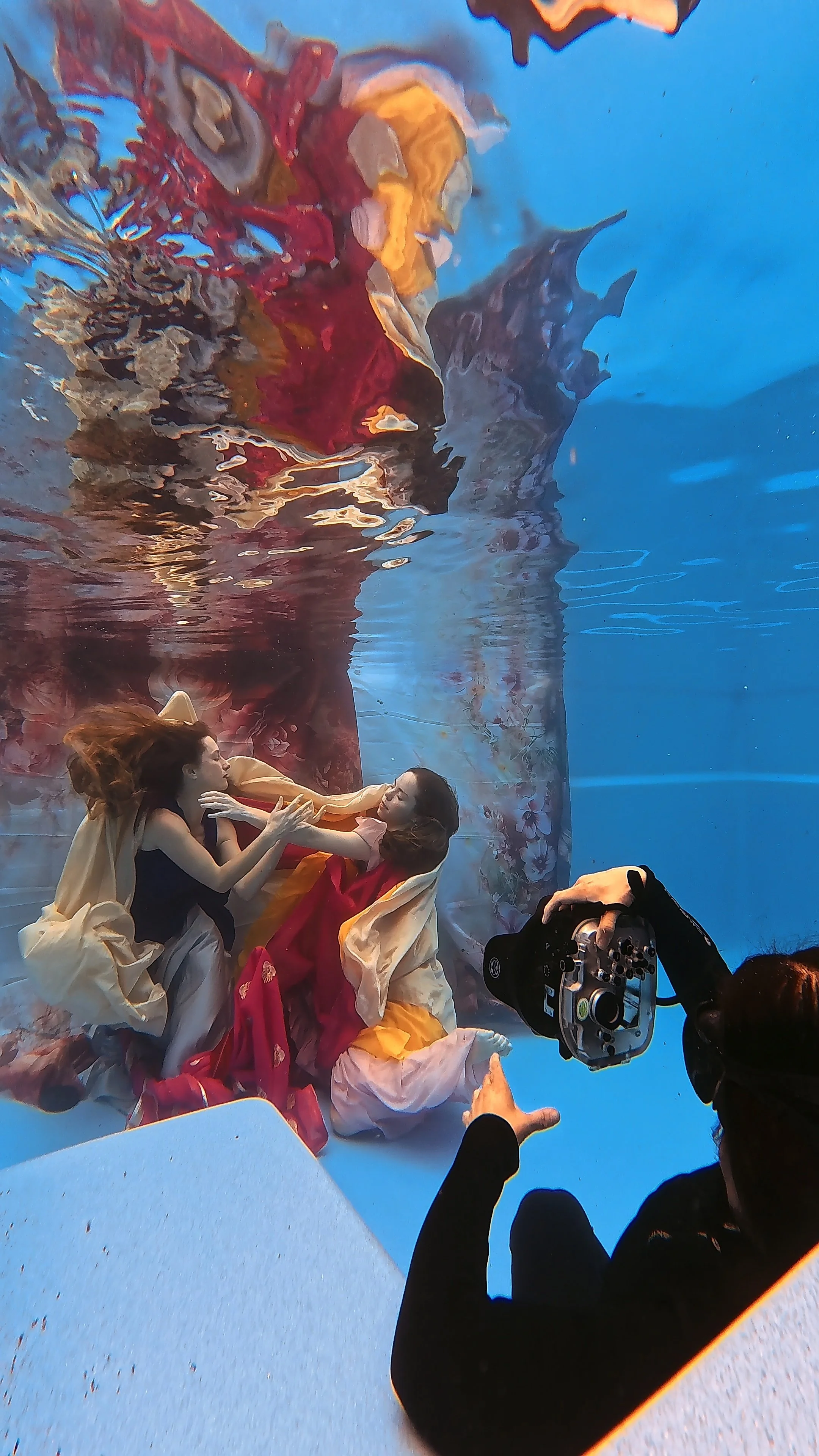
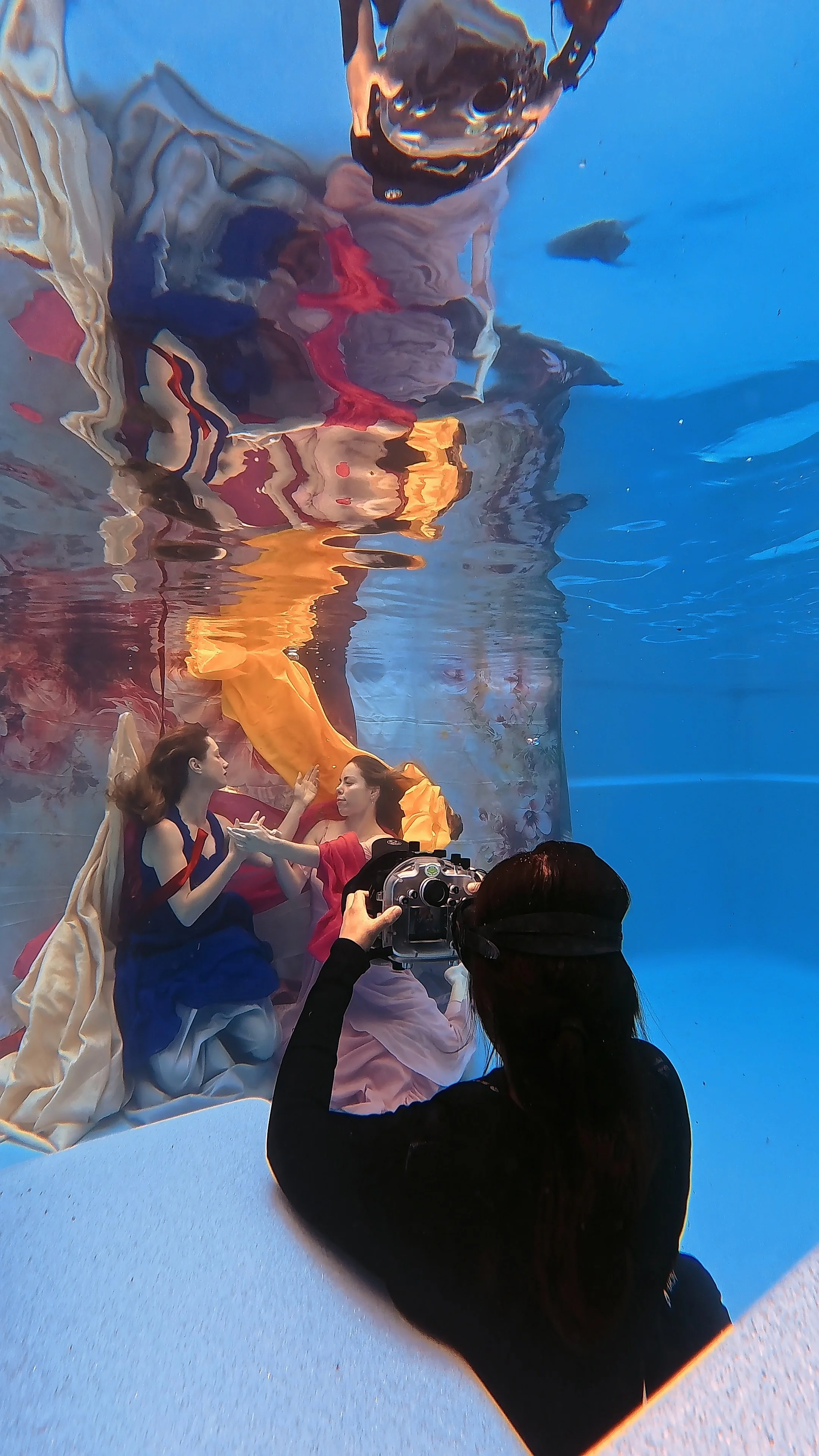
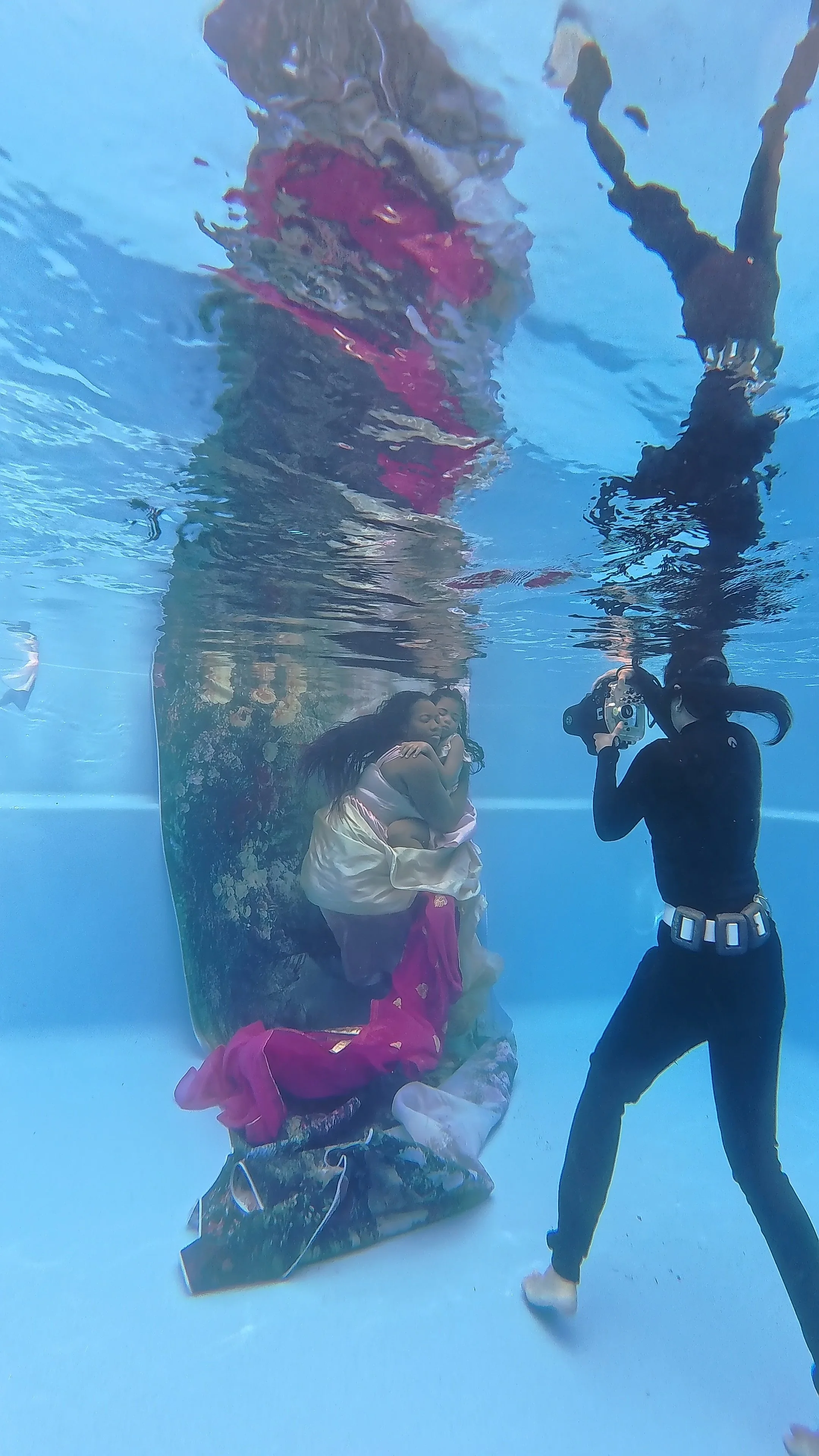
For many years, it grew quietly beside my professional life, but I always felt pulled towards creating images that had a painterly quality but I can never achieve on land. Until, I discovered underwater photography. I delved into underwater photography in 2023. At first, I simply wanted to explore the idea of it. But very quickly, it became an obsession. I became fascinated by how water transforms everything. Fabric becomes sculptural. Hair moves like brushstrokes. Light softens. The body appears weightless, vulnerable, and almost mythic. It was everything that I was looking for in my work. Since then, I have been constantly learning, experimenting, and refining my voice. In 2025, I made the decision to stay true to what I love the most: florals, the drama of Baroque art, the colours and softness of Rococo, the dreamy, ethereal feel of the photos I create and the emotional power of water. My work is created underwater on breath-hold, with me entering the water alongside my muses. That shared experience is very important to my process. What began as underwater portraiture has slowly become a deeper artistic language for me, one shaped by trust, movement, beauty, and surrender.
I am still early in my artist career, but this first year has already been meaningful. My work has been shown digitally in London and Milan, an honorable mention award at Teravarna and my debut exhibition, Bloom, will be presented at Oakhill Gallery in Mornington this June 2026.”
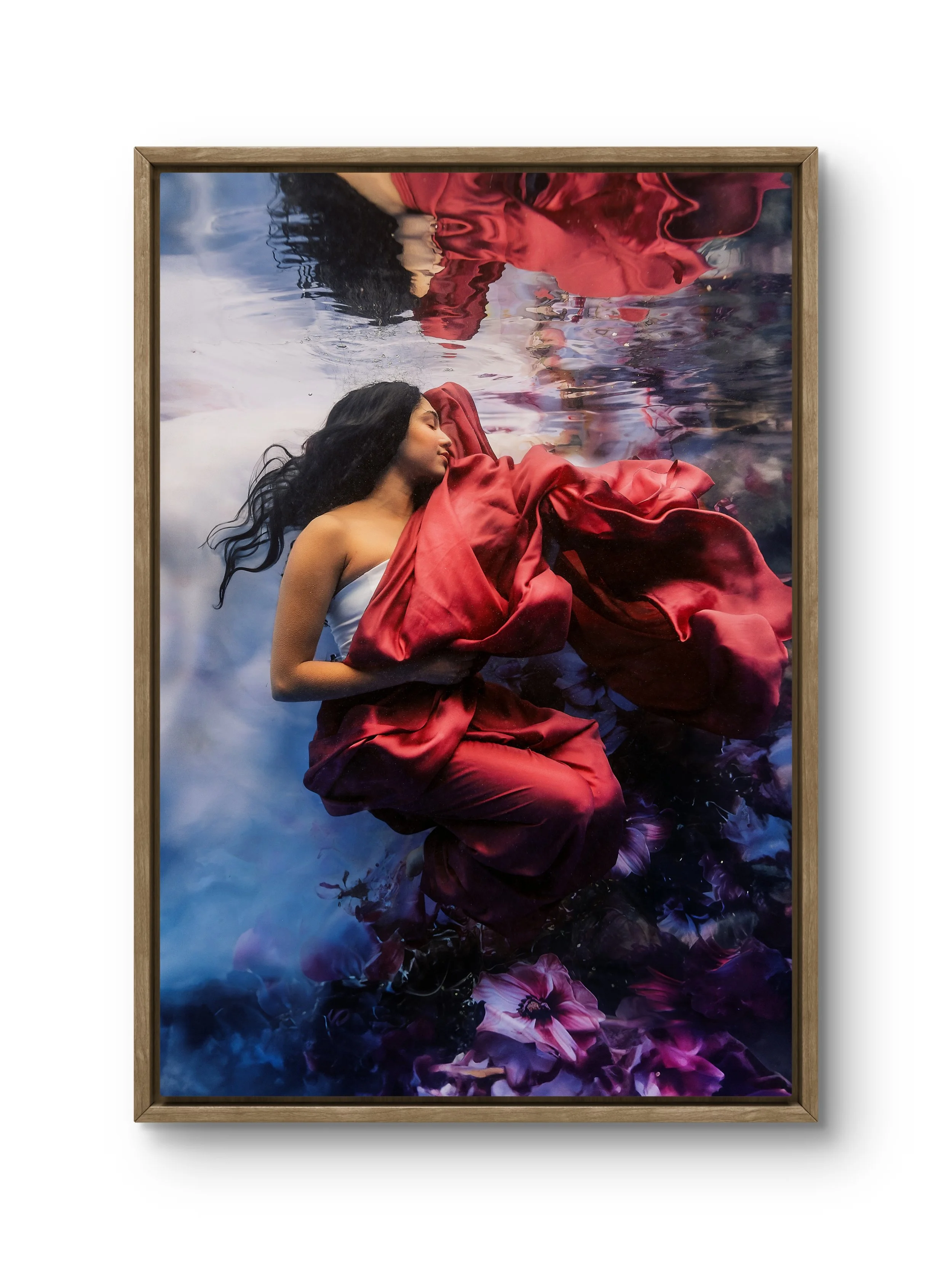
What inspires you?
“I am inspired by water, softness, mythology, old paintings, fabric, motherhood, vulnerability, and the quiet strength people carry when they go underwater with me. Visually, I am deeply drawn to Baroque and Rococo art, the drama, movement, romance, and richness of those paintings. I love the way old master works use light, gesture, fabric, and emotion to create something that feels almost sacred. I am also inspired by Pre-Raphaelite imagery, Roman sculpture, flowers, and fairytales. Emotionally, I am inspired by the idea of transformation. I often think about what happens when a person finally feels safe enough to unfold. That thought became the heart of my current body of work, Bloom. Water itself is one of my greatest inspirations. It is beautiful, but it is not passive. It has its own movement and mood. I can plan an image, but once I am underwater, the water becomes part of the work. It changes the fabric, the light, the body, and the feeling. I love that collaboration. I am also inspired by the small return to wonder in everyday life, the need to keep softness, imagination, and beauty alive even when life feels heavy.”
What themes do you pursue? Is there an underlying message in your work?
“My work explores transformation, softness, vulnerability, safety, memory, and the hidden strength within people. Each body of work becomes its own world. Some pieces are rooted in blooming and becoming. Others move toward mythology, feminine resilience, and small moments of wonder. Water is at the heart of my work. It softens the body, lifts the fabric, and changes the way emotion is seen. Underwater, everything becomes quieter, more vulnerable, and more honest. The underlying message of my work is that beauty can be more than something we admire. It can become a mirror, a reminder, and a place for meaning. Through my images, I want people to feel the possibility of becoming, of returning to themselves, of being seen, and of remembering what could still unfold.”
How would you describe your work?
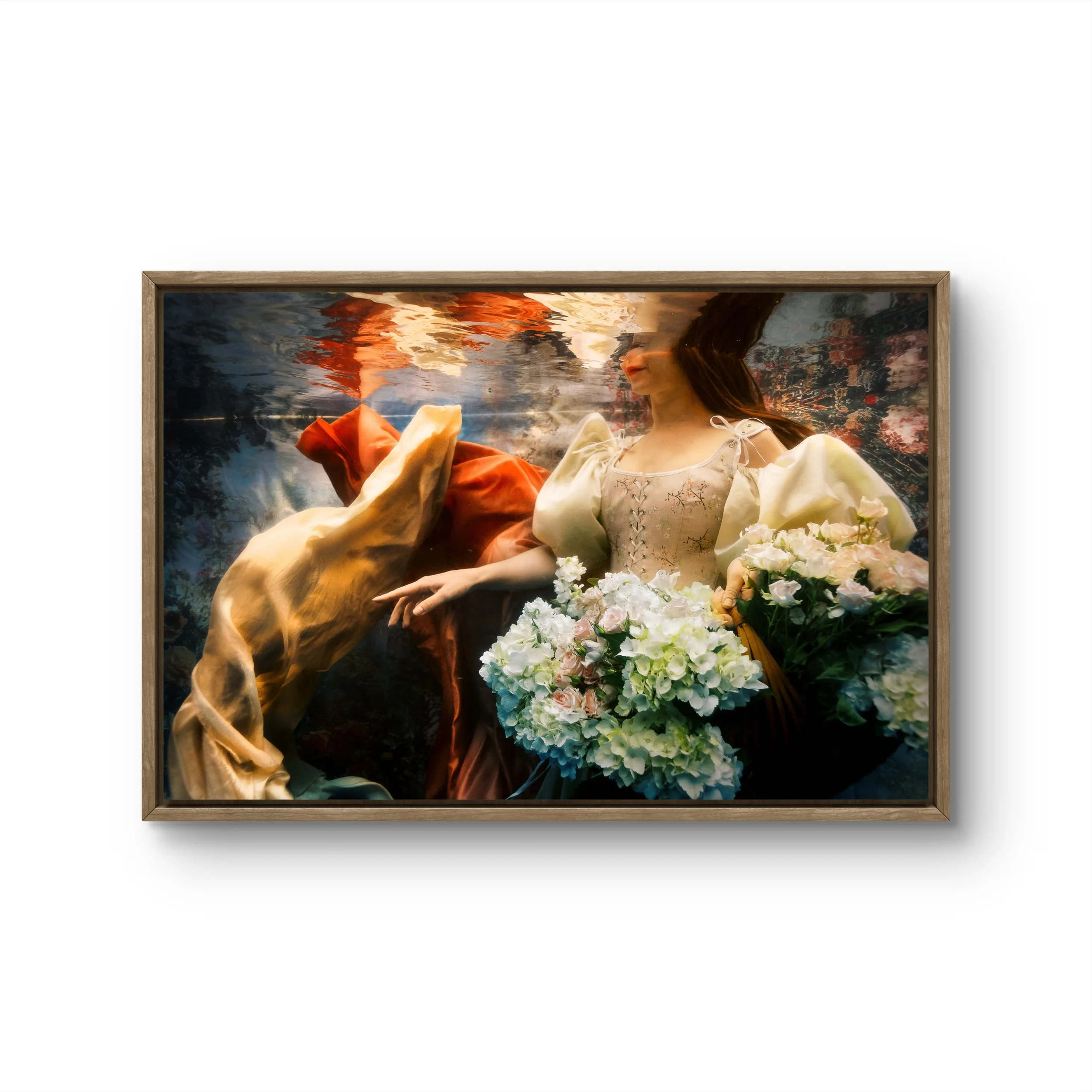
“I would describe my work as painterly underwater fine art portraiture. My images sit somewhere between photography, painting, performance, and dream. They are created underwater on breath-hold, using fabric, movement, and natural light. I often think of the water as my canvas. It softens reality and allows the body to become almost dream like, ethereal. Visually, my work is inspired by Baroque and Rococo beauty. I am drawn to dramatic fabric, delicate gestures, sculptural forms, and a sense of old-world romance. But because the work is created in real water, there is also an element of unpredictability. Fabric does not always move the way I expect. Bubbles appear. Light shifts. The body floats differently each time. The images are literally captured in seconds and each time we go underwater, everything moves differently again. That tension between control and surrender is part of what gives the images their feeling, its rarity. I want my work to feel timeless, and honest, like a memory, a painting, or a dream suspended underwater.”
Which artists influence you most?
“I am strongly influenced by the atmosphere and visual language of old master paintings, especially Baroque and Rococo art. I am drawn to artists who used light, fabric, gesture, and emotion to create drama and beauty. Rather than being influenced by one artist alone, I am often inspired by the feeling of historical paintings, the softness of skin, the movement of drapery, the theatrical use of light and body movements. I often think about works such as Pietà, The Birth of Venus, and Ophelia, not to recreate them directly, but to understand how they hold emotion, mythology, and stillness. I am also inspired by Pre-Raphaelite imagery and classical sculpture. There is something in those works that feels between beauty and sadness, reality and myth. In my own practice, I try to translate that painterly atmosphere into water. I want the final image to feel as though an old painting has been brought back to life.”
What is your creative process like?
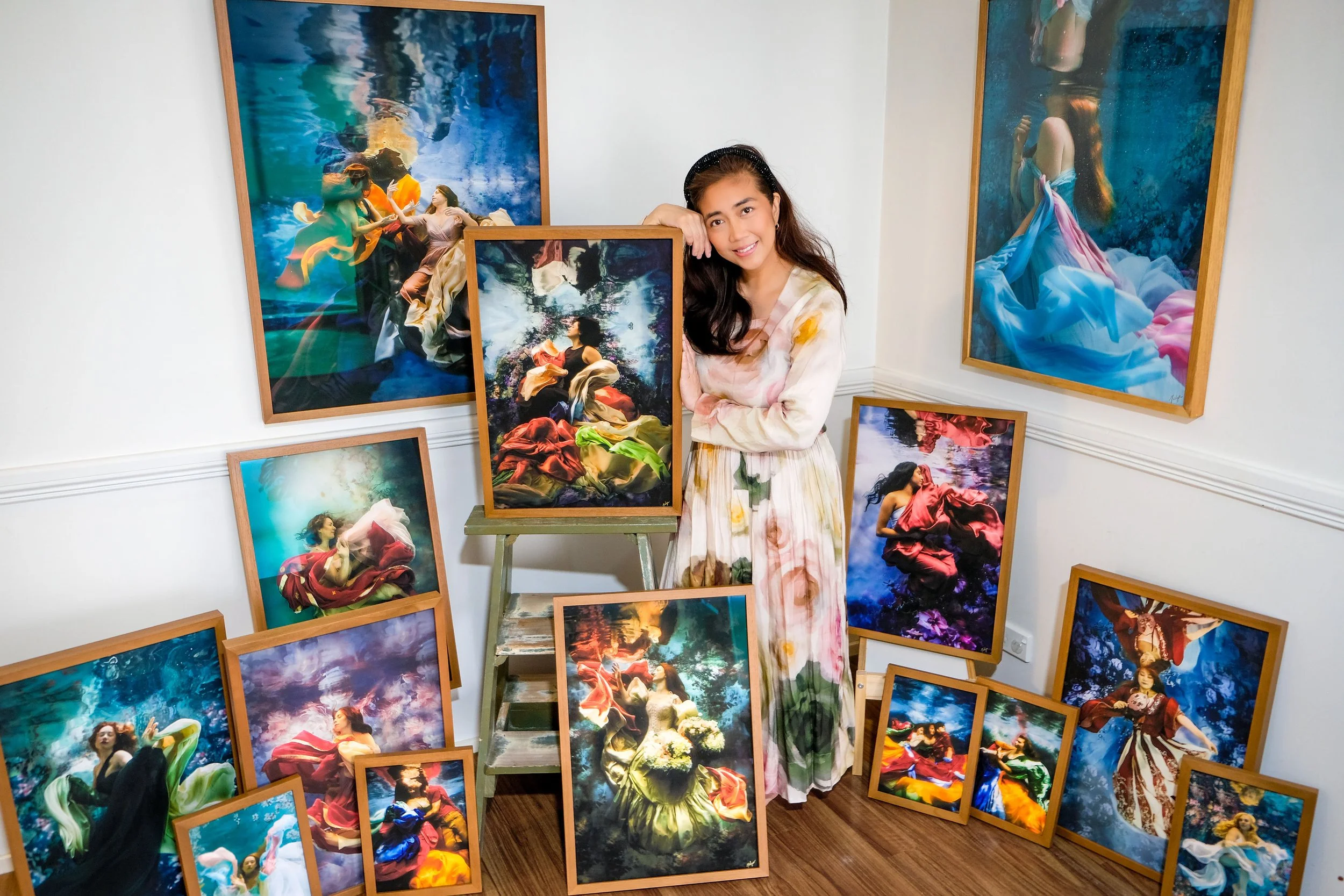
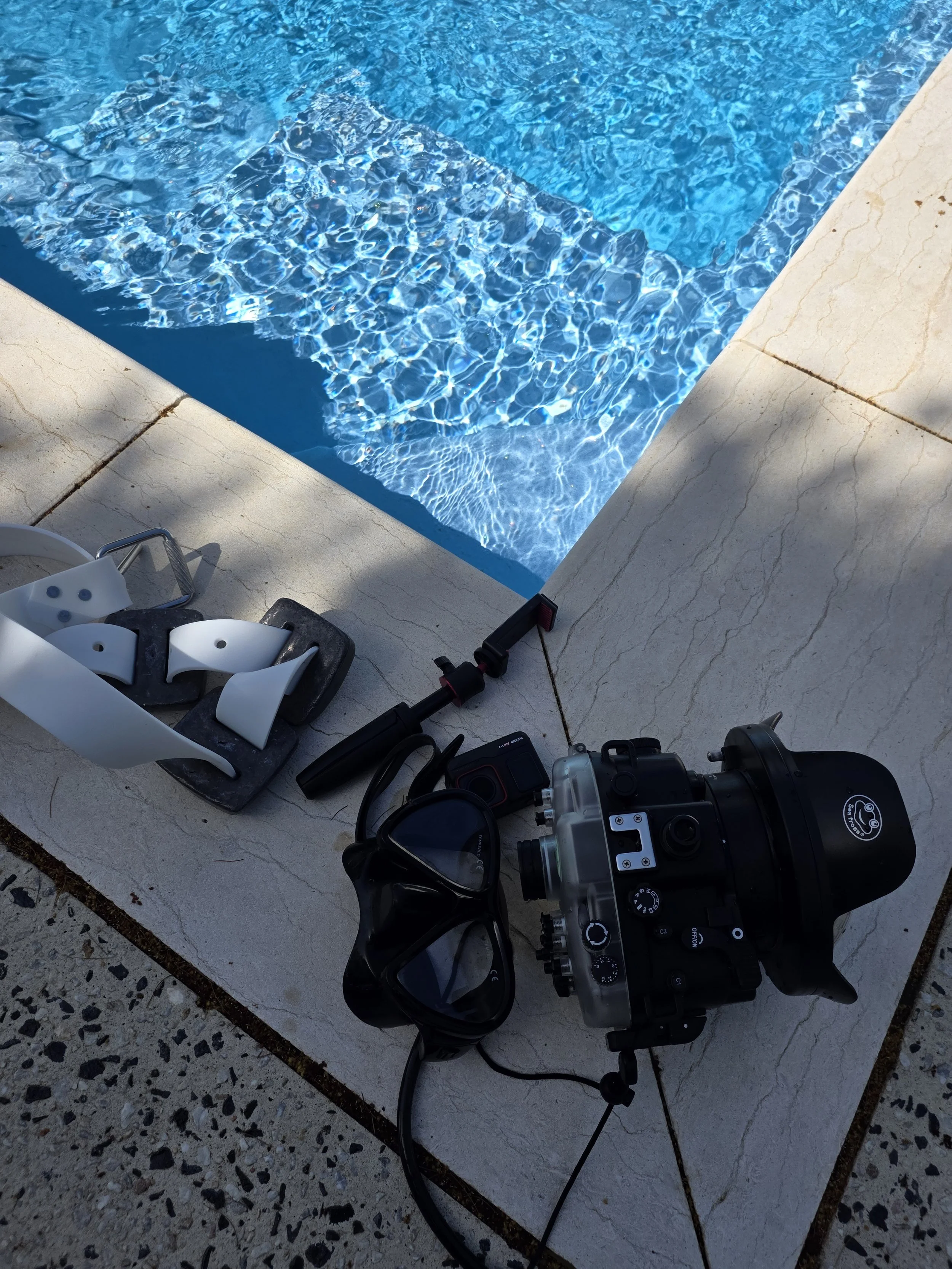
“My creative process usually begins with a feeling before it becomes an image. I might start with an emotion, a phrase, a colour, a piece of fabric, or a backdrop. From there, I build the world around it. I think about what the image needs to say, what colours will hold that feeling, what fabric will move well underwater, and how the body might be positioned. Before a shoot, I plan carefully. I consider the muse, the styling, the backdrop, the movement, the emotional tone, and most importantly, safety. Working with water means safety is always the first priority. It is beautiful, but it also has to be respected. Once we are underwater, I have to allow space for improvisation. You cannot fight water. You have to move with it, especially in natural bodies of water where light, current, temperature, and visibility can change quickly. Water has its own rhythm, and part of my process is learning when to guide and when to surrender. I work on breath-hold, entering the water with my muse. We repeat movements, adjust fabric, wait for stillness, and allow the muse time to acclimatise. The strongest images often happen when the muse becomes fully relaxed , when they stop trying to perform and begin to let go. That moment is very special to me. It is when the body softens, the fabric moves naturally, and the image starts to feel honest. After the shoot, I edit carefully to bring back colour, depth, and painterly richness. The final work is intended to feel like a fine art piece, not just a photograph.”
What is an artist’s role in society and how do you see that evolving?
“I believe an artist’s role is to help people feel, remember, question, and imagine. Art does not always need to be loud to be powerful. Sometimes it creates a quiet space where people can recognise something within themselves. It can make visible what is often difficult to explain, grief, tenderness, hope, safety, longing, transformation. I think the role of the artist is becoming even more important in a world where images are created and consumed so quickly. We are surrounded by visual noise, but not all images ask us to slow down. I am interested in art that invites stillness. Art that has been made with care, time, and intention. With the rise of artificial intelligence and fast digital creation, I feel even more committed to process-driven work. My images are not instant. They are made through holding the breath, in the water, trust between the muse and I, repetition, and physical presence, menta and physical resilience. That matters to me. I think artists will continue to remind society of what is human, vulnerability, imagination, beauty, memory, and the need for connection.”
Have you had any noteworthy exhibitions you'd like to share?
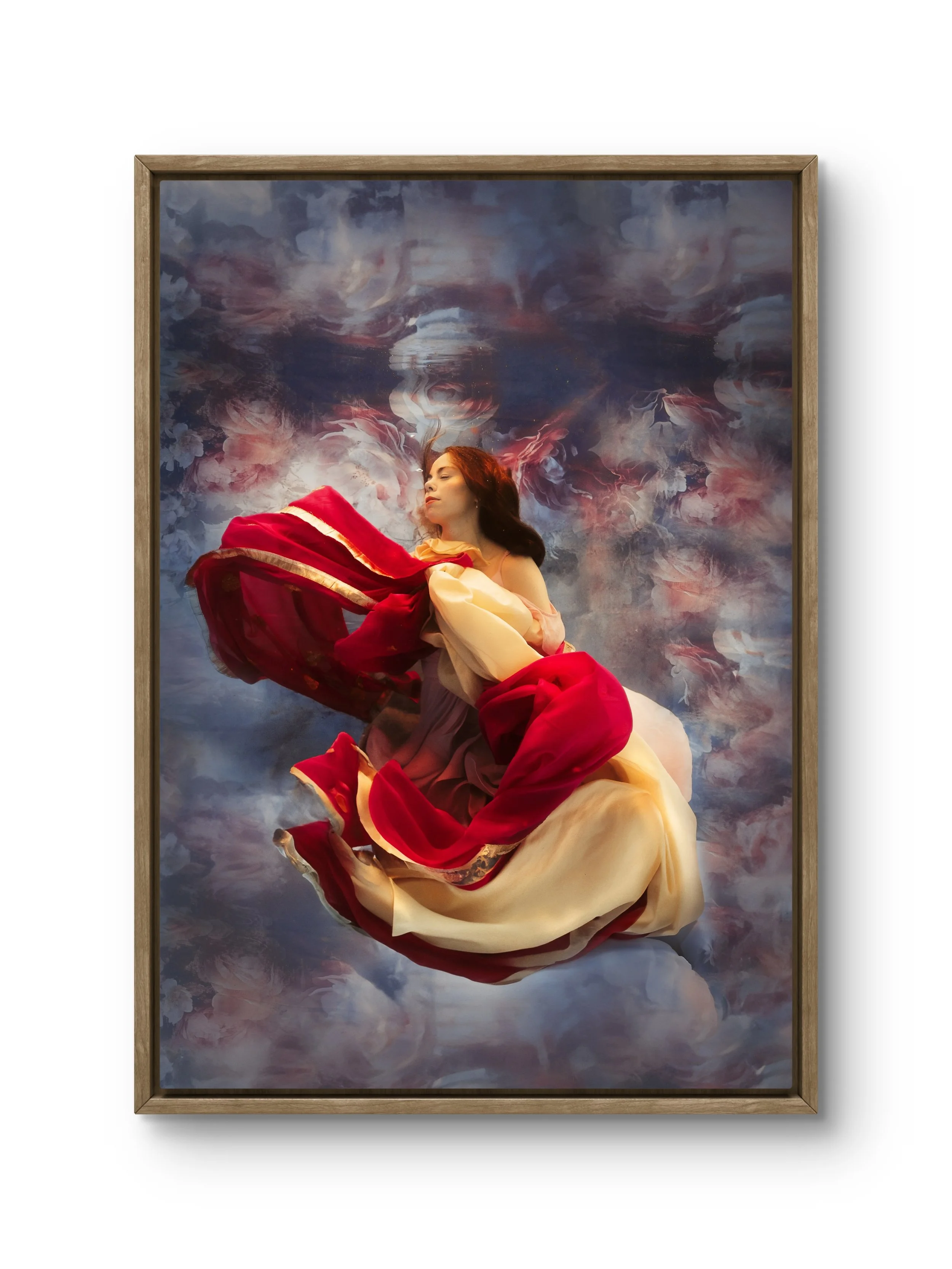
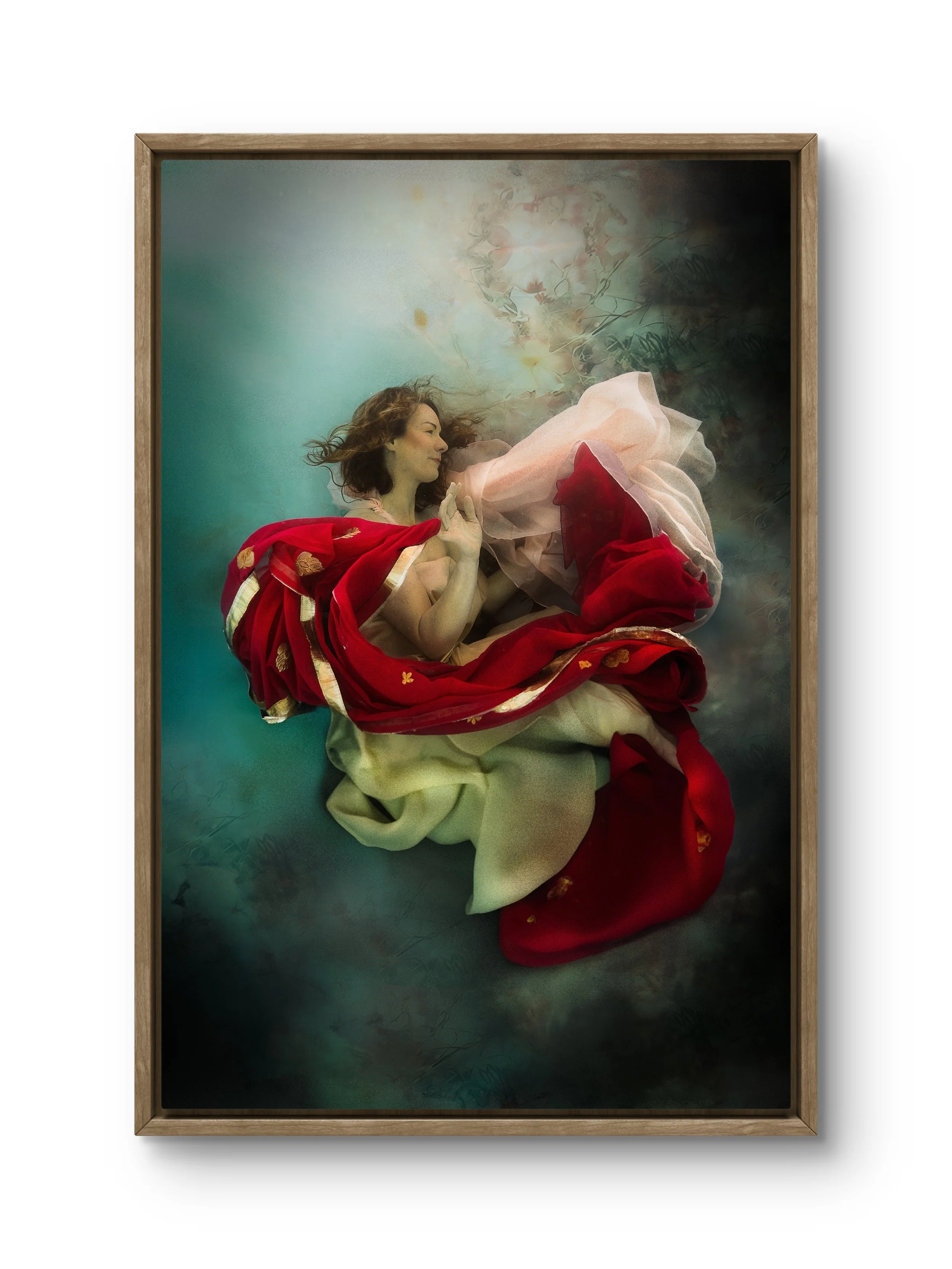
“In 2026, my work was shown digitally in London and Milan through The Arrival Gallery. Seeing my underwater work presented internationally was a meaningful milestone, especially at this early stage of my artist career. Another important moment was receiving an Honorable Mention in the WATER Teravarna Art Competition. Because water is at the heart of my practice, this recognition felt especially meaningful to me. My most significant milestone, however, is my upcoming debut exhibition, Bloom, which will be presented at Oakhill Gallery in Mornington from June 1 to June 30, 2026. This will be my first full exhibition and my most personal body of work to date. Bloom brings together underwater fine art portraits inspired by Baroque and Rococo beauty. The series explores safety, trust, softness, transformation, and the quiet power of being seen. At its heart, Bloom asks what becomes possible when a person feels protected, nurtured, and free to unfold. This body of work is dedicated to those who have experienced harm, especially children and vulnerable people whose safety has been taken from them. Through Bloom, I hope to bring gentle awareness to the importance of protection, care, and safe spaces and to the possibility that can emerge when someone is finally held with love instead of fear. For me, this exhibition is more than a presentation of images. This body of work is dedicated to those who have experienced harm, especially children and vulnerable people whose safety has been taken from them. Bloom gently brings awareness to the reality of child exploitation and trafficking, and to the harm that continues to happen in the world. But rather than creating images of sorrow, I wanted to create images of possibility, a vision of what could happen when the world chooses to care, protect, and pay attention. Through beauty, softness, and water, I hope the work reminds people that safety is not a small thing. It is the ground where healing, freedom, and becoming can begin.”
Instagram: @theweightlessarchive
Brush Bio: brush.bio/jayeselga