Interview
Lily Camarena
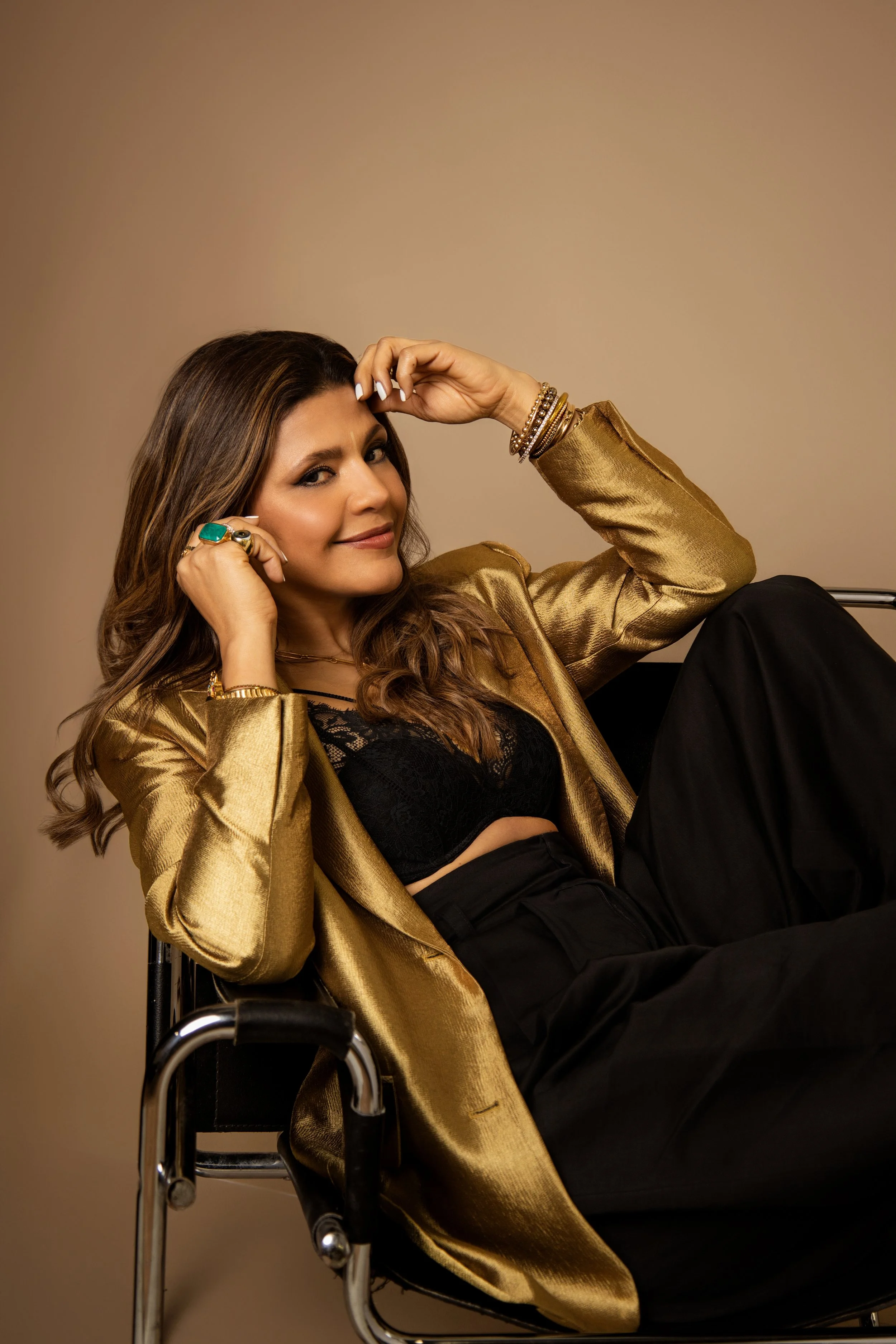
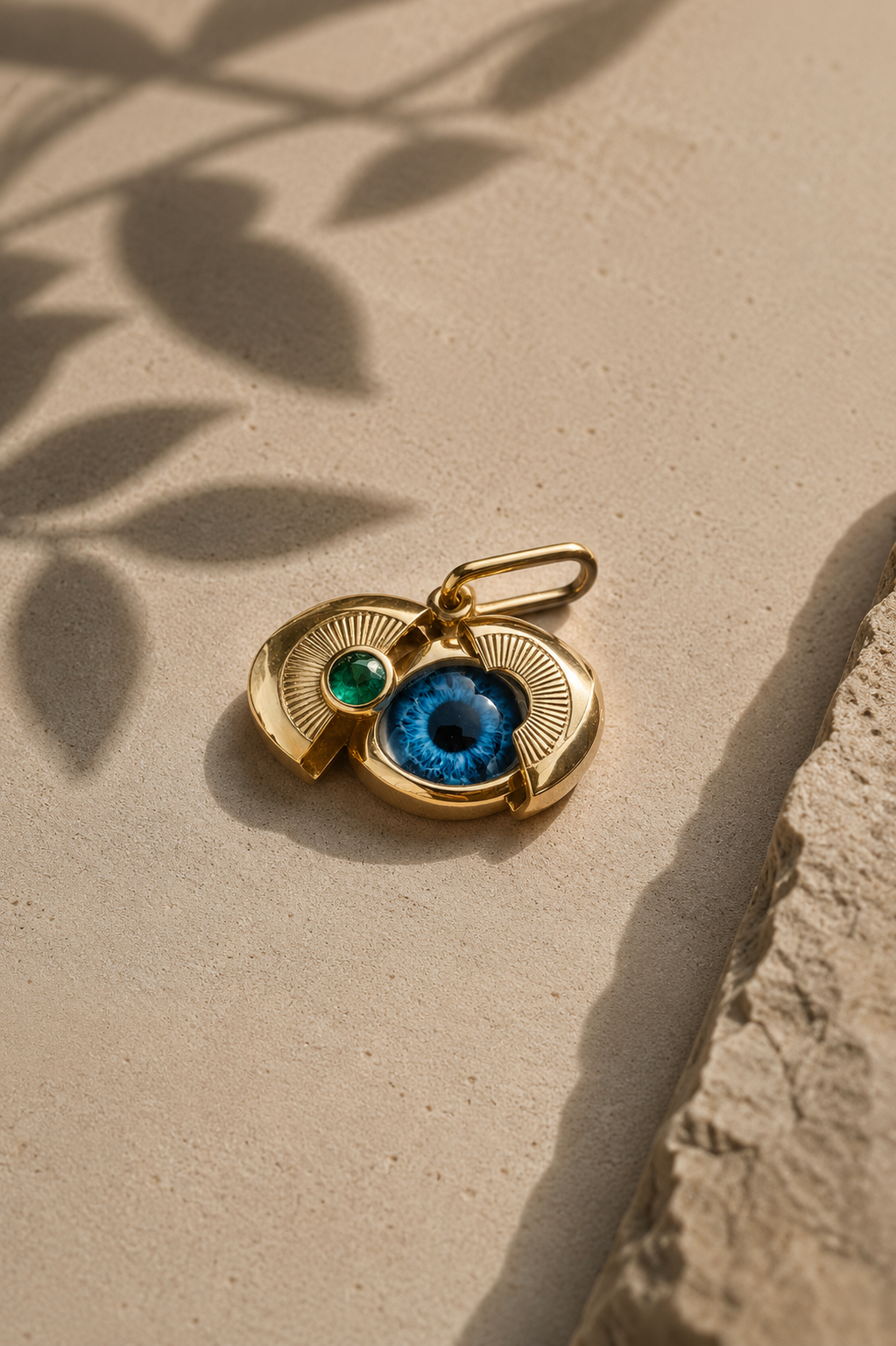
Lily Camarena is the founder and designer behind Oromma, a jewelry brand celebrated for its distinctive symbolic motifs and unconventional aesthetic. Before pursuing jewelry full-time, Lily built a career in technology, eventually becoming Head of Technology for a Japanese investment bank. While her professional life followed a structured and analytical path, creativity remained a constant presence in the background. From an early age, she was drawn to jewelry, not as an accessory, but as a form of personal expression. Unable to find the pieces she was looking for, she began collecting jewelry and transforming it, adding, removing and reimagining elements to create something that felt more personal and more her own. What began as a creative outlet gradually evolved into designing original pieces. As others started responding to her work and seeking out her designs, Oromma was born. Today, Lily creates jewelry that combines natural gemstones with unexpected symbols, including eyes. Her work explores individuality, curiosity and the enduring attraction of objects that feel rare, distinctive and deeply personal. Her pieces have been exhibited internationally, including exhibitions in New York and in The Hague. Through Oromma, she transforms ideas, symbols and gemstones into pieces that people connect with in deeply personal ways.
What is your background and how did you start your journey in the art world?
“My path into the art world wasn't a conventional one. As a child, I loved drawing and creating things, but I never formally studied art or design. In fact, my professional career took me in a completely different direction. I worked in technology and eventually became Head of Technology for a Japanese investment bank. Creativity, however, never really left me. I've always been drawn to jewelry, especially pieces that felt unique and different. The problem was that I could rarely find exactly what I was looking for, so I started modifying the pieces I bought, adding elements, removing others, and transforming them into something that felt more personal and more ‘me.’ Over time, I began collecting jewelry and eventually reselling pieces to fund my growing passion for it. The more I immersed myself in that world, the more I realized there was a particular aesthetic I was searching for that simply didn't exist. At some point, I stopped looking for it and decided to create it myself. What started as a creative outlet in my spare time soon became something much bigger. People began responding to my designs and asking where they could get them. That unexpected response gave me the confidence to keep creating, and eventually led to the birth of Oromma. Looking back, I don't think I entered the art world through a traditional door. I found my way into it through curiosity, a desire to create something I couldn't find anywhere else, and a refusal to settle for ordinary.”
What inspires you?
“Inspiration rarely comes to me as a finished idea. More often, it begins as a feeling, a sense that there is a piece waiting to exist. I know that may sound strange, but many of my designs start that way. I feel the urge to create something new before I know what it will look like. I sit down with a sketchbook, start drawing lines, shapes and forms, and gradually the piece reveals itself. Beyond that creative impulse, I am deeply inspired by symbolism, ancient civilizations and the objects that have fascinated humanity for centuries. I'm particularly drawn to symbols that provoke a reaction. The ones that make people stop, look twice and ask questions. The symbols that feel mysterious, powerful, intriguing or even slightly unsettling. I think the most interesting pieces are rarely the ones that try to please everyone. They're the ones that make people feel something. I'm fascinated by the idea that a symbol can survive for thousands of years and still evoke emotion in someone today. To me, that's one of the most powerful forms of communication. Beauty may catch our attention, but meaning is what stays with us.”
What themes do you pursue? Is there an underlying message in your work?
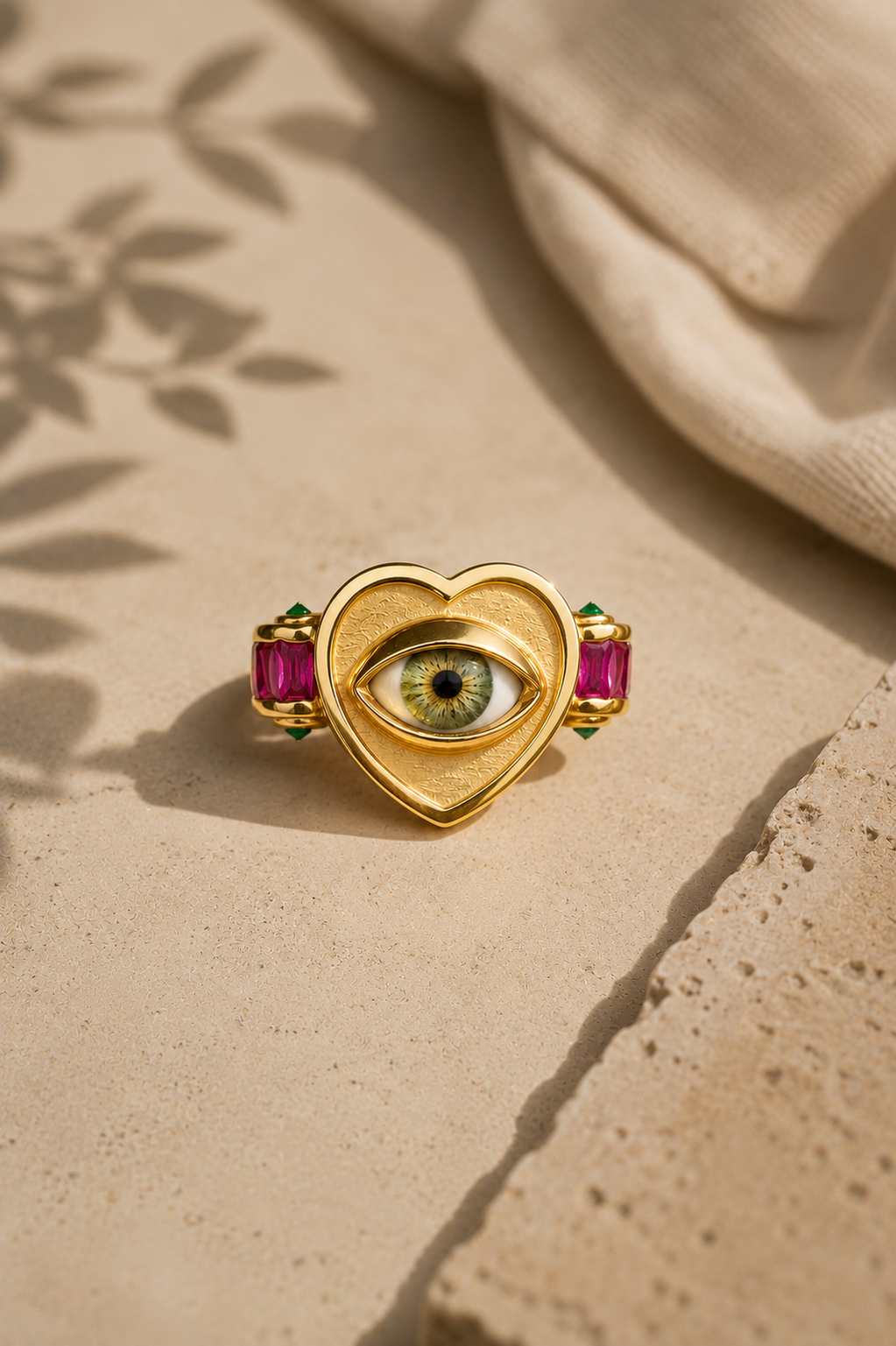
“Many of my pieces explore themes of symbolism, mystery, ancient cultures and the idea of hidden treasures. I've always been fascinated by objects that feel as though they carry a story, something discovered rather than manufactured. That fascination naturally finds its way into my work through symbols, gemstones, eyes, scarabs, serpents and other elements that have captured the human imagination for centuries. But beneath all of that, I think the deeper theme is individuality. I've never been interested in creating jewelry that blends in. The pieces I create are designed for people who are drawn to things that feel rare, meaningful and a little unexpected. People who don't want to wear what everyone else is wearing. If there is an underlying message in my work, it's that our differences are often our most valuable qualities. I think there's something powerful about finding a piece that feels like a treasure, something that speaks to you in a way you can't fully explain. Not because everyone understands it. But because you do. And perhaps that's what makes it special.”
How would you describe your work?
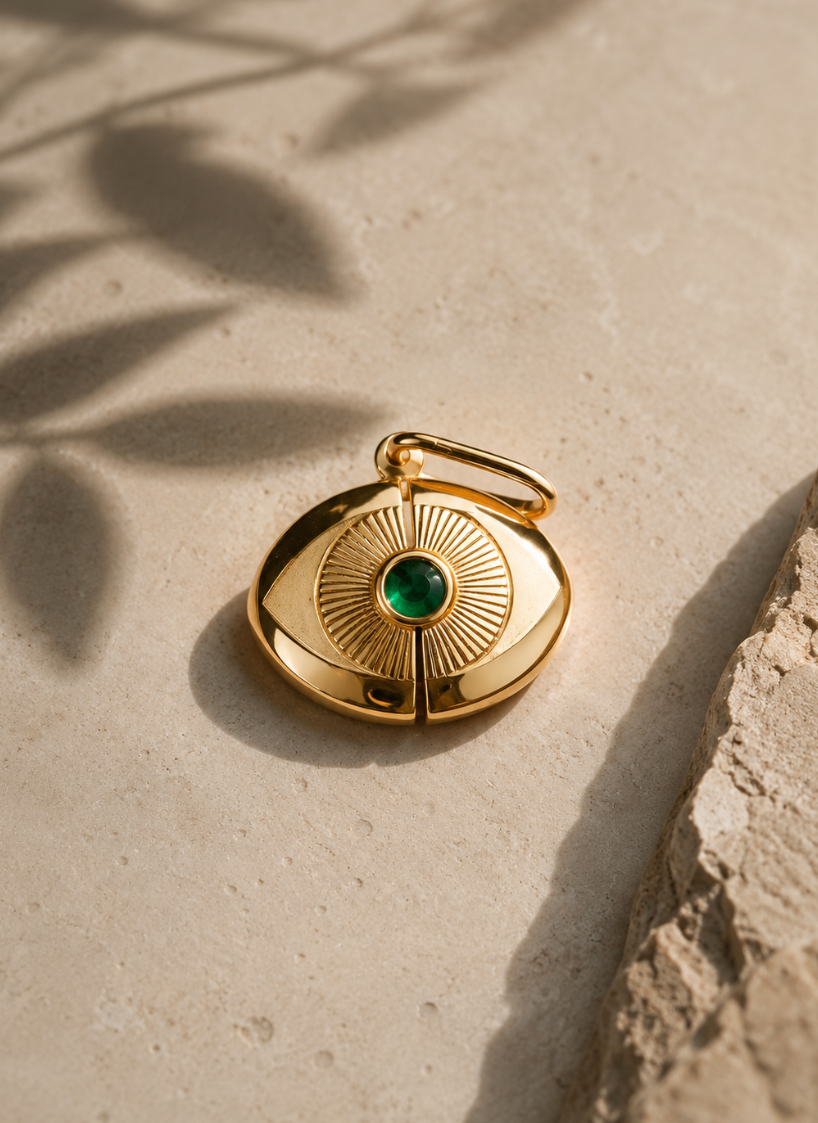
“I would describe my work as wearable treasures. Pieces that feel discovered rather than designed. I've always been drawn to objects that spark curiosity, the kind that make people stop and ask, ‘Where did you find that?’ Many of my designs combine gemstones, symbolism and unexpected elements in a way that feels both ancient and contemporary. I love creating pieces that seem to belong to a story, as though they carry a past, even when they are entirely new. More than anything, I want my work to feel distinctive. Not trendy. Not disposable. Not something that could belong to anyone. I want each piece to feel like a personal find, something that resonates deeply with the person who wears it. If someone looks at one of my pieces and feels they've discovered a small treasure that was somehow waiting for them, then I've achieved what I set out to create.”
Which artists influence you most?
“To be honest, I don't have a long list of artists who directly influence my work. In fact, I think much of my creative process comes from following my own curiosity rather than consciously drawing inspiration from specific creators. That said, if I had to name one artist whose work has always fascinated me, it would be René Magritte. What I admire most about his work is his ability to take something familiar and make you see it differently. His paintings challenge assumptions and invite you to question what you're looking at. There's a simplicity to his work, but also a sense of mystery and surprise that I find incredibly powerful. I think that's something I try to achieve in my own way. Many of the symbols I use, eyes, scarabs, serpents, gemstones, are instantly recognizable. Yet when they're transformed into jewelry, they invite a different conversation. People bring their own interpretations, emotions and stories to them. What I find most interesting is that no two people see the same piece in exactly the same way. Someone may be drawn to a piece because it feels protective. Someone else may see freedom, transformation or strength. Another person may simply fall in love with its beauty. I never want to dictate what a piece should mean. The moment it becomes part of someone's life, their story becomes just as important as mine.”
What is your creative process like?
“My creative process is less about following rules and more about following curiosity. I rarely begin by asking what is fashionable, what is trending, or what people expect to see next. Instead, I ask myself a different question: ‘What would I love to find if I stumbled across it?’ That question guides much of my work. As I work on a design, I follow what feels interesting rather than what feels predictable. Sometimes that leads to a highly detailed piece rich in symbolism. Other times it leads to something remarkably simple. The complexity of a piece is never the goal. The connection is. I keep refining until the design feels honest to itself, until nothing needs to be added and nothing needs to be taken away. I think the best designs have a sense of inevitability about them. As if they couldn't have become anything else.”
What is an artist’s role in society and how do you see that evolving?
“I believe an artist's role is to make the intangible tangible. To take something that exists only as a feeling, an emotion, a vision, a question or an experience, and give it form so that others can connect with it. To me, that's what art really is. It's the invisible made visible. The intangible made tangible. More broadly, I think beauty plays an essential role in human life. Beauty is nourishment for the soul. Whether it's a breathtaking landscape, a piece of music, a painting, a face or a piece of jewelry, beauty has the power to expand us. Sometimes it expands the heart. Sometimes it expands the mind. Sometimes it simply makes us pause and feel more alive. And the remarkable thing is that it doesn't always need to be understood. We don't need to explain why a sunset moves us or why a particular piece of art speaks to us. We simply feel it. In a world that is becoming increasingly focused on speed, productivity and efficiency, I think the role of artists becomes even more important. Because they create moments of connection, moments that remind us there is something more to life than simply getting through the day.”
Have you had any noteworthy exhibitions you'd like to share?
“Yes, over the past few years I have had the opportunity to exhibit my work internationally. A few years ago, I participated in a New York exhibition dedicated to emerging independent jewelry designers and new creative talent, an experience that allowed me to introduce my work to a broader international audience. More recently, I exhibited at The Winter Salon, and in June 2026 I will be exhibiting at The Summer Salon in The Hague, The Netherlands. For me, these exhibitions are valuable because they place my work in conversation with artists, collectors and visitors from different backgrounds and cultures, creating opportunities for discovery and exchange beyond the online world.”
Website: www.orommajewewlry.com
Instagram: @orommajewelry