Interview
Laura Bauer
Laura Bauer is a New York based contemporary artist with more than three decades of dedicated studio practice. Self taught, her work has evolved through a lifelong commitment to experimentation, intuition, and material exploration. While her practice has included ceramics, painting, and encaustic, it now centers on sculpture and installation, where materials themselves have become central to her work. Working with both traditional and unexpected materials, Bauer transforms everyday and discarded materials into abstract forms that invite curiosity, interaction, and new ways of seeing. Her evolving body of work includes modular sculptures and installations that challenge conventional ideas of permanence through movement, transformation, and viewer engagement. Guided by an intuitive process, Bauer allows materials to lead the conversation, embracing discovery as an essential part of making. Rather than repeating ideas, each body of work builds naturally upon the last, reflecting an ongoing investigation into the expressive potential of materials and the possibilities they reveal.
What is your background and how did you start your journey in the art world?
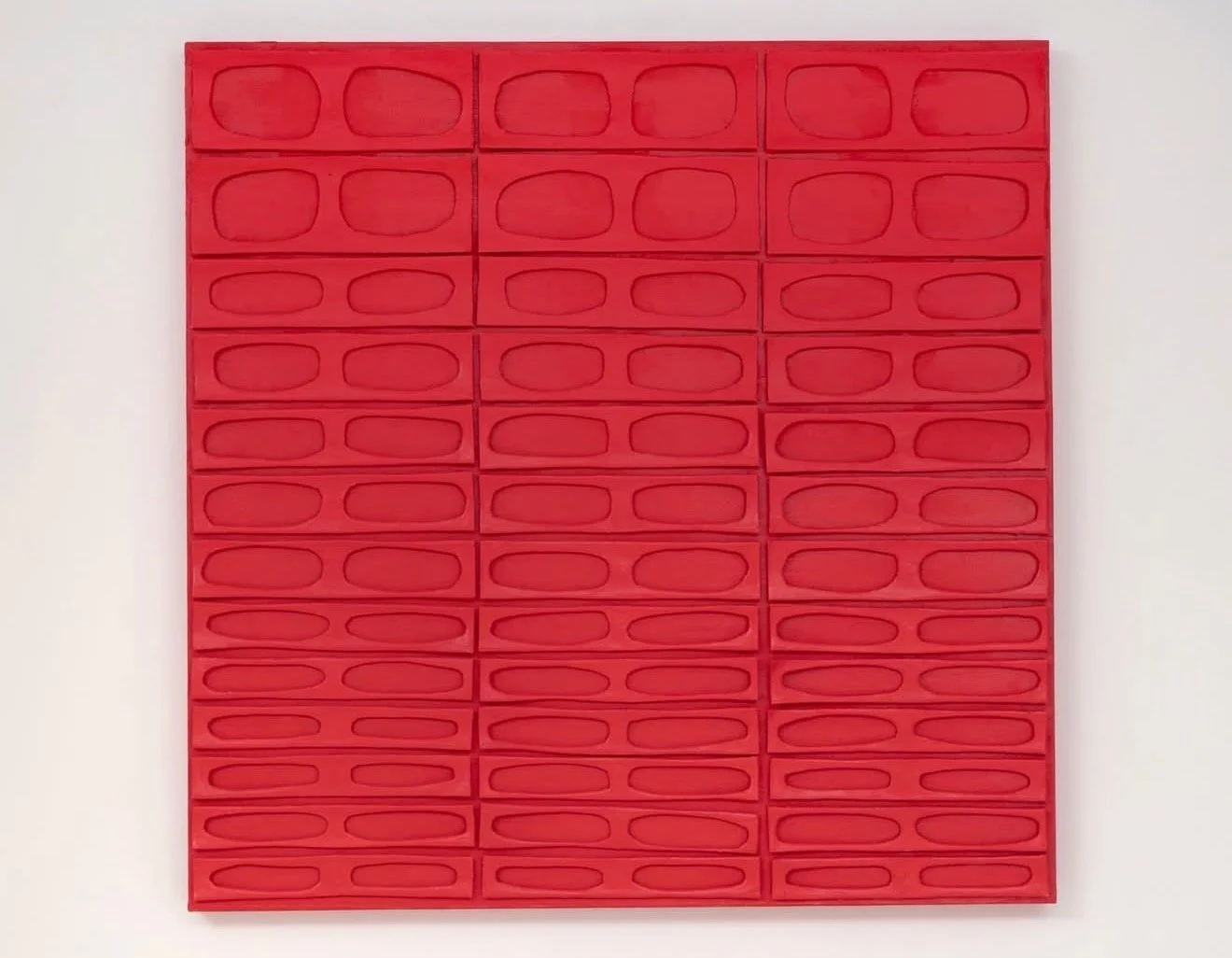
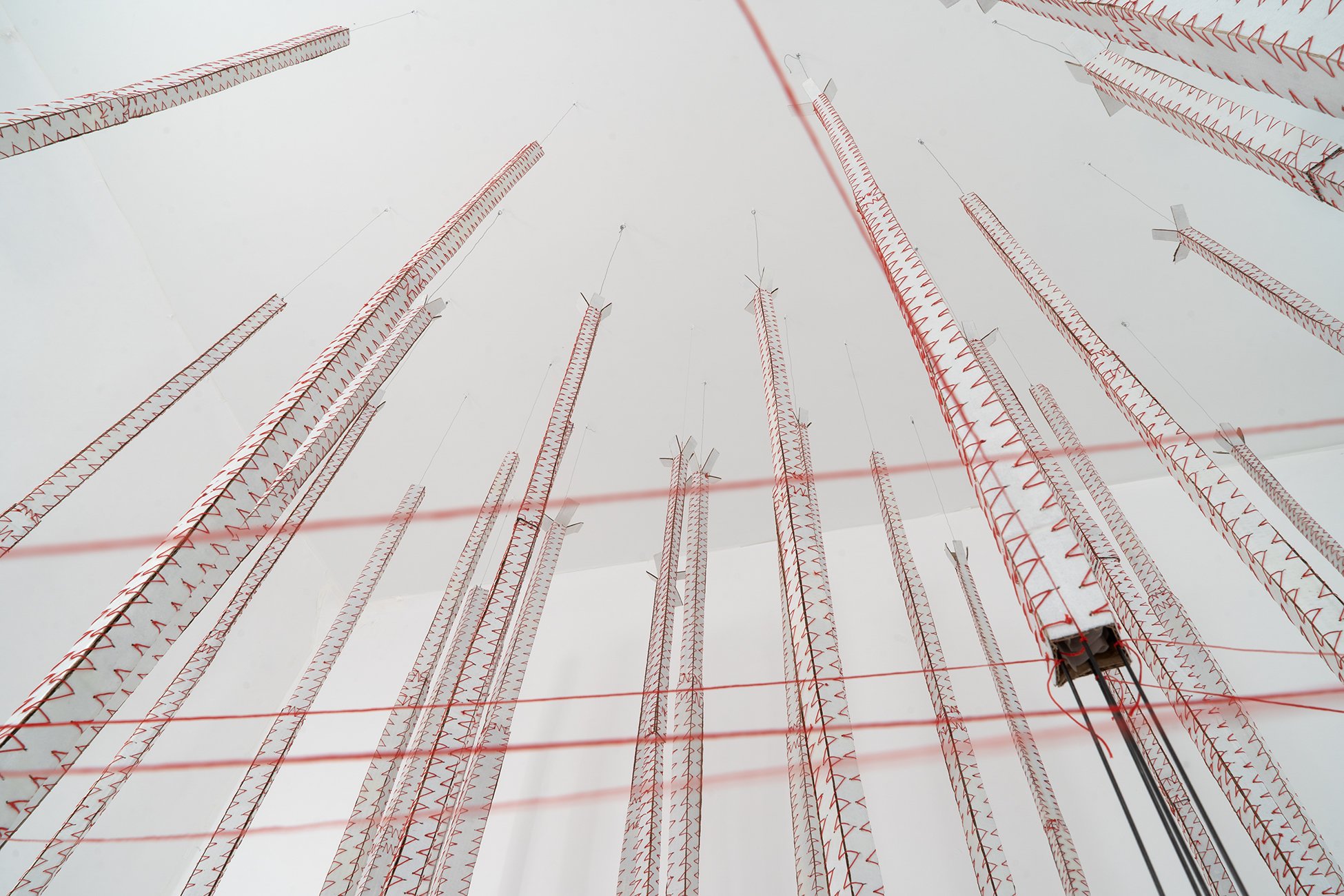
“I started making art as a little girl. Creating things always felt as natural to me as breathing, and I was happiest when I had materials in my hands. Even in high school, I practically lived in the art department. My art teacher gave me an unusual amount of freedom, encouraging me to explore, experiment, and teach myself whatever interested me. That independence shaped the way I still work today. In my twenties, I committed myself to a daily studio practice, teaching myself through experimentation rather than through formal art school. One of my earliest studios was my boyfriend’s gravel-floor basement, where I learned to throw on a kick wheel and discovered that making art wasn’t simply something I enjoyed—it was how I wanted to live my life. More than thirty years later, I still enter the studio with the same sense of curiosity. My practice has evolved from ceramics into sculpture, encaustic, stitched cardboard constructions, thermoplastic forms, and interactive modular works. Every new body of work grows naturally from the last, guided by experimentation and a willingness to let the materials reveal what they can become.”
What inspires you?
“I’m inspired by materials and the process of experimentation. I love discovering what a material can do when it’s pushed beyond its expected use. Often one piece leads naturally to the next, revealing possibilities I hadn’t anticipated. The studio is a place of exploration, where each work asks a new question and opens the door to another. After more than thirty years of making art, that sense of discovery still excites me the most. I’m always curious to see what comes next as I allow the work to unfold naturally, following my instincts and intuition and making decisions along the way.”
What themes do you pursue? Is there an underlying message in your work?
“I don’t begin with a fixed message or narrative. Instead, I allow the work to evolve through experimentation and intuition. Many of the themes emerge naturally during the making process. I’m drawn to ordinary, everyday materials—cardboard, paper, clothing, and other discarded consumer objects. I’m fascinated by their ability to be transformed into something unexpected, where what might once have been overlooked or considered waste is given a new presence and beauty. Through transformation, play, movement, and interaction, I hope the work invites curiosity and encourages viewers to discover their own meanings rather than presenting a single, predetermined interpretation.”
How would you describe your work?
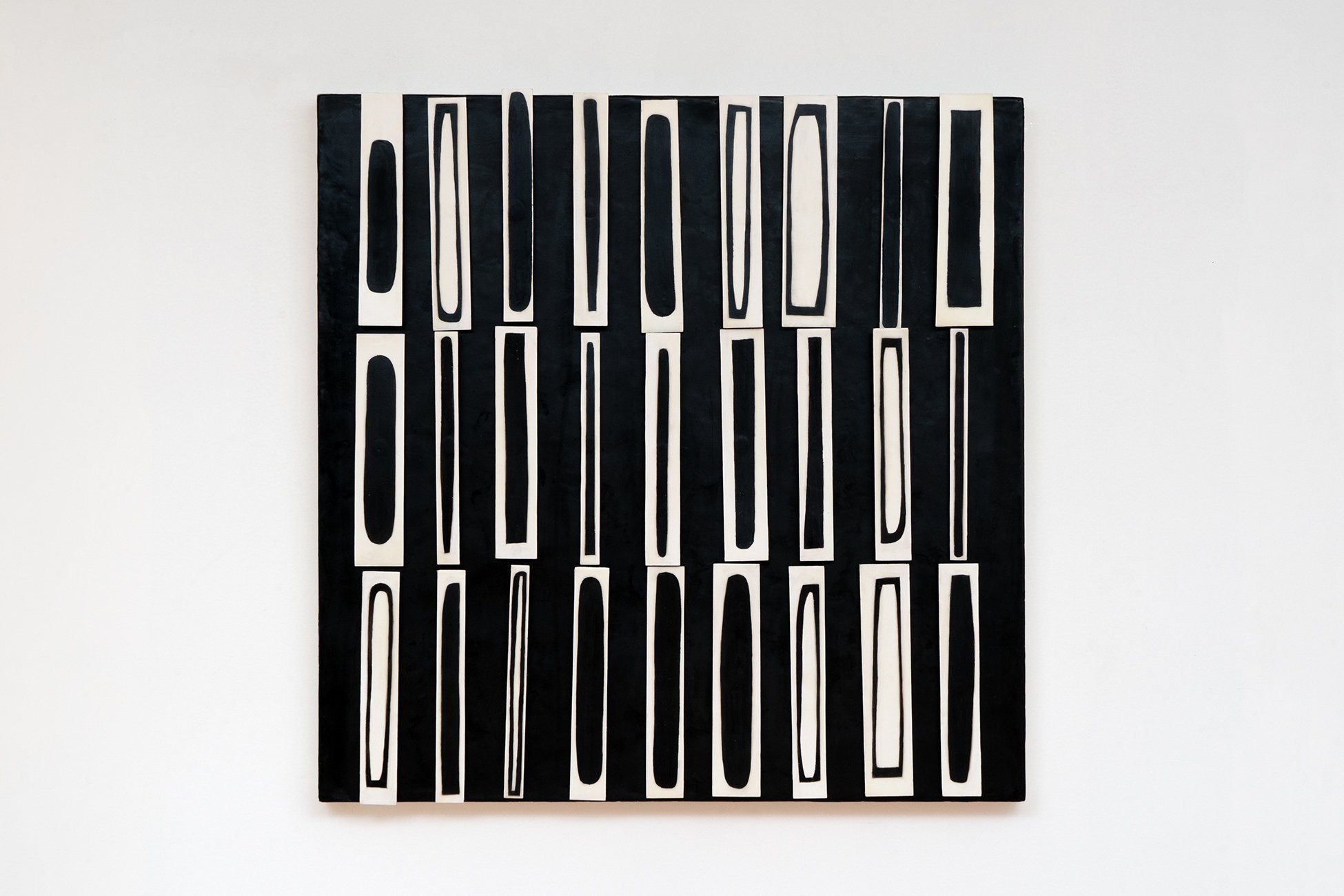
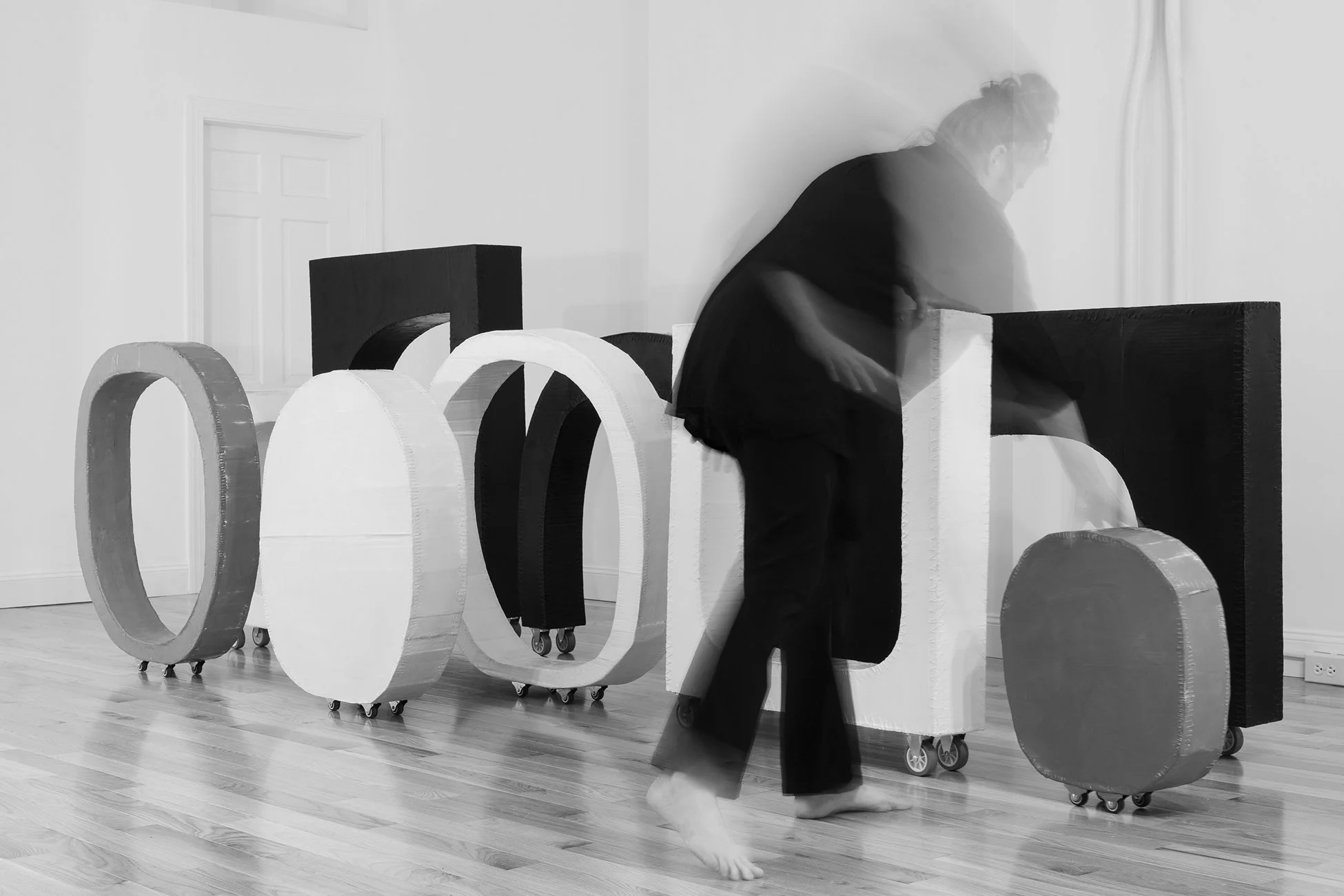
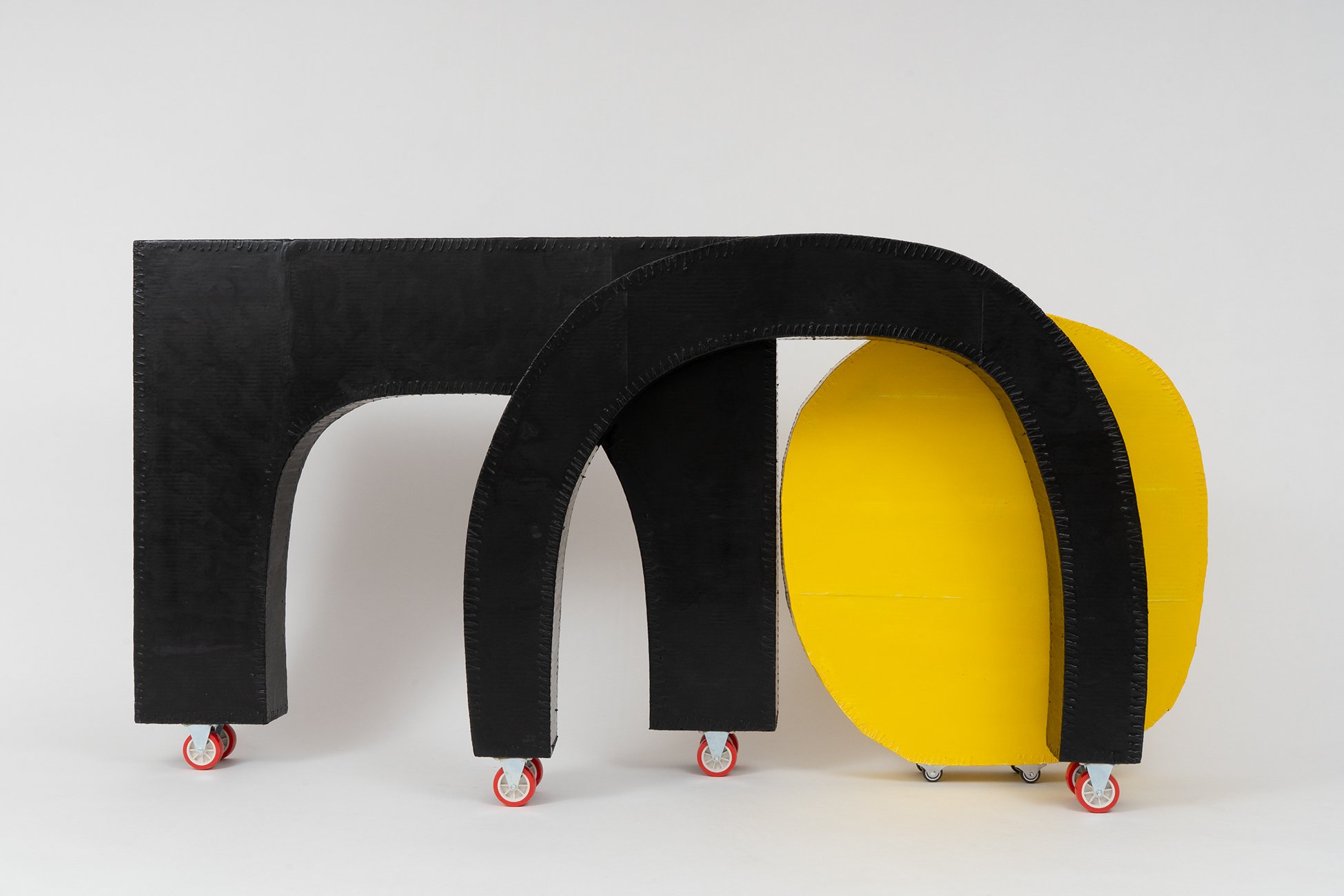
“Today my work centers on sculpture. Although painting and sculpture have always coexisted in my practice, I have now fully transitioned into three dimensional work. My sculptures are intentionally minimal in form. I often choose simple, familiar shapes because they allow the conceptual nature of the materials to take center stage. I work with both traditional and unexpected materials, frequently transforming discarded or everyday objects into something unfamiliar. Other times I discover an unusual material and simply want to explore it, to see how it behaves, what it can do, and where it might lead. The work is less about representation and more about revealing what a material can become. Many of my sculptures are modular or interactive, allowing them to be rearranged and continually transformed. I think of each piece as a snapshot of an idea rather than a final conclusion. Once I have discovered something meaningful, I do not feel compelled to repeat it. A single work becomes a marker, a way of remembering how I arrived there. I can always return to it if I choose, but I am equally drawn toward what comes next. My practice is guided by intuition, experimentation, and a willingness to let each discovery lead naturally to another.”
Which artists influence you most?
“I have always been drawn to the modernists and minimalists. Artists such as Alexander Calder and Mark Rothko have had a lasting influence on me, not because I want to emulate their work, but because of their ability to communicate so much with clarity and restraint. I admire artists who trust simplicity and allow form, material, space, and presence to do the work. At the same time, I believe it is important for every artist to find their own voice. While I appreciate the artists who came before me, my greatest influence comes from the process itself. Each new body of work teaches me something I did not know before and points me toward the next discovery.”
What is your creative process like?
“My creative process is intuitive and experimental. I rarely begin with a fully formed plan. Instead, I often receive brief mental images or dreams that reveal a form, a sculpture, or sometimes an entire installation. I see the work as a whole before I understand how to make it. The challenge then becomes translating those glimpses into reality. The path is rarely revealed all at once. I have to discover each step, solve each problem, and allow one piece to lead naturally to the next until the larger vision begins to emerge. Sometimes the most difficult part is deciding which direction to take because I can see so many possibilities. That is where I rely on instinct. Other times I simply have to try something. Not every idea works, but each attempt reveals something new and helps me find the next step forward. The studio is a place of exploration where making and discovery happen simultaneously. I spend a great deal of time observing how materials behave, testing possibilities, and responding to what unfolds rather than trying to force a predetermined outcome. Although my process appears intuitive, it is grounded in more than thirty years of daily studio practice. Experience has taught me to trust those initial visions while remaining open to what the materials themselves reveal. Often the finished work becomes a marker of a discovery, and that discovery naturally points me toward the next one.”
What is an artist’s role in society and how do you see that evolving?
“I believe an artist’s role is to remain curious, ask questions, and create work that offers people a new way of seeing. Art does not always need to provide answers. Sometimes its greatest strength is inviting us to pause, wonder, and experience something we have never encountered before. As society continues to change, I hope artists continue to value originality over conformity and authenticity over trends. Every artist has a unique voice, and I believe our responsibility is to develop that voice rather than follow what is expected or popular. For me, making art is an act of exploration. If my work encourages someone to slow down, engage with a material in a new way, inspires curiosity or wonder, or leaves them with the desire to create something of their own, then it has done its job.”
Have you had any noteworthy exhibitions you'd like to share?
“One of the most meaningful opportunities in the past year has been my invitation to collaborate with Arttyco, an international platform that has introduced my work to a broader global audience through curated online exhibitions and presentations. It has been a rewarding experience to see my work viewed alongside artists from around the world. Over the course of my career, I have participated in exhibitions that reflect the evolution of my practice from painting to sculpture. Each exhibition has marked a different stage of that journey, and I see them as important milestones rather than final destinations. More than any single exhibition, I value the opportunity to continue developing the work and sharing it with new audiences. I believe every body of work finds its place in its own time, and I remain excited to see where that journey leads.”
Instagram: @lbauerart