
Interview
John Bibby
John Bibby, known as Spirit Glow Art, is a UK-based self-taught painter whose work explores emotional narrative through vibrant colour, layered texture, and expressive form. His painting combines acrylic, resin, and mixed materials on stretched canvas, often blending abstraction with recognisable figures and symbols. In his Strong Woman series, he incorporates embedded bra straps as a striking visual and conceptual device to invite reflection on resilience, identity, and feminine strength. His paintings are marked by bold palettes, tactile surfaces, and a strong sense of movement, depth, and emotional resonance.
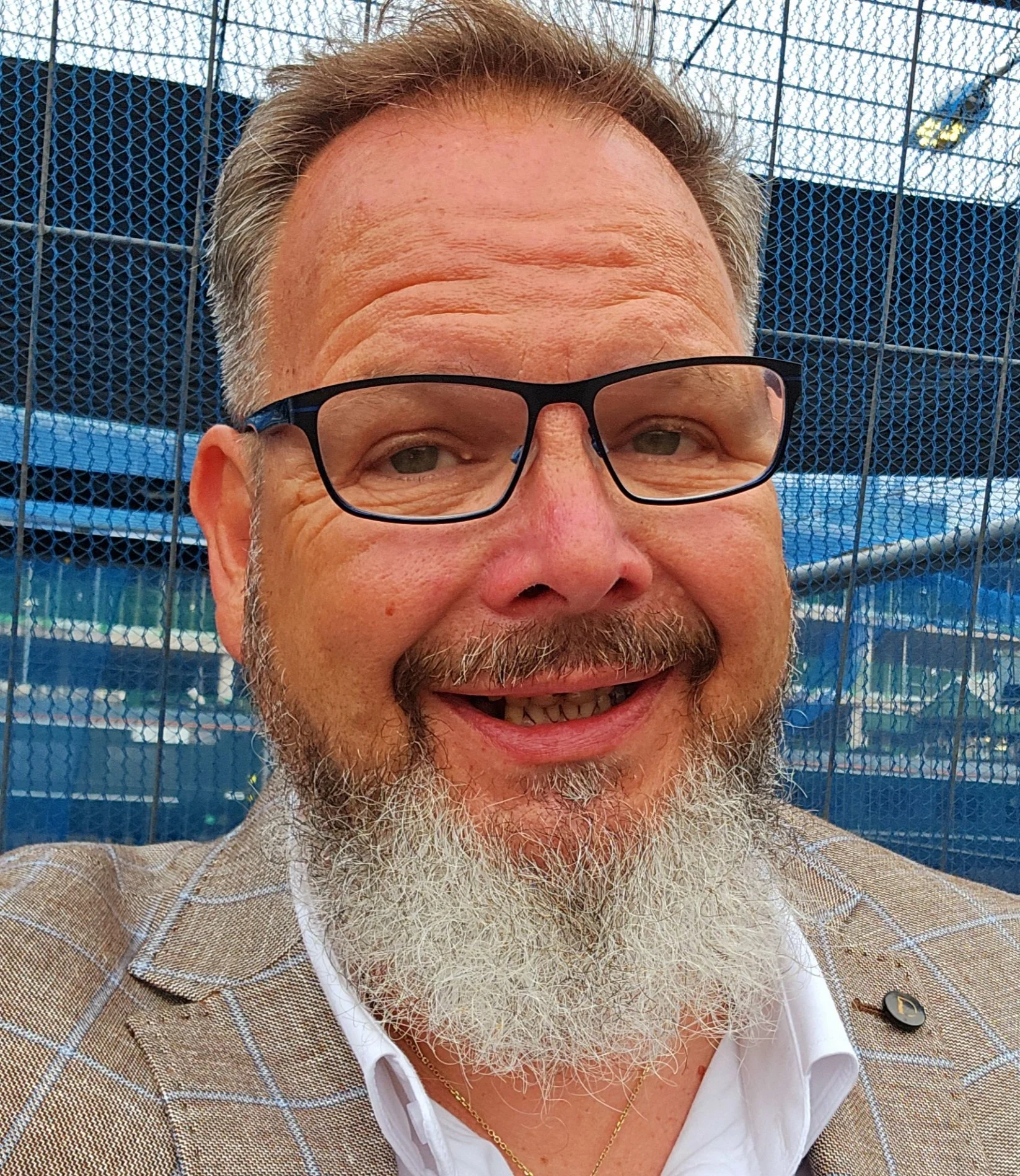
What is your background and how did you start your journey in the art world?
“I am self-taught, and I began painting after my wife passed away. At first, it was a way of coping with the stress of grief — a quiet, private space where I could process emotion and regain some sense of calm. What started as a personal healing practice gradually evolved into something much more significant. I have learned by doing: experimenting, failing, adjusting, and discovering what felt true to me. That freedom became an important part of my artistic identity. I became increasingly drawn to real emotional stories, expressing those with vibrant colour, movement, and the interplay between abstraction and recognisable forms. Over time, painting became not just a therapeutic outlet, but a deeply meaningful artistic journey and a new adventure in which I continue to grow. My work now reflects that path. It is shaped by intuition, emotional truth, and a willingness to let the painting lead as much as I do.”
What does your work aim to say? Does it comment on any current social or political issues?
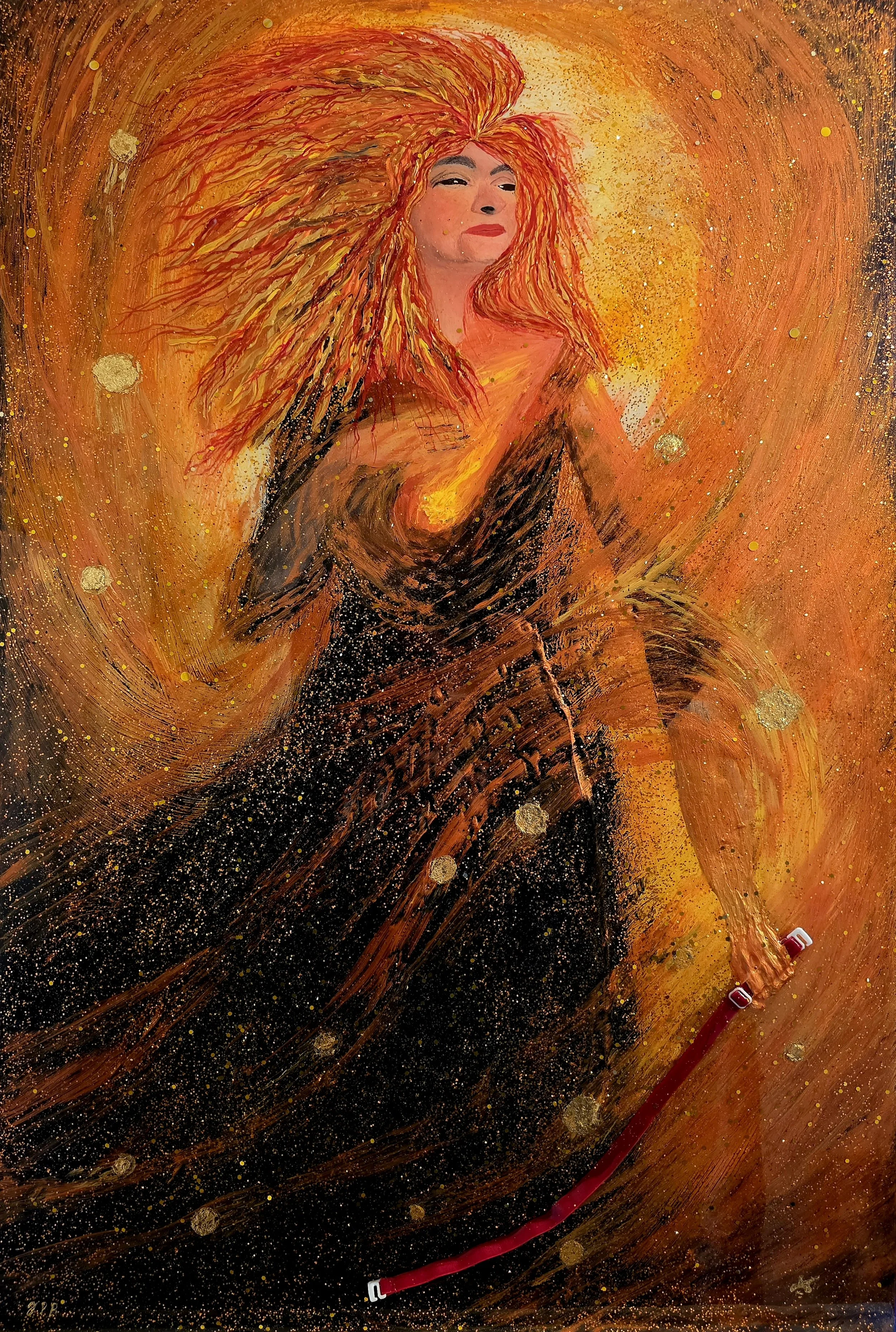
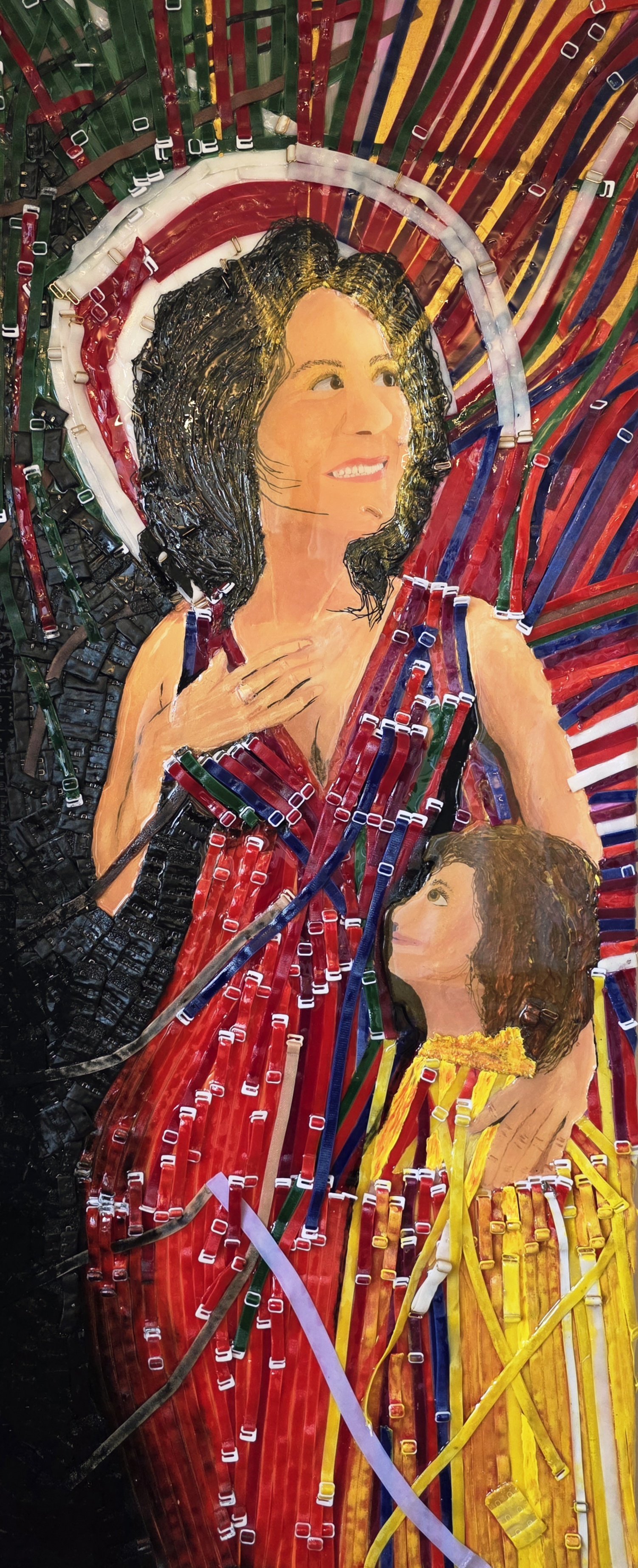
“My work aims to express emotional truth through colour, texture, and form. I’m interested in making paintings that carry feeling — whether that feeling is resilience, tenderness, strength, tension, or release. I often work in the space between abstraction and realism because I like the ambiguity that space creates. It allows me to suggest a story without over-explaining it, and it invites viewers to bring their own meaning to the piece. The Strong Woman series is a good example of this approach. In these works, I use layered paint, textured surfaces, resin, acrylic, and embedded physical materials to give the paintings a tactile, embodied presence. I also embed a bra strap into each piece in the series as a deliberate symbolic gesture. For me, that object becomes a point of conversation — something that can prompt reflection, curiosity, and dialogue. It adds another layer of meaning around femininity, strength, lived experience, and the complexity of identity. In She Carries Light, the bra straps become especially central to the work, with the material itself shaping the piece’s physical and conceptual identity. While I wouldn’t describe my work as overtly political, it certainly engages with social themes. The Strong Woman series touches on ideas around motherhood, resilience, identity, chosen strength, and the emotional labour carried by women. I’m interested in the way art can hold space for those themes without becoming didactic. I want the work to feel open, emotionally resonant, and human.”
Do you plan your work in advance, or is it improvisation?
“My process is a combination of planning and improvisation. I usually begin with a strong emotional or thematic direction, and sometimes with an idea of colour, composition, or symbolic content. In the Strong Woman series, for example, I knew I wanted each piece to carry a physical object — specifically a bra strap — because I wanted the material itself to become part of the conversation. That decision gives the work a conceptual anchor before the painting process even begins. I have borrowed a technique from industry project management, and that is the use of a ‘Definition of Ready’ and also a ‘Definition of Done.’ My definition of ready provides a check list that makes sure I have clear documented emotion(s) and emotional centre point, storyline and contents, colours, contrasts, depths and themes, before I choose a canvas and put paint to it. At the same time, I don’t want the painting to become too rigid or over-controlled. Once I begin working, I often respond intuitively to what emerges on the canvas. I let the layers build organically. I may alter direction, deepen a texture, change the balance of colour, or allow a spontaneous mark to stay because it brings energy to the piece. I enjoy that dialogue between intention and discovery. This balance is important to me because it reflects the way many of my paintings are experienced emotionally too: there is structure beneath the surface, but also movement, instinct, and a sense of something unfolding.”
Are there any art world trends are you following?
“I’m particularly interested in trends that value authenticity, texture, and emotional depth. There seems to be a renewed appreciation for work that feels handmade, layered, and visibly process-driven — work where the surface itself tells a story. That is very aligned with my own practice, especially in the Strong Woman series, where the layering of acrylic, resin, and embedded materials creates both physical and symbolic depth. I’m also following the continued interest in work that sits between abstraction and figuration. I think many viewers are drawn to pieces that leave room for interpretation while still offering a clear emotional anchor. That balance is something I strive for in my own work. I want the viewer to feel something immediately, but also to spend time with the piece and uncover more as they look. Another trend I find meaningful is the growing appreciation for art that carries personal narrative. Collectors and audiences increasingly seem to want to know not only what they are looking at, but why it matters to the artist. That’s important to me, because my work is deeply rooted in lived experience. The materials, the surface, the symbols, and the stories all work together to create something that feels both intimate and universal.”
What process, materials and techniques do you use to create your artwork?
“I primarily work with acrylic on stretched canvas, and I often build the surface using multiple layers of paint, resin, and texture materials. In the Strong Woman series, those materials are especially important because they create a tactile surface that feels physical and alive. I also embed real objects into the work, most notably the bra strap, which serves both a visual and symbolic function. It is there to generate thought, conversation, and emotional response. In Fierce Love, for example, the layered resin and acrylic create a strong sense of movement across the surface, and the embedded metallic specks add energy and visual sparkle that shifts as the light changes. That interplay between depth, movement, and reflective detail is something I’m very drawn to. It creates a living surface rather than a flat image. My technique is very much about layering — not only visually, but emotionally. I build up the painting gradually, allowing earlier marks and textures to remain visible underneath later stages. That creates a sense of history and presence. I want the surface to feel worked, lived-in, and emotionally rich. The texture is not decorative; it is part of the meaning. Colour is also central to my process. I use it to guide mood, create contrast, and generate feeling. I’m especially interested in the tension between warmth and intensity, softness and energy, stillness and movement. These contrasts help the work feel dynamic and emotionally layered.”
What does your art mean to you?
“My art means a great deal to me because it is both personal and transformative. It began as a way of dealing with grief and stress, but it has become something much bigger — a way of making sense of life, emotion, memory, and identity. Painting gives me a language for what is difficult to say directly. The Strong Woman series in particular is very meaningful to me because it brings together material, symbolism, and emotional narrative. The physical presence of the bra strap, the texture of the surface, and the layered build of the work all reflect the complexity of what strength can look like. Strength is not always loud or obvious. Sometimes it is carrying, enduring, softening, surviving, or loving fiercely through difficult circumstances. What matters most to me is that the work connects. I want my art to create a genuine emotional response — to make people feel seen, understood, or moved. When a painting sparks a memory, a conversation, or a sense of recognition in someone else, that is incredibly powerful. That connection is part of the artwork’s meaning for me.”
What’s your favourite artwork and why?
“My favourite artwork is Fierce Love. I’m especially drawn to the sense of movement that runs throughout the piece, created through the multiple layers of resin and acrylic and the embedded metallic specks. Those details give the surface a dynamic quality — the light shifts across it, the layers interact, and the whole work feels as though it is still in motion. What I love most about Fierce Love is that it balances strength and energy with emotional depth. It feels alive to me. The layering creates physical richness, while the metallic elements add a sense of vitality and lift. It is a piece that holds both force and tenderness, which is something I value deeply in my work. It captures, in a very direct way, the kind of emotional and visual tension I am always trying to create in painting. For me, a favourite artwork is not simply the one that looks most polished — it is the one that best captures a true artistic moment, where material, feeling, and movement come together in a way that feels honest and complete. Fierce Love does that for me.”
Have you had any noteworthy exhibitions you'd like to share?
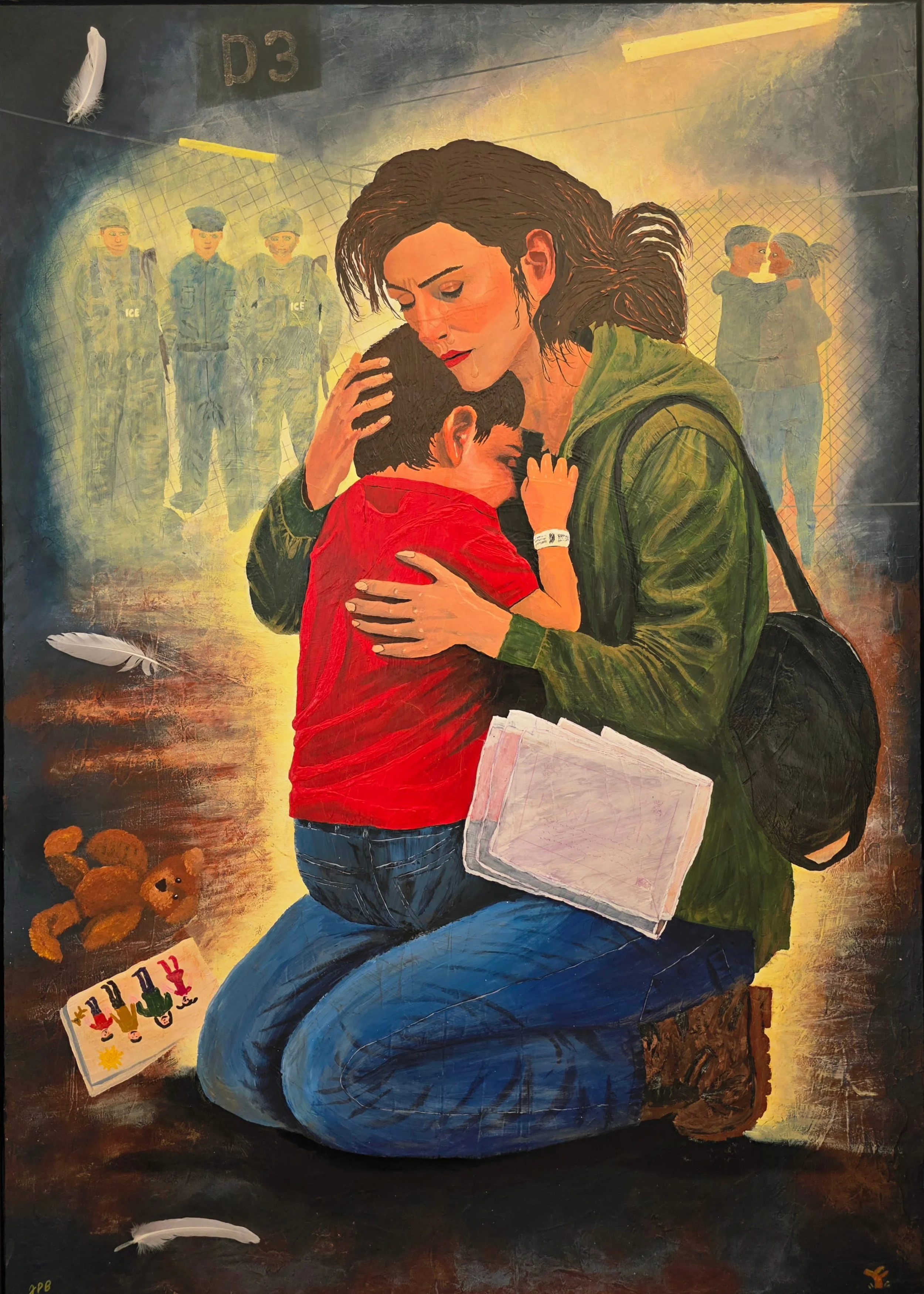
“One of the most noteworthy experiences for me was Leamington Art in the Park Festival, particularly because of the emotional response people had to Reunion – Safe at Last. That piece generated very real, very human connections, and seeing the physical impact it had on viewers was immensely powerful for me. What moved me most was not simply that people liked the work, but that they saw themselves in it. Hearing responses such as, ‘I am a mother too,’ or ‘I have had to leave my son back in my country fighting for our country,’ brought home just how deeply art can resonate when it touches on lived experience. Those moments were incredibly meaningful because they showed me that the painting had reached people in a personal and emotional way. For me, that is the most important part of making art. I want to create work that does more than sit on a wall — I want it to connect, to communicate, and to move people. When viewers are emotionally impacted by a piece I’ve created, that is the deepest form of success. It confirms that the artwork has found its way into someone else’s life and experience, and that is something I find profoundly rewarding.”