Interview
el Pinch
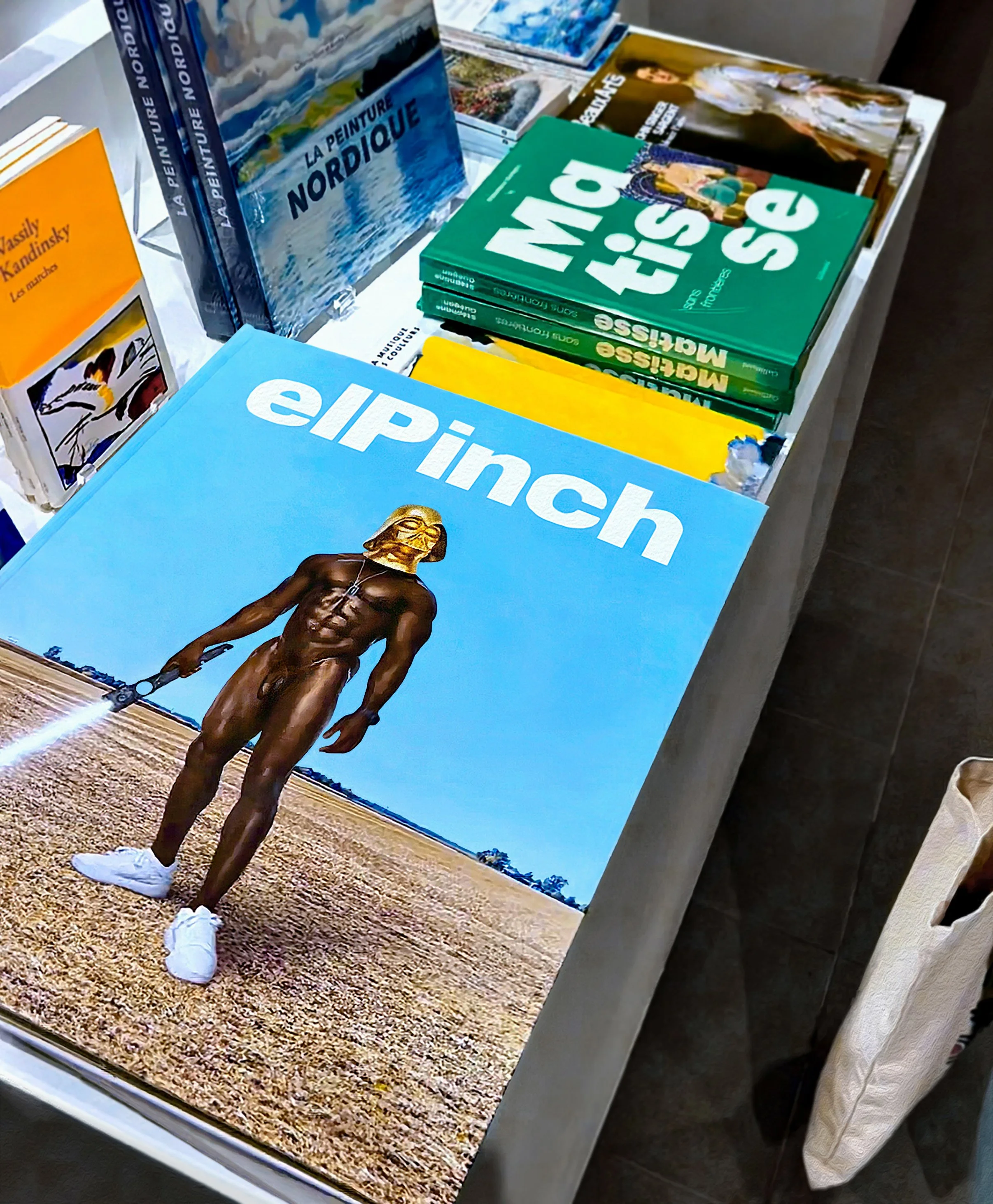
An emerging artist, El Pinch embodies a unique artistic approach, combining precise imagery with a profoundly contemporary vision. He imbues his works with a classical aesthetic inspired by the great portraitists of the past, while simultaneously situating them within a resolutely modern, even visionary, universe. Every detail, rendered with almost obsessive care, invites reflection on the inconsistencies and dictates of contemporary society, where appearances tend to stifle authenticity and the courage to be. His art, straddling the line between surrealism and hyperrealism, questions, engages the intellect, and invites the viewer to broaden their perspective and reflect on the world.
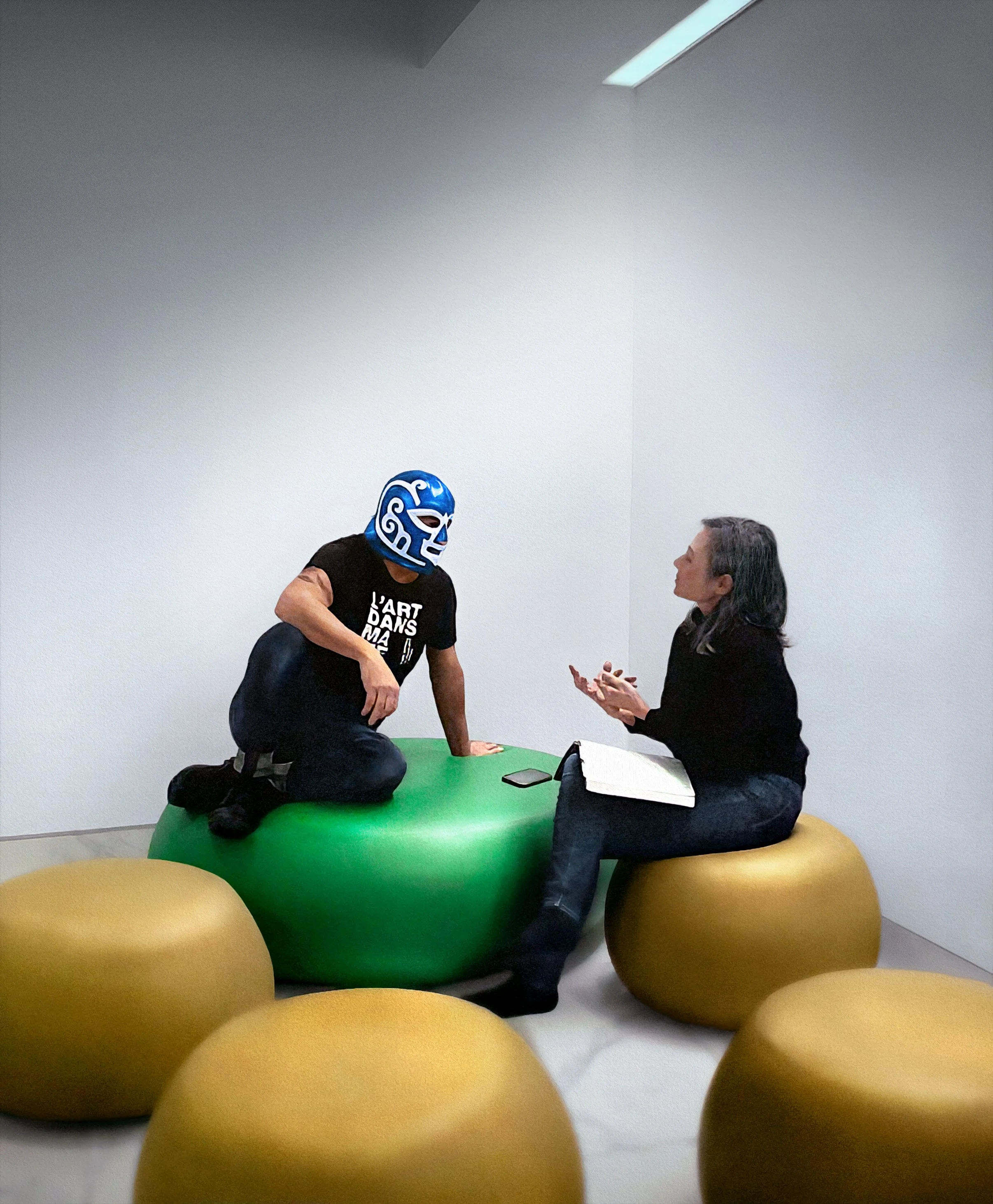
Interview: written by Line Dicaire
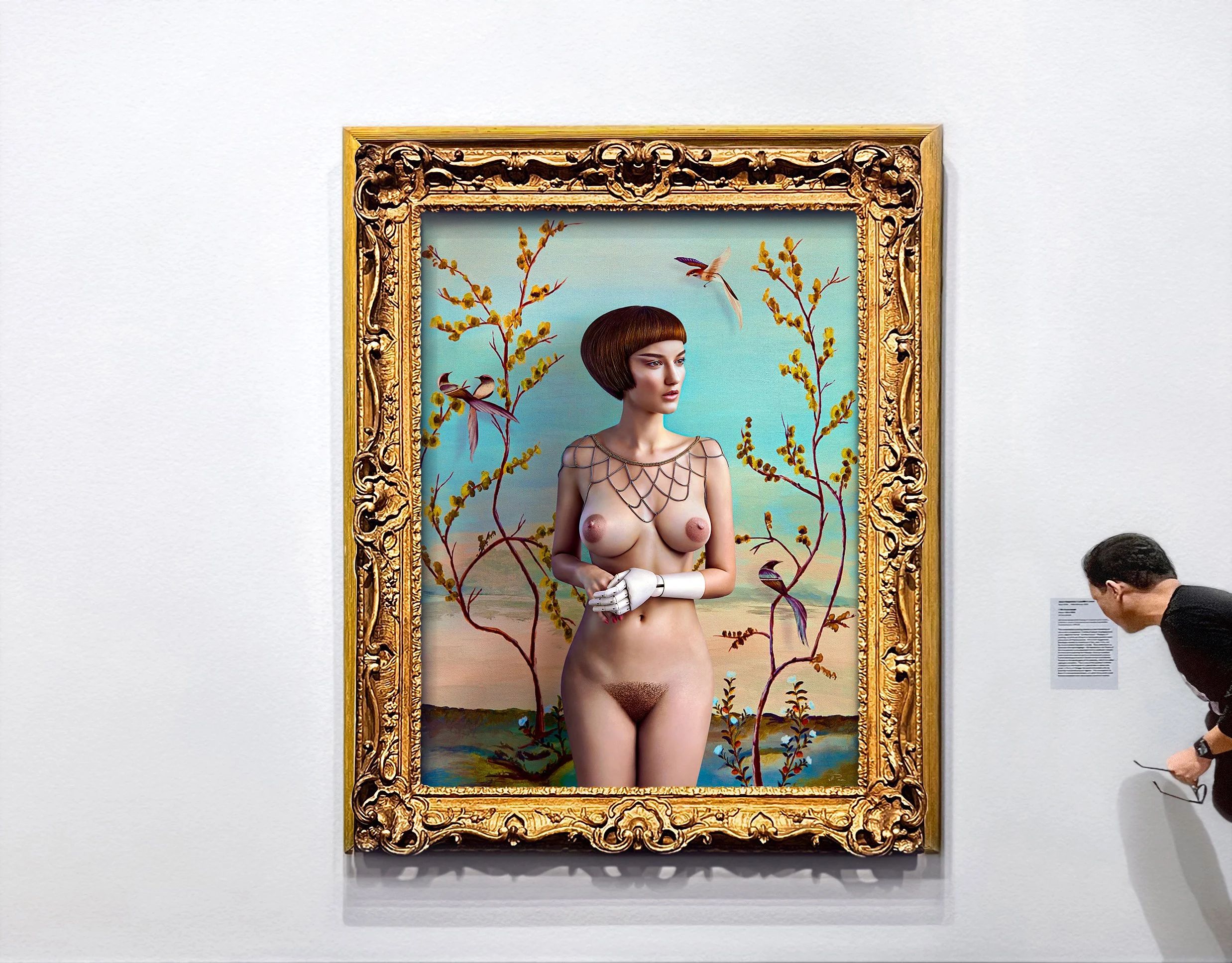
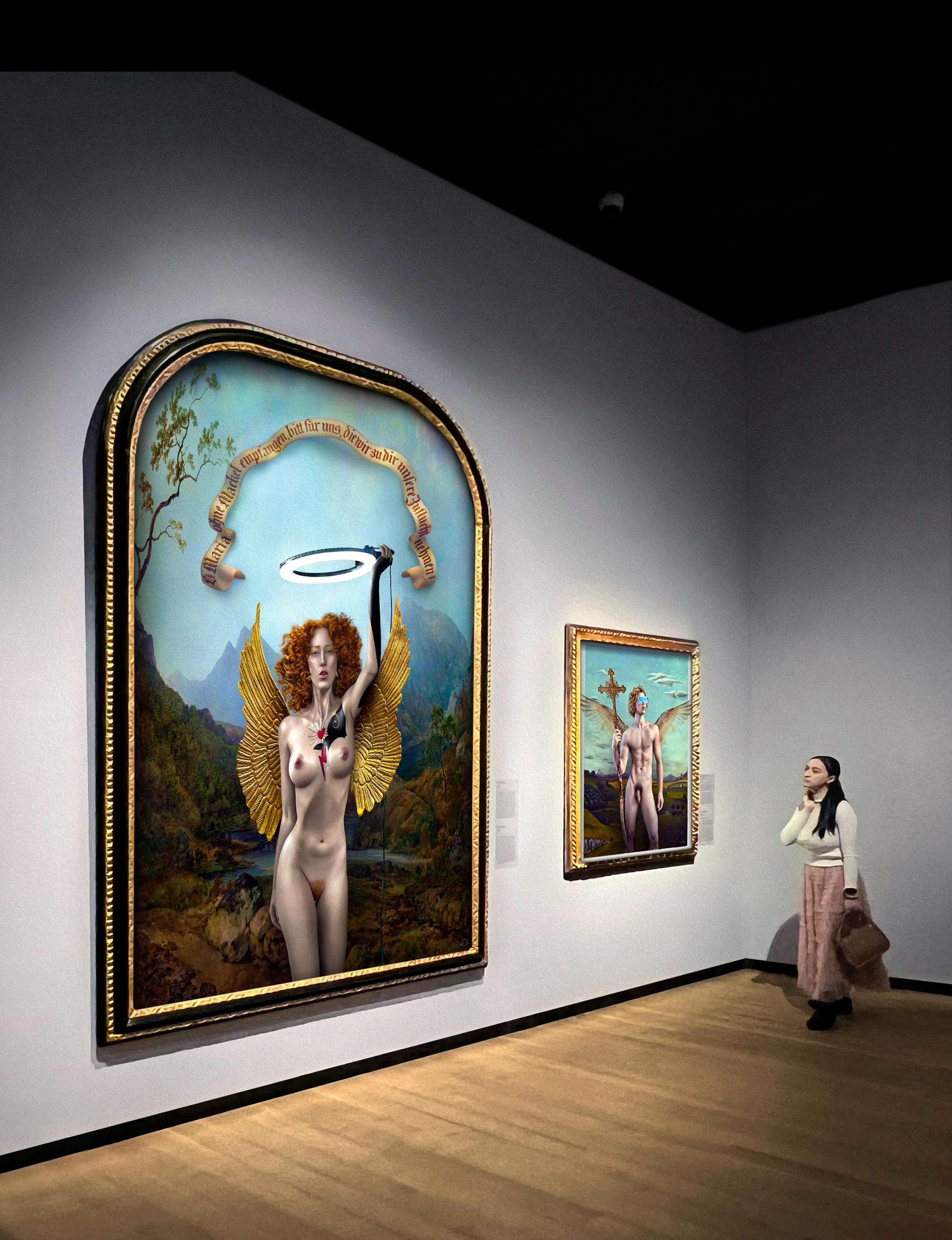
By introducing contemporary and often disparate elements into Renaissance-style compositions, the artist creates a visual dialogue between past and present, subtly transforming the nude subject into something akin to deification. The choice of noble materials, such as gold, paint, and canvas prints enhanced with a varnish reminiscent of oil painting techniques, lends his works a timeless and naturally rich quality. This meticulous treatment of subject and image allows the artist to produce a personal and refined iconography that suggests both the style and theme of the Renaissance and, by extension, the Resurrection and Origin. EL Pinch's works, both intellectual and visually striking, possess a narrative and aesthetic depth, positioning them among the most relevant pictorial creations of our time.
What does your work aim to say? Does it comment on any current social or political issues?
“Everything starts with my own feelings about everything I perceive in the world around me, socially and politically. I am human, pragmatic, and emotional, and I am a product of my time. Without clearly intending to, expressing my view of things such as overconsumption can provoke reflection and reaction in those who encounter my work. I like to give them the freedom to perceive the echo that my works produce in their own imagination. My intuition has often led me to create visionary works without even knowing it. Currently, I must admit that the rapid and uncontrolled development of artificial intelligence prompts me to reflect on its misuse and the inevitable loss of reference points in reality, whether in the representation of the concrete or the relational world. Where is the truth, the essence, in this sea of information, proposals, and products? Of course, this is a question that could have been asked before the advent of AI, but now it leaves an abysmal void beneath the foundations of thought and emotion. My works exhibit contrasts between elements from different contexts and different eras, revealed through the diverse details presented. The whole exacerbates the desire to find meaning in them or exerts a significant impression.”

Do you plan your work in advance, or is it improvisation?
“The nature of my work requires significant preparation, whether it be organizing photo shoots with models, preparing them, or creating or adapting props prior to the shoot itself. This is followed by image and canvas processing, for which I refrain from using artificial intelligence, and then the processing of the final canvas rendering. I insist that everything be done by hand in order to achieve a timeless finish. Improvisation is still present, however, as certain elements come with unexpected constraints that I must remedy or with which I allow myself to play in order to see a result emerge that I had not fully anticipated.”
Are there any art world trends are you following?
“The definition of art itself can be flexible. Art can be found in almost anything, provided that some form of organization is present. I have always had a broad perspective, and the visual and auditory immersion in the different worlds and works that I have encountered or observed throughout my life has made me the creator that I am today. My current signature style emerges from my observation of natural structures and the worlds of advertising, architecture, movement, etc. To say that I am following a specific trend would not accurately define me. However, among all the things that attract me, I would say that the pictorial universe of Gucci and the music of Björk hold an important place.”
What process, materials and techniques do you use to create your artwork?
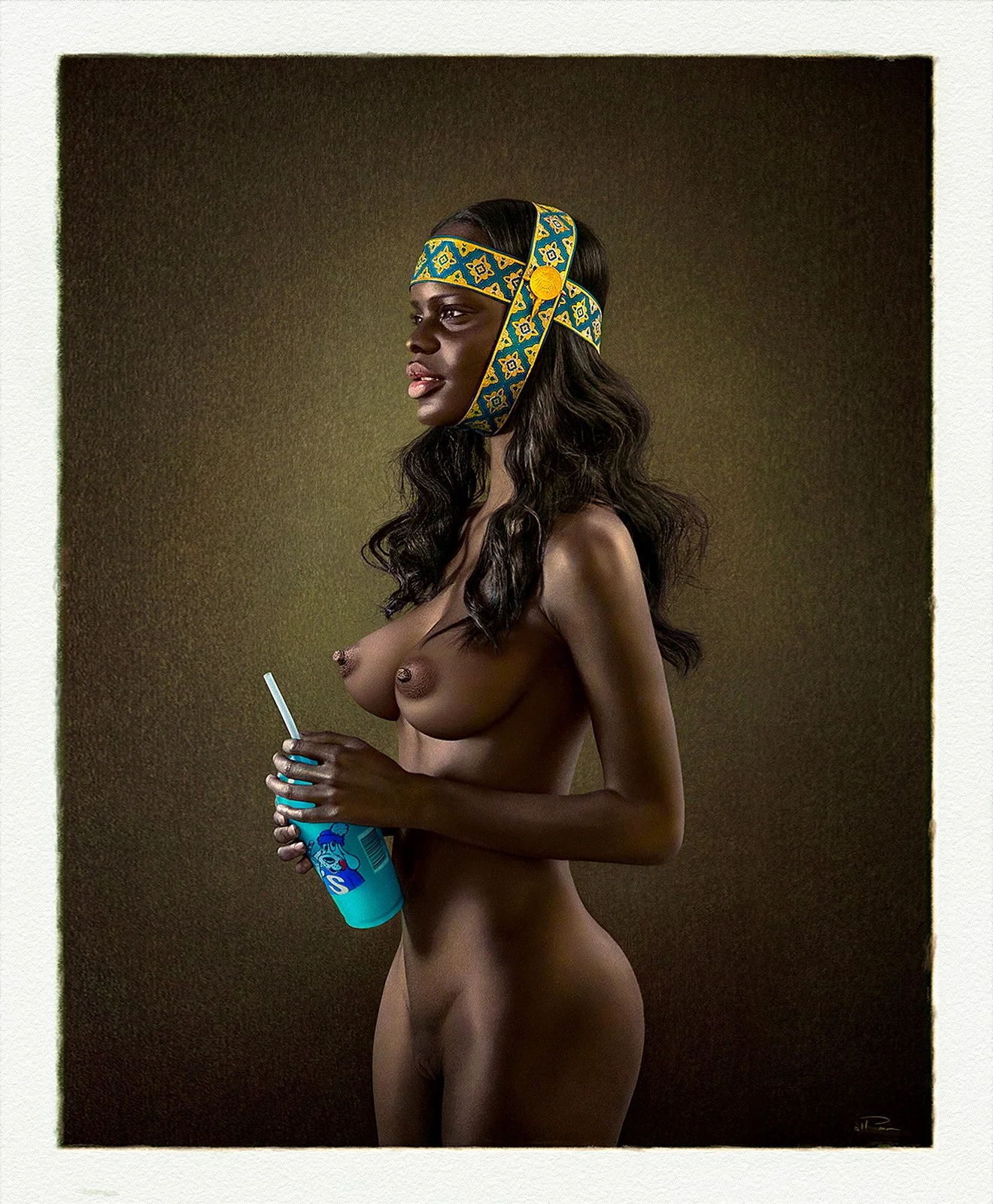
“I use a wide range of processes and materials, but all involve hands-on manipulation. No artificial intelligence is used. The naked human model remains the raw material of my work. I pay close attention to all the details related to their hairstyle, makeup, the objects they handle, the setting, the context, and the staging. I carefully think about, create, or adapt the objects I imagine beforehand. Materials and colors are important. The skin finish itself is treated with a dry oil to provide a finish that reflects light in a specific way. The light is nearby and is sometimes natural, sometimes artificial, and is carefully directed as if it were a natural source emanating from a window, much like in the portraits of Flemish Renaissance painters. The photos are then processed by computer, mainly using brush or light painting tools. Each work requires between 40 and 100 hours of processing. The photo is then printed on canvas, which in turn is varnished to provide a natural finish similar to the oil paintings of the great masters of older painting.”
What does your art mean to you?
“It's rather difficult to express because my art comes from a deep intuition and energy that I don't question much. I feel my art. However, the image or concept that comes to mind to define it is that of a supernova: the extremely violent and brilliant explosion of a star at the end of its life. It is one of the most energetic phenomena in the universe and a key stage in the life cycle of stars. A supernova can give birth to something else. That's how I feel about my art. I use my movements, my iconography acquired over the years, my memories, music, and the vibrations around me to produce a work in which I transcend myself into another dimension, beyond time and space.”
What’s your favourite artwork and why?
“My favorite work among those presented here is ‘Freedom.’ This work effectively represents the power of icons. The portrait is well defined and represents the nostalgia of gestures. Nudity is fully embraced.”


Have you had any noteworthy exhibitions you'd like to share?
“I created several series of works, including one entitled ‘Resurrection.’ It is a hymn to the return to life. Without having clearly established it at the outset, this theme represented a profound reflection on my own artistic journey. In this series of paintings, the visual dialogue between past and present subjected the nude model to a subtle transformation toward deification through the addition of colors, materials, and objects symbolizing an atmosphere specific to the religious iconography inherited from my childhood.”