
Boris Rachkovsky
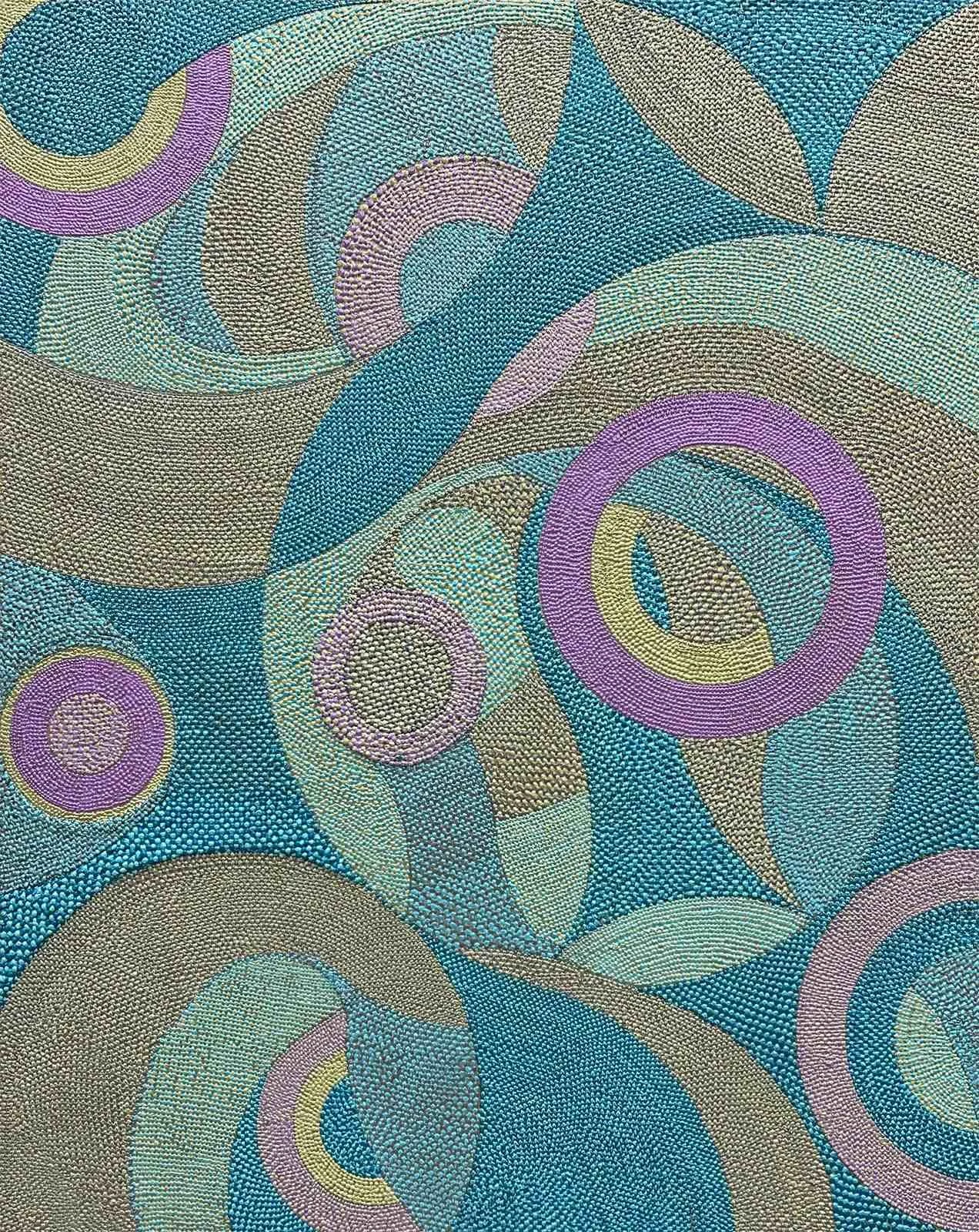
Dropillism is an original painting technique in which the image is built from individually applied, raised drops of acrylic paint. Each drop retains its physical volume and colour, so the painting is experienced as both an image and a relief surface shaped by light, shadow, distance and the viewer’s movement.
Could you introduce your artistic practice and explain what led you to develop Dropillism?
“I am an abstract painter and the creator of Dropillism. In this technique, the paint is not only a means of applying colour: its physical form becomes part of how the image is built. The defining principle is that each mark remains present as a small volume of paint rather than disappearing into a flat surface. That principle is the basis of Dropillism.”
What is Dropillism, and how would you describe its defining principle?
“Dropillism is a painting technique in which an image is constructed from separate, raised drops of paint. I apply the drops individually and preserve their rounded, three-dimensional form. Each one remains a material unit within the larger composition. The work therefore has a painted image and a real relief surface at the same time.”
How do you make a Dropillist painting?
“I work on a horizontal surface and apply acrylic paint directly from the tube, drop by drop. I do not blend the colours together on a palette before applying them. Instead, the colours meet in the composition while each drop keeps its own identity and volume. The process is slow and deliberate: the placement, size and colour of each drop contribute to the whole.”
How do you balance planning and decisions made while working?
“I establish the composition and its main structure before I begin applying the drops. The execution then depends on many local decisions: where a particular colour belongs, how the drops relate to one another, and how the surface develops across the canvas. The method combines an overall plan with careful decisions at the level of each individual unit.”
What role do light and the viewer’s position play in the finished work?
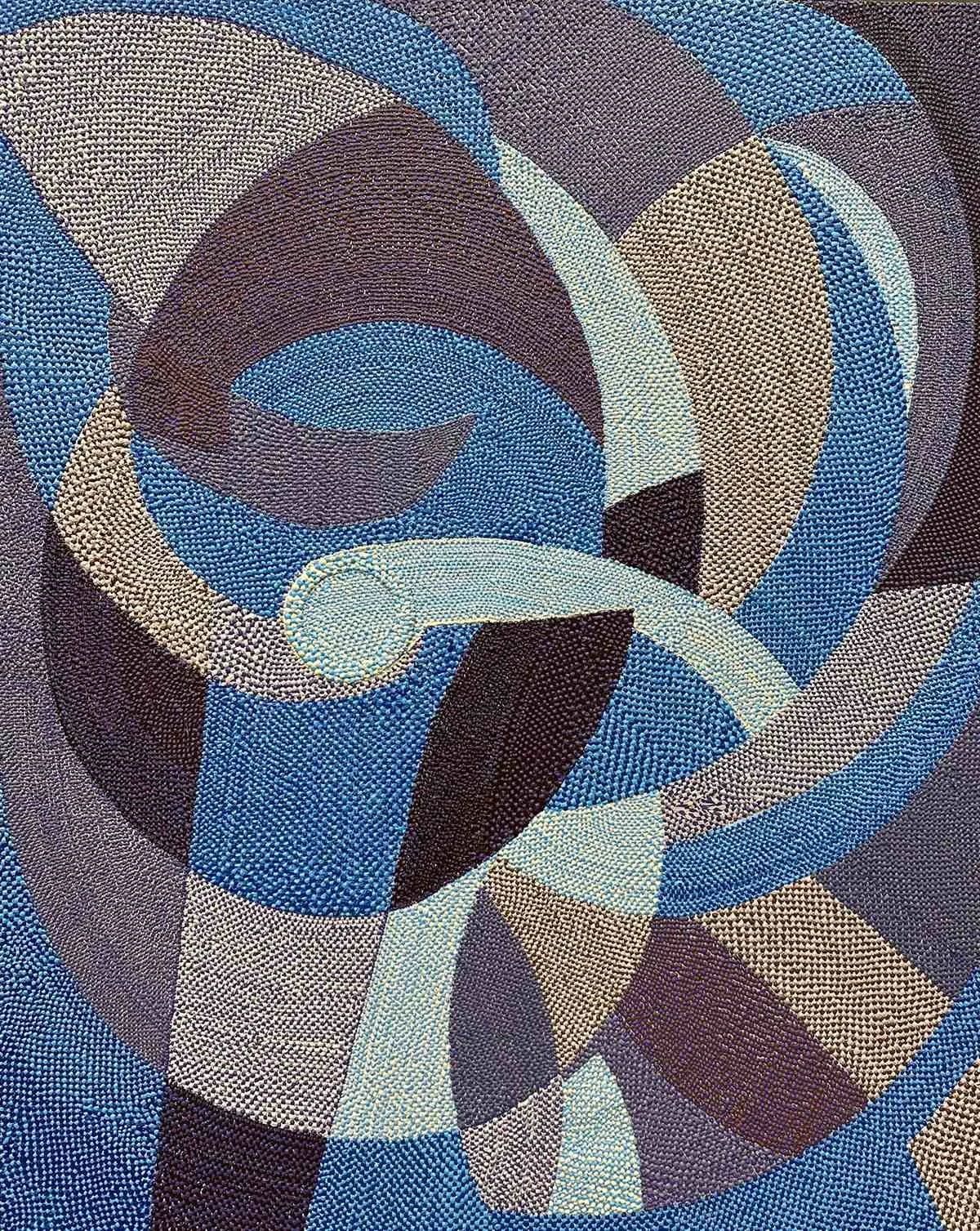
“I see it this way: the raised drops on the canvas reflect the incoming light, while their colours interact to create new colour combinations. The shadows cast by individual drops bring the surface together and give it a velvety quality. As the viewer changes position, highlights and shadows shift, and the relief is perceived differently. From a distance, the drops form the overall composition; up close, the shape of each one becomes visible. The painting therefore looks different from different distances and angles.”
How is Dropillism different from Pointillism or a pixel-based image?
“The resemblance is limited to the idea of building an image from separate units. In Dropillism, each unit is a physical drop of paint with its own height, contour and shadow. It is not a flat dot or a digital pixel, and the aim is not to make the units disappear through optical colour mixing. Their material presence remains visible in the finished painting.”
Which work would you choose to help a viewer understand Dropillism?
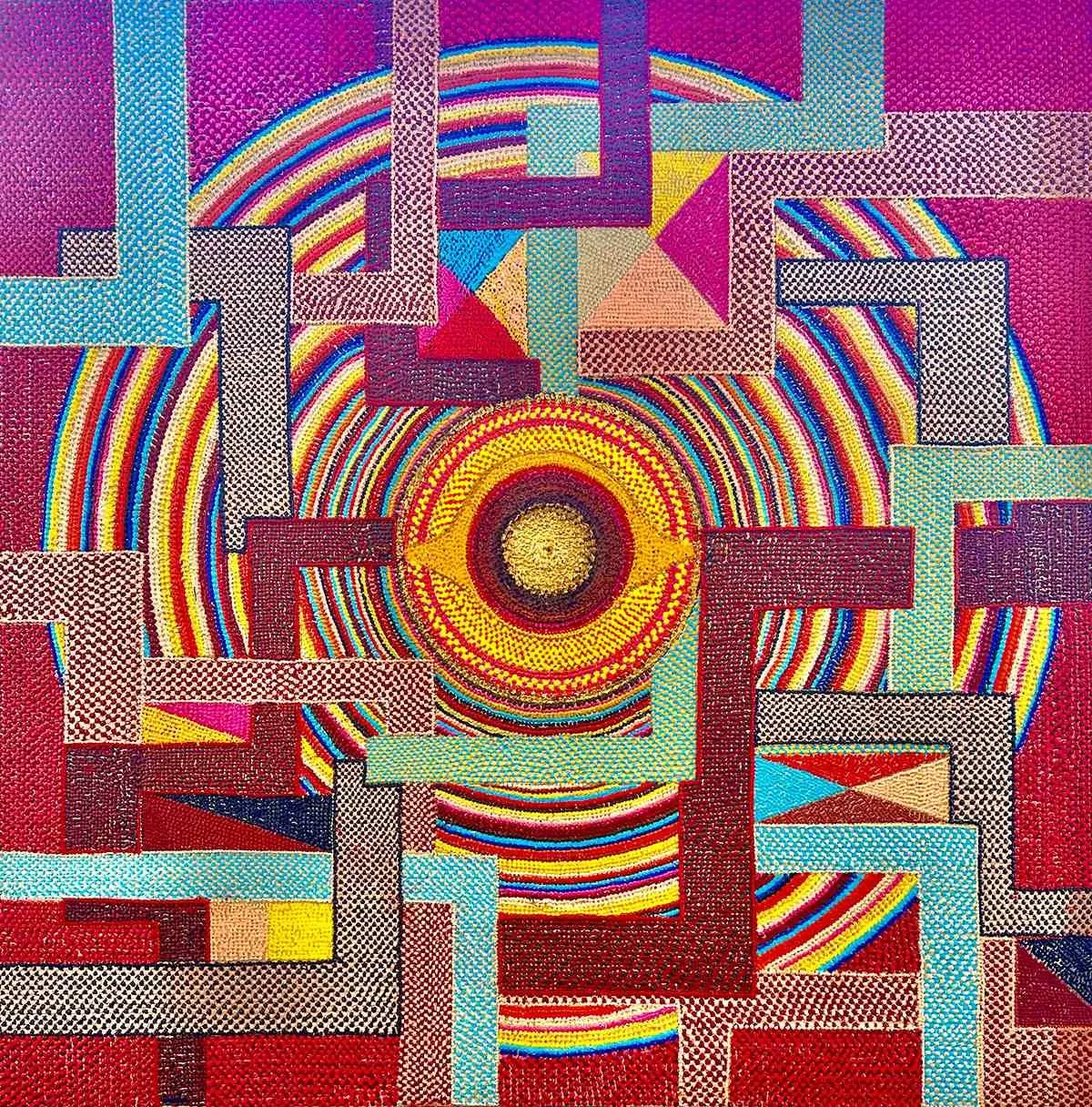
“Squaring the Circle (N° 157, 2026) is a strong introduction. It is a 100 × 100 cm acrylic painting on canvas. Its geometric organization makes it possible to see both the larger composition and the individual drops that form it. I would also include Dissectio and Noema, because they show how the same technique can support different compositions.”
What has exhibiting your work taught you about how people encounter Dropillism?
“At art3f Monaco in September 2026, visitors often responded to the colour and the depth of the surface. Comments such as ‘Très coloré, belle profondeur’ were useful because they referred to qualities that are central to the technique: the colour is seen together with the physical depth of the drops. I would like viewers to take time to look from different distances and notice how the surface changes with light.”