Interview
Bianca Youngers
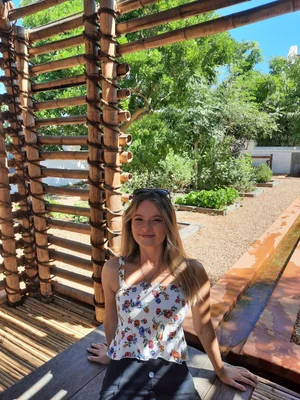
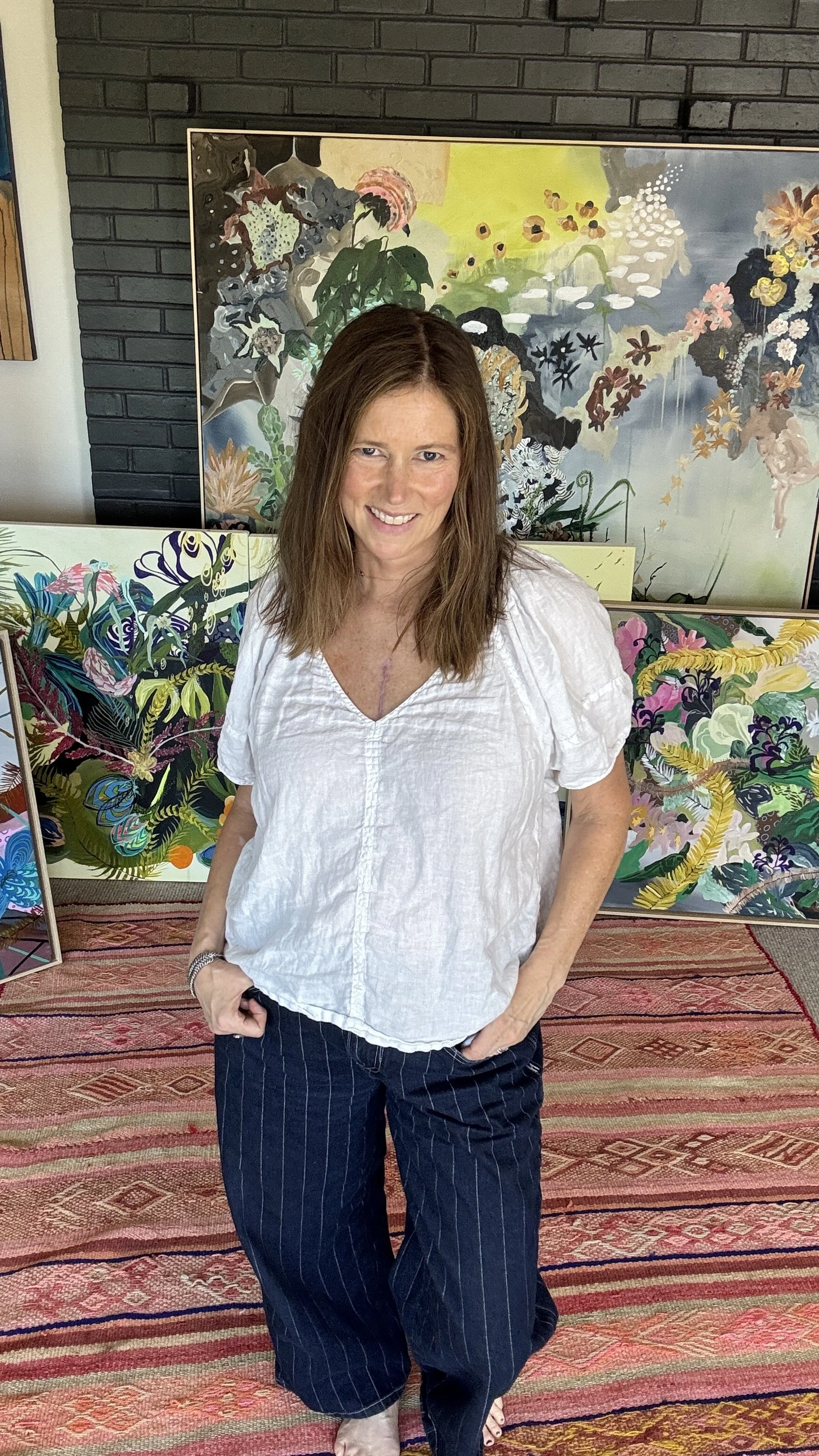
Bianca Youngers is a self-taught acrylic painter based in Portland, Oregon. Her vibrant, layered paintings explore the spaces between nature, spirit, and emotion — often resembling lush florals, undersea gardens, and dreamlike portals that invite viewers to step inside and breathe. A lifelong traveler, Bianca once journeyed with her family to more than 24 countries in a single year — experiences that deeply shaped her color palette and sense of place. Her art is grounded in connection, inspired by breathwork, healing, and the unseen energy that ties us all together.
What is your background and how did you start your journey in the art world?
“I actually started painting back in college while listening to my husband Justin DJ on our local radio station. I’d sit there surrounded by music, mixing colors and losing track of time — it just felt right. I never went to art school, but I’ve always been drawn to creating things with my hands and finding beauty in everyday life. Over the years, my art has grown right alongside my life — raising three kids, running our neighborhood bar, and traveling to more than 24 countries in a single year as a family. That kind of adventure really changed the way I see the world — all the colors, the energy, the light. But painting also became something much deeper for me. After years of chasing an undiagnosed case of Lyme disease and discovering a congenital heart defect that eventually led to open-heart surgery, art became my path to wellness. It’s where I found calm, spirituality, and a way to process everything that life was throwing at me. What started as something I did just for myself slowly turned into something much bigger — a way to connect with people, to share a little hope and color, and to remind myself that even in the hardest seasons, beauty is still possible.”
What inspires you?
“I’m inspired by life — all of it. The chaos, the beauty, the quiet in between. Traveling with my family to more than 24 countries in a year completely changed how I see things — the color, the light, the way energy shifts from place to place. The high desert, the Oregon Coast, the wild greens of the Pacific Northwest — they’re all in my work. But what really drives me is something deeper — my breathwork and spirituality. Painting has become this meditative space where I go just outside of consciousness, somewhere otherworldly. It’s where I process life — the joy, the grief, the healing — and connect with something much bigger than myself. Not long ago, I painted a piece for a friend’s child who was suffering from a brain tumor. Before I began, I scribbled his name and all my emotions surrounding it into the underpainting. The piece came easily, almost like it knew what it needed to be. Deep down, I had this quiet feeling that he would have a better outcome than we feared. When the painting sold, the woman who came to pick it up pulled into my driveway wearing hospital scrubs — she was an ICU nurse in neurology. She told me her favorite part of her job was connecting with families and helping them through impossible situations. I told her what the painting was about, and we both just stood there crying and hugging.
Moments like that — that’s what inspires me. It’s not just the paint or the color, it’s the connection. When art becomes this bridge between people, when something unseen moves through the work and lands exactly where it needs to — that’s when I feel like I’m doing what I’m meant to do.”
What themes do you pursue? Is there an underlying message in your work?
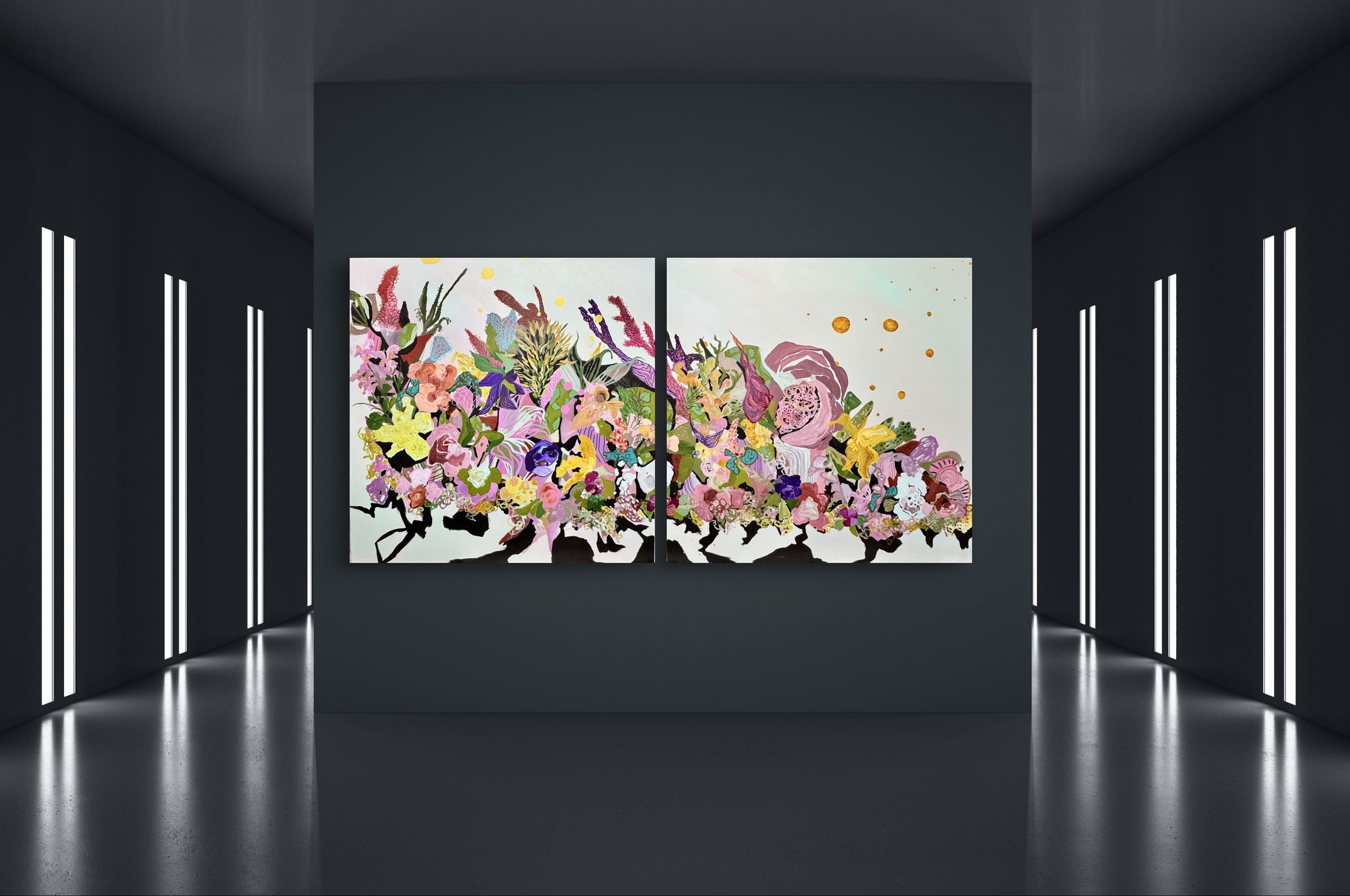
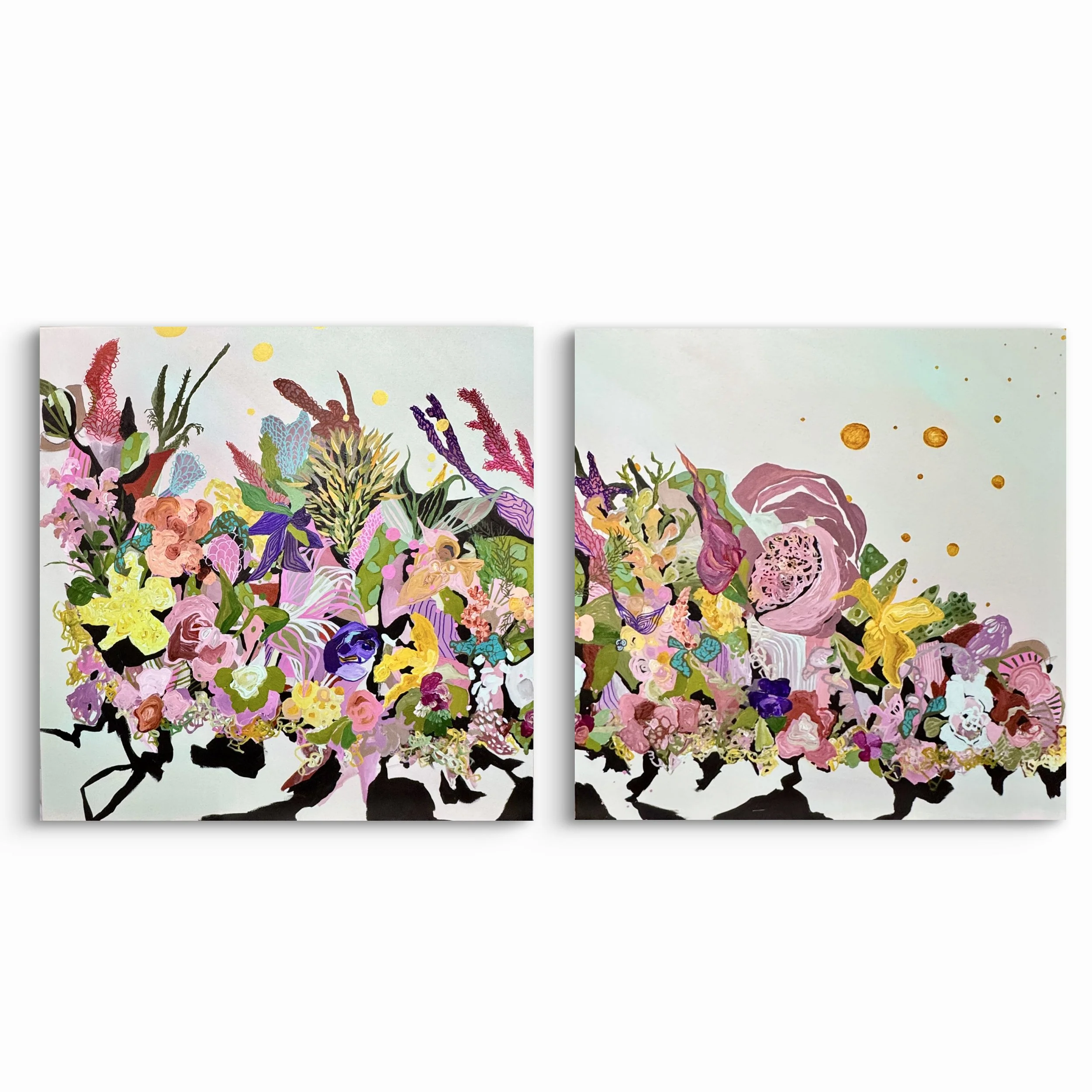
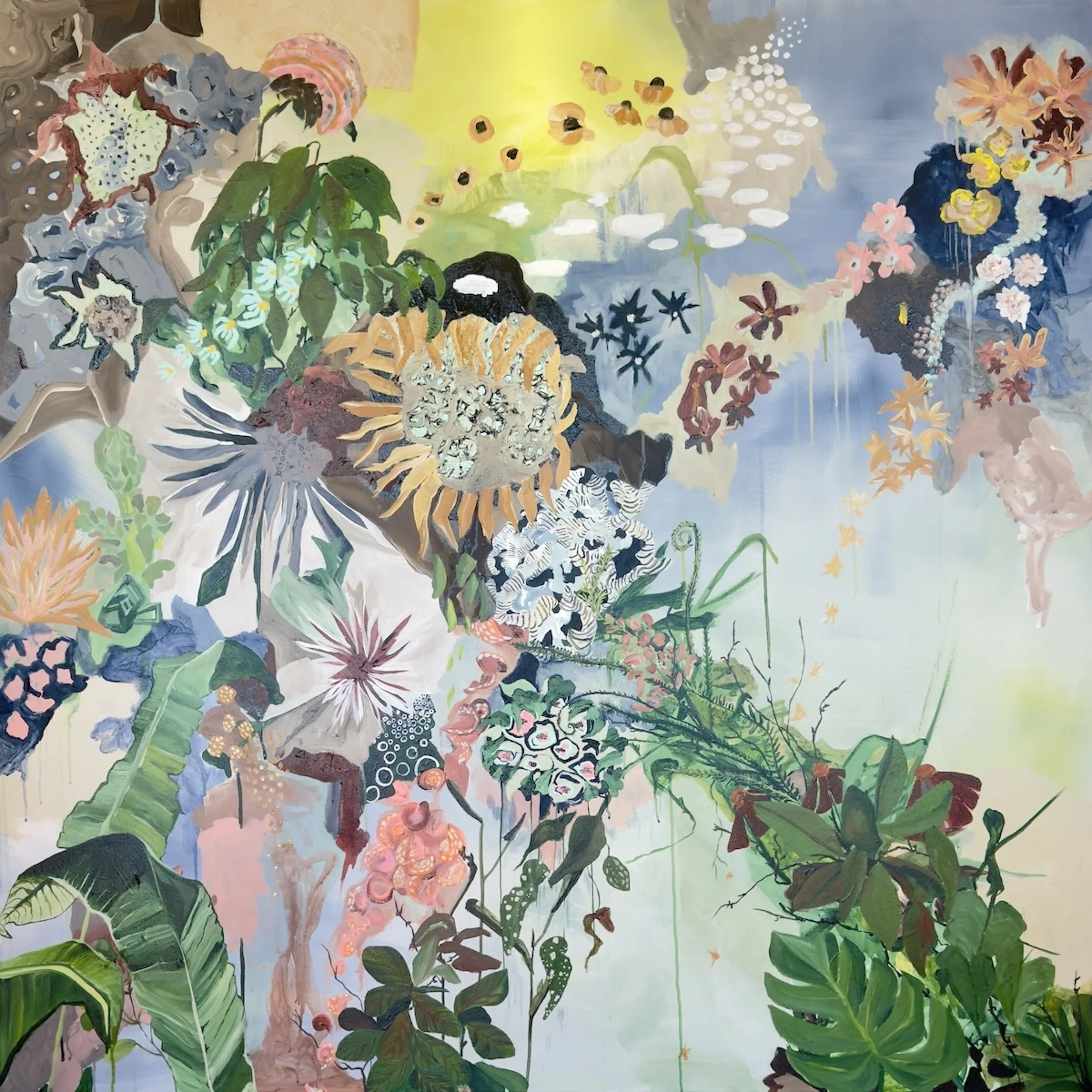
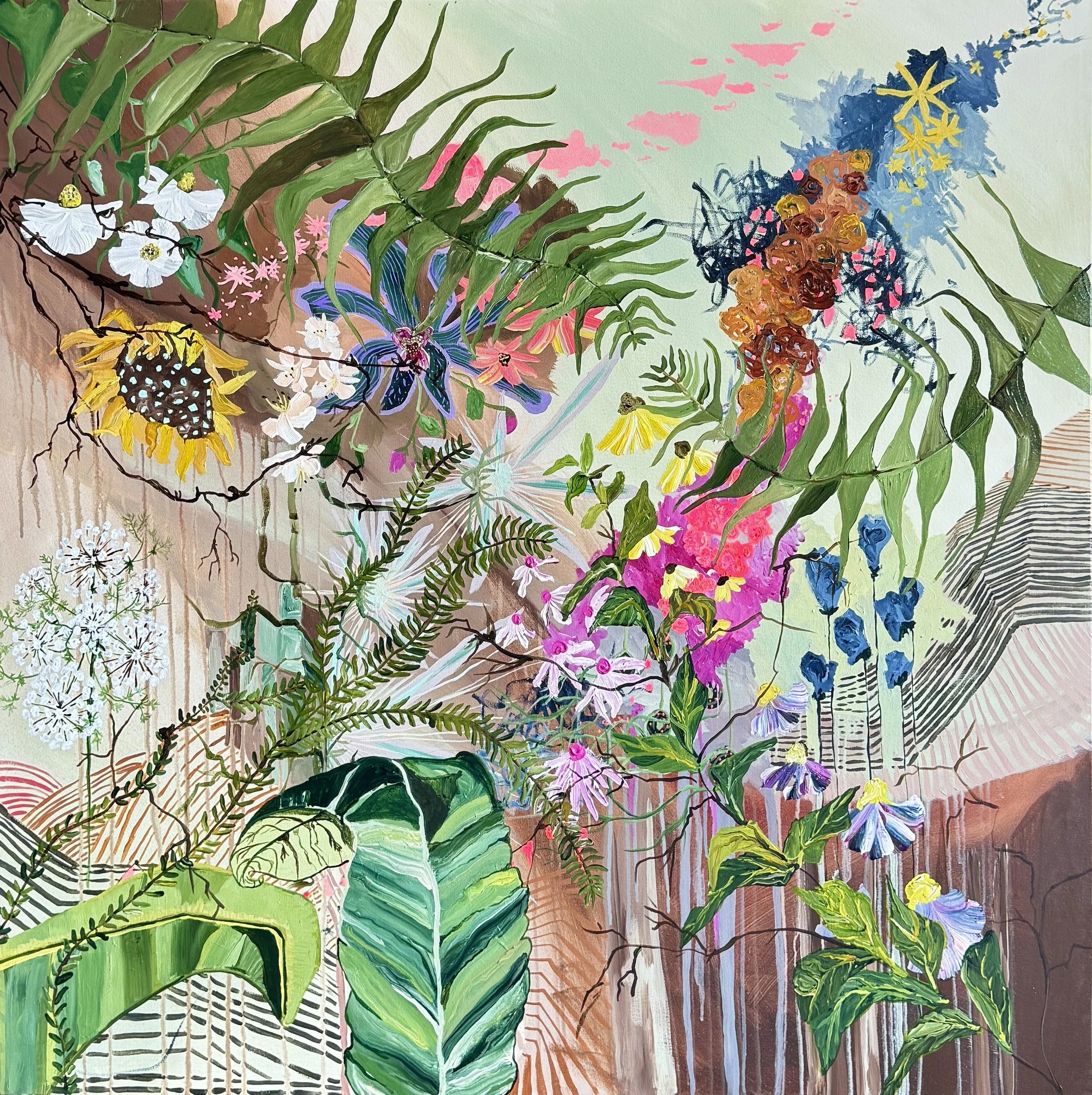
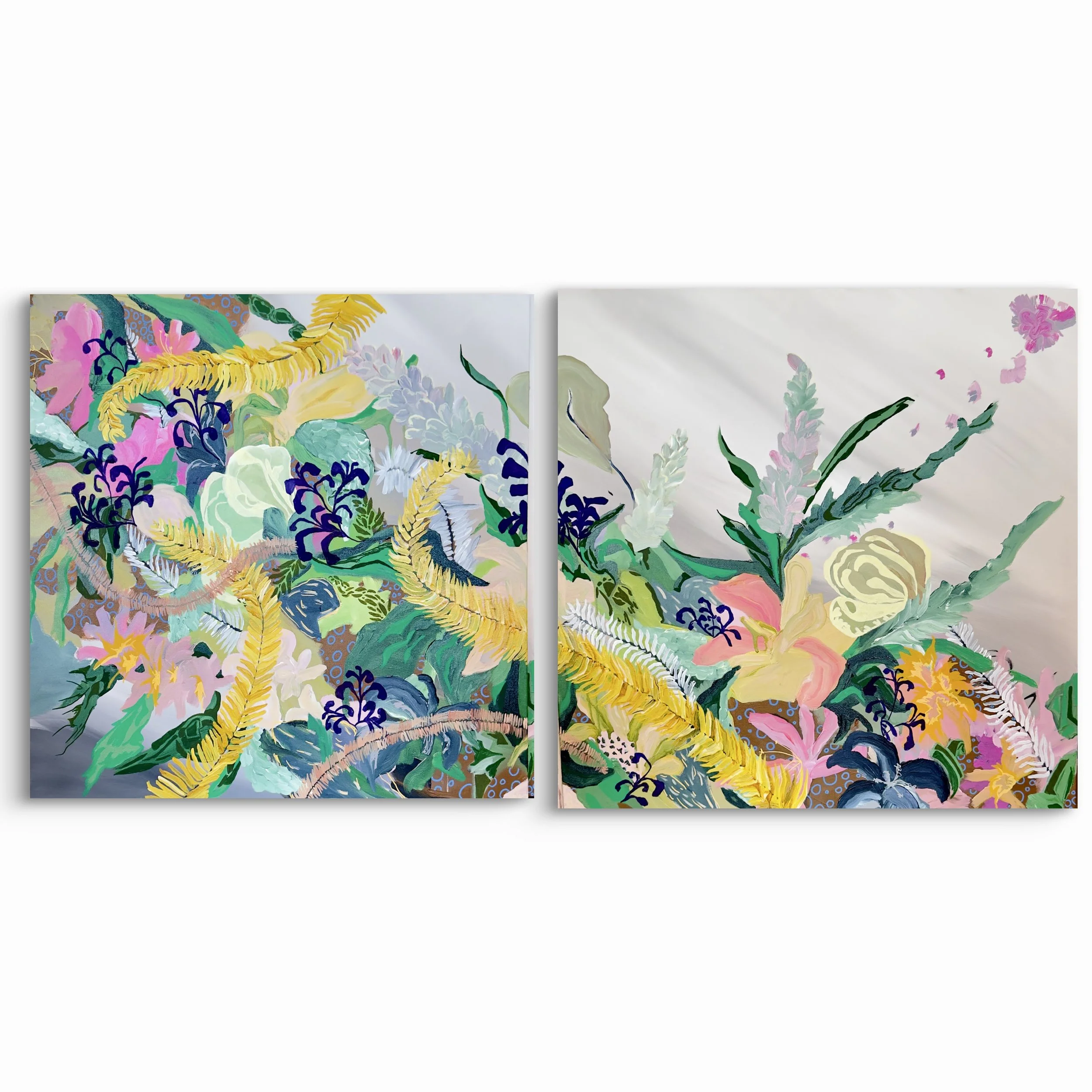
“A lot of my work centers around connection — to people, to nature, and to that unseen energy that runs through everything. I’m drawn to themes of healing, transformation, and escape — creating places you can almost crawl into and feel completely at ease. I paint a lot of florals and these lush, undersea garden worlds — spaces that feel both familiar and otherworldly. They’re like emotional landscapes, built from color, memory, and breath. I think of them as portals to a softer, more peaceful dimension — places that hold both chaos and calm, light and shadow, the way life does. There’s definitely an underlying message of hope and renewal in my work. After everything I’ve been through with my health and the healing that came from painting, I want my art to offer people that same sense of grounding — a reminder that beauty can grow out of hard things, and that we’re all connected in ways we can’t always explain.”
How would you describe your work?
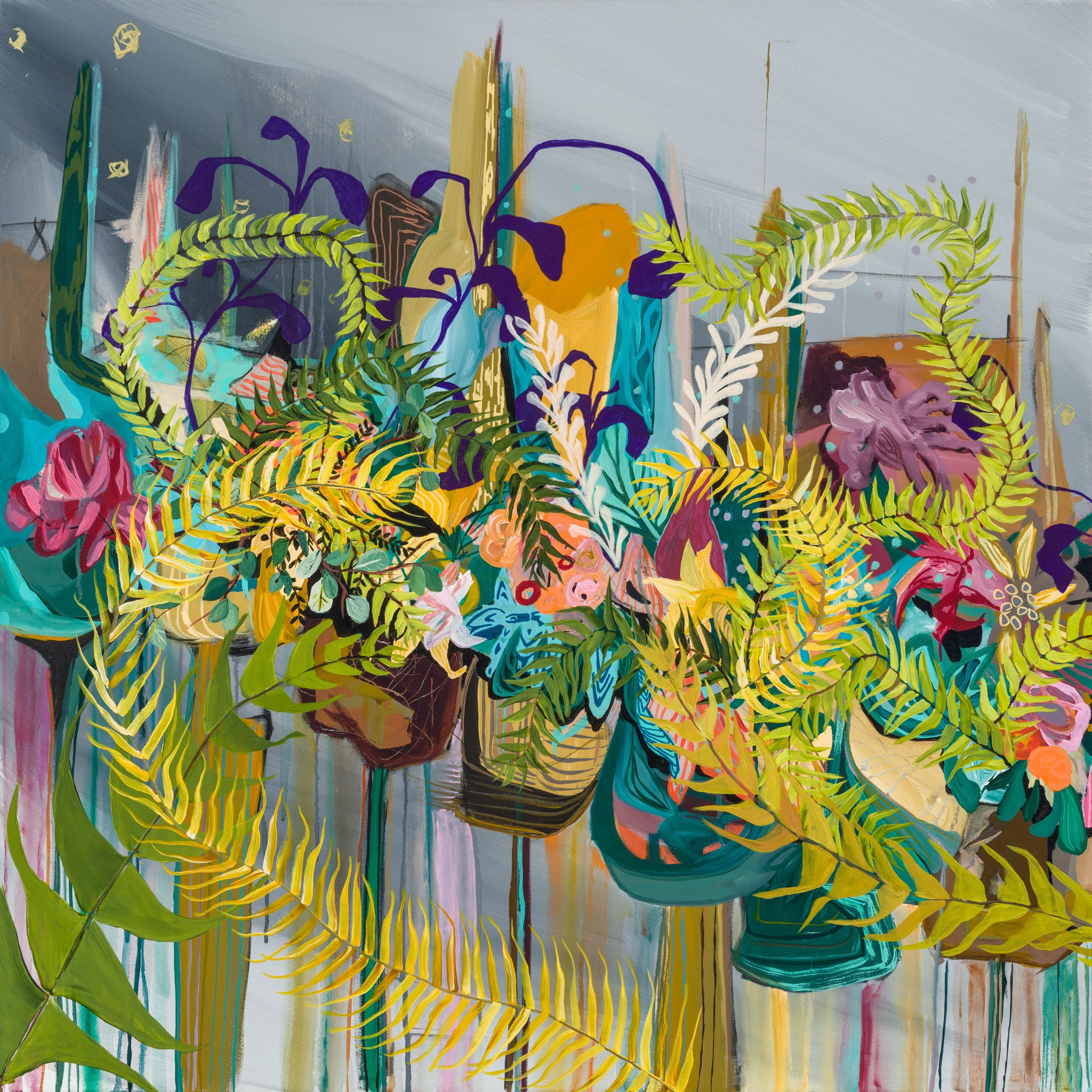
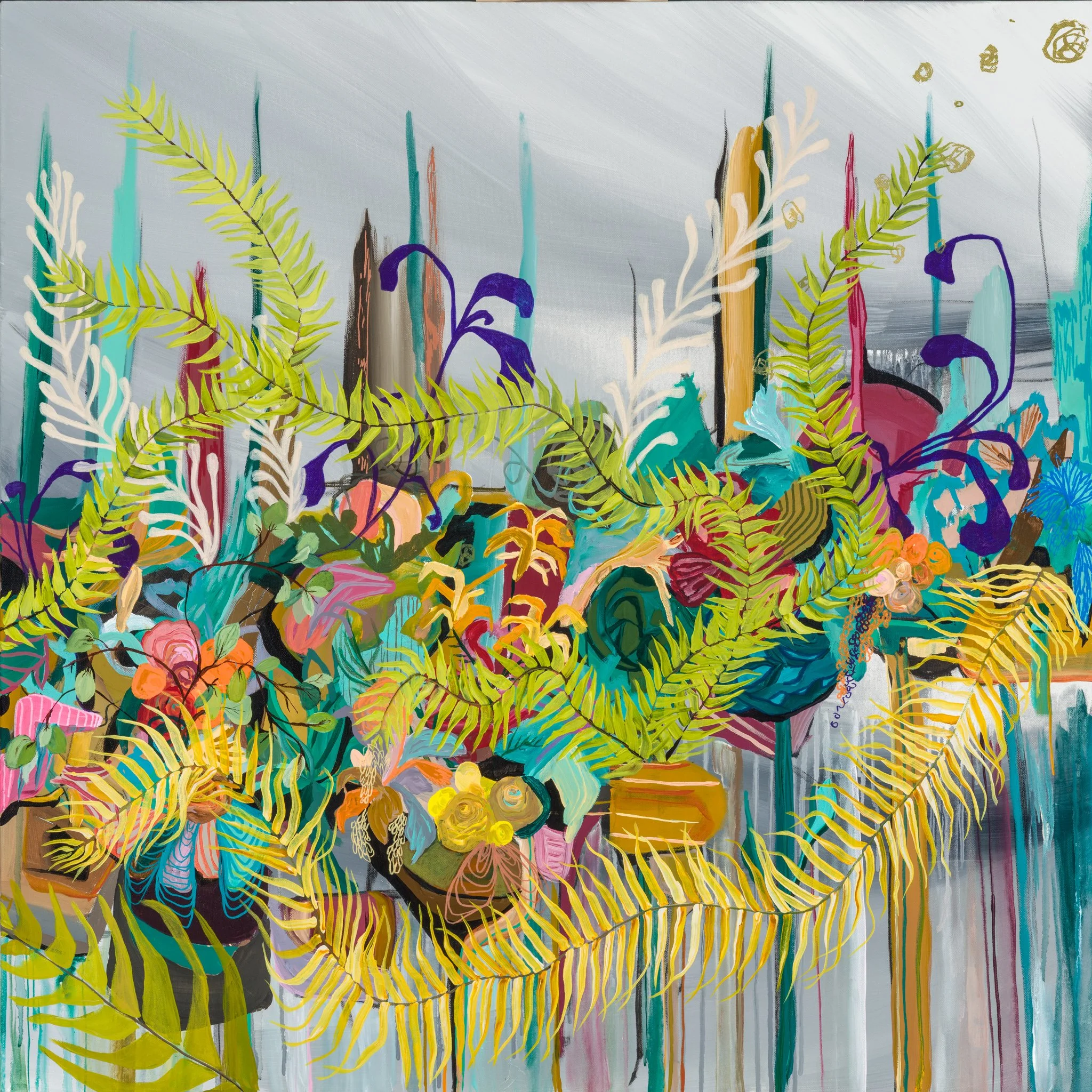
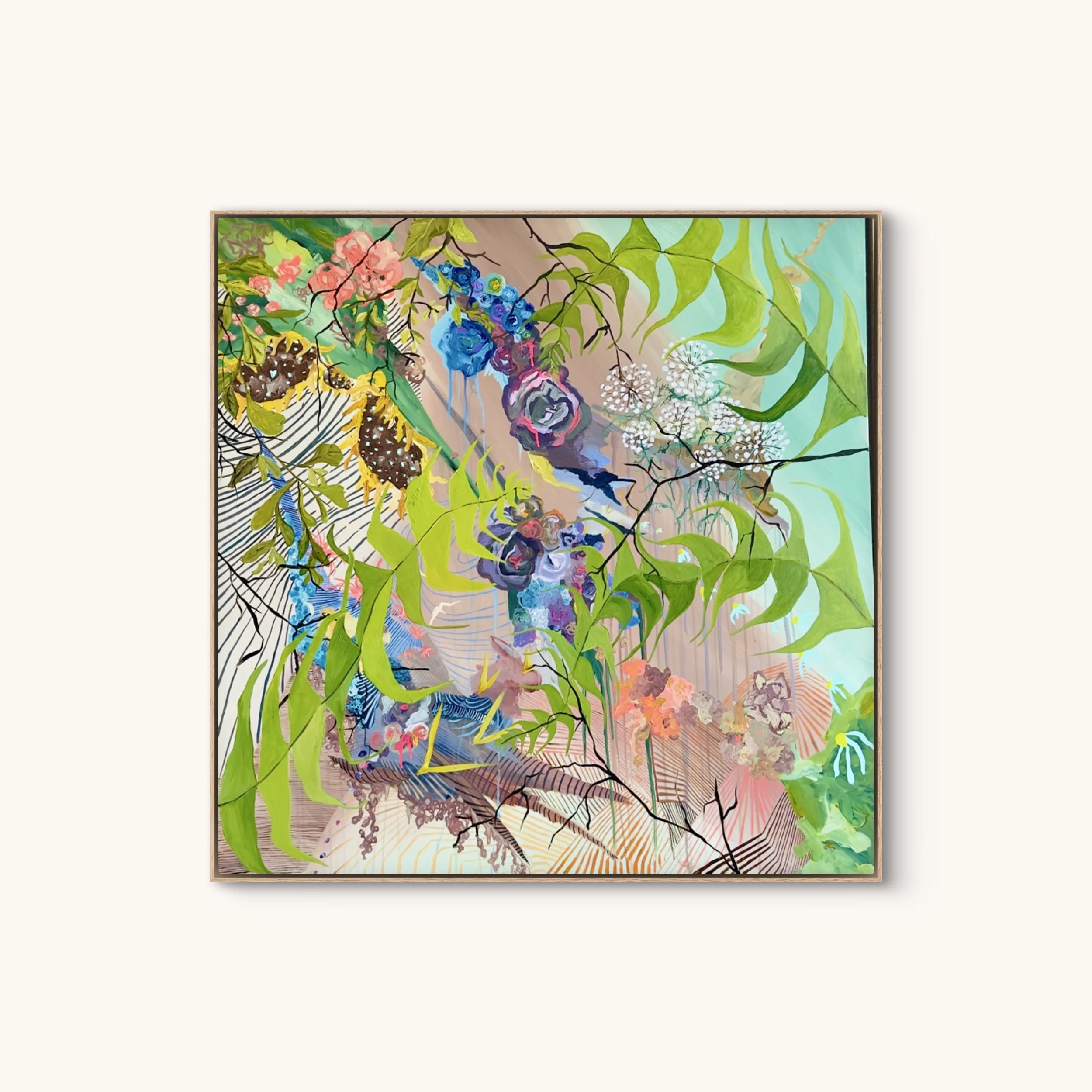
“I’d describe my work as colorful, layered, and emotional — like dreamscapes you can step into. They’re part floral, part undersea garden, and part cosmic portal. Each piece feels alive to me, like its own little ecosystem of energy and feeling. I build my paintings in layers — not just of color, but of experience and emotion. There’s a lot going on underneath the surface — words, marks, and memories — but what comes through on top is this sense of movement and calm, like floating underwater or walking through a garden at dusk. People often tell me my paintings feel peaceful or transportive, and that’s exactly what I hope for. I want them to feel like a place you can go — a little escape from the noise of the world, where you can just breathe and exist.”
Which artists influence you most?
“I’m inspired by artists who create from intuition and emotion — people who let the work move through them rather than trying to control it. One of my biggest influences right now is Ileana Magoda. She paints these sweeping, loose, beautiful botanicals that somehow feel both wild and serene. Her ability to capture that sense of flow and freedom reminds me to stay loose and trust the process — to let the painting breathe and find its own rhythm.
I’m also deeply inspired by Christy Hopkins, an incredible artist out of Seattle. Her work has so much movement and emotion, but it’s her use of color that completely floors me. Color is her superpower — she’s fearless with it — and seeing how she layers and plays with tone pushes me to be braver in my own palette.
And of course, Frida Kahlo. She’s the heartbeat behind so much of what I believe about art — that it can hold pain and beauty at the same time. Her honesty, her vulnerability, and the way she turned her suffering into something fiercely beautiful has always resonated with me.
All of these artists remind me that painting isn’t just about making something pretty — it’s about translating feeling into form. They each work from a place of truth, and that’s what I try to do, too.”
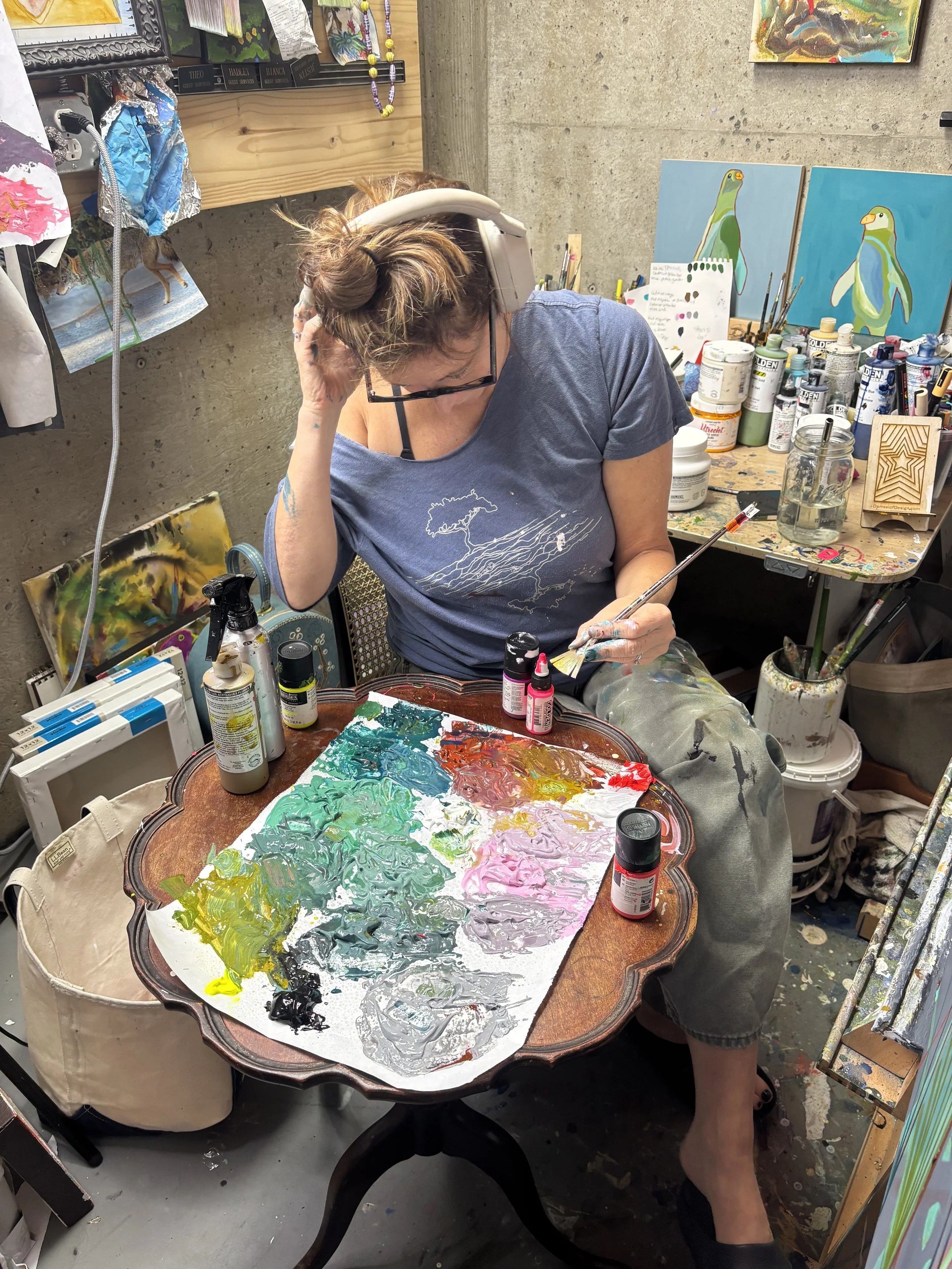
“I’m inspired by life — all of it. The chaos, the beauty, the quiet in between.”
What is your creative process like?
“My process is really intuitive — it’s less about planning and more about feeling. I usually start with breathwork. It helps me quiet everything down and drop into that otherworldly place, just outside of consciousness, where I paint from instinct instead of thought. That’s where the magic happens. I almost always begin with a tinted gesso base and then start building layers — color, marks, words, memories — all the things I’m processing at that moment. It’s like each layer holds an emotion or a fragment of a story. Sometimes I’ll scribble names or thoughts underneath the surface — things no one will ever see, but that give the painting its energy. From there, I let the piece lead me. I respond to color, to movement, to whatever the painting asks for. Music is usually playing — it sets the rhythm — and I just follow that flow. When everything clicks, it feels like being in two worlds at once — part here, part somewhere else. I don’t always know where a painting is going when I start, but I trust that it will tell me when it’s done. That trust, that surrender, has become such a big part of not just my art, but my healing too.”
What is an artist’s role in society and how do you see that evolving?
“I think an artist’s role is to help people feel again — to slow down, to see beauty, to connect in a real, human way. In a world that moves so fast and lives so much online, artists create spaces that remind us what it means to be present, to be emotional, to be alive. Art is a mirror and a bridge. It reflects the times we’re living in, but it also gives us a place to process it all — to find hope, or softness, or even just a moment of calm. I really believe artists help people remember their humanity. As technology keeps advancing — especially with AI and all the digital noise — I think the artist’s role becomes even more important. We need tangible, in-person experiences more than ever. When someone stands in front of a painting and feels that spark of connection, that’s something no algorithm can replace. For me, that’s the heartbeat of it all — art as a way to bring people together, to create a little light, and to remind us that we still need each other.”

Have you had any noteworthy exhibitions you'd like to share?
“I’ve had the chance to show my work in some really special places lately. Gallery 408 in Camas, Washington, has been such a meaningful partnership — it’s this heartfelt, community-driven space that really believes in local artists. And Stefani Gallery in Salem, Oregon, has been another wonderful connection — they welcomed my work with so much enthusiasm and care. This year I’m especially excited to have a piece in the Volume Control show at SIMS Contemporary in Chelsea, New York. To see my paintings in that kind of setting — surrounded by so much incredible art energy — honestly still feels surreal. And one of the biggest moments for me was showing with Antler Gallery here in Portland. I’ve admired that gallery for years, and standing in that space during the opening, surrounded by artists I look up to, was such a full-circle moment. I also loved being part of Portland Open Studios — inviting people into my space, talking about process, color, and life. Those conversations are what keep me going. It’s such a reminder that art isn’t just about what’s on the wall — it’s about connection, energy, and being human together.”
Website: www.BiancaYoungersArt.com
Instagram: @biancayoungersart