Interview
Young Kwang Kim
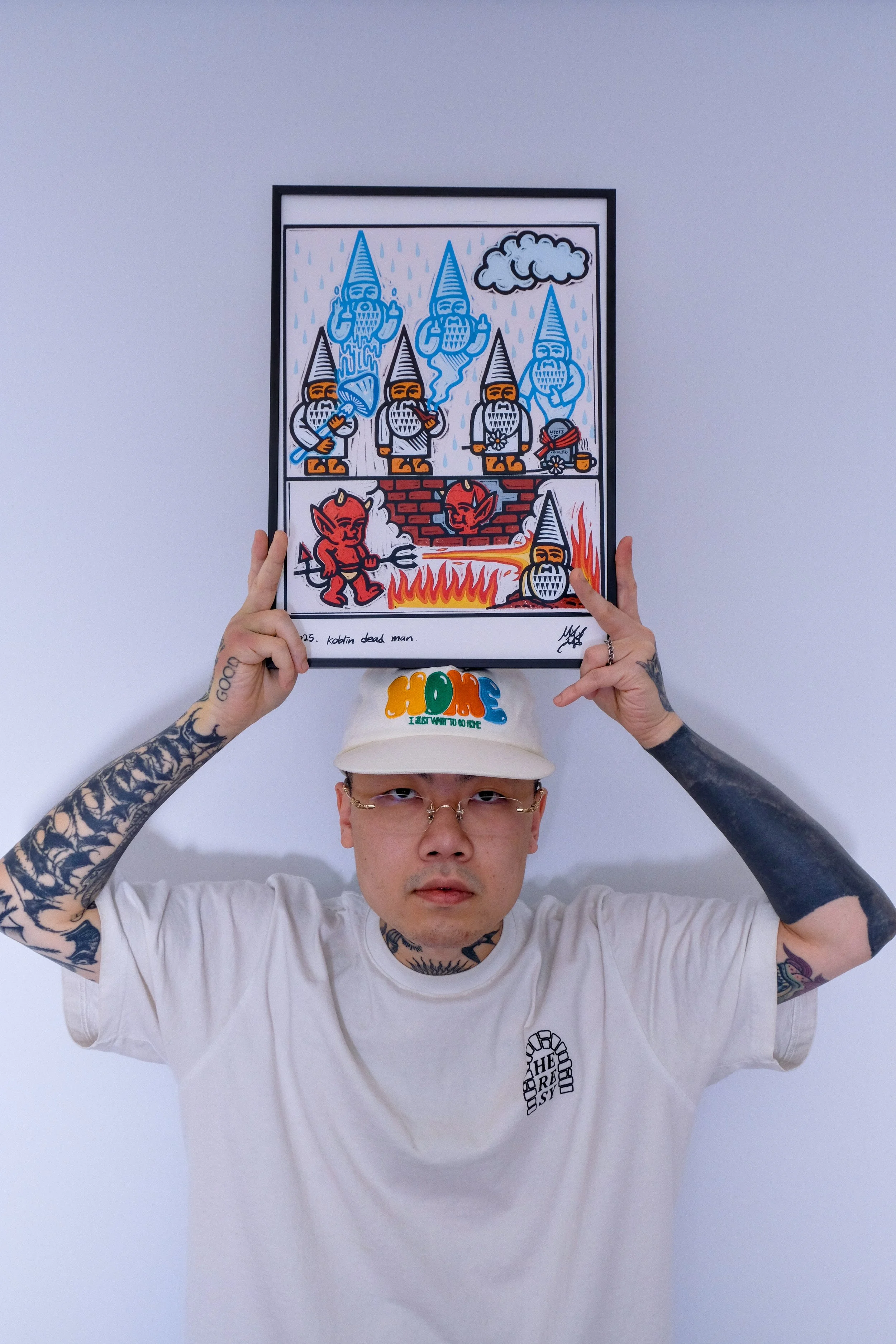
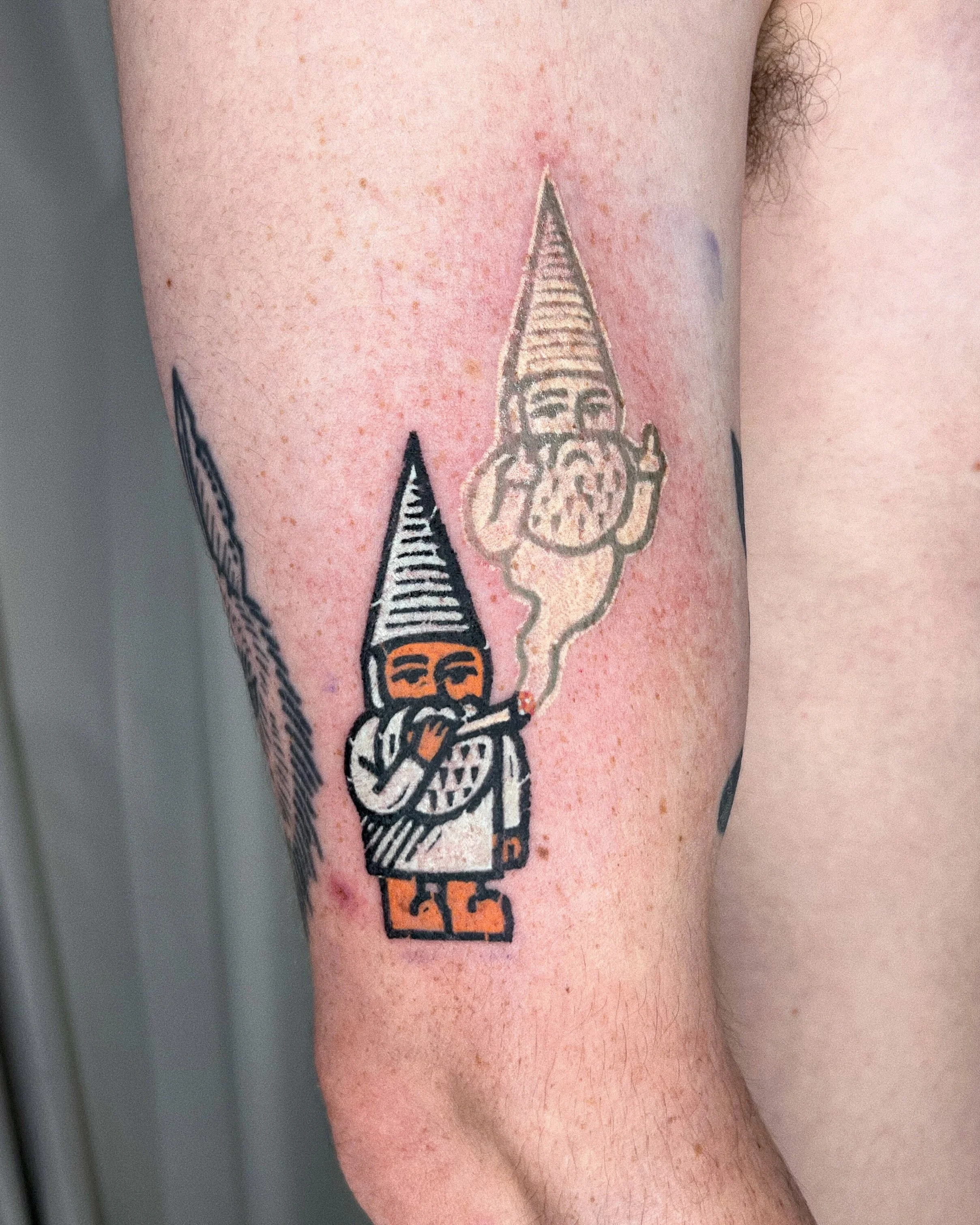
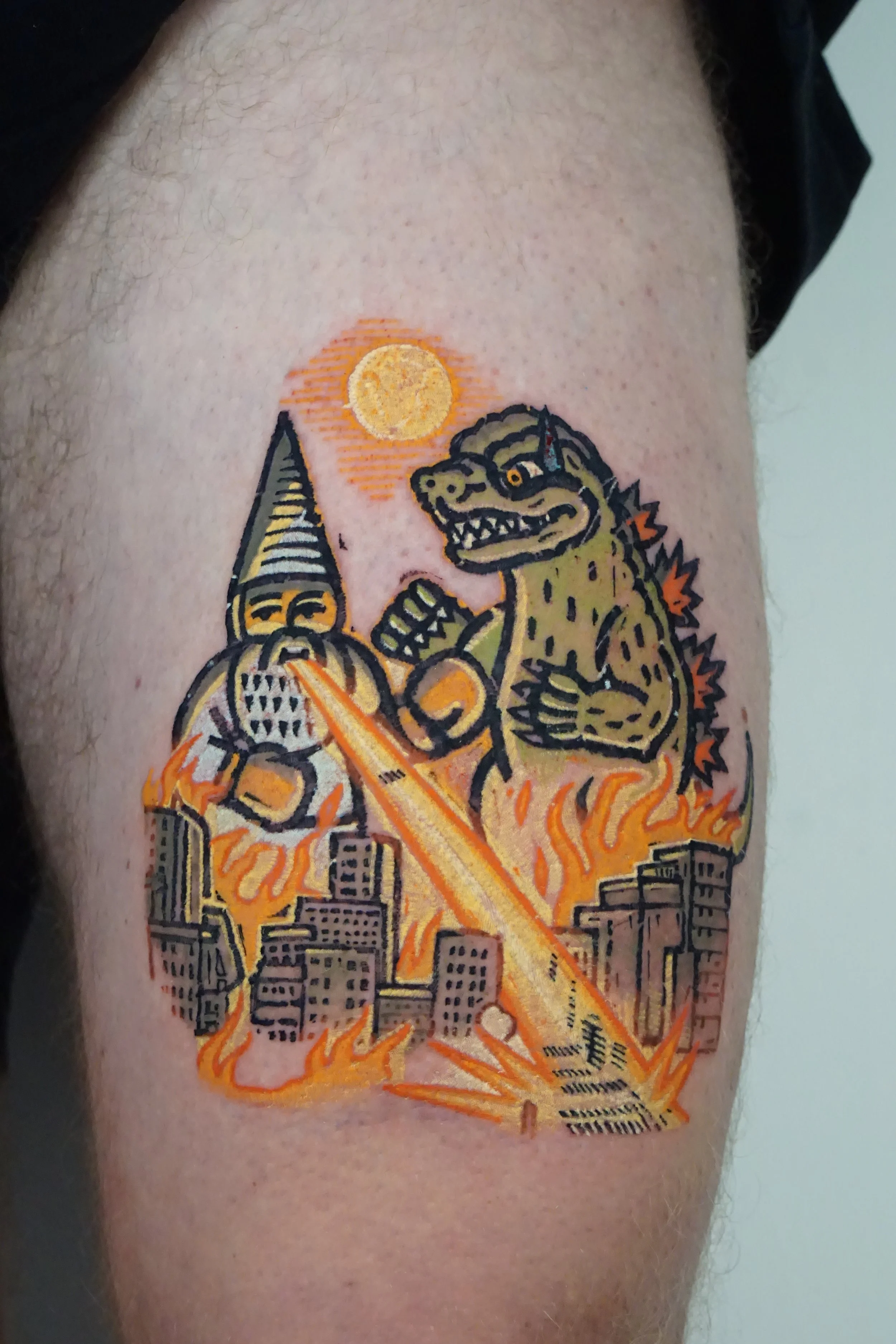
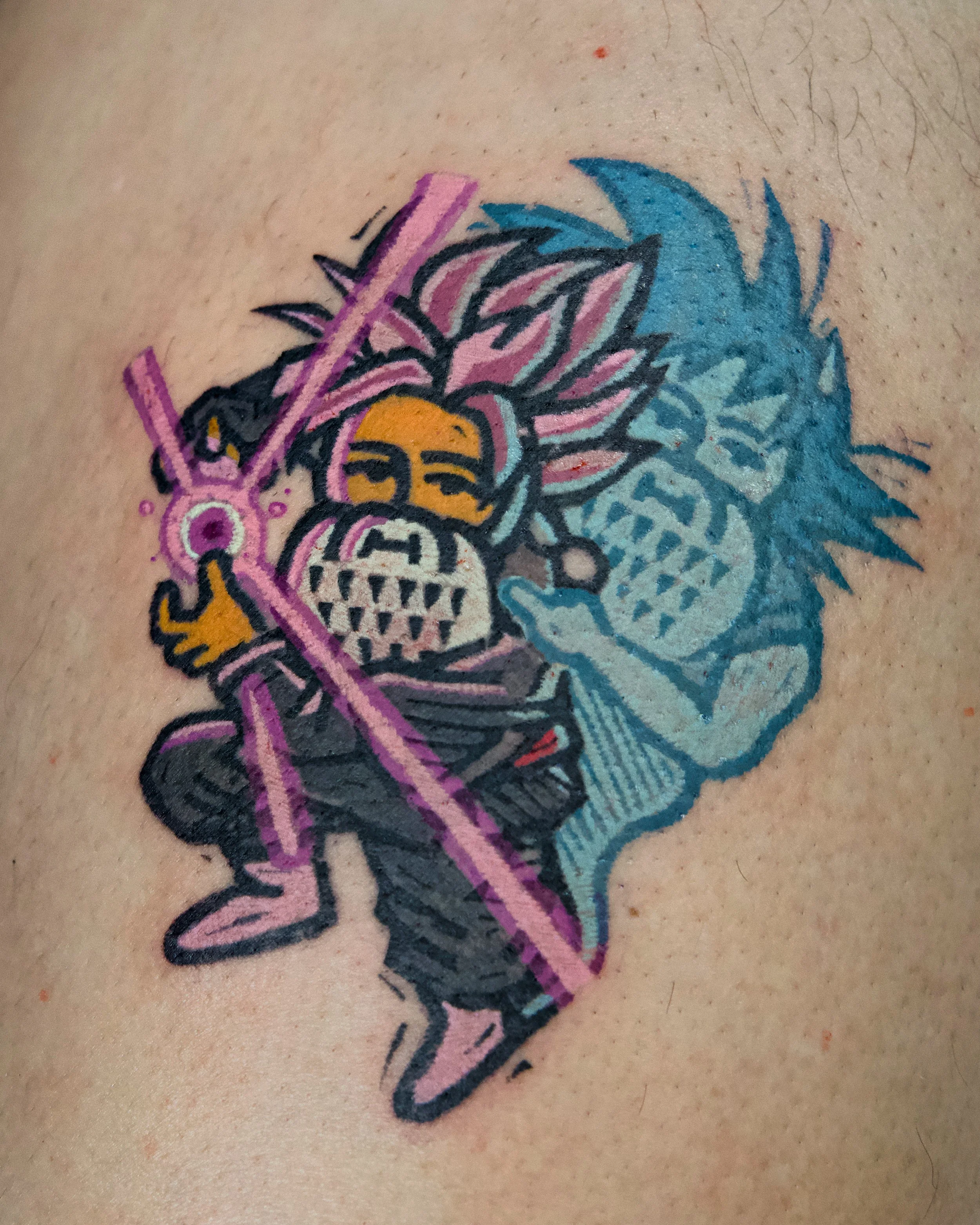
Koblin (b. 1995, South Korea) is a tattoo artist and illustrator known for his signature Gnome character. Influenced by medieval printmaking and contemporary underground aesthetics, his work combines bold black lines, textured surfaces, and subtle irony. Through tattooing and illustration, Koblin explores themes of vulnerability, foolishness, and quiet resistance in modern life. He has worked internationally across Europe and Asia.
What is your background and how did you start your journey in the art world?
“I was born in Incheon, South Korea, in 1995. I studied Fine Art at university but did not complete my degree. During that time, I realized that traditional academic structures did not fully align with my personality. I worked various part-time jobs while continuously drawing and searching for a visual language that felt truly my own. Around 2019, with very little money but a strong desire to build something personal, I began focusing seriously on my work. My early pieces were influenced by medieval woodcut prints and animal-based humanoid figures. Over time, this evolved into my signature ‘Gnome’ character — a foolish, innocent yet slightly cynical being that represents fragments of human nature. Tattooing became a natural extension of my drawing practice. Skin felt more alive than paper.”

What inspires you?
“I am inspired by medieval printmaking, street observations, humor, childhood animation, and human vulnerability. Edvard Munch has influenced me deeply, particularly through his print works. Although his prints are not as widely recognized as his paintings, I am drawn to the way he expressed profound and often cynical emotions through imperfect forms and raw textures. The lack of polish makes the emotion feel more honest and exposed. Recently, I have also been exploring the repetitive pattern work and visual structures of Maurits Cornelis Escher. I am still in the process of studying his work, but I am fascinated by how repetition and spatial logic can create a sense of rhythm and quiet tension. Lately, I try to observe daily life more carefully — strangers on the street, awkward gestures, small absurd moments. I am interested in the fragile and slightly ridiculous aspects of being human.”
What themes do you pursue? Is there an underlying message in your work?
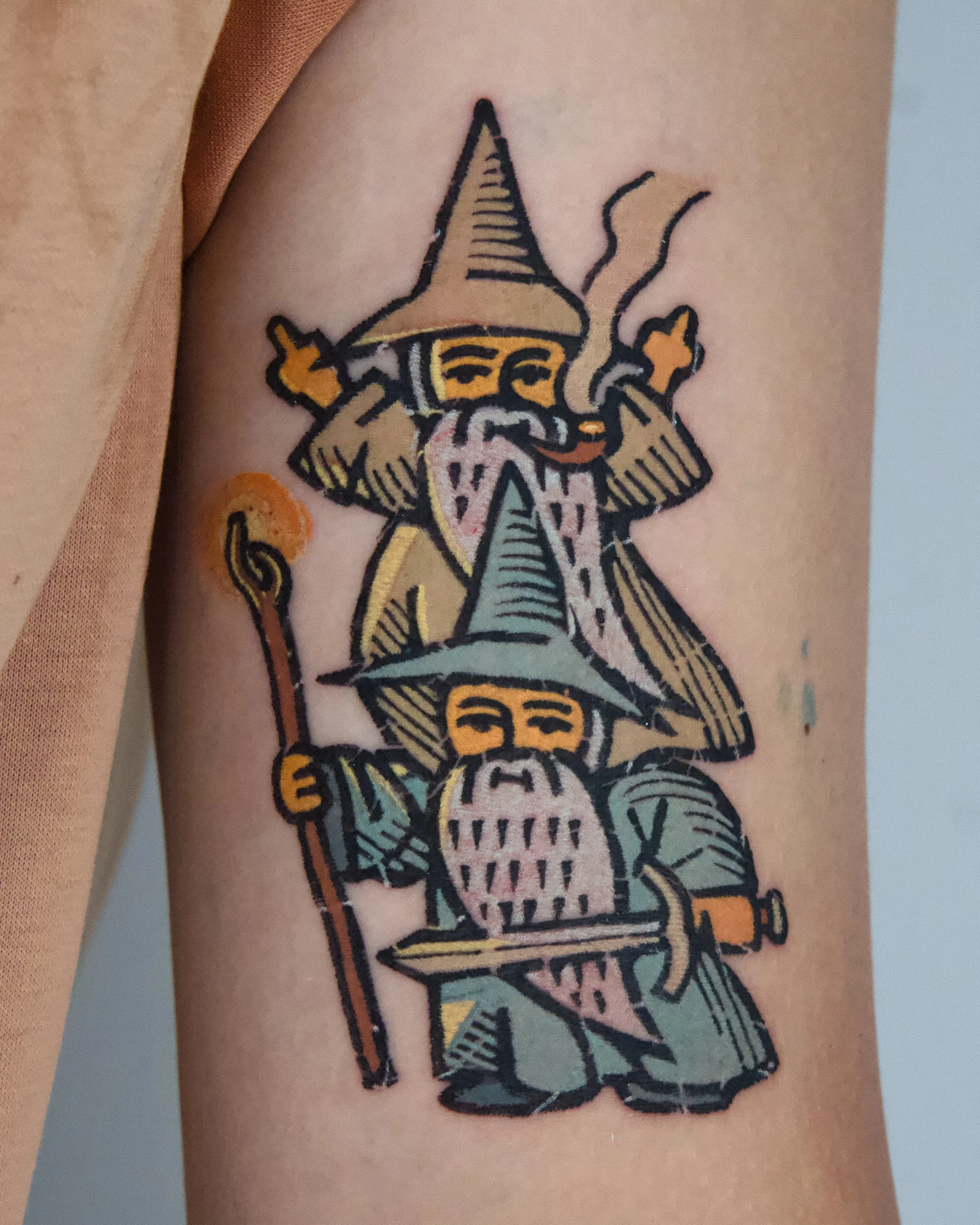
“My central figure is the Gnome. The Gnome is not a heroic character. He is naive, sometimes smoking, sometimes confused, sometimes quietly defiant. He can be cute, but he is also sarcastic. Through this character, I explore themes of identity, foolishness, ego, vulnerability, and quiet resistance. There is no heavy political statement in my work, but there is a subtle reflection on how humans attempt to appear strong while remaining internally fragile.”

How would you describe your work?
“My work combines bold black lines inspired by woodcut and lino print textures with playful compositions. At first glance, it may appear childlike. However, there is often a slightly darker or ironic undertone beneath the surface. I am interested in balancing innocence and discomfort — allowing both to coexist within a single character.”
Which artists influence you most?
“Edvard Munch’s print works have had a strong impact on me. I am particularly drawn to the way he conveyed deep and sometimes cynical emotions through imperfect shapes and rough textures. His prints feel emotionally direct and unpolished in a way that resonates with my own approach. I am also currently exploring the repetitive patterns and visual logic found in Maurits Cornelis Escher’s work. While I am still studying and observing his structures, I find the rhythm created through repetition and spatial construction very compelling. Beyond individual artists, I am influenced by traditional printmaking aesthetics, underground illustration culture, and contemporary tattoo artists who approach tattooing as fine art rather than mere decoration.”
What is your creative process like?
“My process usually starts before I touch any software. It begins as a feeling I can’t shake. Sometimes it’s tension, sometimes it’s a question, sometimes just a pressure I can’t quite name. I’ll sit with it for a while before it slowly starts to piece itself together and its structure form. Technically, I start in 3D. I build the image in space, as a collection of objects. But the 3D stage is just a structure and base colour. The real shift happens when I begin transferring the still image to 2D painting into it pushing colour, softening or deepening shadows, where the essence of the artwork starts to reveal itself fully. The process is a slow build up. I question a lot. Most of the decisions aren’t logical they’re instinctive, blending layer styles and colours. I’m constantly asking, “Does this feel right to me?” If it doesn’t, I keep adjusting. By the end, it’s less about having constructed something and more about having refined a feeling or moment enough for its shape to hold. Like the image was already there in fragments, and I just had to stay with it long enough for it to surface.”
What is an artist’s role in society and how do you see that evolving?
“I believe artists reflect emotional realities that are often hidden. In a world driven by fast images and algorithms, the role of an artist is to create something sincere. The medium may evolve — digital work, tattooing, merchandise, installations — but authenticity remains essential. Without sincerity, images become disposable.”


Have you had any noteworthy exhibitions you'd like to share?
“I have worked internationally through various guest spots across Europe and Asia. Tattooing in different cities has allowed me to witness how a character created in Seoul can resonate with someone in Frankfurt, Tokyo, or Hong Kong. For me, these international guest experiences feel like a moving exhibition — not confined to a gallery space, but living on human skin.”
Instagram: @koblindeadman