Interview
Xiaohan Wu
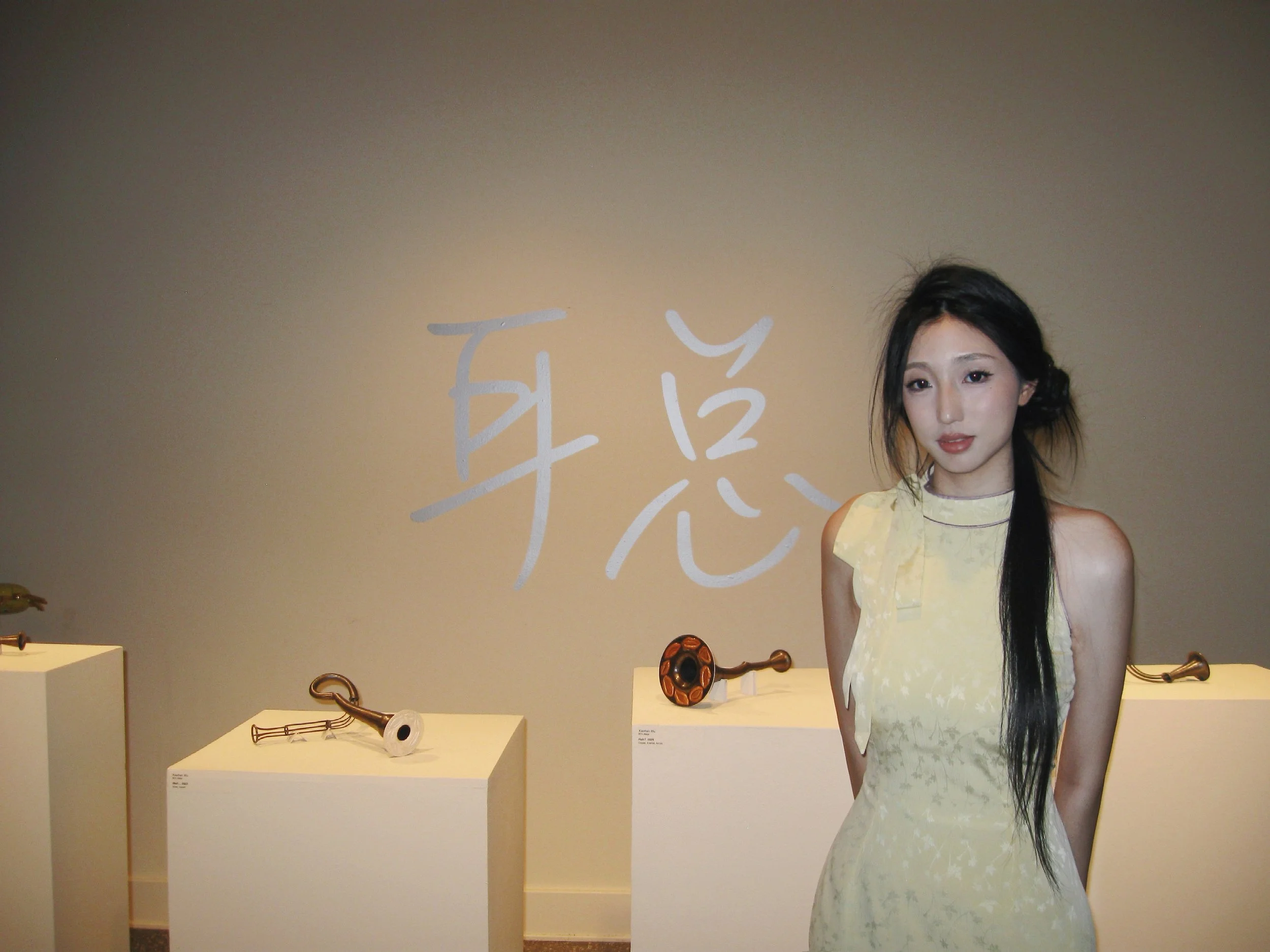
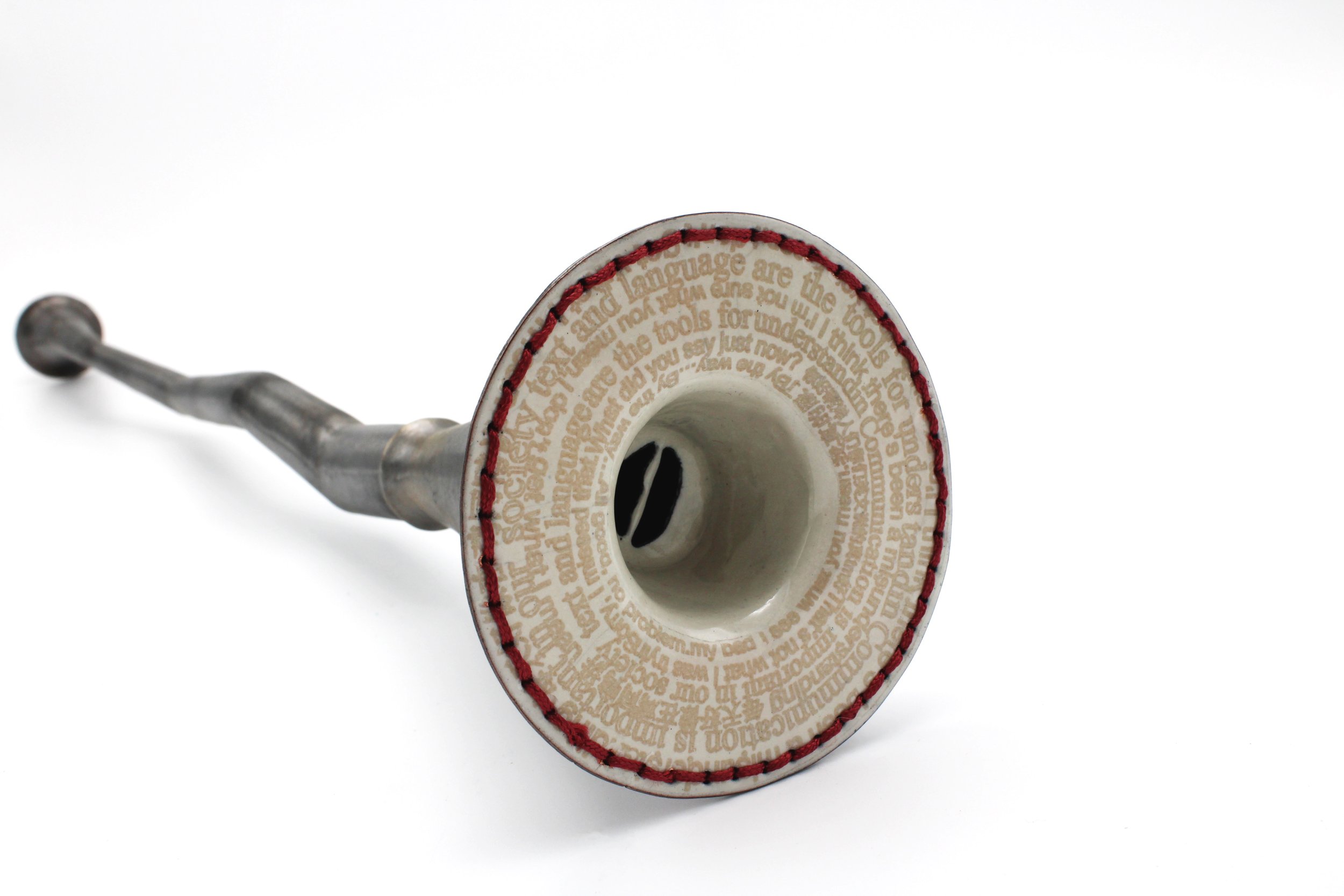
Xiaohan Wu is a metalsmith and contemporary jewelry artist whose work explores the intersection of form, sound, and communication. Through horn-like and woven metal structures, she translates vibration into visual language, revealing how sound embodies both expression and silence. Her practice is rooted in her experience of navigating linguistic and cultural boundaries after moving across countries, where accent and miscommunication became part of her creative vocabulary. Wu holds a BFA from the Metal Program at the State University of New York at New Paltz and currently lives and works in Chicago.
What is your background and how did you start your journey in the art world?
“I grew up with a deep curiosity for visual storytelling and cultural history, which naturally led me toward artistic expression. My academic and personal journey gradually shaped my practice—first through drawing and painting, and later expanding into sculpture, installation, and mixed media. Entering the art world felt organic; I began participating in exhibitions during my early training, and over time my practice evolved into a more research-driven and conceptually grounded approach. Each step has strengthened my belief in art as a way of understanding both myself and the world around me.”
What inspires you?
“I am inspired by the relationship between the physical body and emotional experience. Metal, as a material that can be both rigid and fragile, mirrors the dualities within human nature. I often draw from moments of pressure, conflict, restraint, or transformation. These internal states translate naturally into the material language of bending, stretching, or stressing metal.”
What themes do you pursue? Is there an underlying message in your work?
“Many of my works address themes of tension, vulnerability, containment, and release. I am drawn to the subtle emotional states that are difficult to articulate verbally but can be expressed physically through form. The underlying message in my work often revolves around resilience—how something can bend without breaking, or how pressure reveals the inner structure of things. Through the language of metal and constructed forms, I explore how the human psyche responds to stress, protection, intimacy, and boundaries.”
How would you describe your work?
“I would describe my work as materially driven, emotionally charged, and structurally expressive. Although rooted in metalwork, my sculptures often combine industrial techniques with a delicate or vulnerable sensibility. I like to create forms that appear both strong and fragile, or stable yet on the edge of collapse. My work sits between craft, sculpture, and personal narrative—blending technical skill with conceptual inquiry.”
Which artists influence you most?
“I am influenced by artists who use material as a psychological language—such as Louise Bourgeois for her emotional honesty, Eva Hesse for her material experimentation, and Richard Serra for his understanding of weight and tension. I also look to contemporary sculptors who explore bodily presence and spatial relationships through constructed forms.”
What is your creative process like?
“My process begins with material exploration. I often start by physically manipulating metal—bending, cutting, hammering—to understand how it reacts. These tests help me discover the emotional direction of a piece. I sketch structural ideas, create small models, and then refine them through fabrication. The process is intuitive but grounded in technique. I allow accidents and resistance from the metal to influence the final form. Often, I follow a feeling rather than a predetermined design, letting the work evolve as the material responds.”
What is an artist’s role in society and how do you see that evolving?
“I believe an artist’s role is to translate complex emotions, social conditions, and cultural experiences into forms that help people see themselves and the world differently. As society becomes more fast-paced and saturated with digital images, the tactile, physical presence of art becomes increasingly important. Artists today are bridging boundaries—between craft and fine art, technology and tradition, personal stories and collective issues. I see the artist’s role evolving into one that creates spaces for reflection and sensitivity in a world that often prioritizes efficiency over emotion.”
Have you had any noteworthy exhibitions you'd like to share?
“One exhibition that was particularly meaningful was when my piece ‘Ack!’ received third place in a national juried show. The recognition reinforced my commitment to exploring emotional depth through material. I have also participated in several group exhibitions where viewers connected strongly with the physicality and psychological tension in my metal-based works. These experiences encouraged me to continue pushing the expressive potential of my materials.”
Instagram: @jennxzhen