Interview
Tati Tudor
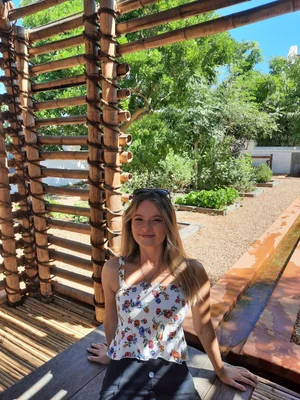
Tati Tudor is an American contemporary artist working with textured painting and mixed media, exploring materiality, memory, and embodied experience through layered and tactile surfaces. Born in Khabarovsk, Russia, and raised in an environment shaped by a substantial private art collection, Tudor developed an early sensitivity to form, texture, and the expressive potential of material. Her life and studies across Europe and the United States contributed to a transnational perspective that continues to inform her artistic practice. Alongside her work as a visual artist, Tudor continues an active professional practice in holistic health, regenerative medicine, and body-oriented disciplines. This ongoing engagement deeply informs her artistic language, where concepts of layering, tension and release, folds, and material transformation parallel processes found in the human body, memory, and lived experience.
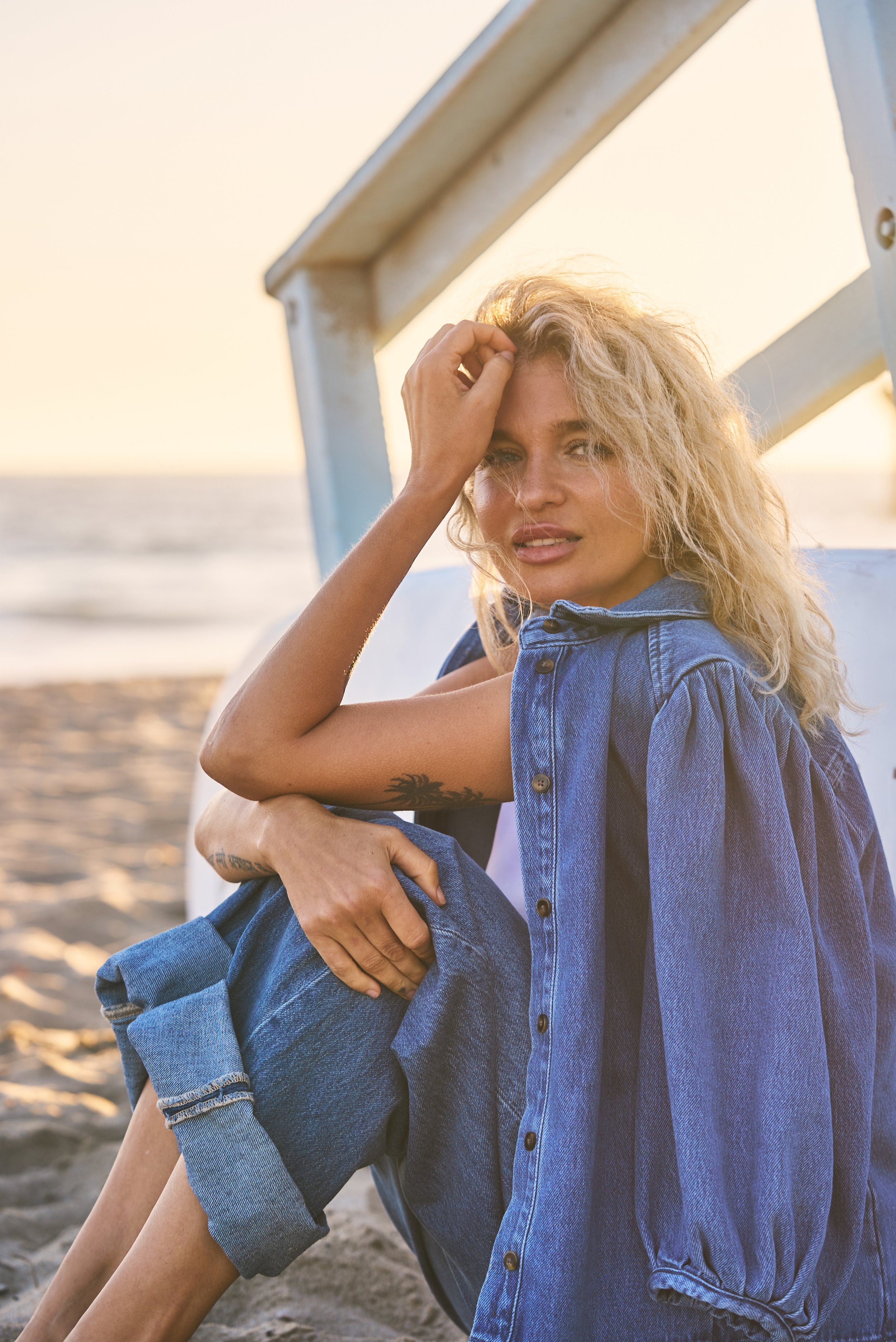
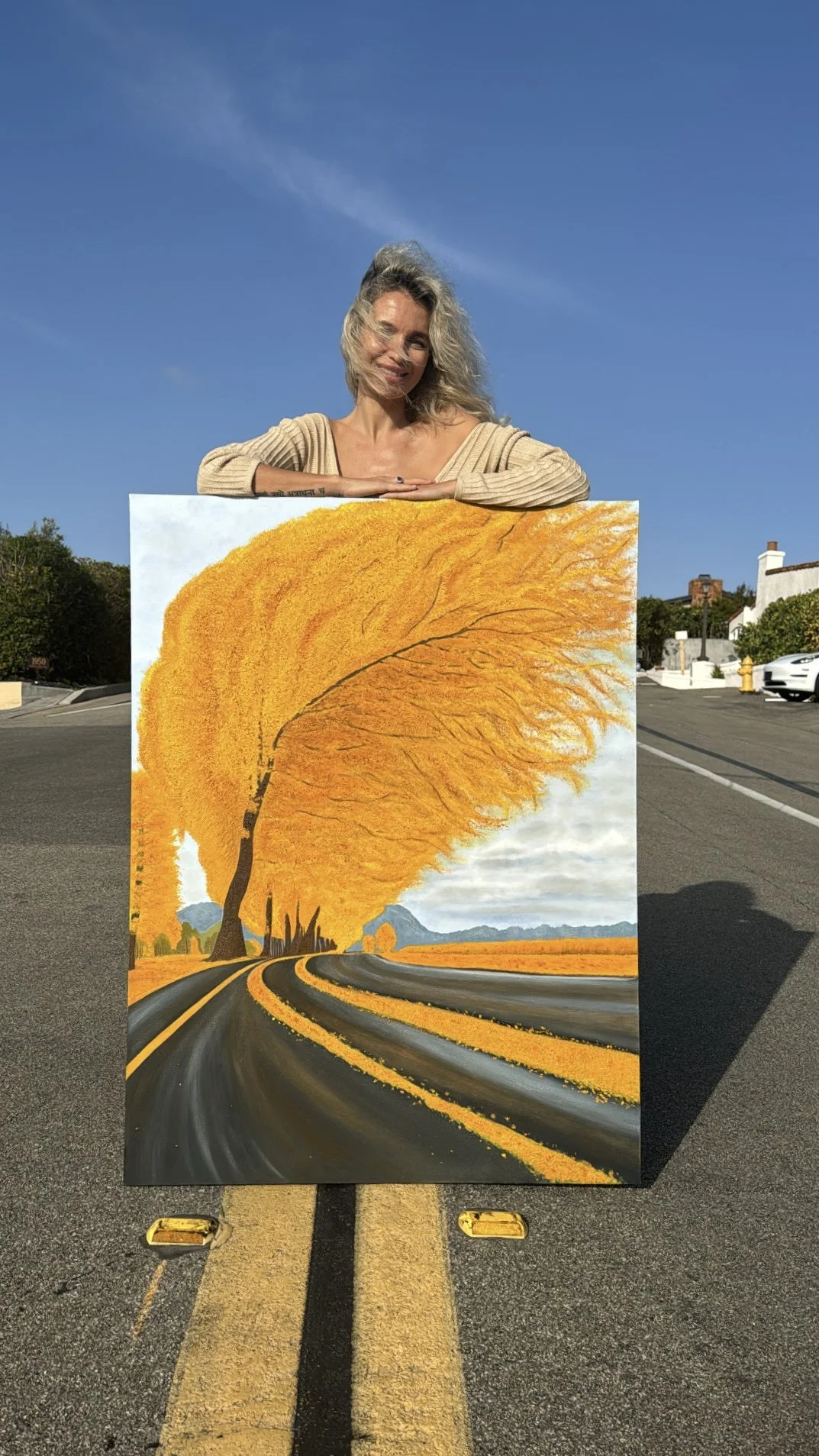
Since 2022, she has developed a focused studio practice, completing multiple international trainings in textured painting, bas-relief techniques, and material-based abstraction. Her work emphasizes physical presence, surface depth, and the expressive agency of material itself. Tudor lives and works in Laguna Niguel, California. Her works are held in private collections in the United States and Europe and have been featured in international art media, including Art Estate Magazine.
What is your background and how did you start your journey in the art world?
“I did not plan to become an artist. My path toward painting emerged unexpectedly and from a deeply personal place. Before art entered my life, I worked for many years in holistic and regenerative practices, focusing on the body, its memory, and its capacity for transformation. This experience profoundly shaped my sensitivity to material, tactility, and the relationship between surface and inner structure. At a certain point, I began to experience an intense inner impulse to paint. It was not an intellectual decision, but a physical necessity. I felt drawn specifically to oil, texture, and the tactile presence of matter. This impulse led me to pursue formal training in textured painting, bas-relief techniques, and material-based abstraction through several specialized programs and institutions. These studies provided technical knowledge, but more importantly, they allowed me to develop a deeper dialogue with material. When I created my first works, it became a point of no return. Painting opened a space where I could explore the fold not only as a physical structure, but as a carrier of memory, time, and embodied experience. What began as a personal necessity gradually evolved into a dedicated artistic practice. My background in working with the human body continues to inform my approach to matter, where surface, fold, tension, and release function as material expressions of lived experience. Painting became both a process of self-discovery and the foundation of my artistic identity.”
What inspires you?
“My work is inspired by the chronotope — the inseparable unity of time, space, and lived experience as it manifests through material. I am particularly interested in inner states and how they exist as real structures before they become visible. Every state carries its own density, rhythm, and presence. Painting allows me to translate these intangible conditions into physical form. For me, love is not simply an emotion, but a fundamental state of existence — a condition that permeates both material and immaterial reality. It exists within matter, within memory, and within the body. My work emerges from an attempt to give form to this underlying state. Through material, I explore how memory and experience become embedded within surface. The fold becomes a chronotopic structure — a site where time accumulates and where past, present, and potential coexist simultaneously. I understand perception as a reciprocal process between inner and outer reality. Internal states shape how I perceive and construct the world, while the external world, in turn, imprints itself onto the body and memory, continuously transforming my internal landscape. This ongoing exchange forms a living chronotope, where experience circulates between matter, perception, and presence. My practice exists within this continuous dialogue between body, memory, and material. Painting becomes a process of investigation into how invisible states can emerge into tangible form, and how matter can hold and transmit lived experience.”
What themes do you pursue? Is there an underlying message in your work?
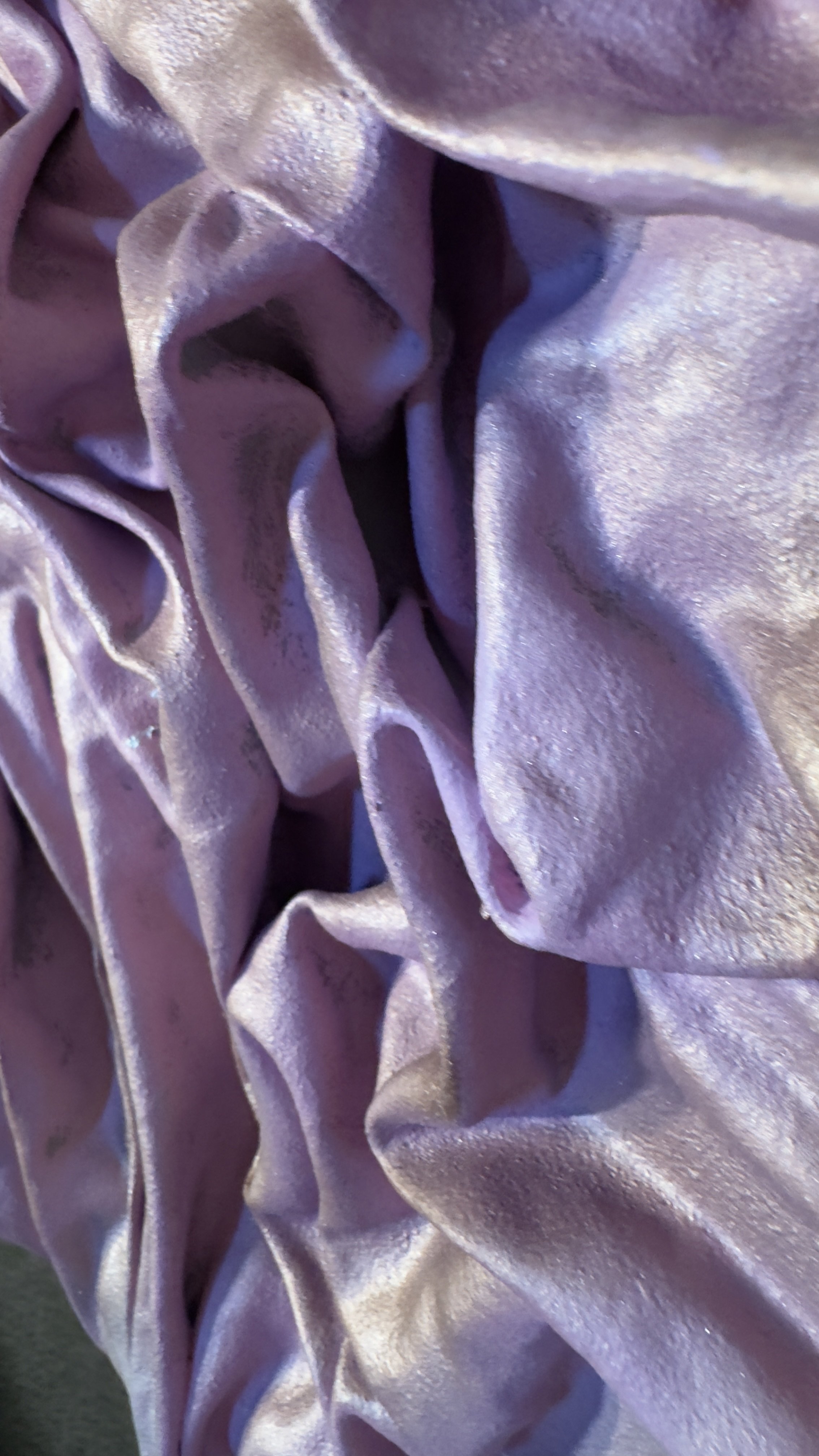
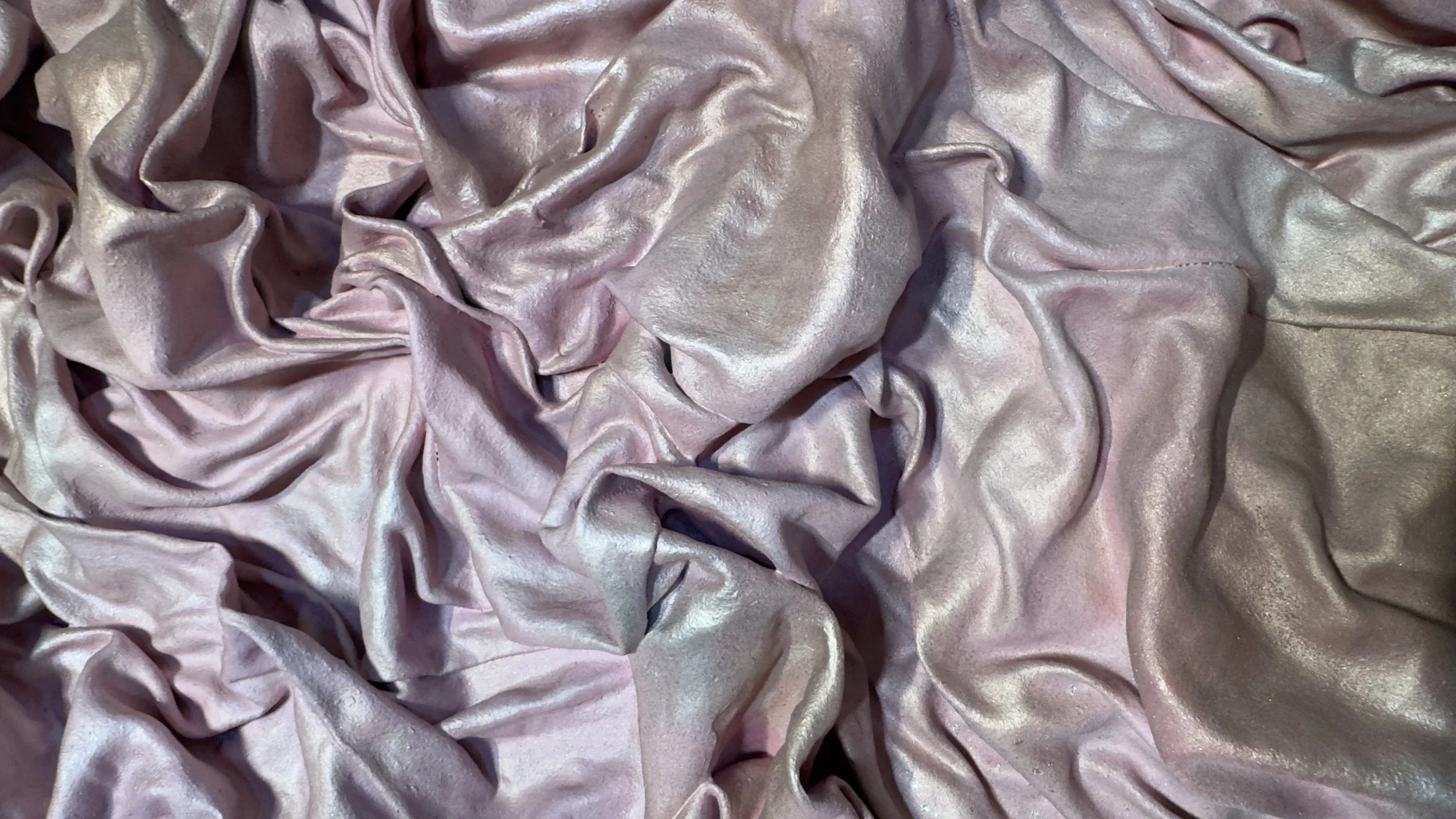
“The central theme of my work is the chronotope of the soul — the manifestation of inner states through material form. I explore how memory, experience, and emotion exist not only psychologically, but physically, as structures capable of inhabiting matter. My practice investigates how time becomes embodied, how lived experience leaves material traces, and how invisible dimensions of human perception can be translated into tangible form. The fold is a recurring structural element in my work. It functions as a chronotope — a spatial manifestation of time. The fold and texture are key structural elements of my work. They function as chronotopic spaces in which different temporal layers accumulate and coexist. Through the process of layering texture — the gradual accumulation of material layer upon layer — I reconstruct the way memory itself is formed: through micro-events, micro-durations, and lived moments that sediment into structure. Each fold and each material layer embodies a temporal trace. These layers do not merely build surface; they manifest the invisible architecture of experience. Just as memory is formed through successive accumulations of time, perception, and sensation, the physical stratification of texture allows time to become materially present.
Through density, rupture, tactility, and layered texture, I create surfaces that function as spatial carriers of internal states, allowing time not to be represented but to exist as embodied form. The surface becomes a living chronotope — a site where invisible psychological, emotional, and perceptual processes become materially articulated. At its core, my work addresses the process of encountering one’s authentic internal presence. Contemporary existence is shaped by external systems that continuously structure perception and identity. My paintings create autonomous spaces that interrupt this external conditioning, allowing for a moment of perceptual return. Within these spaces, the viewer is invited to shift from externally imposed structures toward direct internal awareness. This encounter is not symbolic, but experiential. The material presence of the work creates conditions in which the viewer can recognize their own internal chronotope — their own temporal, emotional, and perceptual structure. In this way, the work becomes a site where fragmentation can reorganize into coherence, and where the individual can encounter their own continuity beyond externally constructed narratives. My paintings do not depict external reality; they construct environments in which presence, memory, and perception converge. These environments function as portals that allow access to a deeper level of self-recognition — a state in which internal experience becomes perceptible, embodied, and real.”
How would you describe your work?
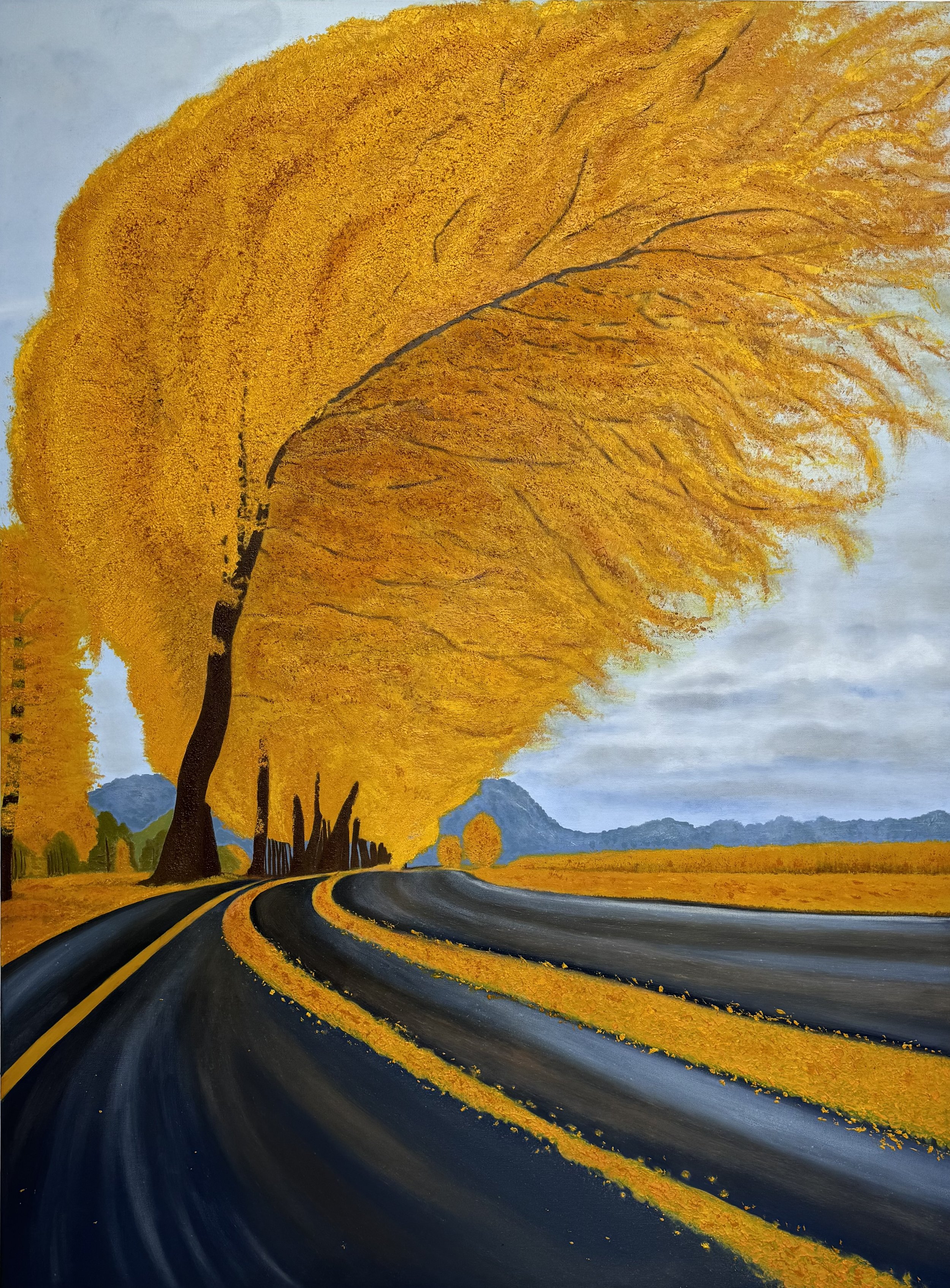
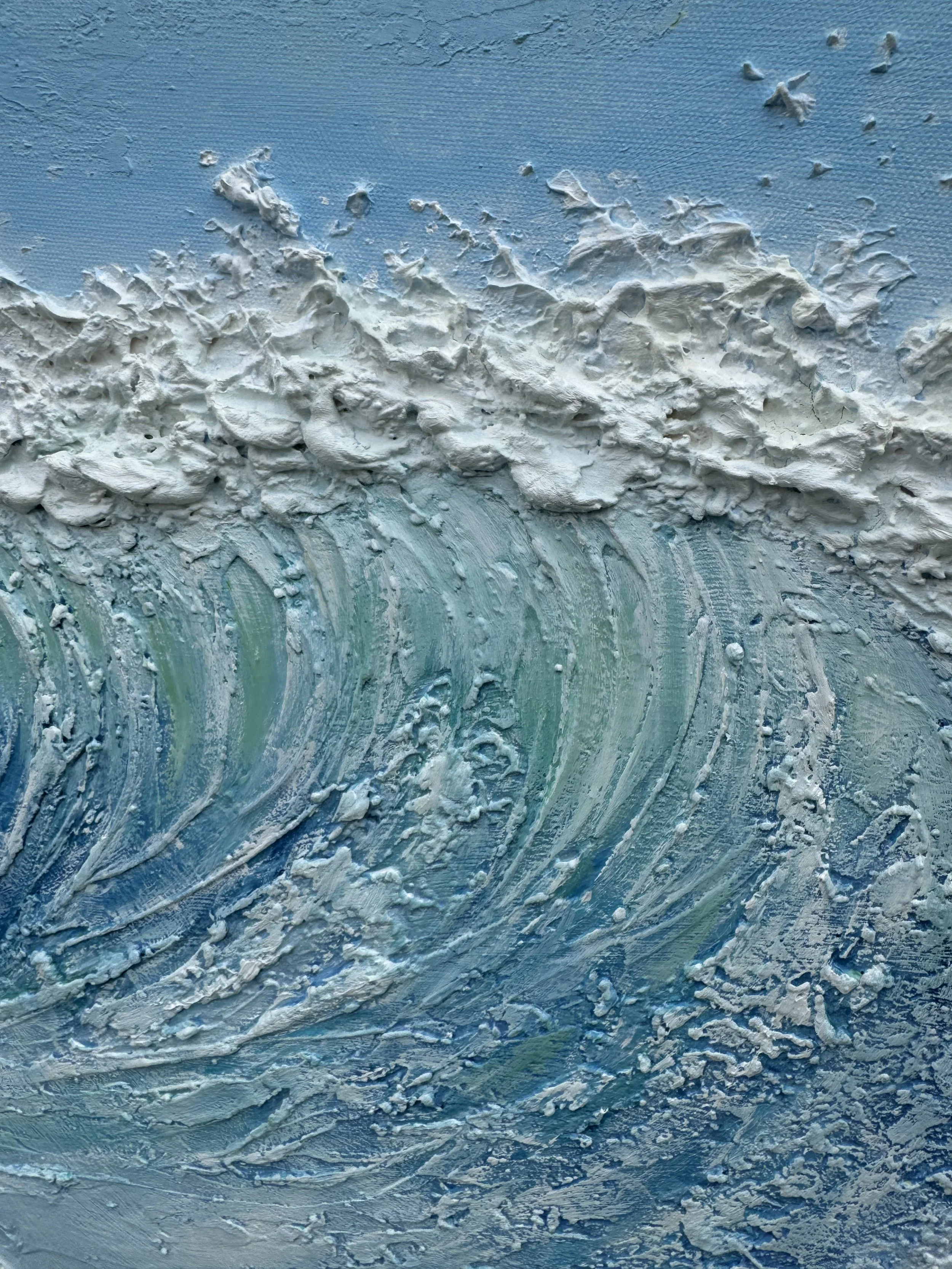
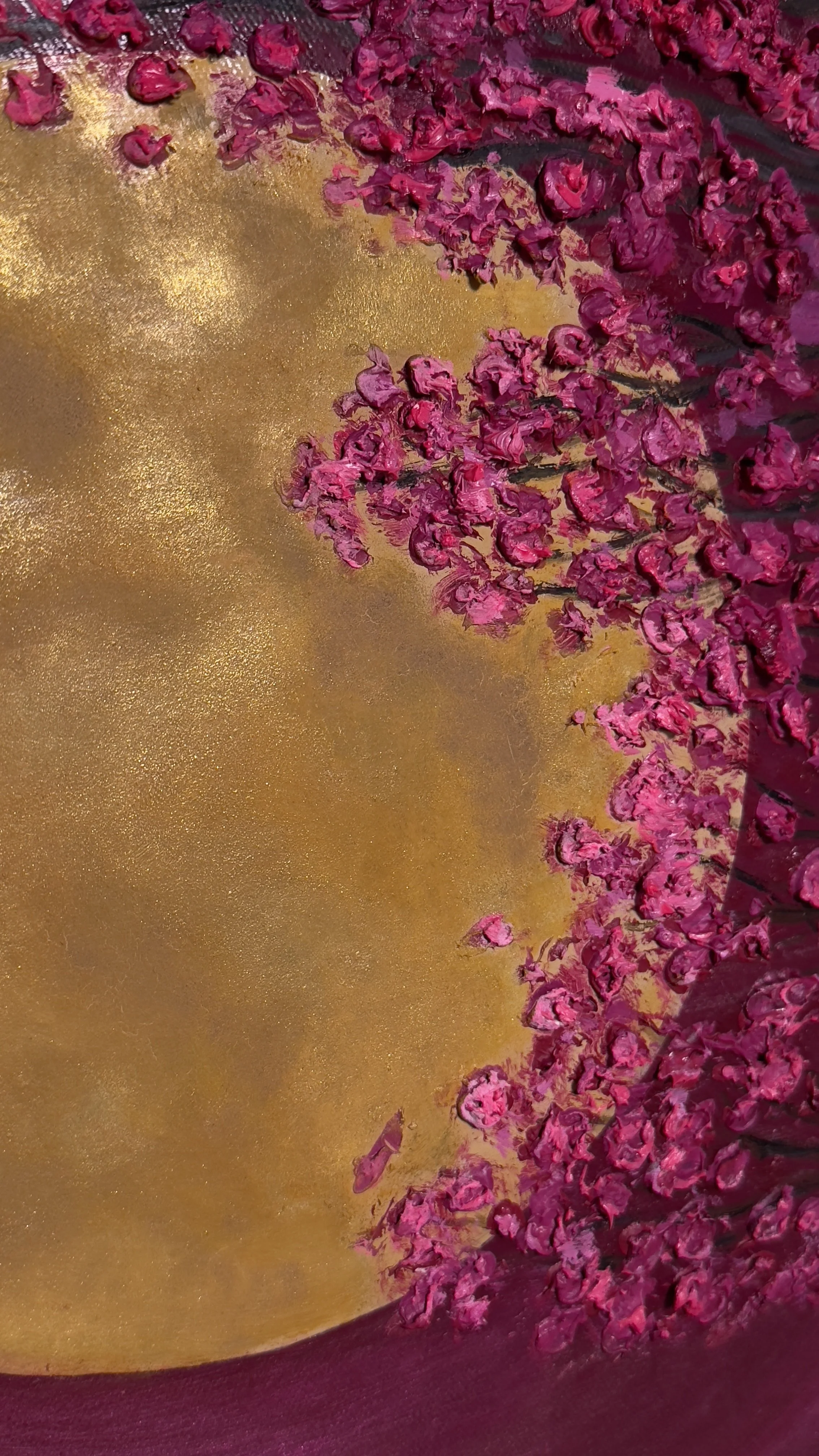
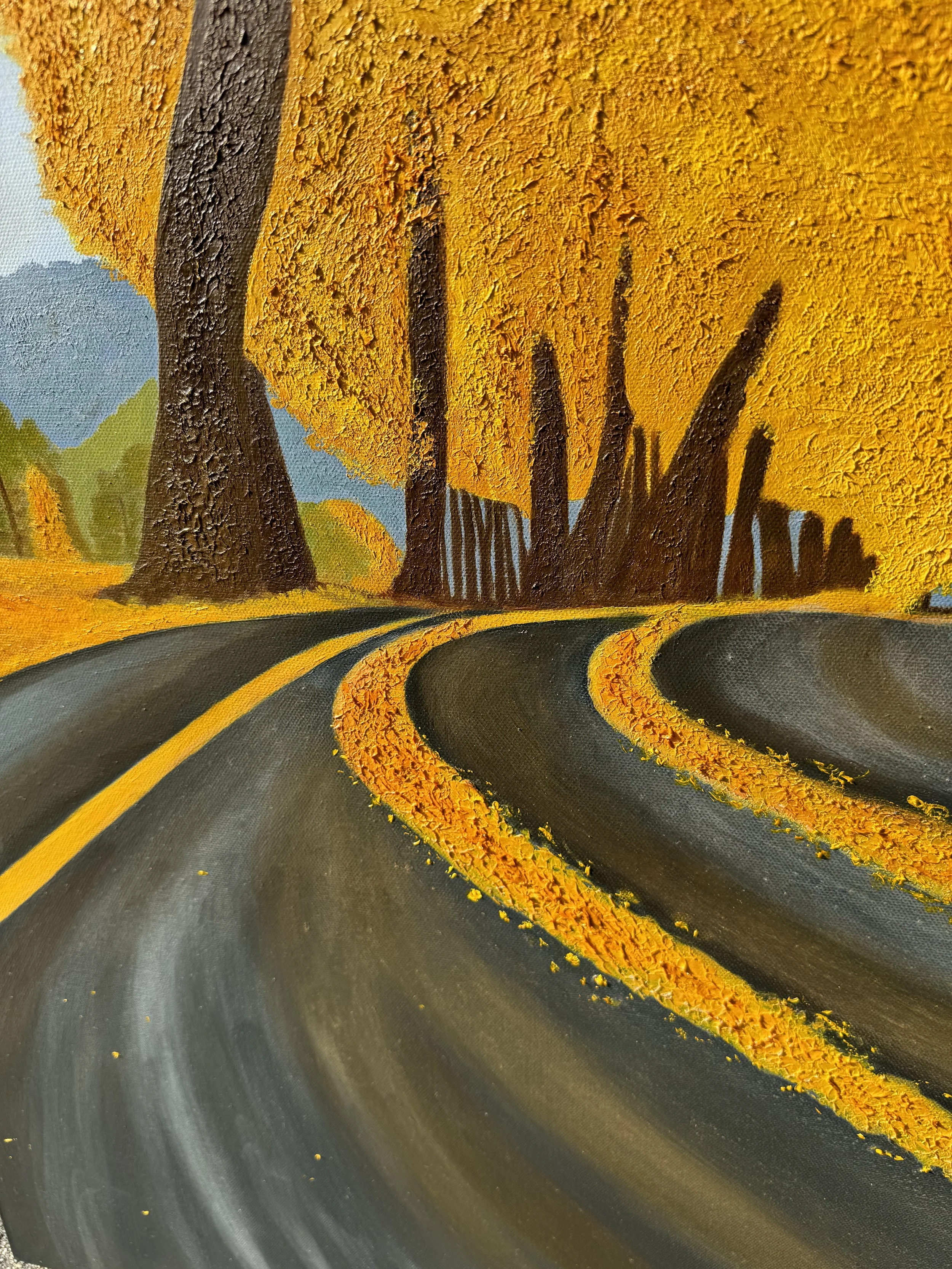
“My work exists at the intersection of painting, sculpture, and material investigation. I create abstract, materially driven compositions using oil, textile, sand, wood, bark, stone, gold, and structural compounds. I work with fabrics of varying density and character, and incorporate organic and elemental materials whose physical presence carries their own temporal and energetic history. The surface is constructed through processes of folding, layering, and building relief. Each material is not merely applied, but allowed to participate in the formation of the work. These materials act as active agents rather than passive tools — they carry memory, resistance, fragility, weight, and duration. Their interaction shapes the final form through a process of emergence rather than control. I approach the canvas as a site of origin — an initially open field that becomes transformed into a new spatial reality. Through accumulation, compression, and structural formation, the work evolves into a self-contained environment where matter becomes organized into form. My practice treats texture, fold, and material density as fundamental structural principles. Each layer functions as a temporal register, where the physical process of formation mirrors the way memory and internal states accumulate over time. The resulting works exist as autonomous material fields — not representations, but presences.”
Which artists influence you most?
“Claude Monet profoundly influenced my perception of time as a visible and living phenomenon. His serial works demonstrated that a single form, observed under different conditions of light, atmosphere, and duration, becomes a carrier of multiple temporal realities. This understanding deeply resonates with my own practice, where I return to similar forms—such as waves, folds, or spatial structures—not to repeat them, but to reveal how each moment imprints a distinct state into matter. In this sense, form becomes a site where time accumulates, shifts, and becomes perceptible. Alberto Burri revealed to me the expressive and conceptual power of matter itself. His fractured, burned, and ruptured surfaces demonstrated that material can carry memory, tension, and transformation. Eva Hesse deepened my sensitivity to fragility and instability, showing that vulnerability within material form can become a site of meaning rather than limitation. Anselm Kiefer expanded my understanding of matter as a bearer of historical and existential memory, where material itself becomes a field of temporal depth. Their practices affirmed my own direction: not to illustrate experience, but to allow time, memory, and inner states to become physically present through matter. Through folds, textures, and layered surfaces, I explore how invisible states—memory, perception, anticipation—can take material form. My work continues this lineage while developing its own language, where matter becomes a chronotope: a site where time and space converge and become physically and perceptually accessible.”
What is your creative process like?
“My creative process is always concept-driven. Each work begins with a clearly formed idea—a specific perceptual and conceptual structure that carries meaning and embodies a particular state. These ideas emerge continuously and often exist long before they are realized materially. Some works I create today originate from concepts that first appeared months or even years earlier. Each idea contains not only an image but a precise material logic: an understanding of how it must exist in texture, structure, density, and spatial tension. My role is to recognize which of these internal structures is ready to be brought into material form. This moment of selection is itself a temporal threshold—a fold in time where potential becomes decision. Even after the concept is fully formed and all materials are prepared, I often wait. This waiting is a necessary phase of internal consolidation. The work must first achieve structural coherence within me before it can exist externally. This process unfolds across multiple levels—intellectual, perceptual, emotional, and bodily. It is a phase of incubation, during which the work develops its internal integrity and readiness for material emergence. When this internal alignment is complete, the act of making begins.
The canvas initially exists as an open field—a site where a new spatial and perceptual reality can emerge. Through layering fabric, textured compounds, sand, pigment, wood, stone, and gold, I construct surfaces capable of holding temporal depth. Fold and texture function as structural mechanisms through which invisible states—memory, perception, and time—become materially present. While the conceptual structure of the work is precise, its physical formation unfolds through direct engagement with material. I do not mechanically execute a predetermined image. Instead, I enter a state of heightened perceptual concentration in which body, material, gesture, and spatial awareness operate as a unified system. Each intervention responds to the material in real time, allowing the work to evolve through dialogue rather than imposition. The work develops until it reaches a point of structural completion—when it no longer requires intervention and exists as an autonomous spatial presence. The work is not executed. It is allowed to emerge.”
What is an artist’s role in society and how do you see that evolving?
“I believe the artist is a living link in the continuous evolution of culture and human consciousness. The artist does not merely create objects, but constructs perceptual environments—spaces where reality can be encountered beyond its habitual and socially conditioned forms. Throughout history, artists have played a fundamental role in expanding the boundaries of perception. By giving form to what exists beyond language and established systems of understanding, they reveal dimensions of experience that would otherwise remain inaccessible. Art allows what is latent to become visible, and what is internal to acquire material presence. In this way, it does not simply reflect reality, but participates in its ongoing transformation. The encounter with art is inherently perceptual and psychological. It invites the viewer into a process of recognition—sometimes through resonance, sometimes through disruption. Even when a work unsettles or challenges, it activates awareness. It reveals that perception itself is not fixed, but fluid and capable of expansion. Through this encounter, the viewer becomes aware of new internal and external possibilities of experience. In this sense, the artist functions as both researcher and mediator—working at the threshold between material and immaterial realities.
Through matter, texture, fold, and spatial construction, the artist translates temporal, psychological, and perceptual structures into form. These forms become sites of encounter, where individuals can experience themselves beyond inherited limitations and rediscover their own depth and complexity. Art also exists within history, while simultaneously expanding it. Each authentic artistic voice contributes to widening the field of what can be perceived, understood, and imagined. By remaining faithful to their own perceptual truth, artists gradually dissolve fixed cultural, psychological, and perceptual boundaries, allowing new dimensions of human experience to emerge. This role becomes especially vital in an era increasingly shaped by automation, standardization, and artificial systems. As technological structures continue to shape external reality, the artist preserves and expands the internal dimension of human experience. Art sustains the space where perception remains open, where meaning remains alive, and where human consciousness continues to evolve. In this way, the artist does not stand outside of history, but moves within it—studying its structures, revealing its hidden layers, and expanding its horizon. Through the act of creation, the artist participates directly in the unfolding of human perception itself.”
Have you had any noteworthy exhibitions you'd like to share?
“My work is currently entering broader international visibility through publications, editorial features, and inclusion in private collections. My practice has been featured in international art publications, including Artist Statement Magazine, and I am currently in the process of preparing several forthcoming interviews and printed editorial features with international platforms. These upcoming publications reflect the growing recognition of my research-driven approach to materiality, memory, and perceptual space. While my exhibition program is actively developing, my primary focus remains on building a cohesive body of work through sustained studio research. I am currently preparing new works for forthcoming exhibition opportunities and expanding my presence within gallery and institutional contexts. My practice unfolds as a long-term material investigation, where each work contributes to a broader continuum exploring how matter becomes a carrier of time, memory, and embodied consciousness. This ongoing process situates my work within contemporary discourse surrounding perception, material intelligence, and the formation of experiential space.”
Website: tattitudor.com
Instagram: @tati_tudor_art