Tamara Chausse
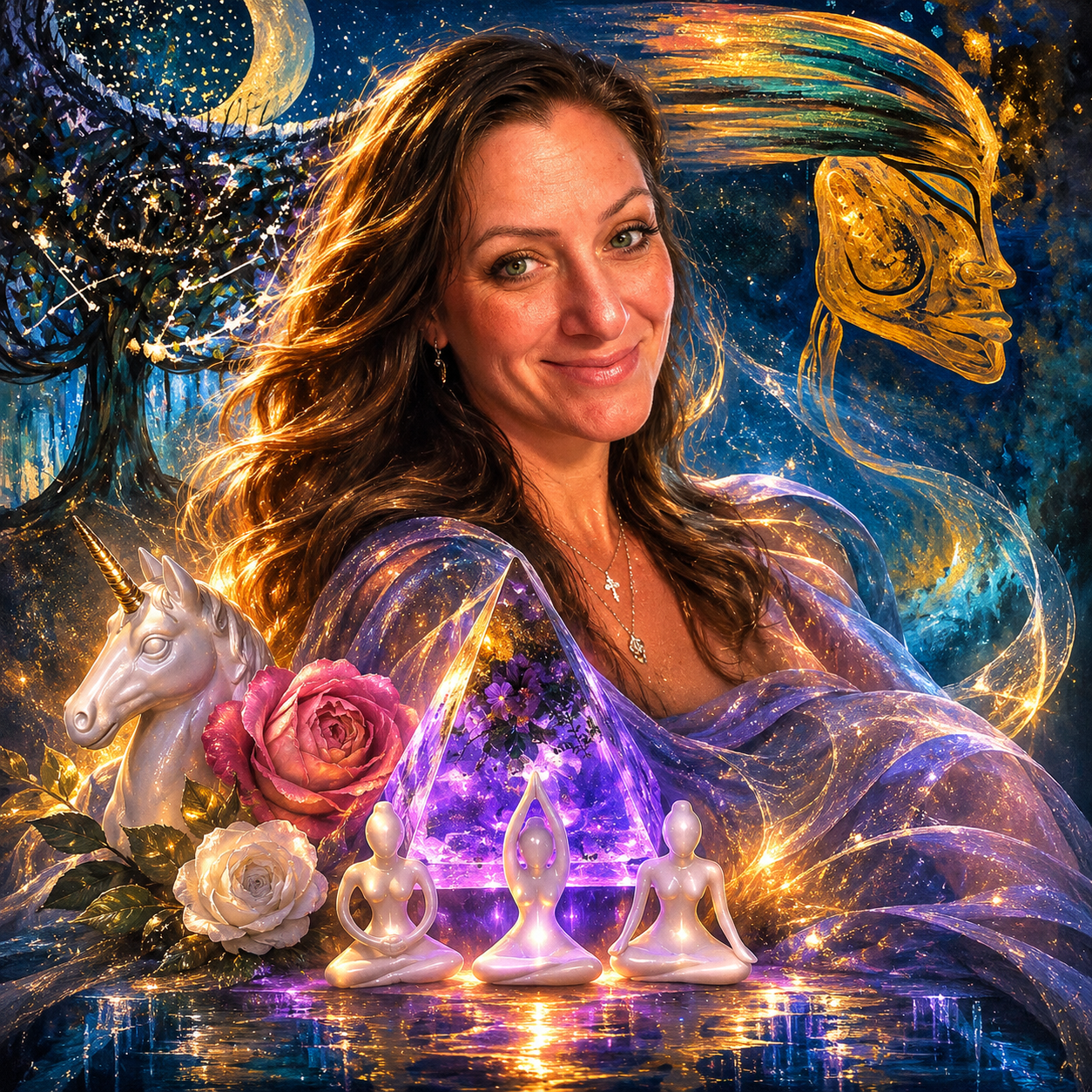
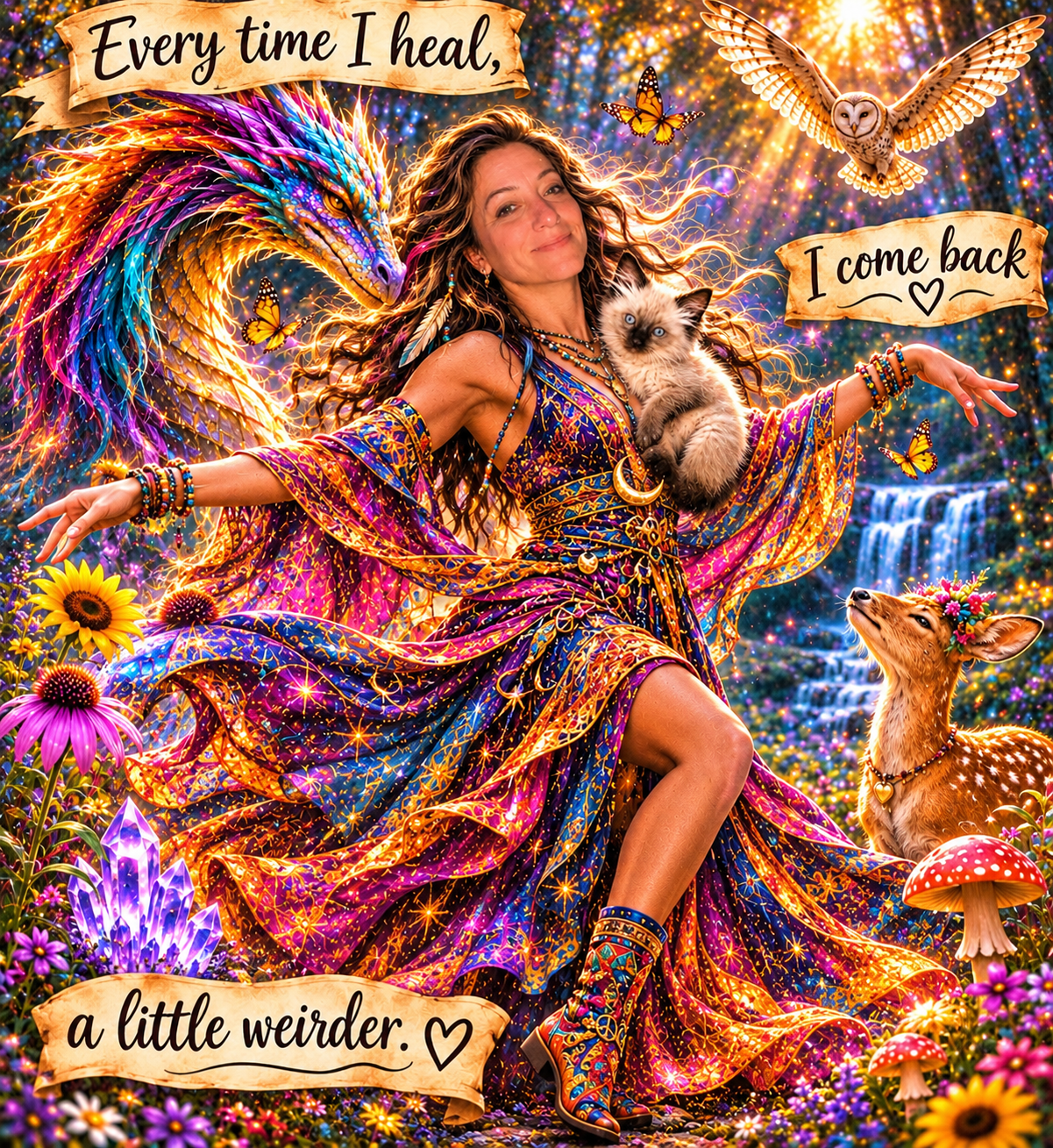
Tamara Chausse is a self-taught mixed-media artist from Arizona. Her creative journey began in 2019 as a path toward healing, self-discovery, and transformation. Through vibrant colors, symbolism, and intuitive painting, Tamara explores the connection between light and darkness, nature, spirituality, and humanity. Her purpose is to build bridges between cultures and beliefs through art, compassion, and understanding. Every painting is another chapter of Her Becoming.
What is your background and how did you start your journey in the art world?
“My journey into the art world began in March 2019, during a period of profound personal transformation. Before becoming an artist, I spent approximately 20 years working in the dental field. I had no formal fine arts education and never imagined painting would become such an important part of my life.
In January 2019, I began exploring spirituality, consciousness, and meditation. The following month, I discovered Synctuition, a sound-based meditation program that became an important part of my journey of self-discovery. Through meditation, I began reflecting on childhood experiences, emotional wounds, and aspects of my life that I had never fully explored.
In March 2019, I picked up a paintbrush and began experimenting with color. Initially, I would place simple dots of paint on a blank canvas, allowing the colors to blend and the imagery to emerge naturally. I had no predetermined designs or expectations. Painting became an intuitive process, a way of expressing thoughts and emotions that I couldn’t always communicate through words.
Later that year, my life changed dramatically when my marriage ended. I experienced profound loss and uncertainty, but art became a source of expression, healing, and personal discovery. In January 2020, less than a year after I began painting, I participated in my first art exhibition with RAW, where I displayed my original artwork publicly. It was a meaningful milestone, particularly considering how recently I had discovered my passion for painting.
Since then, I have continued experimenting with acrylic paints, acrylic inks, glitter, resin, and mixed media. Some of my paintings have evolved over several years, changing alongside my own perspectives and experiences. My artistic journey has become inseparable from my personal journey, which I call My Becoming. I believe we are constantly growing, learning, and transforming. For me, art is not simply about creating something beautiful; it is about discovering who we are, expressing our experiences, and finding connections with others. What began with a few colorful dots on a blank canvas became an entirely new chapter of my life.”
What inspires you?
“My inspiration comes from the connection between nature, humanity, music, spirituality, and the extraordinary ability we have to transform through life’s experiences. I am fascinated by the relationship between light and darkness, beginnings and endings, destruction and creation. Sunrises and sunsets remind me that transitions can be beautiful. Trees symbolize strength, growth, and resilience, while the moon, stars, and movement of water inspire my curiosity about the mysteries of existence. I find beauty in the contrasts that make life meaningful. Music has also had a profound influence on my artistic journey, particularly the work of violinist Lindsey Stirling.
In 2019, I watched her documentary Brave Enough, and something about her story deeply resonated with me. Her willingness to express vulnerability, struggle, and resilience through music inspired me during a time when I was discovering my own creative voice. In September 2019, I purchased tickets for one of her December concerts, accidentally selecting Peoria, Illinois, instead of Arizona. Shortly afterward, my husband left, and my life changed dramatically. During that period, I began creating artwork inspired by Lindsey, including an early painting I eventually destroyed.
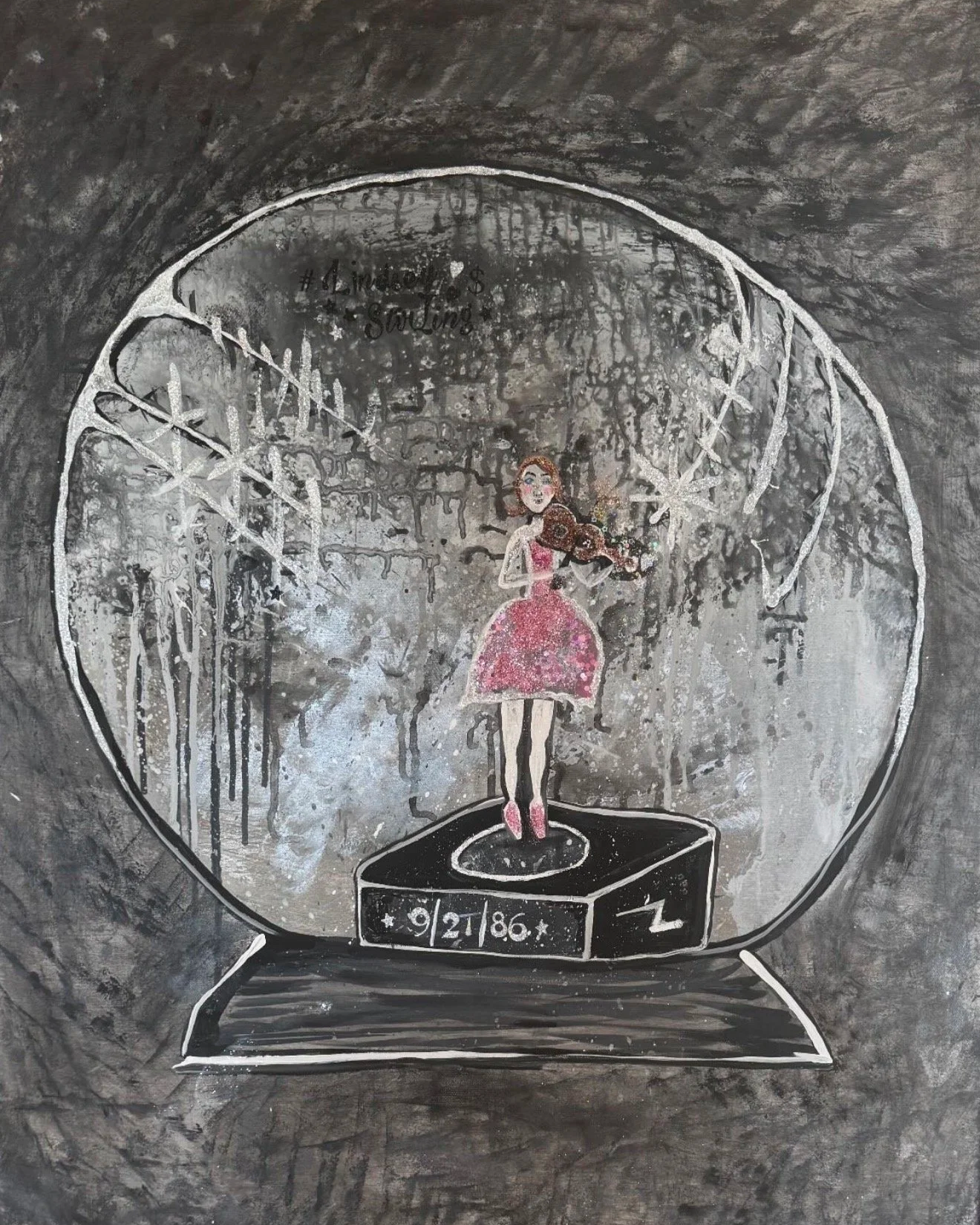
In September 2024, I had tickets to another of her concerts and hoped to give her a painting inspired by her song Shatter Me. Unfortunately, gifts weren’t being accepted. The painting depicts a violinist standing inside a fractured snow globe, symbolizing the experience of feeling emotionally shattered while still holding onto beauty, strength, and the possibility of healing. My personal experiences are another powerful source of inspiration. I have experienced loss, uncertainty, profound change, and the difficult process of rebuilding my life. Through those experiences, I have become increasingly interested in the relationship between suffering and growth, and how creativity can help us process emotions that words alone cannot express. My exploration of spirituality, meditation, consciousness, and different religious and philosophical traditions has also influenced my work. I believe there are meaningful connections between people, even when our cultures, beliefs, and experiences differ. That curiosity inspires me to explore symbolism, opposing forces, and the possibility of finding unity within diversity.
Ultimately, what inspires me most is transformation—not simply the transformation of a blank canvas into a painting, but the transformation of the human spirit through experience, compassion, self-discovery, and love. I want my art to remind people that even when life feels broken, beauty can still emerge, and that our differences do not have to prevent us from finding common ground.”
What themes do you pursue? Is there an underlying message in your work?
“The central themes in my artwork are transformation, healing, balance, self-discovery, and the connection between all living things. I am particularly drawn to the relationship between opposites: light and darkness, chaos and harmony, destruction and creation, pain and healing. I believe these contrasts are part of the human experience, and much of my work explores how we learn to navigate and integrate them. My paintings often begin without a predetermined image or message. I allow colors, shapes, and movement to develop intuitively. Sometimes I discover symbolism within a painting that I hadn’t consciously intended to create. Other times, I return to a piece months or even years later, adding new layers that reflect how my understanding of myself and the world has evolved.
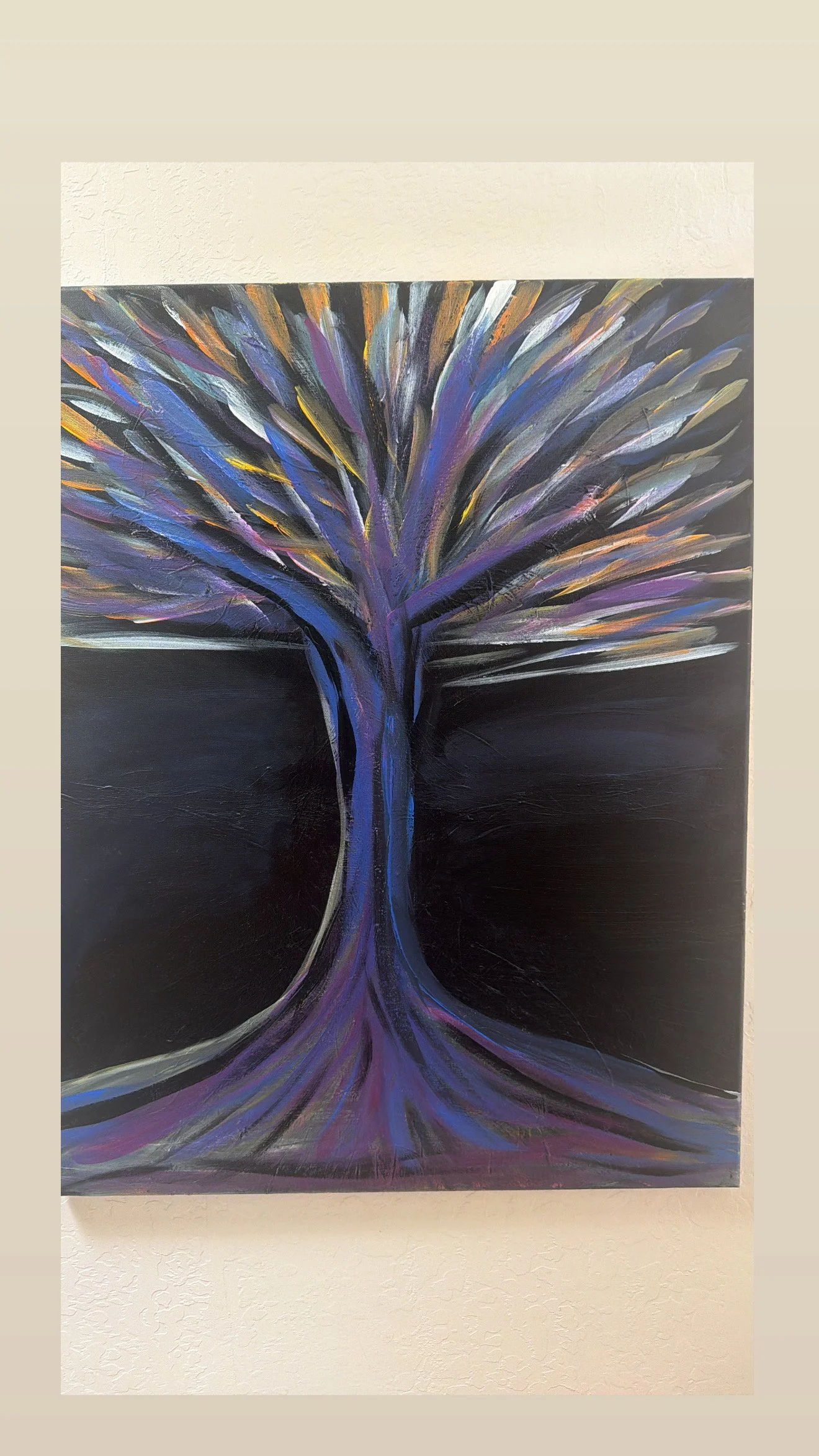
One example is The Rainbow Dragon, a painting I began in 2019 and continued transforming years later. To me, its evolution reflects the idea that neither art nor the human spirit has to remain fixed. We are constantly becoming, and sometimes what once felt unfinished simply wasn’t ready to reveal its next chapter. Nature and spiritual symbolism also appear throughout my work. Trees and roots evoke resilience and connection. The sun and moon suggest cycles, transitions, and balance. Spirals, flowing colors, and celestial imagery invite reflection on movement, continuity, and the mysteries of existence. My personal experiences have deeply influenced these themes. Having navigated significant loss, emotional wounds, and periods of profound change, I understand how difficult transformation can be.
Through art, I explore the possibility that even painful experiences can eventually become sources of understanding, compassion, and growth. But the underlying message of my work reaches beyond my own healing. I believe that humanity is deeply connected, even when our beliefs, cultures, religions, and personal experiences differ. Throughout my spiritual journey, I have explored various perspectives on God, consciousness, and the meaning of existence. Rather than focusing only on what separates these traditions, I am interested in discovering the values and experiences that connect us. I believe art offers a unique opportunity to build bridges between people. A painting does not require its viewers to speak the same language, practice the same religion, or interpret its meaning in exactly the same way. Two people can stand before the same artwork, experience completely different emotions, and still share a moment of connection. My intention is not to persuade people to abandon their beliefs or adopt mine. It is to encourage curiosity instead of judgment, compassion instead of condemnation, and understanding instead of division. To me, a bridge does not require either side to surrender its identity. It simply creates a place where people can meet.
Ultimately, I hope my artwork reminds others that our wounds do not have to define us, our differences do not have to divide us, and transformation is always possible. If there is one message I want my art to communicate, it is this: We do not have to be the same to recognize the humanity in one another. We can honor our differences while discovering the beauty of what connects us.”
How would you describe your work?
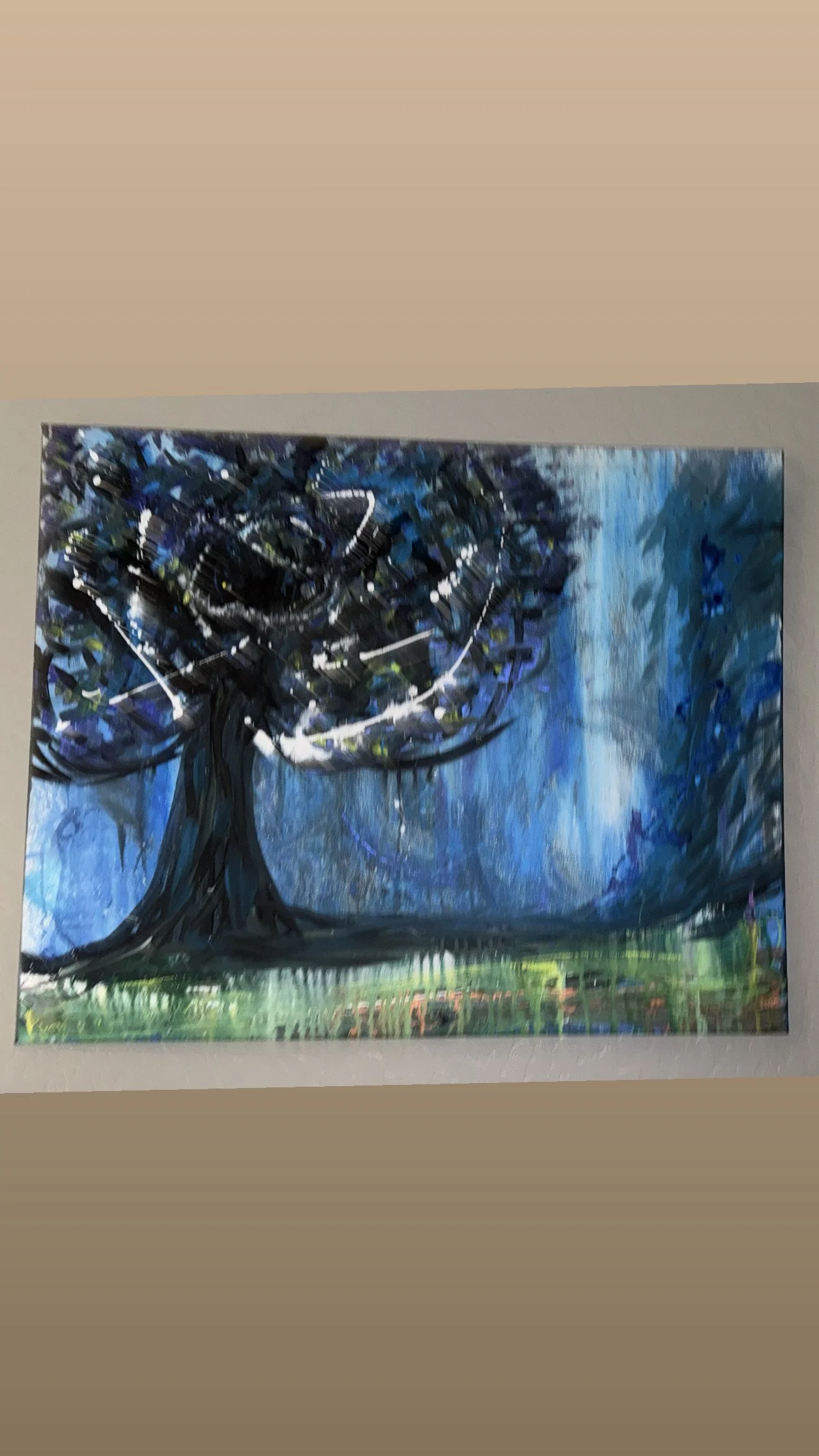
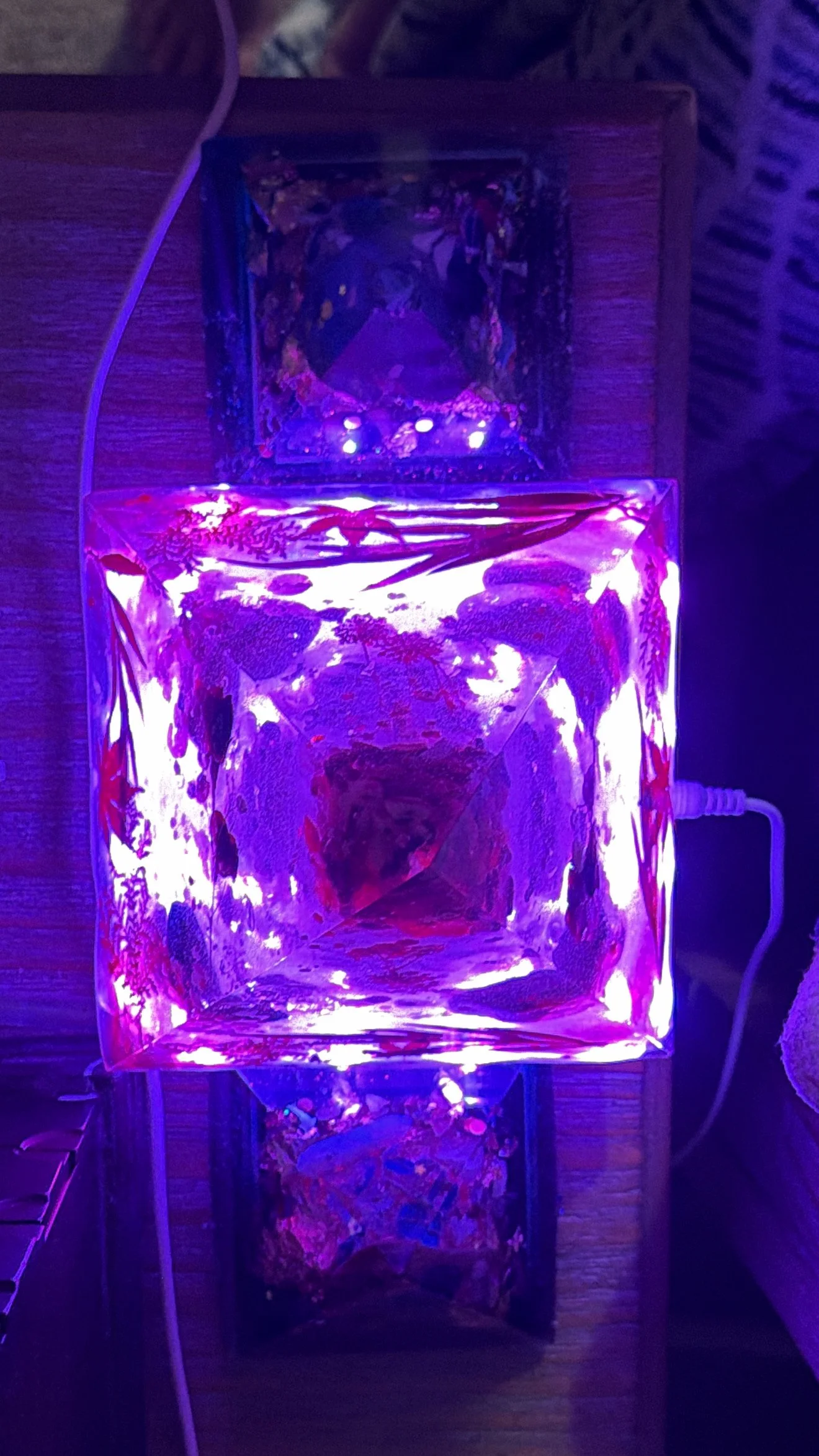
“I would describe my artwork as intuitive, emotionally expressive, colorful, symbolic, and constantly evolving. As a self-taught artist, I have never felt the need to confine myself to one particular style, technique, or artistic movement. I enjoy the freedom of experimentation and allowing each painting to develop its own personality. My work ranges from abstract compositions and vibrant landscapes to celestial imagery, symbolic figures, dragons, and nature-inspired paintings. Some pieces are peaceful and contemplative, while others are mysterious, dramatic, or filled with movement and energy. Color is one of the most important elements of my creative expression. I am fascinated by the way colors interact, blend, contrast, and transform depending on their surroundings. I am especially drawn to rich blues, purples, turquoise, and vibrant combinations that create movement and depth. I also enjoy the relationship between light and darkness, often using contrasting shades to create atmosphere and emotion. I work primarily with acrylic paints, acrylic inks, glitter, and mixed media. Acrylic ink allows me to explore fluidity and transparency, while glitter and reflective materials introduce another dimension to my paintings. I particularly enjoy observing how certain pieces appear to change under different lighting conditions.
My artwork often incorporates flowing lines, spirals, circular movements, and organic shapes. These elements can be seen throughout my paintings, from my abstract compositions to my trees, moons, and symbolic figures. Sometimes these shapes emerge naturally, without any conscious intention to create them. One of the most distinctive aspects of my work is that I don’t always consider a painting permanently finished. I may return to a canvas months or even years later, adding colors, details, or entirely new elements. A painting that once represented one chapter of my life may evolve to reflect another. The Rainbow Dragon is a wonderful example. I began the painting in 2019 and returned to it years later, transforming its appearance through additional colors and details. Rather than viewing the original version as incomplete, I see each stage as part of the artwork’s history. I also believe that creativity should include a sense of freedom and playfulness.
Although many of my paintings explore deeply personal experiences and meaningful themes, I enjoy experimenting, discovering unexpected imagery, and occasionally laughing at where my imagination takes me. I don’t necessarily want viewers to see exactly what I see in my paintings. I love the idea that someone can look at a piece and discover an entirely different interpretation based on their own experiences. Ultimately, I see my work as a visual reflection of the human experience: layered, imperfect, sometimes chaotic, sometimes peaceful, and always capable of transformation. If I had to describe my art in one sentence, I would say it is an ever-evolving conversation between color, emotion, intuition, and the beautiful uncertainty of becoming.”
Which artists influence you most?
“My artistic influences extend far beyond traditional painting. As a self-taught artist, I have developed my creative expression primarily through intuition, experimentation, music, nature, and personal experiences rather than formal artistic training. One of my greatest creative influences is violinist Lindsey Stirling. Her ability to combine music, movement, emotion, and storytelling has inspired me since 2019. Watching her documentary Brave Enough introduced me to another side of artistic expression—the courage to be vulnerable, to embrace individuality, and to transform personal struggles into something beautiful. Her music inspired several of my early paintings, including my interpretation of Shatter Me. I am particularly drawn to artists who are unafraid to explore the emotional and spiritual dimensions of the human experience. I admire creativity that challenges conventional boundaries, encourages self-reflection, and allows viewers to discover their own meanings. My exploration of meditation, consciousness, and spirituality has also influenced the way I approach art.
Through the work of authors and researchers such as Dolores Cannon, I became interested in different perspectives on consciousness, existence, and the connections between people. Although her work is not traditional visual art, those explorations have influenced the questions and symbolism that appear in my paintings. Nature is perhaps my most consistent artistic teacher. The Arizona desert skies, brilliant sunsets, trees, flowing water, and the changing relationship between sunlight and shadow have inspired much of my work. I am fascinated by how nature creates extraordinary beauty through contrasts, movement, and constant transformation. I also find inspiration in the creativity of everyday people. I believe artistic expression does not always require formal education, recognition, or perfection. Sometimes the most meaningful creations emerge when someone allows themselves the freedom to experiment without fear of judgment. Rather than trying to imitate another artist’s style, I prefer to discover my own through experience. My paintings often begin without a clear destination, and I allow the creative process itself to become a teacher. Ultimately, the artists who influence me most are those who create authentically, embrace vulnerability, and use their gifts to communicate something meaningful about being human. I believe inspiration is everywhere, and sometimes the greatest artistic influence comes not from what we see, but from what we feel.”
What is your creative process like?
“My creative process is primarily intuitive, spontaneous, and constantly evolving. I rarely begin a painting with a fully developed plan. Instead, I allow my emotions, imagination, and the colors themselves to guide me. When I first began painting in March 2019, I often started with something incredibly simple: a blank canvas and a series of colorful dots. I would place different colors of acrylic paint directly onto the canvas, sometimes arranging them in a single line. There was no detailed sketch, predetermined image, or expectation of what the finished painting would become. From those simple dots, I began experimenting with blending, movement, and the relationships between colors. Sometimes an image would emerge unexpectedly. Other times, I would discover shapes and patterns that inspired me to take the painting in an entirely different direction. As my artistic journey progressed, I began exploring acrylic inks, glitter, resin, and different mixed-media techniques. I particularly enjoy working with materials that create fluid movement, transparency, texture, and reflective effects. Light plays an important role in my work, and I love observing how a painting can reveal different qualities depending on how it is illuminated.
One of the most important aspects of my creative process is entering what I describe as a flow state. During those moments, I become completely immersed in what I am creating. I stop worrying about the outcome and simply enjoy the experience of allowing something to emerge. I’ve also learned that creativity cannot always be forced. Sometimes I become frustrated with a painting because it doesn’t look or feel the way I want it to. Rather than continuing to work against that feeling, I’ve learned to step away. I may return days, months, or even years later with a completely different perspective. The Rainbow Dragon is one of my favorite examples of this. I originally began the painting in 2019, but it has undergone significant transformations over the years. As I continued developing both personally and artistically, I returned to the canvas, introducing new colors, reshaping its wings, and discovering new possibilities within the original composition. What I find fascinating is that a painting can take on an entirely new meaning without losing its history.
Each layer becomes part of its story, much like the experiences that shape us as individuals. I also enjoy the unexpected discoveries that happen during the creative process. What initially appears to be a mistake may become my favorite part of a painting. A shape I never intended to create might inspire an entirely new composition. I’ve learned that allowing myself to experiment freely often produces results that planning alone could never achieve. My creative practice has become a reflection of my personal philosophy. I believe life rarely unfolds exactly as we imagine, and sometimes the most meaningful transformations happen when we release our expectations and remain open to possibility. For me, painting is not simply about creating a finished image. It is about exploration, discovery, and allowing something to become. Just as I began with a few dots of color on a blank canvas, I believe we often discover who we are one experience, one layer, and one transformation at a time.”
What is an artist’s role in society and how do you see that evolving?
“I believe an artist’s role in society extends far beyond creating something beautiful. Artists are storytellers, observers, explorers, and sometimes bridge builders. We have the ability to communicate emotions, challenge perspectives, preserve experiences, and encourage conversations that might otherwise never take place. Throughout history, art has reflected humanity’s triumphs, struggles, beliefs, and transformations. It has given voices to those who felt unheard, challenged established ways of thinking, and created connections between people separated by geography, language, religion, and culture. I believe that role is becoming increasingly important in today’s world. We live in a time when differences in beliefs, backgrounds, and perspectives can quickly become sources of division. It is easy to misunderstand someone whose experiences differ from our own, especially when we approach those differences with fear or judgment rather than curiosity.
One of my deepest personal aspirations is to help build bridges between people, particularly those who come from different spiritual, religious, and cultural backgrounds. My own journey has led me to explore Christianity, meditation, spirituality, consciousness, and various philosophical traditions. Through those explorations, I have become increasingly interested in the values that connect us rather than focusing exclusively on the beliefs that separate us. I recognize that people understand God, creation, and spirituality in different ways. My intention is not to convince anyone to abandon their faith or adopt my perspective. Instead, I hope to encourage mutual respect, compassion, and meaningful dialogue. I believe art provides a beautiful opportunity to create that kind of connection. Two people can look at the same painting and see completely different things. One might recognize a spiritual symbol, while another sees an expression of emotion or a reflection of nature. Neither interpretation necessarily diminishes the other. Instead, those differences can become opportunities to understand how another person experiences the world. I also believe artists have an important role in helping people explore their inner lives.
Art can provide a space to confront difficult emotions, examine personal experiences, celebrate individuality, and discover beauty in places where it might otherwise go unnoticed. My own paintings have helped me navigate periods of loss, uncertainty, and personal transformation. Through that process, I have come to appreciate how creativity can encourage reflection and support healing. As society continues to evolve, technology and digital platforms are changing how artists share their work. Social media, online galleries, and emerging creative tools allow individuals to connect across borders and cultural boundaries in ways that were once unimaginable. I believe this creates both opportunities and responsibilities.
Artists can now reach audiences far beyond their immediate communities, making it increasingly important to consider the messages we communicate and the conversations we encourage. For me, the future of art is not simply about developing new techniques or embracing new technologies. It is about using creativity to preserve and strengthen our shared humanity. I hope to contribute to a world where differences are met with curiosity rather than condemnation, where compassion is valued alongside conviction, and where people recognize that understanding one another does not require complete agreement. I do not believe an artist needs to have all the answers. Sometimes our greatest contribution is simply asking a question, opening a conversation, or helping someone see something from a different perspective. If I can use my creativity to build even one bridge between people who might otherwise remain divided, then I believe my art has served a meaningful purpose. Ultimately, I want my work to remind people that we can honor our individual identities, traditions, and beliefs while still recognizing something profoundly human in one another. Art does not have to erase our differences to bring us together. Sometimes it only needs to create a place where we are willing to meet.”
Have you had any noteworthy exhibitions you'd like to share?
“My first and only formal art exhibition took place in January 2020 at a one-day RAW artist showcase in downtown Phoenix, Arizona. This experience was particularly meaningful because I had only begun painting in March 2019, less than a year earlier. As a self-taught artist with no formal fine arts education, having the opportunity to publicly display my work was an exciting and deeply personal milestone. The exhibition came during one of the most challenging and transformative periods of my life. In November 2019, I experienced the unexpected end of my marriage, which brought significant emotional challenges and changes to my life. Despite those circumstances, I continued pursuing my creativity.
Art had become an important way for me to express emotions, explore my identity, and discover strengths I had not previously recognized. Participating in RAW gave me an opportunity to share my paintings with an audience and connect with others through something I had created entirely from my own imagination and experiences. I remember being surrounded by my artwork and recognizing how much my life had changed in such a short time. What began with a few dots of color on a blank canvas had become a collection of paintings that I was now sharing publicly.
Although RAW remains my only formal exhibition to date, I have continued developing my artistic practice, experimenting with new materials and techniques, and sharing my work through social media. I have photographs documenting my participation in the January 2020 event, although I do not have a public exhibition link available. Looking back, that experience represents more than my first art exhibition. It reminds me that personal transformation can lead us toward unexpected opportunities and that creativity can emerge even during life’s most difficult chapters. I hope to participate in future exhibitions that celebrate artistic individuality, healing, personal transformation, and the connections that bring people together.”