Interview
Suzanne Connors
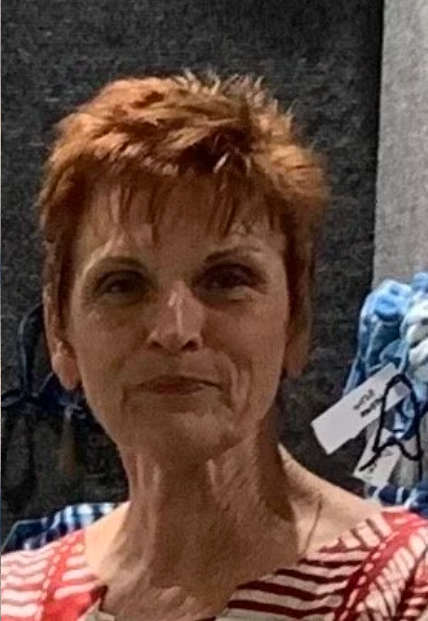
Suzanne Connors is a fiber artist, designer, educator, and arts organizer whose practice includes indigo dyeing, shibori, katazome, botanical printing, and surface design. Drawing on a background in sewing, design, gallery ownership, and community arts leadership, she explores color, texture, pattern, and the expressive possibilities of cloth. Connors founded Aya Fiber Studio as a personal studio in 2008 and opened it to public teaching in 2013. Based seasonally in Stuart, Florida, the studio brings artists together for small-group fiber-art workshops. Through Aizome Studio in Murphy, North Carolina, she is developing her personal practice and teaching centered on Japanese textile traditions. Her community work includes founding artist organizations, cooperative galleries, and studio-tour initiatives in North Carolina and Florida. She is a founder and past president of the Martin Artisans Guild, founder of the Martin County Open Studio Tour, and founder and president of the South Florida Surface Design Association. Her work as an artist and educator reflects an enduring commitment to experimentation, shared knowledge, and creating opportunities for artists.
What is your background and how did you start your journey in the art world?
“I am a fiber artist, designer, educator, and arts community organizer. I divide my time between Stuart, Florida, where I founded Aya Fiber Studio, and Murphy, North Carolina, where I am developing my personal practice through Aizome Studio. My background includes sewing and design, interior design, construction project management, and gallery ownership. Although I have explored different media, I continually return to textiles. I am drawn to their tactile qualities and the possibilities of building color, pattern, and texture within the cloth itself. My involvement in the art world has included creating opportunities for other artists as well as developing my own work. In North Carolina, I founded Saxapahaw Artists and the Saxapahaw Artists Co-op Gallery, and later opened SAX Art Gallery. In Florida, my work has included Suzanne Connors Fine Art, founding the Martin Artisans Guild and Martin County Open Studio Tour, and founding the South Florida Surface Design Association. Aya began as my personal studio in 2008 and opened as a public teaching studio in 2013. It became a place where artists could gather for small-group workshops, exchange ideas, and study with visiting instructors. Over time, Japanese textile traditions—particularly indigo dyeing, shibori, and katazome—have become central to my practice. Today, I am working to give my own art more time and space while continuing to teach and connect people through textiles.”
What does your work aim to say? Does it comment on any current social or political issues?
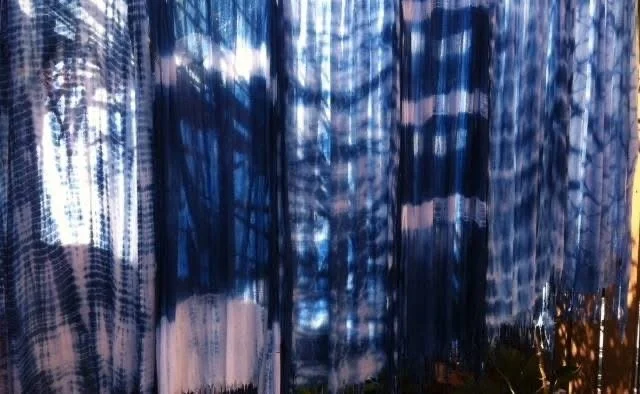
“My work explores transformation, repetition, and the relationship between intention and surprise. Working with cloth and resist techniques allows me to establish a structure while leaving room for the materials to influence the outcome. I am interested in the marks that remain after folding, stitching, binding, or applying paste. These marks record a process. They carry evidence of the maker’s hands, the preparation of the cloth, and its encounters with dye. My surroundings also influence my work. South Florida and the Caribbean have contributed to my sense of color—the water, sky, sunsets, and changing light. Indigo holds a particular attraction because it can suggest both depth and openness, from a pale blue to a rich, nearly black shade. My advocacy addresses social issues more directly than my textile imagery. I believe artists need investment as well as recognition: affordable places to work and exhibit, fair compensation, and time to develop their practice. Much of my community work has grown from that belief. Supporting artists also supports the cultural and economic life of a community.”
Do you plan your work in advance, or is it improvisation?
“My work involves both planning and improvisation. Shibori requires preparation. The placement of stitches, the way cloth is folded, and the tension of a binding all influence the resulting pattern. Katazome also involves deliberate decisions, particularly in designing and cutting a stencil and considering how the pattern will repeat. That preparation gives me a starting point. Once the cloth enters the dye, there are additional variables: the fabric, the strength and condition of the vat, the number of dips, and the way the resist performs. I enjoy that exchange between control and discovery. Sometimes a piece follows the direction I anticipated; sometimes an unexpected result suggests a more interesting next step. I may respond through additional dyeing, another layer of pattern, or a change in how I use the cloth. Experience helps me understand what is happening, but I want to remain open to being surprised.”
Are there any art world trends you are following?
“The areas I pay attention to most closely are textile and fiber art, natural color, and the ways artists bring traditional processes into contemporary practice. I am interested in work that makes the process visible—where stitching, texture, irregularity, and the character of the material are part of the expression. I also pay attention to conversations about the relationship between art, craft, and functional objects. Cloth can be worn, used, or displayed, and those different forms can all carry artistic meaning. Within my own practice, I am especially interested in how artists develop an individual voice through techniques with long histories. Learning a traditional method can provide a foundation for experimentation, rather than a fixed set of results. My choices are guided primarily by curiosity about the materials and a desire to deepen my understanding of them.”
What process, materials and techniques do you use to create your artwork?
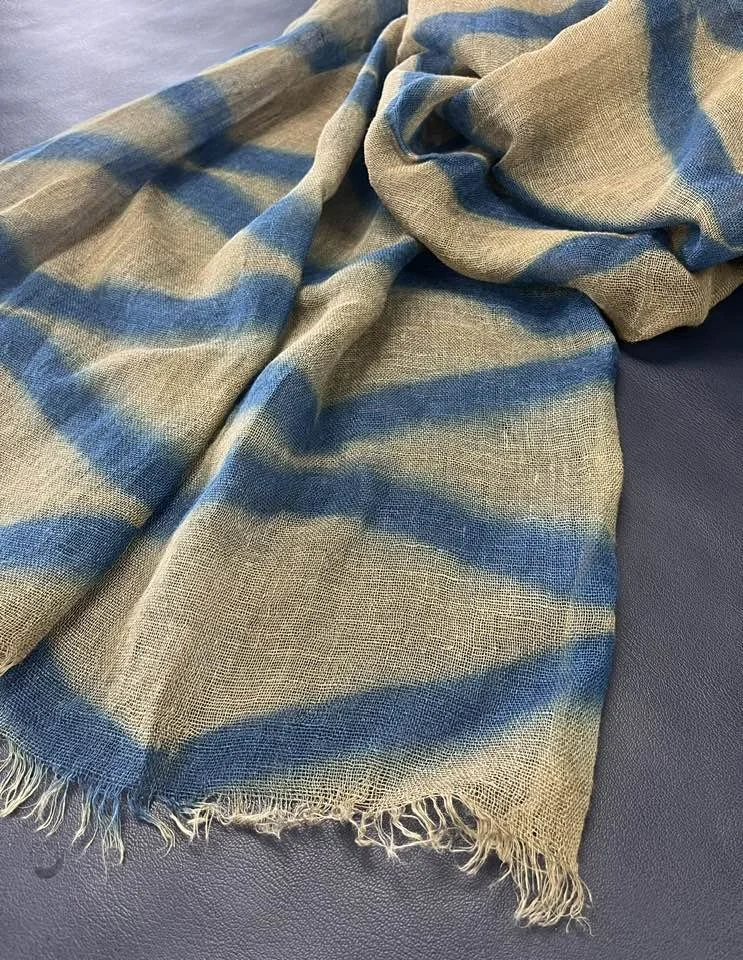
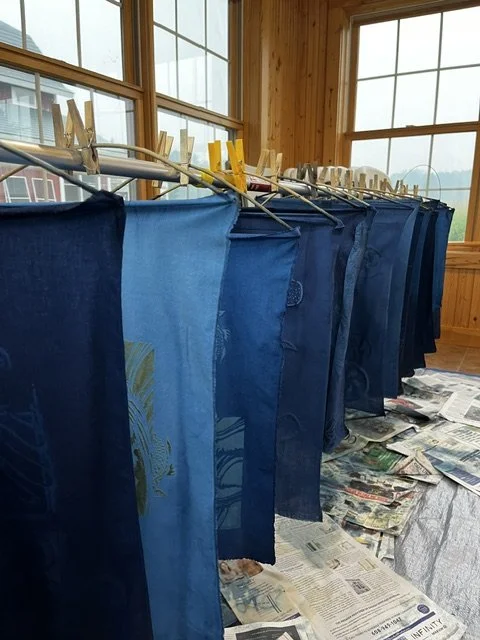
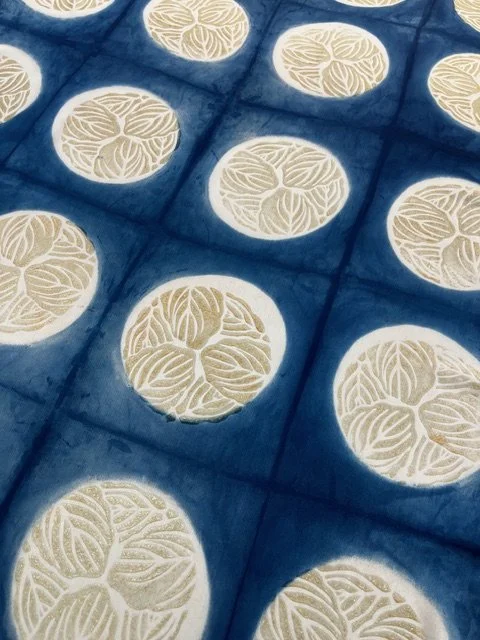
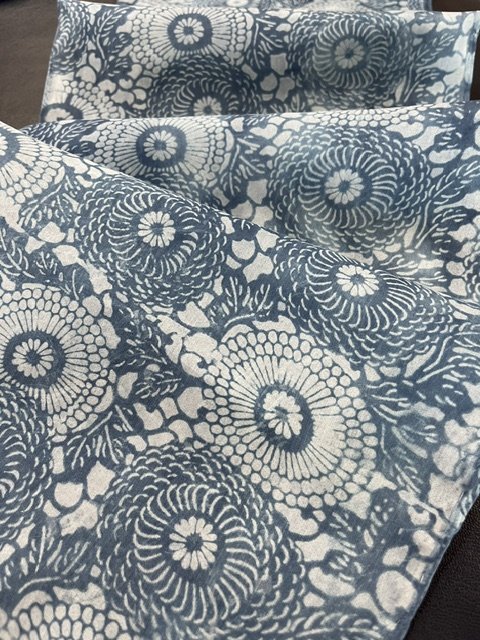
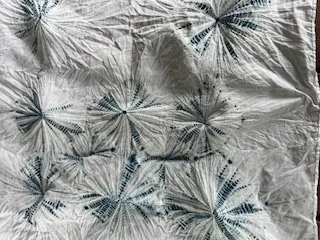
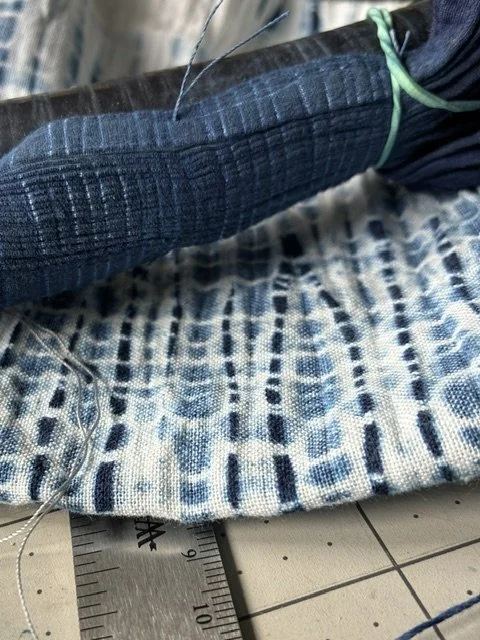
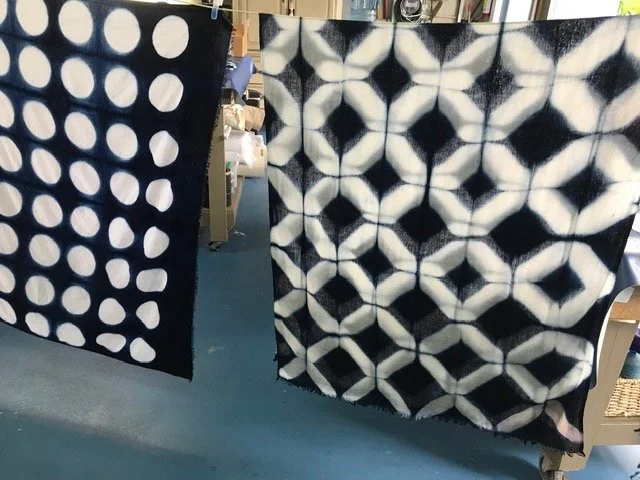
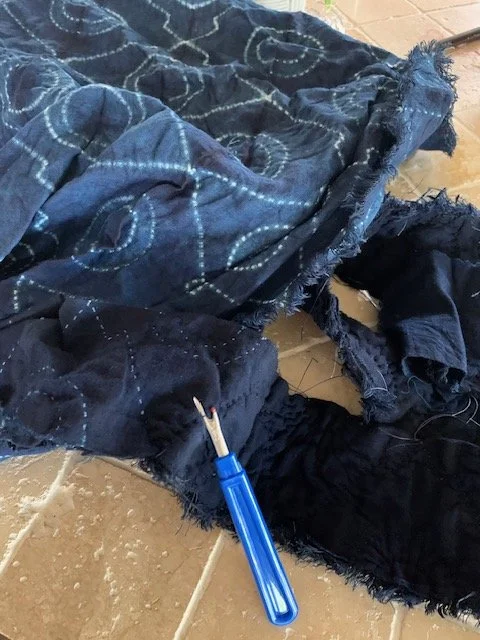
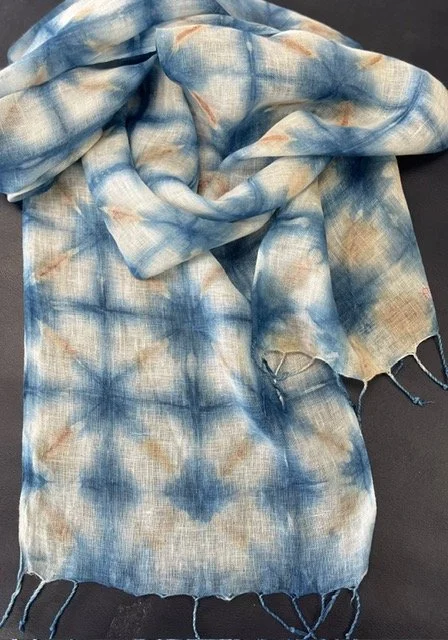
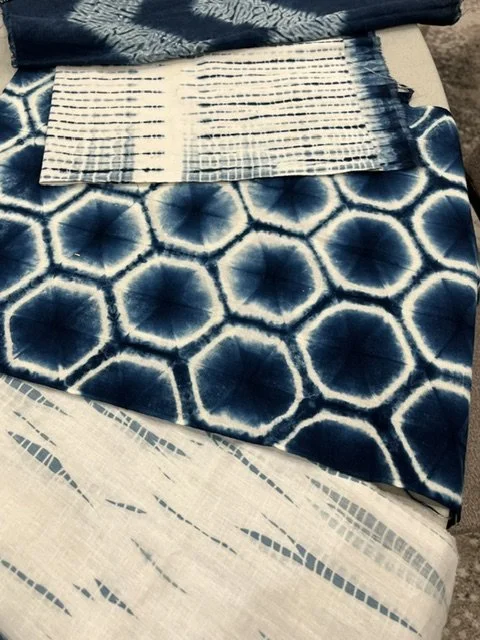
“I work primarily with natural-fiber textiles, including cotton, linen, and silk. My practice includes indigo dyeing, shibori, katazome, botanical printing, and other surface-design processes. In shibori, I manipulate the cloth before dyeing it. I use stitching, folding, binding, and clamping to create areas of resist. Stitched shibori is especially absorbing because the pattern develops through many small, deliberate actions. The placement of each stitch and the gathering of the fabric affect the final result. Itajime uses folded cloth held between shapes or blocks to create geometric patterns. Other bindings produce circles, gathered forms, and more organic arrangements. For katazome, I work with hand-cut stencils and rice-paste resist. The paste protects selected areas of the cloth during coloring. This process allows me to explore the relationship between positive and negative space, repeated patterns, and layered designs. Botanical printing offers another way of creating marks through direct contact between plant material and cloth. The results depend on the plants, fabric preparation, and processing conditions. Indigo connects many of these explorations. I use natural reduction vats, and I remain fascinated by the moment when cloth emerges from the vat and changes from greenish tones to blue as it oxidizes. Even after many years of working with it, that transformation continues to hold my attention.”
What does your art mean to you?
“Art is a way of maintaining a connection to my own curiosity and creative identity. Teaching, organizing, and running a studio are meaningful parts of my life, but making my own work gives me a different kind of attention and space. Working with cloth asks me to slow down. Stitching, preparing a resist, and building color through repeated dips cannot always be hurried. The process encourages patience and observation. I value experimentation and the individuality of each piece. An irregularity may become an important part of the work, and an unexpected result may lead me toward a new idea. Aizome Studio represents a renewed commitment to that personal exploration. I want to continue sharing knowledge while also protecting the time needed to develop my own work. Making art keeps me learning, and that learning feeds both my practice and my teaching.”
What’s your favourite artwork and why?
“Rather than choosing one favorite artwork, I am especially drawn to contemporary fiber art. It is exciting to see it receiving greater recognition in the art world and to see the expressive possibilities of textiles being appreciated more widely. I love the use of color and texture, particularly when artists combine multiple media within a piece. The interaction of cloth, thread, paint, paper, and other materials can create layers of depth and detail that invite closer looking. I am drawn to work that makes me curious about both its construction and the story it conveys. As a fiber artist, I find these combinations inspiring. They encourage me to explore materials, experiment with layering, and continue expanding the possibilities within my own work.”
Have you had any noteworthy exhibitions you'd like to share?
“One particularly meaningful exhibition was UNCOMMON Threads, presented by the South Florida Surface Design Association at the MartinArts Courthouse Gallery in Stuart, Florida, in September 2025. This exhibition gave me the opportunity to introduce textile art to my local community and exhibit my work alongside prominent contemporary fiber artists. It was especially rewarding to share the range of materials, techniques, and artistic expression possible within fiber art, helping visitors see textiles as a compelling medium for contemporary art.”
Website: www.ayafiberstudio.com
Instagram: @ayafiberstudio
Other links: www.facebook.com/ayafiberstudio