Interview
Star Smart
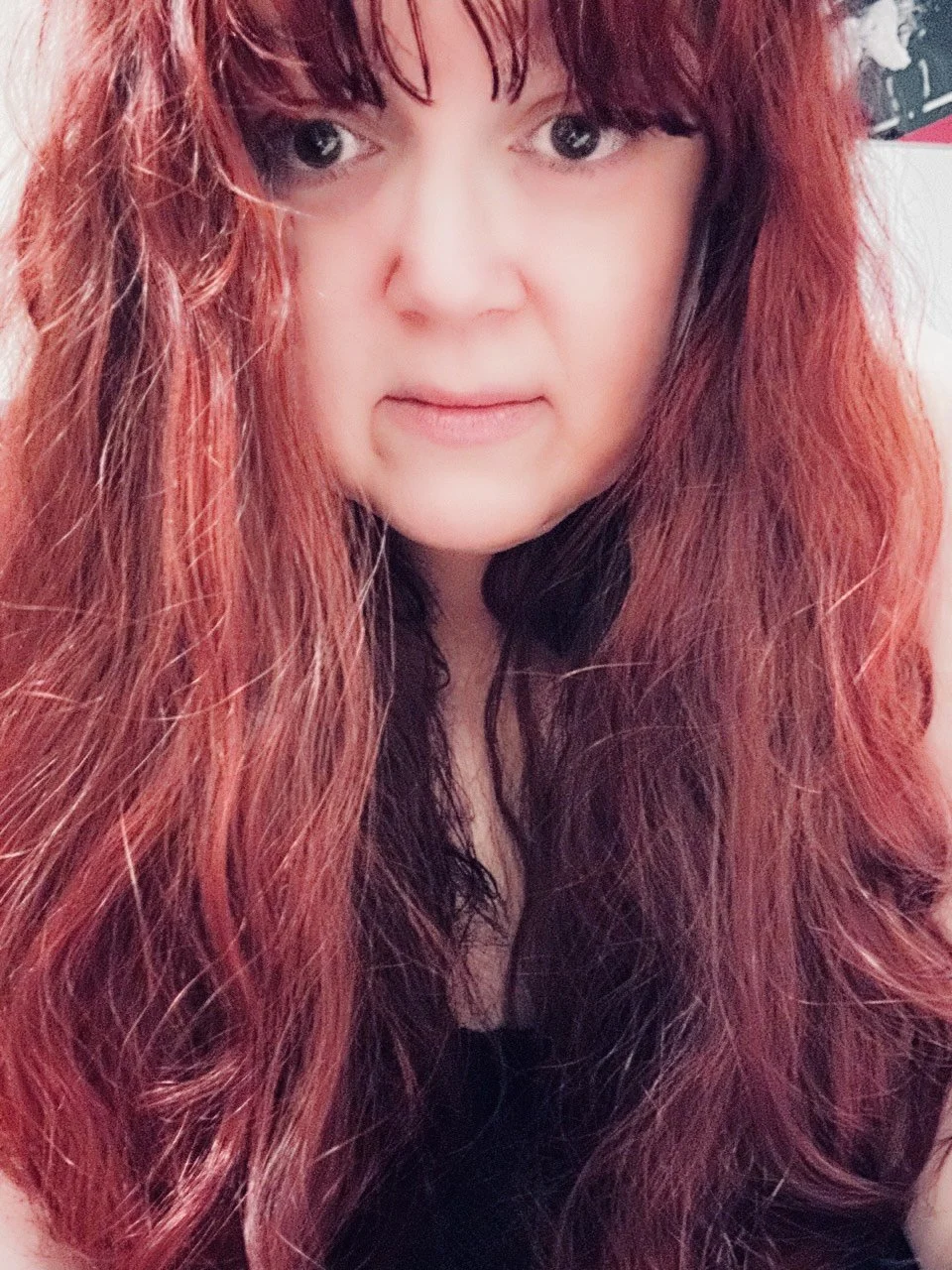
Star Smart is an award-winning contemporary abstract artist, activist, writer, political and artistic spokesperson, and—most recently—a creative voice for the cancer experience. She holds a degree in Fine Art and has continued her studies at institutions such as MIT, Harvard, and Duke. Star explains, “If I want to create new art practices—new art—I must always be learning.” Recently relocated from Miami, Florida, to Cincinnati, Ohio, she now works from a beautiful studio in a historic building over 100 years old. After surviving a rare cancer and navigating a personal crisis, she chose to slow down—to rediscover hills, historic architecture, and the textures of stone and brick that South Florida lacked. “As strange as it may sound, I missed those textures. Being so tactile, it deeply affected me,” she shares with a smile. “Now, with space to create on a larger scale, I’m inspired. The best is yet to come.”
What is your background and how did you start your journey in the art world?
“I have always been encouraged to create. When I was a kid living in the commune on the mountain, I created with sticks, leaves, and shells. If I could make something out of sticks and leaves and make it stick together without and type of ‘glue,’ just the tension of the materials, I was so proud I’d show everyone. As a teen my body was my canvas. I’d design clothes, sculpt and color hair, and draw across my skin with black eyeliner. In my twenties and thirties I designed homes and made my commitment to art official by earning my BFA. After, I tried all the art media I could get my hands on. They did not satisfy. It also did not please me to create the created. I craved abstraction and I yearned for my own art media that would carve my own creative path. After many tries, I finally got it right. I was creating what I wanted. I now considered myself an artist. Now I was free to exhibit in gallery and museums, interview, have my art critiqued, participate in residencies, apply for grants, and win awards. As long as I’m making what’s in my head and in my soul I feel like I’ve made it.”
What inspires you?
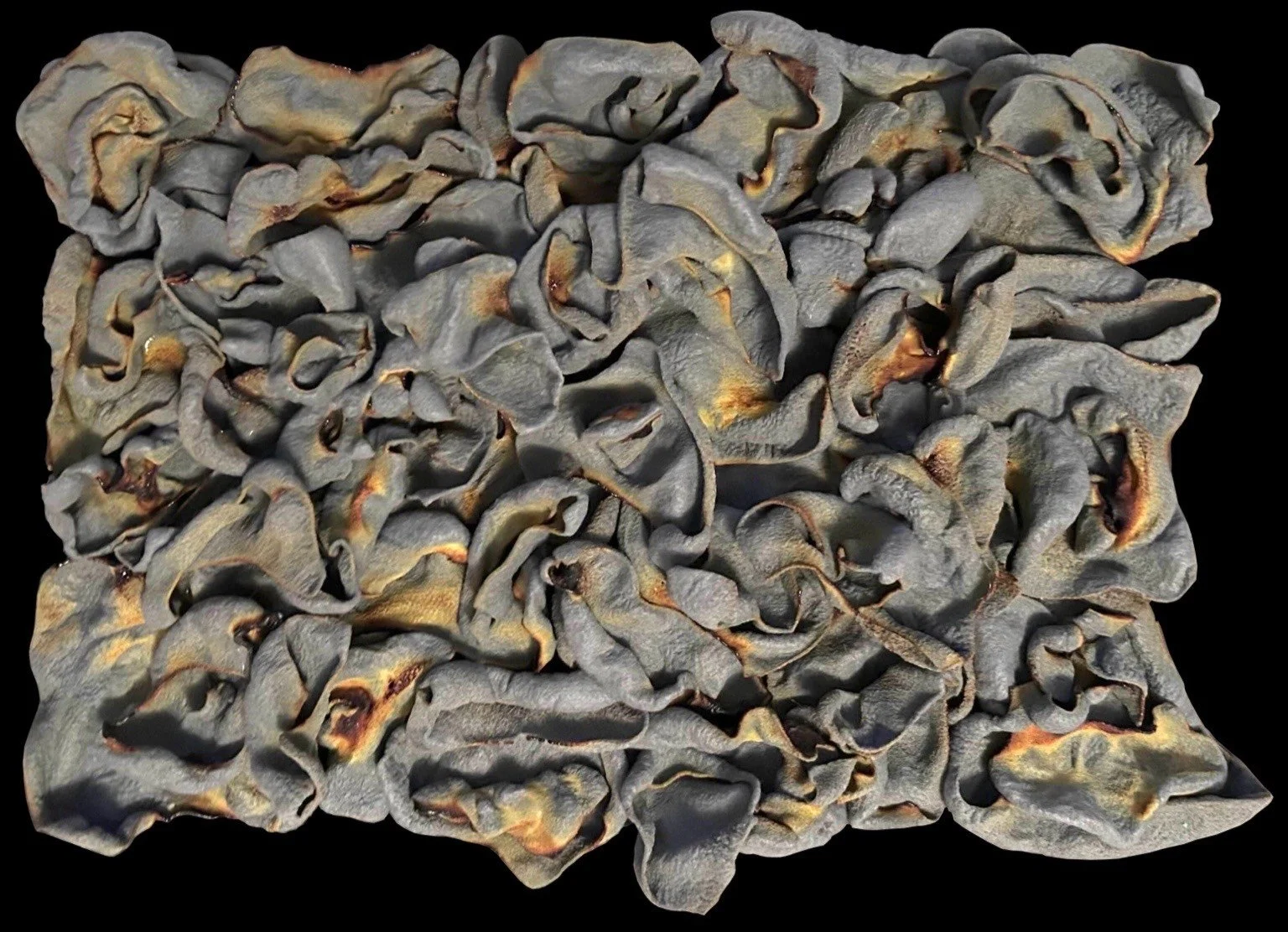
“Tangibly, Fungi. Molds and mildews growing in flowery bouquets and shiny organic shaped colonies. Mushrooms, in all their impossible shapes and textures. Flowers in their beautiful colors and shapes. Always music. Intangibly, my experience and memories. Almost every piece has a memory of me in it. I’ve lived a lot of life and have a great sense memory. Art is the best was I’ve found to clear away parts of my brain, to resolve trauma, and recall vividly great memories.”
What themes do you pursue? Is there an underlying message in your work?
“I purse themes that touch me or I wish to touch. I also feel a strong sense of legacy. The internal; survivorship, motherhood, love, cancer, pain, betrayal, murder and death, whichever subject’s boney finger brushes against my skin. Then there are the themes that I wish to touch; feminism, upcycling, FGM, victimization especially of children, the shapes and smells of real and imagined forests. I pursue themes of environmentalism, feminism, and memory. Trauma, disease, and survival, chase me. In order to empty them from my head, all of them, I create.”
How would you describe your work?
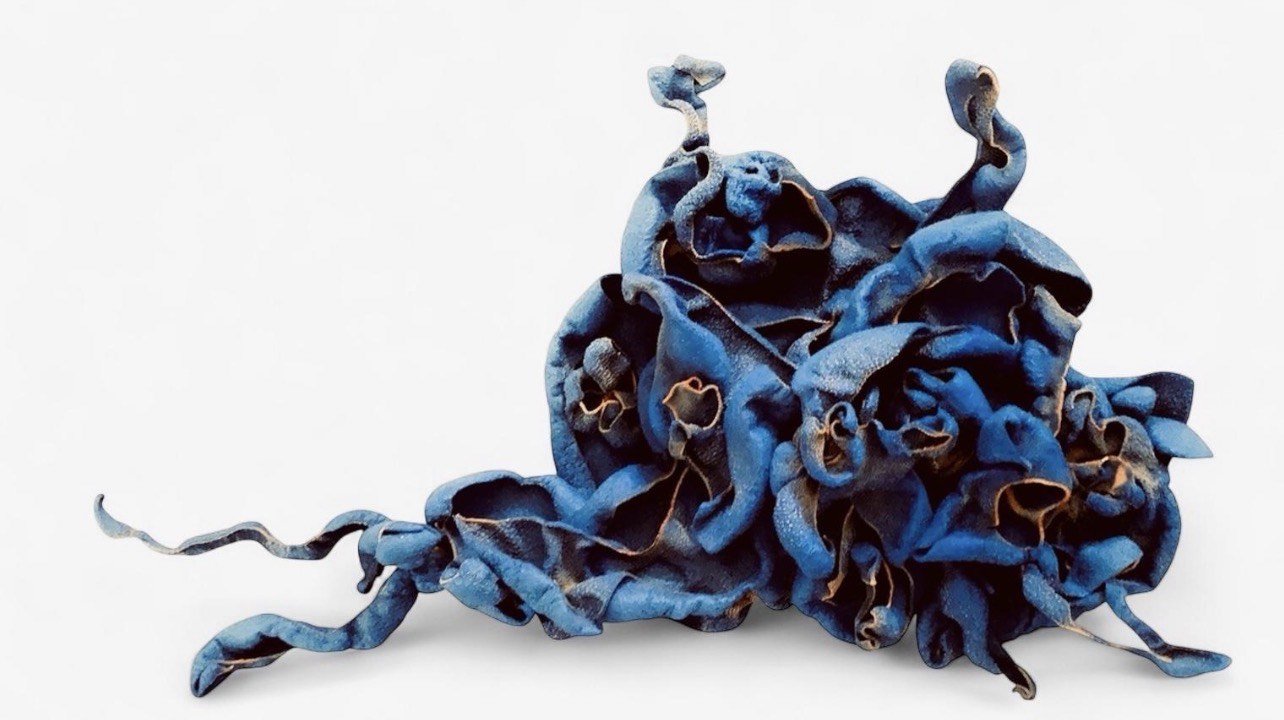
“I prefer working in abstract. I don’t want to create the created. What I view I feel is its own perfection, I feel can not improve upon it. My work comes from inside it’s meant to express my emotions and emotion, hoping to convey that to the viewer.”
Which artists influence you most?
“Louise Bourgeois, Jeong Miheui, Antoni Gaudi, Bunghee Sung, Choi Sori, Lee Jeoun In, Mar, Richard Wasson, Mi Heui Jeong, Robert Smith, Mark Rothko. I am drawn to unconventional techniques and themes.”
What is your creative process like?
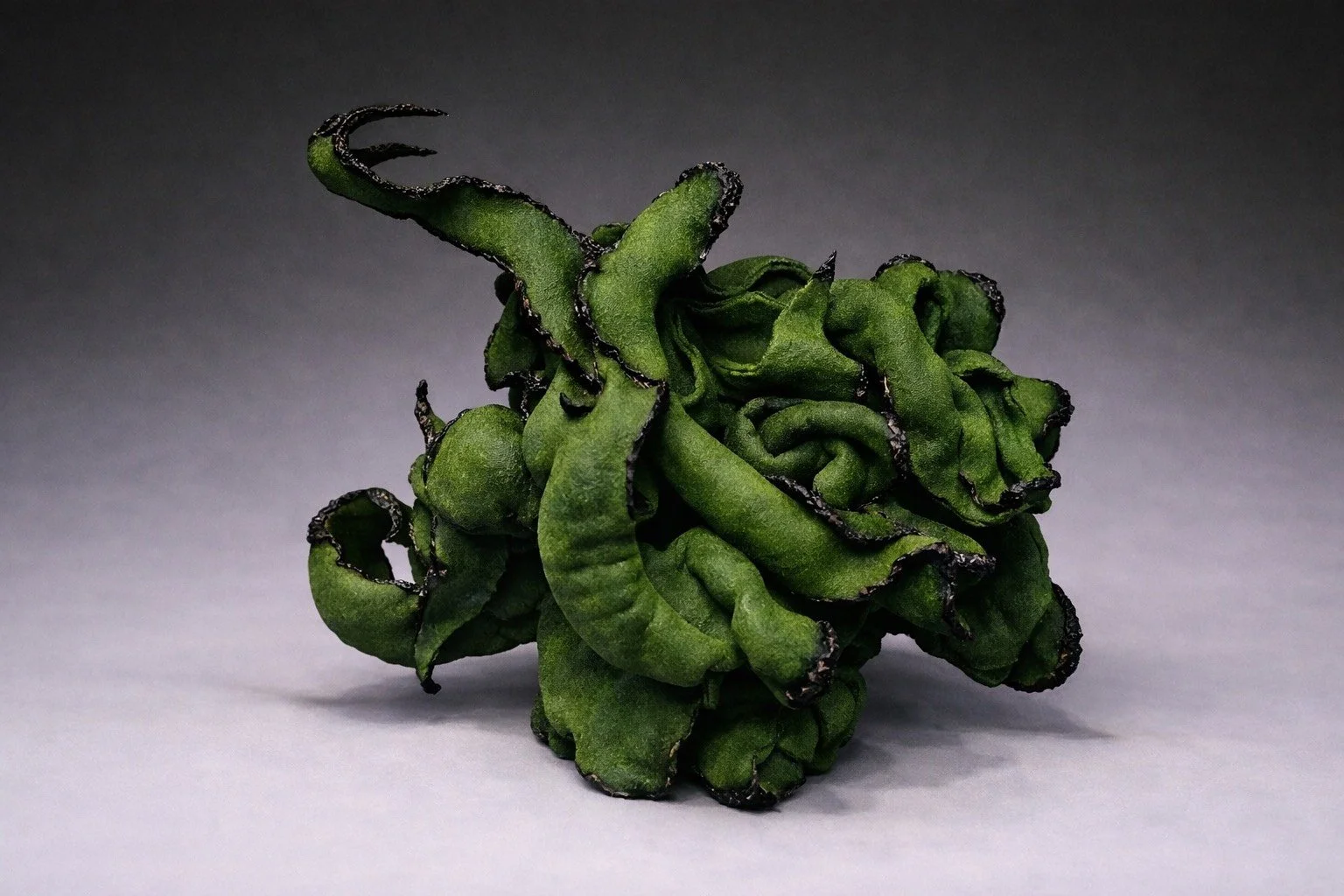
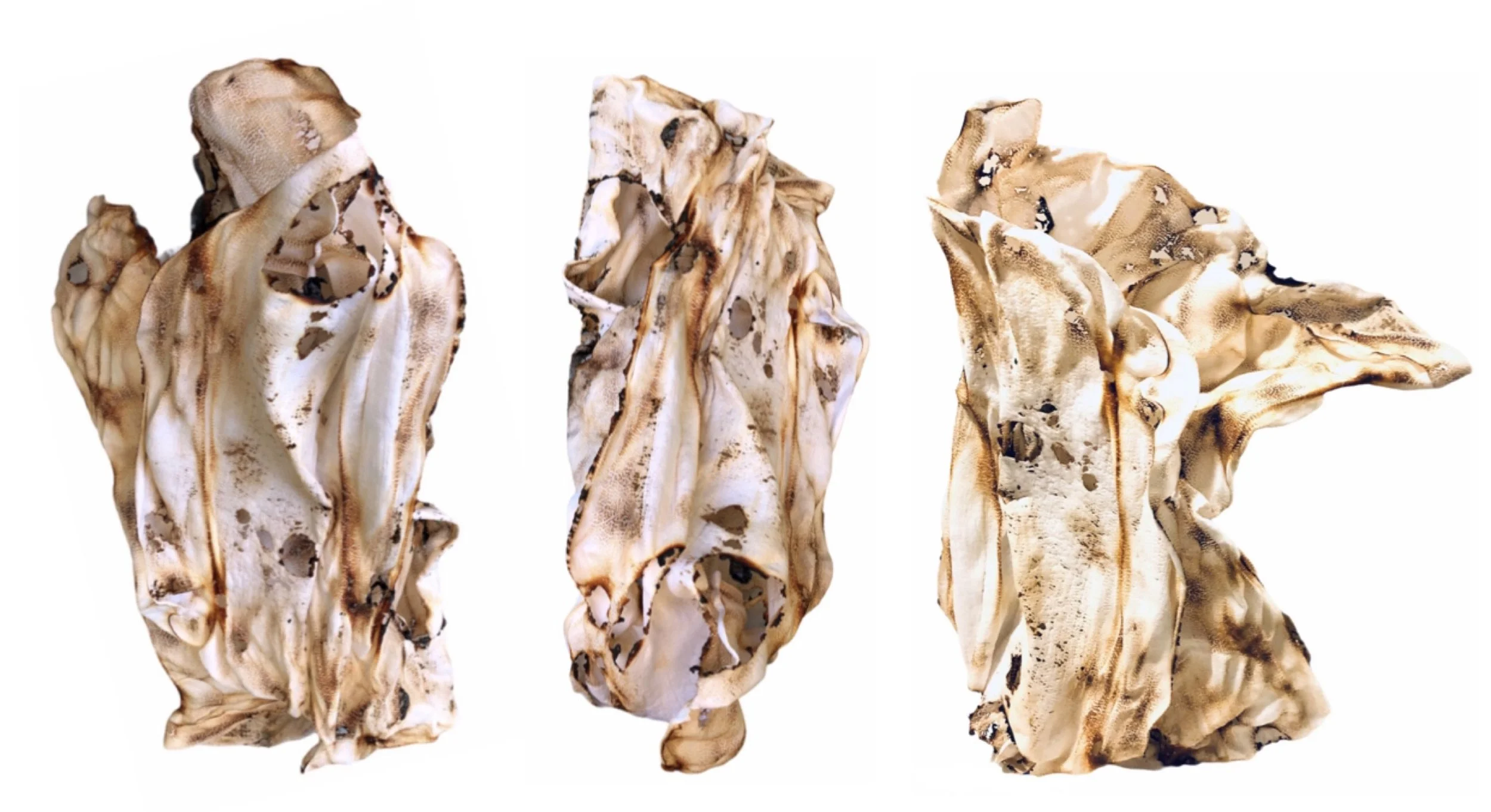
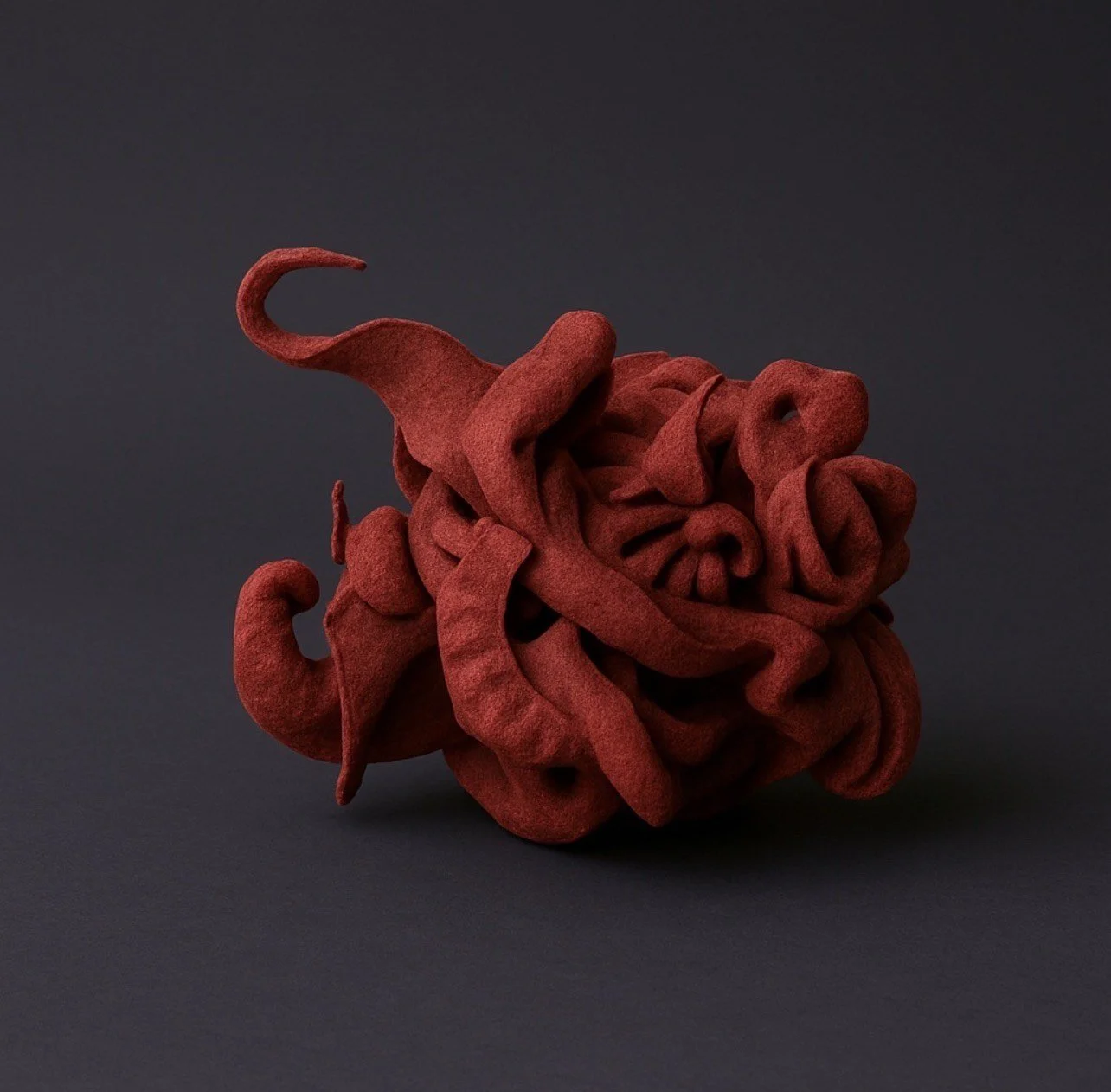
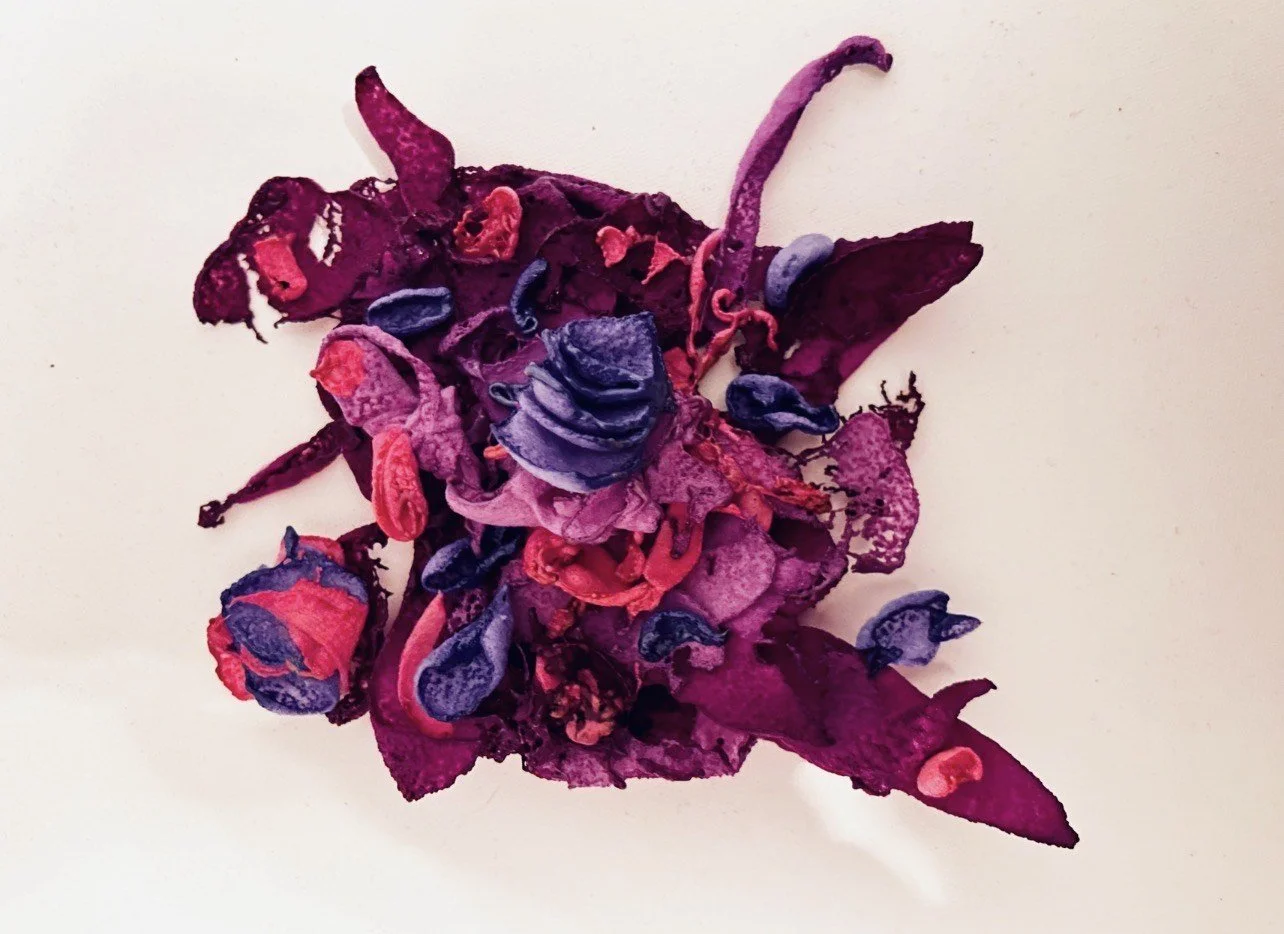
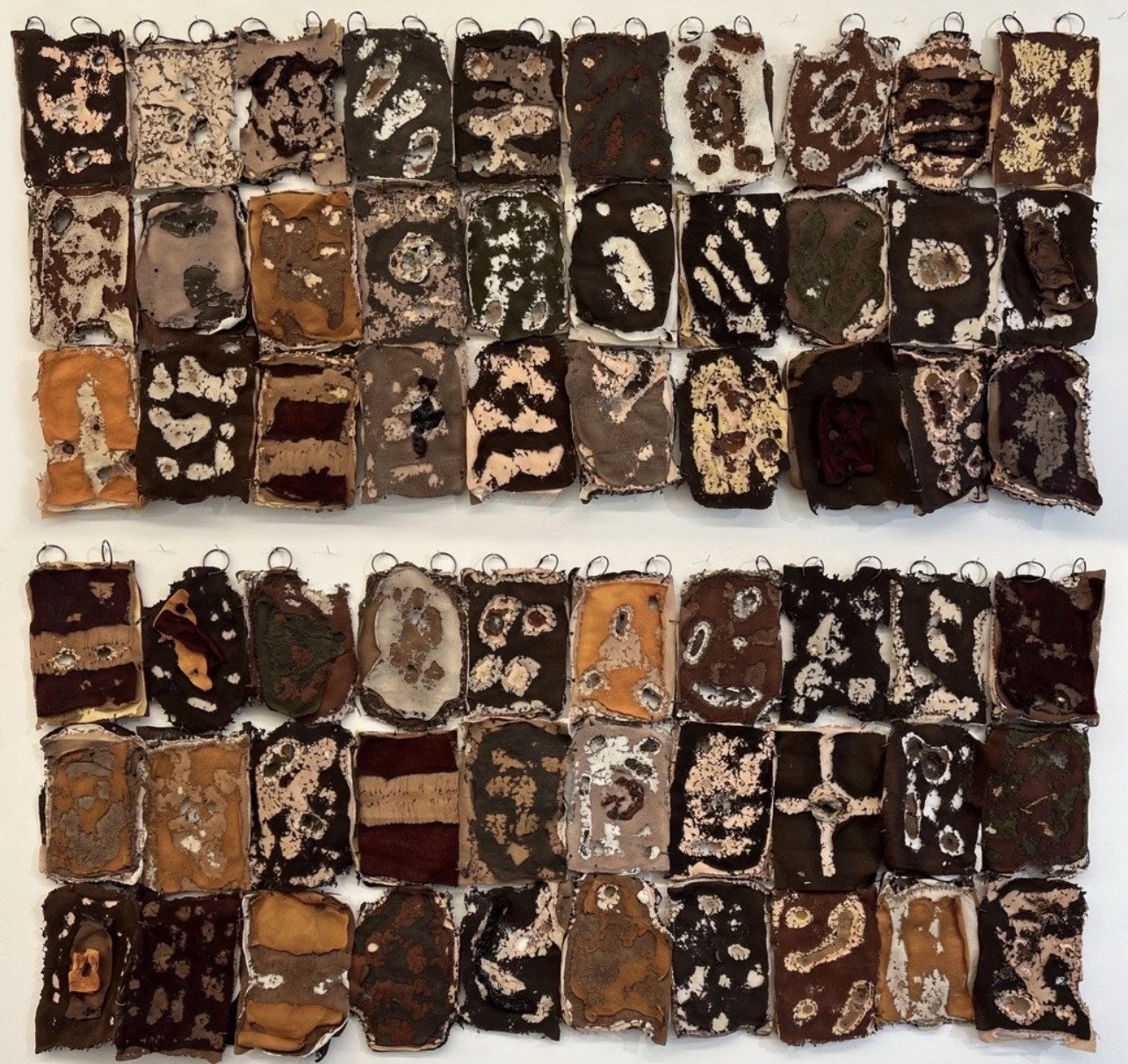
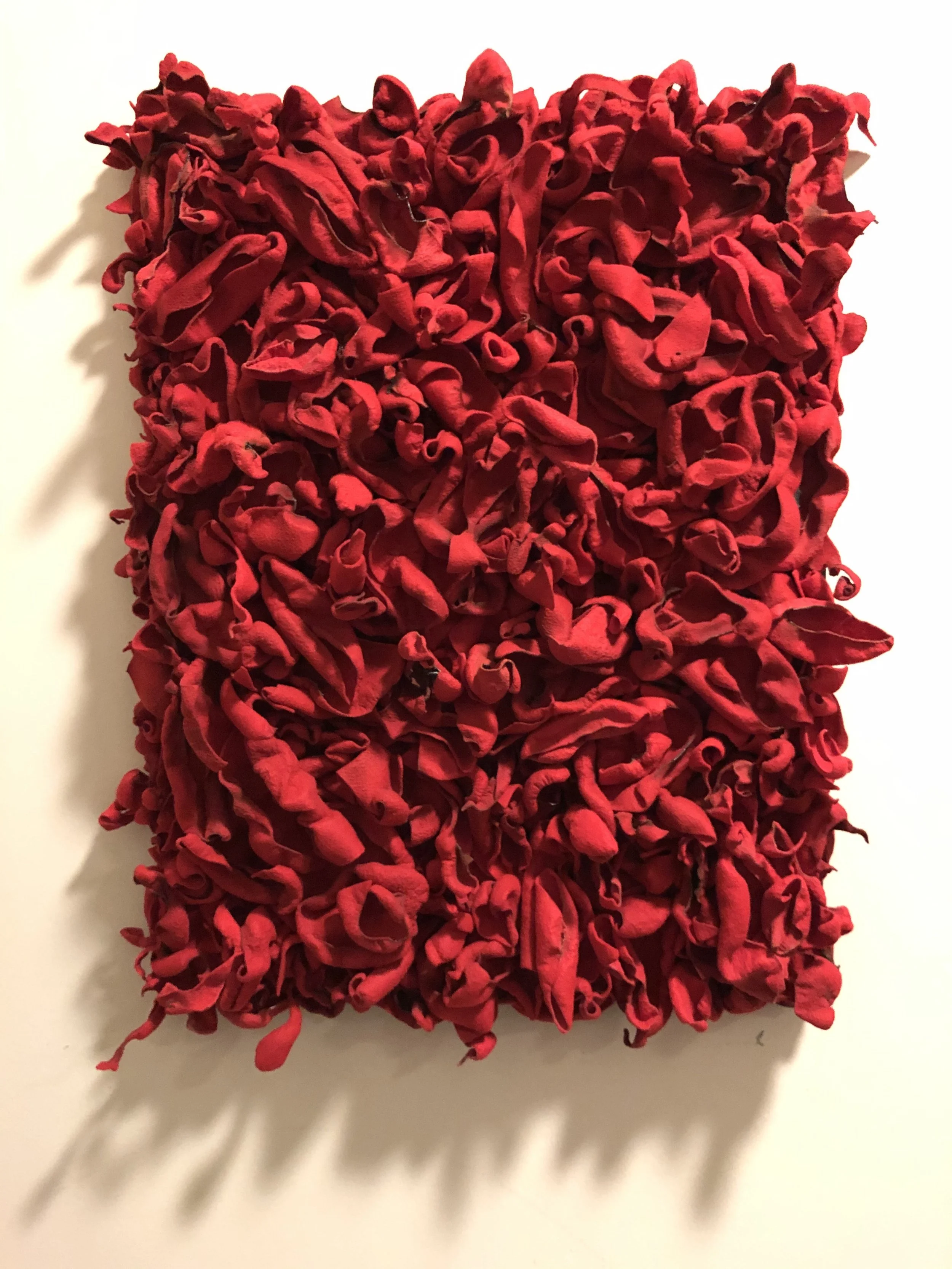
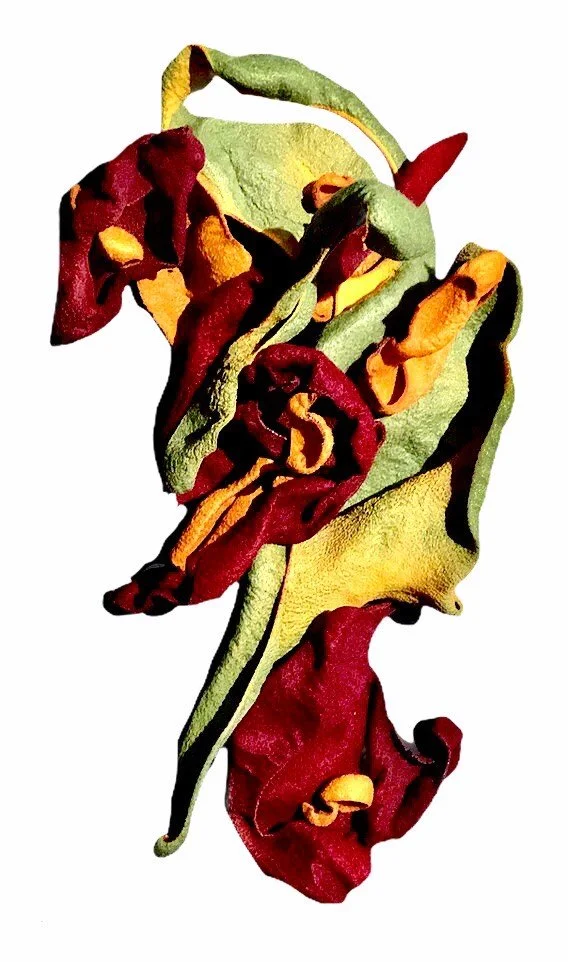
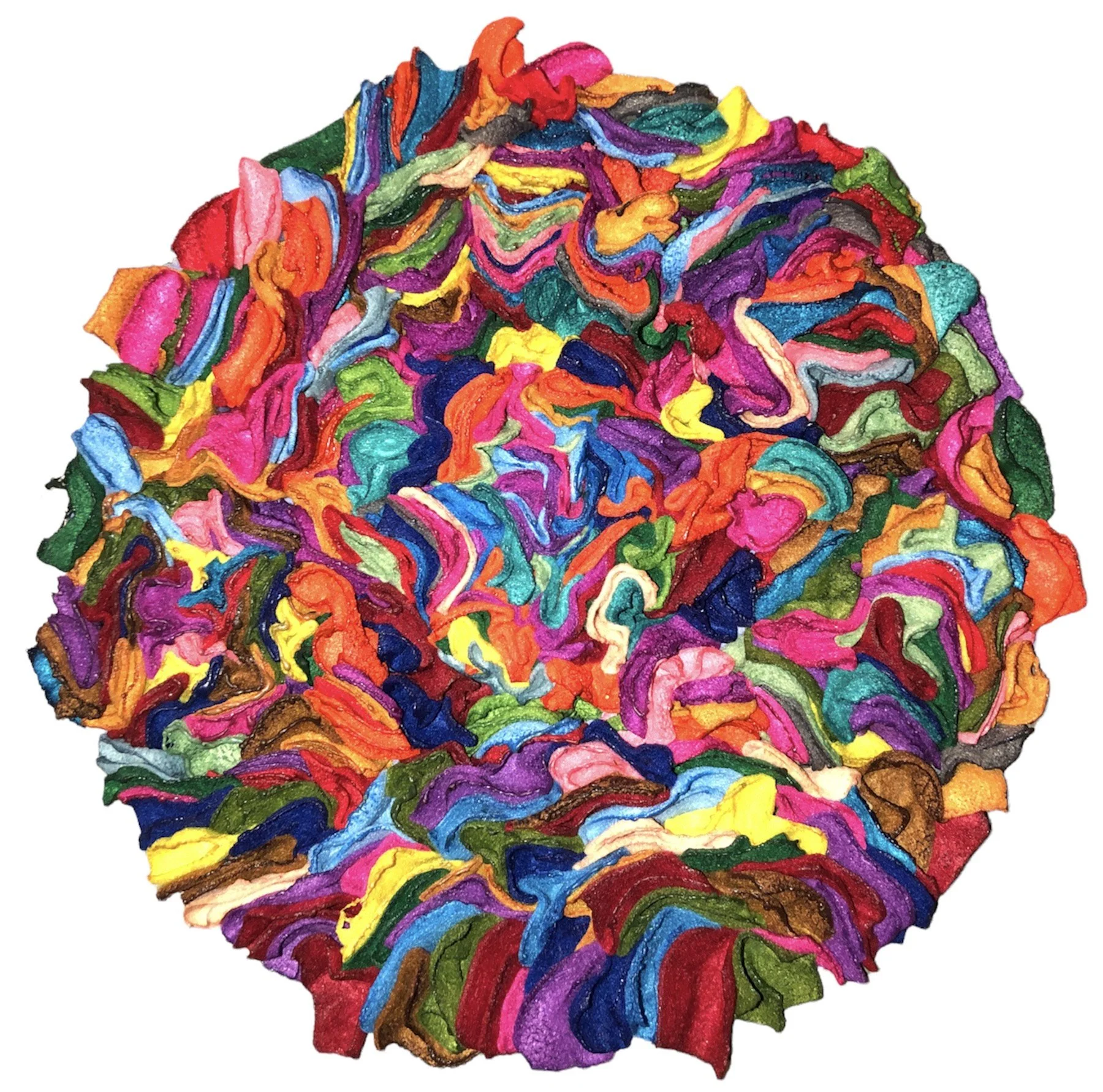
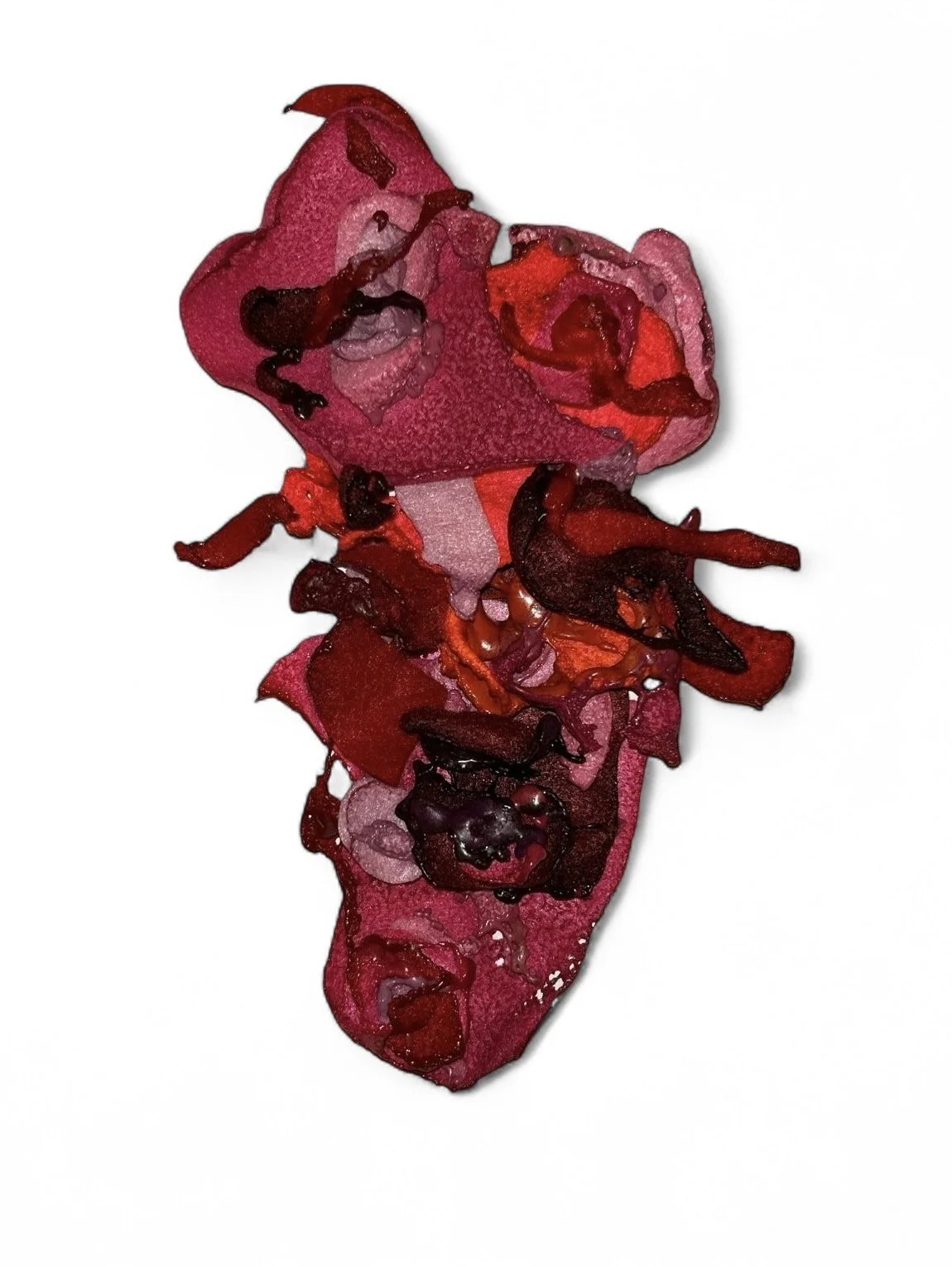
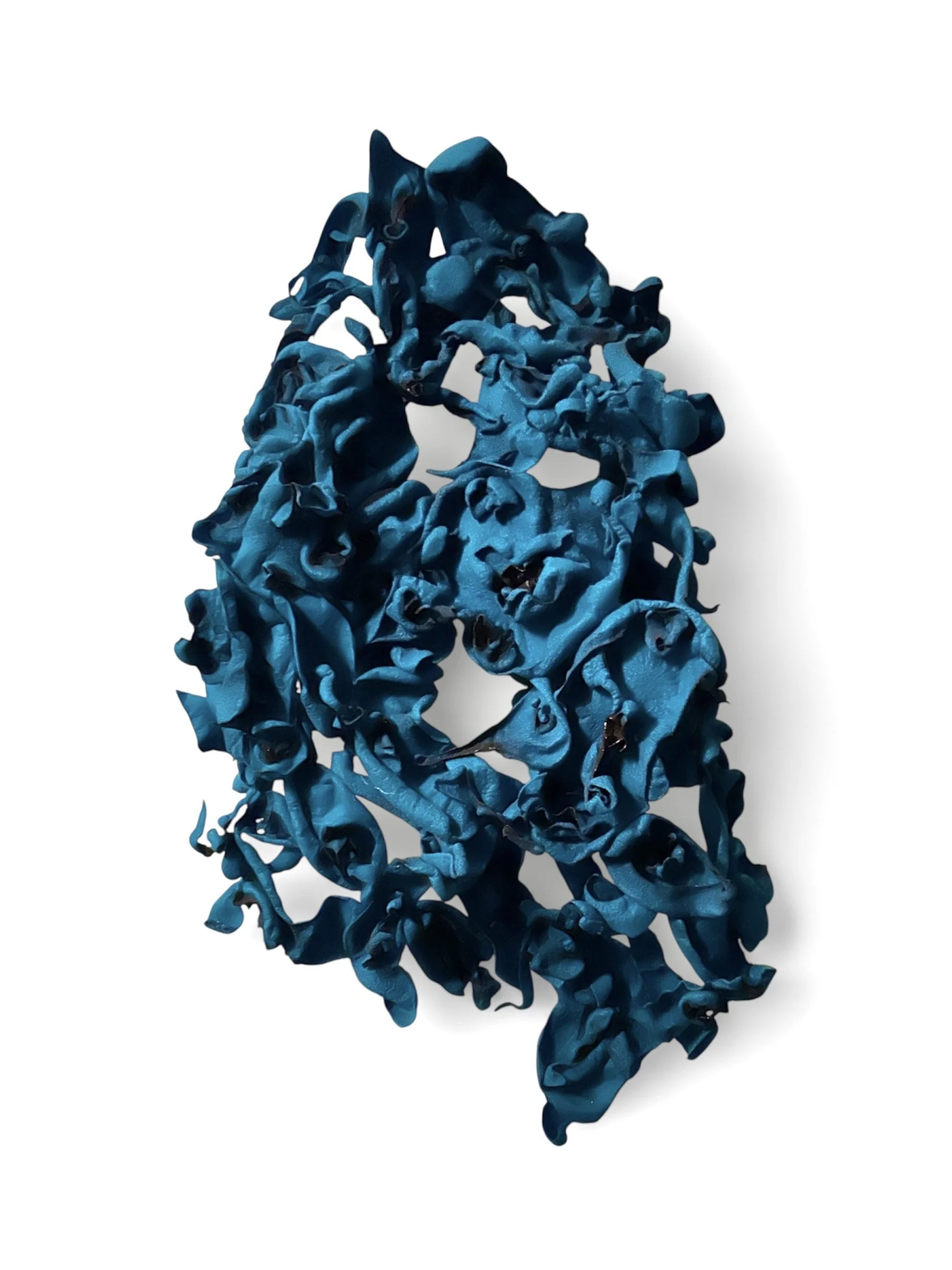
“It is a thought or inspiration that begins creating the piece in my mind. Then comes the real work, making what my mind showed me. I mix the recycled materials and bake them. After they are dyed. I cut, hand mold, and fire the pieces. They become assemblages to hang, place on a pedestal, or stand alone on the floor.”
What is an artist’s role in society and how do you see that evolving?
“Artists create not only their imaginations but their experiences. Art documents and reflects what is happening and hopes for the future. The art should be quality to last beyond the life of the artist. That is the artists’ responsibility.”
Have you had any noteworthy exhibitions you'd like to share?
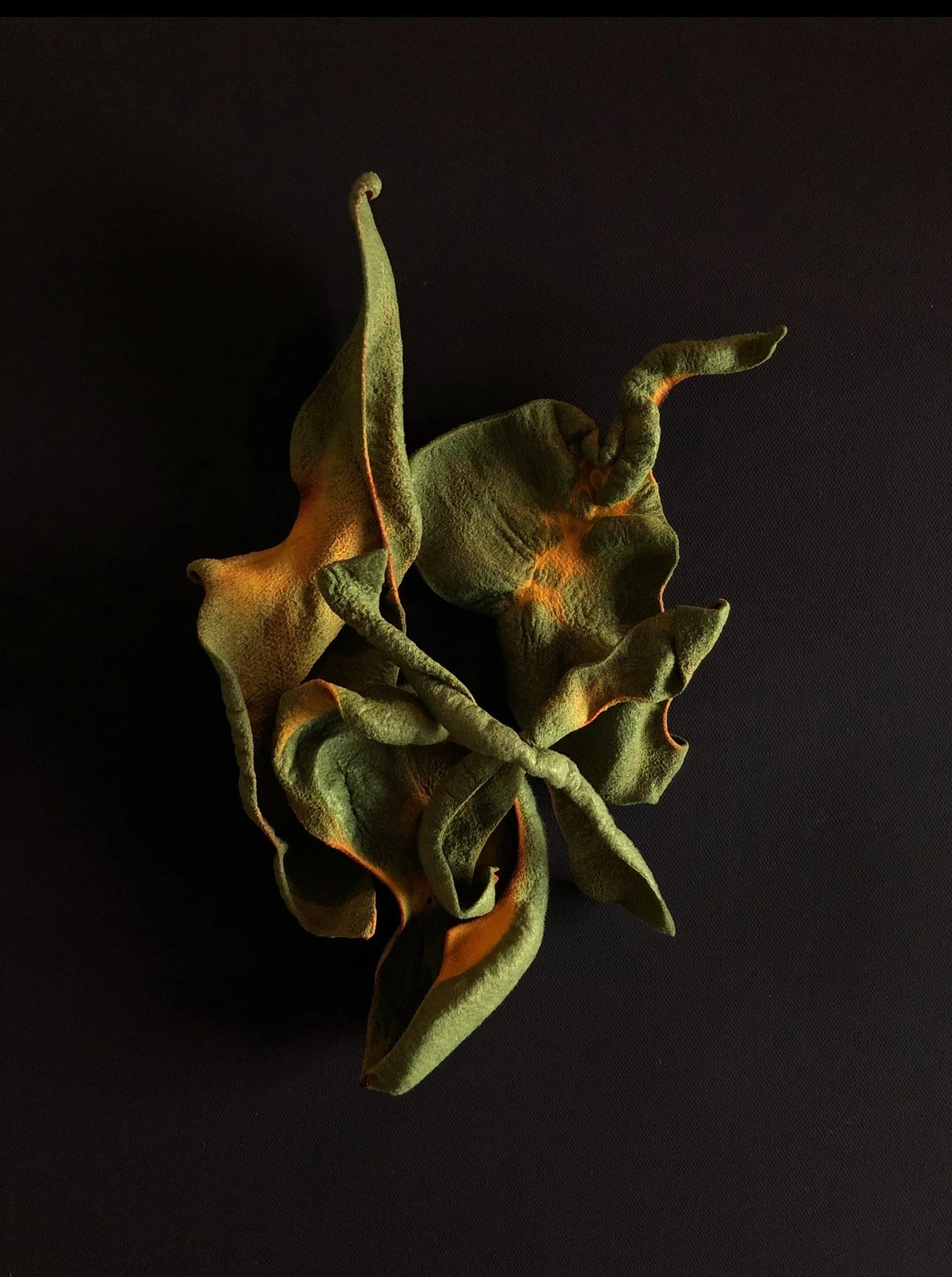
“My exhibitions include: 26th BIEAF ‘The Lost’ in South Korea'; Lartir Museum ‘Land for Calm’ Iran ’Fiber is Art’ Clifton Cultural Arts Center in Cincinnati, Ohio; Post Mosty Gallery in Poland; Yoko Ono’s ‘Arising’ and ‘Peace Tree’ Nobel Peace Center in Oslo, Norway; ‘Cancer Feminine’ Exhibition and Book in Singapore and ‘12x12 Cubed’, Geumgang Nature and Art Museum Geumgang in South Korea.”
Website: www.starsmartartist.com
Instagram: @_starsmart