
Sonia Kumari Sharma
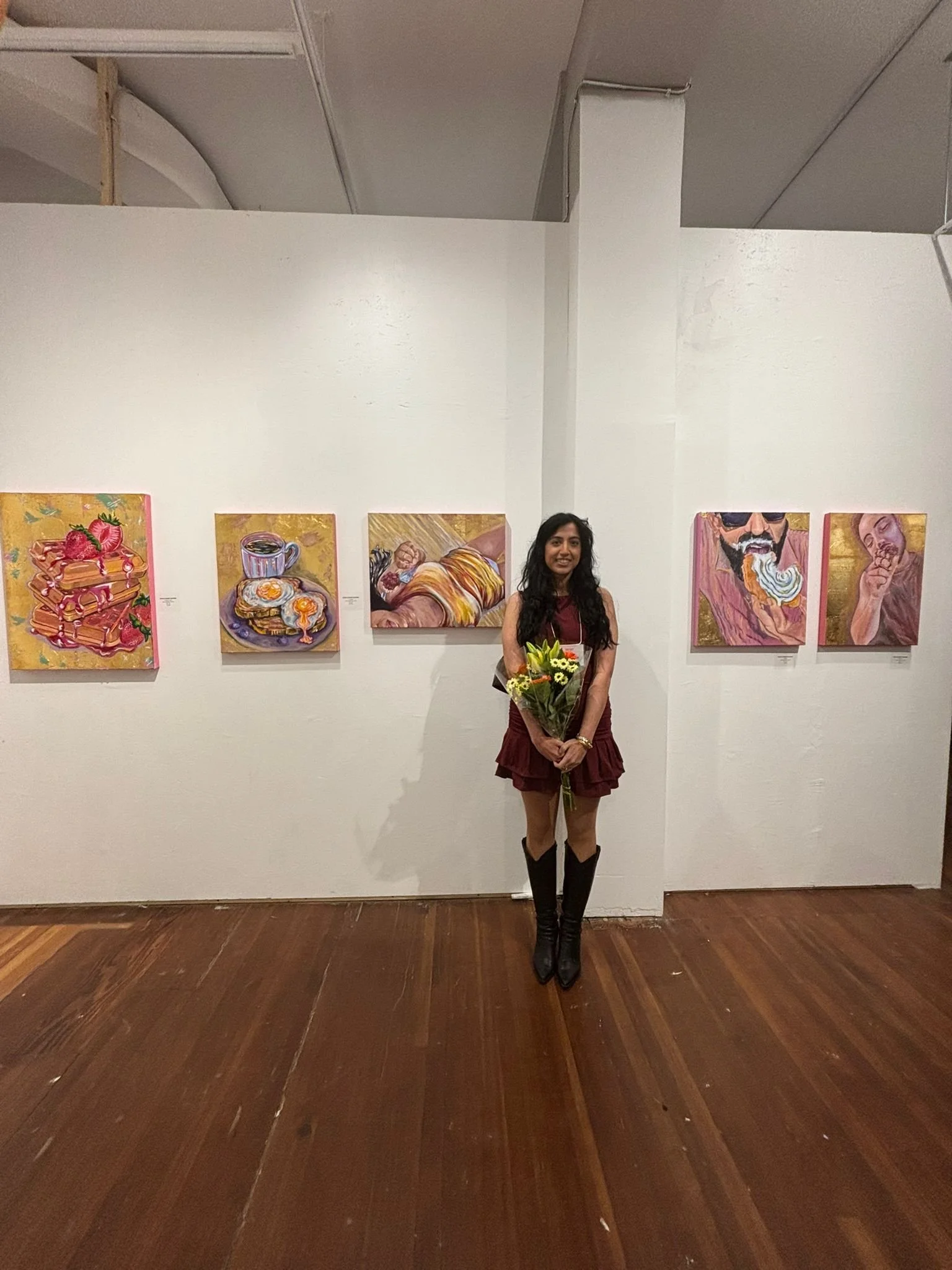
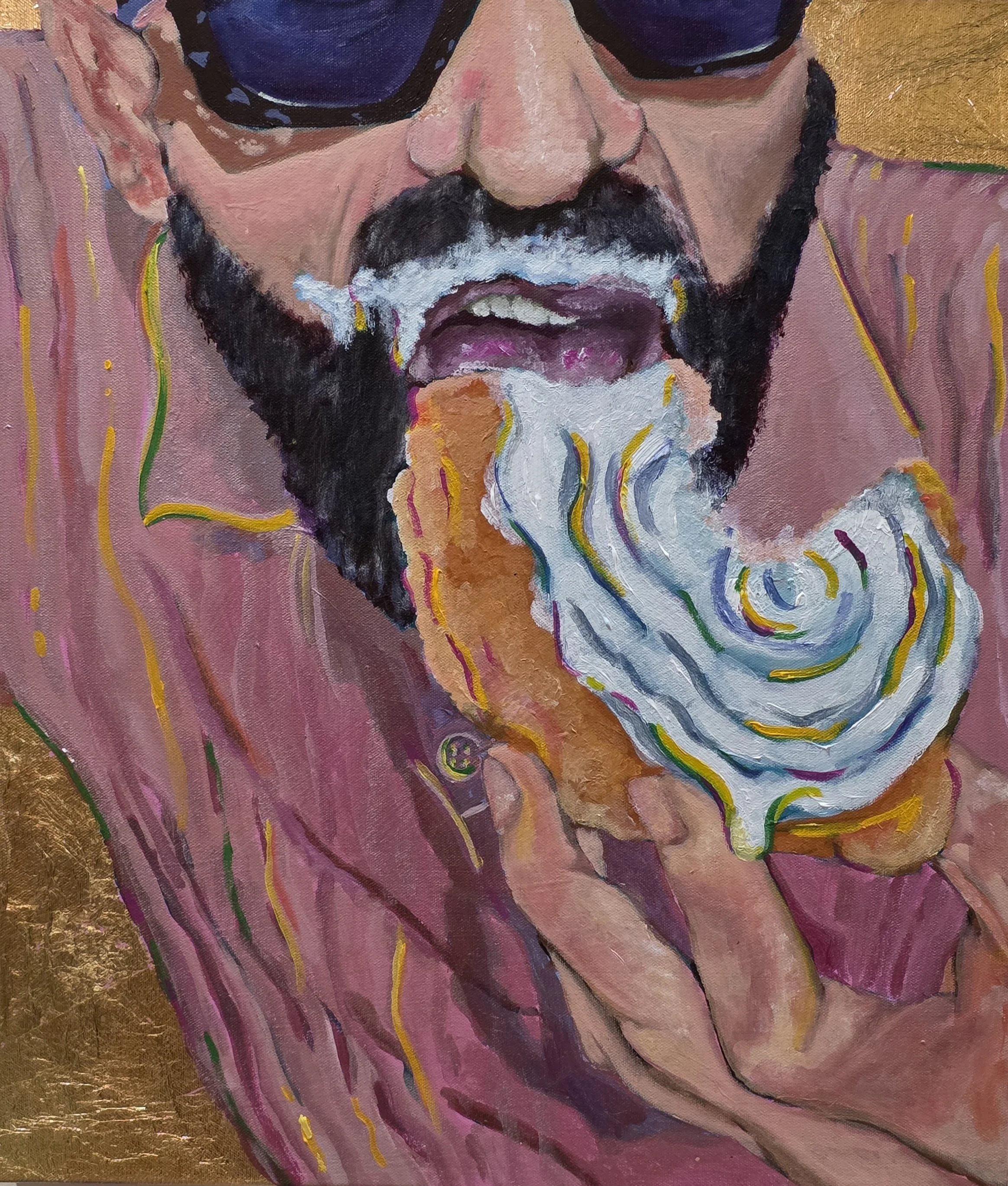
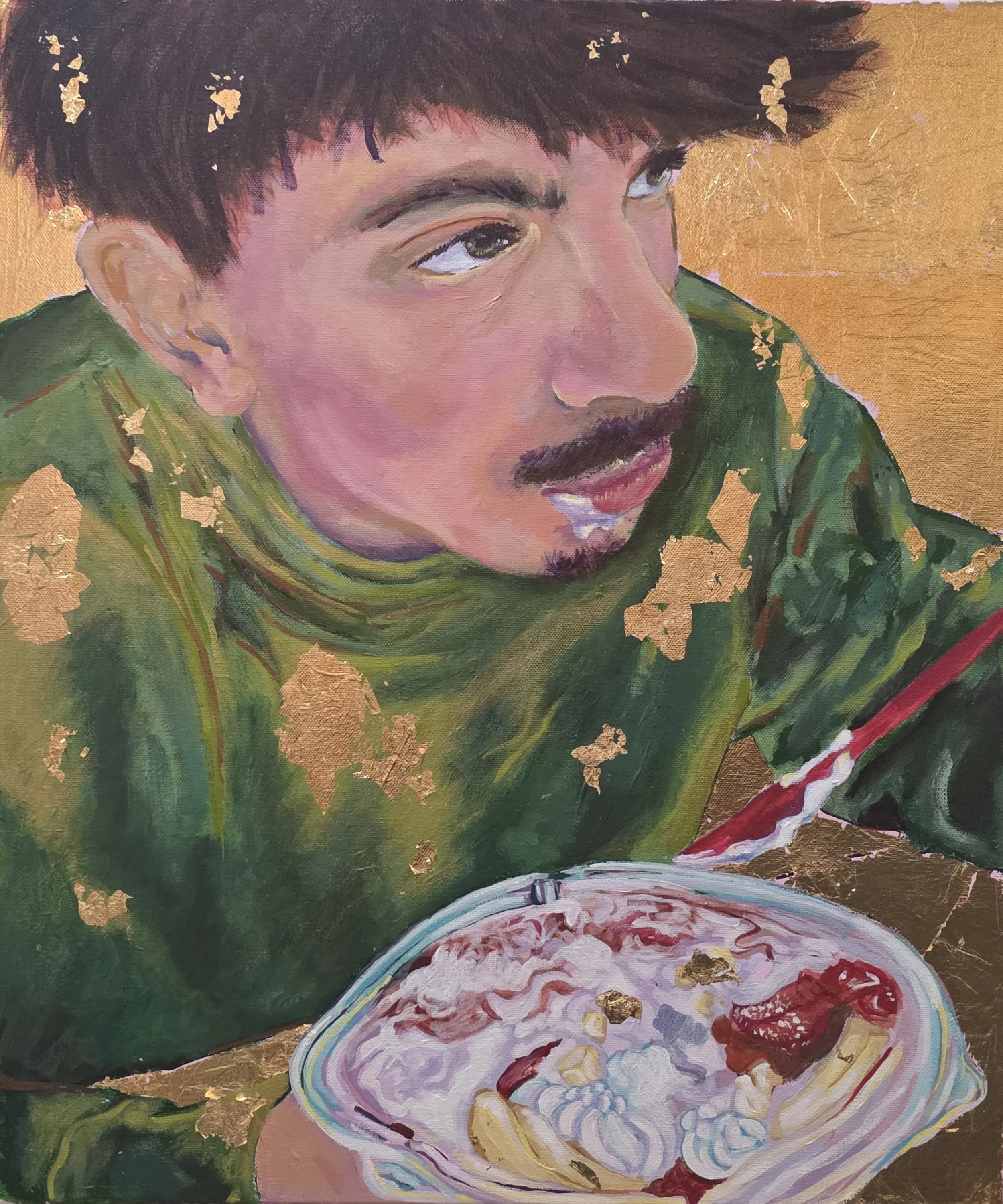
Sonia Kumari Sharma is a North Vancouver based artist. Her creative practice is grounded in an evolving interest in materiality, consumption, desire, and the ways ordinary experiences become psychologically charged. The use of gold allows her to explore historical associations with luxury, ceremony, devotion, and permanence contrast with the temporary, human experience of consumption within the scenes, shifting ordinary into something playful and ambiguous.
What is your background and how did you start your journey in the art world?
“I've always had a relationship with art, I loved to draw and paint for as long as I can remember. I received a Bachelors of Fine Arts, but then I found myself working in various sections of the insurance industry for a decade. The more I worked with meticulous structured contracts and policy, the more I found myself needing to communicate creatively again.”
What does your work aim to say? Does it comment on any current social or political issues?
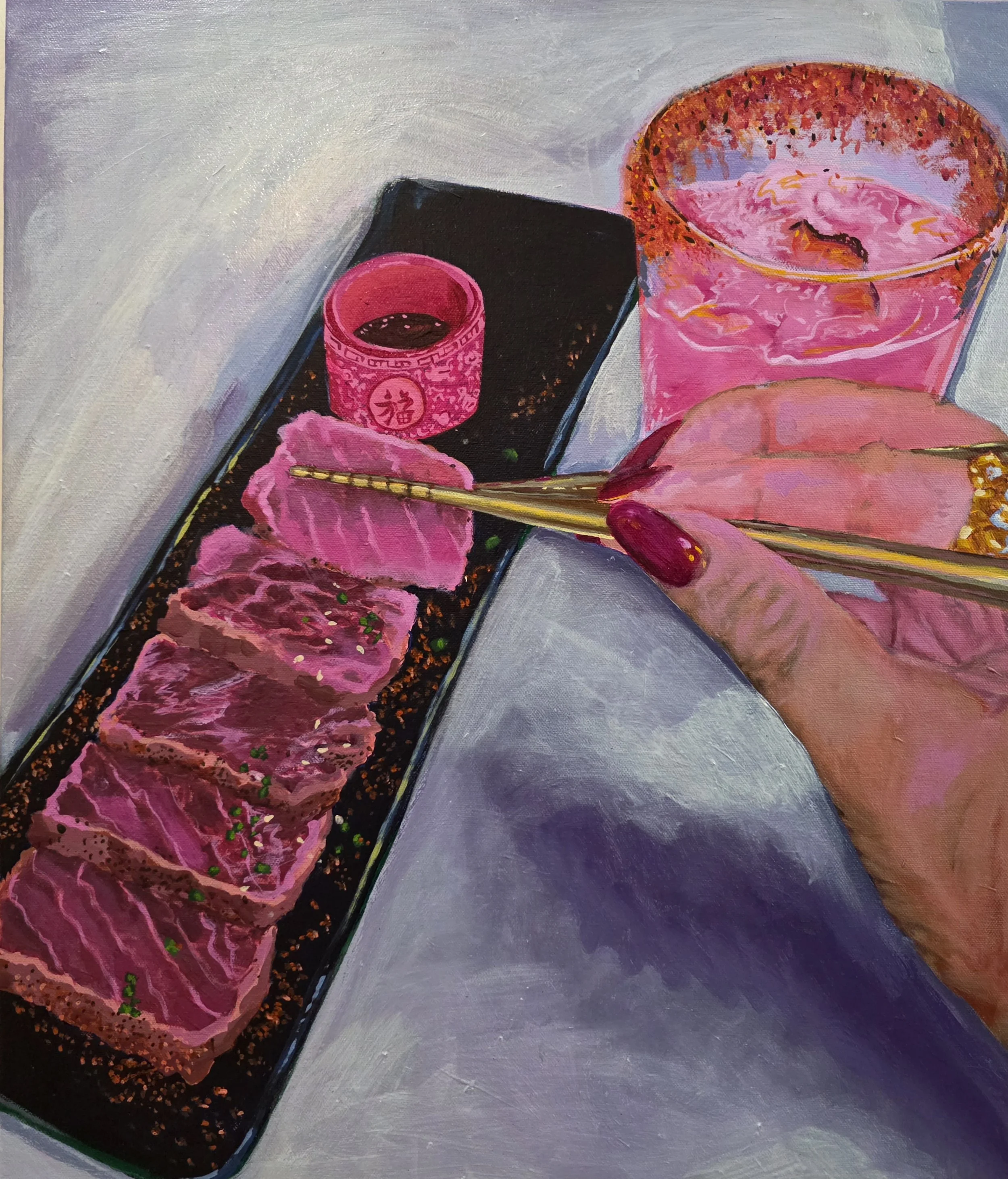
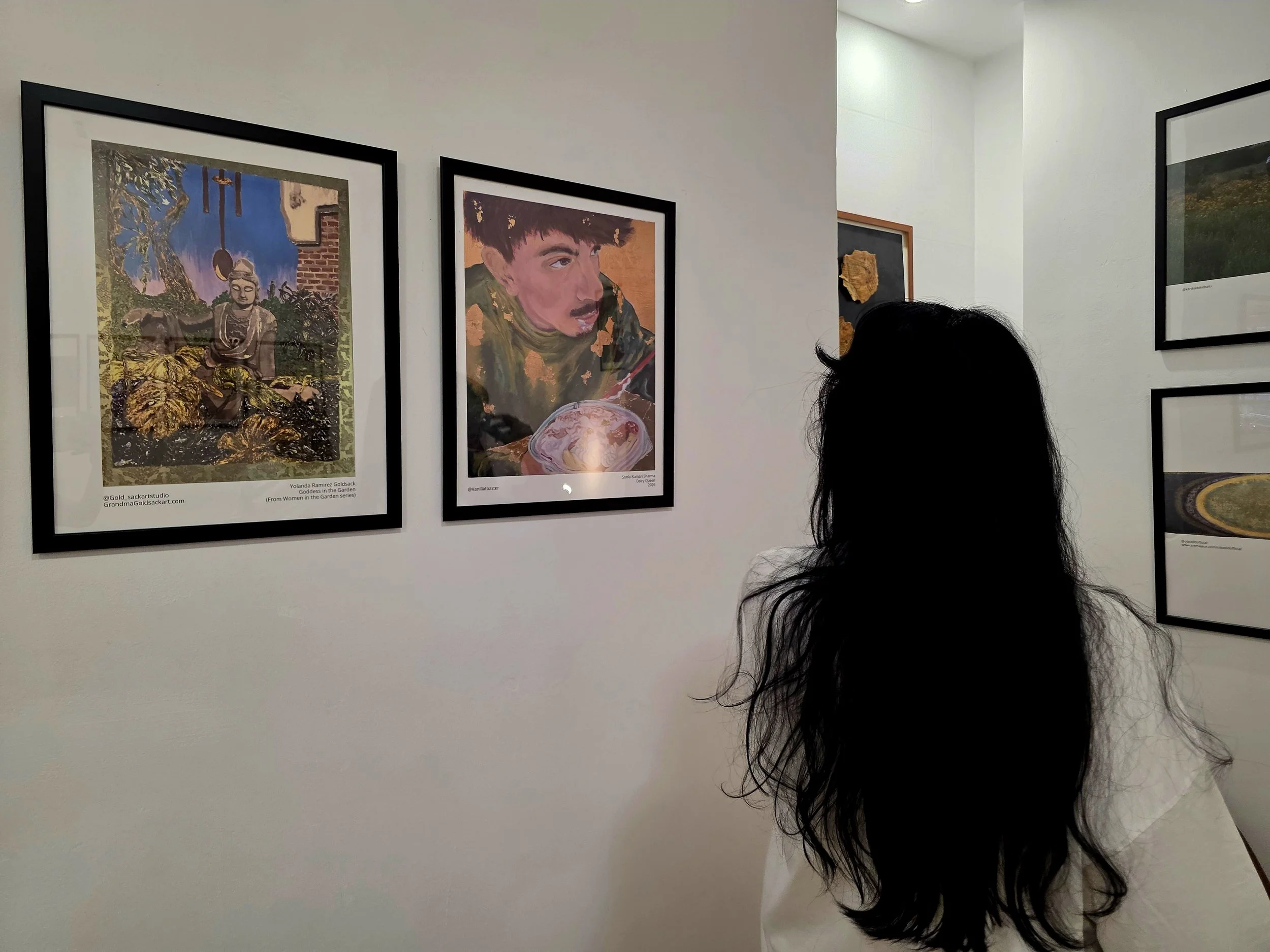
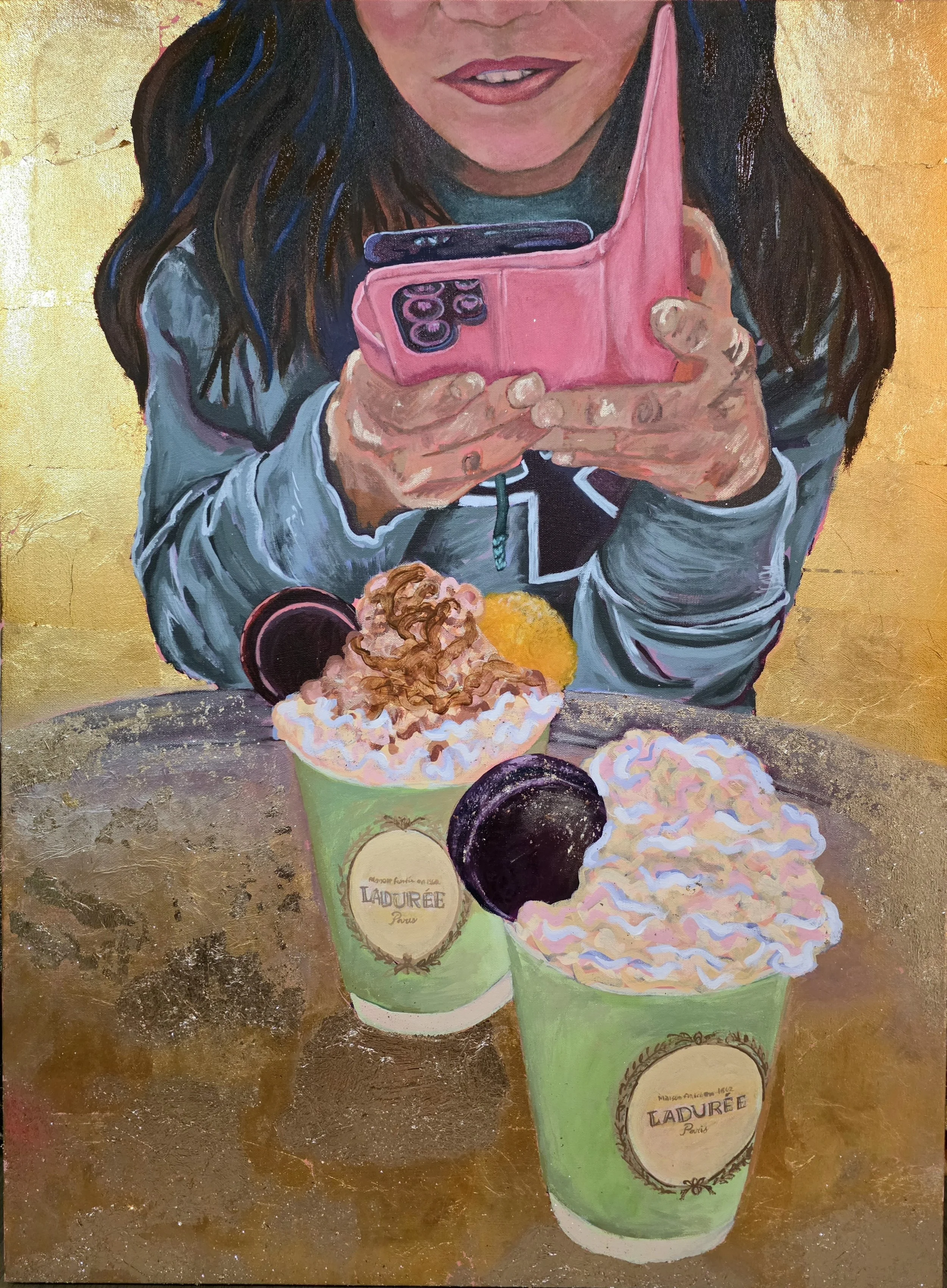
“I started working with gold to explore the idea of status indicators, and how the materials can communicate value. Gold has an expansive visual history, appearing in religious spaces, ceremonial objects, family heirlooms, offerings, ornamentation, and symbols of prosperity. It can imply devotion, wealth, permanence, reverence, and security almost immediately. What interested me was placing that material beside imagery of something as ordinary and fleeting as food. Food disappears. It is eaten, gifted, wasted, shared, craved, or remembered, but it does not last in the same way gold is expected to last.”
Do you plan your work in advance, or is it improvisation?
“I go into my projects with an idea of what I think I might want to see visually to communicate my ideas, but given the nature of food, sometimes if things melt or drip the organic moments captured tell better stories.”
Are there any art world trends are you following?
“I’m always watching fashion cycles. To me, fashion has a way of reacting and signalling what is going on in the world geopolitically, almost faster than any other art form. I think paying attention to those cycles, and the moments when they break from the norm can help you have a better understanding of the world from both an artistic, or an economic perspective.”
What process, materials and techniques do you use to create your artwork?
“I will film my models eating, and I will take stills from the recording and start sketching what I think are the most interesting moments. From there, I will paint the sketches on to the canvas. I will use a lot of glazing in my work to incorporate subtle shifts in tone, I think this helps incorporate the metallic finishes.”
What does your art mean to you?
“For me, art has a way of communicating a feeling or an energy more successfully than storytelling.”
What’s your favourite artwork and why?
“I’m not sure if ‘favourite’ is quite the right word, but whenever I paint portraits, I always find myself thinking of The Death of Marat by Jacques-Louis David. I think the way the piece communicates so many layers of imagery is something I could talk about for hours. While my own work is nowhere near that level of storytelling, the piece always reminds me of the possibilities of what can be communicated with successful visual language.”
Have you had any noteworthy exhibitions you'd like to share?
“My most recent opportunities include Whimsical Wonders at Gallery George in Vancouver and a group pop-up exhibition with Names Gallery in Madrid, Spain. My work has also been featured in Times Square, New York City, through Visual Arts Journal, which published an interview with me in its August issue and on its website.”
Website: with-sonia-2.myshopify.com
Instagram: @vanillatoaster