Interview
Serron Green
Serron Green (b. Newark, NJ) is a contemporary artist whose work explores the layered realities of Black American life through a fusion of history, rebellion, and reclamation. Raised in Newark during the height of the Black Power movement and the golden age of graffiti, Green’s practice is deeply rooted in the tension between invisibility and hypervisibility—the simultaneous erasure and magnification of Black existence in American culture. Green’s earliest creative impulses emerged from childhood play and comic book illustration. In his teens, a chance encounter with graffiti culture ignited a lifelong passion for unbounded expression: “Graffiti had all of the things most young teenagers wanted—it was expressive, it had no rules, and it was freeing.” This freedom became foundational to his philosophy as an artist and as a man shaped by both the struggles and the triumphs of Black America.
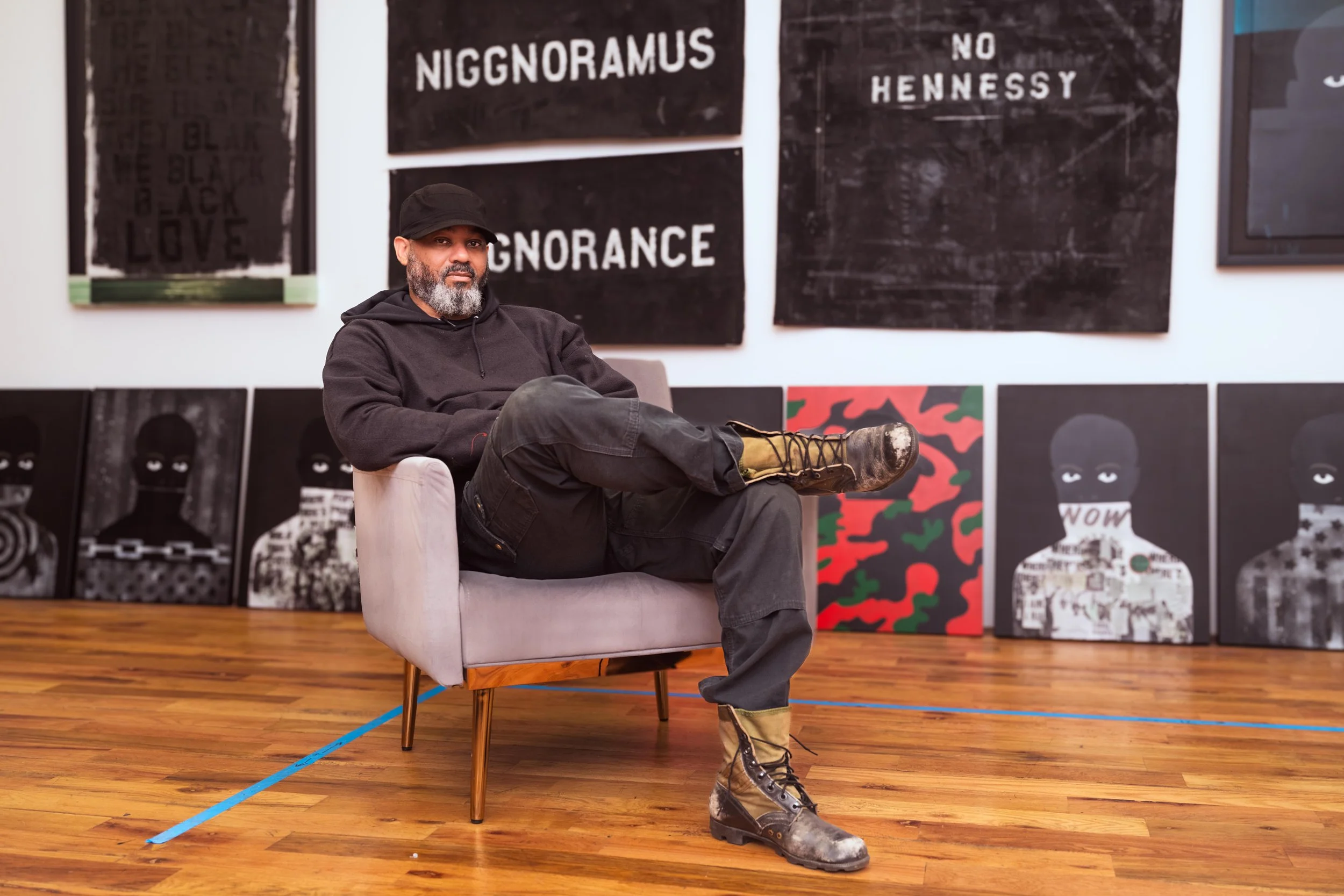
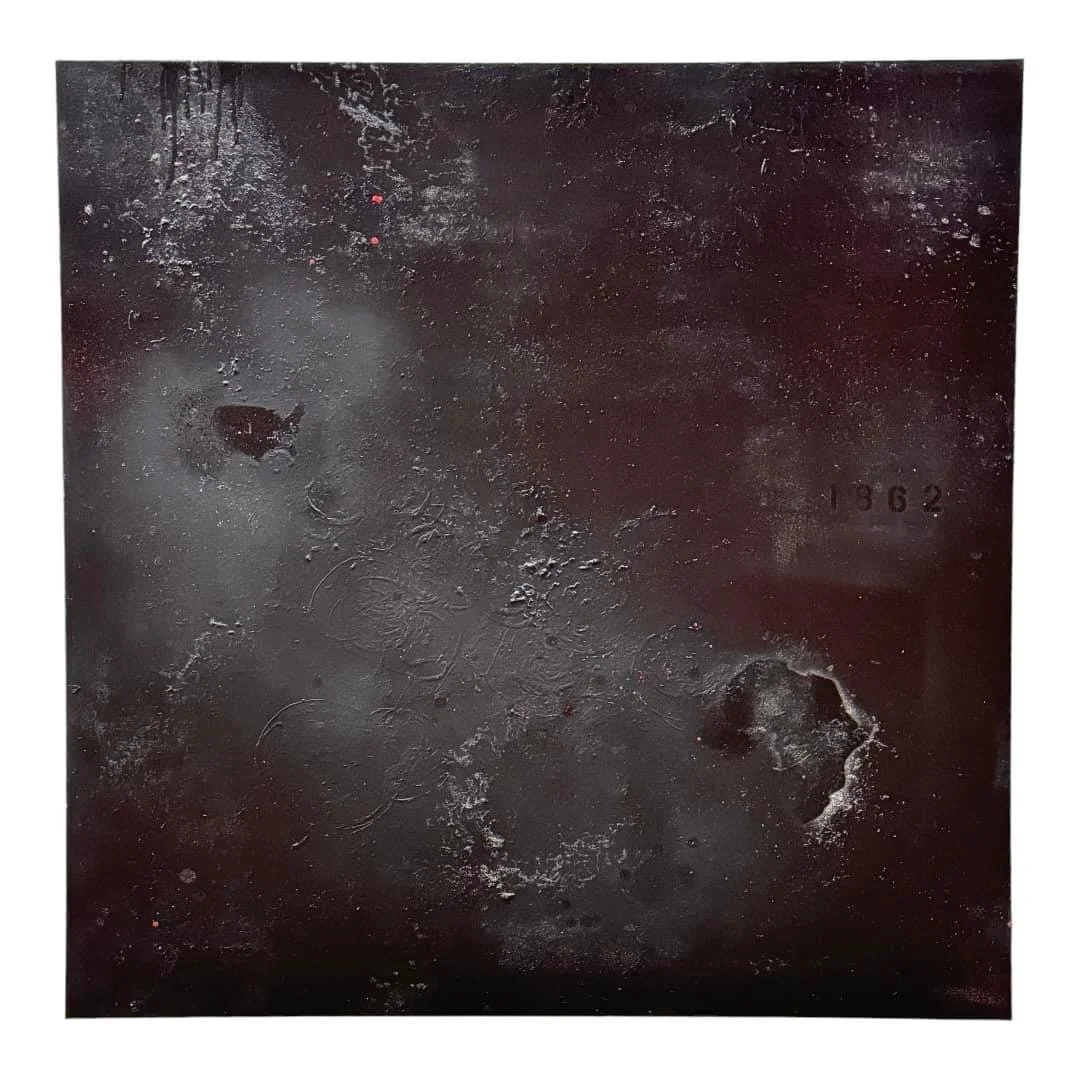
Over the years, Green’s material language has evolved to include paper, canvas, reclaimed wood, enamel, and found objects. His work has appeared in major exhibitions across the United States, including Radical Reimagining at the Newark Museum of Art, Affordable Art Fair New York, LA Art Show, and Scope Art Fair during Miami Art Week. His practice continues to expand across series such as Young Leroi—a tribute to Amiri Baraka—and Protected by the Red, Black, and Green, inspired by David Hammons’ African American flag. Green cites artistic influences including Jean Michel Basquiat, Dana Chandler, Kerry James Marshall, Radcliffe Bailey, Henry Taylor, and Gary Simmons—all of whom shaped his layered approach to narrative, symbolism, and social commentary. His creative process is both intuitive and research-driven: “I’m easily inspired by what I see and hear. I gather as much data as I can on an idea, and then it’s just a matter of making it two or three dimensional.”
His studio operates like an assembly line of imagination, where multiple works take shape simultaneously. The culmination of each piece, he says, is “the most enjoyable part—when what I had in my mind is right there in front of me.” Travel, community, and memory all play vital roles in Green’s evolution. His journeys across Europe, the Caribbean, and the Americas reinforced his belief in art as a tool for transformation. Yet, Newark remains his anchor and muse: “The city and its people have a bad reputation, but being from Newark, I know better. It has a rich history and some extremely gifted and amazing people. When I see them and the city, I see myself.” Through his body of work, Green offers a visual vocabulary that confronts erasure while celebrating rebirth. The Black butterfly—a recurring motif—symbolizes that ongoing cycle: “We die every day, literally and metaphorically, and have to get up and go on as if nothing happened. The butterfly represents that daily rebirth.” Green’s work can be found in numerous private collections across the United States and abroad.
What is your background and how did you start your journey in the art world?
“My original goal in life was to become a comic book illustrator, which I did learn to do for a short period of time. Based on where I grew up in the northeast are of the United States, that all changed when I was introduced to graffiti. I lived in the greater metropolitan area near New York. At the time, hip hop music and graffiti was in its early stages. So, it was a pretty easy transition from comics, to graffiti. In the beginning, most of my graffiti was a fusion of the comics, that I read and drew, and the graff that I was learning. There was also a mix of anime as well. At some point along the way, I eventually out grew both of those things, and stop making art all together. Many years went by before a chance meeting at a gallery caused me to pick up a paint brush and paint again.
Although, I had never painted with a brush, or on a canvas before, I thought I may as well give it a chance. That was around 2011-2012. I showed in some local galleries, and did a few fairs back then. I was also producing my own pop up exhibitions. I did canvas and works on paper off and on, taking breaks for a year here or there. Then at the end of 2020, during the pandemic, I decided to get move into an official studio away from home. I moved into my studio in January of 2021, and everything took off from there. Posting on instagram led me to more sales, and more exposure then I had ever had before. Fast forward to 2023, I was in an exhibit in Brooklyn that catapulted me even further. I started being in more exhibitions further away from home. Los Angeles, Virginia, Washington DC to name a few. All of that is where the real journey started for me.”
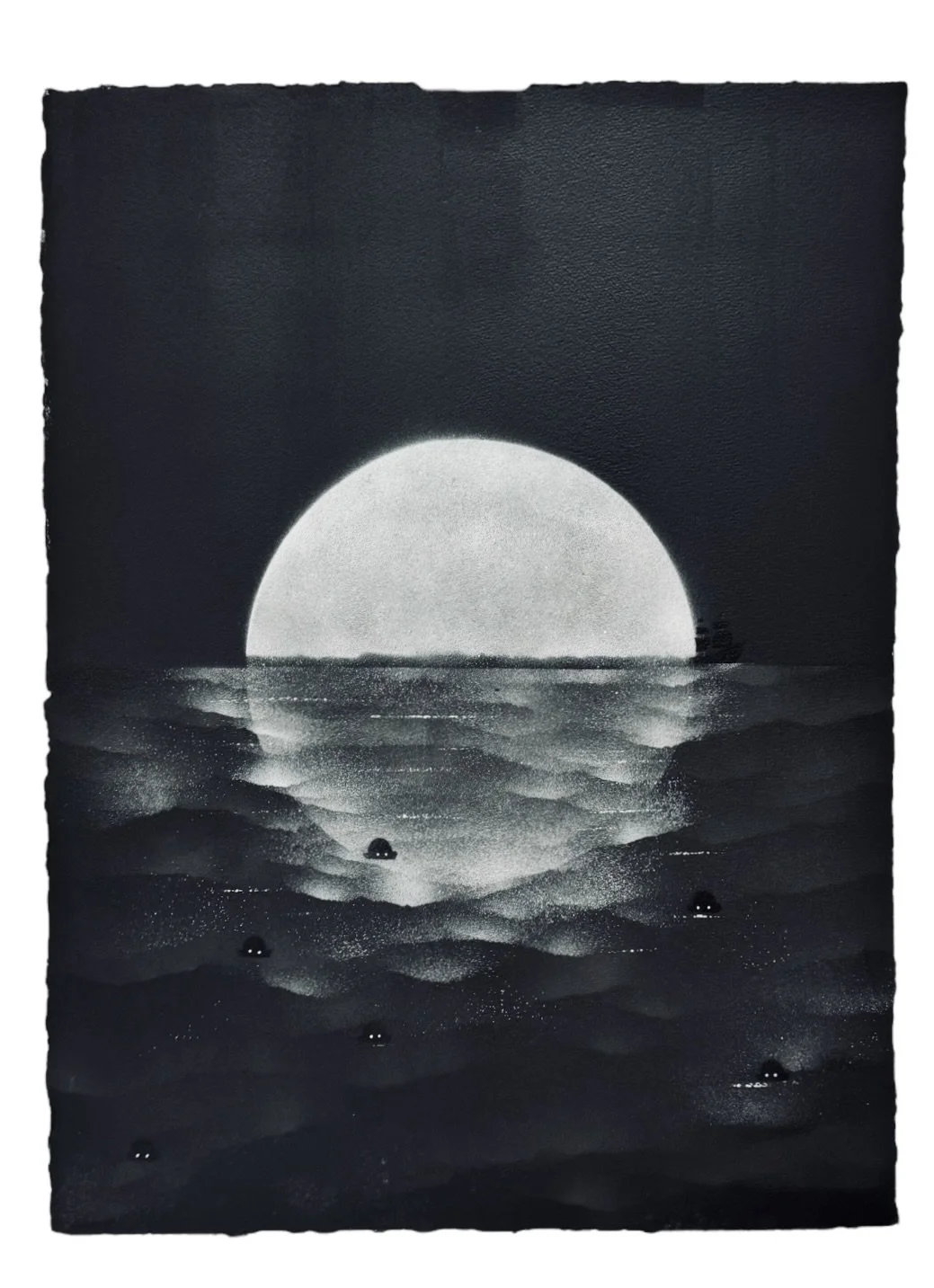
What inspires you?
“The thing that inspires me the most, is Black people. More specifically, Black American people. The culture, contributions and overall experience of The Black American. It is a lived experience for me. Adding that experience to the history of the people, whether it be from a social justice, or political perspective, it will always be inspiring. Also knowing many of the trials and tribulations, and the struggles of said people give me an unlimited resource of information. As well as the beauty in which we have brought to the world. For example, pop culture in America, and around the world, is Black American culture. Things such as style, cuisine, termanology, music, etc. And the list goes on. Simply put, as long as there are Black people, I will be inspired by them.”
What themes do you pursue? Is there an underlying message in your work?
“As I mentioned before, Black American culture plays a big part in how and what type of art that I make. As far as an underlying message goes, my message is not underlying at all. I put everything out front, or above ground unapologetically. My message is clear, I love Black people, good, bad or indifferent. I accept the wins, and the loses wholeheartedly. I suppose that would be my message. Be unapologetically Black.”
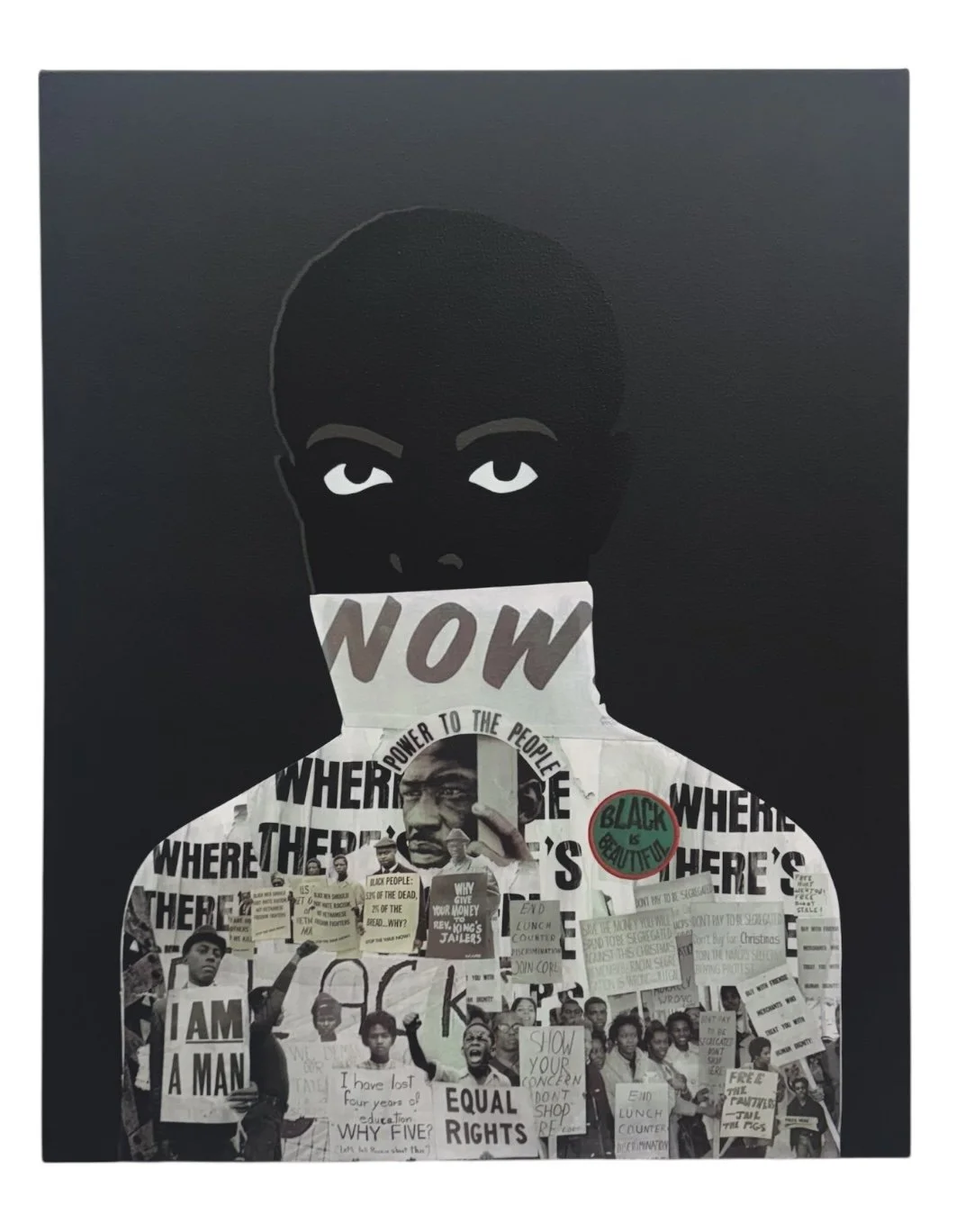
How would you describe your work?
“I would describe my work as multidisciplinary visual art. I work in all mediums. Paints, drawing, installations, and found object sculptures.”
Which artists influence you most?
“My artistic influences vary in style. They include, Jean Michel Basquiat, Dana Chandler, Kerry James Marshall, Radcliffe Bailey, Henry ‘Chinatown’ Taylor and Gary Simmons. All of them in some way helped shape my layered approach to narrative, symbolism, and social commentary.”
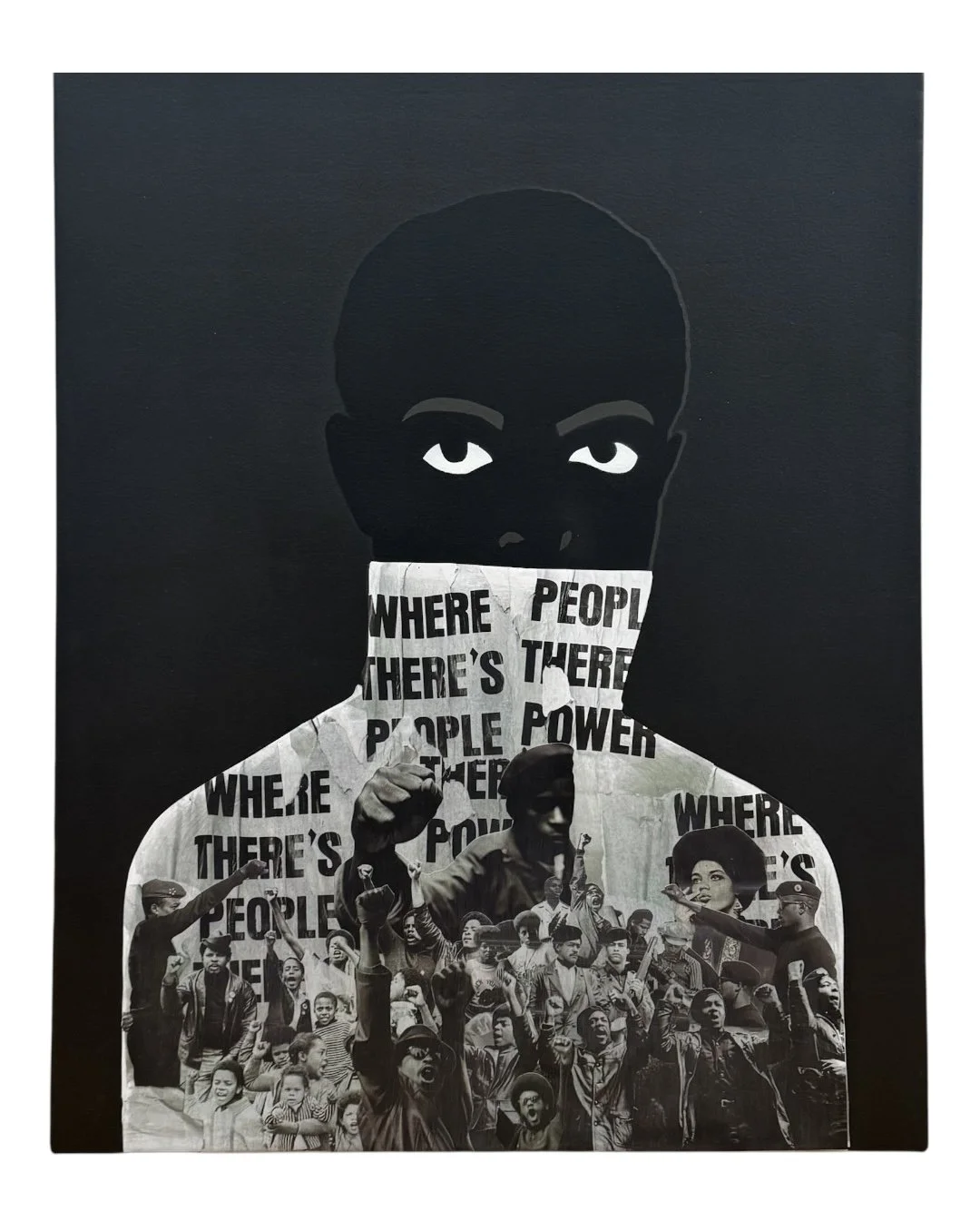
What is your creative process like?
“My creative process starts with an idea. Then it forms backwards so to speak. I tend to create a list of titles first, then work my way backwards to the original idea. The content, or the message that I am trying to convey, then in turn dictates the medium. Pretty simple I think.”
What is an artist’s role in society and how do you see that evolving?
“I feel that the artist role in society is plain and simple, and that is to tell the truth. Whether it is about past history, or current affairs. Just tell the truth in the medium of your choice. Nothing hits a viewer harder than an artist, or art that is telling the truth.”
Have you had any noteworthy exhibitions you'd like to share?
“Some of my more noteworthy exhibitions would include, The LA Art Show at the Los Angeles Convention Center. Art On Paper at Chelsea Piers, New York. The exhibition titled, Radical Reimagining at The Newark Museum of Art in my hometown of Newark, NJ. The Atlanta Art Fair, as well as The Scope Art Fair in Miami during Miami Art week, better known as Art Basel, where I had a sold out show. I've also shown in several galleries in Manhattan, Brooklyn, and in multiple other states. My work has also been acquired by The Thelonius Monk Foundation, The Black Panther Party Museum in Oakland California, as well as The Huey P. Newton Foundation.”
Instagram: @serrongreen