Interview
Rick Osann
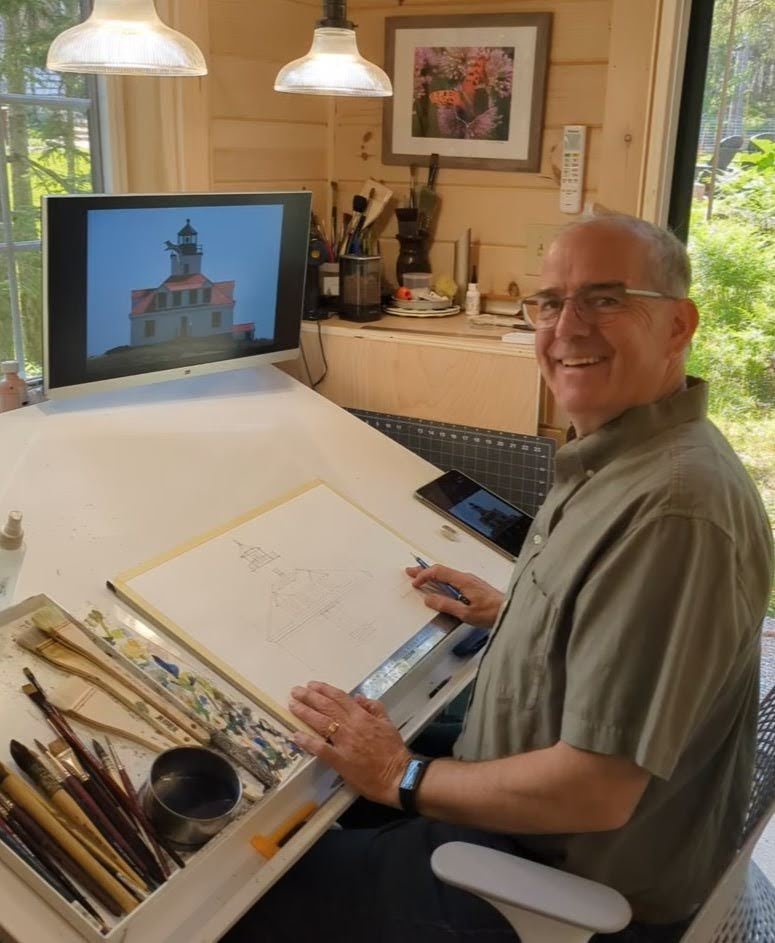
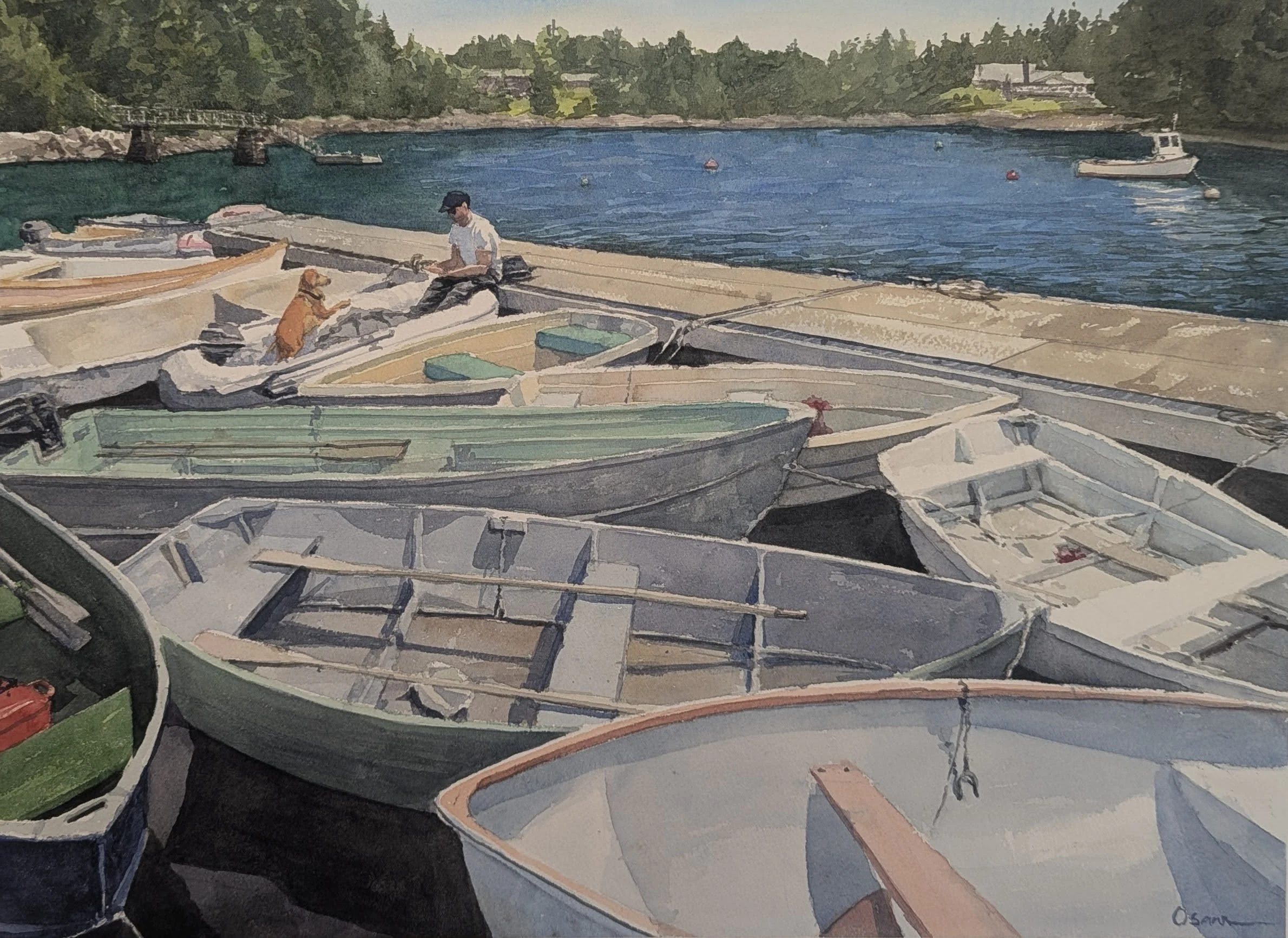
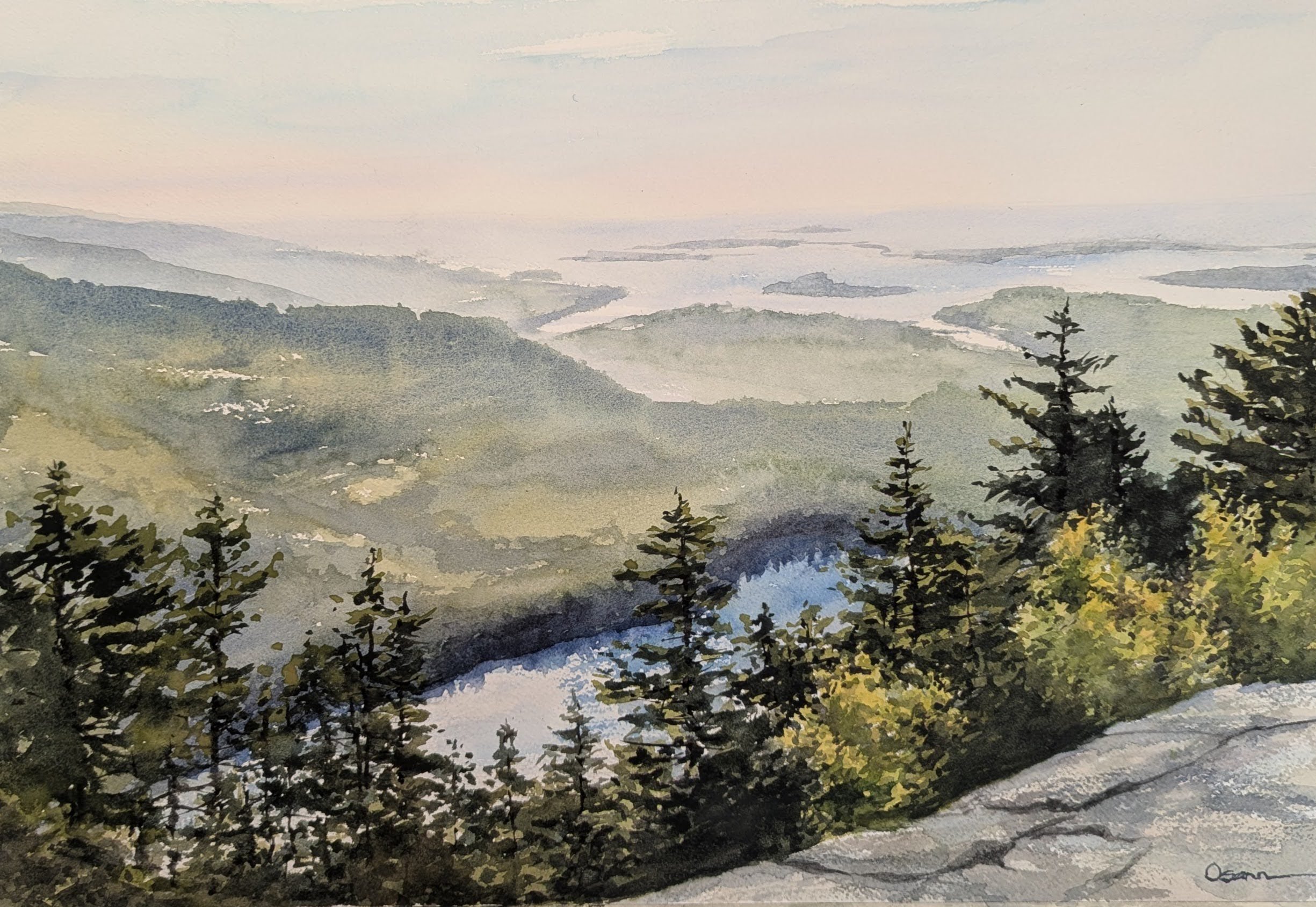
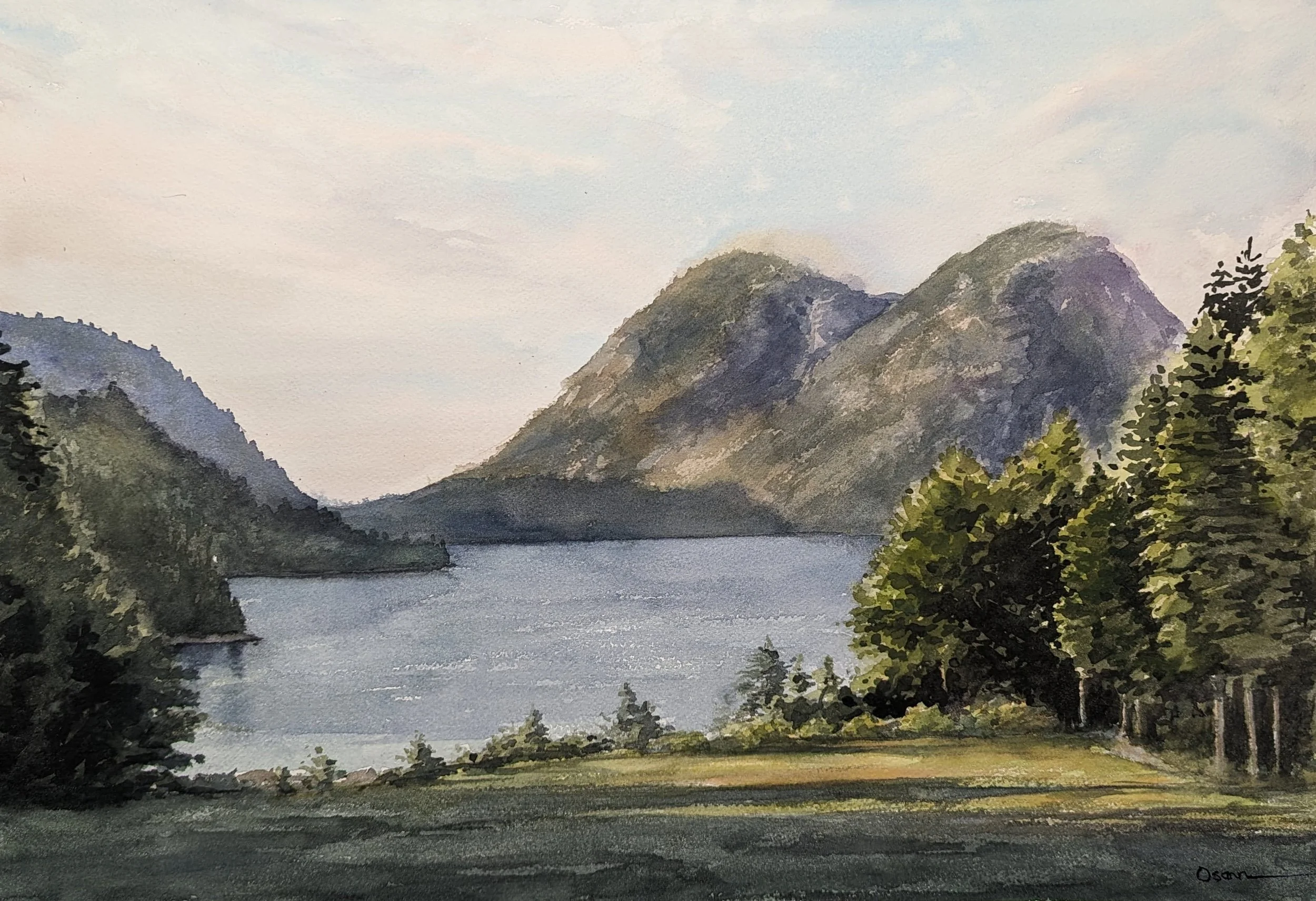
Rick Osann has been painting in watercolor since the early 1970's. After various careers as a professional Scenic Artist working for stage, film & TV in New York City, and teaching art/theatre/film at Bonny Eagle High School in southern Maine, Rick is now happily focusing on his painting in Bar Harbor, Maine, one of the beautiful places of our world, in his studio adjacent to Acadia National Park. From his background as a theatrical set and lighting designer, Rick is most interested in exploring light, shadow and color in dramatic moments of nature through his painting. His work celebrates the beauty of the Maine landscape and encourages us to think about protecting our environment and the precious bounty that surrounds us.
What is your background and how did you start your journey in the art world?
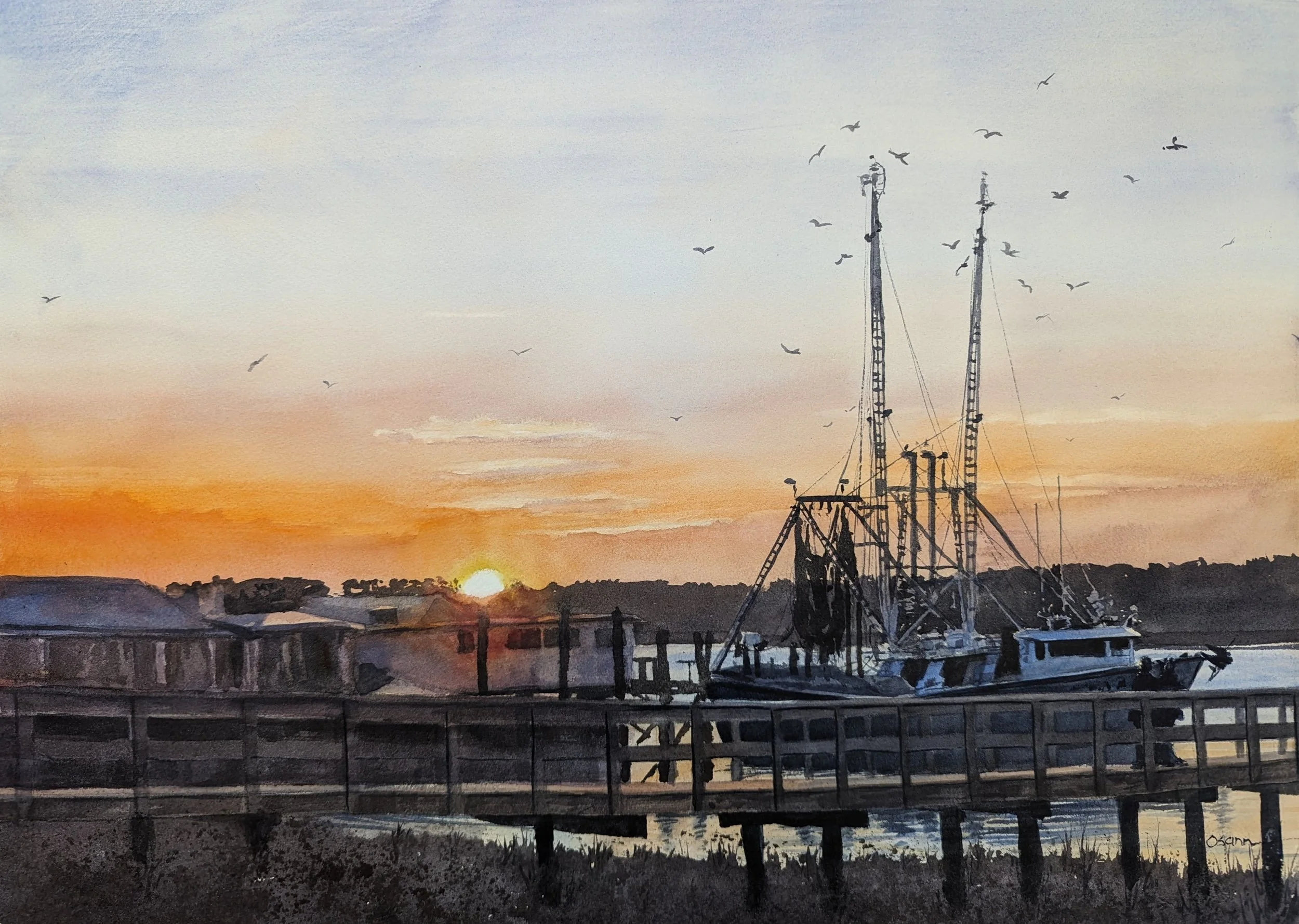
“I was always a ‘music and theatre’ kid growing up and was terrified of making visual art. My father painted occasionally as a hobby in oil, acrylic and watercolor and I loved to watch him work. But I loved the immediacy of theatre and performance and this, in part, informs the art I pursue today. Early on in my education, I fell in love with the technical side of theatre, especially set design and lighting, and pursued that in my education, completing a BA and MFA. I first learned watercolor in my college set design class and really enjoyed it. I still avidly remember the first painting I created for myself, sitting on a hillside in Vermont and observing a colorful sunset. Perhaps this and my love for the outdoors led me to my love of landscape painting, especially skies.
My first work out of theatre school was as a scenic artist for Milwaukee Repertory Theatre in Wisconsin and from there I was accepted into the United Scenic Artists in New York City. As a union scenic artist I spent most of my time working in TV and film, most notably for the film, ‘Muppets Take Manhattan.’ When I first started seeking work in NY I wondered if I could start a career as a painter, but loved the collaborative nature of theatre and shied away from the solitude of painting. After working in NYC my wife and I decided to live in a different country, for a broader cultural experience, and this led my working career away from theatre into interior design. I eventually returned to theatre as a high school theatre and art teacher in southern Maine, where I spent the last 15 years of my working career. I retired in 2019 and moved to Bar Harbor, Maine, adjacent to Acadia National Park. With retirement I began to focus on watercolor painting again and the natural beauty of Acadia National Park gave me a great reason to love painting the landscape. I’m six years into it now and love every minute I can spend painting, outdoors and in my studio (in the back of the garden shed). I continue to study in workshops, live and online. Our local art center, Acadia Center for the Arts, has become a place to find friends and share my love of painting, while returning to teach a variety of classes.”
What inspires you?
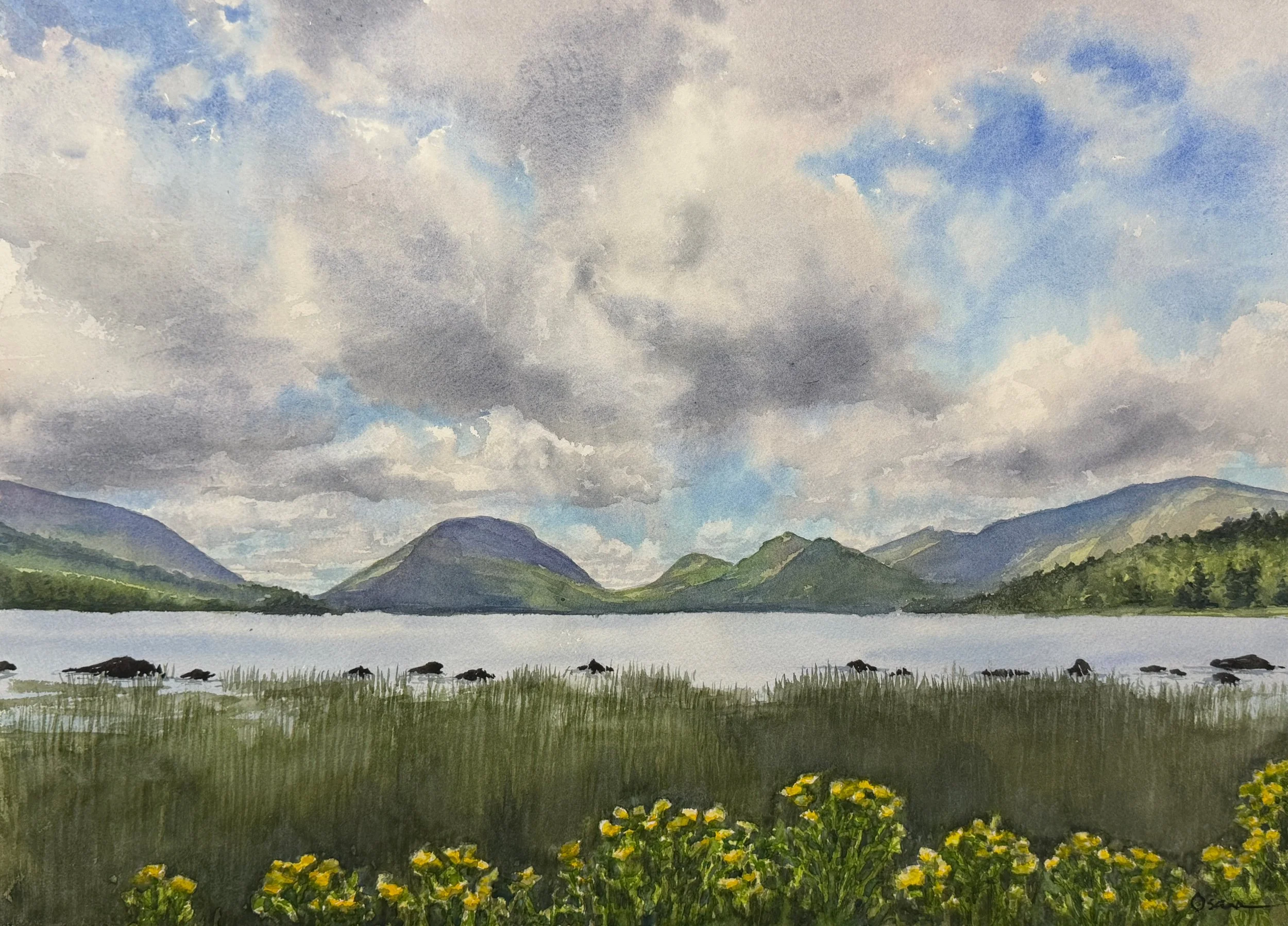
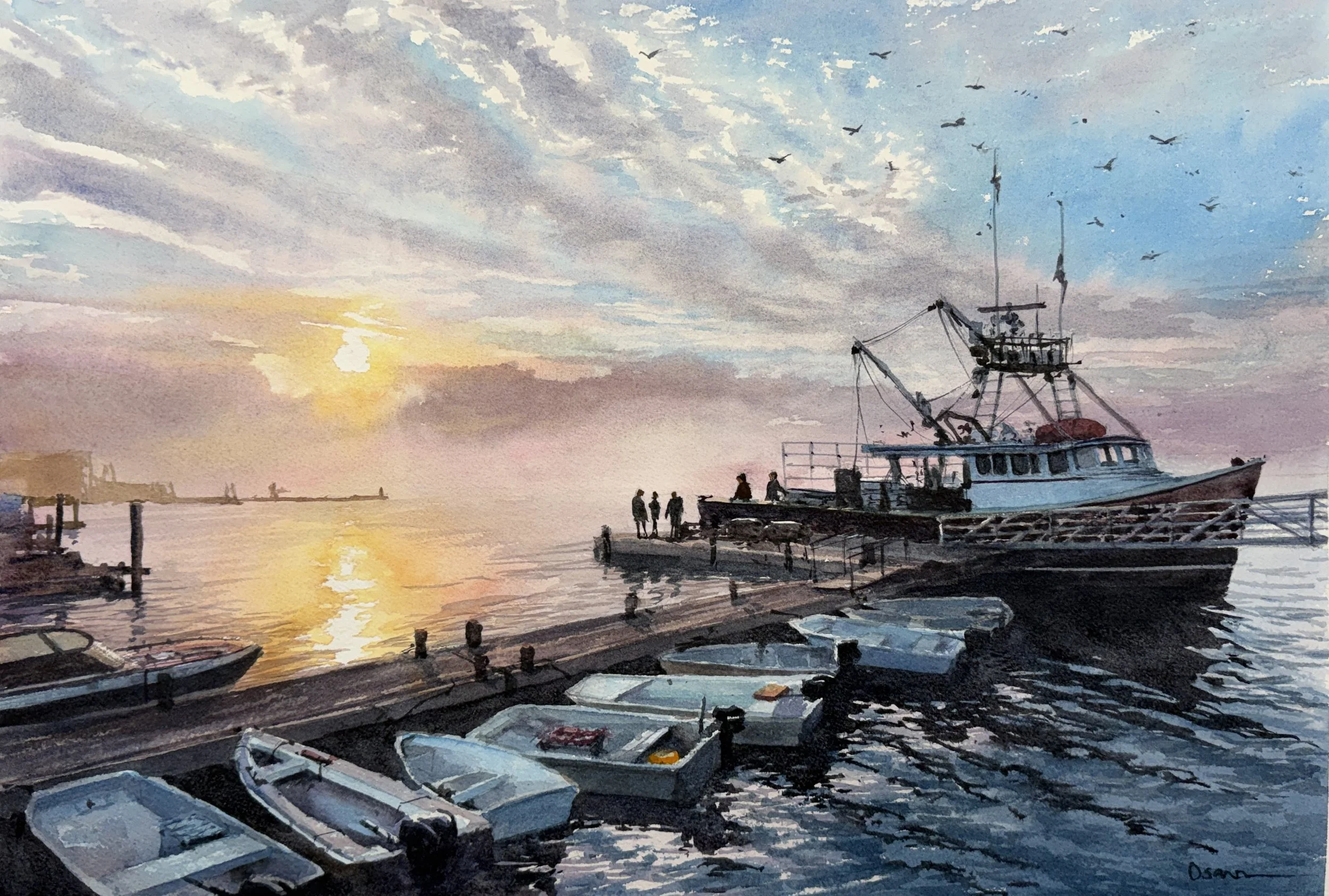
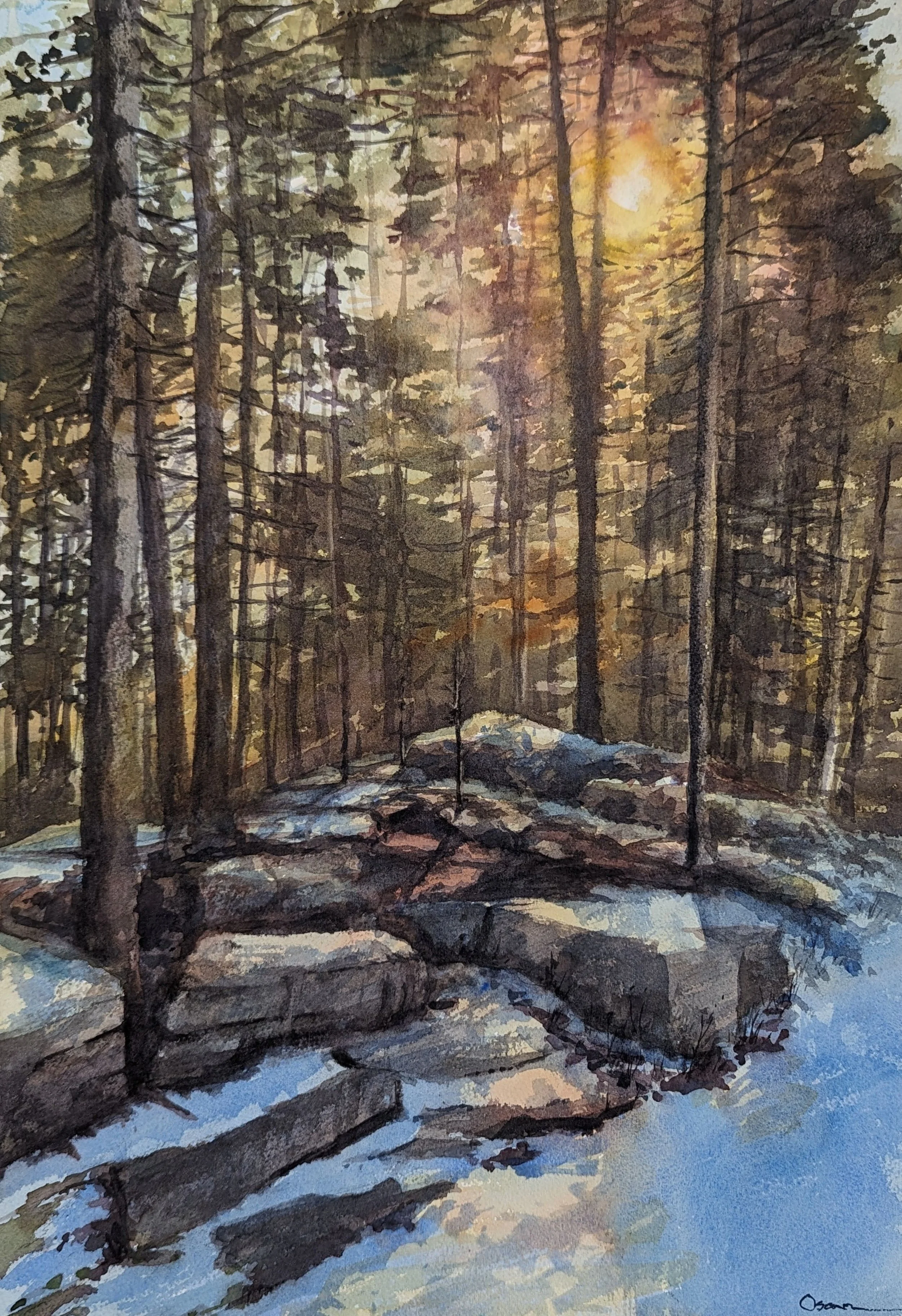
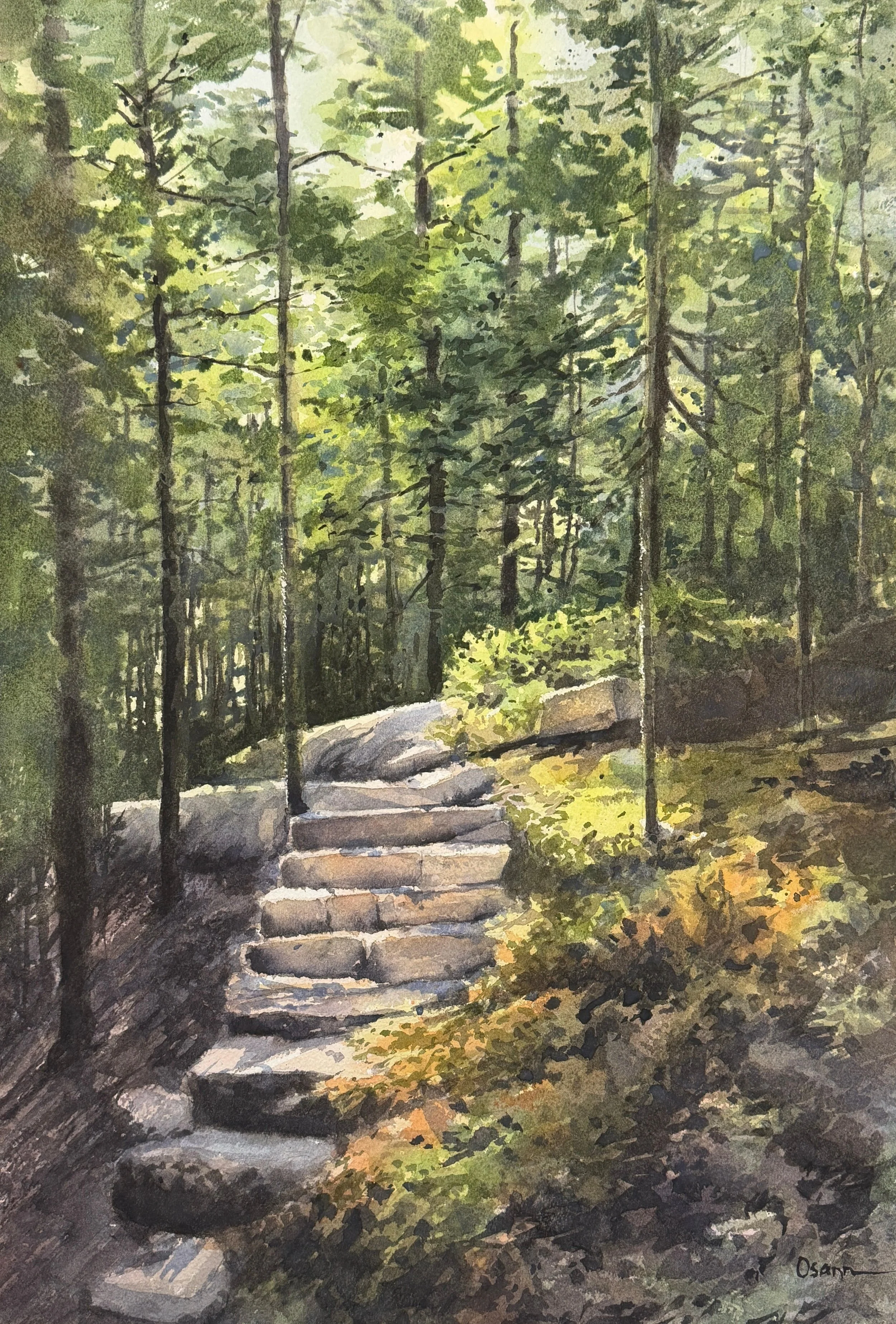
“I love the outdoors- my wife and I hike, bike and kayak in Acadia National Park regularly and painting plein air is the best way to observe and record the whole experience of being there, not just what one sees but what one feels through all of the senses. I also love the focus of working in my studio and often work from photographs I have taken or photos from a few generous friends whose vision appeals to me and who have given me permission for use. Perhaps because of my training and work as a theatrical set and lighting designer I absolutely love the quality of light and this becomes the focus of my painting. I’m often looking for a special instant when the light creates a dramatic moment of light, shadow, contrast and color that draws me and the viewers of my paintings into the landscape, to step beyond seeing and to feel the warmth of the sun filtering through the trees, the mystery of a foggy day, the quiet breeze, the fresh smell of the ocean or the rich musky scent of the woods.”
What themes do you pursue? Is there an underlying message in your work?
“The natural world is a miracle and it is an honor and privilege to record my impressions of the local landscape and the light that illuminates it. I’m not an intellectual painter- I want to share what I feel when I come across that moment of special light. I don’t purposefully seek to make political statements but inherent in my choices lie my worry about the future of our environment. By painting the landscape, I strive to record the beauty before it disappears and also hope to inspire others to value and protect the extraordinary beauty that remains.”
How would you describe your work?
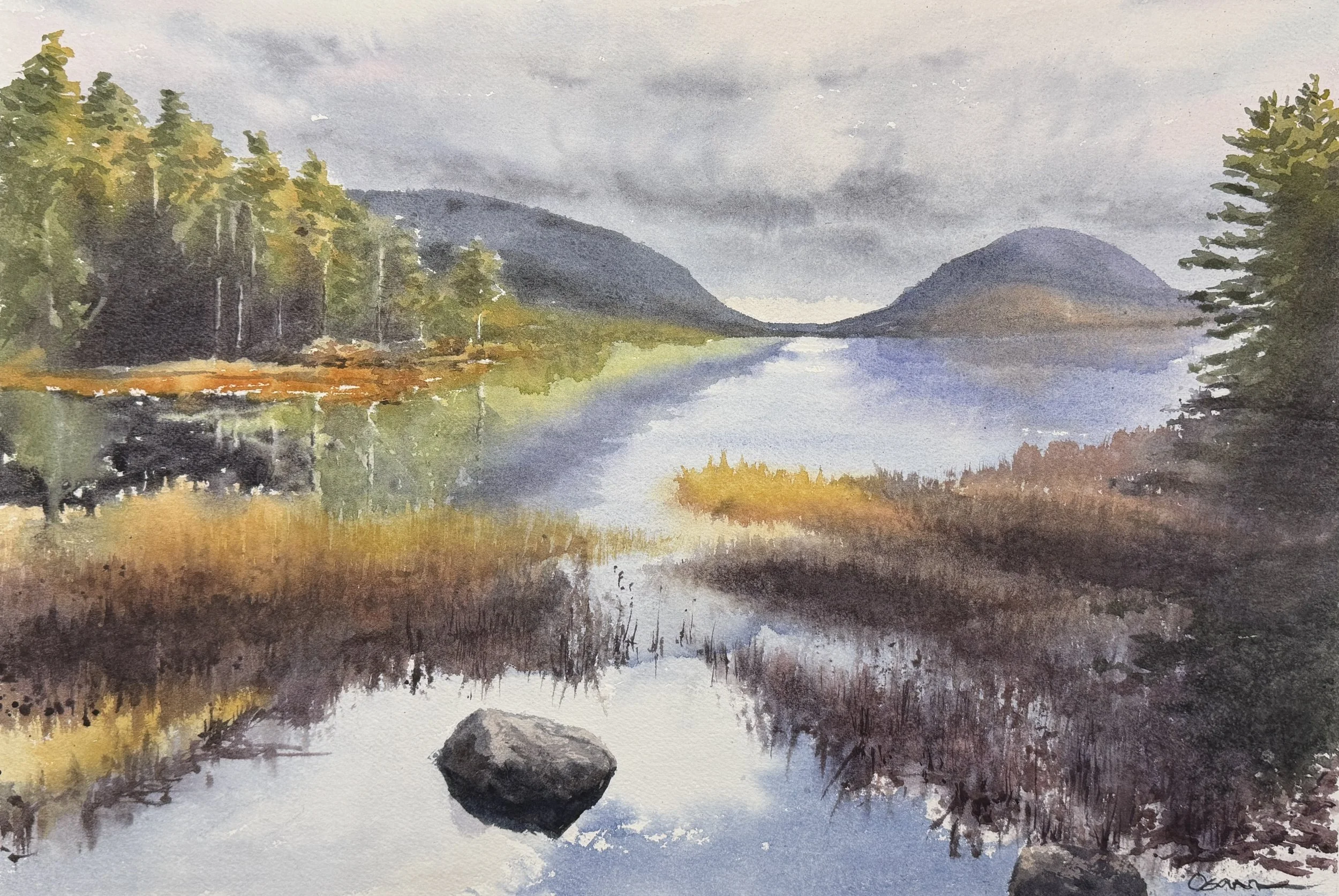
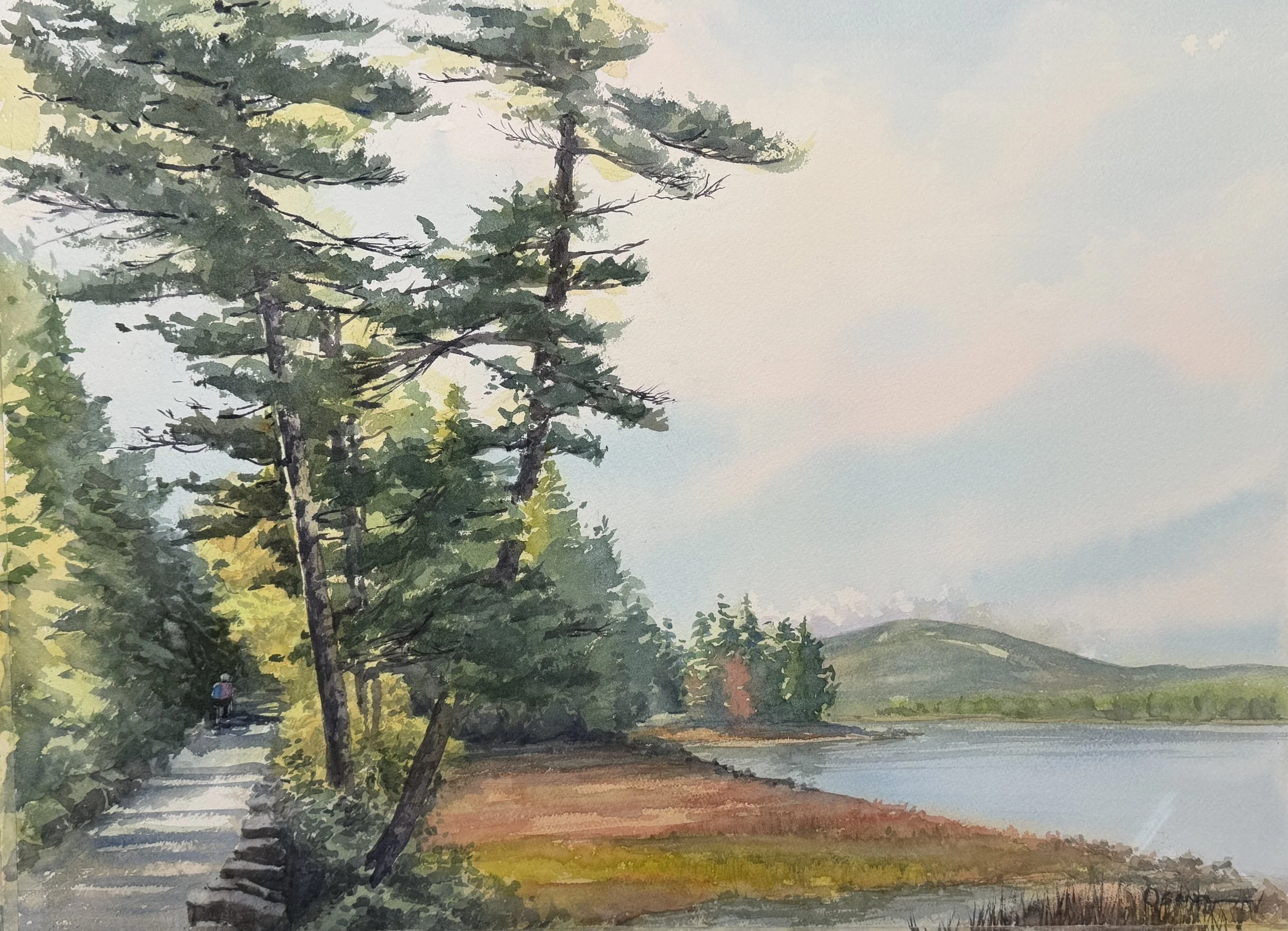
“Watercolor landscape painting is often very loose and quick. The flick of the brush is more important than the accuracy of detail. I love the freshness of watercolor painting but I’m also, perhaps again because of my theatre background, very much a detail-oriented person. I seek to incorporate the extraordinary detail of the landscape and the light but at the same time maintain the freshness that makes watercolor feel alive, so I think of my work as realist with a dab of Impressionism. I love the way transparent media allows the white of the paper to shine through the color. I also love the fragmented nature of light as it filters through the woods and seek to share that warmth through the flow of water on paper and strokes of the brush.”
Which artists influence you most?
“I love the Impressionists and the way, with quick, bold strokes of paint, they conveyed the feeling of a place. I admire Monet for his studies of light, Van Gogh for his bold and lively paint strokes, and especially Claude Renoir, for the soft and fragmented light he reveals, the rich contrast between light and shadow that infuses his work and reveals the warmth of the light. I also admire the great watercolorists, from Thomas Rowlandson, the 18th century satirist, to John Singer Sargent, Winslow Homer and Andrew Wyeth, who have connections to my home state of Maine.”
“The natural world is a miracle and it is an honor and privilege to record my impressions of the local landscape and the light that illuminates it.”
What is your creative process like?
“My creative process begins outdoors, with the search for those transcendent moments of light in nature. Even when I’m painting outdoors I use a camera to help compose and frame the scene that best reveals the light. And so I am a collector of moments and images, taking hundreds of photos that might reveal that special quality. When I sit down to start painting, my first step is to sift through my photo collection and select what appeals to how I’m feeling at that moment, and then I can begin to paint. I choose not to use opaque paint in my work, so before starting a painting I must plan how to use and save the white of the paper to reveal the light. I often will begin with a value study, providing the opportunity to prepare the composition and values that will allow the painting process to be less labored and maintain the freshness that is so appealing to watercolor. I’ve always been a planner so this process of preparation appeals to me.”
What is an artist’s role in society and how do you see that evolving?
“With such easy access to photography on our phones and the advances of AI, it is increasingly important to be reminded of the value of hand-made craft. This more than anything drives my efforts. This element of hand craft inherently instills the work with one's own personal value statement. The viewer is not just looking at a scene but sharing in the feelings that filled the artist at the moment of creation. As AI becomes more powerful and easier to access we must be reminded of the personal, one-of-a-kind aspects of life that can’t be created or recreated by a machine, and the emotions that are distinctly and uniquely human.”





Have you had any noteworthy exhibitions you'd like to share?
“I am proud to have recently had a painting accepted into the New England Watercolor Society’s annual exhibition for the third straight year. Last winter it was a great honor to have paintings on display at the prestigious Palm Beach Show. Locally, I am happy to share my paintings through outdoor art fairs where I have the opportunity to meet and chat with potential collectors, and in the off-season months in our neighboring libraries, cafes and assisted living facilities.”