Interview
Qianhui Xie
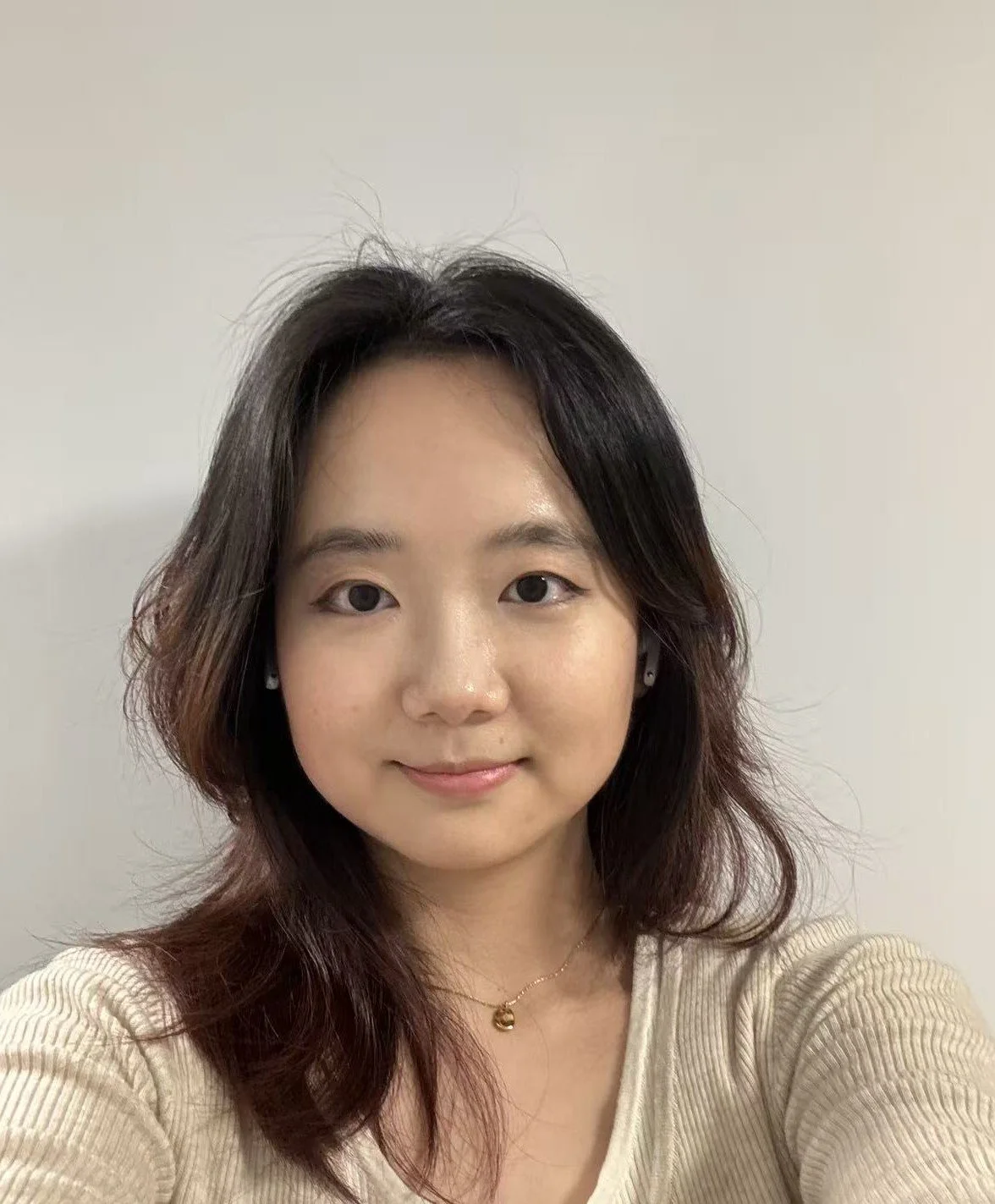
Qianhui Xie is a London-based artist whose practice centres on watercolour painting. She received her undergraduate degree in watercolor from Xi’an Academy of Fine Arts in Xi’an, China. She is currently pursuing an MA in Illustration at Camberwell College of Arts, University of the Arts London. Through motifs of flowers and flames, her work explores cycles of growth, transformation, and renewal. Delicate organic forms are used to evoke both vulnerability and persistence, expressing a quiet yet enduring sense of vitality.
What is your background and how did you start your journey in the art world?
“My name is Qianhui Xie. People call me Qian. I completed my undergraduate studies in Watercolour Painting at Xi’an Academy of Fine Arts in China. After that, I moved to London and studied the Illustration Graduate Diploma at Camberwell College of Arts, which led me to continue my studies there as an MA Illustration student. In a broad sense, my artistic journey began when I was very young. Since kindergarten, I’ve always loved drawing, and I used to spend my free time attending art classes simply because I enjoyed it so much. But I think my practice became more serious in 2019, when I first entered art school. During the early years of my undergraduate studies, I focused on foundational drawing and painting training, and later I began concentrating more deeply on watercolour techniques and how they could be used expressively within painting. After graduating, I started wanting to explore stronger narrative possibilities within my work. That curiosity is one of the reasons I chose to study illustration in London. Compared to my earlier practice, I now think more about how images can build emotional atmospheres, suggest stories, and create connections between personal feelings and the viewer’s imagination.”
What does your work aim to say? Does it comment on any current social or political issues?
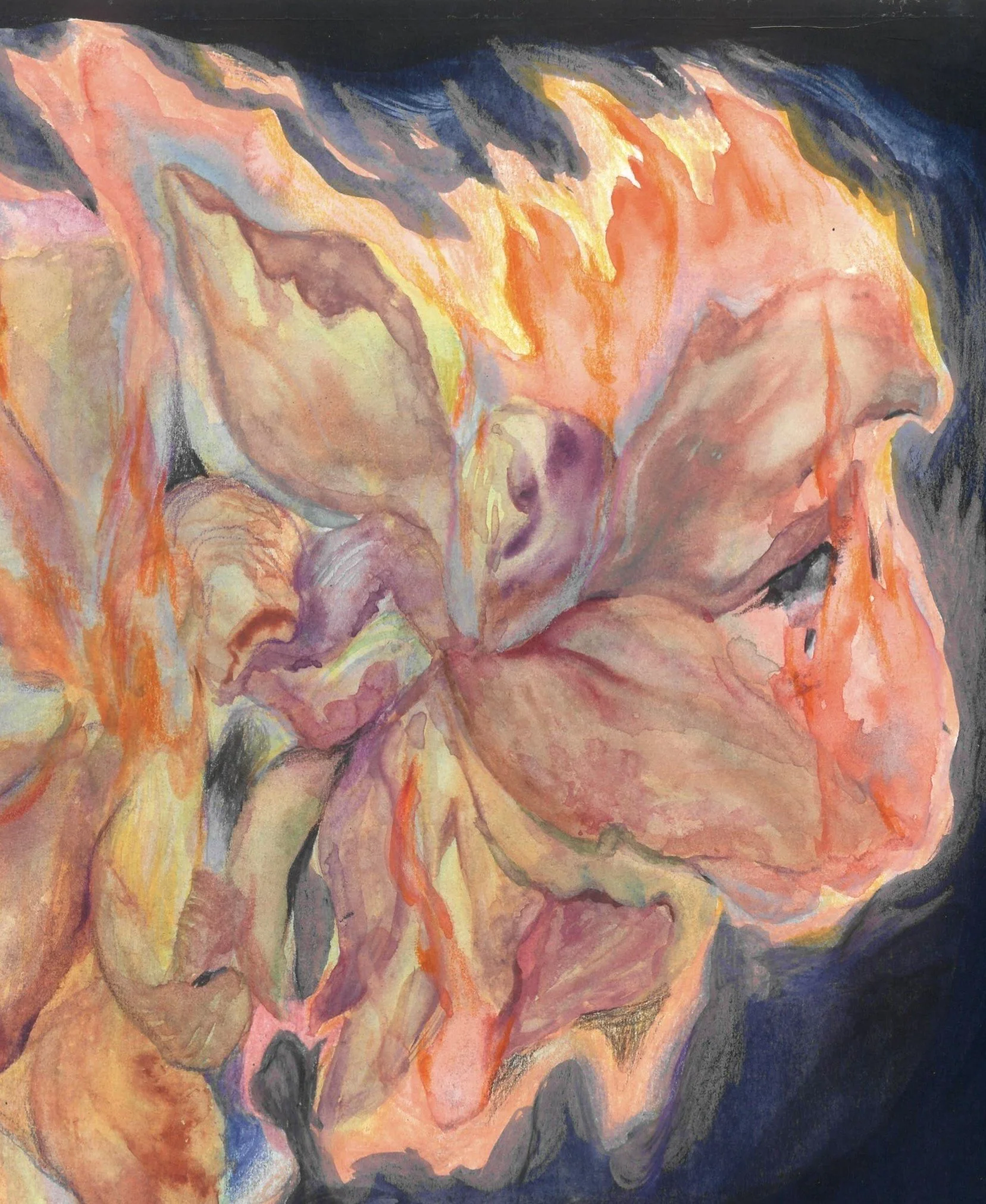
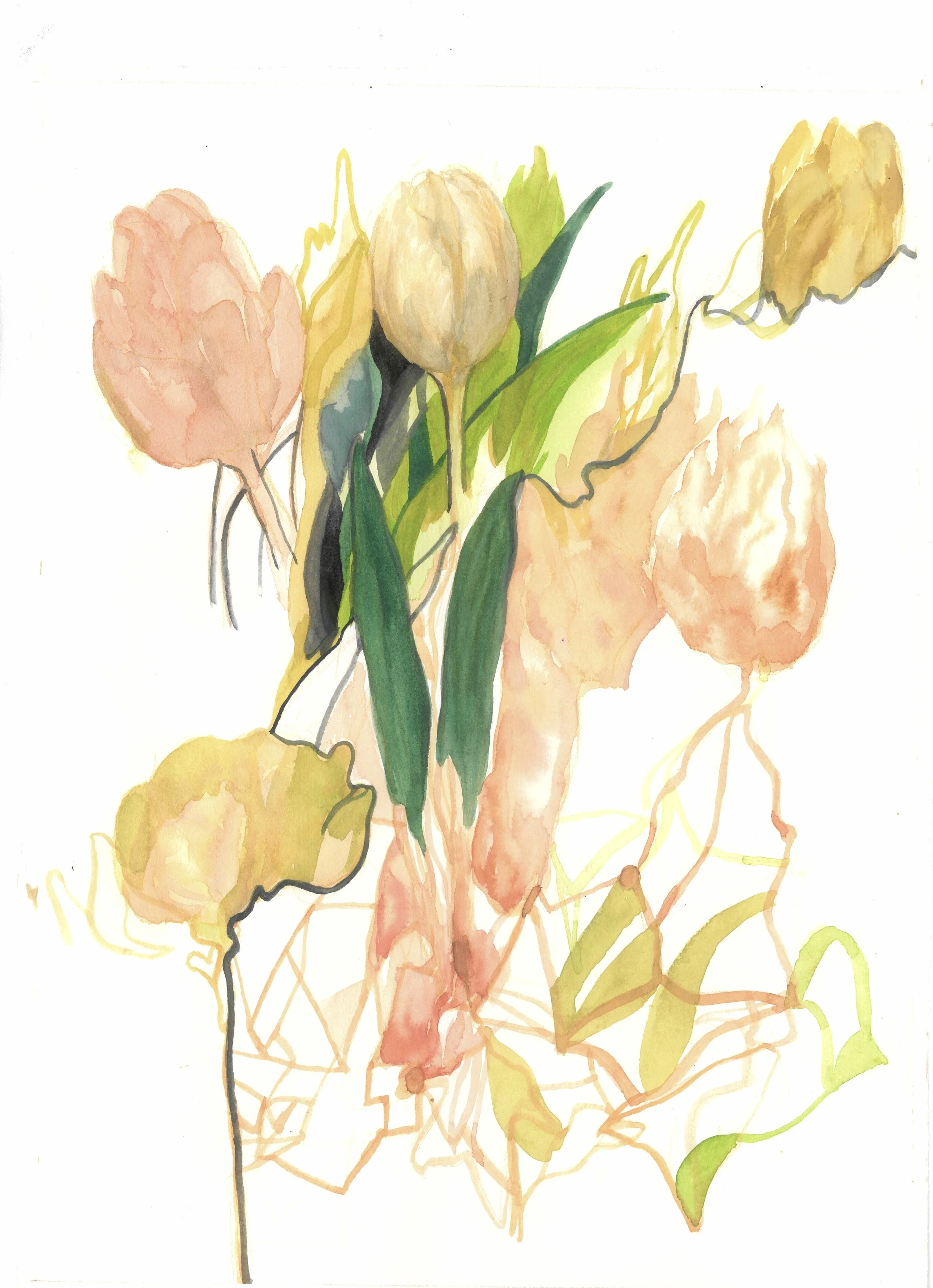
“My work uses flowers as its central subject and focuses on the complete cycle of life — from birth and blossoming to decay. To me, each stage carries equal weight and meaning. Rather than only focusing on the most beautiful or vibrant moment of a flower’s life, I’m more interested in observing flowers as they begin to wither. I believe these moments also deserve to be recorded, noticed, and preserved. I see flowers as a metaphor for people. Although they are small and short-lived, they contain an intense, flame-like energy. Blooming represents the release and burning of energy, while withering feels more like the settling, remaining warmth of that energy after the flame. These two states are not opposites to me, but together form the completeness of life. My practice is rooted more in philosophical exploration than direct narrative. Through flowers, I try to reflect on the fragility and transience of life, as well as the hidden strength that exists within every individual. Just as every small flower carries a powerful vitality, I believe every person also holds an immense inner energy.”
Do you plan your work in advance, or is it improvisation?
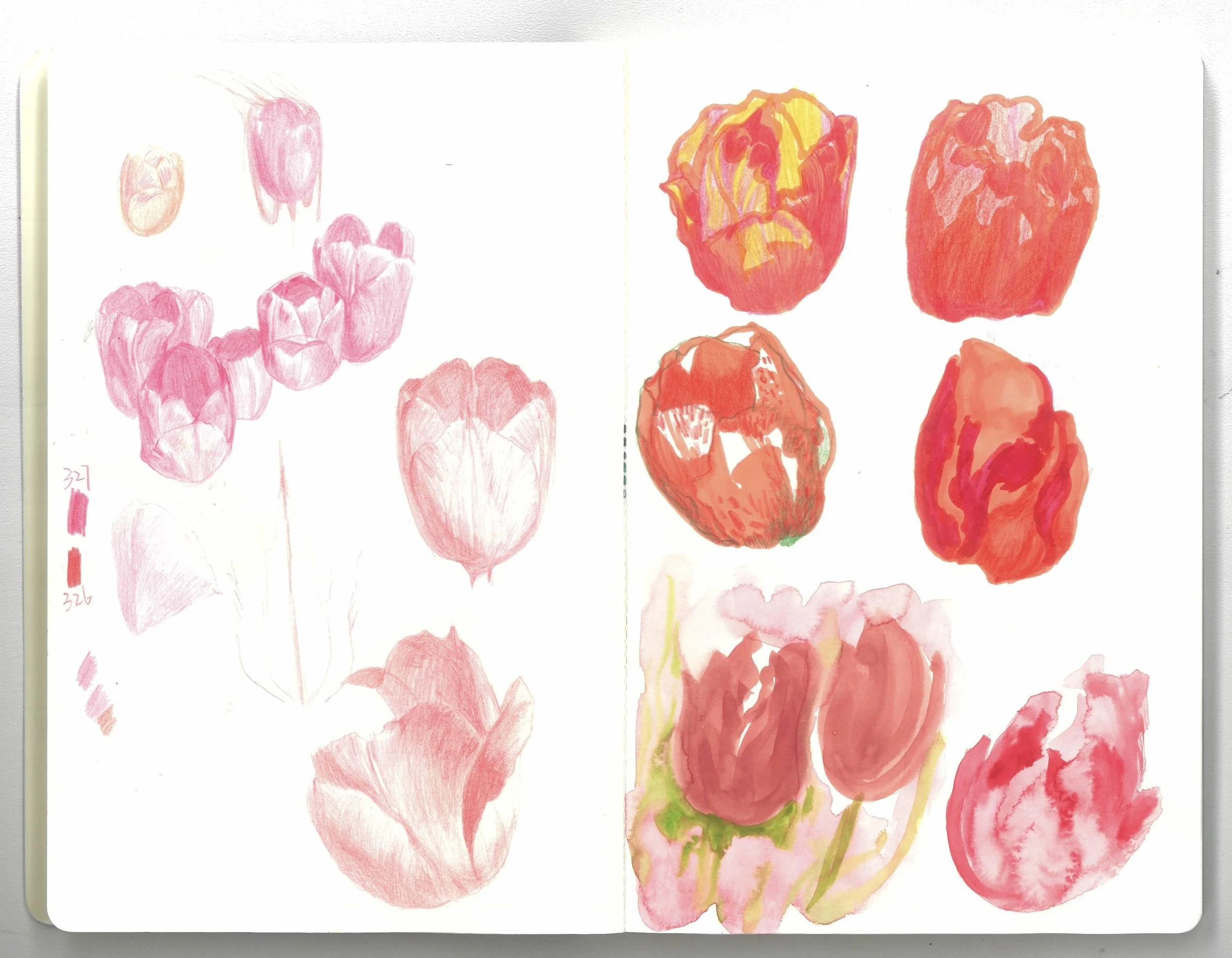
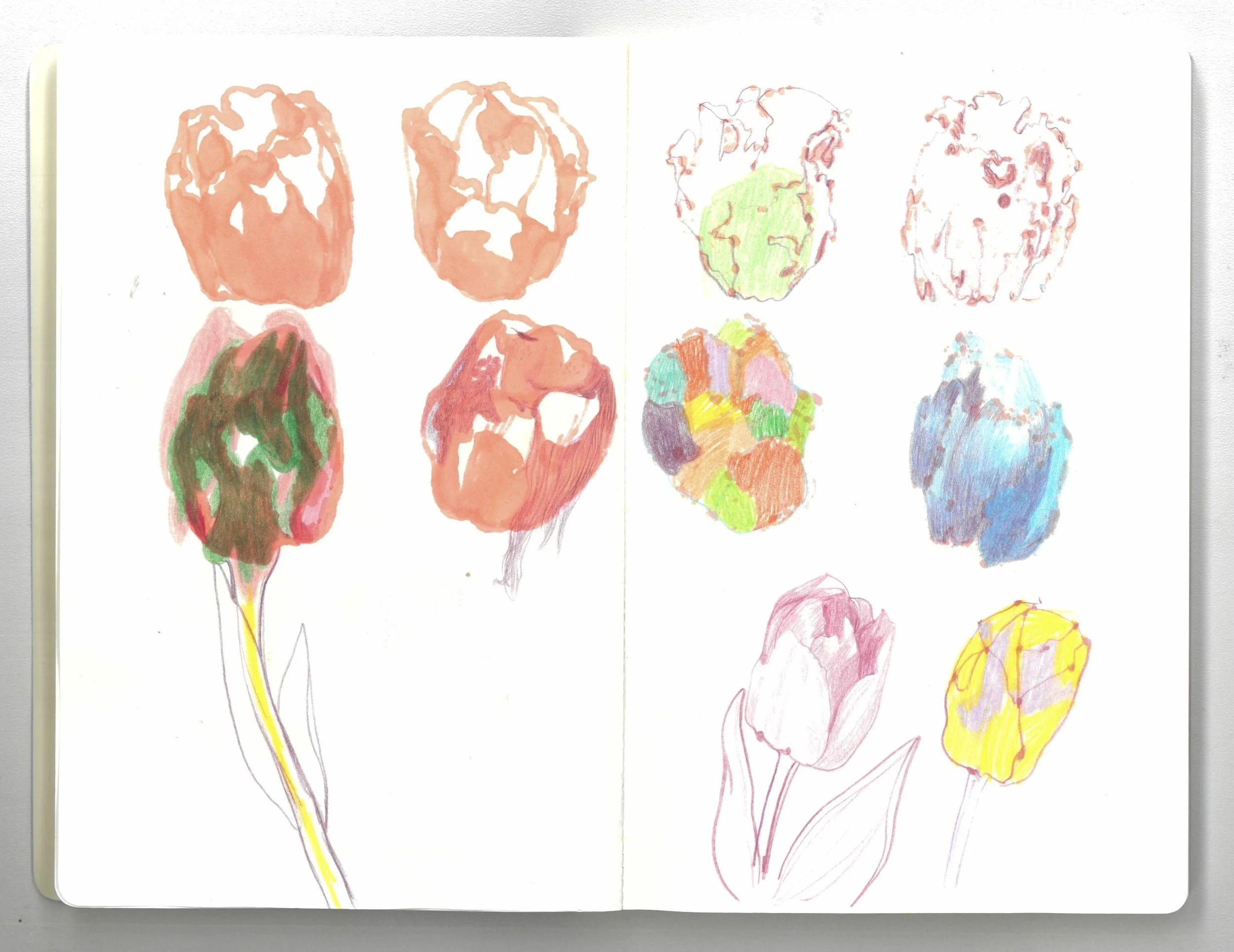
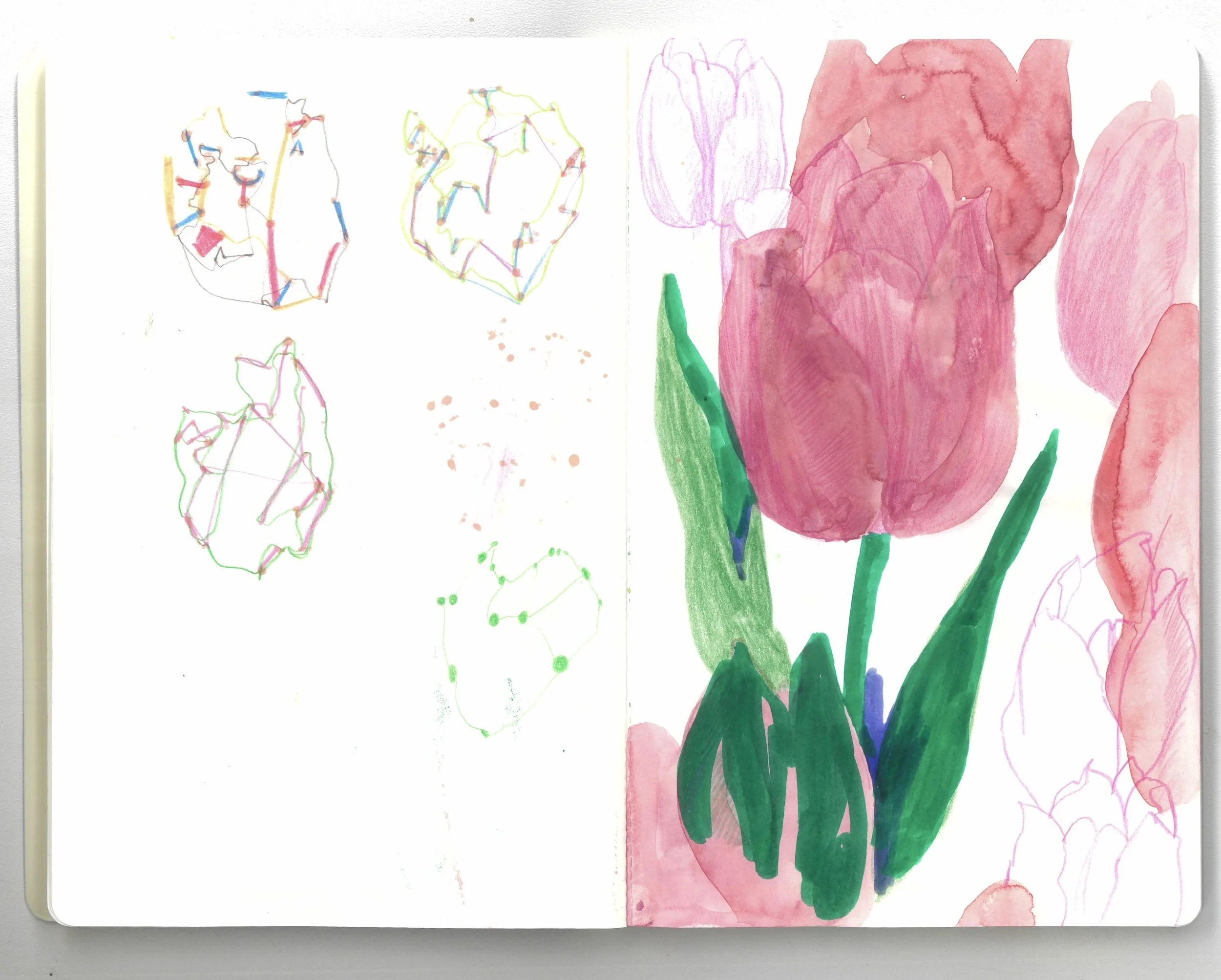
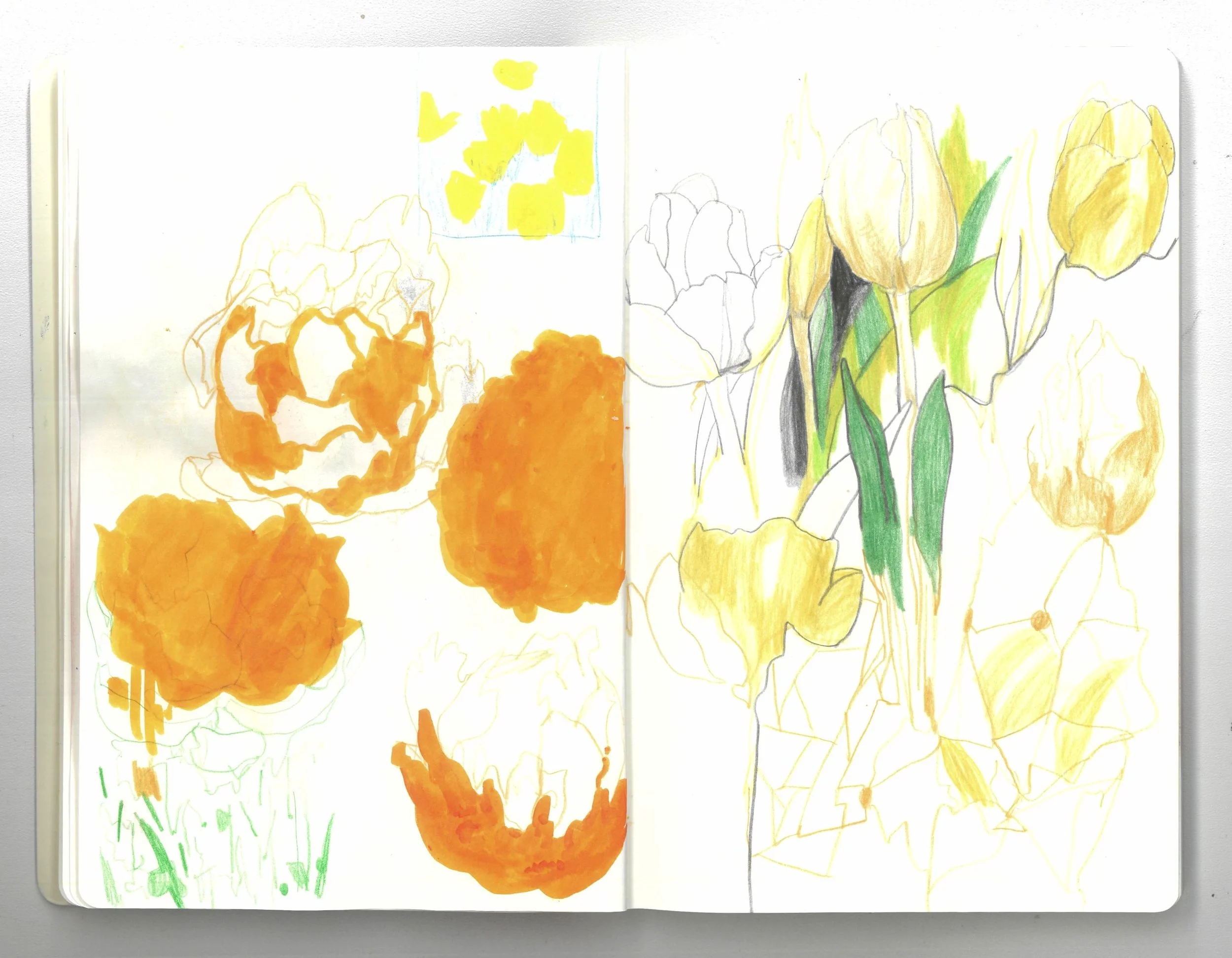
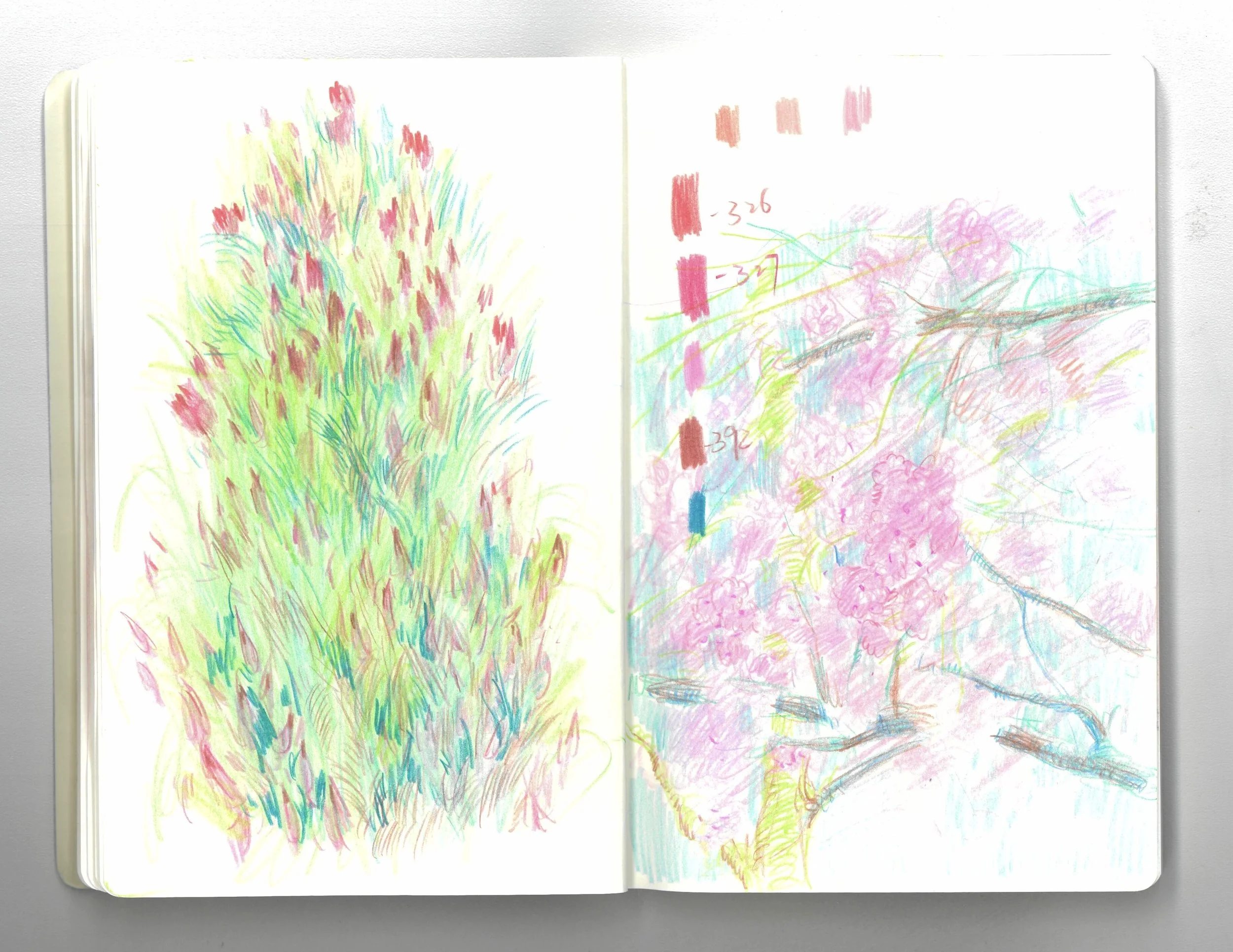
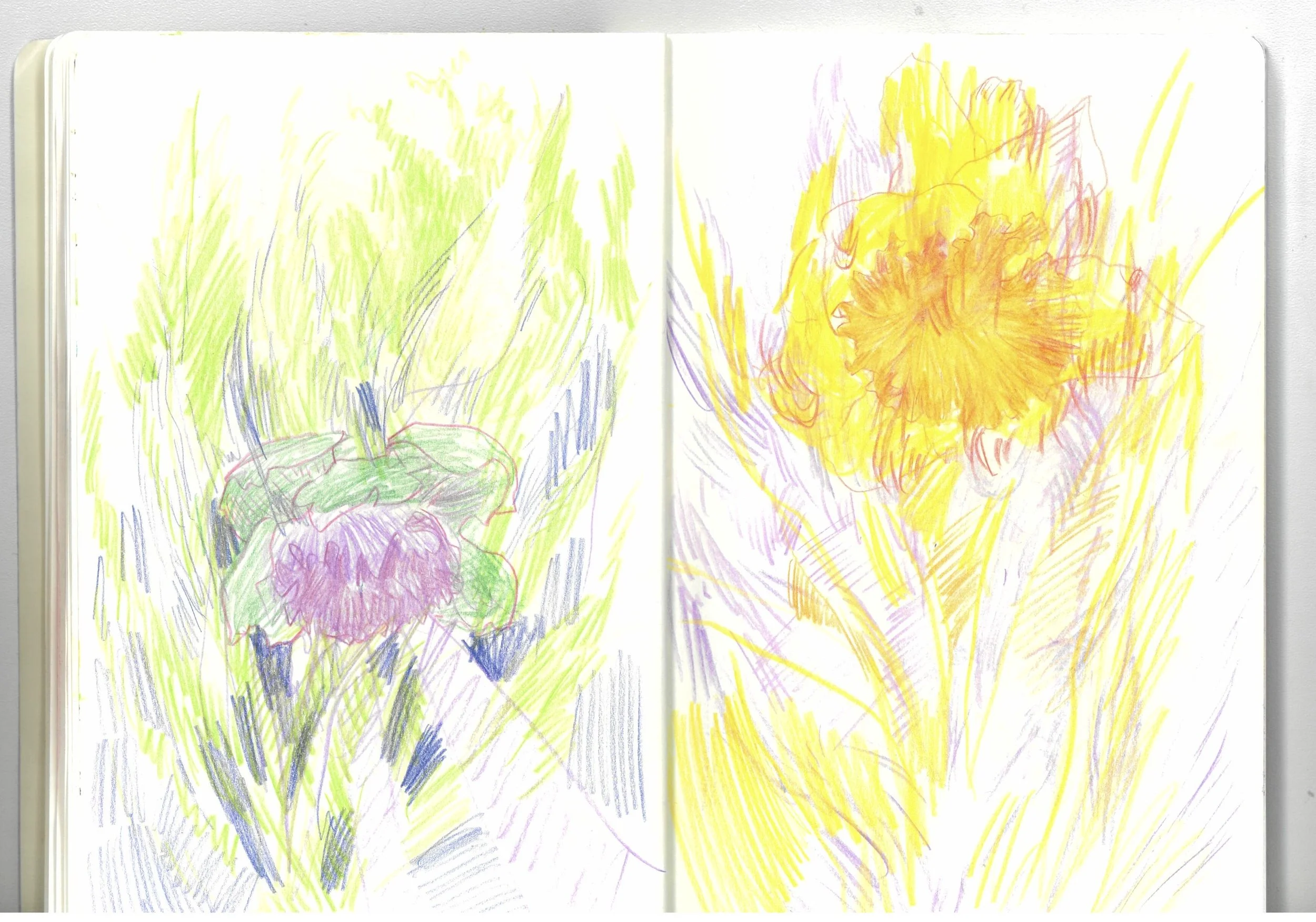
“I’ve always kept a sketchbook dedicated to flowers. It’s not just a place for drawing flowers themselves, but more like an ongoing space for experimentation and exploration. Using flowers as my main subject, I try out different compositions, transformations, and distorted forms, mainly working with coloured pencils and markers to record ideas and visual fragments. Before starting a final piece, I usually return to my sketchbook to look for inspiration. Sometimes a work grows directly from a single page, while other times I combine elements and ideas from different sketches together. At the same time, a large part of my process also relies on improvisation and chance. Most of my finished works are created with watercolour, a medium that naturally contains a strong sense of movement and unpredictability. I enjoy allowing the pigment to spread freely across the paper rather than controlling every detail. Because of this, unexpected textures, shapes, and atmospheres often emerge during the painting process, creating results that differ from the original sketches. I then continue developing the work in response to these accidental forms. For me, making art is not about perfectly reproducing a sketch. It feels more like an ongoing conversation between planning and unpredictability.”
Are there any art world trends you are following?
“Within contemporary art, I’m particularly drawn to organic forms and to discussions surrounding nature, cycles of life, and fragility. Compared to digital media or AI-generated art, I’m more interested in artistic practices that retain traces of the handmade and are able to connect physical sensation and emotional experience with the artwork itself. This is also one of the reasons why I continue to work primarily with watercolour as my main medium. Watercolour carries a strong sense of fluidity and unpredictability. The way pigment spreads and settles on paper feels very similar to processes found in nature — there is an underlying order, but also a constant presence of chance and uncertainty. I really enjoy this interaction between the material and the artist, because it allows me to find a balance between control and surrender during the painting process. I’m also interested in the growing focus on ‘fragility’ within contemporary art. In a highly digitalised and efficiency-driven world, I believe artworks that still contain traces of the hand, the passage of time, and emotional residue are able to reconnect people with something more honest and human. For me, these qualities create a more genuine connection between people, nature, and their own inner emotional experiences.”
What process, materials and techniques do you use to create your artwork?
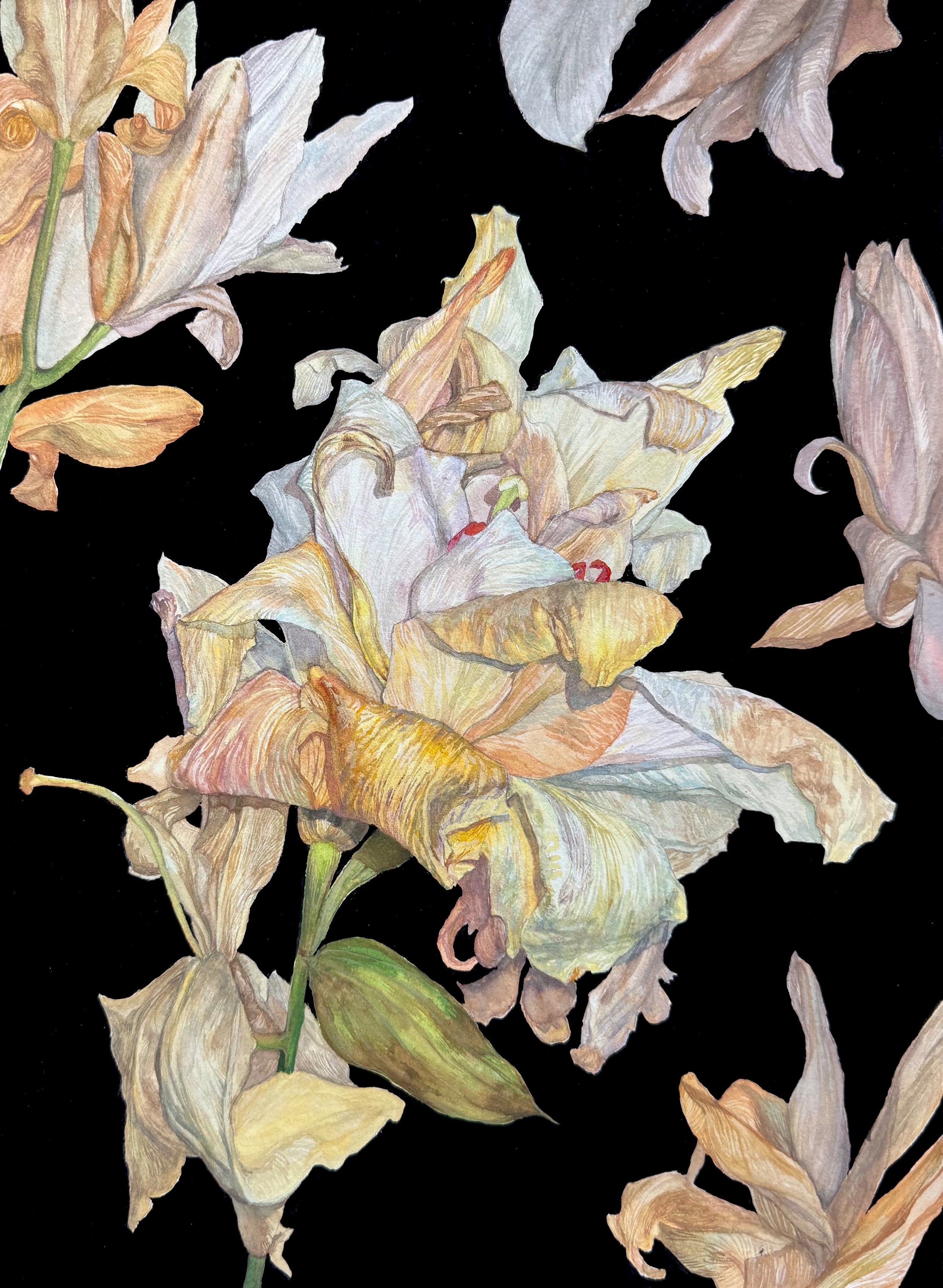
“My creative process usually begins with a sketchbook. I use coloured pencils, markers, and water-based pens to record ideas, compositions, and different visual experiments related to flowers. For me, the sketchbook is not simply a place for drafts, but an ongoing space for collecting and developing thoughts. When creating final works, I primarily use watercolour. The fluidity of watercolour brings a strong sense of unpredictability to my process. As pigment spreads randomly through water, I can never fully predict where it will stop or what kinds of traces it will leave behind. I see this as a kind of secondary creation process, in which new atmospheres and visual possibilities naturally emerge from the image's original structure. At the same time, the fluid nature of watercolour does not mean losing control of the painting. Instead, I constantly move between control and release, guiding the image through adjustments in water, pigment density, and the condition of the paper. Allowing chance and structure to coexist has become an essential part of my practice. When painting dark backgrounds, I often use opaque black watercolour to build large areas of space and atmosphere. I also use the softness and slow diffusion of watercolour to blur the boundaries between the subject and the background, creating a balance between clarity and ambiguity within the image.”
What does your art mean to you?
“Art, for me, is a form of self-healing as well as a window through which I can express my inner world to others. It feels like an emotional anchor in my life, allowing me to communicate my feelings, thoughts, and perceptions through the process of making work. In everyday life, there are always many repetitive and mundane things we have to deal with — sometimes even things we would rather avoid but still have to face. Because of this, art has become a kind of emotional refuge for me. After dealing with the pressures and routines of daily life, I know I can always return to painting, continue expressing myself, and reconnect with my emotions. That alone gives me a strong sense of comfort. At the same time, art also helps me connect with other people. Whenever I share my work online, I feel as though art shortens the distance between myself and others. I’m able to meet people who genuinely connect with my paintings and respond to them emotionally, which makes me realise that art is not only a form of personal expression, but also a way of creating communication and empathy between people. For me, painting also fills emotional and spiritual emptiness. During moments of solitude or uncertainty, creating allows me to return to a state of concentration and emotional fullness. It helps me move away from feelings of emptiness and reconnect with a sense of inner energy. In the coming months, my work will also be exhibited publicly. I hope viewers can enter a different emotional and visual space through my paintings. They might ask themselves questions such as, ‘I never imagined flowers and flames could be combined in this way,’ or ‘What kind of world exists inside this image?’ and ‘What emotions or meanings does it hold?’ I believe these different interpretations from viewers become another language of the artwork itself. Art is never only about the artist’s own expression — it also exists through the viewer’s imagination, emotional response, and personal understanding. That exchange continues to enrich my own inner world as well.”
What’s your favourite artwork and why?
“My favourite artwork is View of Delft by Johannes Vermeer. What attracts me most about this painting is the way it creates a genuine feeling of being inside the scene itself. When I look at it, I can almost feel the cool, clear weather, the moisture in the air, and the quiet atmosphere of the city. The painting not only presents a realistic landscape, but also opens up an endless imaginative space for the viewer. At first, I was drawn to Vermeer’s extraordinary technical precision and realism. But what truly moved me was the sense of clarity, purity, and calmness that the entire painting carries. It does not rely on dramatic emotion, yet it allows the viewer to stay immersed in it for a long time. I think this kind of purity is a very rare and powerful quality. This feeling has deeply influenced my own practice. I hope my work can also retain a sense of quietness and clarity, allowing viewers to momentarily step away from the noise and distractions of everyday life when entering the floral worlds I create. Through my paintings, I want to offer an emotional space that feels sensitive, peaceful, and sincere.”