Interview
Polla Posavec
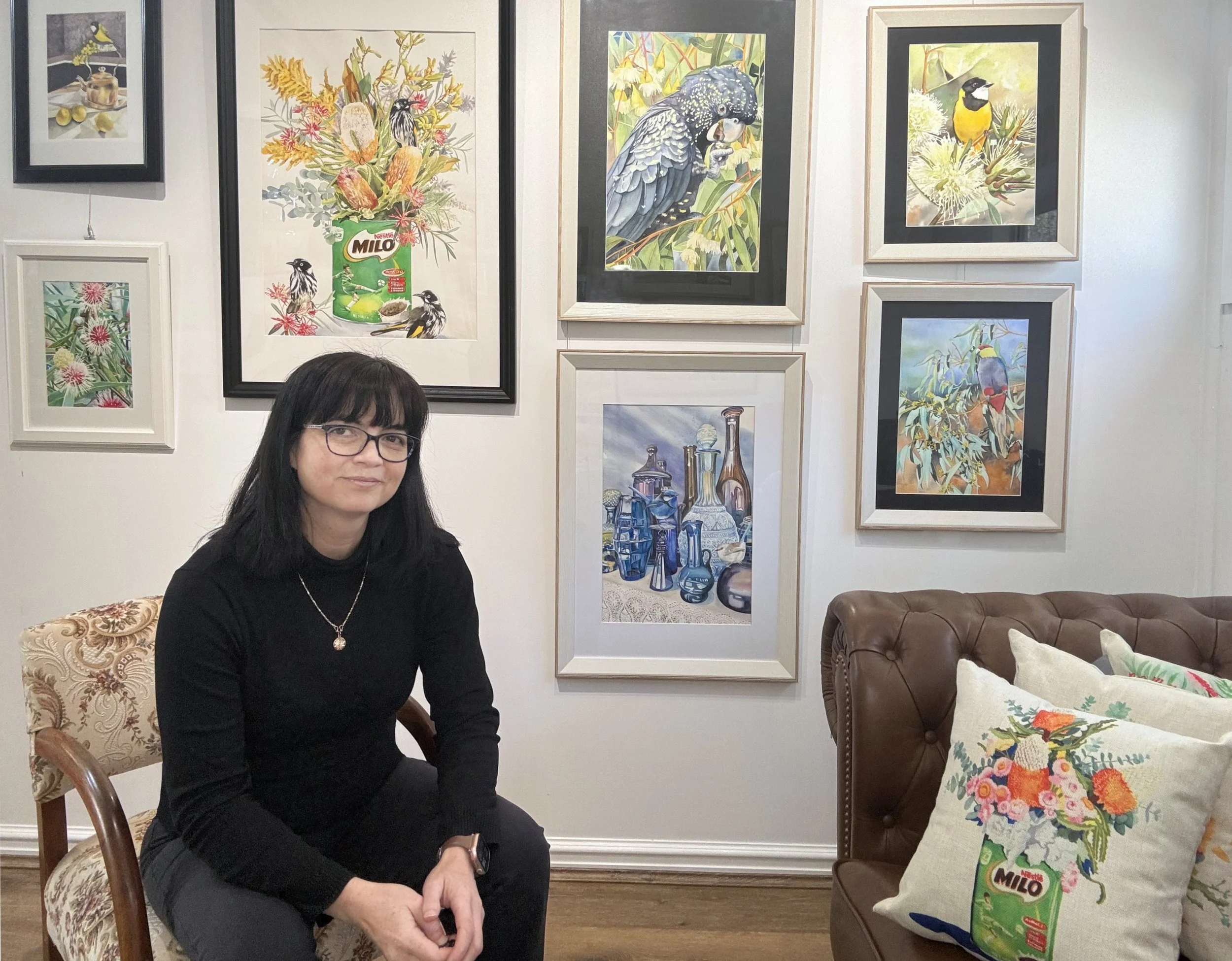
Polla Posavec is a multi-award-winning, professional visual artist living and working in Chittering, a picturesque part of the Wheatbelt in rural Western Australia. A graduate in Fine Arts from the University of Western Australia, she currently specialises in painting representative watercolours inspired by the intimate landscapes of life close up, including portraiture, still life, flora and fauna - particularly that of her region. A member of the Watercolour Society of Western Australia, the Botanical Art Society of Australia and professional member of the National Association for Visual Artists, she enjoys exhibiting regularly as well as sharing her knowledge with others through teaching. Polla is also involved with multiple organisations that encourage community arts development, as she is is passionate about stimulating and integrating the arts into ordinary neighbourhoods, believing it to be an underrated but vital part of the fabric of functional communities.
What is your background and how did you start your journey in the art world?
“I am a lifelong artist, brought up in a creative family. I studied fine art at university and have worked a long career in graphic arts, alongside my personal art practice. I originally worked in acrylics, with a bold, graphic style, but came to embrace watercolour after a personal tragedy. The death of my husband at age 31, just a few months after the birth of our first child saw me stop painting for around a year. When I came back to my practice as part of my healing journey, I chose watercolour, a challenging, expressive medium which I have since fully embraced, along with subjects that explore and celebrate nature, life, and the simple beauty of the ordinary. I now work fully in my art practice, based in my studio in Chittering, in the rural Wheatbelt area of Western Australia, just beyond the urban fringes. I also enjoy teaching and sharing the creative process with others.”
What inspires you?
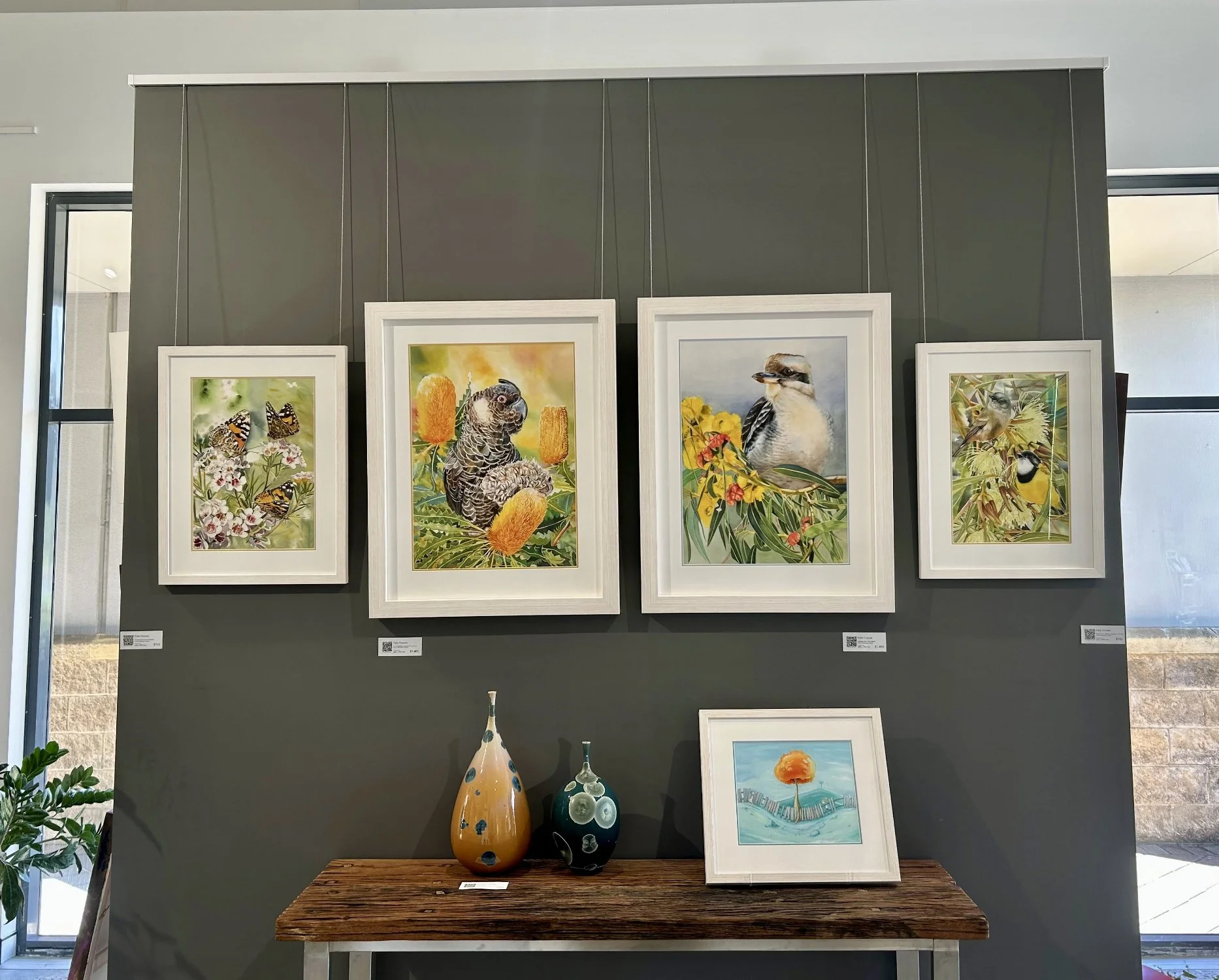
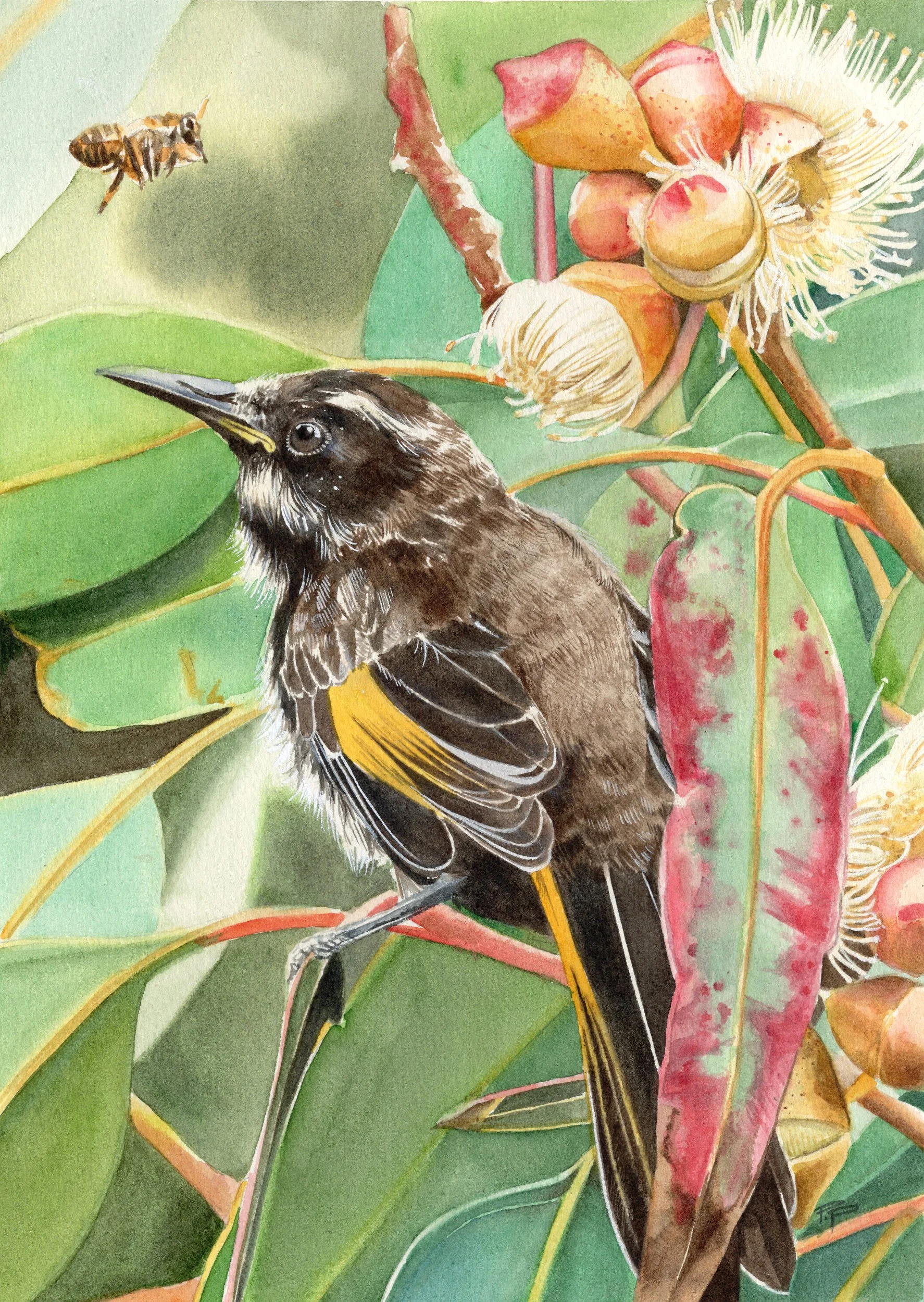
“I'm endlessly inspired by nature. Where I live, I am lucky enough to be immersed in the Australian bush where the flora and fauna is particularly unique. I enjoy drawing attention to small, unassuming and often-overlooked species, many of which are rare and endangered. I like to think I can not only celebrate them, but encourage awareness and conservation. I'm also enchanted by the quiet beauty of ‘life close up.’ My subjects are usually observed at close range and in delicate detail. I find still life particularly engaging, where I am able to shown something special found amongst ordinary objects - whether it's the fall of light, curious reflections or the stories these objects can be arranged to tell.”
What themes do you pursue? Is there an underlying message in your work?
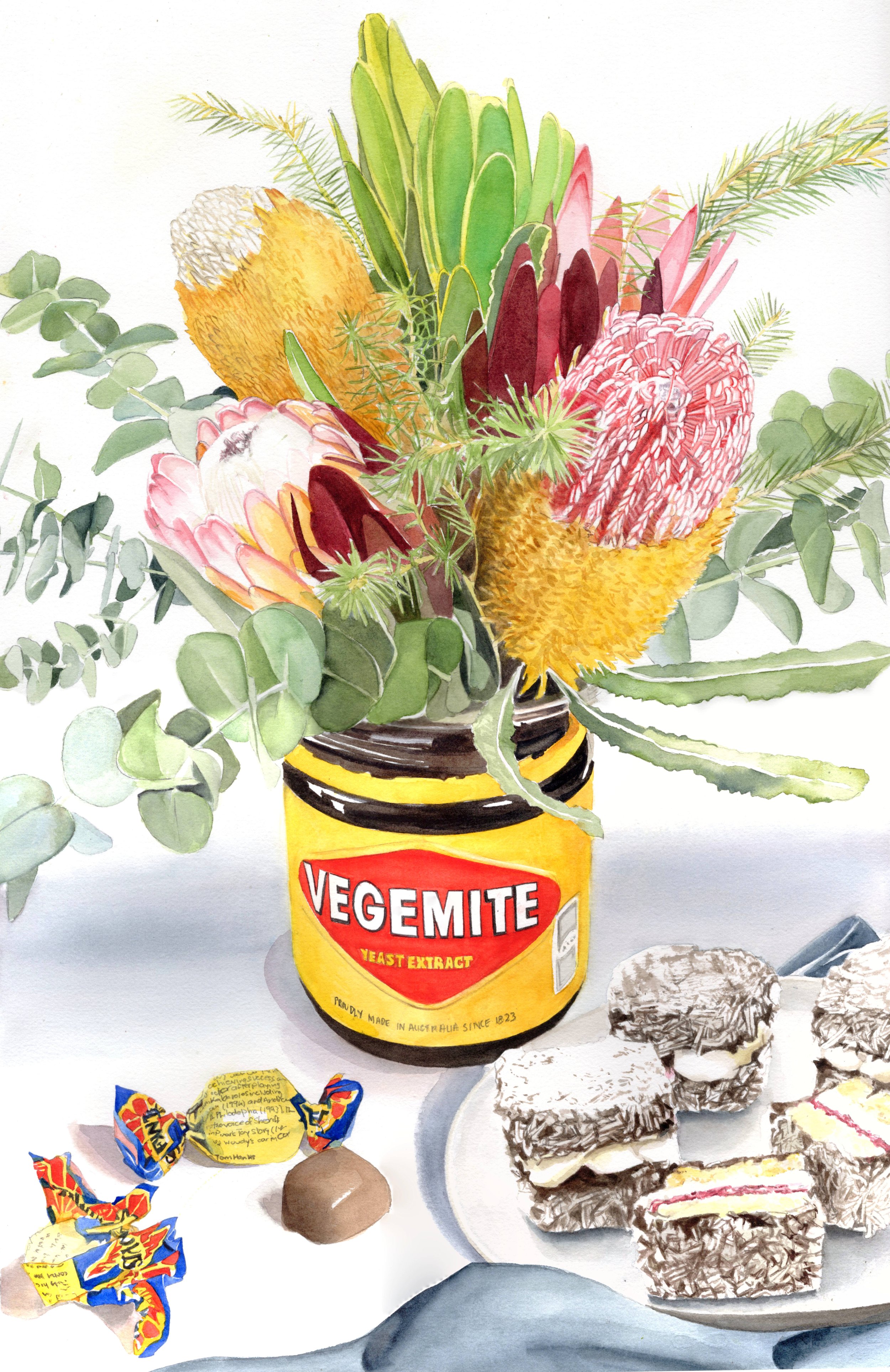
“I enjoy exploring small series with different themes. Nostalgia is a recurring theme, for me. I enjoy exploring the way particular objects trigger emotion through associated memory. My series depicting Australian birds and flowers alongside iconic Australian brands (such as Vegemite) for example, has been a wonderful experience to create, as it has resulted in many conversations with viewers regarding personal childhood memories, travels and remembered interactions. Education regarding Australian native flora and fauna is also a repeating theme in my work. My deliberate accuracy and honest representation serves to share the spirit and uniqueness of these species. Through drawing attention to these beautiful species I hope to help people understand their importance, and the ever increasing need to protect them in the face of environmental change.”
How would you describe your work?
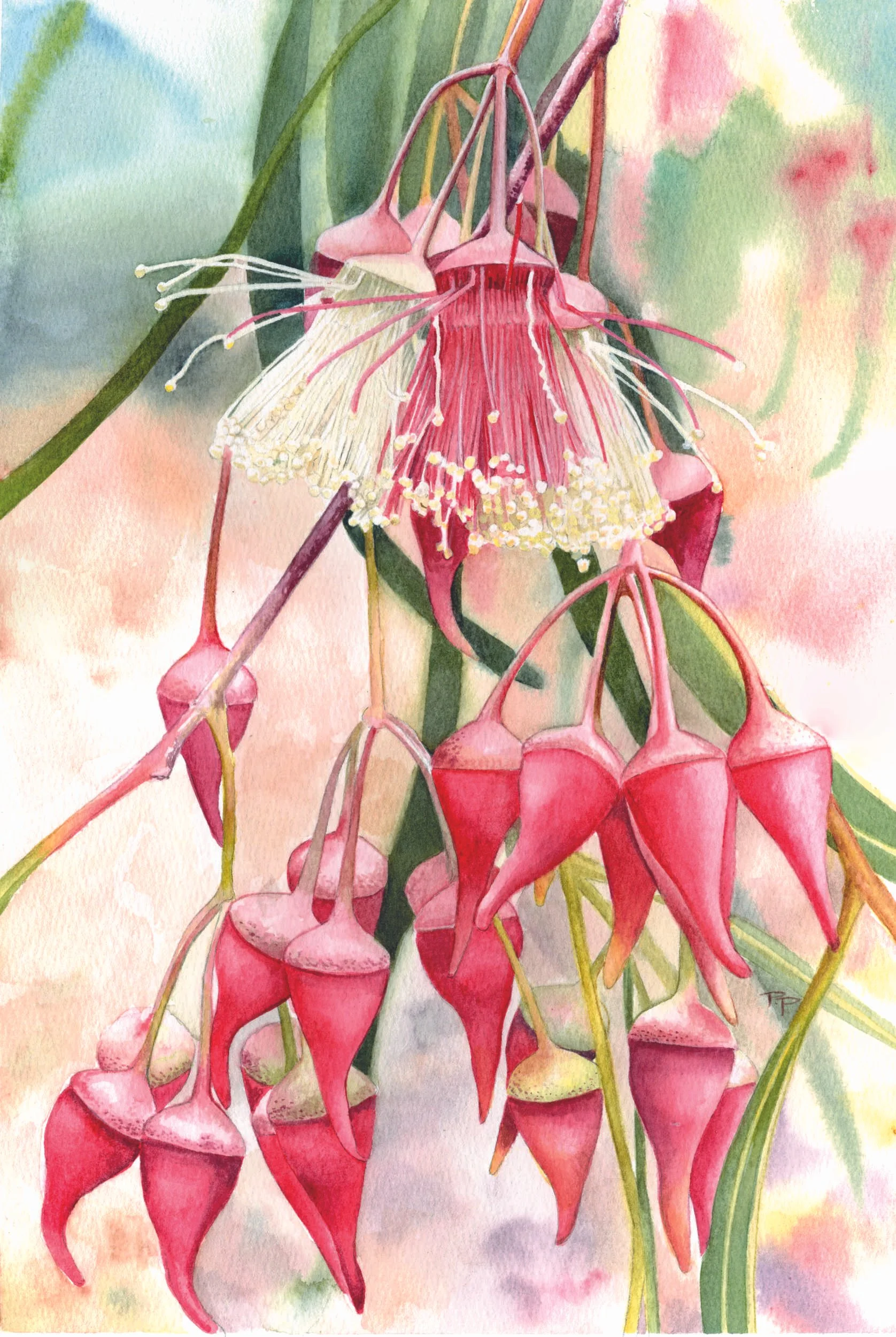
“My work is rooted in observation and a deep appreciation for the quiet beauty of the everyday world. I paint watercolour with a finely detailed approach, but never in a washed out way. I love bold colour and retaining the naturally expressive nature of the watercolour medium within my largely realistic style.”
Which artists influence you most?
“I can find inspiration in art from a huge variety of times and places. Different artists can offer us insight that can inform many different areas of our practice. For example, I appreciate Claes Oldenburg for his dedication to the celebration of the ordinary, the artists of the Australian Heidelburg School for their observation and understanding of Australian colour, and contemporary artist Jung Hunsung for his mastery and expression of the watercolour medium with strong colour and realism.”
What is your creative process like?
“I enjoy spending time in nature collecting objects and taking photographs. As an experienced graphic designer I often utilise my computer to try out different compositions until the balance is right. An elaborate under drawing proceeds painting, to ensure all the details of the image are correct. I then paint mostly in my studio, but the nature of watercolour means that I can also extend my practice to wherever I am. A lot of my work is made in front of the TV in the evening, and can also travel with me to work with other creatives in shared environments. The nature of my work is fairly involved, so a controlled indoor environment, preferably with good music or podcasts, creates the best results!”
What is an artist’s role in society and how do you see that evolving?
“Artists are the creators of beauty - the educators, storyteller, innovators and agents of social change. We can reflect, shape and change society. Artists have always held this role, but in the future I can see how real artists will protect us from the relentless flattening of creativity we're seeing from the proliferation of AI art and the nature of our increasingly screen-heavy society. We will not only be the makers of objects, but the makers of meaning, connection and attention.”
Have you had any noteworthy exhibitions you'd like to share?
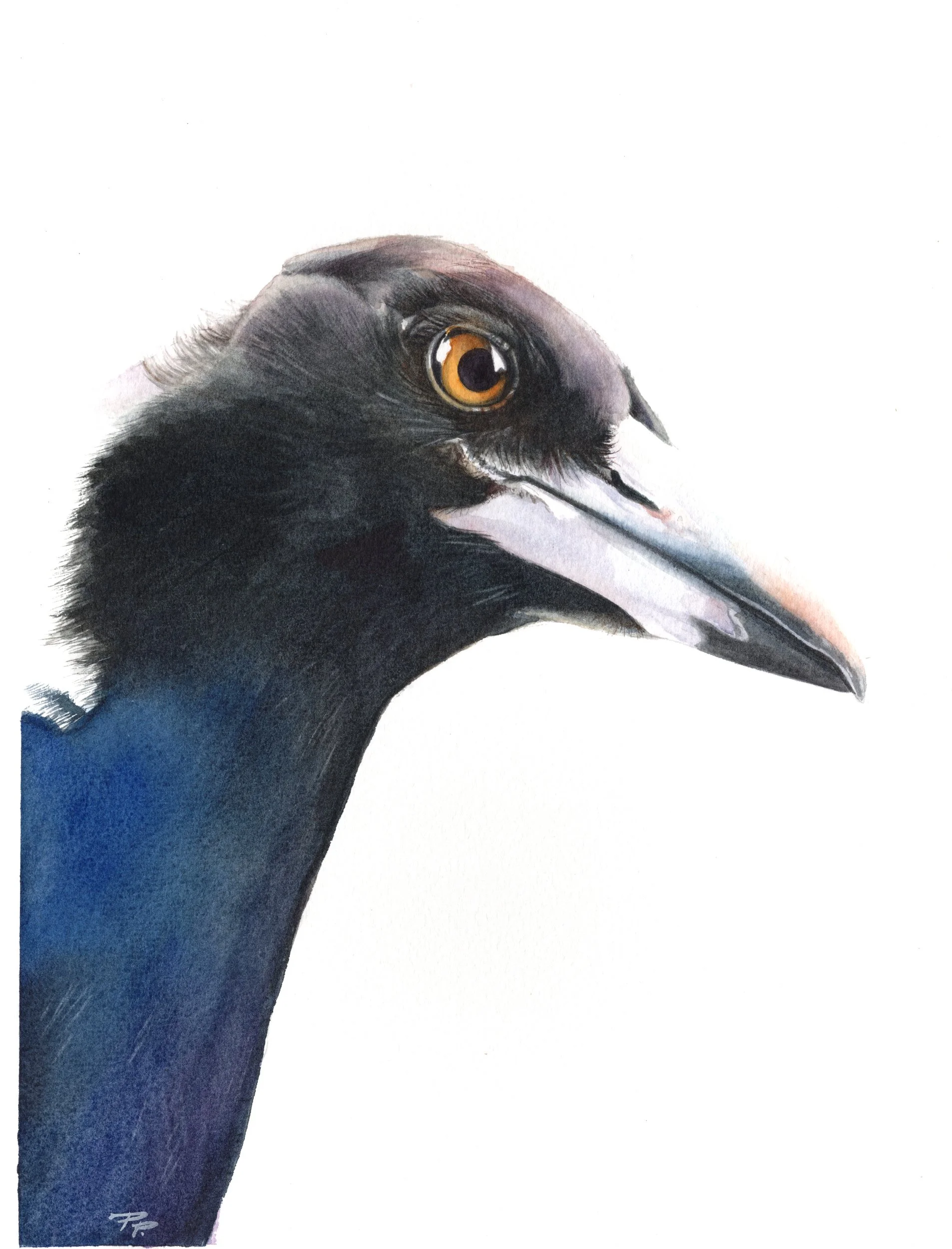
“This year, I am particularly proud of my involvement with the Watercolour Society of Western Australia's International Exhibition where I was able to exhibit alongside watercolour artists from around Australia and the world. My work also travelled to Gdansk, Poland for the 29th International ECWS Symposium Exhibition 2026. I was also lucky enough to win awards at the Watercolour Society of Western Australia's Annual Awards Exhibition and in the International Women in Watercolour Exhibition.”