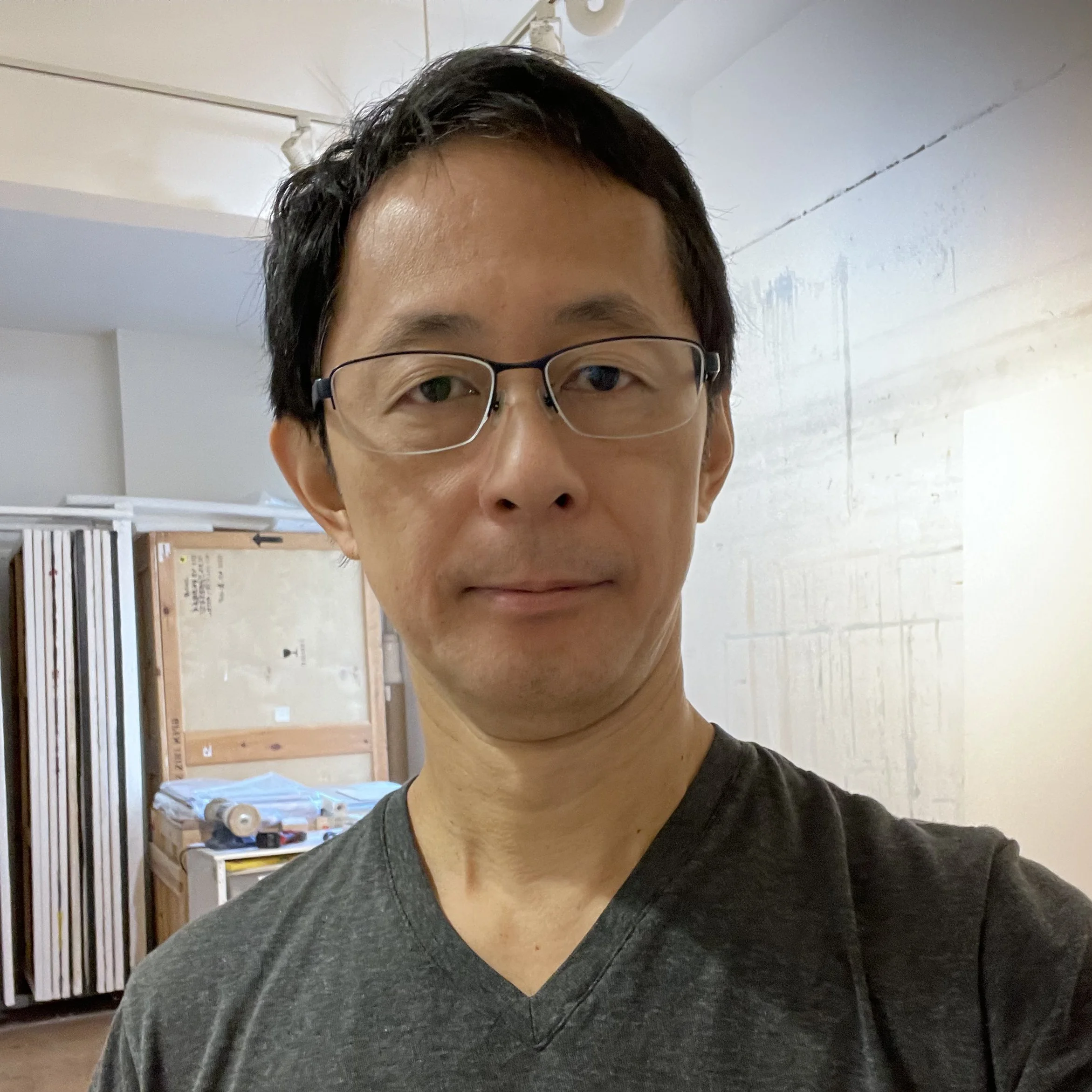
Oscar Oiwa
Oscar Oiwa was born in São Paulo, Brazil. He received his B.F.A. (1989) from the School of Architecture and Urbanism, São Paulo University. He experienced contemporary art during this time in nearby galleries and became an assistant at the São Paulo Art Biennial. Oiwa held his first solo exhibition while he was still in college and thereafter participated in the 21st São Paulo Art Biennial (1991). He has received several awards including Pollock-Krasner Foundation grants, John Simon Guggenheim Memorial Foundation Fellowship (2001) and Asian Cultural Council in 2002. Recently (2019) receive the Medal of Honor from His Imperial Majesty, the Emperor of Japan. He currently lives and works in New York City.
His works has been shown widely throughout the United States, South America, Asia, and Europe., including solo exhibitions in institutions like: Museum of Contemporary Art Tokyo (2007), Japan House São Paulo (2019) , Kanazawa 21st Century Museum of Contemporary Art (2019), California Southern University Pacific Asia Museum(2020), Maison de la culture du Japon in Paris (2020), among others. Selected public collections: The National Museum of Modern Art, Tokyo (Tokyo), Museum of Contemporary Art Tokyo (Tokyo), Mori Art Museum (Tokyo), Yokohama Museum of Art (Kanagawa), Toyota Municipal Museum(Aichi), Hiroshima City Museum of Contemporary Art(Hiroshima), Hyogo Prefectural Museum of Art(Hyogo), 21st Century Museum of Contemporary Art, Kanazawa(Ishikawa), Utsunomiya Museum of Art (Tochigi), Phoenix Museum of Art(Arizona), Arizona State University Art Museum (Arizona), California Southern University Pacific Asia Museum, University of São Paulo Museum of Contemporary Art (São Paulo).
Oscar’s work was featured in Times Square, New York as part of Artistcloseup’s international open call for visual artists.
What is your background and how did you start your journey in the art world?
“I was born and raised in São Paulo, Brazil. My journey into the art world began while studying Art History in college and working as an assistant to international artists at the São Paulo Biennial in the 1990s. It was an exciting and unforgettable time. I had a lot of fun, meeting and partying with artists who have since become legendary figures in the art world, such as Keith Haring, Anselm Kiefer, and many others.”
What does your work aim to say? Does it comment on any current social or political issues?
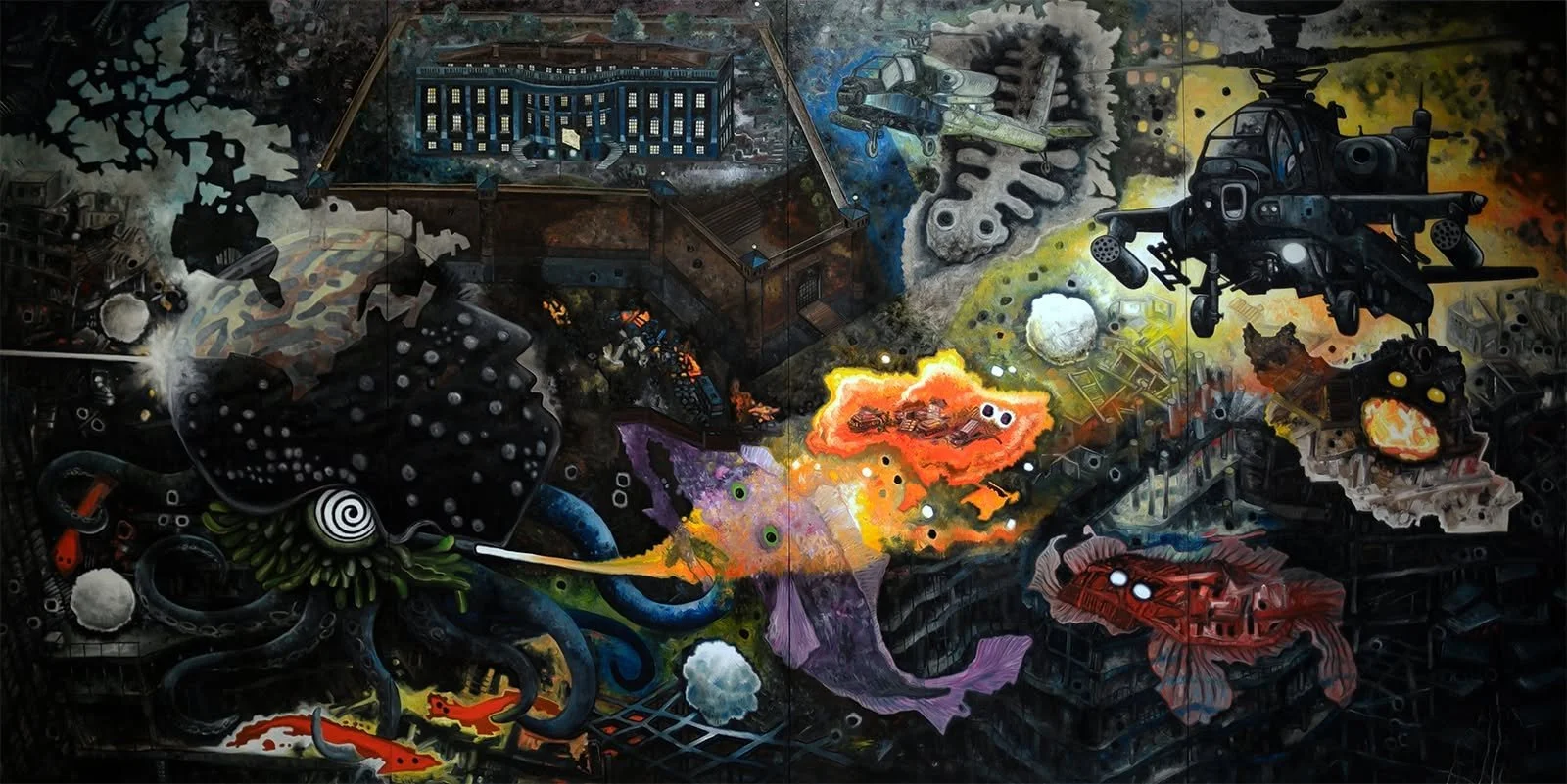
“My art comes from my everyday life. Of course, my personal experiences and the history of humanity are part of my background and influence my work. But I believe creativity is something that happens in our brains, through the process of connecting different pieces of information, experiences, and ideas in unexpected ways. For example, the recently painting ‘No King,’ portrays a world suspended between dream and nightmare. Within the painting are nine goblin-like figures, each representing a different country or geopolitical region—including Iran, Venezuela, Cuba, Gaza, Greenland, Mexico, and Ukraine. Together, they appear to be confronting an imaginary king. Rather than depicting a specific political event, the painting reflects the instability, tensions, and shifting power dynamics of today's world through symbolic imagery.”
Do you plan your work in advance, or is it improvisation?
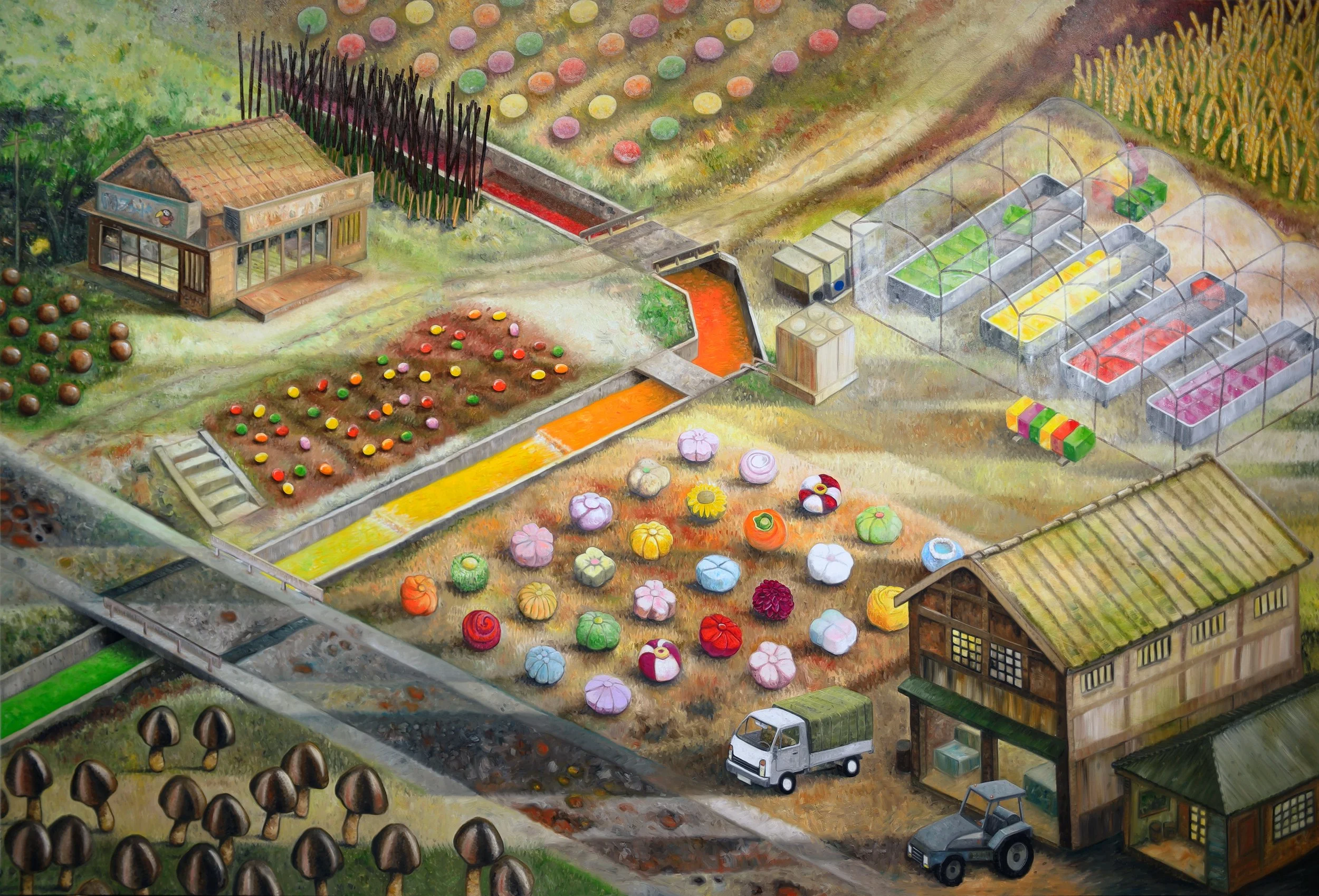
“Before I start anything on a blank canvas, I spend some time thinking about and researching content. I read texts, watch movies, and visit sites to get a better sense of what I am to depict. Following this, I complete a visual search: I take inspiration from media materials, images online, photos, publications, and of course my own memory and imagination. I also like to look at old paintings, and learn from both Oriental and Occidental works. In this way, I layer thoughts to create my image.”
What process, materials and techniques do you use to create your artwork?
“Despite the fact that I have never been in an art school, since I was very young I always have a craftiness in work with several medias. I learned myself how to work with black and white drawings, watercolor and later oil painting. I did also several three dimensional works like jewelry or public sculptures using materials like bronze, stainless, iron or even silver or gold. Usually, I first have an idea and I start to research how I can made it. But I will be honest, mastering the technical part is not easy; I have made many mistakes in my life.”
What does your art mean to you?
“In my life, I have visited many museum around the world and I like to see what other people did in other culture and context. However I think my main inspiration come from my daily life. So many things happen at same time in this World and many factors directly affect my life. I love to see old stuff, but to be honest, I am not too attracted to contemporary art because I work in this field. In my free time, I prefer to watch movies.”
What’s your favourite artwork and why?
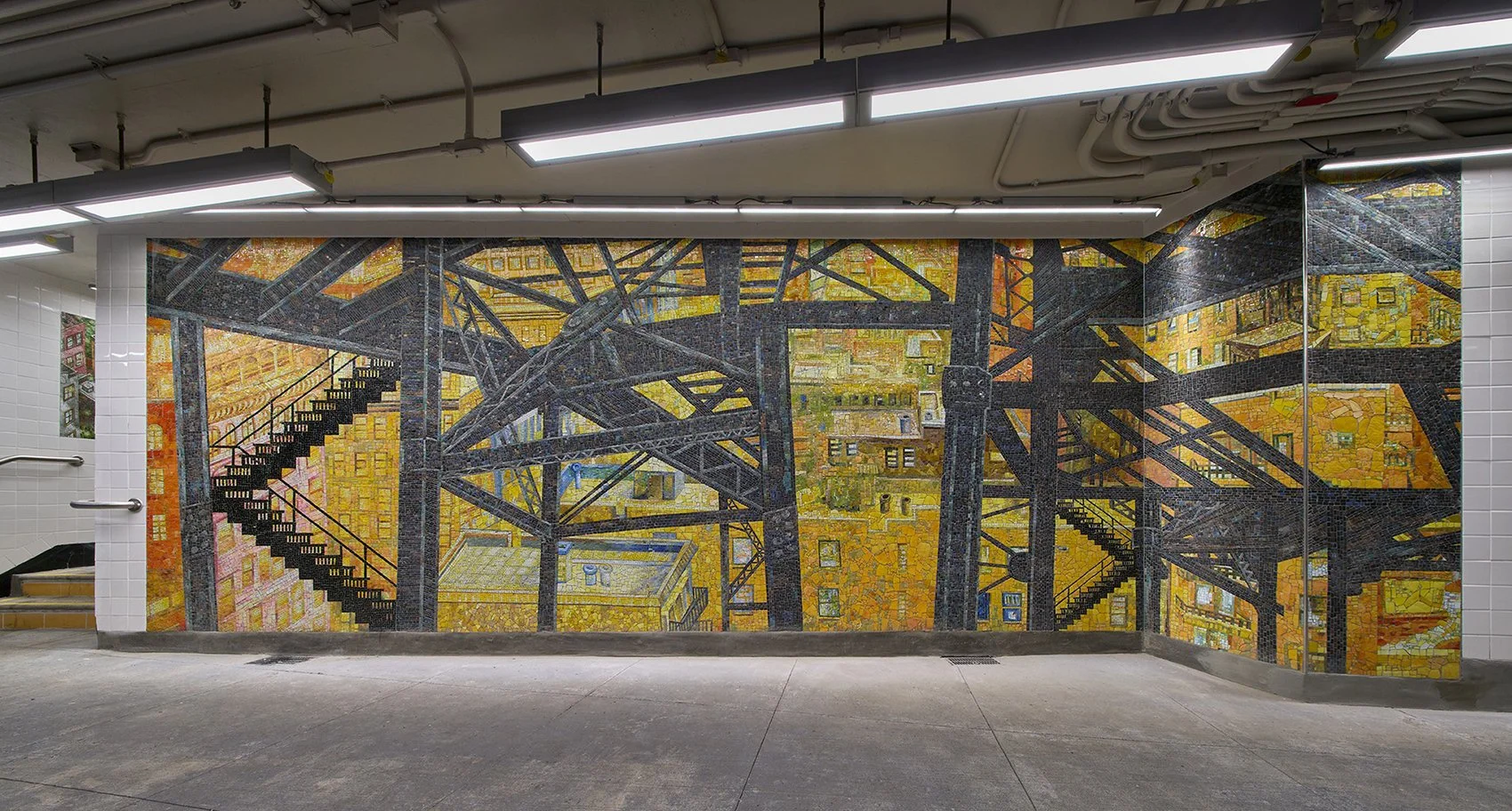
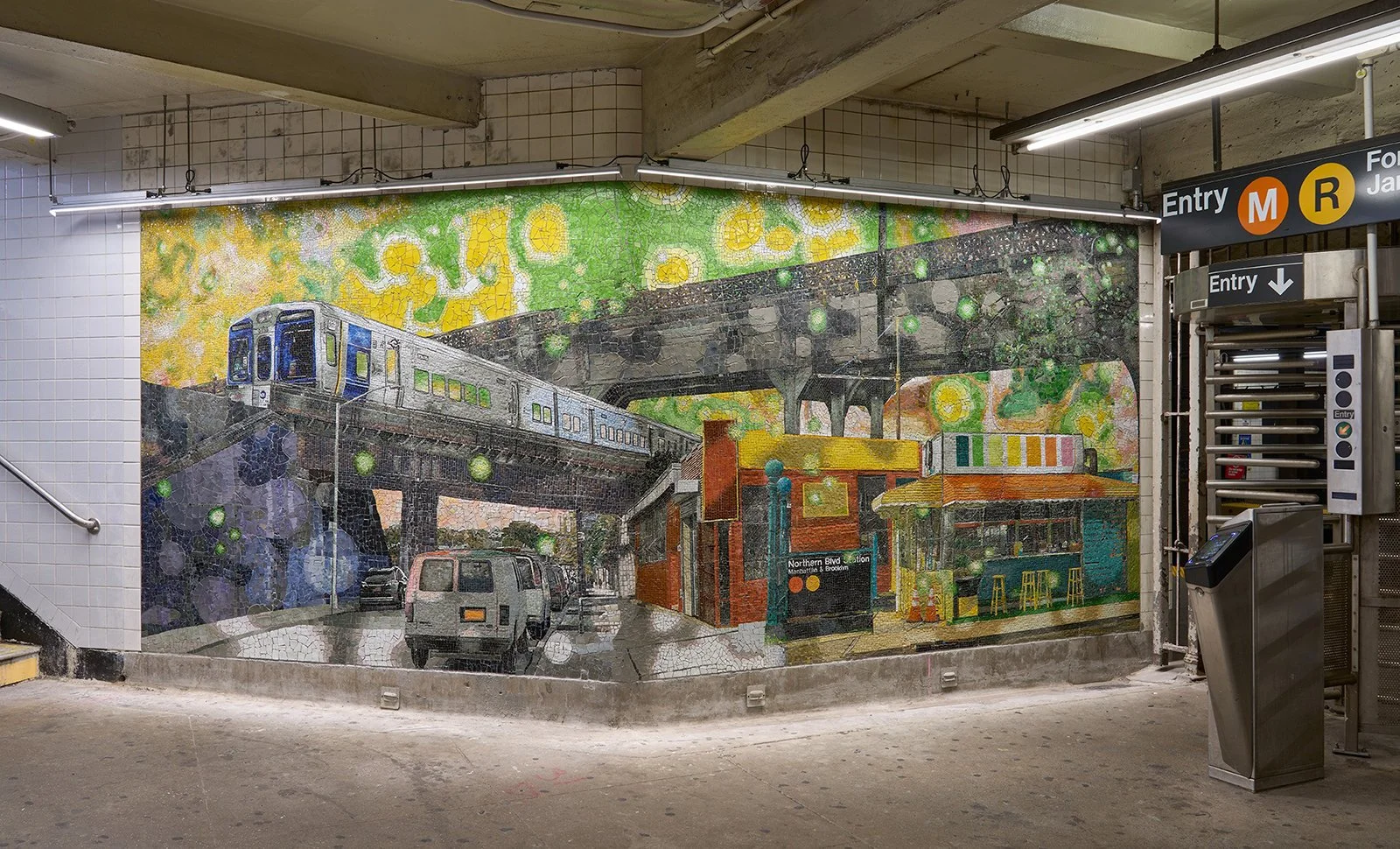
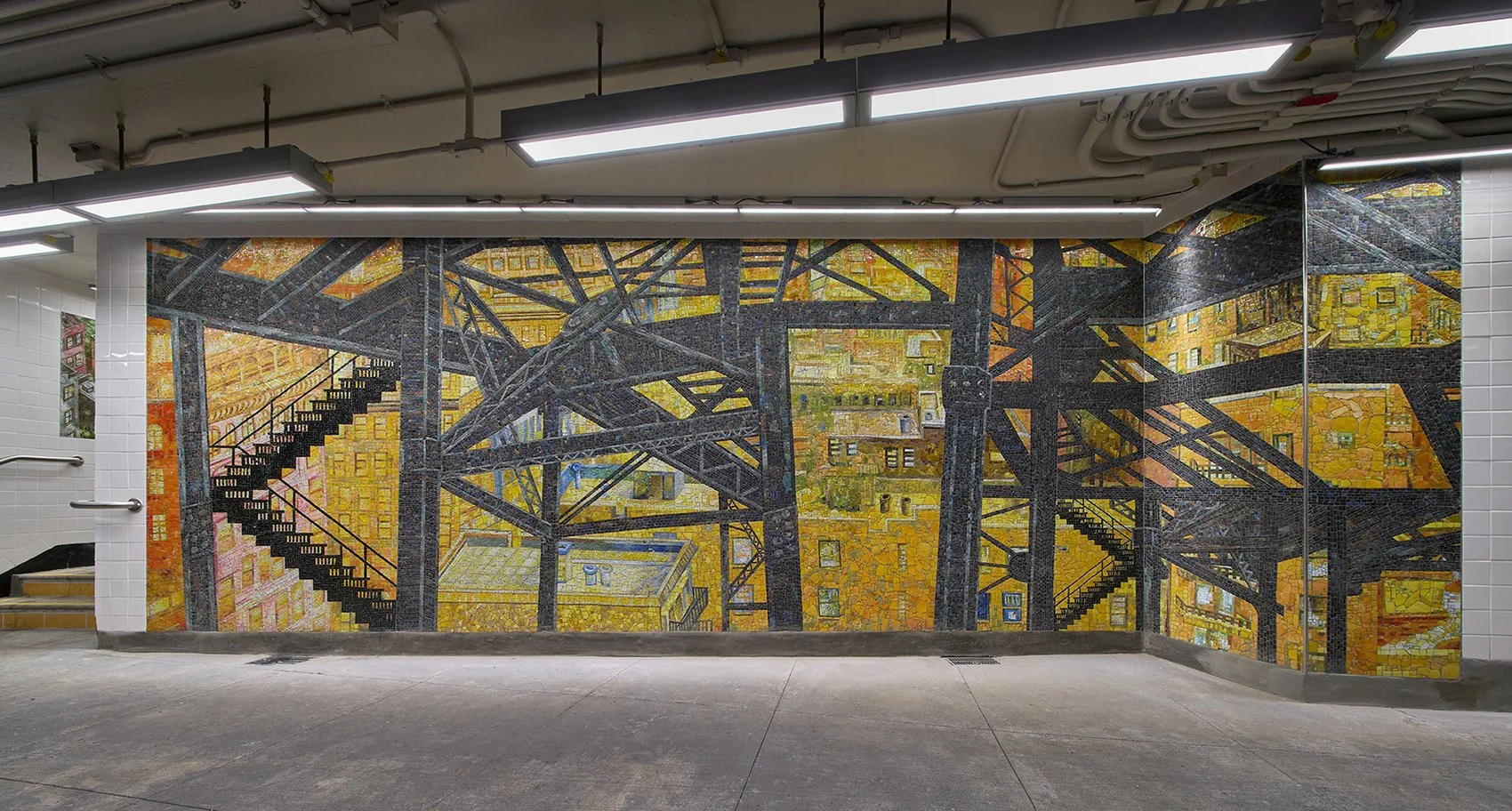
“Last year I finished a Commission work for MTA, New York Subway. The Woodside Window project was conceived to reconnect the underground subway environment with the neighborhood above. Subways, by their nature, separate commuters from the urban landscape; we travel beneath the surface, unaware of the stories and scenery just outside. My intention was to transform the entrance of Northern Boulevard Station into an imaginary window—a visual portal through which passengers can rediscover the character and history of the local community. I began with an extensive study of the neighborhood—its historical development, social and architectural evolution, and current zoning patterns. I also gathered visual references, including archival maps, historical photographs, and images of the contemporary cityscape. The challenge was to translate this research into a vibrant, enduring artwork suitable for the demands of a public transit environment. I chose glass mosaic for its resilience, low maintenance, and inherent luminosity. The mural was fabricated in Mexico by a workshop renowned for its craftsmanship, drawing upon the country’s deep tradition of muralism.”