Interview
Nolan Flynn
Nolan’s passion for art began early, nurtured by a creative upbringing with parents who were educators; one a high school art teacher and practicing artist, the other a history teacher. This supportive environment fostered his artistic curiosity and exploration from a young age, shaping his journey as an artist. After earning his undergraduate degree in painting, Nolan established a studio at the Park Trades Center, a thriving community of over 200 local artists. Immersed in this vibrant environment, he moved beyond traditional figurative work to delve into abstraction, exploring structural elements and developing a distinct artistic voice. Inspired by influential artists such as Cy Twombly, Joseph Beuys, Jean-Michel Basquiat, and Christo, Nolan began integrating a codified visual language into his work, using sketches and notes to construct narratives and engage deeply with the canvas.
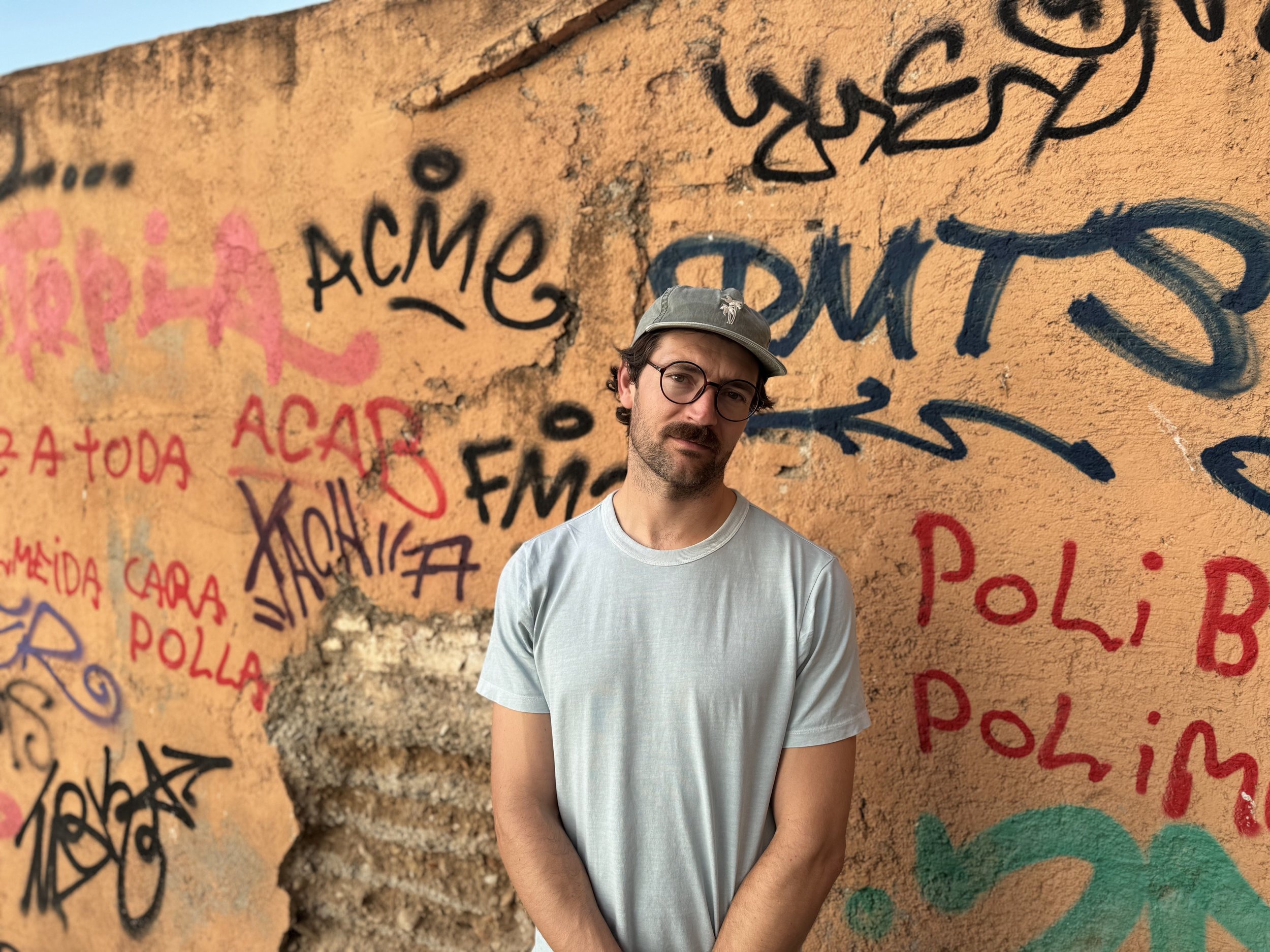
Graduate studies at the University of Utah further evolved his practice, allowing him to examine the interplay between internal and external influences while documenting the subconscious through a meta-critical lens. His current work investigates the dynamic rhythms of optical information, transitioning from intuitive initial marks to fully realized compositions that reflect a dialogue between spontaneity and structure. This continual documentation of decisions within the work create a greater dialogue surrounding the creative narrative.
What is your background and how did you start your journey in the art world?
“Growing up early, I was introduced to art at a young age, like many children. My mother was an art teacher and always helped encourage me to succeed as well as my father a history teacher. I was never really good at paying attention and the applied STEM classes were beyond my patience. I was able to receive a scholarship for my undergrad in painting, it came easy to me and I never stopped since introduced to art. I was always challenging myself and finding new ways to create marks. Following undergrad, I opened a studio gallery in Michigan and did pretty good selling essentially abstracted portraits of pretty women in a large format with catchy colors. At first it was cool and making money selling art was fun. However, it became boring and I felt complacent. So I decided to apply for my masters of fine arts. I ended up in Utah at the university of Utah. I finished up and my primary focus was that of provisionally in strokes, the language behind the marks and questioning the idea of a completed piece. I continue to ask the question and have works that contain the narrative behind the decisions within the work.”
What inspires you?
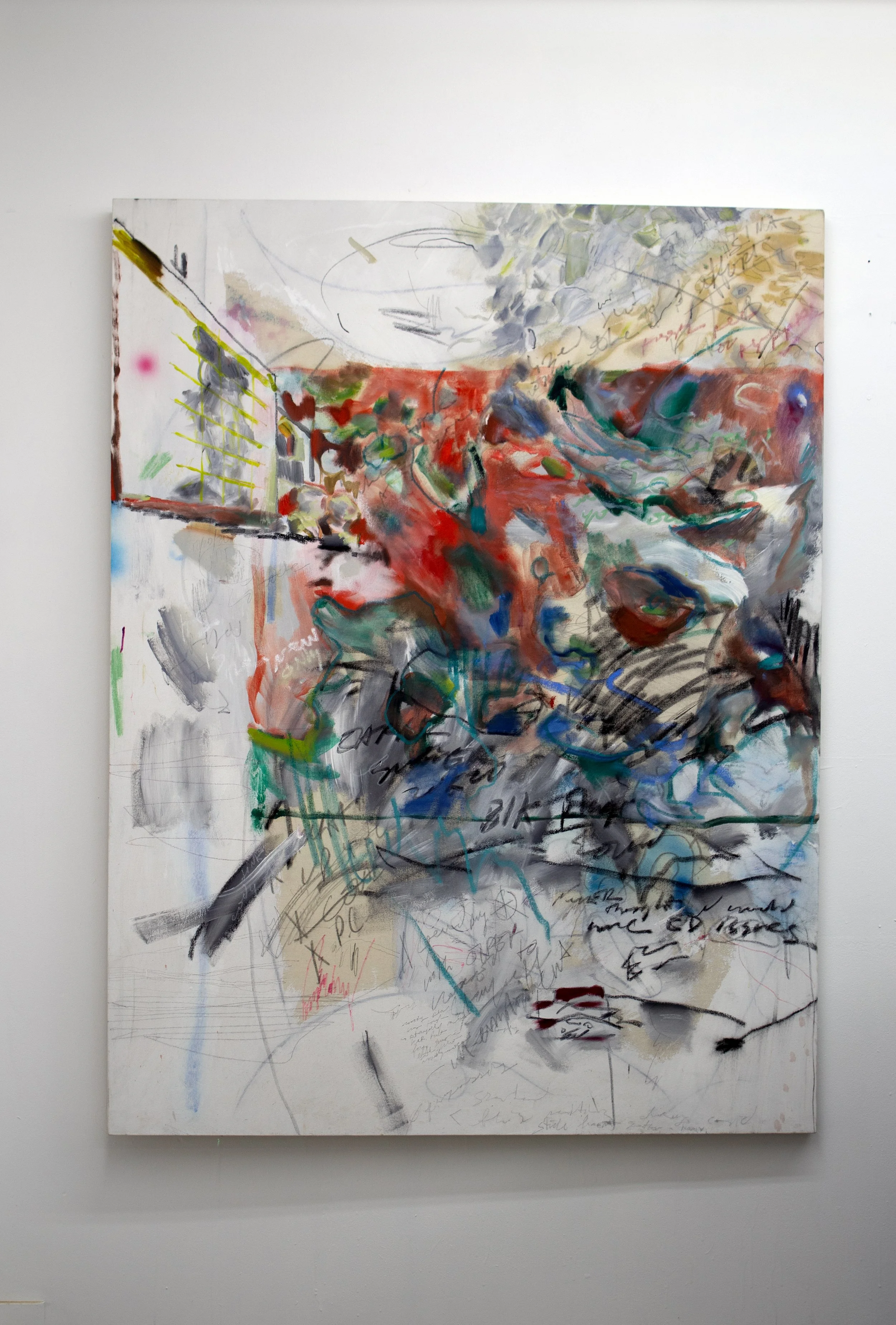
“Some of my favorites like if you were to mix Robert Nava with Robert Krebber whose paintings could almost blow away in the wind. Artists like the Christo Duo, Twombley, Basquiat and the likes of Taylor White. I love how marks can change with urgency. They can relay information and transcend words. That along with accessible optics like scrawled drawings or script. The notion of containing a narrative documenting the decisions within a time span with no preconceived plan inspires me to continue to paint.”
What themes do you pursue? Is there an underlying message in your work?
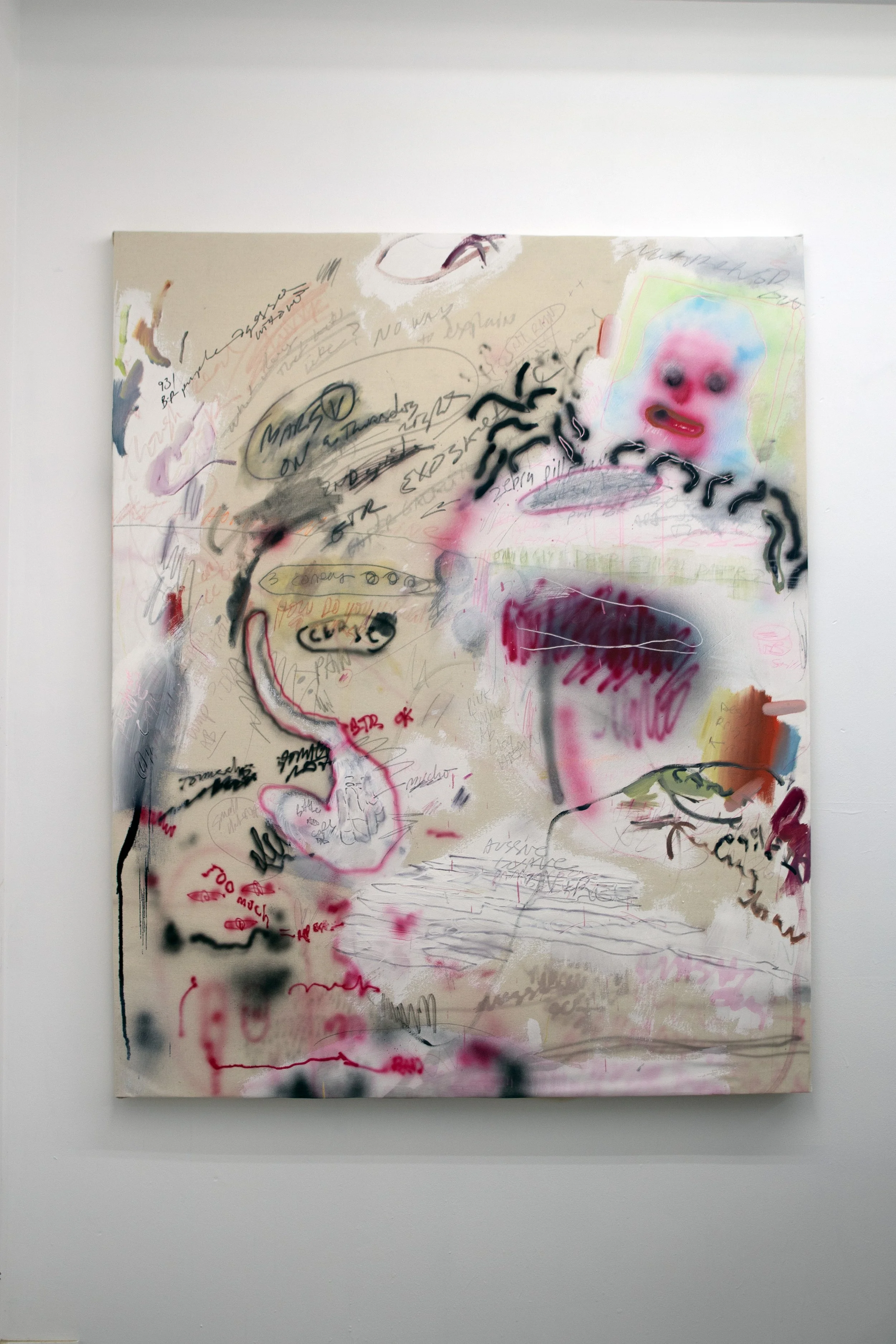
“I pursue the challenge of what societally we consider a finished piece. Whether with linen exposed, ungessoed canvas, script and notes, meander across the canvas. All this contained creates a visualization of thoughts commingling with internal, and external input while critiquing the act of painting across the canvas.”
How would you describe your work?
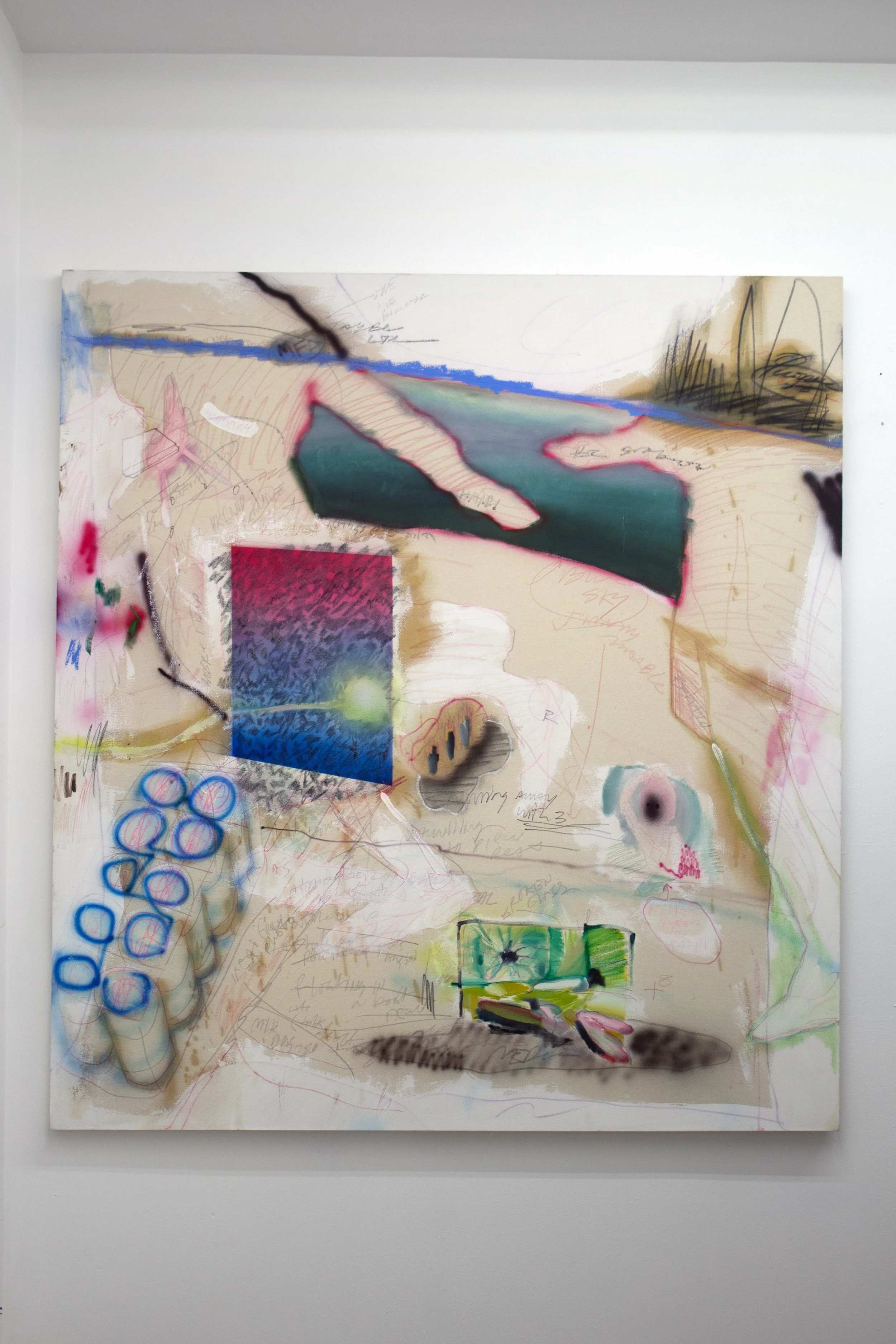
“Demotic and challenging, often referred to as. Naive but rather the opposite. It’s in its most pure sense a visual narrative of decisions and drawn imagery intertwined to create a stream of consciousness across the canvas.”
Which artists influence you most?
“Robert Krebber and his bazaar wrapping paper paintings ready to “blow away in the wind.” The ideals of Raphael Rubenstein’s provisionality work especially when talking about the contemporary applications. Robert Nava’s haunting dreamlike battle ground paintings. Dana Lon’s precision and color options. Cy Twombley’s language within mark making. The Christo duo and high planning personal critique of drawn out sketchbook findings.”
What is your creative process like?
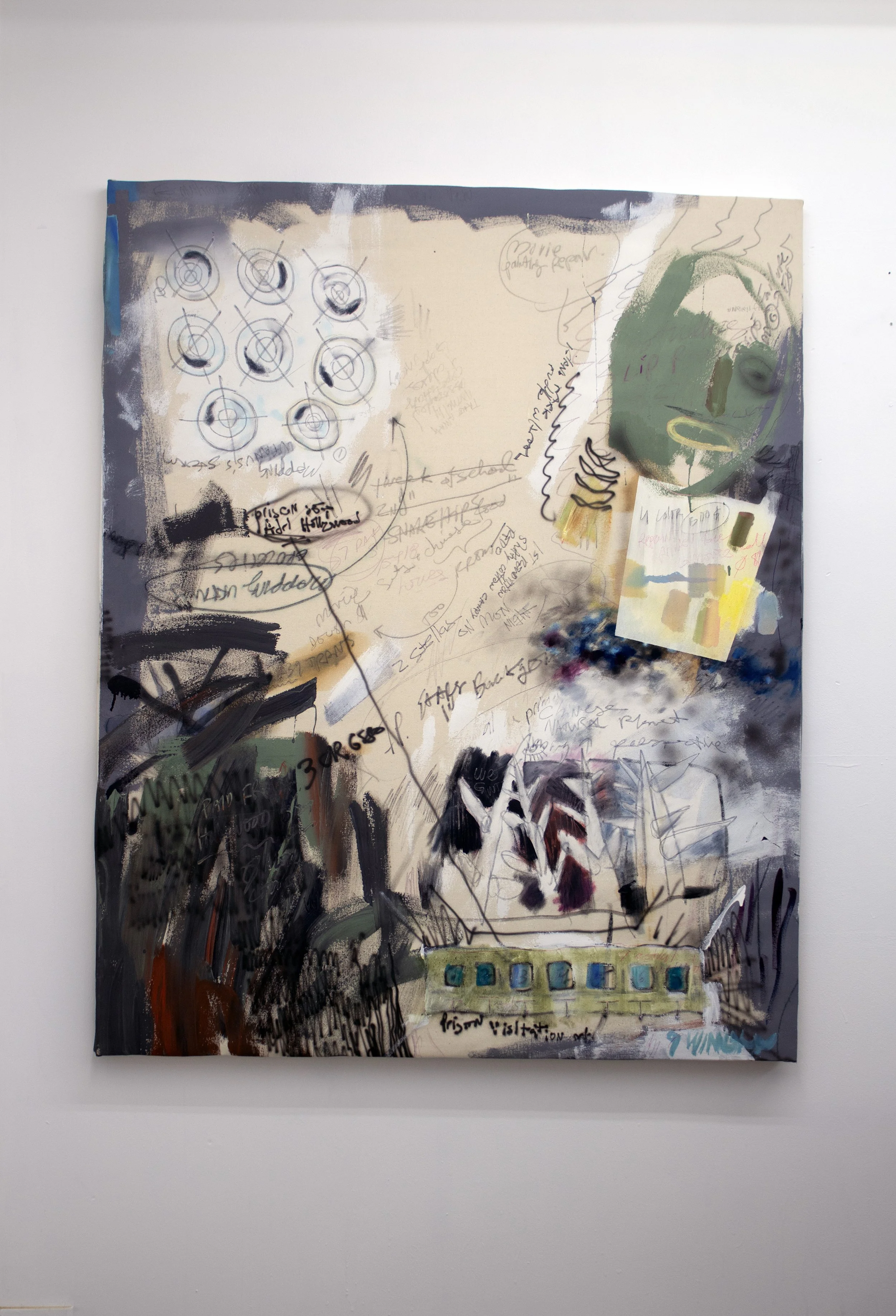
“Well you walk up to the canvas and start with whatever is laying around. Whether charcoal, airbrush, crayon etc. the process is very democratic in a sense. As I’m thinking and documenting the ideas and adapting the piece in real time. Whatever is wet and ready helps set the tone. You can’t really slow down to mix up some very specific color, it takes time and when you were to come back often you’ve lost sight making the now contrived decision secondarily. So I just work through in a very automated sense seeing, drawing, writing and changing my idea until I can come to a sense of balance and answer the questions that are within the surface. I often call them conversations with myself, but all artist have them.”
What is an artist’s role in society and how do you see that evolving?
“It can be many rolls but quite often society is filtered through the lense of the artist. A reflection of current stressors, fears, celebrations, clarity and criticism. AI will and has changed a lot. We are seeing all the right kickback. I think as things are replaced and derived there will once again be a renaissance for artists. Feel it, touch it, smell it, believe it. Real art you can feel, it was created.”
Have you had any noteworthy exhibitions you'd like to share?
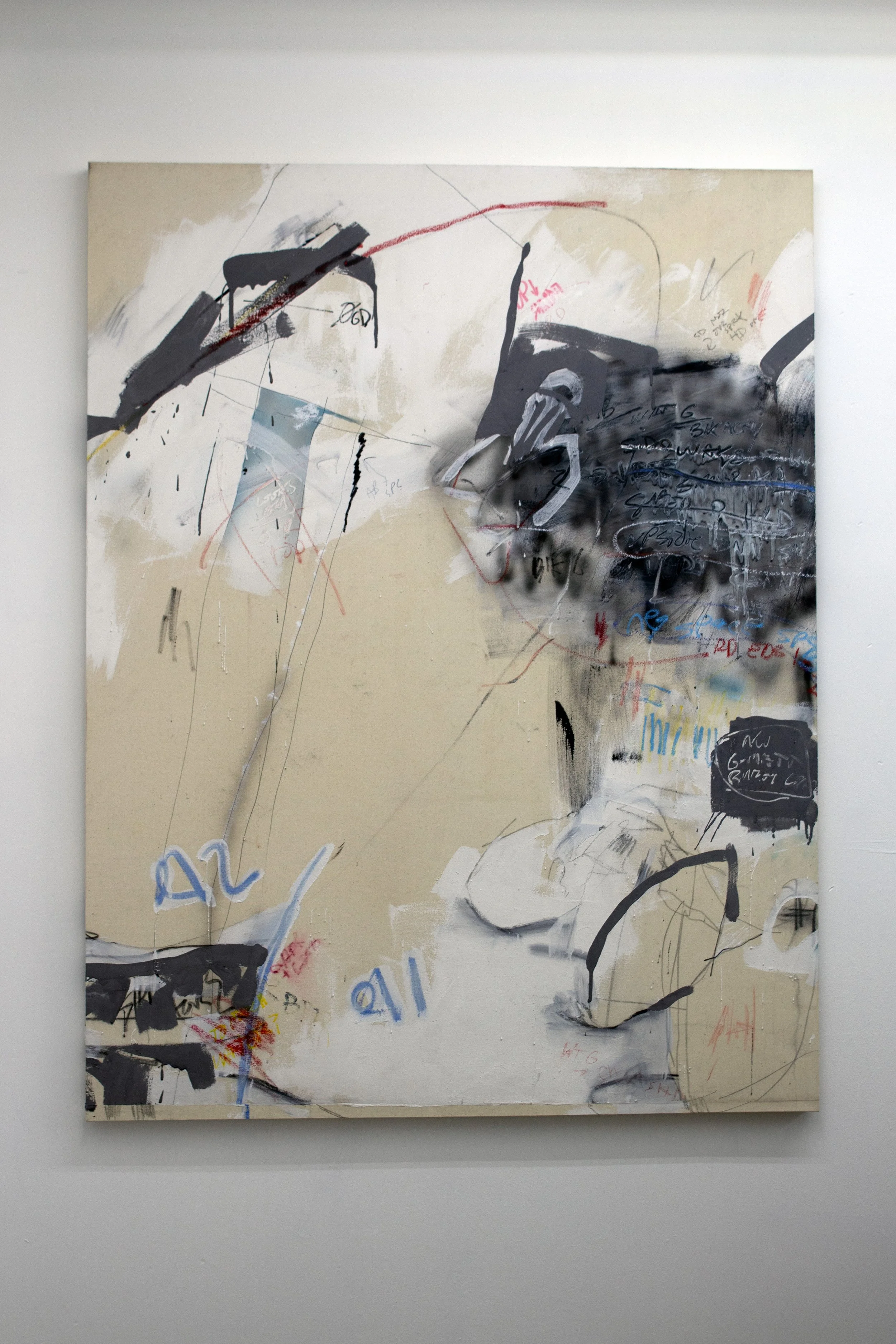
“This past year I had work shown at the CICA museum in South Korea. I thought it was pretty cool, because art is a window into the world and to see it was accepted by those on the other side of the world was pretty amazing. So grateful.”
Website: nolanflynnart.com
Instagram: @flynnone