Interview
Nira Chorev
Nira Chorev was born in Boston, Massachusetts, and raised and educated in both the United States and Israel. In 1970, she graduated from Vocational High School in Tel Aviv with a Diploma in Fine Art. In 1974 she was accepted into the second year at the School of the Museum of Fine Arts, Boston (SMFA), and in 1975 she received a diploma from the institution. In 1977, she completed a Fifth-Year postgraduate program majoring in painting, won the Fifth-Year Scholarship, and during this period worked with photographs to study the landscape from a bird’s-eye perspective, examining relationships of positive and negative shapes. She received a postgraduate degree in 1978 and subsequently returned to Israel. In 2008, she returned to the United States to take part in continuing education programs and workshops at the SMFA, Boston.
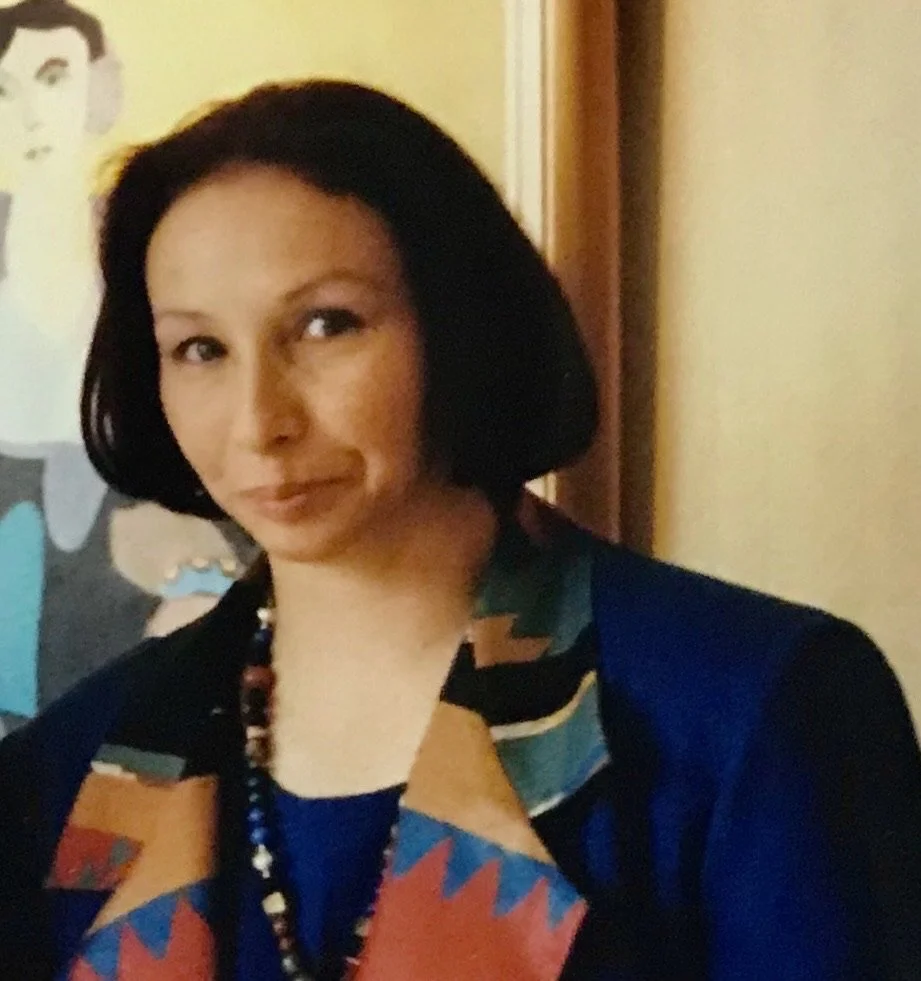
Her work has been exhibited internationally and domestically, including shows at the Royal School of Art in London (1988), the Kennedy Center in Washington, DC (1998), the Grossman Gallery in Boston (2010), and the Post Office Gallery in North Truro, Massachusetts (2016). In 2023 and 2025 her work was shown at the Tova Osman Gallery in Tel Aviv. Chorev’s artwork is held in institutional and private collections worldwide, including the Royal House in The Hague, the President’s House in Jerusalem, and the Center for Israeli Art at the Museum of Art in Jerusalem, as well as numerous private collections. She currently works full time as a self-employed mixed-media artist based in Boston, Massachusetts.
What is your background and how did you start your journey in the art world?
“From my earliest childhood, I knew that I wanted to be an artist. I lived with my family on my grandparents’ farm. My grandmother, who was an embroidery artist, taught me how to look at nature that around me for the difference between leaves facing the sun that had a shinier color than the lower leaves, which were pale and dull; how flowers change their color as the hours pass; how the wind moved through the tall grass in the fields outside our house; the migration of the birds, and the drifting clouds in the blue sky. She amazed me every time she started to embroider the flowers in the garden on a piece of fabric, free form, using no lines or marks to guide her needle. My first block of paper and colored pencils were given to me by my grandfather to encourage me to start painting. Until today I have the first painting I did almost seventy years ago. Framed by my grandfather, it hung in their home for decades. Today it hangs in my studio where it reminds me of the love and encouragement of my grandparents.”
What inspires you?
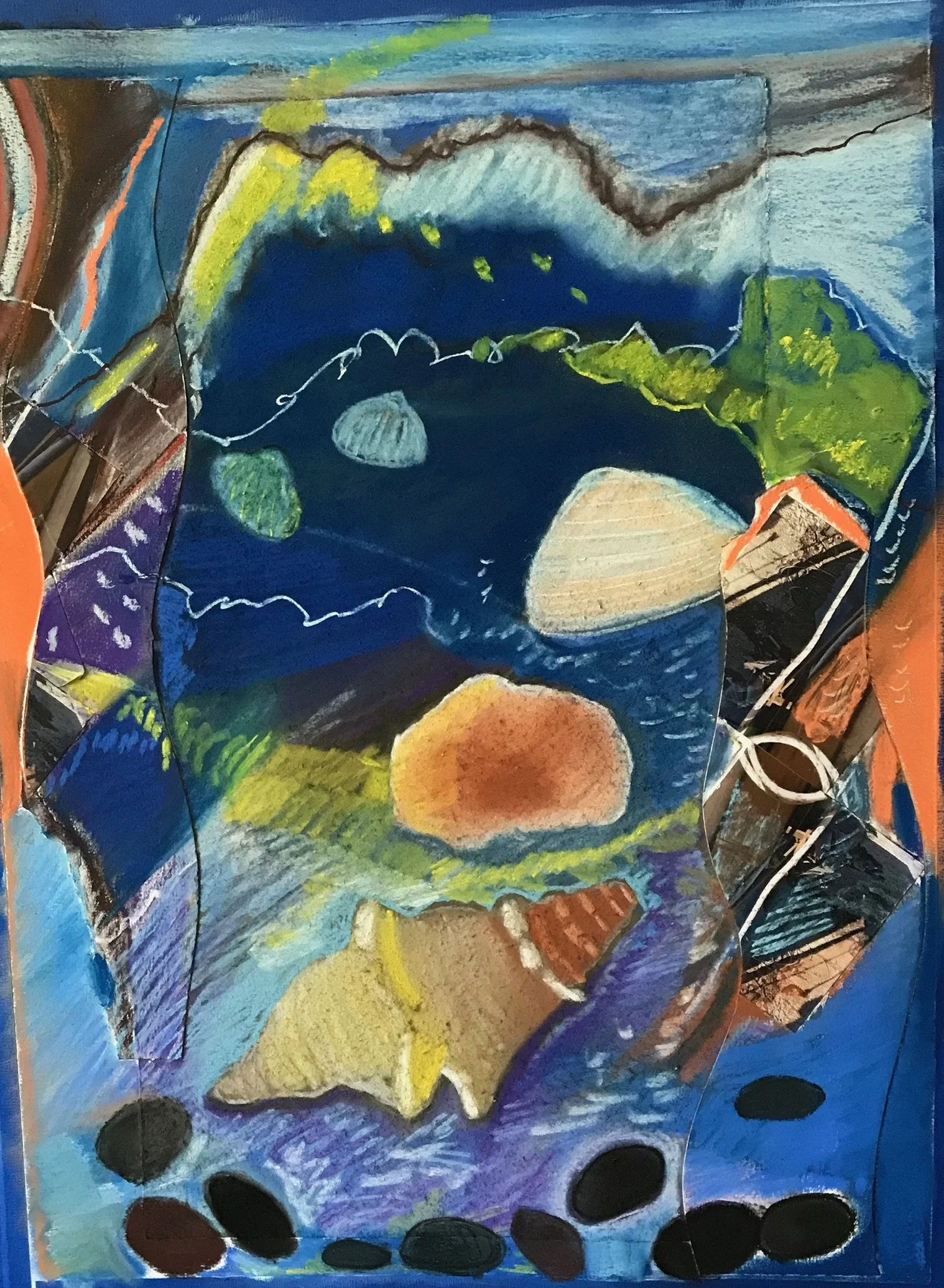
“I find inspiration in my daily life, looking outside my window, driving to the grocery store with my friend, cooking, reading a book, watching chipmunks running across the grass, hearing the rumble of passing streetcars, the sight of the parked cars, a flock of geese with their chicks crosses the busy road, the way the winds blow the leaves on the ground, working in the garden, smelling the rose bush, eating mango, looking at the cypress tree in my parents’ backyard, sitting with my dad waiting for the sunset, looking at the spectacular changes of color in the sky, listening to the singing of the birds as dusk descends . All of these trigger my imagination and give me inspiration to create.”
What themes do you pursue? Is there an underlying message in your work?
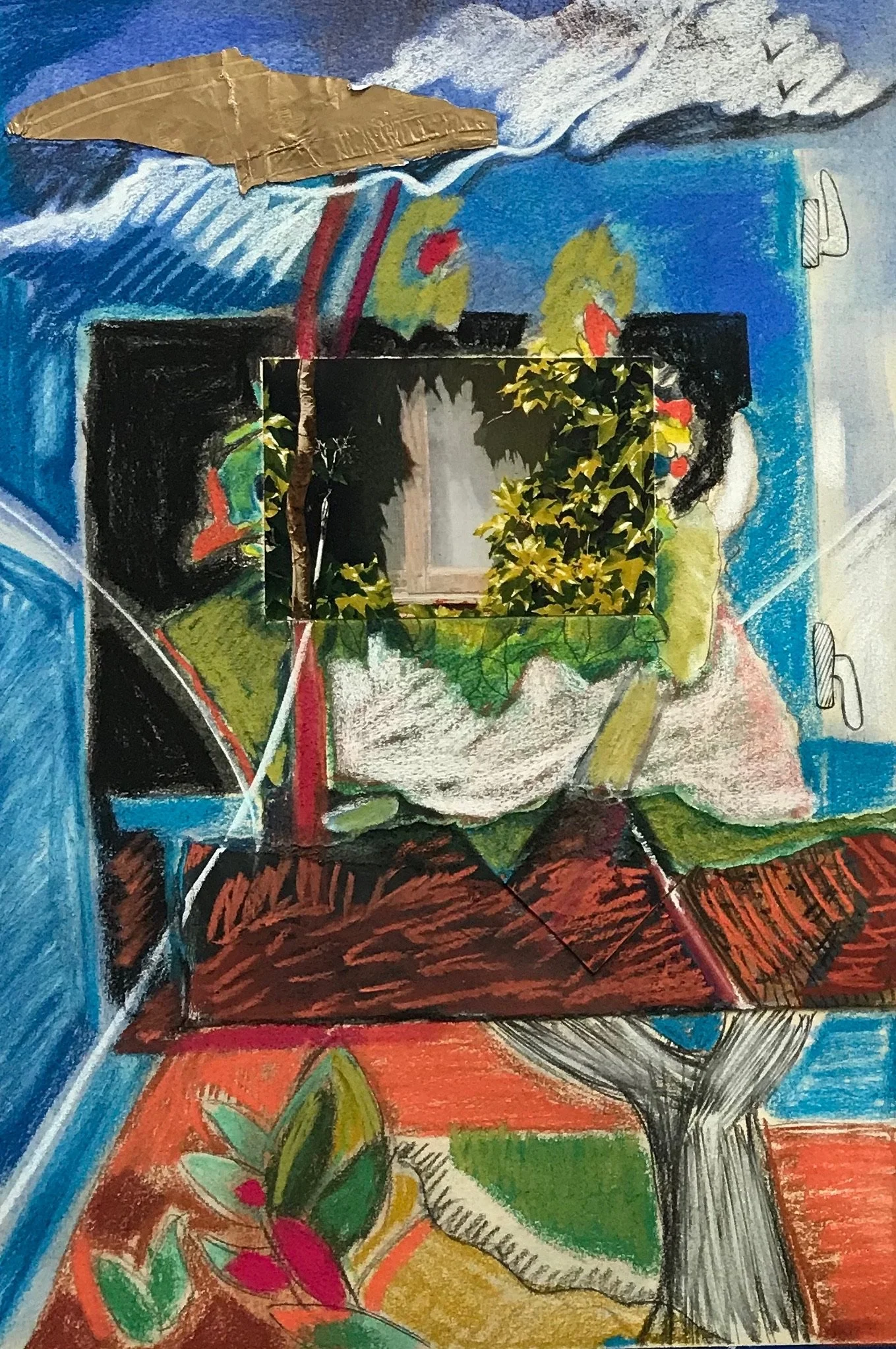
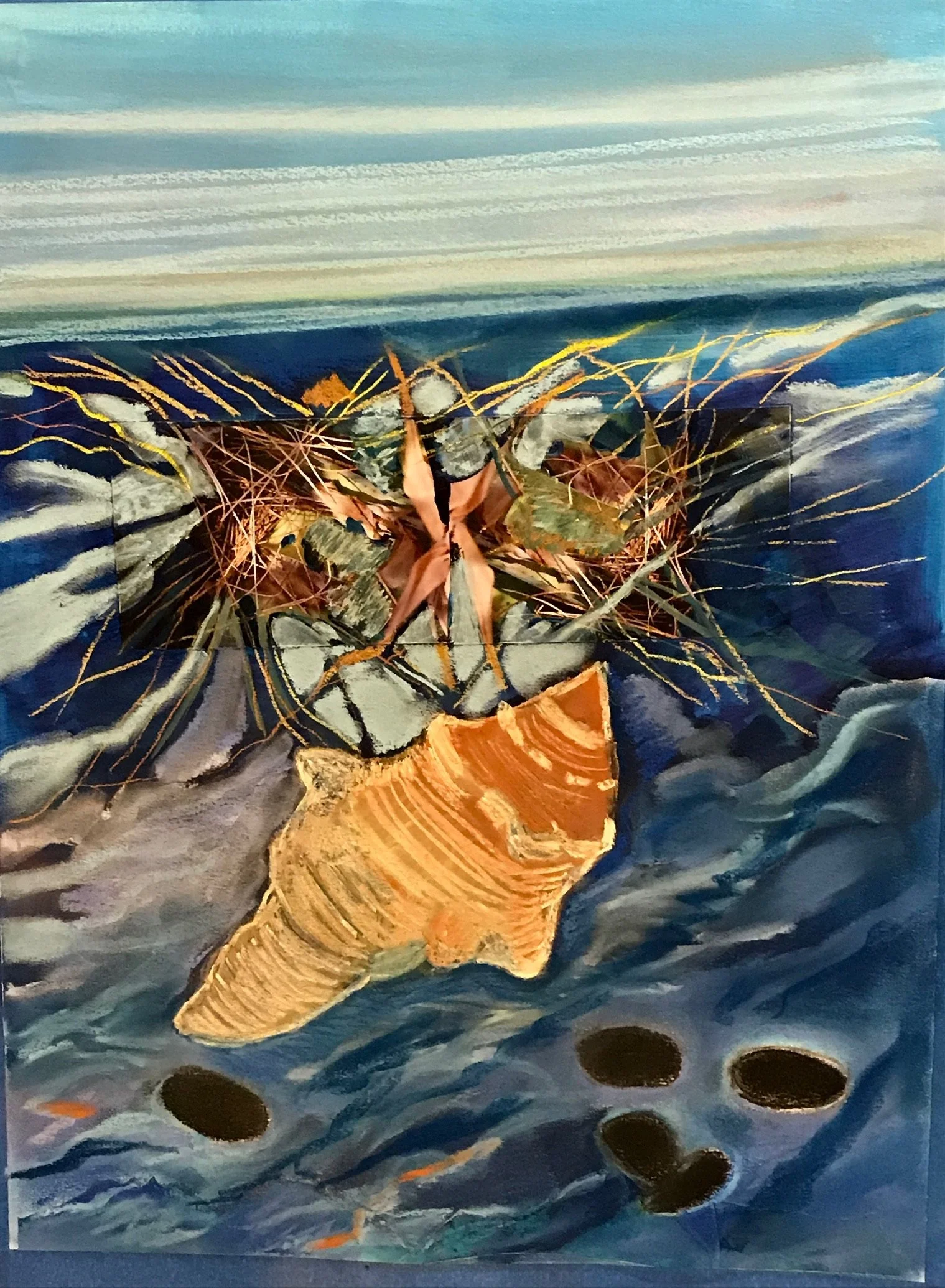
“In the last two years, I have been working on a series entitled ‘Homes on a Journey.’ The name for this body of work, some artworks where exhibited overseas and were sold and some didn’t I’m continuing working. The special body of works comes from a poem that was written by a dear friend, Maccabit Malkin, who shares with me the experience of living in two countries. Over the past decade, I have traveled back and forth overseas, splitting time between my father’s home abroad and my own home in Brookline, MA The constant travel has given me different perspectives on distance and place, so that over time the houses, the sunrises and sunsets, the trees and flowers, and the distance between them, all move and merge into each other and turn into one big landscape that has no boarders. Through this expansive understanding of home, which shifts and moves along with life’s ever-changing contexts, the series also draws upon and responds to the poet’s descriptions of the sea and mountains, as seen through the window of her second home abroad, asking: where is home and whose journey is it? some people see connection to the Holocaust. To others, it reminds them of immigrants that have taken place all over the world in the last few decades I will continue working on this series until their music singes to me. If I need to look at nature I’m a turtle caring with me my home on my back. It is said that artists, poets, writers, and musicians look at the world with different eyes from everyone else, that we relate to life differently. I believe this to be true.
As I go about my day, I am drawn again and again to the smallest details of the natural world around me – the straight lines of the pine needles crunching underfoot, the tiny flower that emerges from the soil with a burst of color, the way the sunlight glimmers on the rippling waves. I have found comfort, stability, and beauty, an antidote to balance the sorrow and loss I carry with me from my own life experiences. At the same time, by looking at nature and its cycles of loss and renewal, I have learned that life is stronger than death. Through my art, I want people – no matter what their life experiences have been -- to be able to sense the unending possibility of rebirth, joy, and fulfillment. This will be my underlying massage, open your eyes and look deeply into the landscapes look what grows upon it, bring nature into your homes. Go outside-Hug a tree, take a walk, lie on the grass and look at the clouds, fill your lungs with fresh air.”
How would you describe your work?
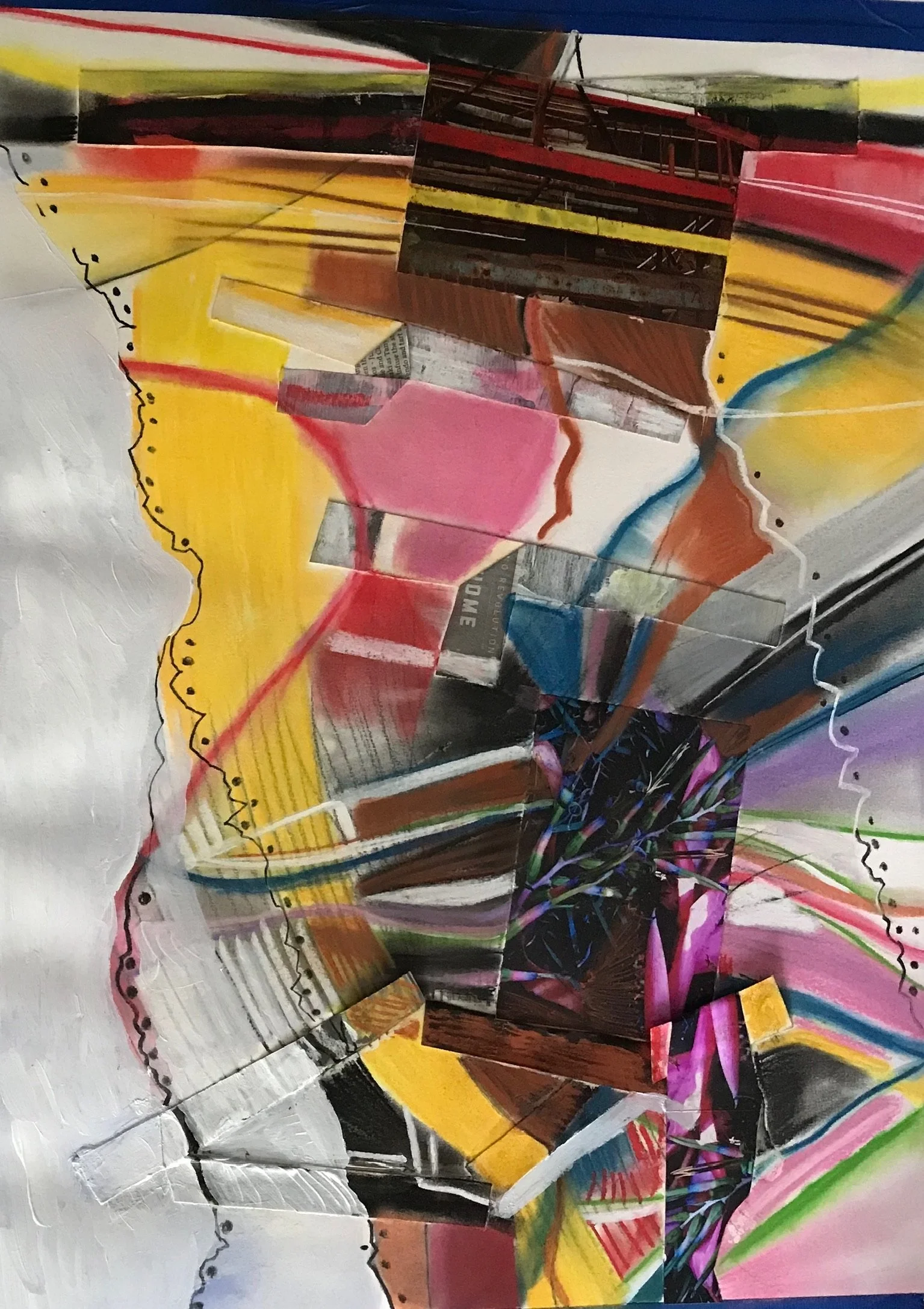
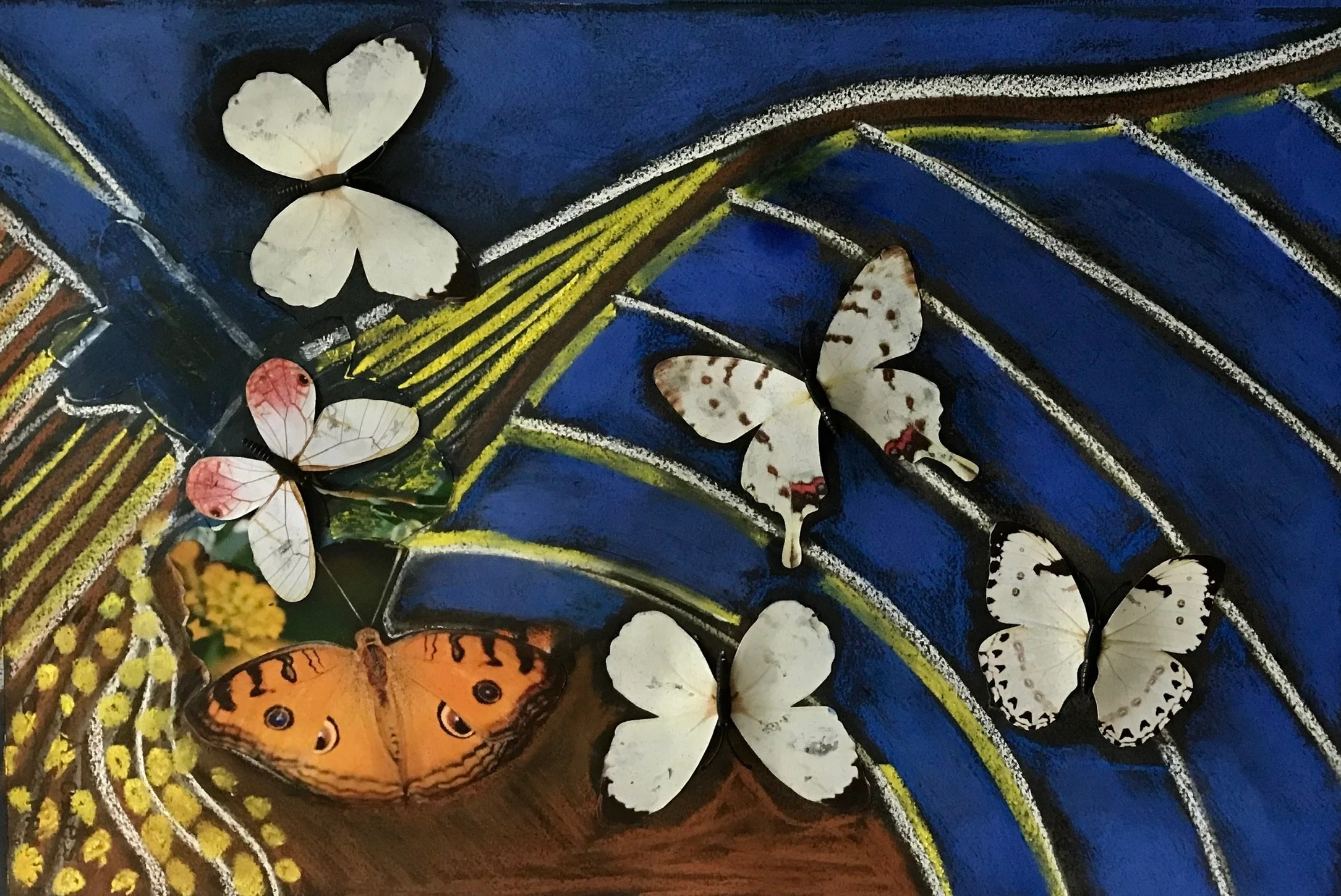
“I usually begin with a photograph I have taken, which becomes the central motif but which ultimately is integrated into the overall painting. Continuing drawing the photo across the surface I chose paper or canvas using watercolor and Indian ink. As the composition develops, I look at it from every angle, seeking a sense of balance till I achieve the ‘golden cut,’ that moment when I know the painting is complete because I can hear its music play. Typically, I work in series, each one devoted to a theme drawn from nature or an aspect of human experience. In every series, I use the same photos again and again as a starting point, each time exploring the theme from different angles. Over the course of a series, individual elements may recur and come to life in different contexts, each painting drawing on my own life experiences, and the series as a whole telling a story in color, shape, and line. Sometimes, between series, I create a standalone piece. This gives me the opportunity to experiment with different techniques, create a range of new colors in soft pastel, and to incorporate different media like Papier Mache into three-dimensional elements in the overall artwork. In the process, I am free to push beyond my own limits and continue to explore the endless possibilities of mixed media. I can take it anywhere.”
Which artists influence you most?
“Picasso, Matisse, Sargent (watercolorist), Moshe Rosenthalis (Israeli painter) and photographer Robert Osborne (black and white portrait photographer). From each one, I learned something else and all together they gave me the tools I needed in order to become mixed media artist with a clear vision.”
What is your creative process like?
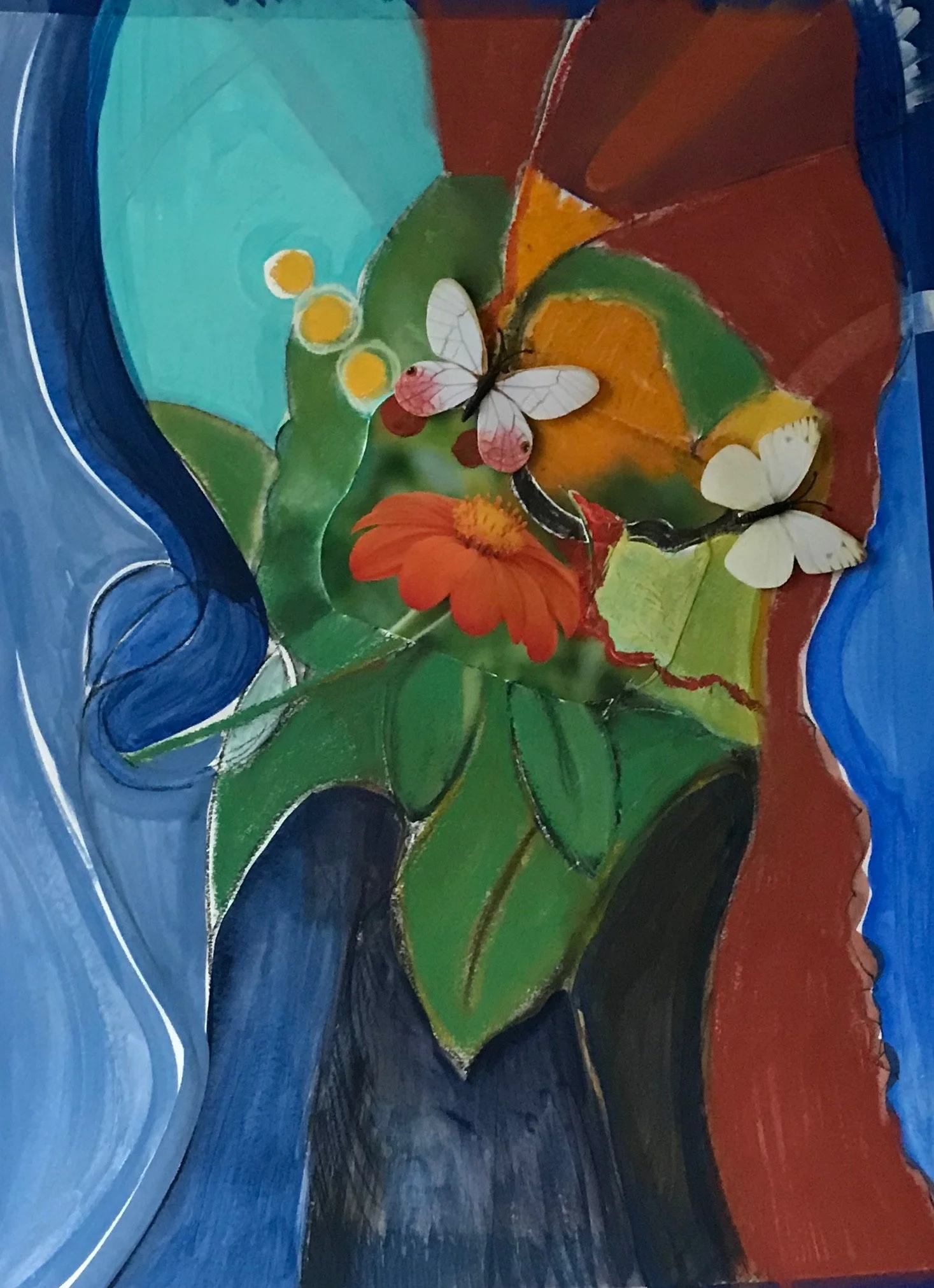
“It all begins with the photos I take on my travels. Then selecting the ones I will use, I send them to be printed on non-glossy paper, combining together the different materials. If it will be a continuation of a series the process has already begun, but if it’s new, I will pick a theme that is important to me. If it’s new, I will first decide if it’s going to be on paper or canvas. This is very crucial information for the surface I will be using. Sometimes, I will create a standalone piece between the multiple ranges of series. The standalone piece gives me the opportunity to study deeper the next theme. In the process, I love to try new things that will trigger my ability to push forward my capabilities testing to endless limitations. The sky is not the limit.”
What is an artist’s role in society and how do you see that evolving?
“Each artist has a different role that contributes to the development of society. Poets, painters and sculptors bring joy, interaction and inspiration to their communities, which push the communities to engage in thought and behavioral change that create constructive steps towards social progress.”
Have you had any noteworthy exhibitions you'd like to share?
“Since receiving my Post-Graduate Degree in 1978, my artwork has been exhibited in The Royal School of Art in London (1988), Art Expo, USA, NY (1997), the Kennedy Center, Washington, DC (1998), Resnikoff Gallery, Boston, MA, Studio Gallery, Irvine, CA (2009), the SMFA Grossman Gallery in Boston, MA (2010), Art Takes Times Square, NYC (2012), Esart Gallery, Barcelona, Spain (2013), The Jerusalem Museum, Israel, Art Center (2013), Post Office Gallery, Inc., North Truro, MA (2016), Red Dot – Spectrum, Miami Art Fair (2022), Tova Osman Gallery, Tel-Aviv (2023, 2025), Bromfield Gallery, MA (2024), Denforth Museum, MA (2024). Biafarin.com, Vancouver, Canada (2024,2025,2026). In 2025, I was exhibiting at Tova Osman Gallery, Tel-Aviv, the title to this exhibit was ‘On the third day God created…’ the opening reception was on 5/13/2025. Two minutes after the opening, sirens began across Israel, and a war with Iran broke out; yet no one left the gallery. Everyone huddled together, waiting for a notification on their phones that it was all over. The exhibition continued, and shortly before midnight, people purchased paintings featuring optimistic colors to bring into their homes. It was an experience I will never forget—as a person, and especially as an artist.”