Interview
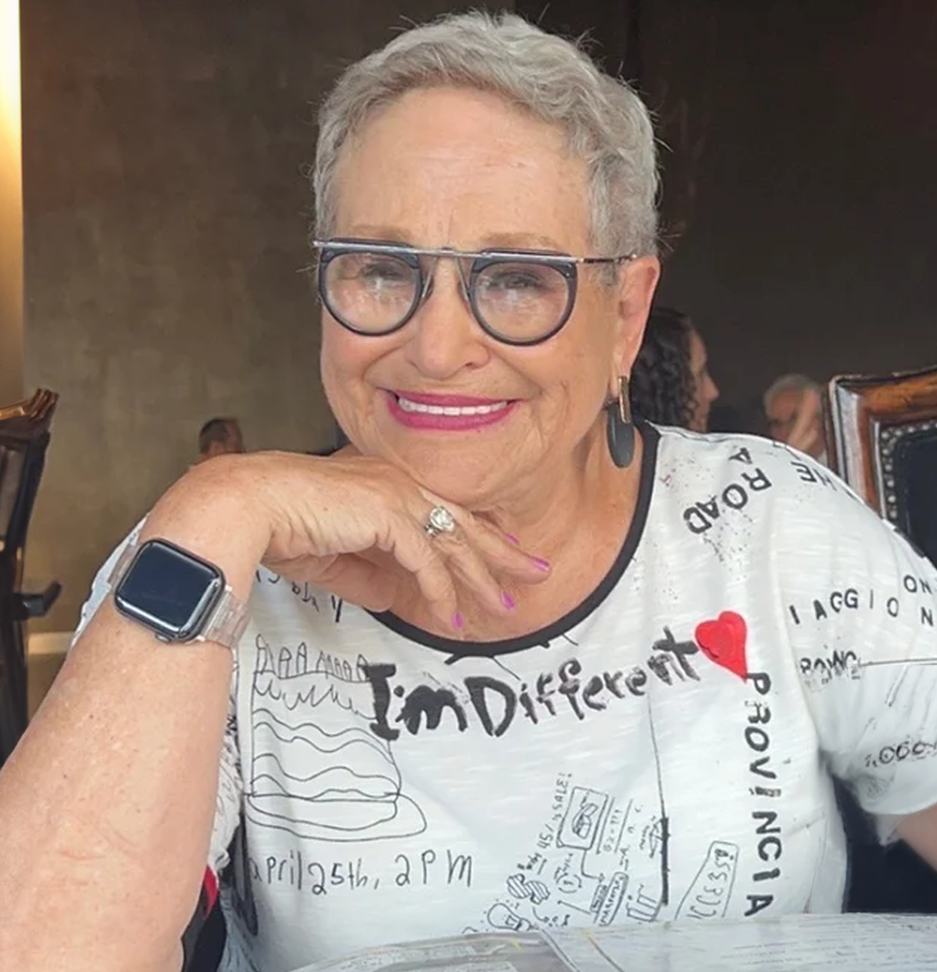
Mimi Wohlberg
Mimi is an artist based in Florida, after more than 75 years living in New York, with a degree from Parsons School of Design. Her studio, Mimi Wohlberg Studio, produces mixed media collage and painting across three collections — Reimagined Reality, Harvested in Layers, and Judaica. Mimi's work is rooted in family history, memory, and personal storytelling, shaped by the story of her parents, immigrants who met in Brooklyn and built a life together, and by decades of travel that continue to inform her color, pattern, and composition. A long career in interior design also runs through her art, giving her an eye for scale, texture, and how a piece lives within a space. That sensibility led to one of her proudest achievements: a large-scale installation at a chapel at JFK International Airport, seen by thousands of travelers passing through. Her recent work includes “From Sea to Shining Sea,” an open edition collage marking America's 250th anniversary and her family's own immigration story.
What is your background and how did you start your journey in the art world?
“I studied at Parsons, but my path to calling myself an artist full-time wasn't a straight line. For many years I was an award-winning quilter, with installations shown both in the U.S. and overseas — that work taught me everything I know about layering, pattern, and patience. Those same instincts carried straight into the collage work I do now.”
What inspires you?
“Travel is a huge one — every place I've been leaves its mark on my color and composition. Interiors do too; years of thinking about how a room lives and breathes shows up in how I build a piece. And my mother, Dora, who was an artist in every aspect of life even though she never called herself one — I think about her often when I'm in the studio.”
What themes do you pursue? Is there an underlying message in your work?
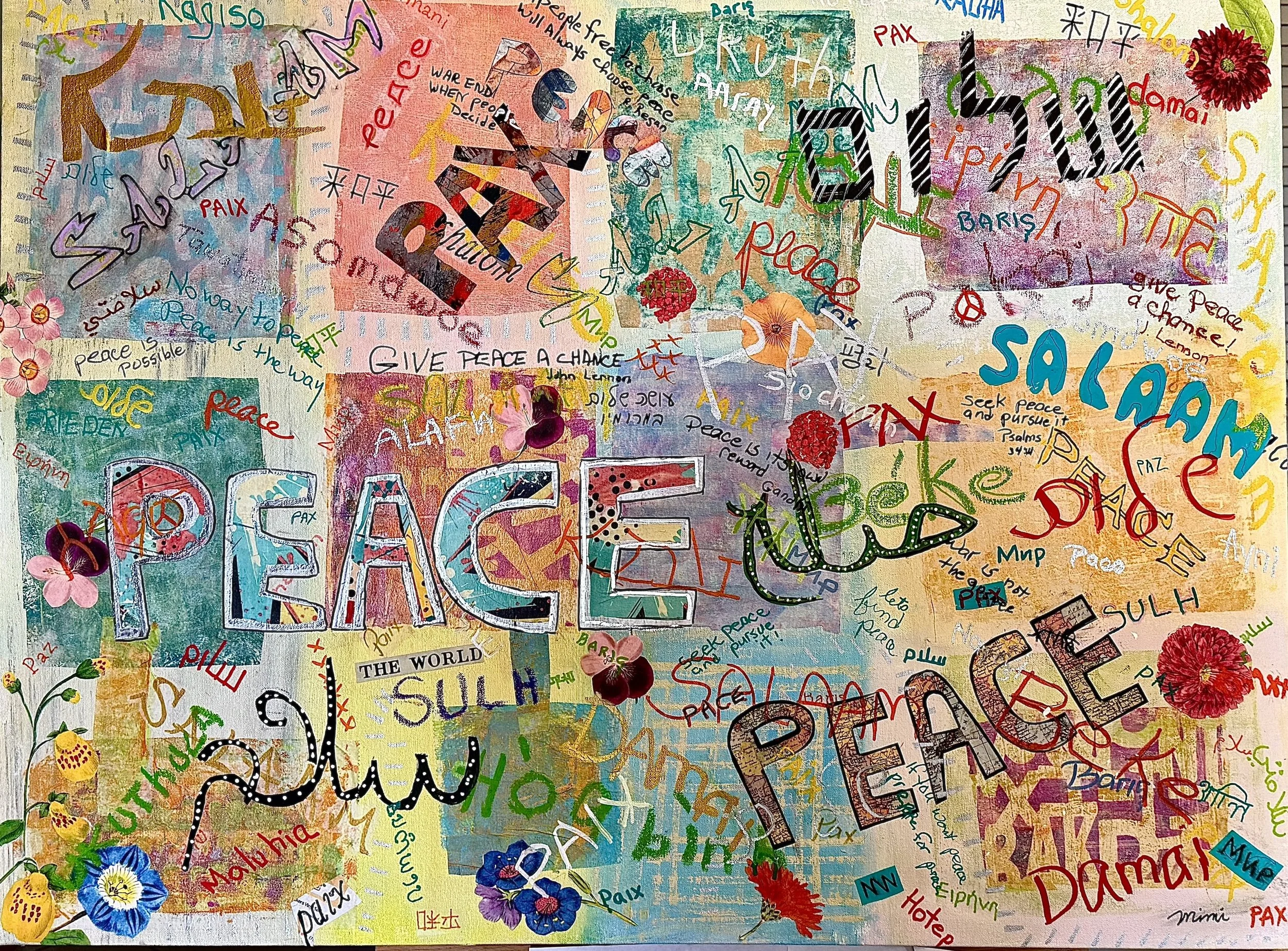
“Connection, above all — to memory, to identity, to the people and places that shape us. Lately, I've been drawn to peace, and how something so universal gets expressed in so many different languages and voices. If there's a message, it's that our stories are layered just like my materials, and what we carry forward is worth honoring.”
How would you describe your work?
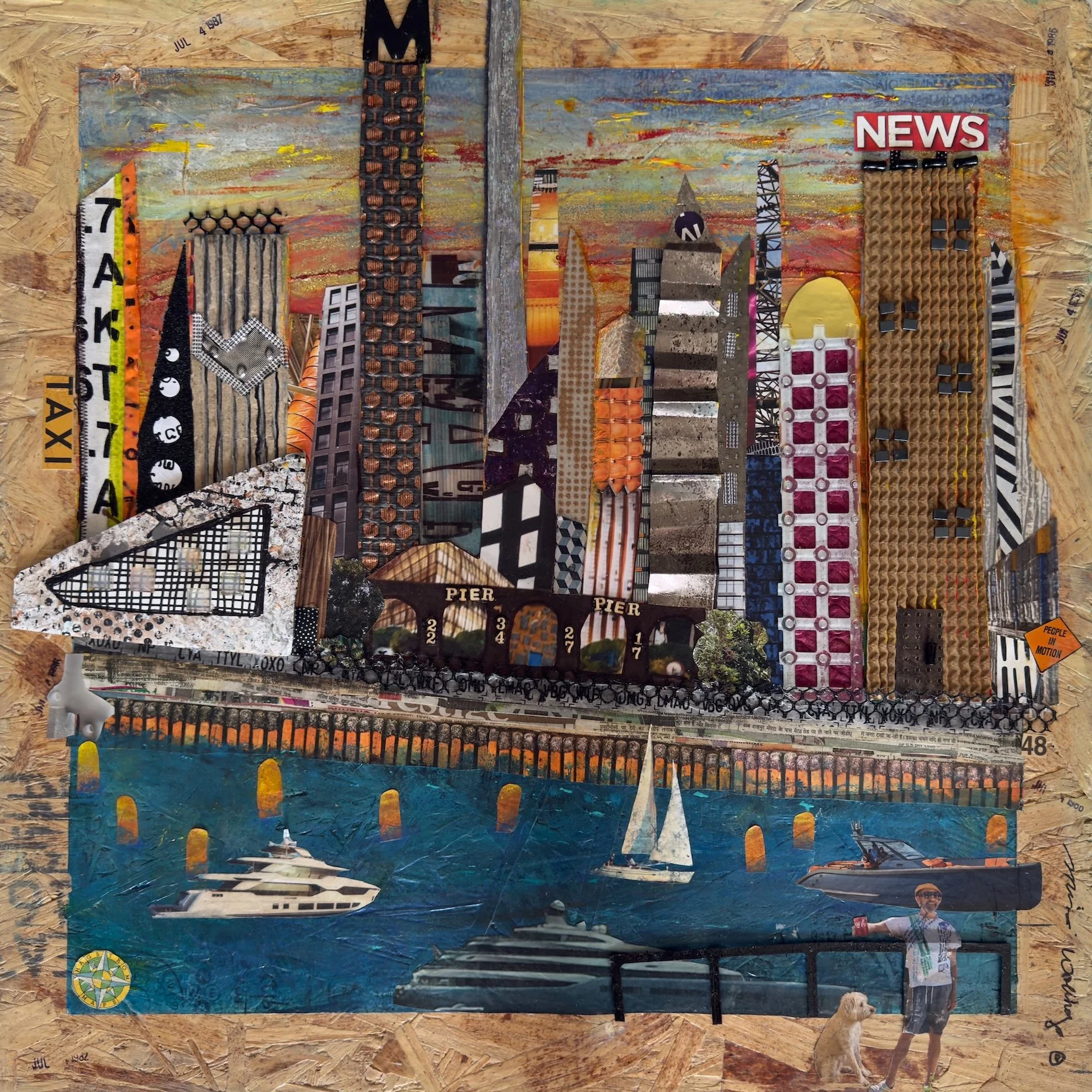
“Layered, literally and emotionally. Paint, paper, texture, found objects, built up piece by piece. I'd call it warm and rooted in storytelling rather than abstraction for its own sake — every piece is meant to feel like it has a history behind it, because it does.”
What is your creative process like?
“I usually start with a single spark — a place, a word, a feeling — and build outward from there until the piece finds its own shape. My years in interior design shaped how I think about scale, and how a piece will actually live in a room once it's finished.”
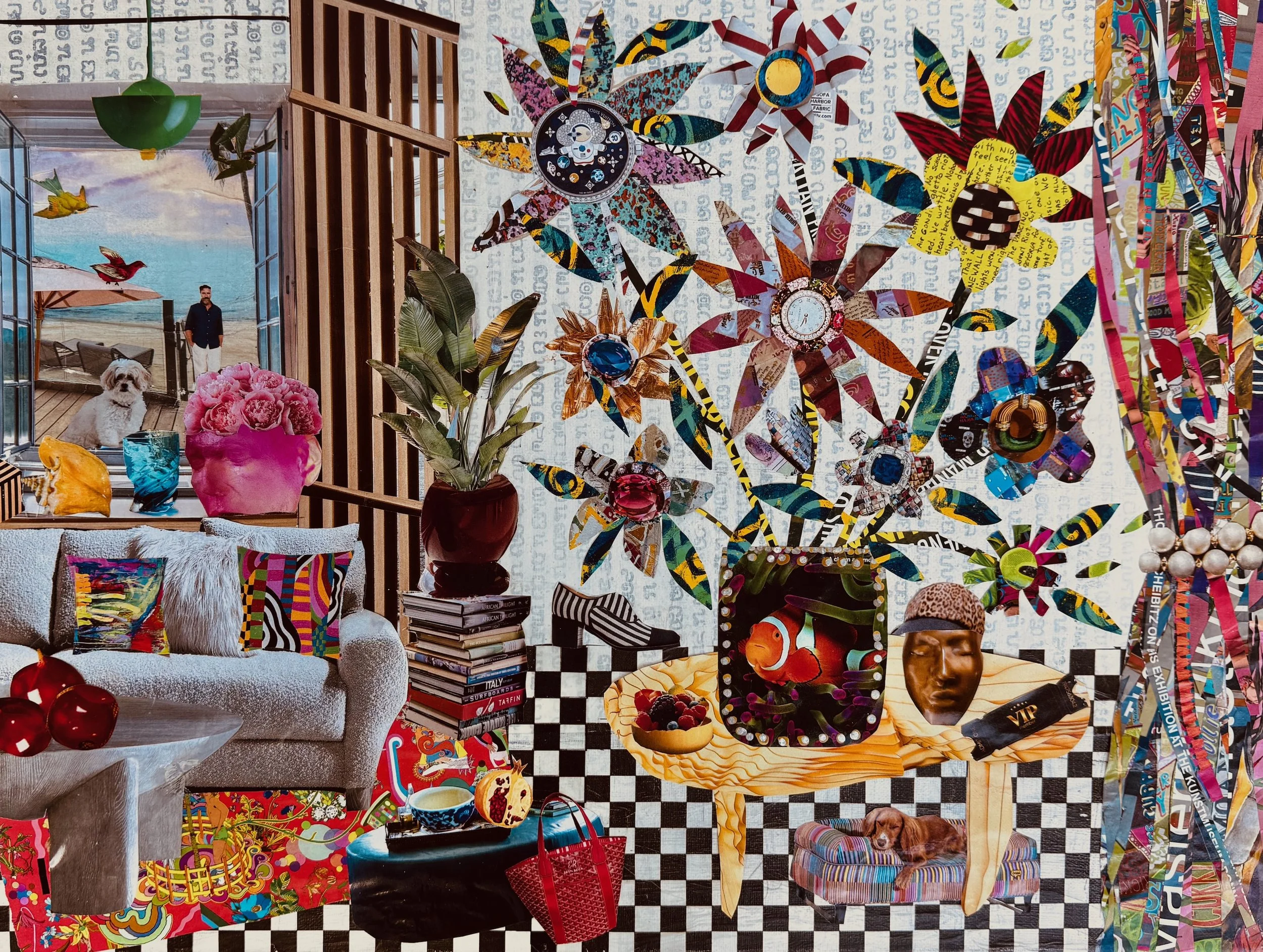
What is an artist’s role in society and how do you see that evolving?
“I think an artist's role is to hold up a mirror, to help people see their own stories, their own histories, reflected back at them in a new way. Art has always been a way to preserve memory and pass down what matters, and I think that role is becoming even more important now. In a world that moves so fast and feels so divided at times, I see artists increasingly being called on to be bridge-builders, finding the common threads, like peace, family, and belonging, that connect people across cultures and generations.”
Have you had any noteworthy exhibitions you'd like to share?
“I've been fortunate to create large-scale installations for synagogues around the country, along with a permanent piece in the chapel at JFK International Airport. Each one asks something different of me — thinking about how a piece holds a room, how it meets people in a shared space, and how the personal, layered storytelling at the heart of my art can still speak to a crowd.”
Why do you think art matters now, maybe more than ever?
“I think it matters even more now. In a world that moves so fast and feels so divided at times, artists have a real chance to be bridge-builders — finding the common threads, like peace, family, and belonging, that connect people across generations. My piece 'Peace in 50 Languages' is a good example — the idea that something so universal can be spoken in so many different voices, and still mean the same thing to everyone who sees it.”