Interview
Matthew Wilkinson
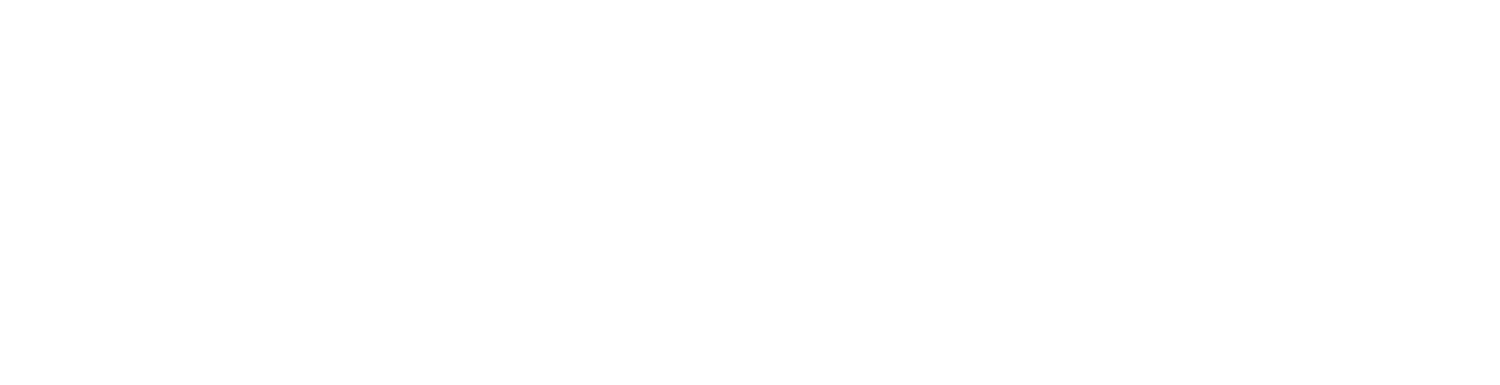
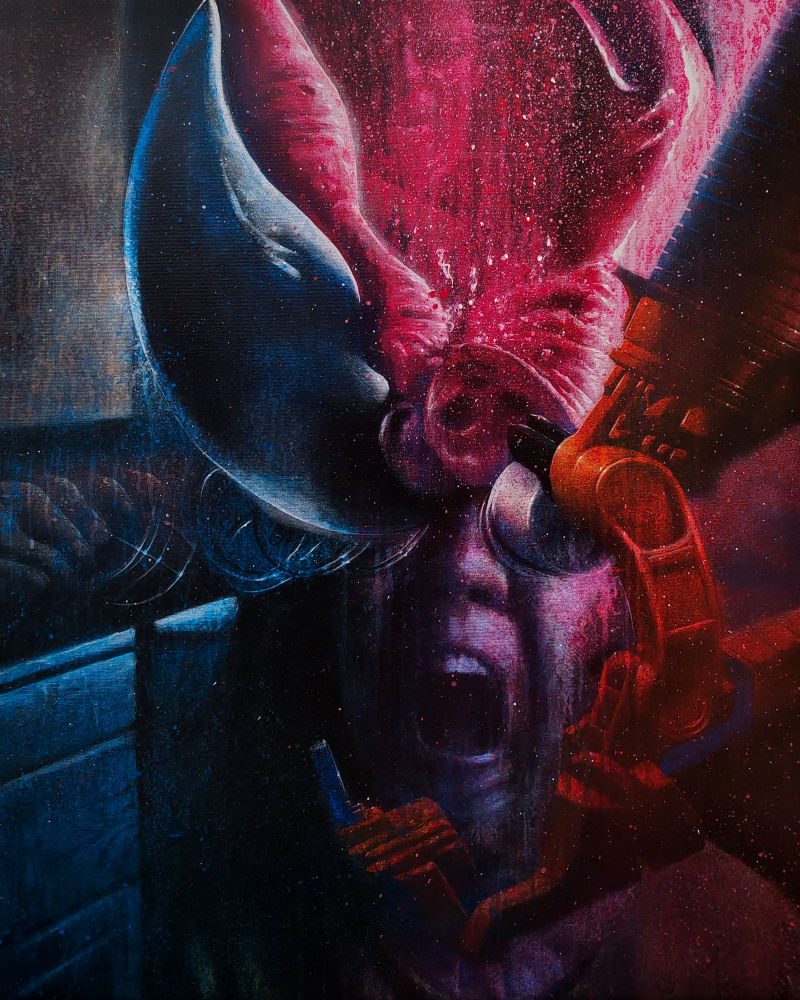
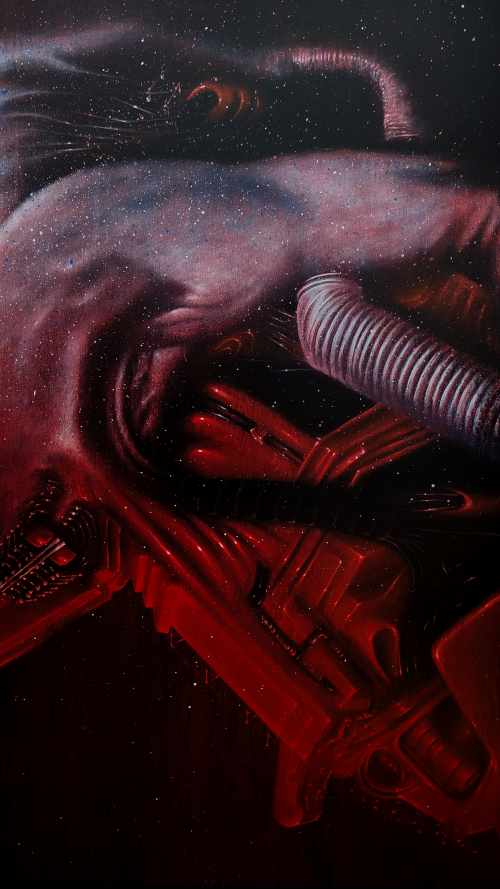
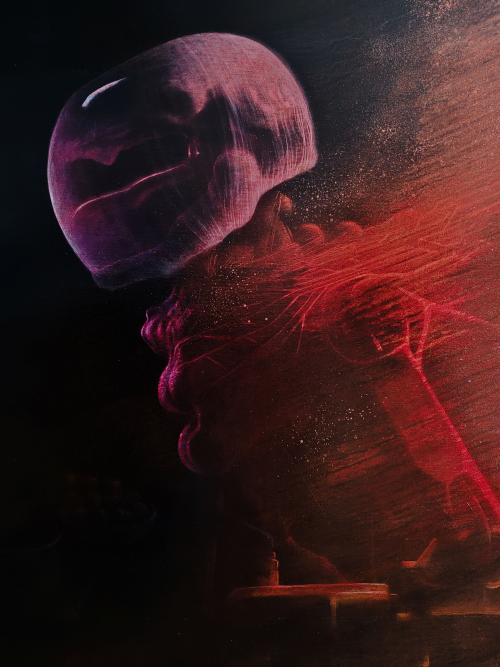
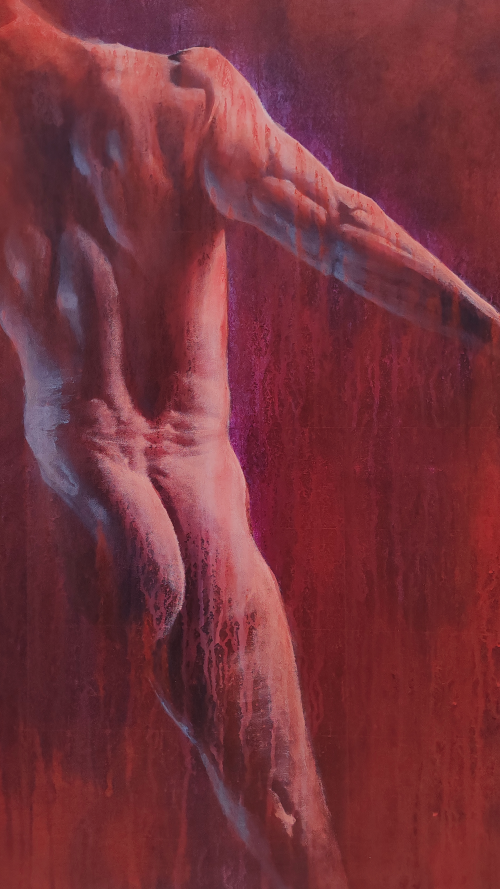
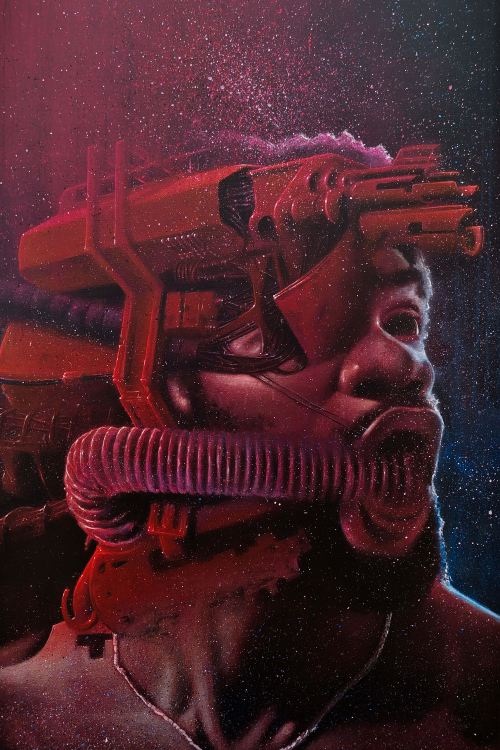
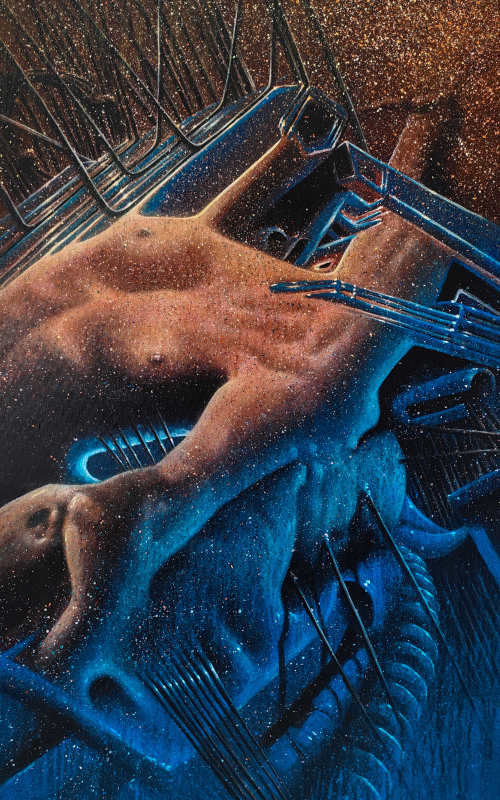
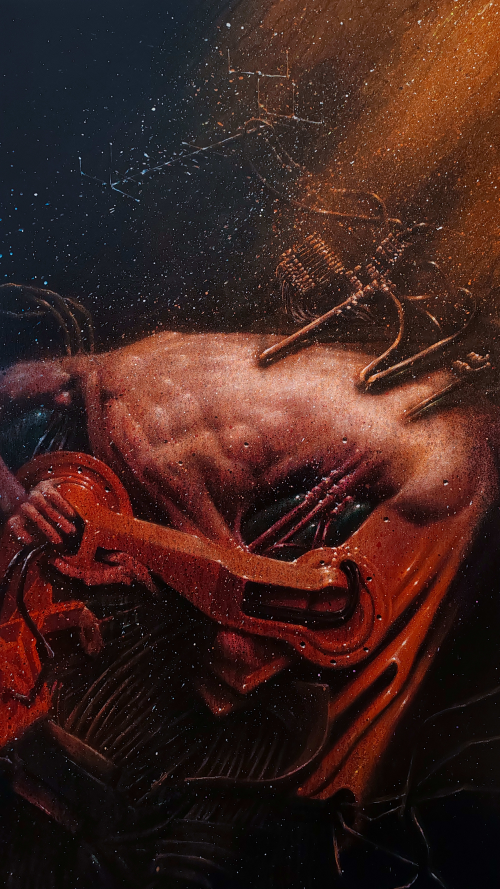
Matthew is a self taught artist. He’s been teaching English in Thailand, Italy and Spain for over the last 25 years or so. In his work, Matthew explores the evolving relationship between flesh and function — a space where the human body is no longer sacred, but rewired, retooled, and reimagined. The figures he paints inhabit a liminal state between the organic and the mechanical, not as metaphors of dystopia, but as reflections of a present already undergoing transformation. Post-Organic is a response to the entanglement of biology, technology, and ideology. On one level, these works represent the physical consequences of our technological immersion: bodies shaped by machines, augmented by code, or exhausted by productivity.
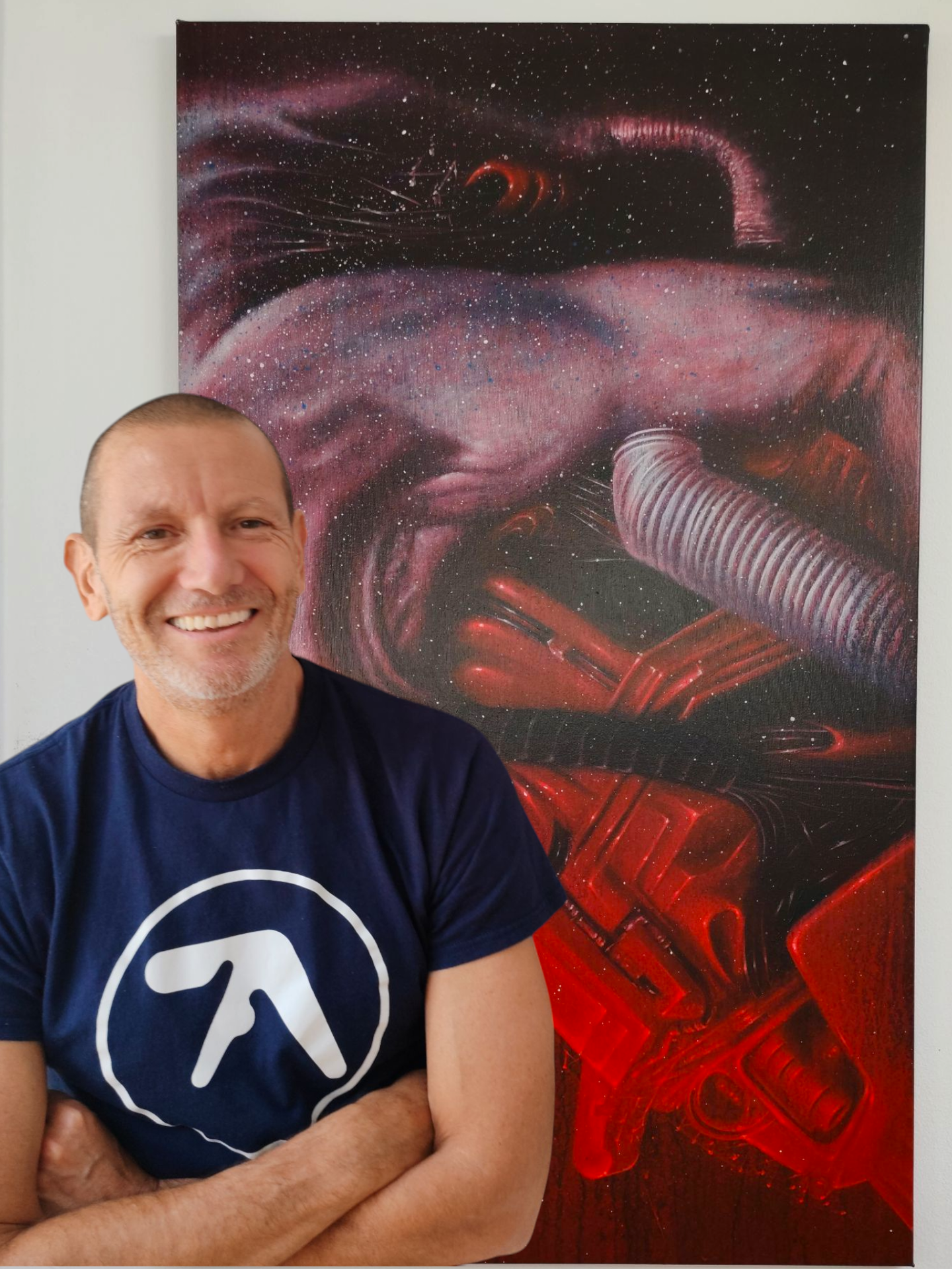
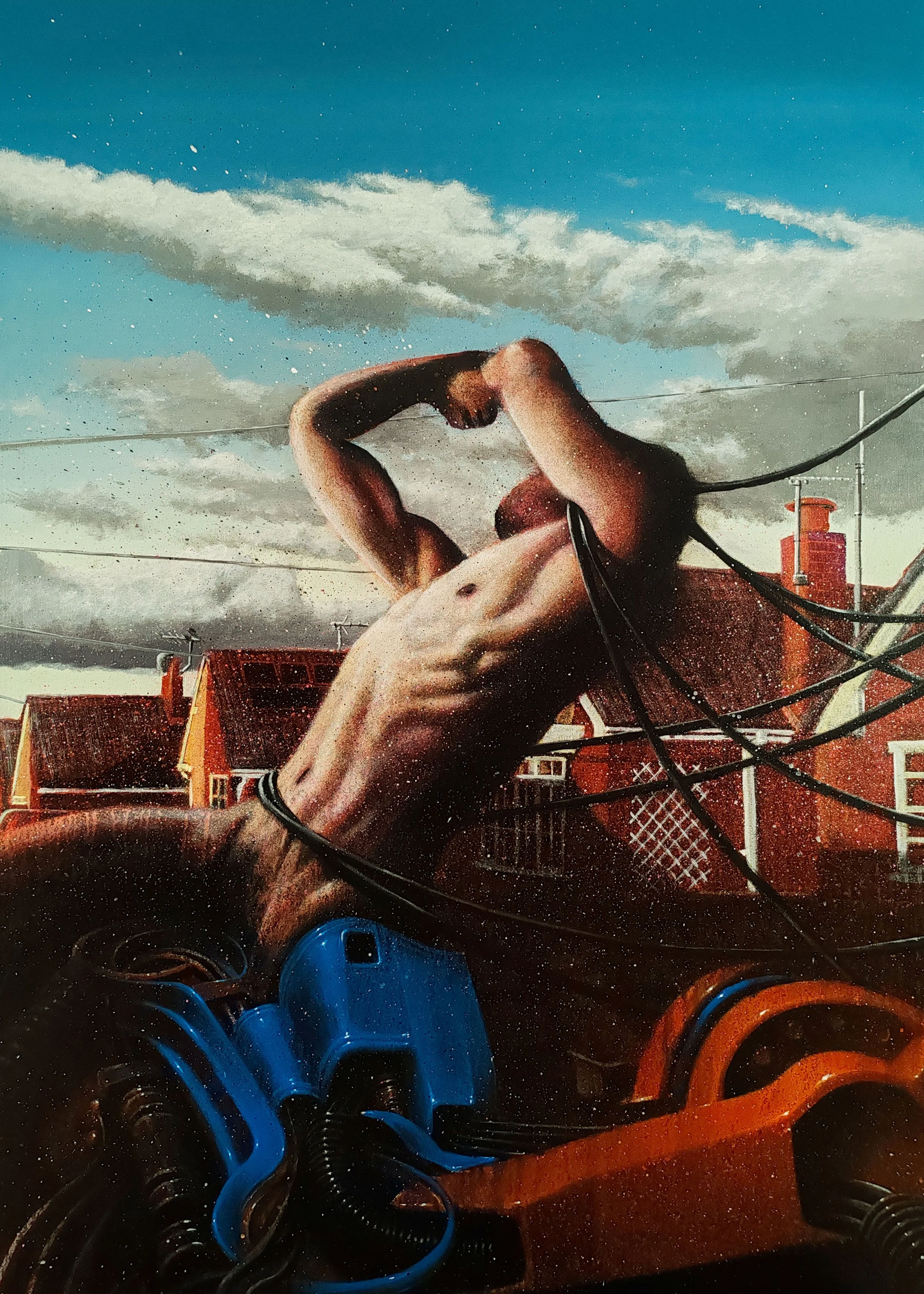
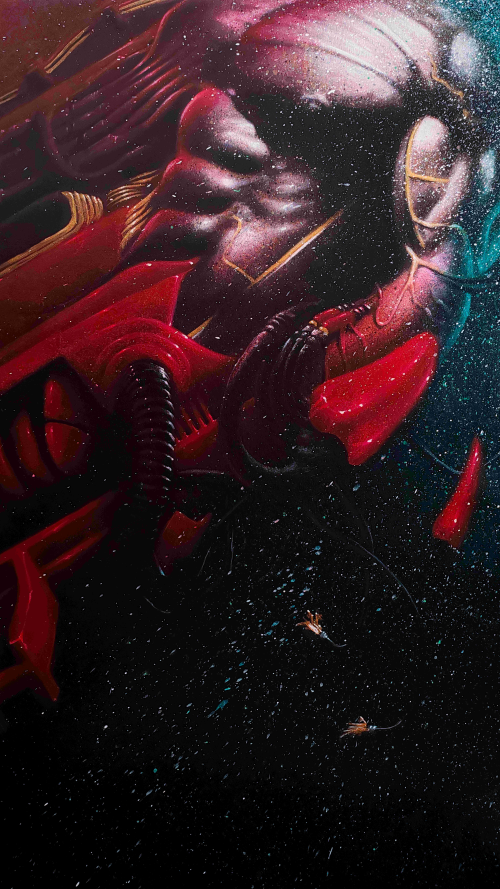
On another level, they point to a deeper mutation — of identity, of memory, of what it means to be human in a post-human age. The mechanical elements — wires, tubes, industrial forms — are not merely implants or tools, but extensions of consciousness. Likewise, the flesh is no longer purely biological; it absorbs the geometry of function, the burden of design. In this hybrid zone, pain, pleasure, utility, and obsolescence converge. Socially, these forms question how we’re conditioned by systems — how bodies are categorized, modified, or made efficient in service of something external. Biologically, they ask where nature ends and engineering begins. Technologically, they echo our current trajectory: machines learning to mimic life, while humans reshape themselves in machine-like ways. He uses paint to blur boundaries — between muscle and cable, skin and circuitry, identity and artifact. Each surface is layered, textured, and punctuated by star-like specks, suggesting a cosmic or existential dimension. These beings might be future relics, or perhaps present truths seen through an altered lens. In this work, Matthew is not offering answers, but anatomical riddles — bodies in flux, machines that breathe, and viewers who may recognize more than they expect.
What is your background and how did you start your journey in the art world?
“I started drawing from an early age, often storylines of air battles that I would draw. I was also into comics and had a Marvel book of how to draw superheroes which I would copy. I was also into military aircraft and would make models and draw them. During that time in the 70's aviation was going through a lot of experimentation creating many weird and wonderful designs which fascinated me.”
What inspires you?
“Everything in that 70's early 80's cultural melting pot. Science, physics and understanding more about our universe and existence. Comics, 200AD. The early works of Ridley Scott, Alien and Bladerunner which would of course include H.R.Giger and Syd Mead. Cyberpunk and the melding of man and machine. Tetsuo the iron man and Akira, Japanese anime. In art the depiction of the human form throughout the renaissance period. Salvador Dali and the surrealists. Illustrators for comics and film.”
What themes do you pursue? Is there an underlying message in your work?
“The man machine dichotomy. The relatively fast transition from analogue to digital and existential dread I feel daily.”
How would you describe your work?
“I feel my work stands out for its bold exploration of the boundary between the organic and the mechanical. Across my portfolio, there’s a consistent fascination with the fusion of human anatomy and machine elements—often rendered in a way that feels both intimate and unsettling. I use acrylic on canvas that gives my forms a tactile, almost sculptural presence, while my compositions invite viewers to question where humanity ends and technology begins.”
Which artists influence you most?
“The Renaissance movement, Salvador Dali, H.R.Giger, Simon Bisley, Syd Mead, Moebius, Francis Bacon, Justin Mortimer, Adrian Ghenie.”
What is your creative process like?
“I usually gather images from the net or my photos and create digital collages which I then paint.”
What is an artist’s role in society and how do you see that evolving?
“That is a question artists have grappled with for centuries, and one that’s especially relevant given the themes I explore in my work. At its core, the artist’s role in society is to observe, interpret, and challenge. Artists hold up a mirror to the world, reflecting not just what is, but what could be. They give form to emotions, ideas, and questions that might otherwise remain unspoken. Through their work, artists can provoke thought, inspire empathy, and spark dialogue—sometimes even before society is ready for those conversations. As technology continues to evolve, so will the artist’s role. Artists will be called on to interpret the impact of AI, biotechnology, and virtual reality on our sense of self. Help society navigate ethical dilemmas and cultural shifts and create new forms of beauty, meaning, and connection in a rapidly changing world”
Website: www.matthewwilkinsonart.com
Instagram: @matthewwilkinson_art