Interview
Mathieu Jardon
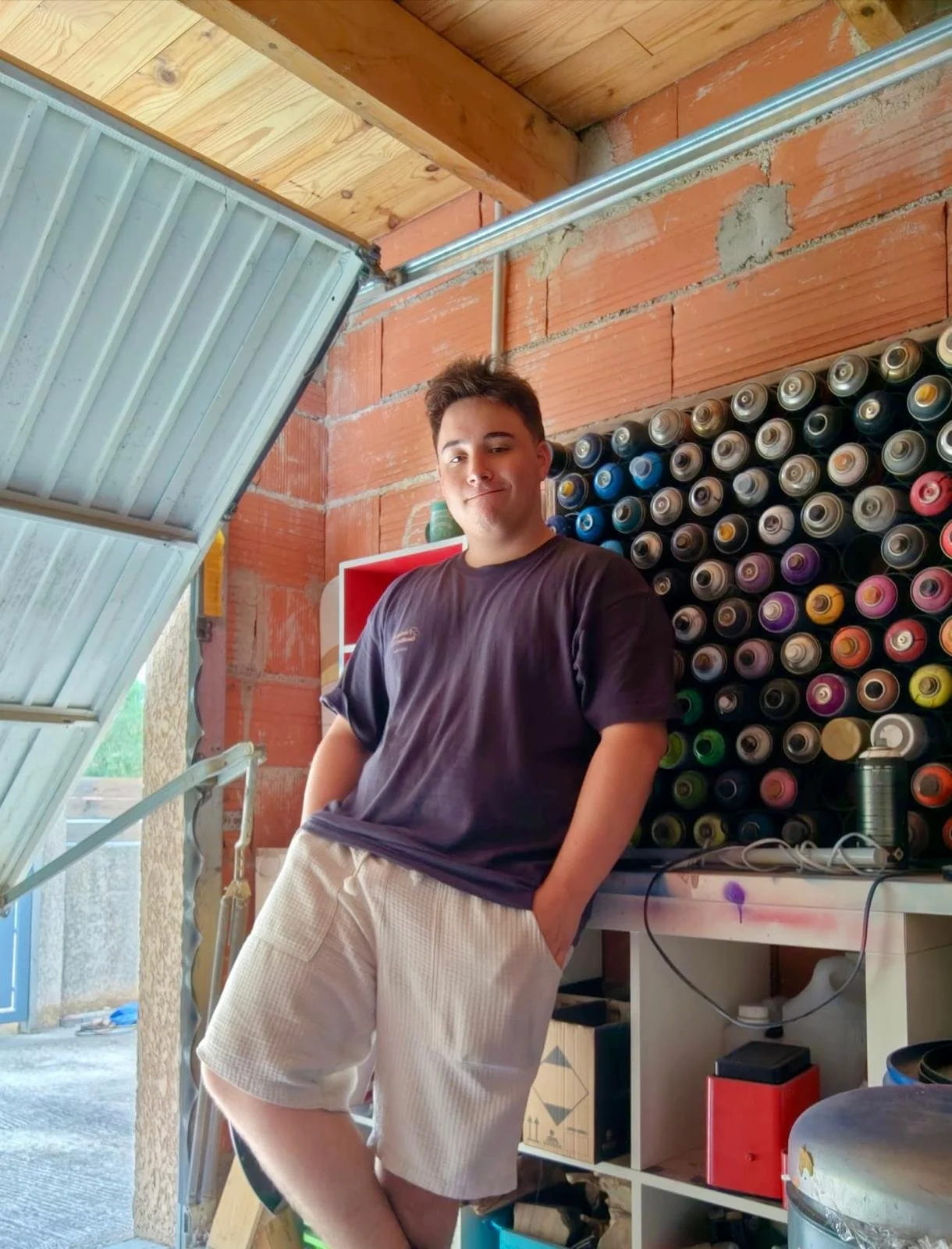
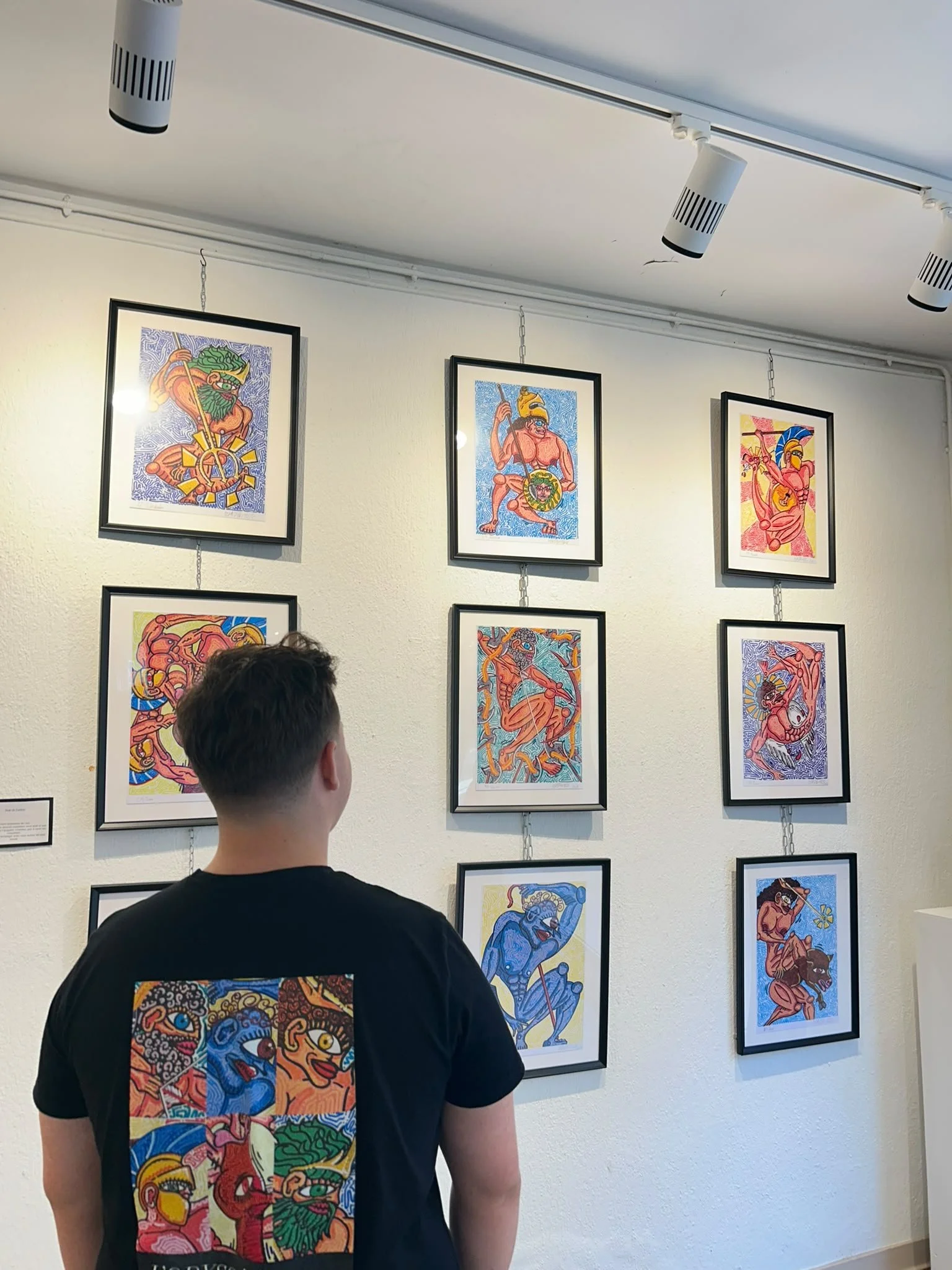
Mathone is an 18-year-old French artist whose work explores the relationship between the body, movement, and material. Through painting and the use of repurposed, cut, or transformed media, he creates a figurative world where bodies appear subject to forces, tensions, and ruptures. The concept of the fracture plays a central role in his artistic process. Far from signifying mere destruction, the fracture becomes a means to transform the medium and reveal new forms. Cutting, irregularities, and distortions thus play an integral part in the construction of the work. His work is also characterized by figures in dynamic, eccentric poses, allowing him to explore movement while questioning how the body interacts with its environment. After beginning to exhibit in the south of France, notably at the Salon des Artistes de Thau, where he received two awards in 2024 and 2025, Mathone is currently continuing his artistic exploration and seeking to develop his work through new media, forms, and collaborations.
What is your background and how did you start your journey in the art world?
“I am a French creator born in the south of France; my name is Mathieu, and I work under the name Mathone. As far back as I can remember, drawing has been a part of my daily life. I grew up in an environment where art was already present, as my mother had been painting for many years. So, I naturally began drawing at a very young age, without really viewing it as an artistic practice in its own right. Above all, it was a spontaneous way for me to express myself and explore the world around me. I kept drawing from childhood through high school, but it was really during my sophomore year that my relationship with art began to shift. I discovered a genuine passion for creating and started looking for new ways to express myself, particularly through painting. One day, I used an old skateboard deck lying around in my garage as a canvas. I started painting on it out of simple curiosity. I enjoyed the experience immediately. The board’s unique shape, its history, and its material made me feel like I was working on something other than just a standard canvas. I then began painting on numerous decks.
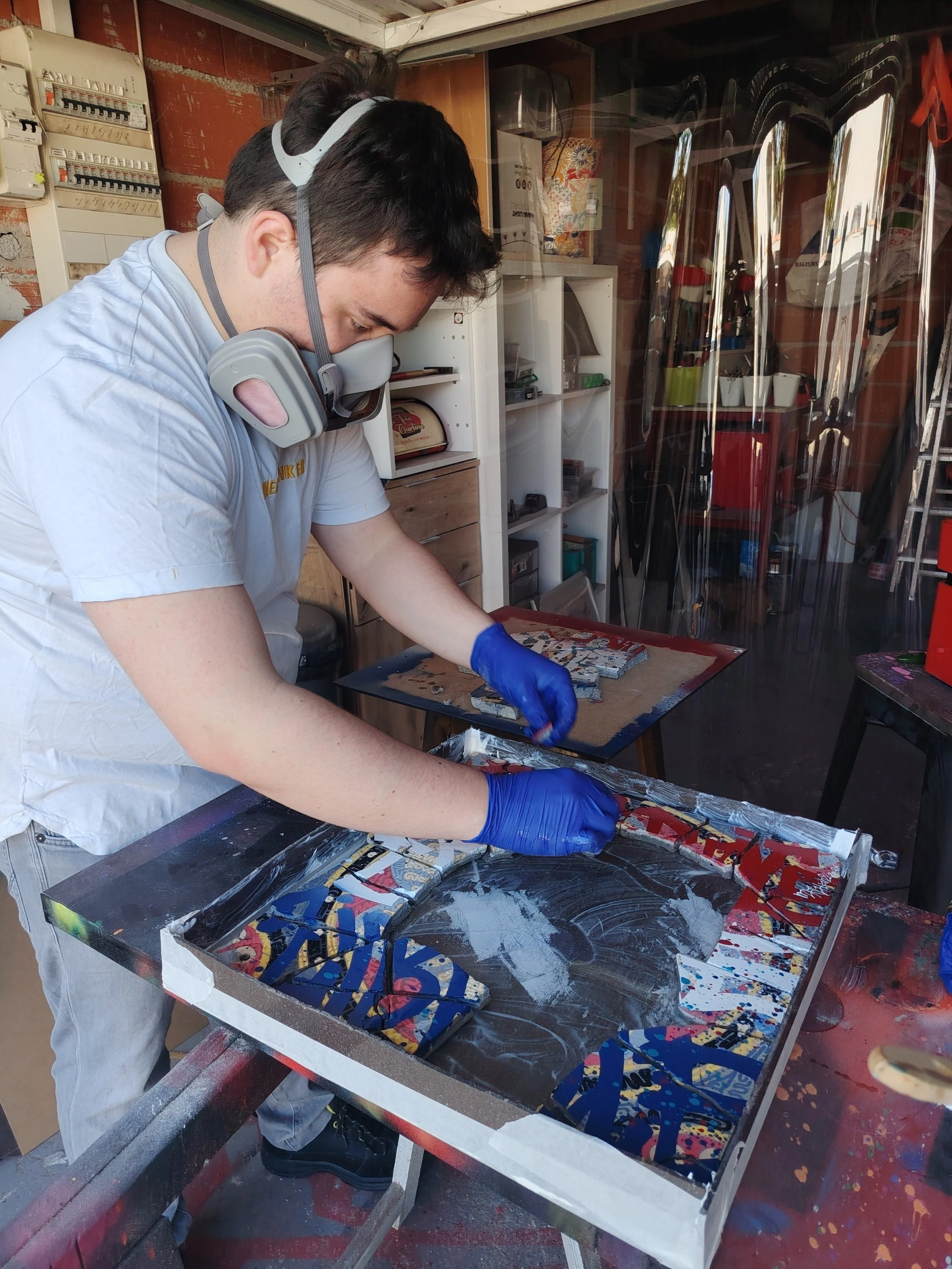
Gradually, I wanted to take things further and stop viewing the board merely as a surface. I wanted to alter its actual shape. So, during my sophomore year, I made my first cut-out piece with my grandfather. We transformed the board, giving it an unusual almost incongruous shape. Once painted, that first experiment convinced me that cutting could become an essential part of my work. I then continued experimenting on my own. I cut into numerous boards, each one gradually becoming a new space for exploration. I was no longer just trying to paint an image; I sought to create a dialogue between the painting and the shape of the support using its breaks, curves, and irregularities to lend a new dimension to my work. Through these experiments, a concept of ‘fracture’ gradually emerged in my work. Fracture became a way to transform the support, but also a more symbolic notion one I translated onto various surfaces, moving beyond just skateboard decks. This line of thought then merged with my interest in the human body, particularly in movement. I began depicting bodies in dynamic poses sometimes eccentric or distorted as if they, too, were subject to forces, tensions, or ruptures. The cut-out shape of the support thus becomes an extension of the body: it accompanies the movement, disrupts it, and fragments it.
My work has therefore evolved gradually, stemming from a highly instinctive approach to drawing, followed by the discovery of painting, and finally, experimentation with material and form. What began with a simple board found in a garage has grown into a genuine artistic exploration of fracture, movement, and the body. It was through these experiences that I truly ‘awakened’ to art by experimenting, cutting, painting, and, above all, by gradually discovering that the support itself could become part of the artwork’s language.”
What does your work aim to say? Does it comment on any current social or political issues?
“I do not necessarily seek to convey a single message; my work often stems from a question: why do we instinctively perceive certain things as negative? The ‘fracture’ lies at the heart of this reflection. It is unpredictable and uncontrollable, becoming a form of destruction akin to creation. It highlights an imperfection, an aspect we strive to conceal, even though it is not negative in itself. It serves as a starting point, an epicenter for a multitude of social and political questions, embodied by symbols and figures drawn from both the mythology of everyday life and human history. Above all, I aim to shift the viewer's perspective and prompt them to question what they believe they understand at first glance.”
Do you plan your work in advance, or is it improvisation?
“Both, actually. Sometimes I start with a very specific idea, one I’ve pondered at length before execution, such as the choice of a character, a material, or a reference, but a large part of the work takes shape during the creative process itself. The way the material is cut or fractured defies total control; much like a shattered windowpane, the final break is unpredictable, meaning the resulting forms and movements can radically transform the initial concept. I actually like preserving this element of the unexpected, as it allows the work to evolve into something I hadn't fully envisioned. In this way, the act of destroying the medium allows the creation to continue.”
Are there any art world trends are you following?
“I am more interested in artists who develop a personal language than in trends per se. I am particularly drawn to practices that blend media, step outside the traditional confines of the canvas, and place real importance on materiality and gesture. I also pay close attention to how contemporary artists reinterpret popular, historical, or mythological references.”
What process, materials and techniques do you use to create your artwork?
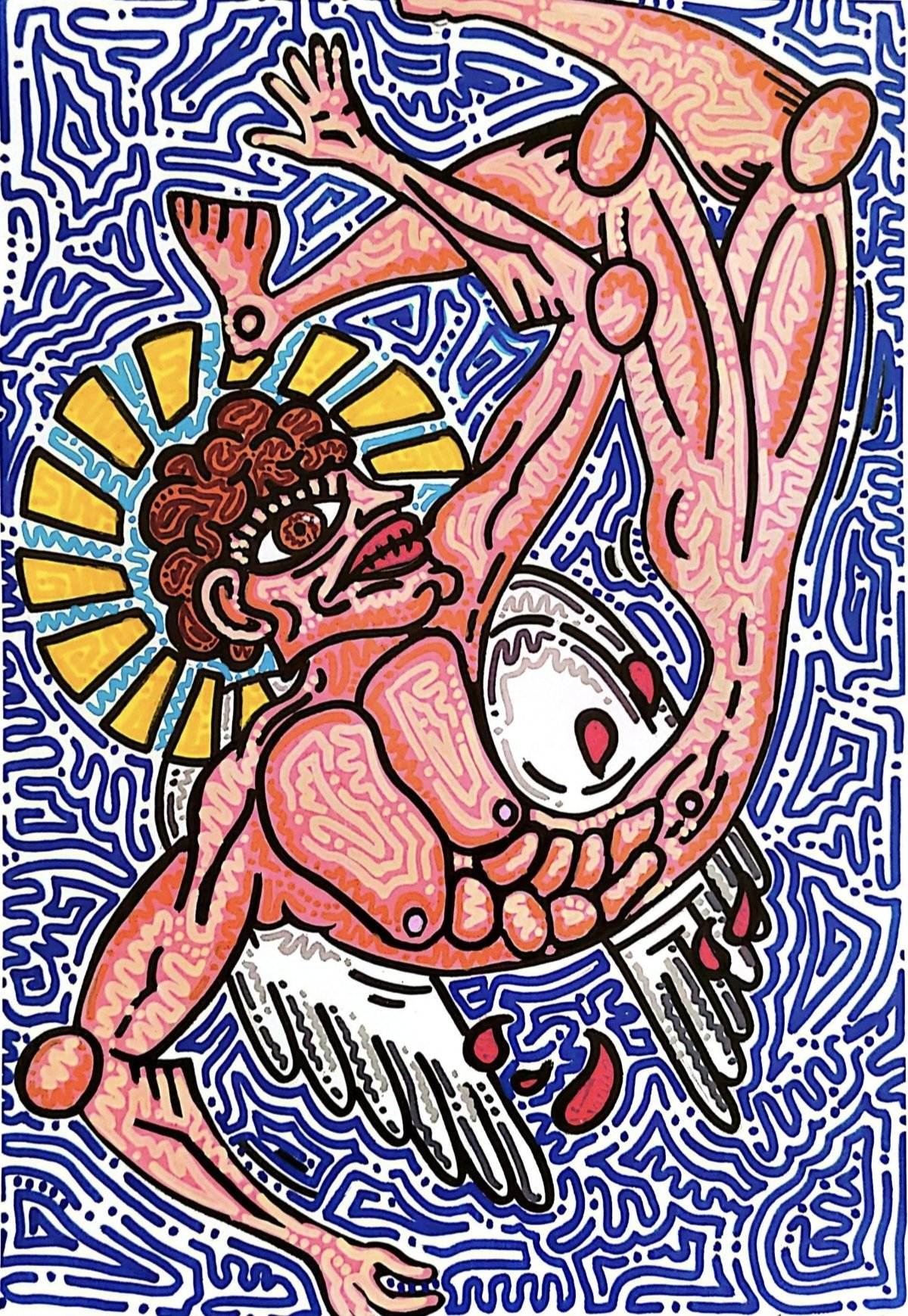
“I work primarily with acrylic paint on a wide variety of surfaces, ranging from wood, plastic, and glass to even metal. While I have worked extensively on skateboard decks, I also use objects or supports that already possess their own distinct shapes and histories. I sometimes cut, fragment, or transform these surfaces, either before or during the painting process. My work relies heavily on drawing, bold outlines, color, and patterns that adorn the shapes and surfaces, thereby saturating the piece. Consequently, the support is not merely a space to be painted; it plays an essential role in the very construction of the artwork.”
What does your art mean to you?
“My art is, above all, a way of understanding my surroundings and my own way of looking at things—whether I like them or not. I did not start with a specific artistic theory; instead, I experimented, cut, and painted, gradually discovering the elements that naturally recurred in my work. Today, fracture, movement, and the body have become ways to explore transformation, the unpredictable, and evolution, as well as how we perceive our surroundings and the things we cannot control or influence.”
What’s your favourite artwork and why?
“For the moment, my favorite piece is ‘Équilibre instable’ (Unstable Equilibrium). It brings together two elements that are essential to my work today: bodily dynamics and the concept of the fracture. The figure’s posture conveys a sense of constant motion, while the shape of the support itself contributes to this tension and acts as an extension of the body. I say ‘for the moment’ because I am experimenting and seeking to develop works that push the boundaries of what I can achieve in terms of form, materials, and subject matter alike.”
Have you had any noteworthy exhibitions you'd like to share?
“I began exhibiting in the south of France before taking part in various art openings and events across the region. Subsequently, I exhibited twice at the Salon des Artistes de Thau, where I received two awards: second prize in the ‘Mixed Media’ category in 2024, followed by the City Prize in 2025. This latter award gave me the opportunity to hold a solo exhibition in Frontignan, alongside the other two City Prize winners. At just 18 years old, I view these experiences as the initial steps of a journey I fully intend to pursue and develop. I would like to gradually exhibit in different regions of France and, perhaps eventually, internationally. I know I still have much to learn and explore; it is precisely this evolution that interests me, as it lies at the very heart of my work.”