
Interview
Mandy Maples
Mandy Maples (b. 1973) is a self-taught, contemporary visual artist whose work examines themes of human connection, emotional healing, spiritual longing, and transformation. Through figurative compositions and emotionally evocative imagery, her paintings explore the nuanced space between grief and hope, isolation and intimacy, and brokenness and restoration. Drawing upon deeply personal experiences, Maples creates works that invite viewers into moments of vulnerability, reflection, and quiet resilience. Her use of gesture, atmosphere, and layered visual narrative enables each piece to convey emotional depth while remaining open to individual interpretation. Her artistic approach balances emotional intensity with deliberate composition, texture, and spatial harmony. Her work aspires not only to be observed, but also to be experienced, fostering environments of contemplation and connection within both private and public spaces.
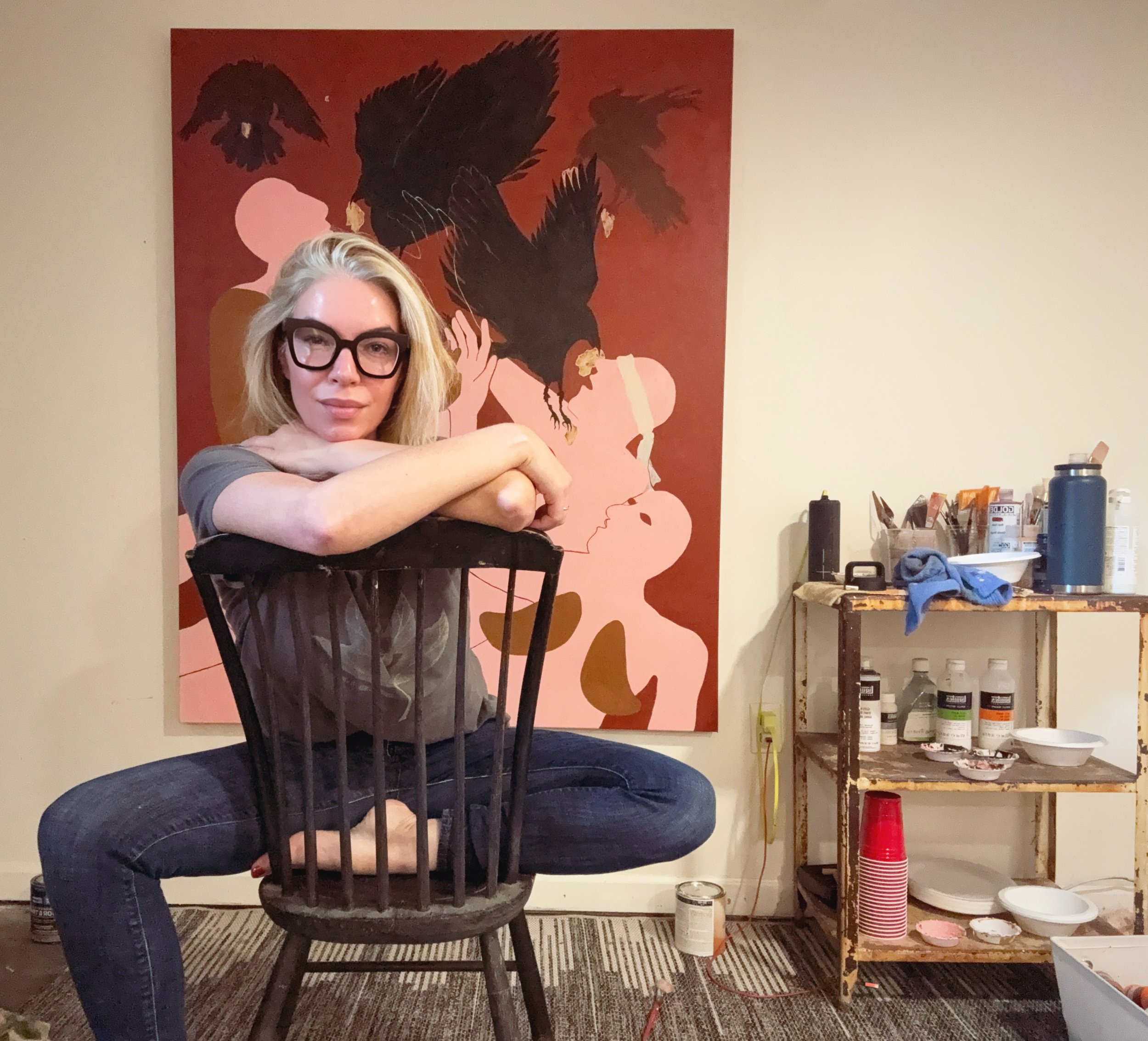
Maples continues to cultivate a body of work centered on redemption, human emotion, and the transformative power of beauty and storytelling through art. Since becoming a full time artist in 2013, Mandy has become a widely-collected, international artist, showcasing her work across the world. Her art was highlighted at the Art Shopping Exhibition at Le Carrousel du Louvre, in Paris, France, in October of 2017. Over the years, her groundbreaking work has been featured on many art and design blogs, and included in numerous magazines such as Birmingham Home Magazine, Southern Spaces Magazine, Southern Style Magazine and Good Grit Magazine. Mandy was featured in the coffee table book, “City Farmhouse Style: Designs for a Modern Country Life,” by Kim Leggett.
What is your background and how did you start your journey in the art world?
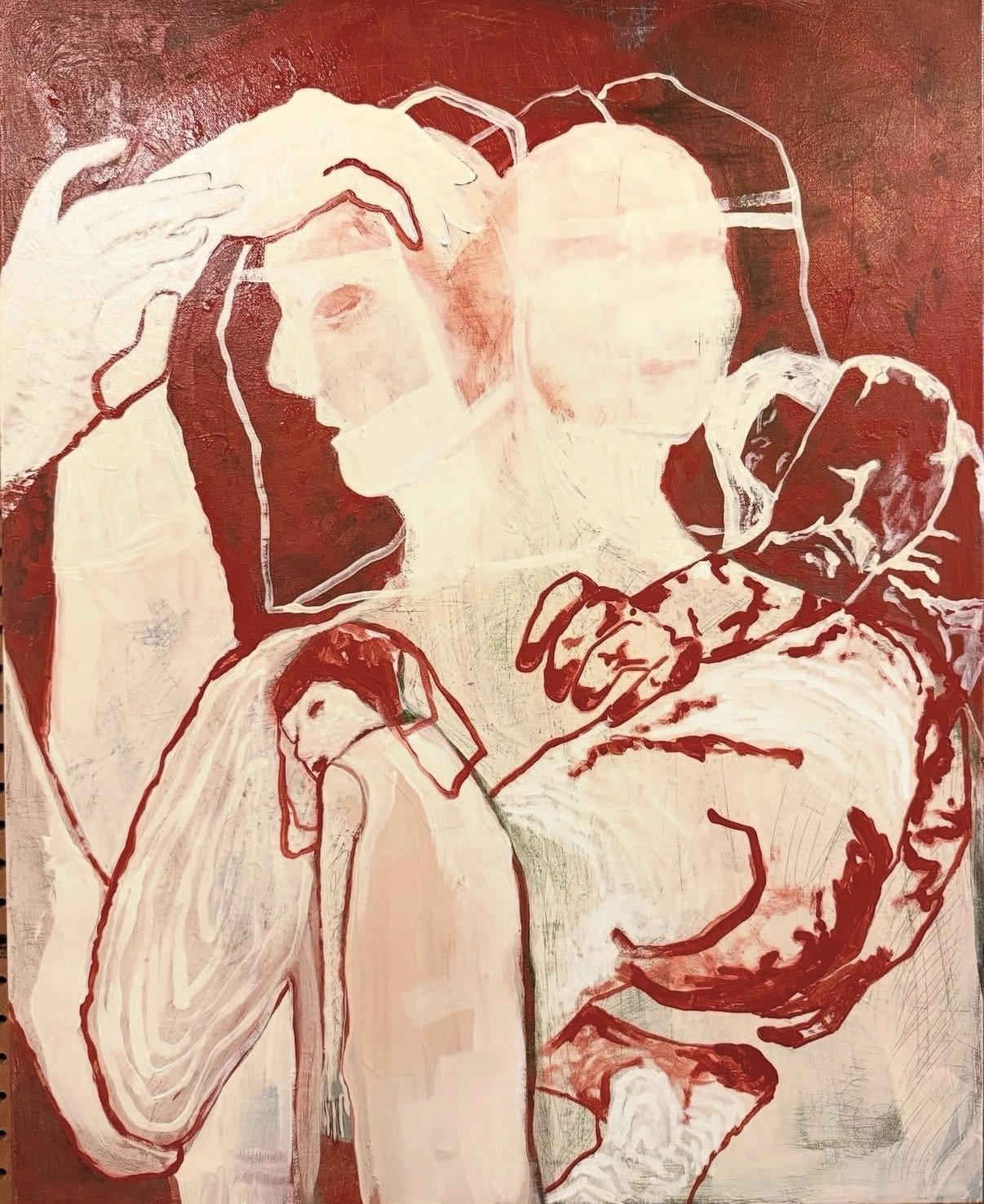
“I knew as a young child that I wanted to be an artist and was always experimenting in my paintings. I had an amazing art teacher in High School who allowed me the freedom to create in my own unique way. In my down time, I studied and copied the masters so that I would look more polished. After High School, I continued my art journey as a studio artist in college. The foundational drawing principles and color theory in painting I was learning took my art to another level but I was undisciplined and rebellious and did not like being told what to paint and draw and found that being told what was acceptable and unacceptable in my unique voice as an artist was disheartening, so I changed my major to marketing. You could say that was the beginning of my art journey, though I was not a full time artist for many years after that. While I was painting commissions here and there, the major shift in my career did not come until 2013, when I decided to become a full-time career artist.”
What inspires you?
“The human condition is what intrigues me. I suffered extreme depression and a crippling identity crisis in 2020 after a painful divorce and that experience changed my art. I had primarily been painting abstracts and some figurative work before that happened, but after that trauma happened in my life I began painting more figurative work that explored the trauma I had just experienced. My work now exemplifies depression, growth in my spiritual life, self-awareness, deciding to be happy, and healing. from trauma.”
What themes do you pursue? Is there an underlying message in your work?
“The underlying message in my work is hope. I attempted suicide in 2020 and that action was a marker in my life. Coming to terms with my actions and how it affected me and the people I love afterward was and is a journey that my work explores. Finding hope in this life is something that I believe resonates with everyone. We all have our own battles that we live with, and when we know there is hope, we can can endure and press on.”
How would you describe your work?
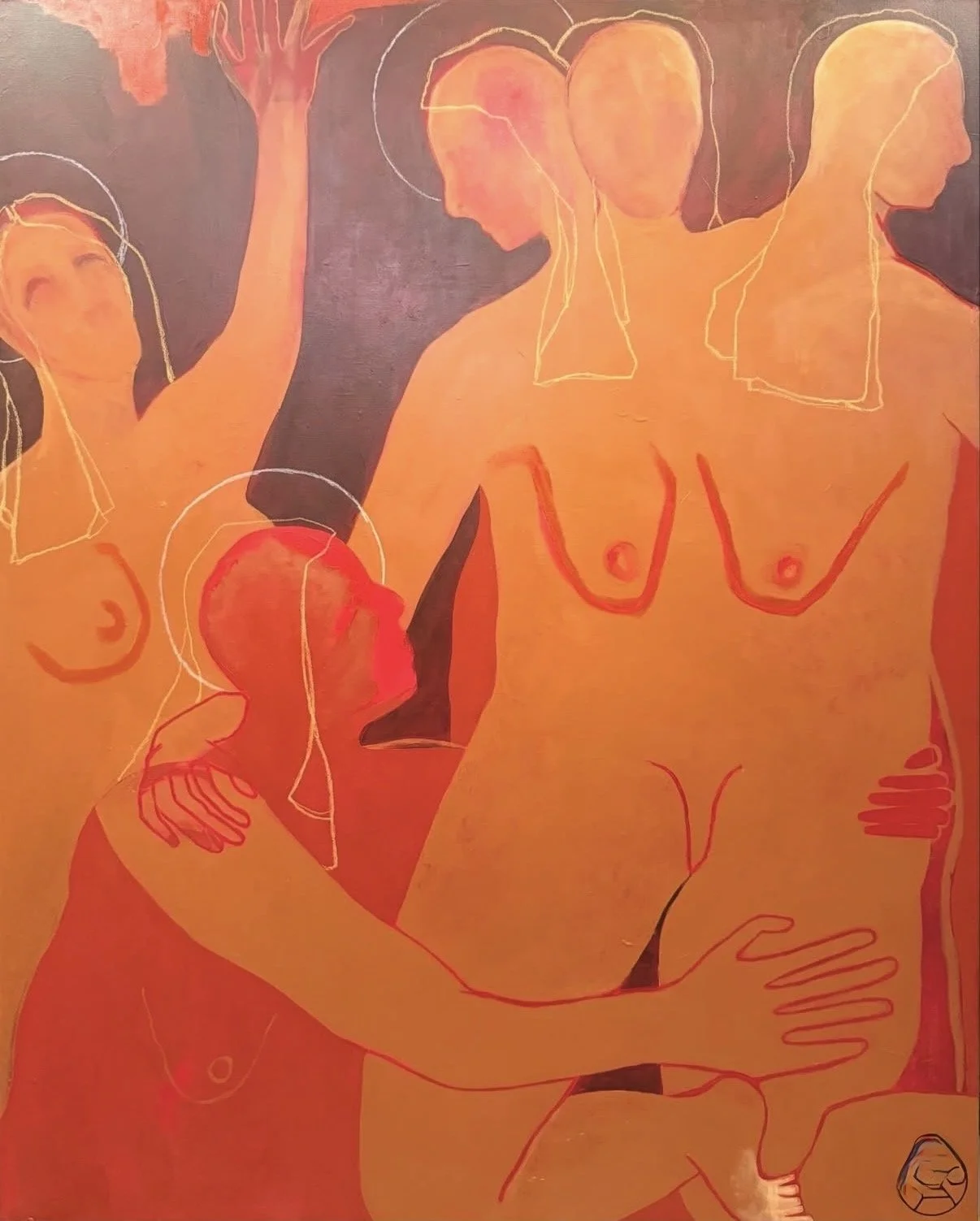
“The only way I know how to answer this question is to try to explain it to someone who has no eyesight. The human bodies I paint in my work are not always realistic; some have dysmorphic features and this is done for a reason. We are not perfect creatures, we are not perfectly symmetrical in our bodies or in our minds. Some of my figures have two or three heads, suggesting we can be one person but with different personas or contrasting points of view all at the same given time. My work often depicts nude female bodies because I am often painting my own vulnerabilities and shame along with the joy and celebration of my femaleness.”
Which artists influence you most?
“I have so many! I am currently in love with the works of Sasha Gordon. Her work is so vulnerable and intriguing. I also love Celeste Rapone for her still-life depictions of women in everyday settings. I think they are both brilliant and fearless in their art.”
What is your creative process like?
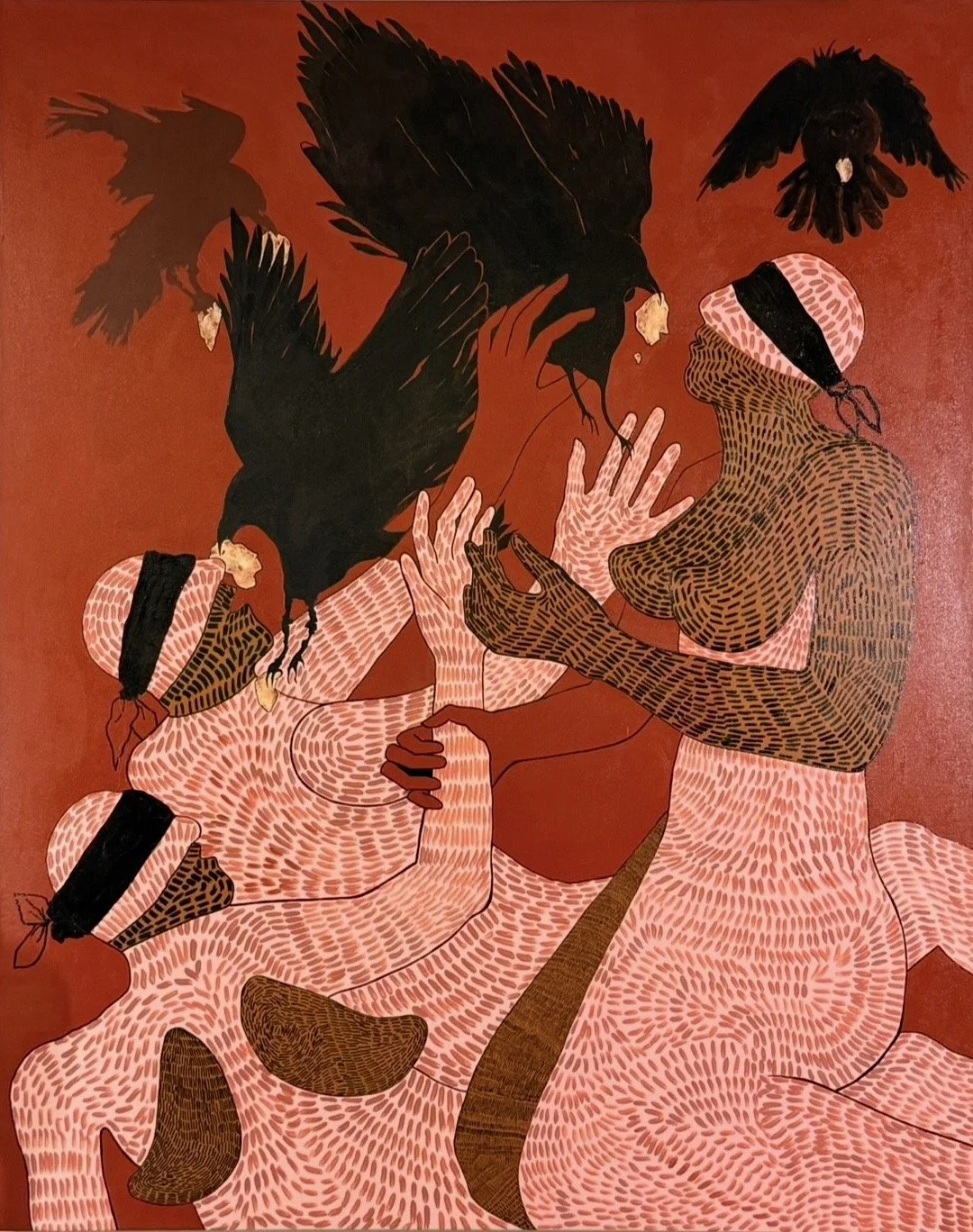
“Music is a big part of my studio process. I will often make playlists of songs that move me and create the environment I need to live in mentally while I am creating a certain work. My work always starts with an idea I want to convey and then I start sketching out my ideas. I then decide what colors suit the work. From there I sketch my ideas to my canvas and begin the journey for that piece.”
What is an artist’s role in society and how do you see that evolving?
“Every artist, whether a visual artist or musician, etc., are truth seekers and truth tellers. I believe artists have the ability to speak to a soul in a way that nothing else can. My hope is that artists realize the impact that they have and embrace this magical role in their practice.”
Have you had any noteworthy exhibitions you'd like to share?
“I had the amazing opportunity to show at the Carrousel de Louvre in Paris in 2017. My art was in the same building as Leonardo DaVinci's’ Mona Lisa. Talk about putting a check mark on a bucket list! It was an incredible experience.”
Website: www.Samaplesstudio.com
Instagram: @Mandy_maples_art