Interview
Lydia Lekka
Lydia is a Greek artist working across Byzantine iconography and contemporary painting. Her work explores the relationship between light, colour, spirituality and human emotion, drawing both from the centuries-old tradition of iconography and from her own personal experiences. Through her art, she seeks to create space for reflection and emotional connection, inviting each viewer to find something of their own within the work.
What is your background and how did you start your journey in the art world?
“My journey with art began rather unexpectedly when I was 21. At that time, I was going through a very difficult period in my life. I was fortunate enough to come close to two accomplished iconographers who not only introduced me to the world of Byzantine iconography, but also supported me personally during a time when I truly needed it. I often say that I owe everything to them. They were the people who made me discover and love iconography. They taught me much more than technique. Through them, I began to understand the patience, discipline and reverence required when working with a sacred image. I spent about a year close to them, learning, observing and absorbing as much as I could. After that year, I felt that I needed to begin my own journey to explore what I could say through art and, eventually, to find my own voice. That search has never really stopped. I don't think finding your artistic voice is something that happens once and is then finished. It changes as you grow, as you experience life and as you learn to see differently. My background in iconography remains an essential part of who I am as an artist, but it has also given me the foundation from which I could explore other forms of expression.”
What inspires you?
“I am inspired primarily by human experience. People, emotions, memories, silence, faith, light and particularly those moments that stay somewhere inside us long after they have happened. Sometimes inspiration comes from something very simple: a particular expression on someone's face, the way light falls on something, a memory that suddenly returns, or an emotion that I cannot quite put into words. Light is particularly important to me. In Byzantine iconography it has an obvious spiritual significance, but I also experience it in a very personal way. Light can change the entire emotional character of an image. It can make something feel peaceful, distant, intimate or hopeful. I am also deeply inspired by the possibility of transforming difficult experiences into something beautiful.”
What themes do you pursue? Is there an underlying message in your work?
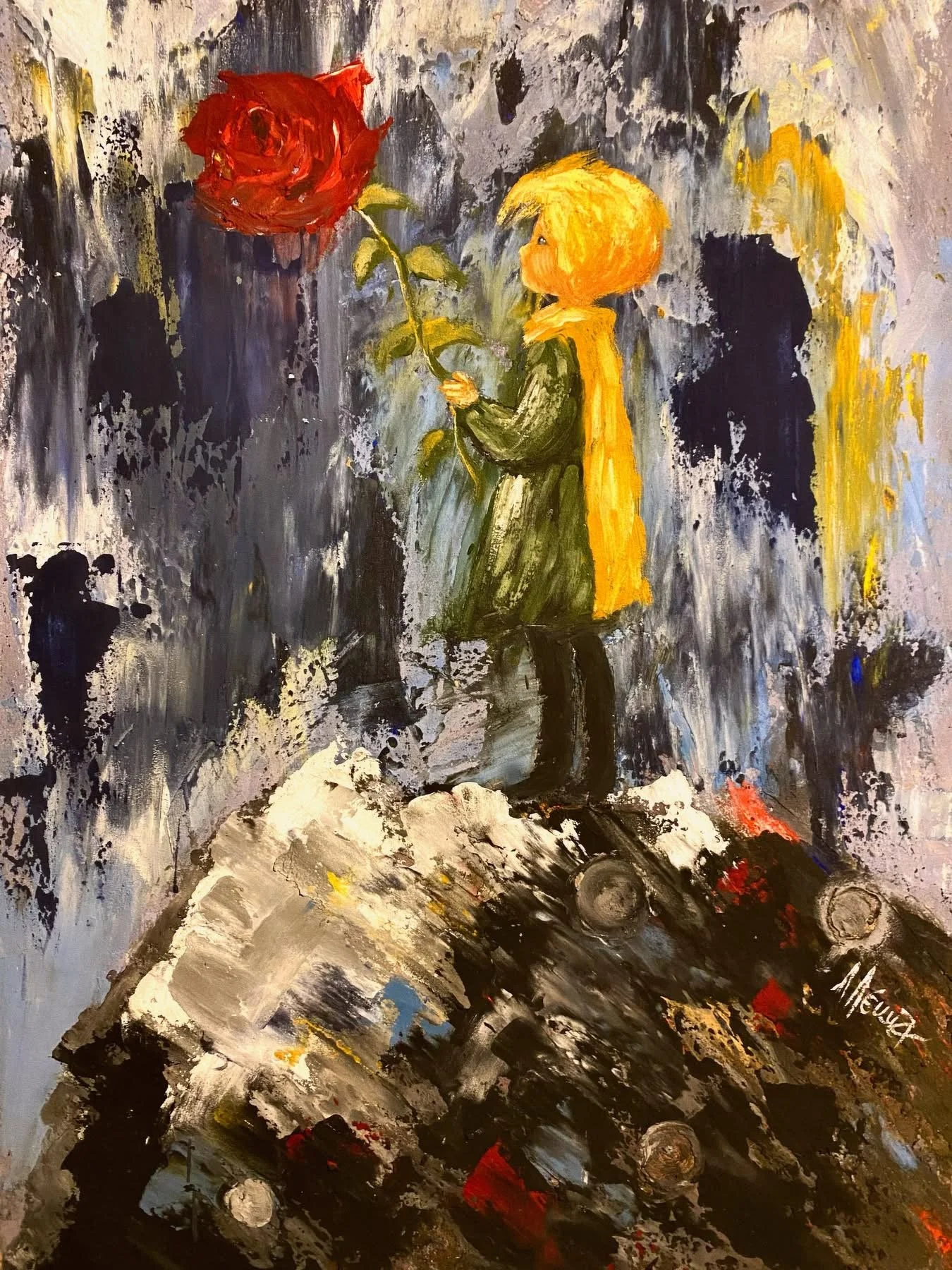
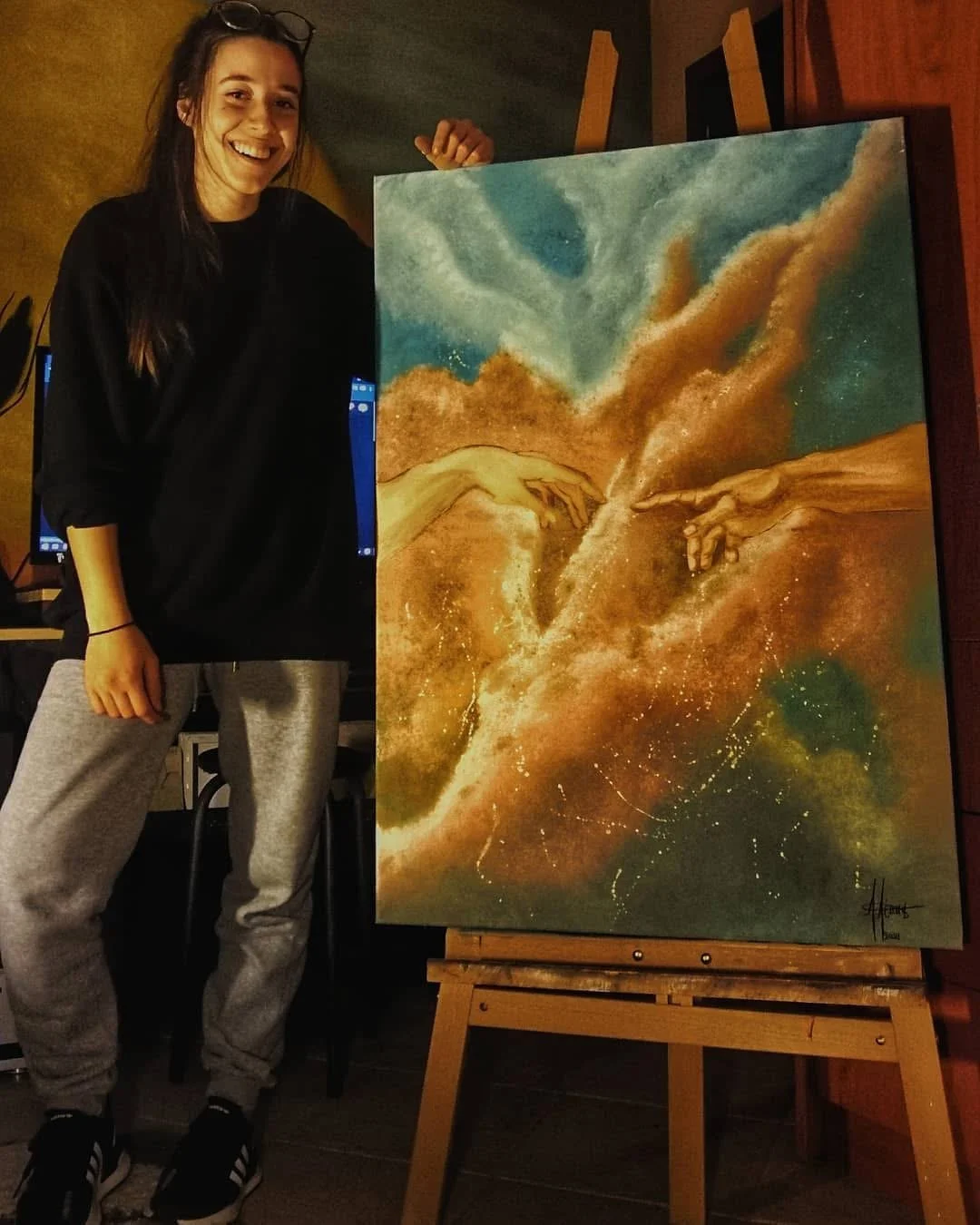
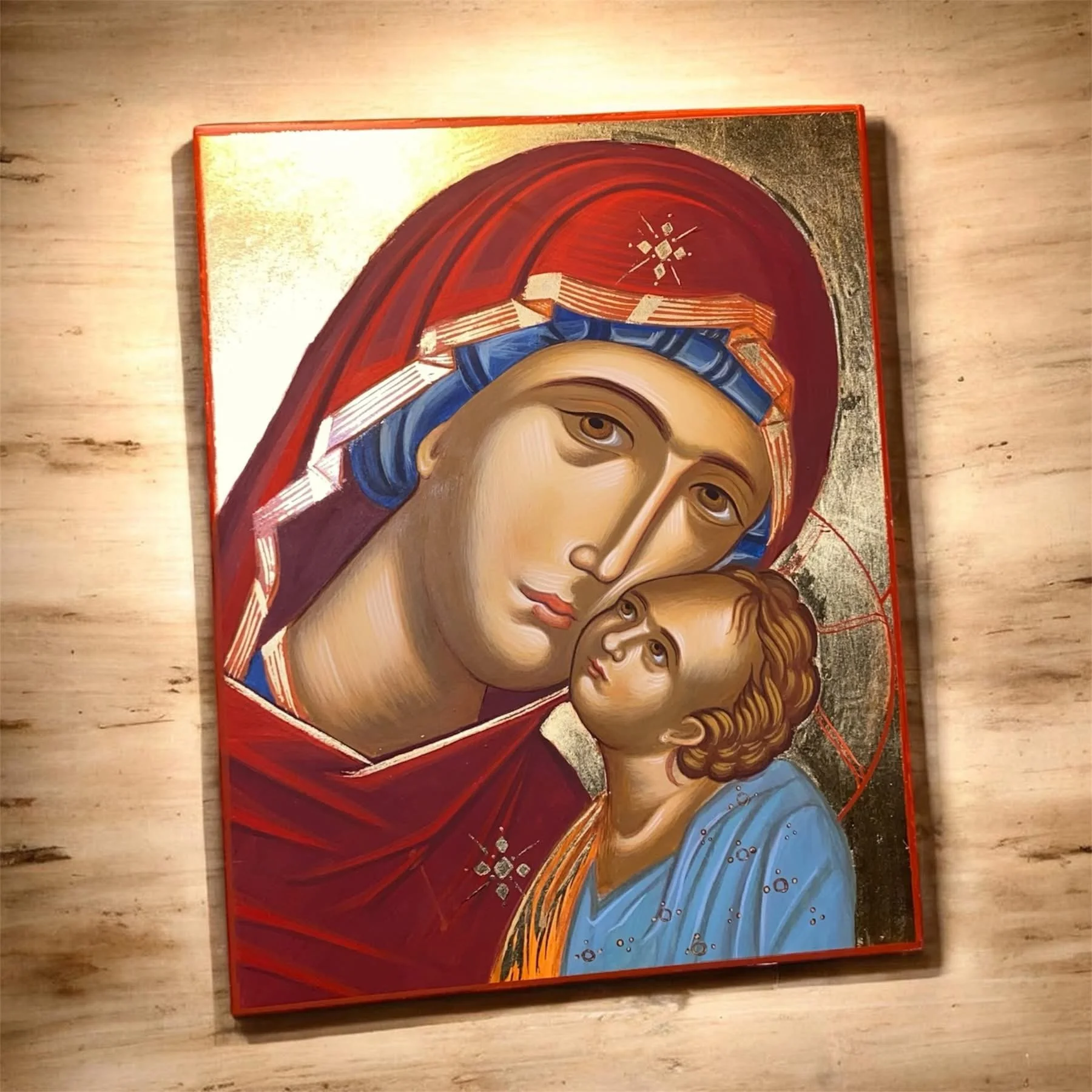
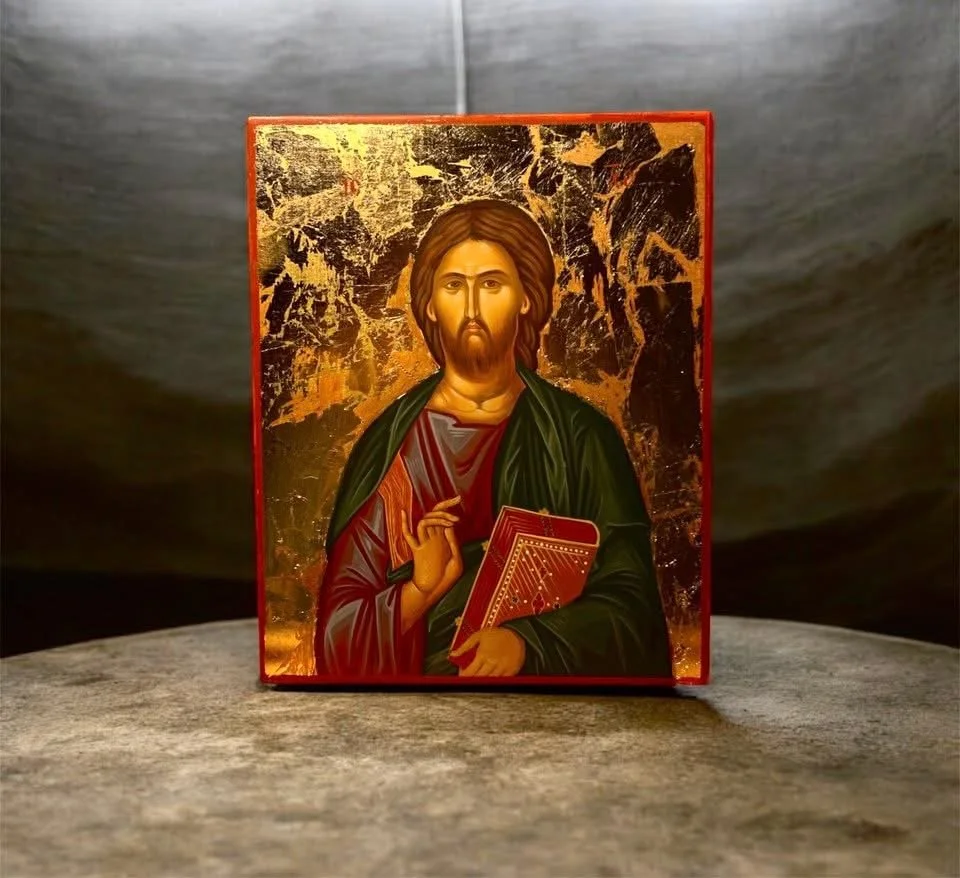
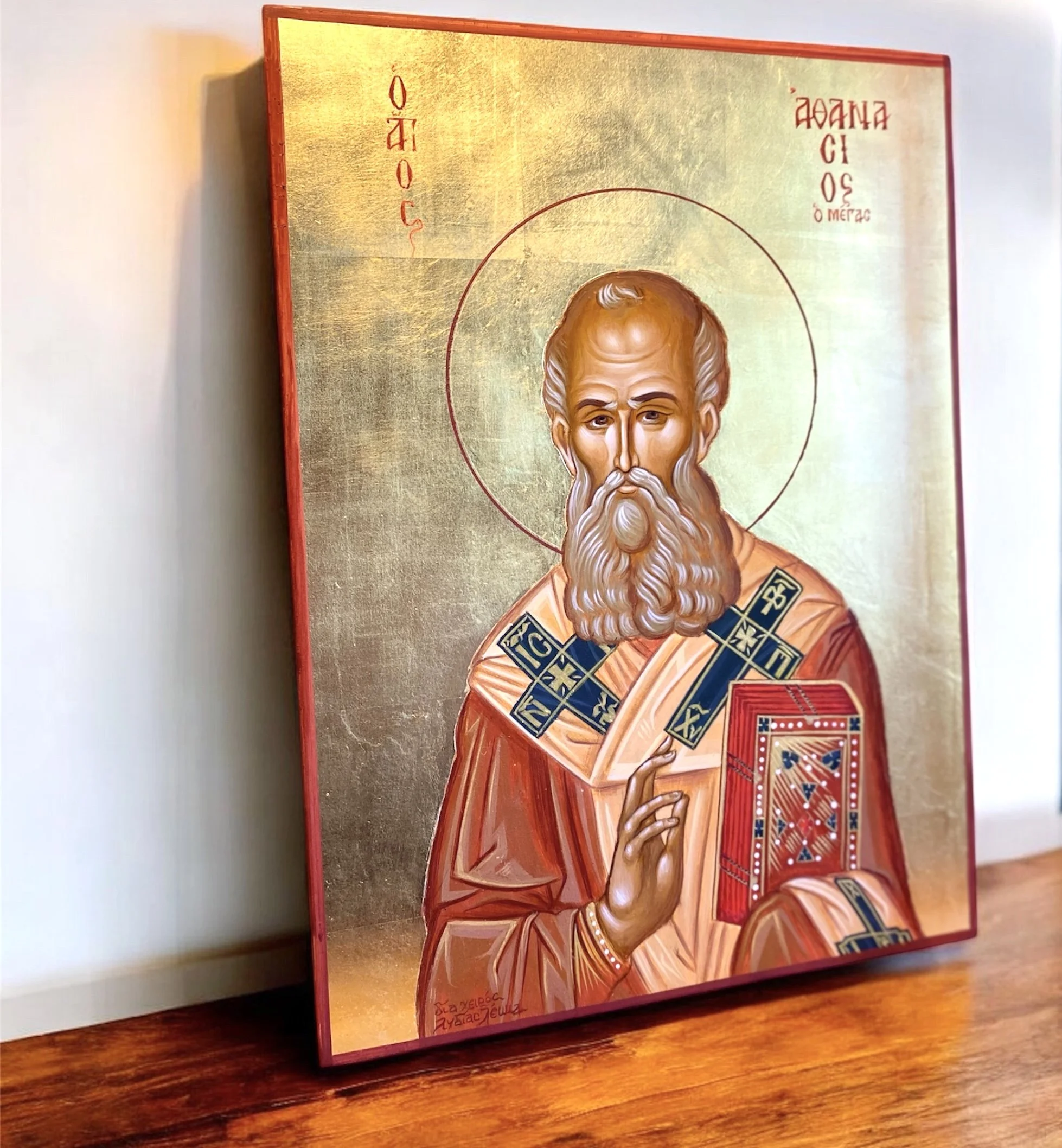
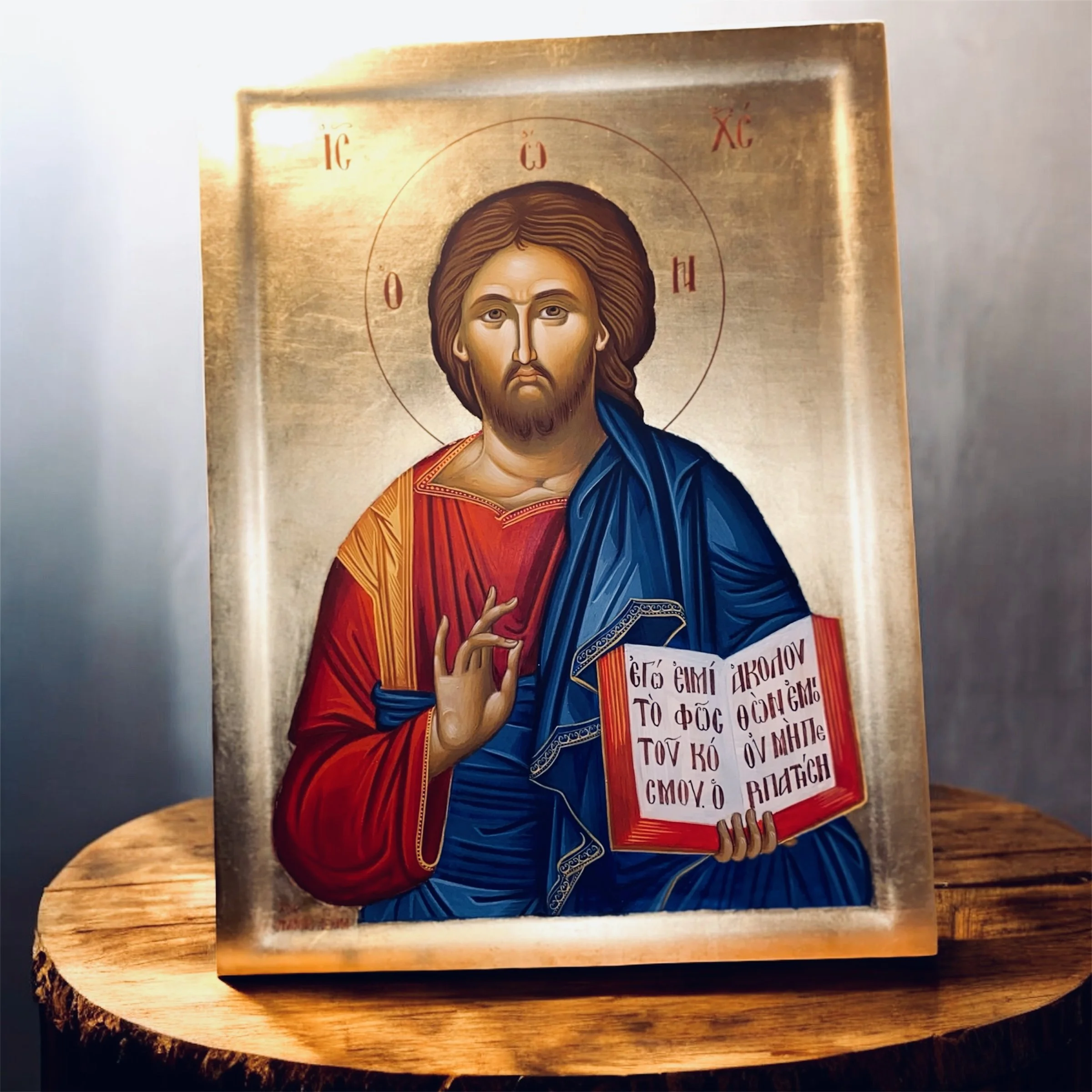
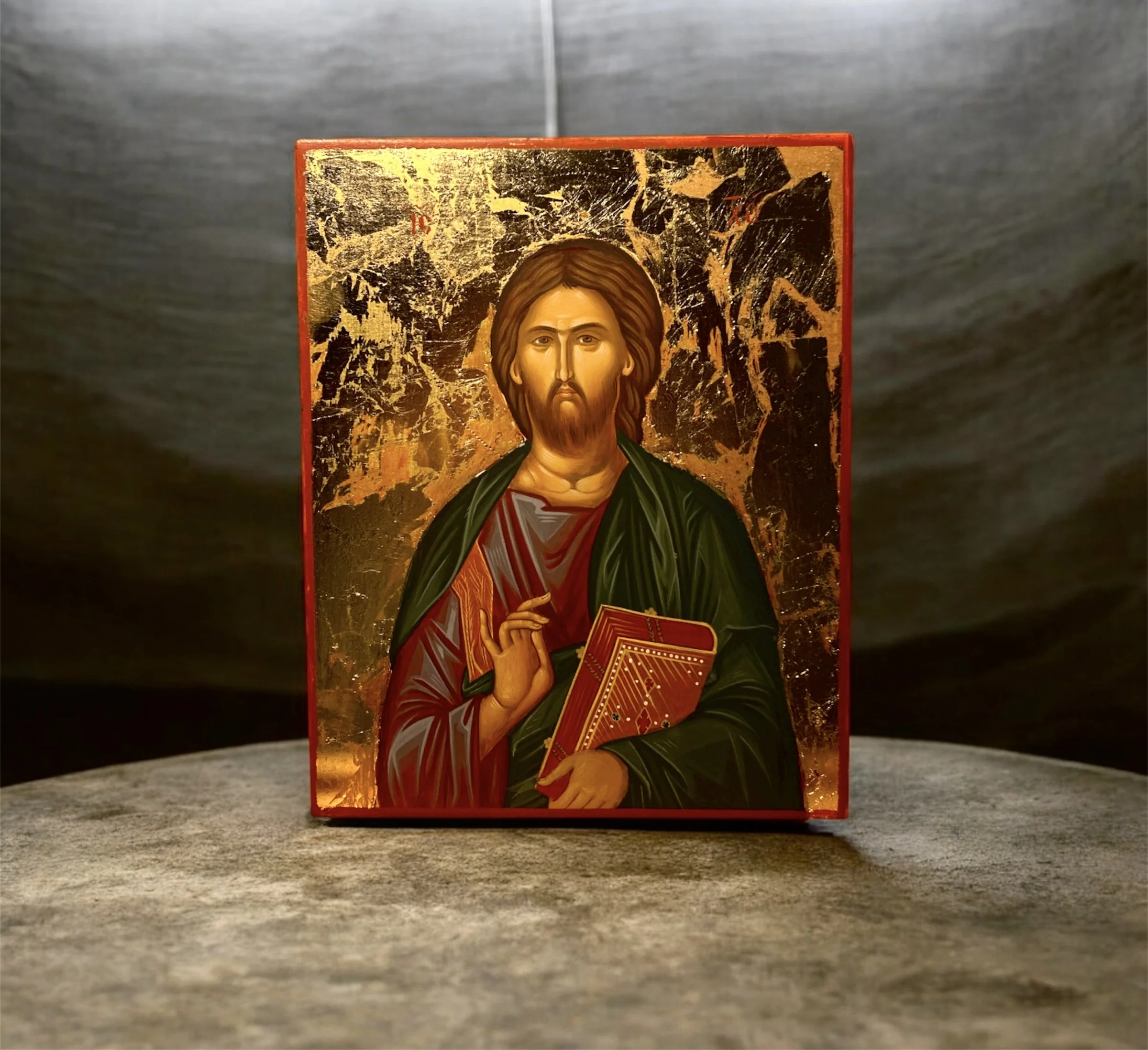
“The themes I return to most often are spirituality, memory, emotion, human connection and the inner world. My two areas of practice, Byzantine iconography and contemporary painting, may look very different, but for me they are not completely separate. In iconography, I work within an established sacred tradition. The prototypes, symbolism and visual language carry centuries of meaning, so there is a responsibility to approach them with respect. I don't see the icon as something that should simply be modernised for the sake of being contemporary. I see it as a living tradition that deserves to be understood and preserved. My own practice uses traditional processes such as egg tempera and gold leaf, depending on the work. My contemporary paintings give me another kind of freedom. I work primarily with acrylics, building layers, textures and fluid forms. Rather than starting with a specific subject, a work can begin with an emotional impression, a memory or something I have experienced internally. The underlying idea connecting both is that an image can communicate something that words cannot. But I don't want to dictate what that something should be. I want the viewer to have the freedom to see their own soul in the work. Not mine. Their own. If someone looks at one of my paintings and suddenly recognises a feeling, a memory or a part of themselves that they hadn't consciously thought about, then something meaningful has happened between the work and the viewer. That, for me, is one of the most beautiful things art can do.”
How would you describe your work?
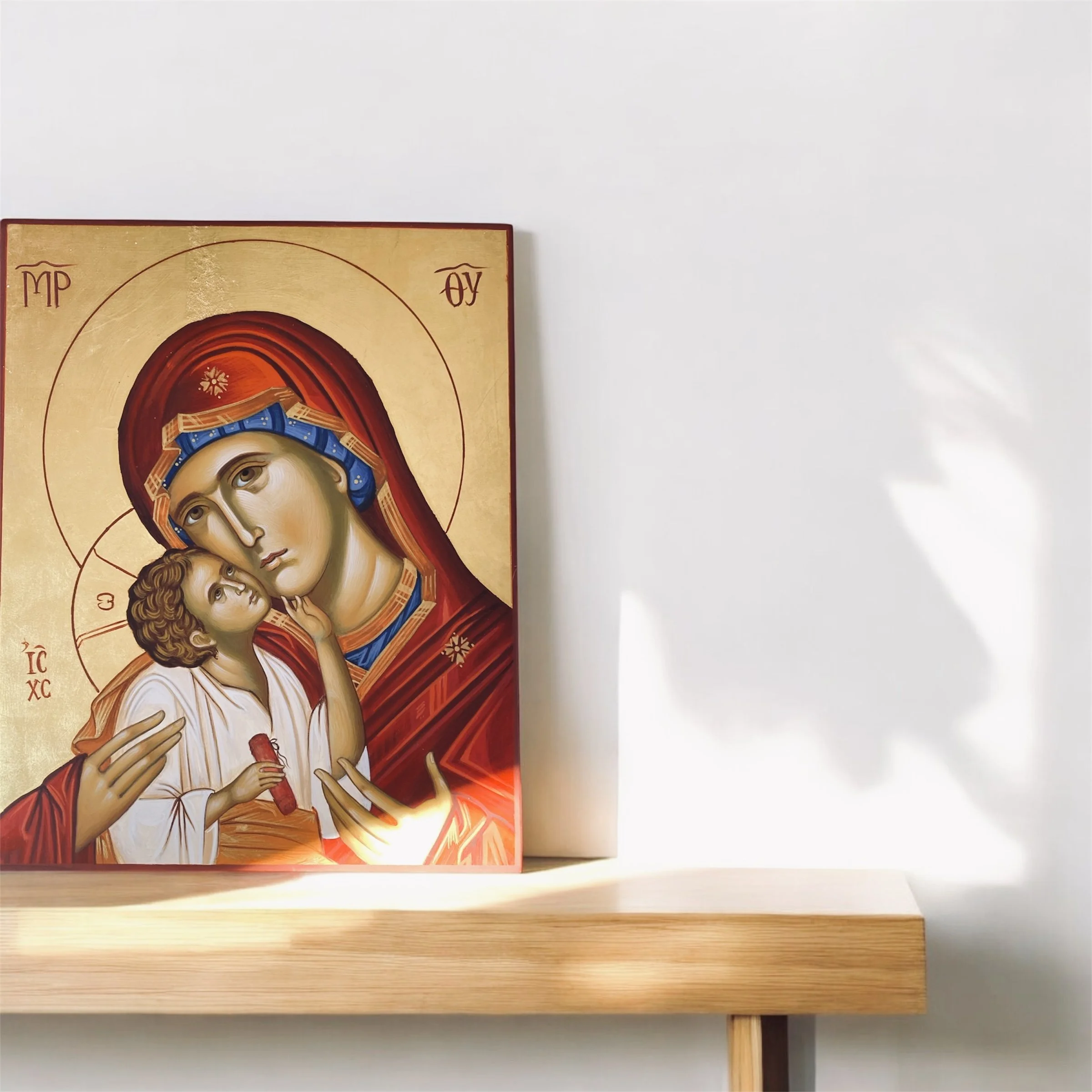
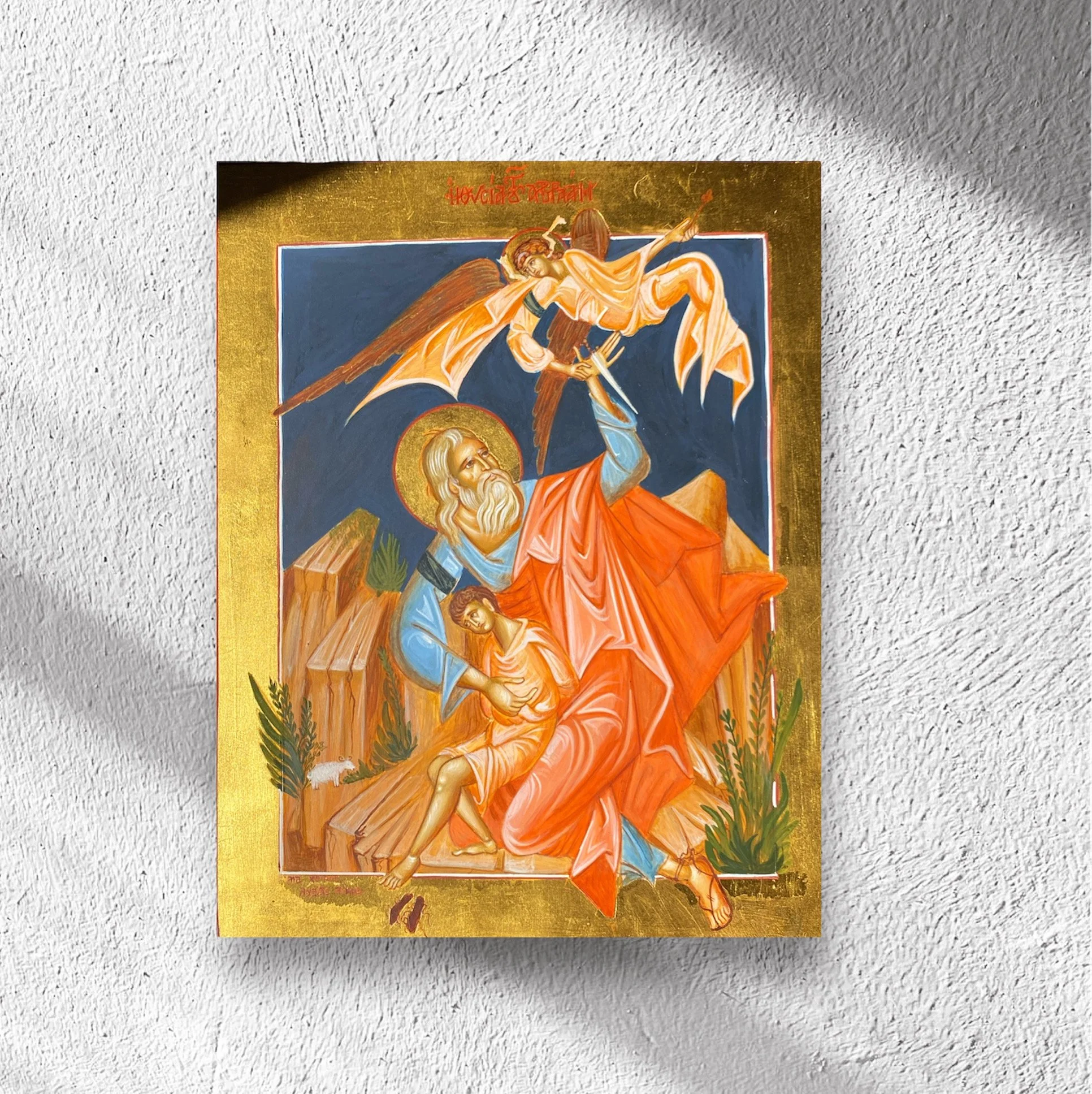
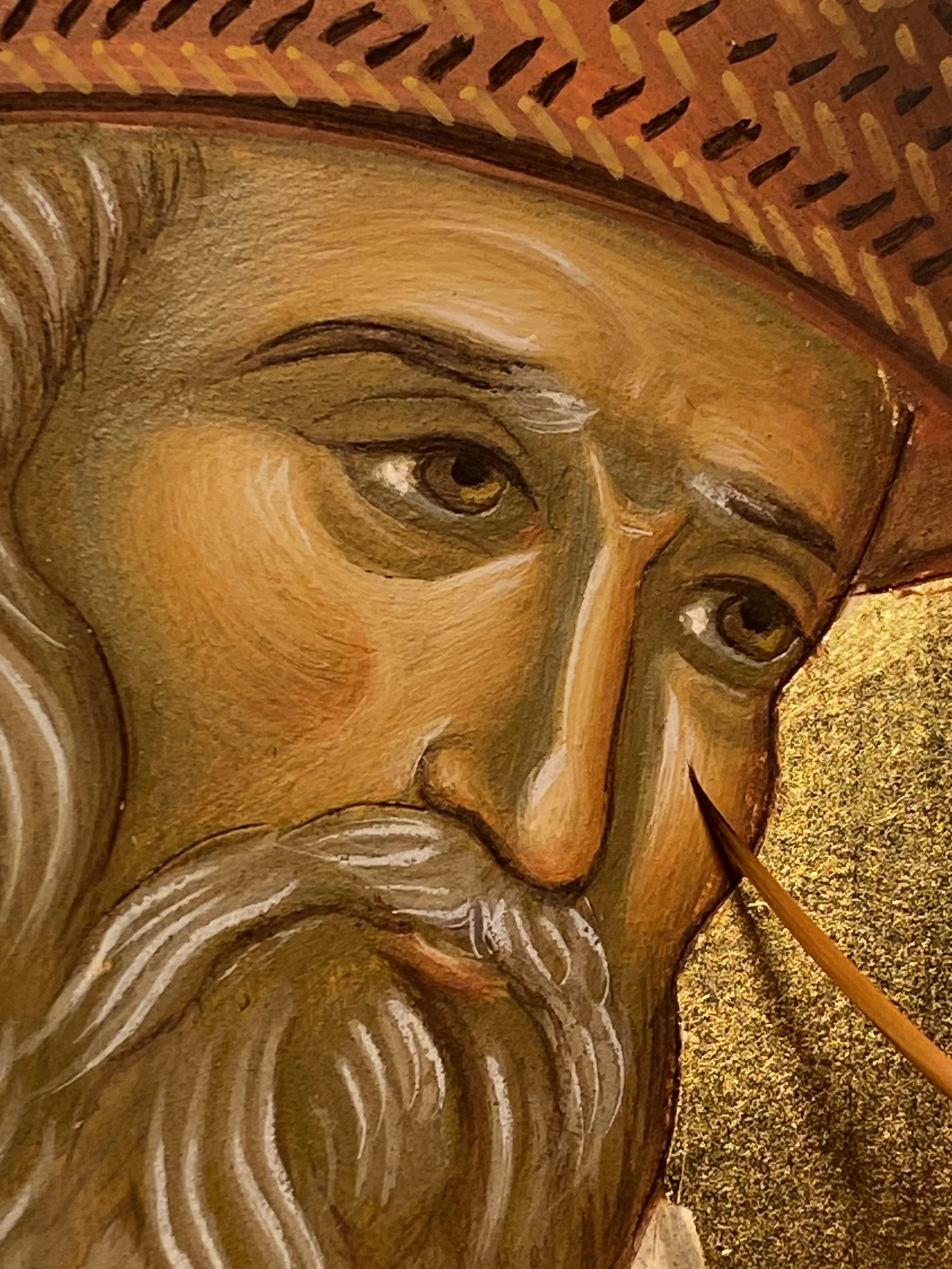
“I would describe my work as a meeting point between tradition and personal expression. One part of my practice is deeply rooted in Byzantine iconography. I work with the discipline of a centuries-old visual tradition, where the materials and process matter enormously. Egg tempera, natural pigments where appropriate, wooden panels and gold leaf are not simply materials to me; they are part of a relationship with the tradition itself. On my icons, I use 22k or 23.75k gold leaf for halos and backgrounds, respecting the role of spiritual light within the iconographic language. My contemporary paintings are much more intuitive. I primarily use acrylics and build the work through layers, texture and movement. They often begin without a completely defined image. Instead, I allow an internal impression or emotion to guide the process. What connects the two is not necessarily the technique. It is the intention. I am interested in what happens beneath the visible image. I want the work to have an emotional presence, but I don't want to explain everything for the viewer. I believe that leaving something unresolved can be much more powerful than giving someone a complete answer.”
Which artists influence you most?
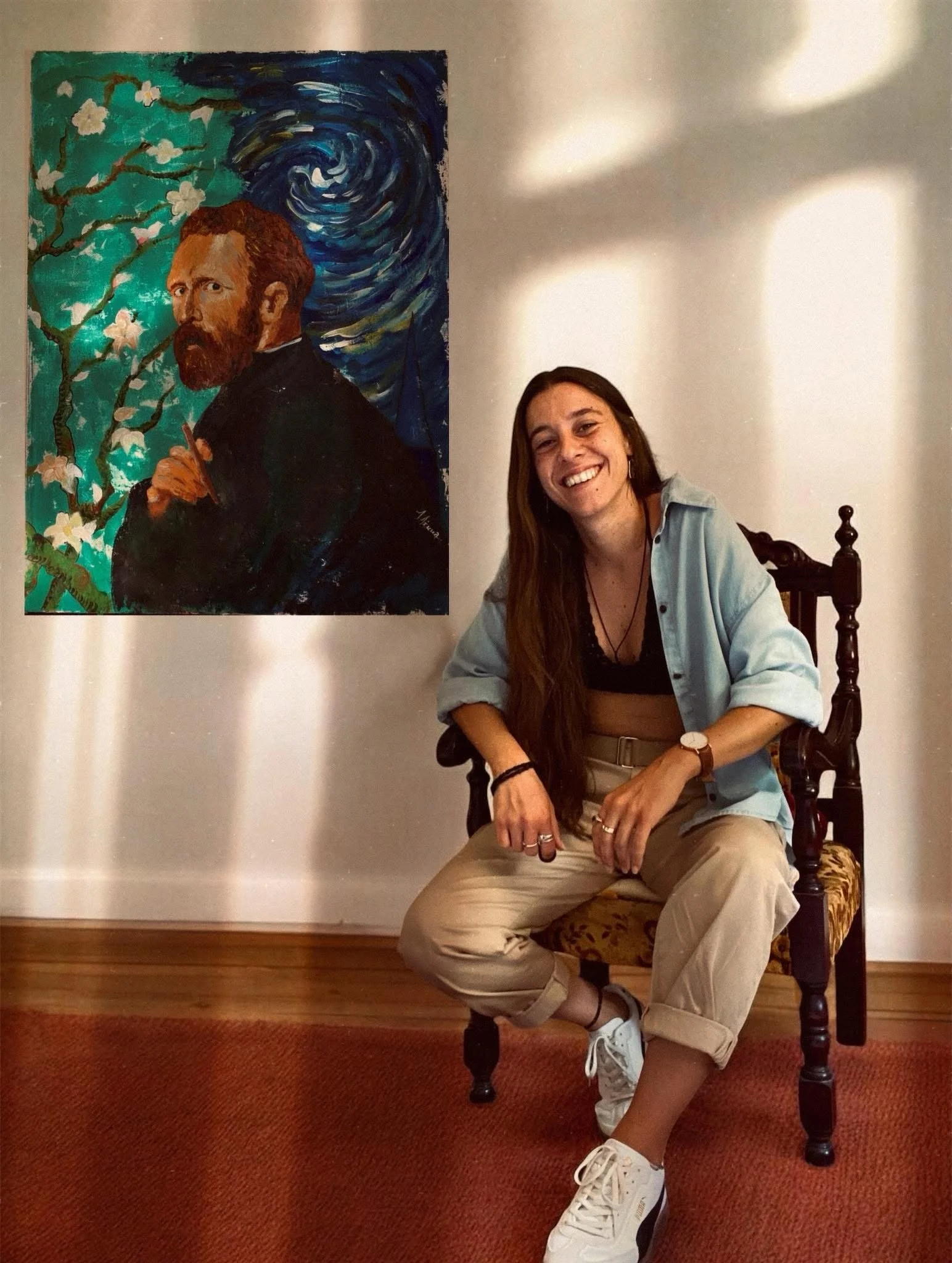
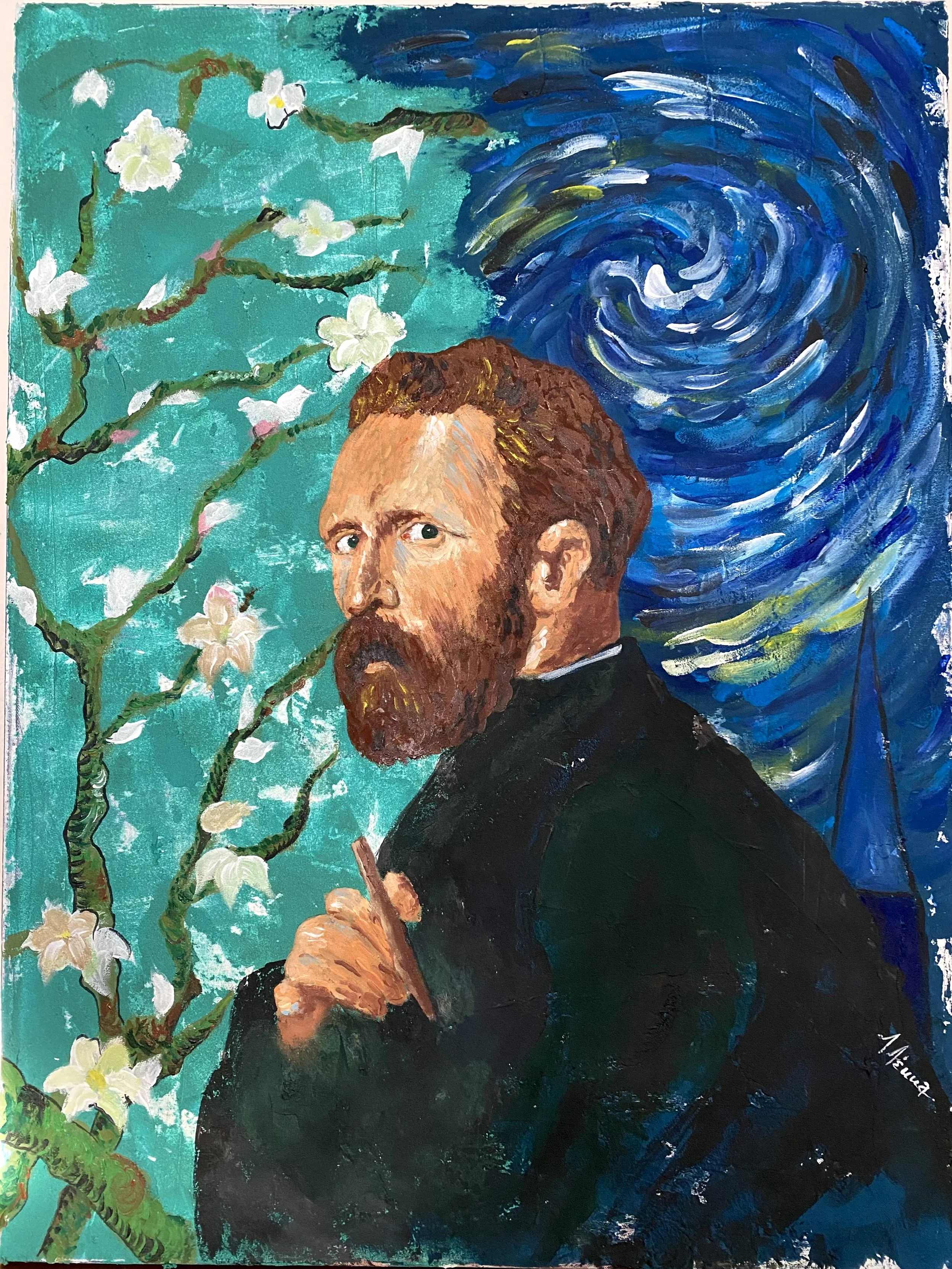
“Without hesitation, Vincent van Gogh is the artist who has influenced me most deeply. Of course, I admire his work, his colour and the way he transformed the world around him into something so intensely personal. But what draws me to him goes much further than his paintings. I have always been deeply moved by his life. I feel that I understood something of his loneliness, his sensitivity and the intensity with which he experienced things. There is something incredibly honest about the way he seemed to put what was happening inside him onto the canvas. What I love most is the transformation. Taking something painful, something that could remain entirely internal and destructive, and turning it into something that can move another human being more than a century later. That idea is very powerful to me. I don't think art has to come from suffering, and I certainly don't believe suffering is necessary in order to create meaningful work. But I do believe that whatever we experience can change the way we see, and sometimes that experience finds its way into what we create. Van Gogh reminds me of the extraordinary possibility of turning what is deeply personal into something universal.”
What is your creative process like?
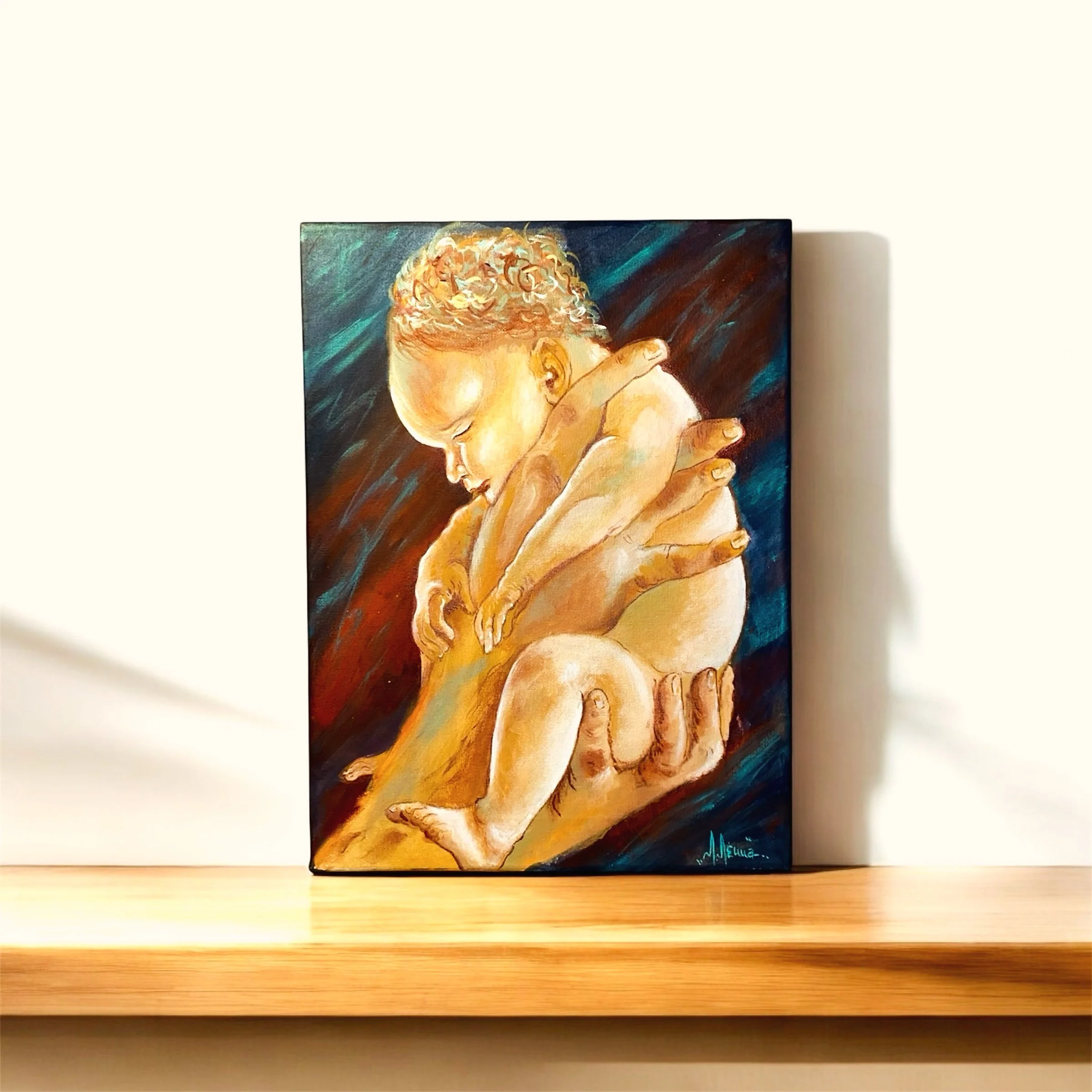
“My process is very different when I am working on an icon compared with when I am creating a contemporary painting. With iconography, there is a strong sense of discipline. The work begins with preparation, research and careful attention to the established prototype. The process is gradual and requires patience. Egg tempera itself encourages a very different relationship with painting because the image is built slowly, layer by layer. There is also a particular kind of silence involved in icon painting. You cannot really rush it. Working with gold leaf is another process altogether, and the gold changes the relationship between the painted surface and the light. It is not simply decoration. Within the iconographic tradition, light has a spiritual significance, and that is something I try to respect in the way I approach the work. My contemporary paintings are almost the opposite. They are much more instinctive. I may start with a feeling, an image in my mind, a memory or simply a colour that I feel drawn towards. I work with layers, textures and fluid forms, and I allow the painting to change as I work. Sometimes I know where I want to go. Other times I don't. And I have learned to be comfortable with that. I think there is a point in the creative process where you have to stop trying to control the work completely and allow it to speak back to you.”
What is an artist’s role in society and how do you see that evolving?
“I don’t believe an artist necessarily has to give society answers. Sometimes the role of art is simply to make us stop. We live surrounded by images, information and constant movement. We are encouraged to look quickly, react quickly and move on. Art can create the opposite experience. It can ask us to stay with something for a little longer. I also think art has an important role in preserving memory and tradition. This is particularly relevant to my work with Byzantine iconography. When you work within a tradition that has existed for centuries, you are not simply working with an aesthetic style. You are engaging with history, spirituality, symbolism and cultural memory. At the same time, I think artists should be allowed to evolve. Respecting tradition does not mean that an artist has to stop exploring. For me, contemporary art provides a space where I can ask different questions and explore things that cannot necessarily be expressed within the structure of iconography. Ultimately, I think art creates connection. Sometimes, between the present and the past. Sometimes, between one person and another. And sometimes, perhaps most importantly, between a person and something inside themselves that they had forgotten or had not yet found the words for.”
Have you had any noteworthy exhibitions you'd like to share?
“There have been several important moments in my artistic journey, and I would find it difficult to choose only one. In 2021, I was selected as a finalist in the Phoenix Art Competition in Athens. In 2022, I received an Honourable Mention at the group exhibition Paths of Light, organised by the Union of Visual Artists in Athens. In 2024, I completed seminars with Monk Loukas Ksenofontinos of Mount Athos, an experience that was particularly meaningful in relation to my continuing relationship with Byzantine iconography. The certificate was issued by the Ecumenical Patriarchate – Patristic Studies Foundation. More recently, I received the Masterful Mind Award at the 6th International CFA Artist of the Year in 2025 and the Art Star Award at the 7th International CFA Artist of the Year in 2026. My work The Weight of a Brilliant Mind was also selected for inclusion in ART STAR: The 2026 Guide to Remarkable Art.
I have also been fortunate to receive written recognition from people working within the art world. Art historian Leontios Petmezas wrote about the personal expressive language emerging through my continuous experimentation and exploration, while visual artist Michalis Michalakis highlighted my sensitivity to light and colour and the way I approach emotion and human connection. My work was also featured in the French publication Spotlight – Contemporary Art Magazine. But I don't really think of my work in terms of one particular piece being more important than another. Every work belongs to a different moment. Even when I look back at something I created years ago, I can remember where I was emotionally, what I was thinking about and what I was trying to understand at that particular time. So, in that sense, they are all important to me.”
Website: echooflightbylydia.com
Instagram: @lydiartss