Interview
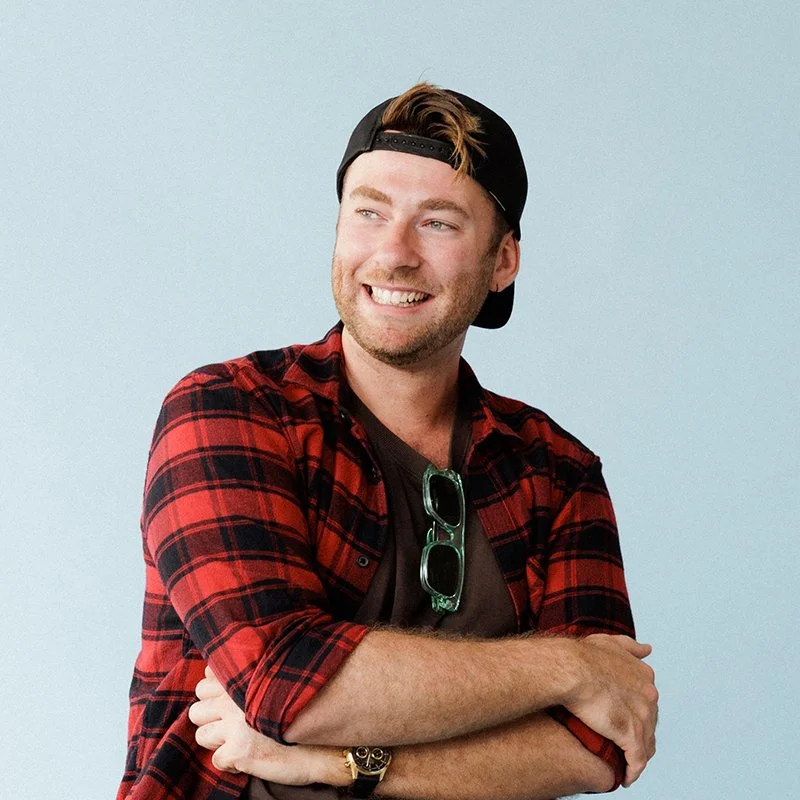
Lucky Smith
Lucky Smith is a passionate expressionist painter from rural South Australia, now living and working in Adelaide. Lucky specialises in large scale portraiture of pop culture personalities and surrealist scenes using oil & acrylics. An avid painter from the age of six, his organically developed style has blossomed into grand and colourful artworks that invite a crowd into vibrant conversation. Lucky is an imaginative storyteller, learning foundations from John Collee's AFTRS Screenwriting seminar, and travelling to New York in 2022 to study story structure under screen and writing lecturer Robert McKee. Lucky uses these storytelling principles to construct scenes in his artwork which empathetically explore complex interpersonal exchanges and idiosyncratic social situations, with recurring motifs such as anthropomorphised animals and retro pop culture. Lucky has worked in graphic design and the film industry for over a decade, working on such significant projects as The Tourist (2020, STAN), La Brea (2020, NBC), The Speedway Murders (2023, SLA Films), Territory (2024, Netflix), My Brilliant Career (2026, Netflix), Penny Lane is Dead (2025, Umbrella Entertainment), Treasure & Dirt (2026, ABC) & Wolf Creek 3 (TBA, Emu Creek Productions). Lucky’s artwork is displayed in numerous public and private collections domestically and internationally. His solo exhibition 'Your Spectrum is Showing' was held at Linhay Gallery in Auburn SA in 2022. Lucky has a studio at The Mill - Adelaide, and exhibited his second solo show 'Under 30s Eat Free' as part of The Mill’s visual art program in 2025.
What is your background and how did you start your journey in the art world?
“I grew up on a farm outside the rural township of Auburn in the Clare Valley, a wine region world renown for its Reisling. I have worked in graphic design and the film industry for over a decade. I have been an avid painter from the age of 6. My mother was very encouraging of my artistic interest; one of my first memories connecting with art was when she took myself and my younger brother to a local craft store where we bought canvas and some cheap acrylic paints. I painted non-stop, painting portraits of my cat and my favourite Saturday morning cartoons. I painted obsessively up until the age of 12, where I started to discover the medium of film and delved into long form storytelling, and have passionately pursued it since. At 19 years old, I reconnected with painting as a way of processing my first heartbreak. While those inspired artworks I made at 19 were rough and raw, I stuck with painting and it is now a meditative and fun medium I use to explore my personal stories working in film and growing up in the countryside.”
What inspires you?
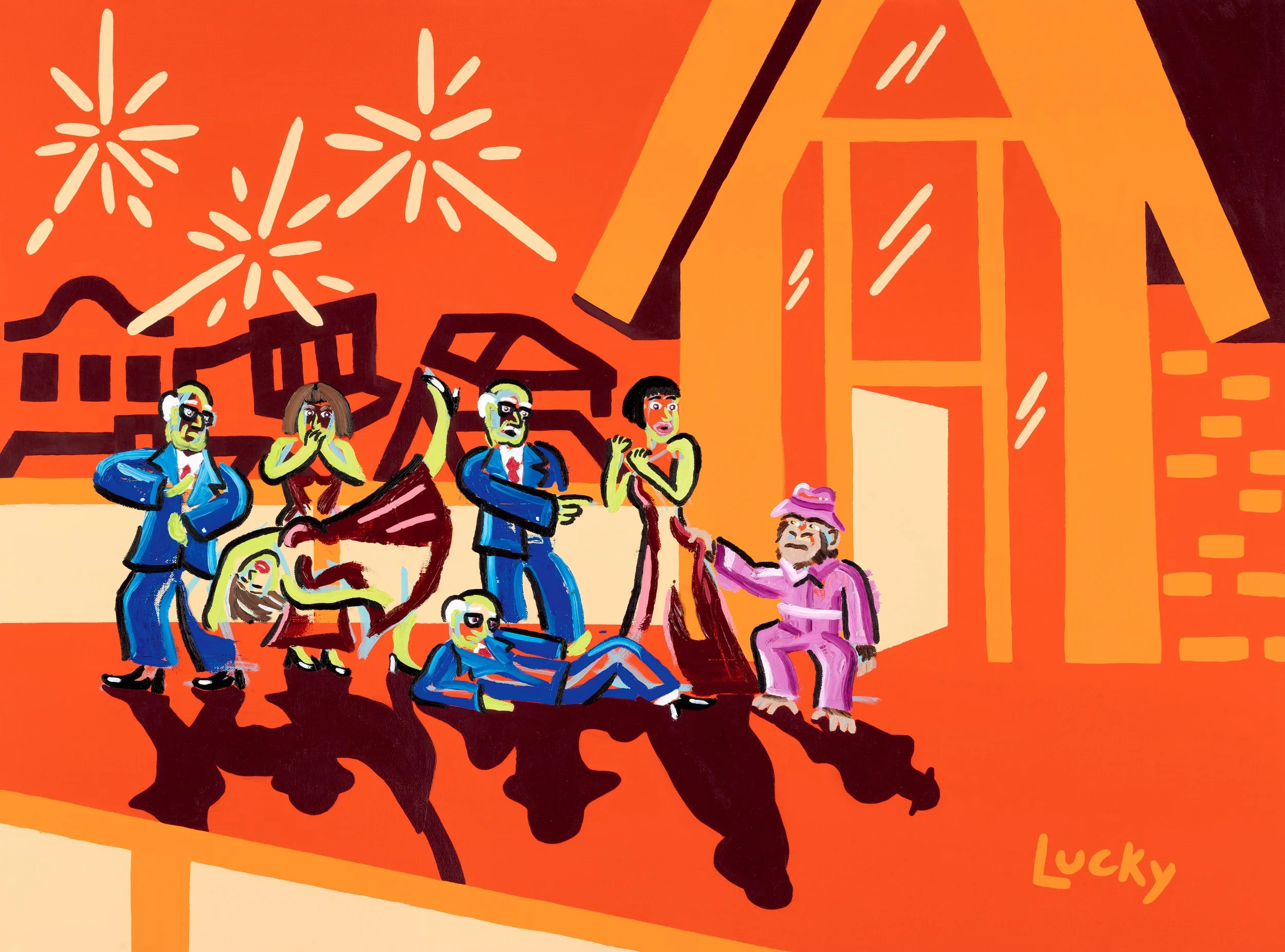
“When I reconnected with painting I was initially inspired by pop culture personalities and media; such as Rodney Dangerfield, Jimi Hendrix, and a disco scene inspired by the lyrics of Duran Duran’s ‘Hungry Like the Wolf.’ Recently, I have been pulling inspiration from my life experiences. Soon after my first exhibition, ‘Your Spectrum is Showing’ - which was a broad collection of works I had done up until that point in time - I decided I wanted to pursue art that speaks to people, and I felt the best way to do that was through stories with emotional anchors. My most recent exhibition, ‘Under 30s Eat Free,’ was designed to have a threaded theme around my anxieties of approaching the age of thirty, using metaphorical interpretations of moments in my life, many of which are universal emotional beats in people’s lives, especially around career, relationships, and family. My next exhibition (currently in production) seeks to explore the experiences I’ve had in the film industry which were instrumental in my personal growth from boyhood to manhood – things like taking accountability, being reliable, and realising hard work pays rewards if allocated to the right workplace and right supervisors.”
What themes do you pursue? Is there an underlying message in your work?
“The greatest neg I ever received was, ‘I admire your ability to reject the group-think.’ My artwork tends to portray characters on the outer of any given social situation – either by choice, circumstance, or group-imposed isolation. Although I don’t believe I have actively pursued this theme, I feel it is an unconscious projection of myself; a protective habit I formed in childhood as the awkward-arty kid in a community hyper-fixated on sporting achievements, which matured into somewhat of a Lone Cowboy ethos. My artwork pulls between wanting to be accepted by the group, while also seeking to disrupt the social structure in pursuit of independence. My exhibition, ‘Under 30s Eat Free’ explored the tribulations of young Millennials and Gen Z’s independence; grown adults being treated like children by the older generations as a means of retaining subservience and dependence as a means of social and economic control.”
How would you describe your work?
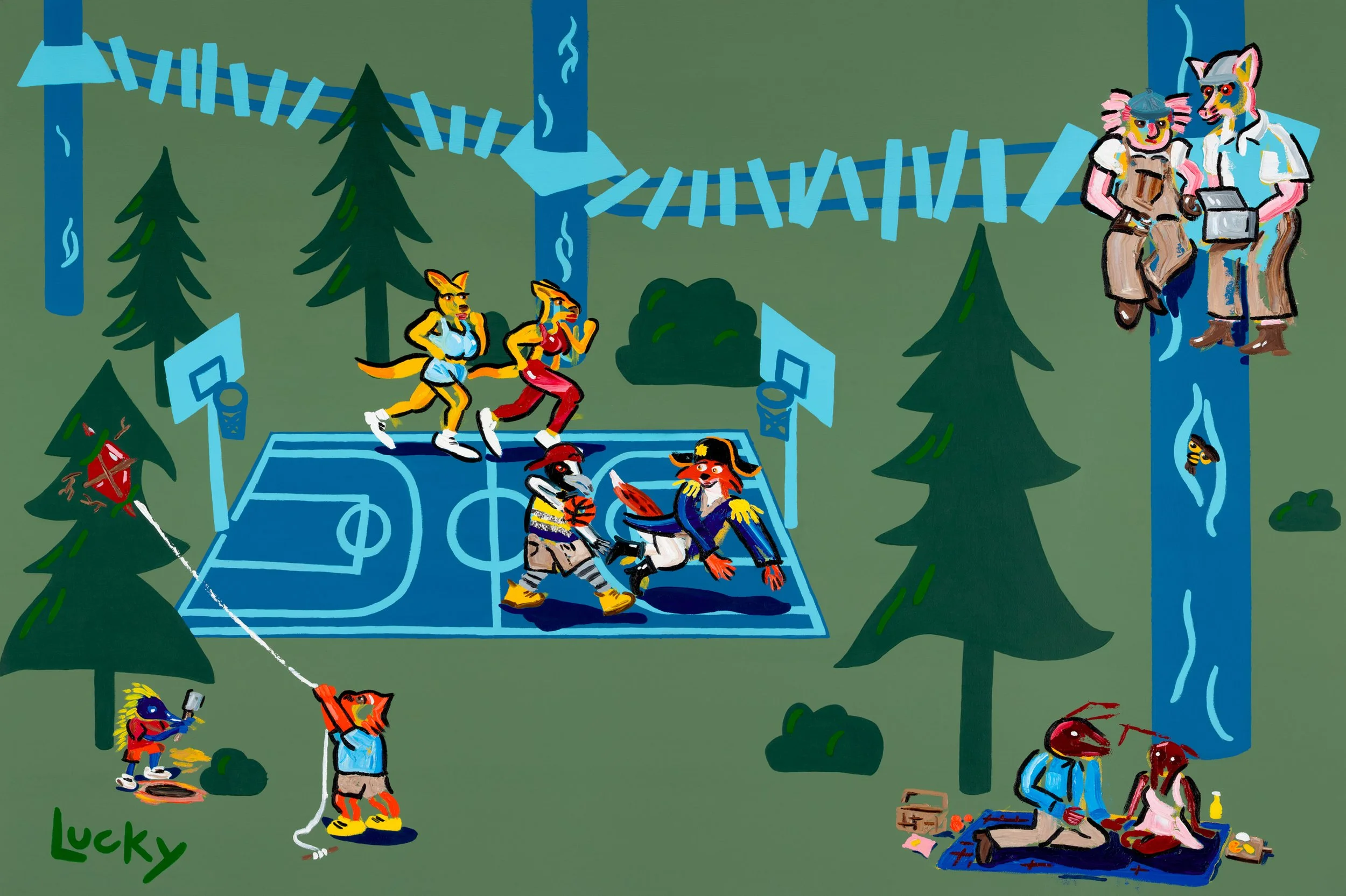
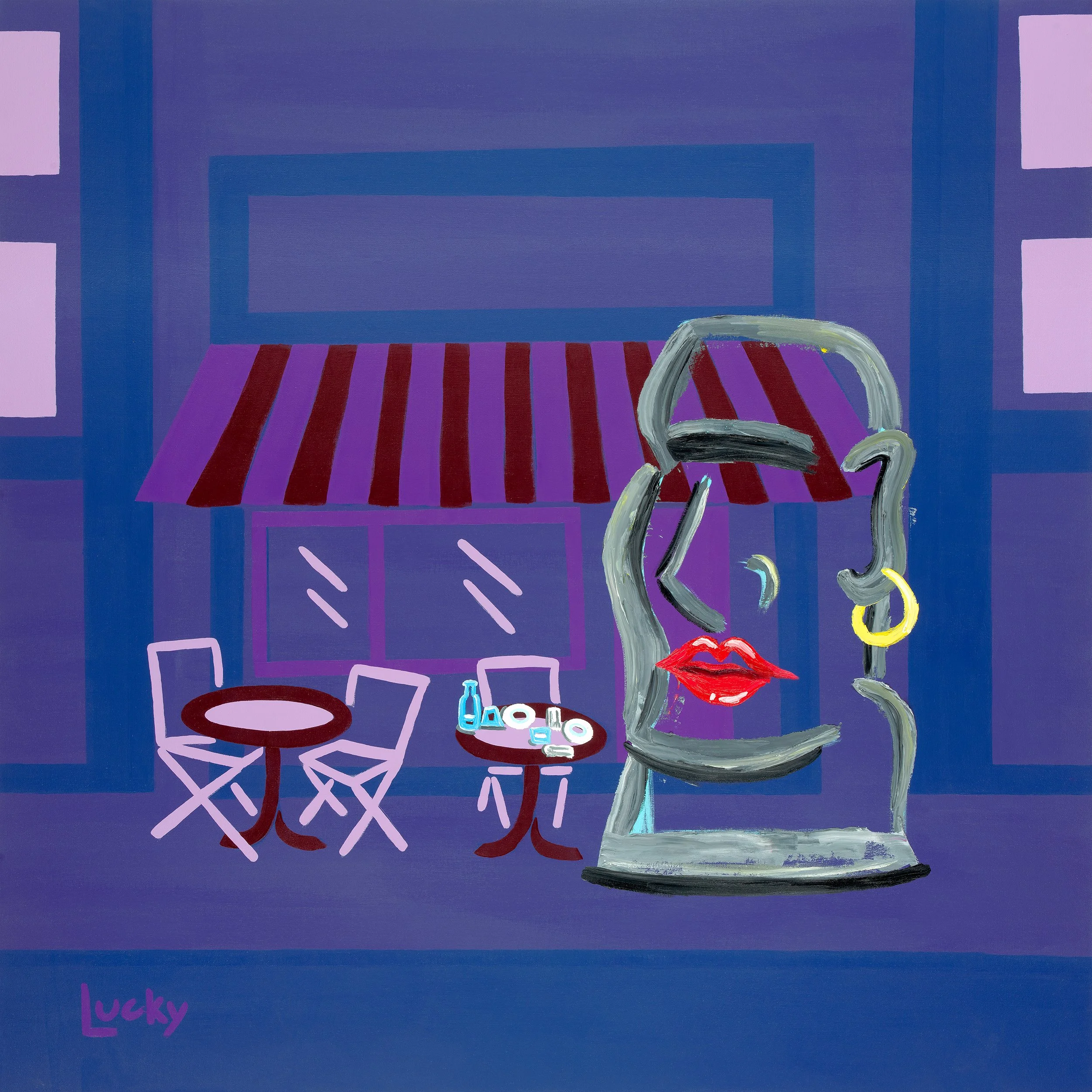
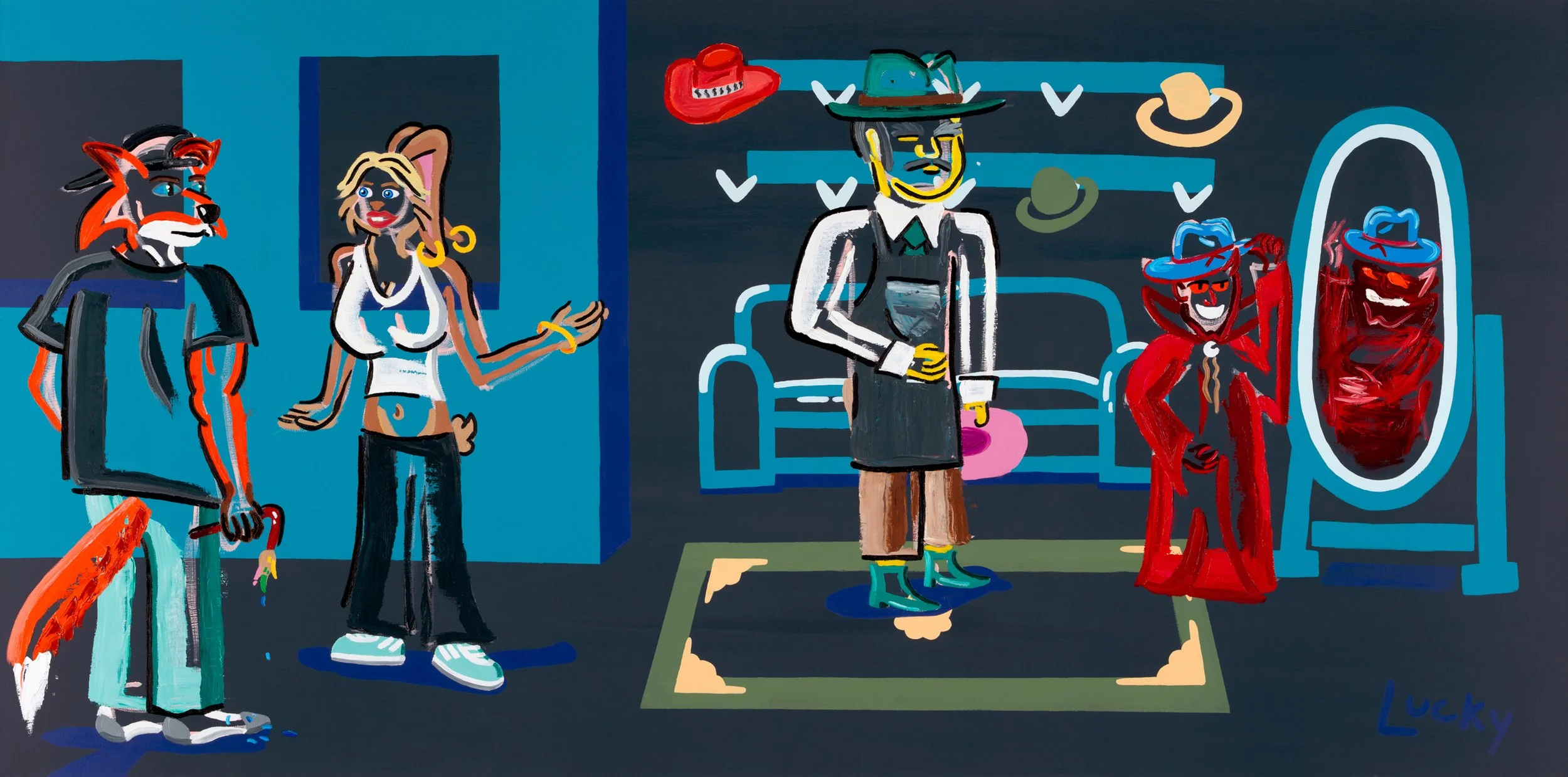
“The general public find it very difficult to categorise my work, but I've had curators and gallery owners describe it as expressionist in construct and surrealistic in subject matter. I identify myself as an imaginative storyteller. I learnt screen narrative from both John Collee's AFTRS Screenwriting seminar, and writing lecturer Robert McKee. I use their storytelling principles to build scenes in my artwork which explore complex social situations I have either been involved in or closely observed. I like using anthropomorphised animals and retro pop culture to allow the viewers to quickly identify personality or context within the artwork. Visually, my artworks consist of basic block backgrounds, which utilise limited colour palettes up to 5 colours (typically from the same colour family) which clearly constructs a location. The subject matter is then made using oil paint, applied thickly to add texture and separate the subjects from the background to draw focus. My work is best hung in large spaces with big walls for people that want to talk vibrantly about their purchase artwork and the stories behind them.”
Which artists influence you most?
“I have many artistic influences. Vincent Namatjira and Noel Fielding are both aesthetic influences on my art. I love the cartoonish styles and witty humour their pieces convey. I especially like Namatjira’s subtle colour changes and his portrayal of personal stories. I love the power works created by Ben Quilty, and his generous use of texture. And philosophically, I love the practices of music producer Rick Ruben. His mantra of ideas having a timeliness – a ballad written in the wake of a devastating breakup won’t be as poignant if recorded at a later date while the musician is in the courtship of new love. Artistic concepts are inspired by where someone is emotionally and physically, and our changing personal lives can quickly move on if a formed idea is not immediately pursued.”
What is your creative process like?
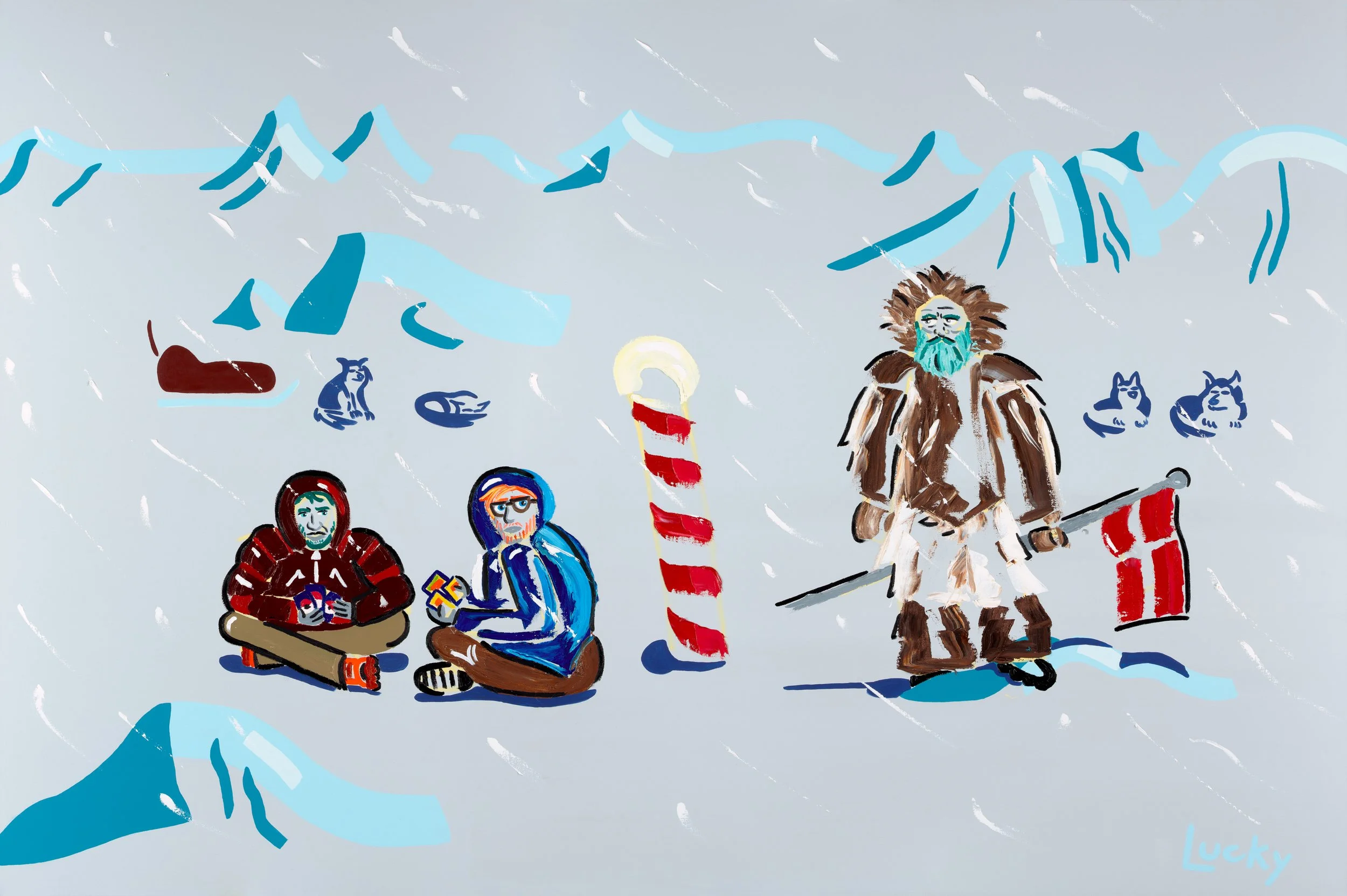
“My creative process typically starts as a note on my phone – a phrase someone said in passing, a quote, a humorous quip, or an idea for a painting title are typically my starting points, and I build the concept outwards from that idea, trying to connect it to a personal story. Often I will do rough sketches using marker pens as a means of blocking out the image, designing where characters will go, or what they may be doing. I then start on the background, using acrylic house paint to stage the location. I then use oil paint to craft the characters and situations within the scene.”
What is an artist’s role in society and how do you see that evolving?
“I think an artist’s role in society is to communicate feelings and capture shared experiences. Art speaks to people in a complex way that combines subject matter, texture, context, colours, and size to illicit a response from a viewer. I think online chatter regarding AI is an insular bubble, where those in it and advocating for it don’t really understand the purpose of art. People who truly appreciate art know that AI lacks tangibility outside a computer. There will always be a place for artists to translate the turmoils of life for the public and connect people through discussion or admiration.”
Have you had any noteworthy exhibitions you'd like to share?
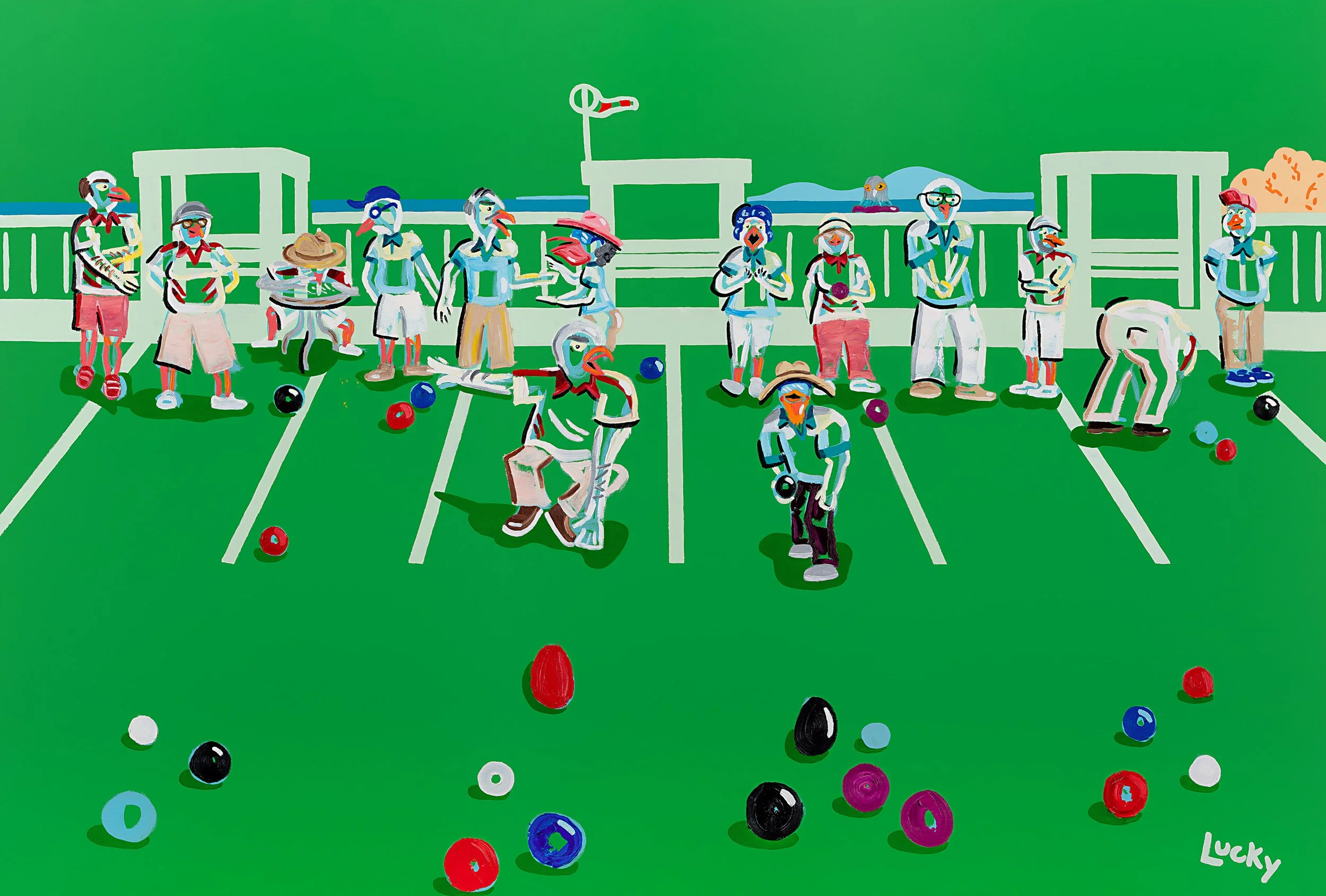
“My last exhibition, ‘Under 30s Eat Free’ was a visual representation of my comparative and anxious feelings towards turning 30 in the present day. This introspection began through reading about Peter Freuchen, an early twentieth century Danish explorer who before thirty had raised a family of three in the midst of mapping the borders and climate of the artic circle, and literally fought off wolves that encroached on his weather recording outpost - a three-day sled from the expeditions’ operations command centre. He spent five years in the arctic. Upon returning home to Denmark, Frechuen journaled, ‘I felt like a stranger when I encountered my old friends. I was proud of my strength and ability to live for long periods without food, but these things meant nothing to them.’ As the biological urge to start a family and forego the insecurity of contract work weighs, I began a transition from the fast paced and torturous nature of the film industry to the seemingly more sensible corporate 9 to 5. I feel the beforementioned quote summarises my experience in making this transition.
My most recent experience in the film industry consisted of 14 hour days, six day weeks, an eight week stretch without a lunch break, six weeks of social isolation, Non-Disclosure Agreements loaded with very real threat of legal action, and crippling heat - all done for the largest serial commissioned in Australia, by the biggest streaming platform of our age. However, within short succession I was informed I have the option to stay on my parents’ private health insurance until the age of 32, and I was told by my new workplace if I wish to come in early to get work done I first need to earn the company’s trust via a year long probation before being granted access to the security alarm code. I constructed nine images of oil and acrylic on canvas, empathetically visualising many contemporary lifestyle and workplace problems shared by Generation Z and their fringes. Such concerns included whether to choose a career of passion or financial comfort, the requirement to enter a job with a wealth of knowledge beyond one’s years, whether to choose a soul mate or children, and the confiscation of autonomy, which all seemingly prolong childhood into one’s late-thirties. This series of works is my life and career retrospective built on strong fluctuating binary feelings of guilt, shame, regret, anger, and self-loathing which necessitates expressive colour, scale, and visuals that demands the viewer’s attention, like a pub banner announcing free meals for us kids. The imagery was confusing and abrasive, uncanny, dreamlike, familiar and yet off, perpetuated by a fluctuating use of palette knives and brushes, and the contrast of thickly layered oils on an acrylic background. The creation of these artworks journaled my epiphany into what I believe adulthood is; that old adage, if you want to be treated like an adult you have to behave like an adult.”
Website: www.luckysmith.studio
Instagram: @luckysmithstudio
Other links: www.tiktok.com/@luckysmithstudio