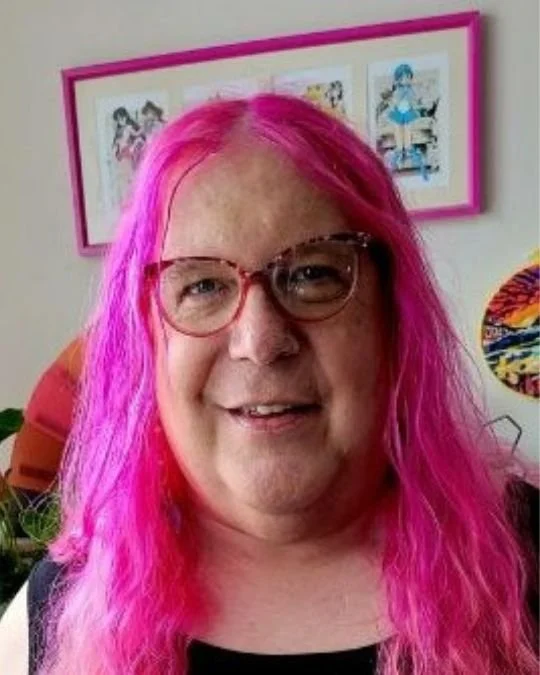
Katrina Stephany
Art is an integral part of mental health. Katrina creates mandalas, neuro-graphic art, and botanical designs which help to better regulate stress. She loves sharing her art with others. Living openly as a disabled, trans, and queer woman, she has found that discrimination and lack of accessibility creates isolation, which has a profound effect on many 2S/LGBTQQINA+ individuals. She provides art therapy practices focused on feeling empowered and at peace. As an artist and a therapeutic arts practitioner, Katrina works to create a safe and welcoming container for everyone. She also understands the difficulties many racialized, disabled, and queer folk face. For this reason, her workshops are provided on a sliding scale for these community members.
What is your background and how did you start your journey in the art world?
“My love of art began when I was young. I would lose myself into creating for hours. I originally wanted to go to University for Art and Theatre, and was encouraged instead to degree in the sciences. I stopped creating after that, and for years I buried that side of myself. It wasn't until I came out as a trans woman that my art poured out in an unstoppable fountain for story-telling. Today, art has become my way of finding peace and joy, as well as a way that I am able to share my stories.”
What does your work aim to say? Does it comment on any current social or political issues?
“While my art primarily helps me to self-regulate and find peace in the face of my disabilities, PTSD, autism, and depression, art has also become a way to share my love of creation, joy and wonder with others. I believe in the power of art to create change, and artivism is a large part of my art as well. Many of my pieces were created to address social injustices. Because art is a form of story-telling, telling these stories is important to me to bring injustice, hate, racism, and trans/homophobia.”
Do you plan your work in advance, or is it improvisation?
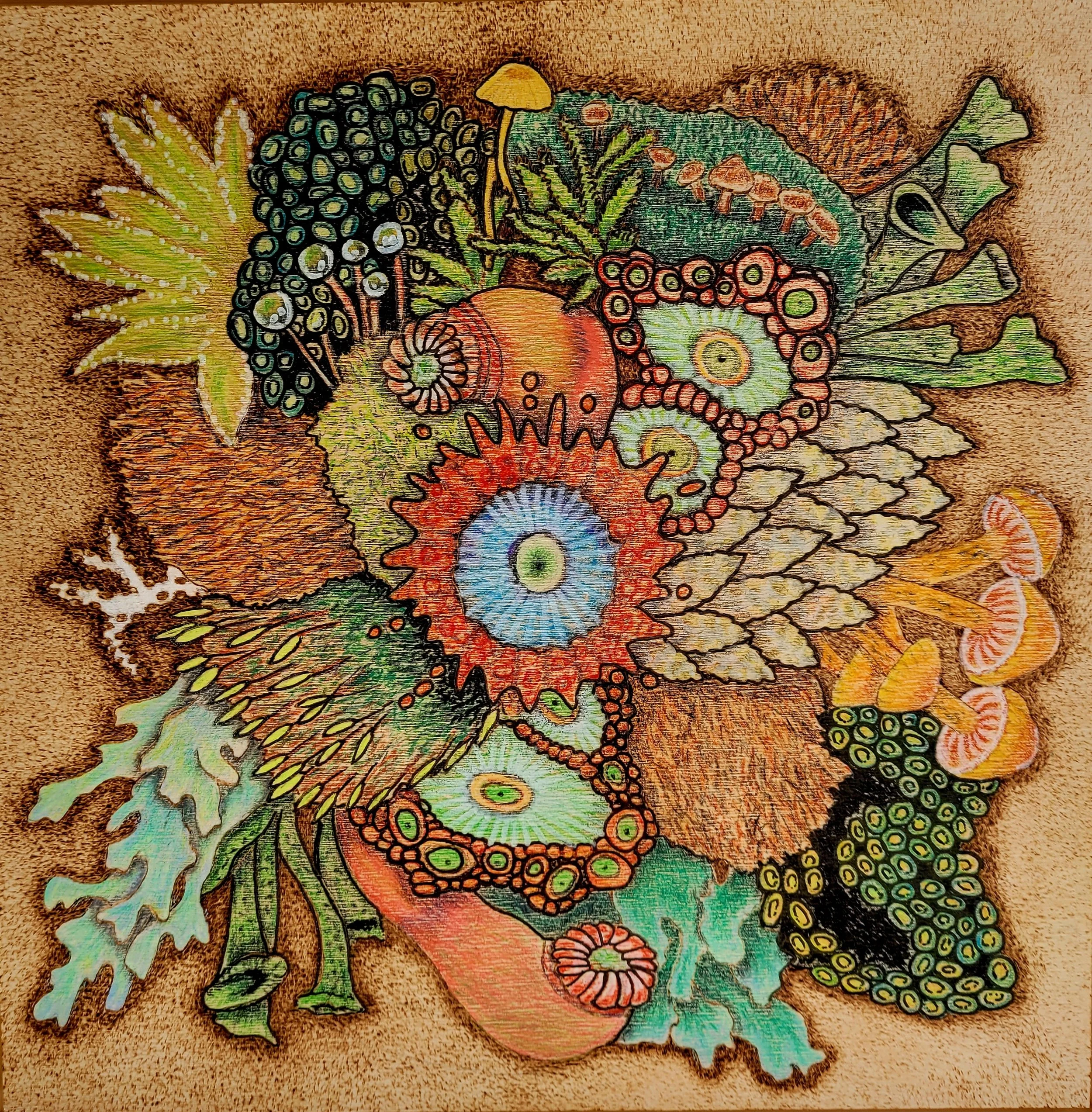
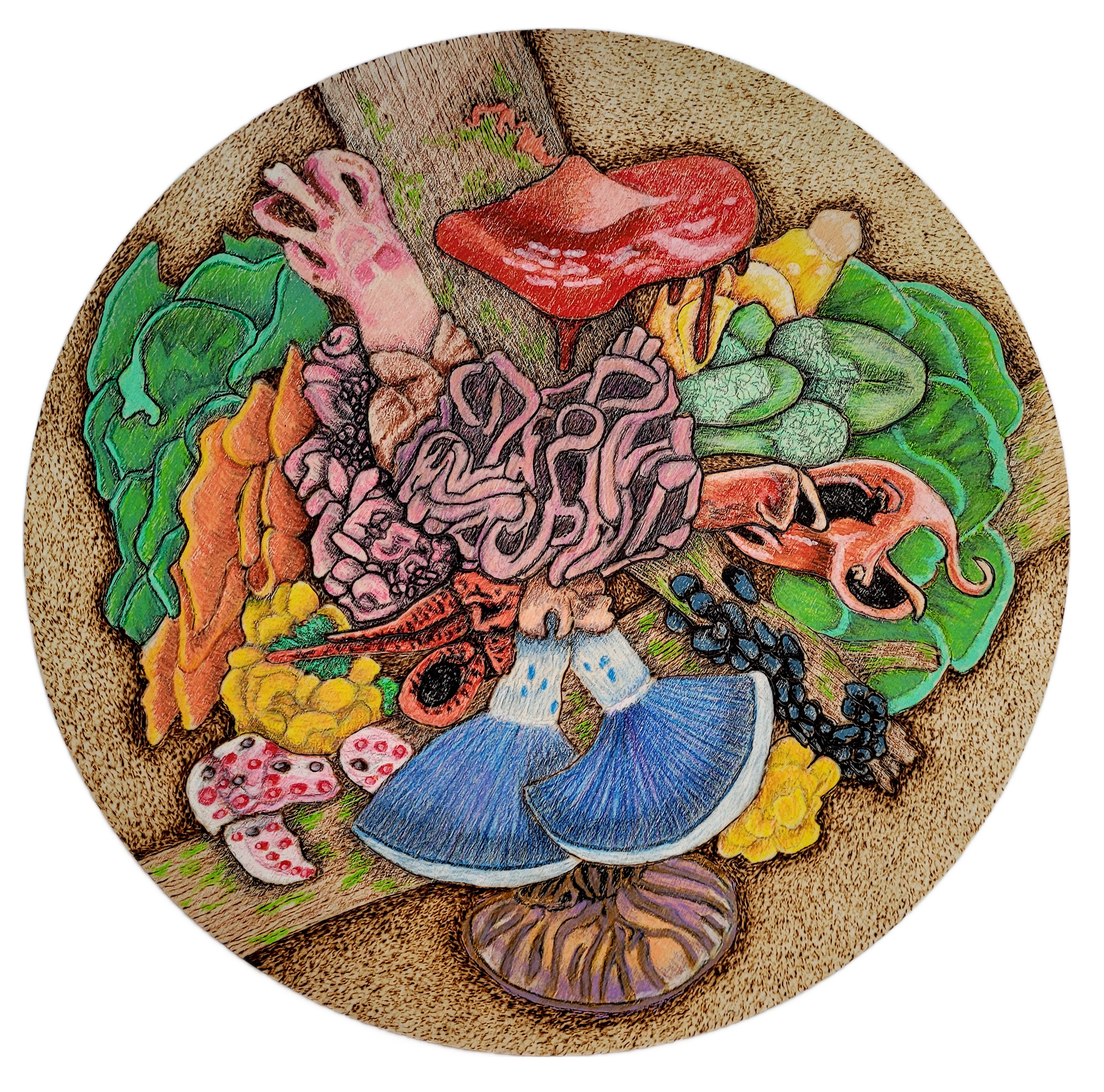
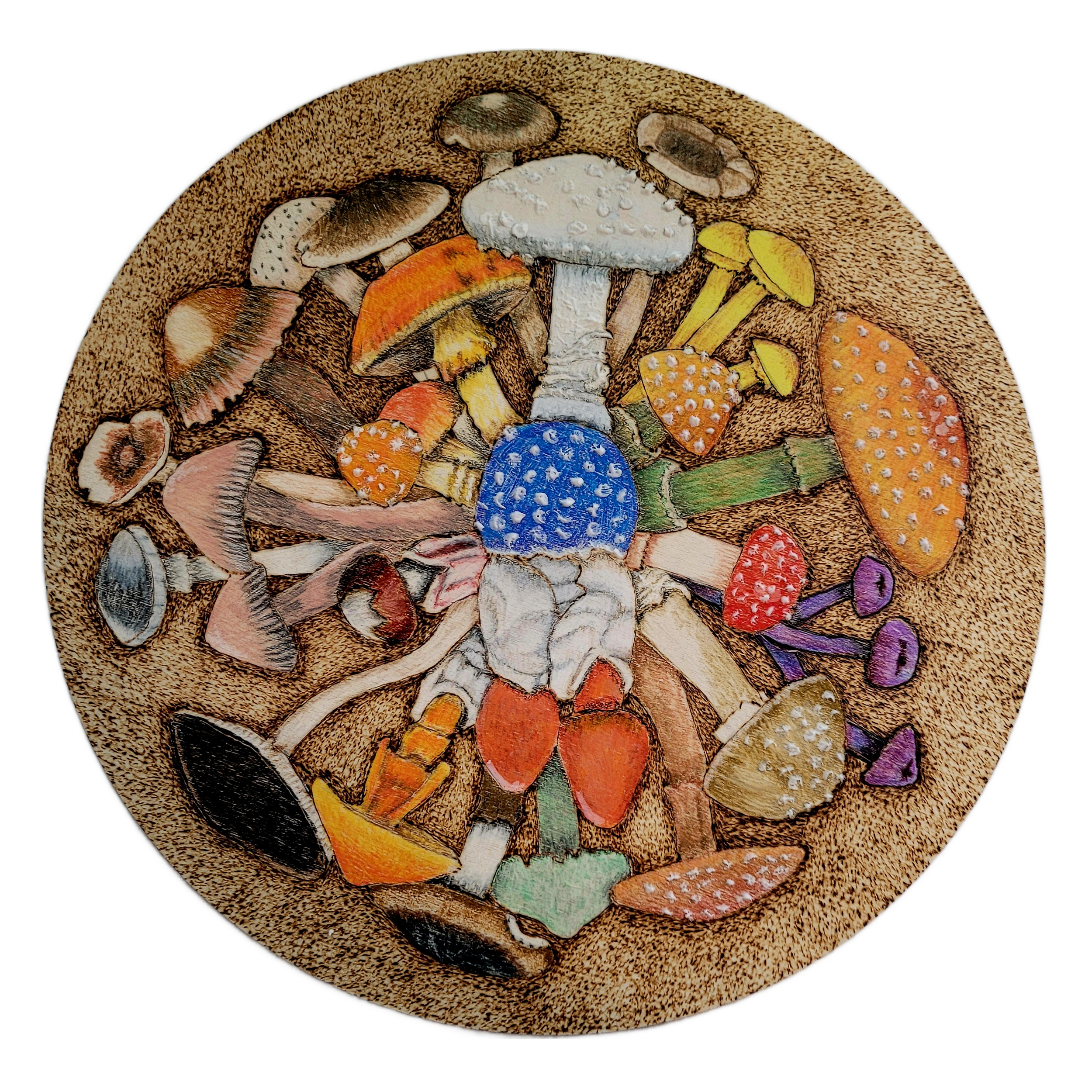
“For my botanical art, I spend hours researching the different plants, animals and biomes I create. Once I have planned the flora and fauna I am using, my work becomes a process of improvisation. I don't know how a piece is going to be designed until I am sketching things out on the wood.”
Are there any art world trends are you following?
“I don't tend to follow trends or restate them in my art. My process of combining wood-burning and colour in a mandala-inspired design is my own. If my story happens to fall into a trend category, then it is simply that it tells the same story I tell.”
What process, materials and techniques do you use to create your artwork?
“My work initially surrounded creating mandalas. This was my form of self-care and bringing mindfulness into my life. In the past few years, I rediscovered my love of wood-burning on wood canvases. My love of nature inspired my botanical collections. I also use colour (coloured pencil and acrylic marker) combined with the wood-burning to create bold and colourful designs that I don't see much of from other artists.”
What does your art mean to you?
“My art is story-telling. It is a way to have my voice heard loudly in a society that would often rather I become invisible. Art is an act of both resistance and joy. My designs allow me to share my stories with others and be seen as whom I am. My art can be stated in a mantra I carry with me: I choose joy, create change, and make room for wonder.”
What’s your favourite artwork and why?
“My favourite art is any that allows me to see plants, animals, and the natural world in new and inspiring ways.”
Have you had any noteworthy exhibitions you'd like to share?
“While I haven't been a part of large exhibitions, my favourite time of the year in Guelph, Ontario, is an outdoor market called Art on the Street. Hundreds of artists gather under tents in a city block. Thousands of people come to view the artwork and purchase readily-available art that speaks to them. It is a chance to not only sell my art, but to meet new artists and art-lovers for the day.”