Interview
Kalani Wijewardana
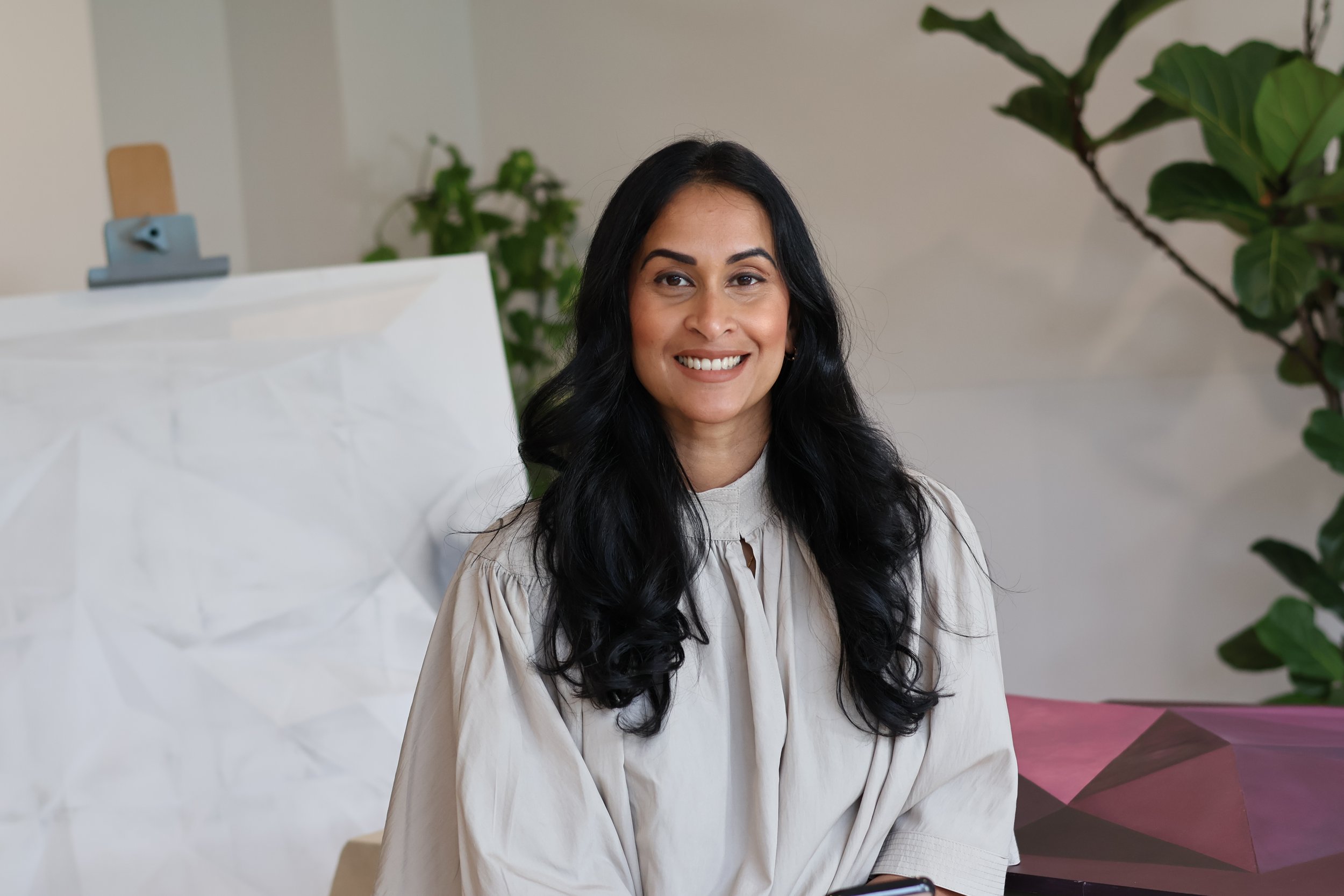
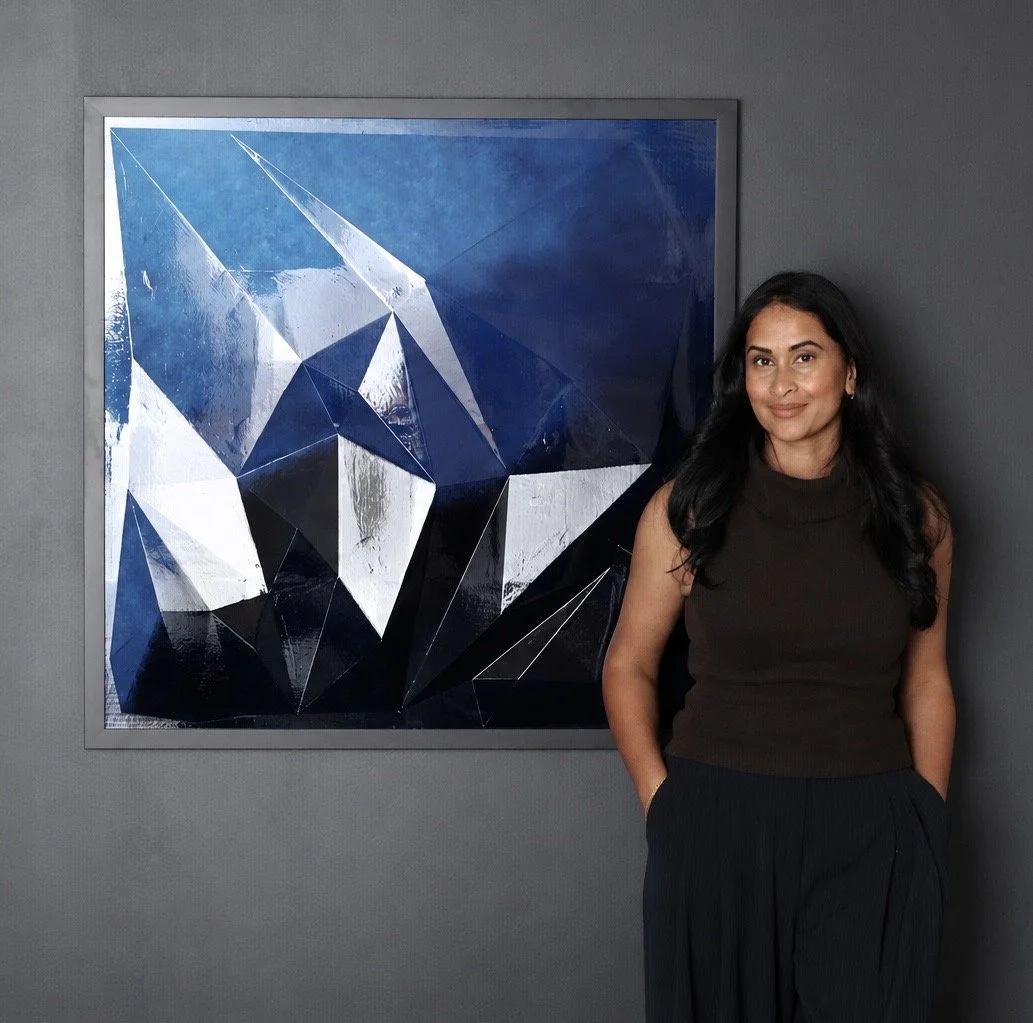
Kalani Wijewardana is a Melbourne-based artist and founder of Altūm, a contemporary art practice exploring the space between painting, sculpture and architecture. Born in Sri Lanka and raised in Melbourne, Kalani's practice developed from a fascination with geometry, interiors and the behaviour of light across dimensional surfaces. An early relief experiment created during Melbourne's COVID lockdowns, followed by a period living opposite Singapore's ION Orchard, became the foundation for her ongoing investigation into how artwork can change with its environment. Working with custom digital processes developed alongside her husband, software engineer Sunny, Kalani begins each artwork by creating a unique three-dimensional geometry. The relief is constructed through a multi-stage process before every surface is finished and painted individually by hand. Her work brings together seemingly opposing ideas: engineering and intuition, precision and imperfection, technology and the human hand. No geometry is reused.
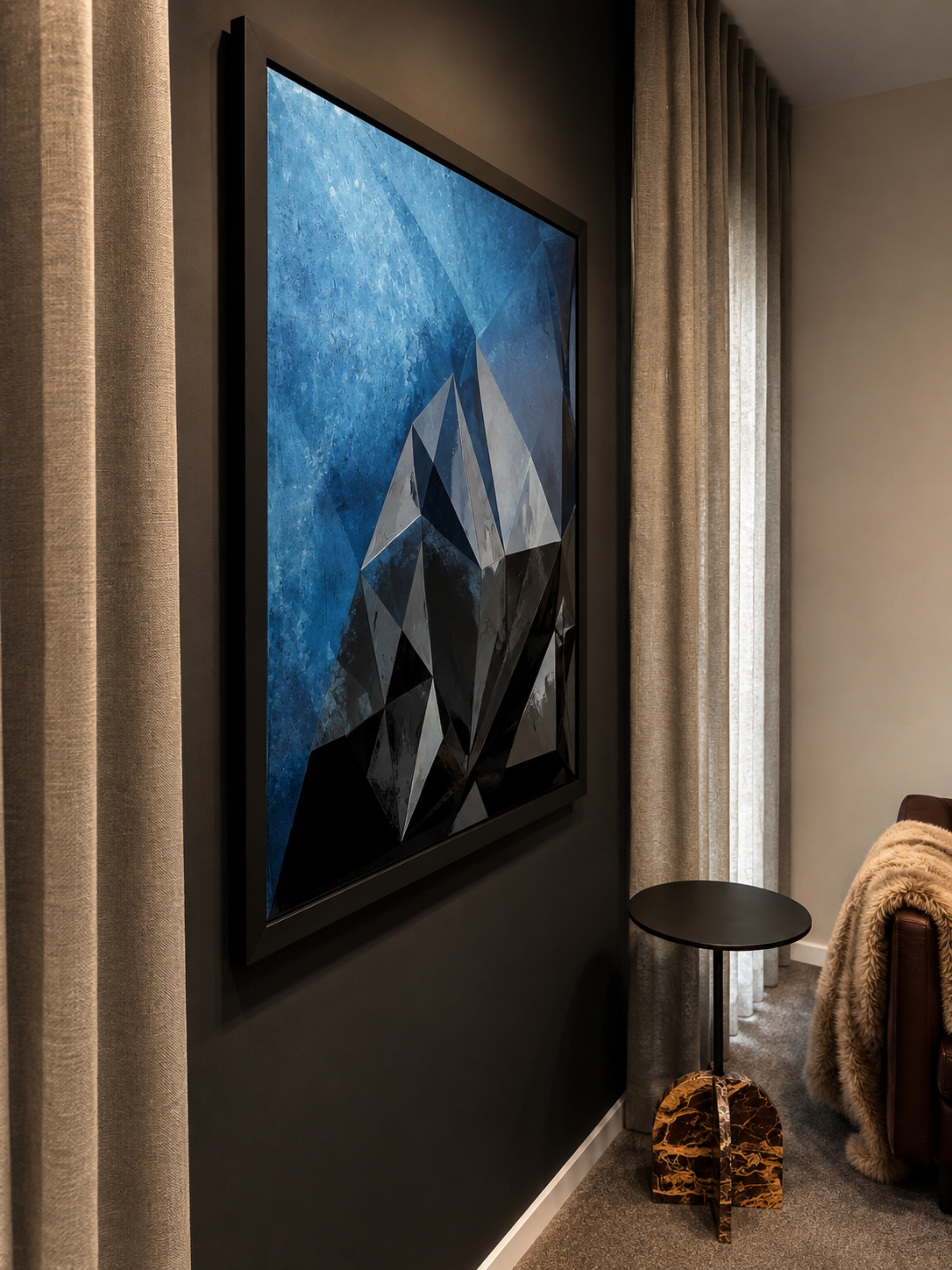
Each sculptural form exists only once and each surface is individually hand-painted, making every Altūm artwork unique both structurally and pictorially. Kalani's work is particularly influenced by brutalist and contemporary architecture, minimalism, engineered form and Yohji Yamamoto's philosophy of finding humanity within perfection. Light functions as an active element within each composition, continually altering colour, shadow and perception as the environment changes. Through Altūm, Kalani is exploring how relief can move beyond conventional wall art and become increasingly integrated with interiors and architecture.
What is your background and how did you start your journey in the art world?
“I was born in Sri Lanka and moved to Melbourne with my family when I was young. I have always had an eye for how things look; proportion, colour, interiors, what works and what doesn't but for a long time I never pursued that creatively. I think I had the attraction without the courage. The real beginning came during Melbourne's COVID lockdowns. Like everyone else, we were looking for something meaningful to do with a very strange period of our lives. My husband Sunny has a software engineering background, and together we started experimenting with creating a dimensional artwork for our own home. We weren't really trying to create ‘relief art’ at the time. We were exploring how breaking an image into dimensional forms could make the eye work differently. But once we made it, I became fascinated by what happened when light moved across the surface. It wasn't static. It changed depending on where you stood and what time of day you looked at it. Later, our family moved to Singapore and we lived opposite ION Orchard. I could see the building from almost every room of our apartment. I watched it constantly, morning, afternoon, night and it was never visually the same building twice because light transformed its surface. I kept thinking about how you could bring that behaviour into a home. Not an image of architecture, but the way architecture responds to light. That idea stayed with me long after we returned to Melbourne. Eventually. I realised I wanted to explore it properly, and that became Altūm.”
What inspires you?
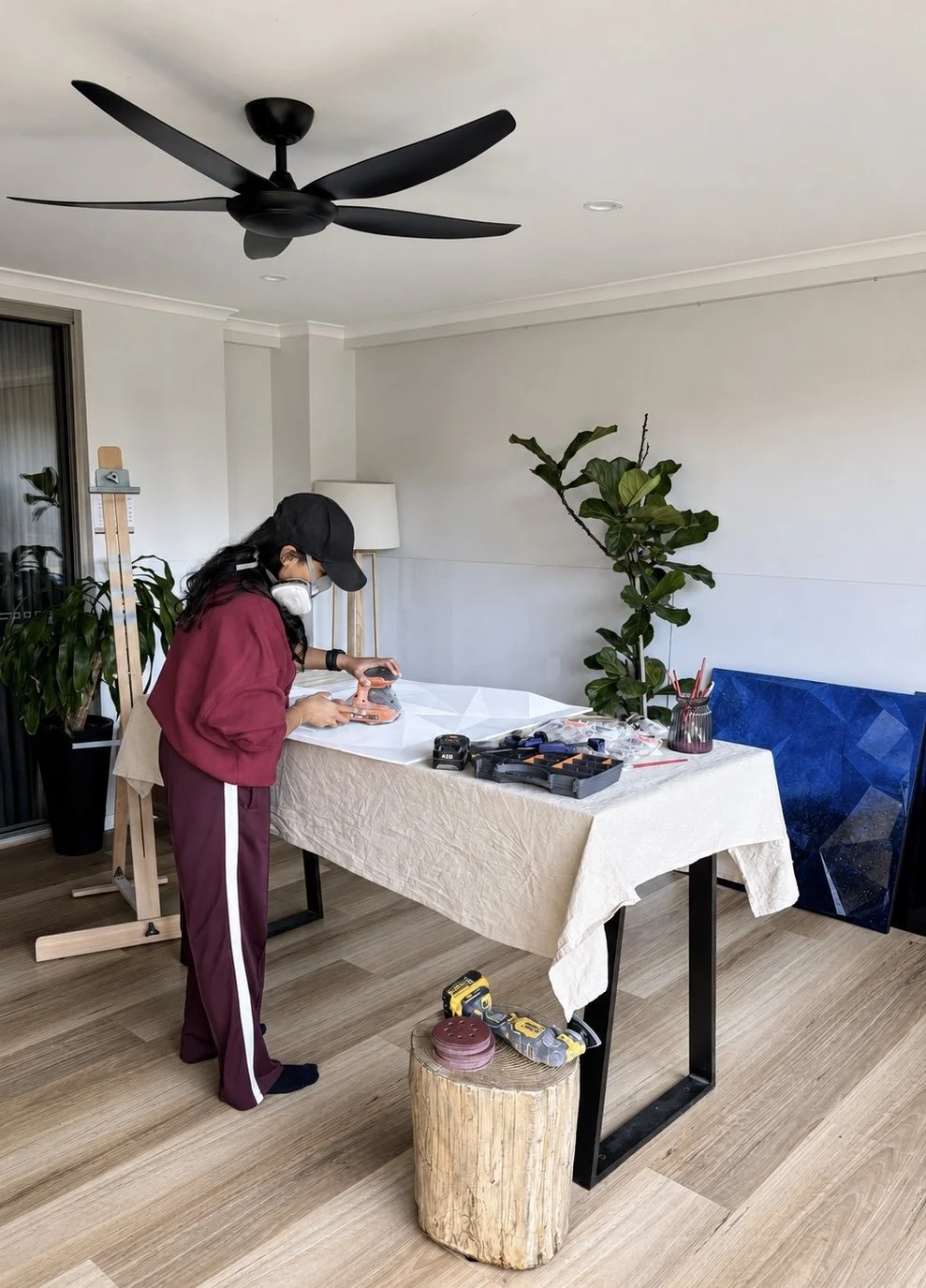
“Architecture is probably my strongest influence, particularly geometry, engineered forms and brutalist architecture. I love precision, sharp edges and the confidence of structures that don't need excessive decoration. But my architectural influences aren't limited to brutalism. Geoffrey Bawa is one of my favourite architects. What I love about his work is the way architecture and the natural world seem to belong together. There is structure and intention, but nature isn't designed out of the experience. It is allowed to soften it, interrupt it and become part of it. I see a connection between that and what I'm trying to do with Altūm. My geometry begins with technology, engineering and precision, but I don't want the finished artwork to feel manufactured. The human hand needs to come back into it. I sand, finish and paint every surface by hand, and those organic decisions and imperfections soften the precision underneath. Yohji Yamamoto has also been a major influence on the way I think about this. I connect strongly with his resistance to surfaces that feel too perfect or too manufactured. There needs to be evidence of the person who made something. That tension is very important to my work: precision against imperfection, engineering against instinct, technology against the human hand. And then there is light. Light is almost another artist involved in the work. I can create the geometry and choose the colour, but I can't completely control what happens once the piece enters someone's space. Morning sun, a cloudy afternoon, a table lamp at night, each one creates another version of the work. I find that incredibly exciting.”
What themes do you pursue? Is there an underlying message in your work?
“A recurring question in my work is simply: why should art be flat? We tend to separate painting, sculpture, interiors and architecture into different categories, but I am interested in the space where those things start to overlap. A painting gives us colour and composition. Sculpture gives us physical presence and changes as we move around it. Architecture gives us planes, shadows and surfaces that respond to their environment. Relief lets me borrow from all three. There is also an ongoing tension between perfection and imperfection in the work. The geometry needs precision. The construction relies on technology. But if the finished piece looked completely machine-made, I would feel that something important had been lost. The hand-painted surface, small irregularities and decisions that happen intuitively are what give it its humanity. Another theme is uniqueness. Technology makes it incredibly easy to reproduce things perfectly and endlessly. Because I work with technology, I'm very conscious of that. So I deliberately use it to do almost the opposite. Every geometry is created for one artwork and is not reused. Then every facet is painted individually by hand. The sculpture underneath is unique and the painting over it is unique. I think of the work as being unique twice over.”
How would you describe your work?
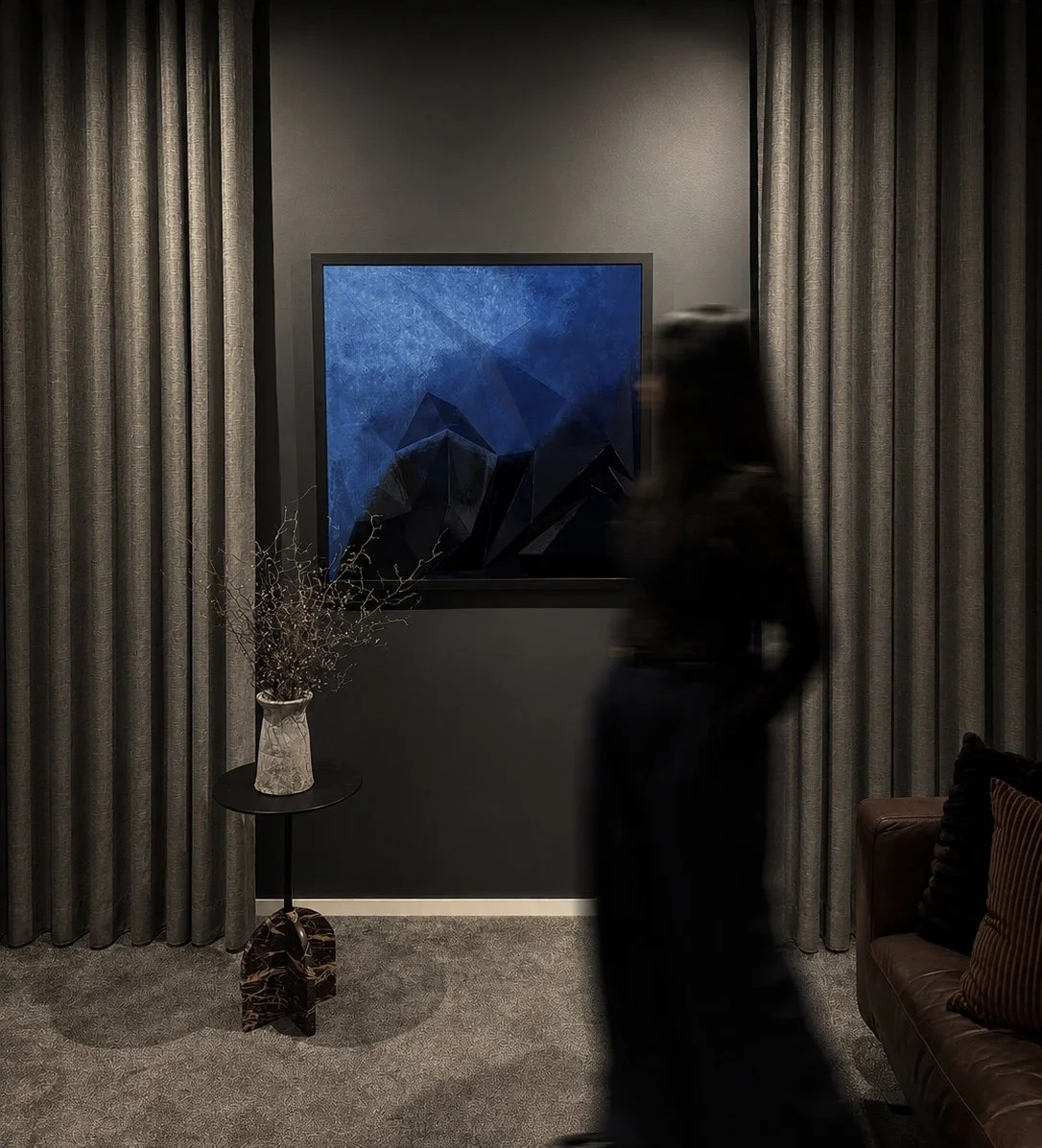
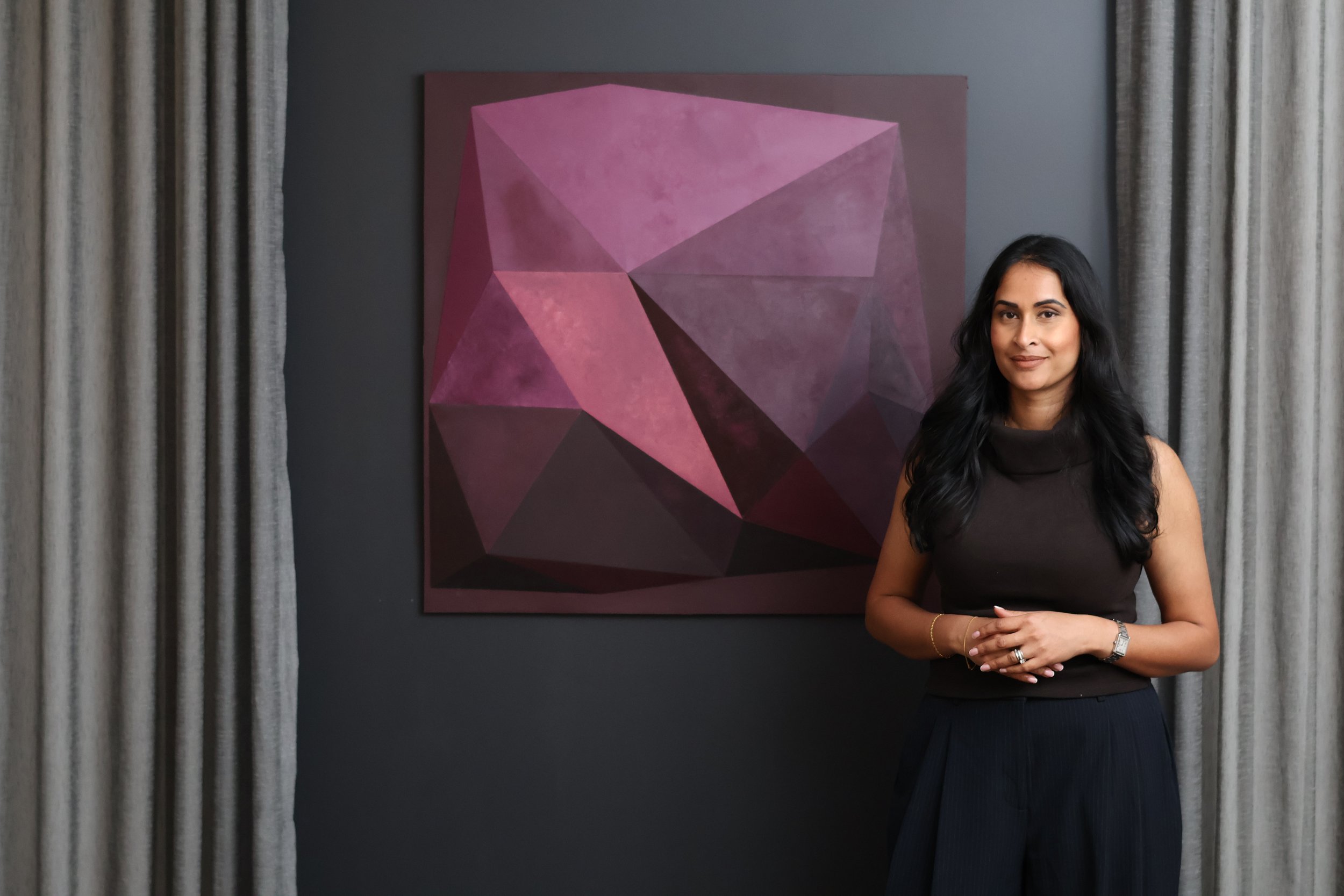
“I describe my work as geometric relief sitting somewhere between painting and sculpture. It has the footprint of a painting because it lives on the wall, but physically it behaves much more like sculpture. The surface projects outward, sometimes significantly, so as you move around it the composition changes. One of the things I love most is that a single colour is never really one colour on a relief. Every facet is sitting at a different angle, so each receives light differently. One plane may appear bright while the plane beside it falls into shadow, even though they are painted with exactly the same colour. That means the work never has one fixed appearance. At eight in the morning it can be one piece. At midday it becomes another. At night under artificial light it can become quite moody and dramatic. I sometimes describe light as the final painter. I bring the artwork to a certain point and then whatever light exists in the space keeps finishing it, differently every moment. That is probably the simplest way to understand Altūm: a painted surface that leaves the wall and begins interacting with the room.”
Which artists influence you most?
“Yohji Yamamoto is one of the strongest creative influences on me, although he is a fashion designer rather than a conventional visual artist. What I connect with is his philosophy around imperfection and his distrust of things that become so polished that you can no longer see the human being behind them. That resonates with me because my process begins in almost the opposite place: technology, software, mathematics and precision. I could pursue a perfectly manufactured surface, but I don't want to. I want the engineering to give the work its structure and then the human hand to interrupt it. I'm also influenced more broadly by architecture than by individual painters. Brutalism, minimalism and contemporary architecture continually feed into how I think about form. I notice how buildings use repetition, restraint, scale, shadow and occasionally one very commanding gesture. ION Orchard in Singapore was particularly important to me. Living directly opposite it and watching its surface change throughout the day fundamentally changed how I thought about what a surface could do. So my influences don't sit neatly inside the art world. They come from architecture, engineering, fashion, interiors and observing light in everyday spaces.”
What is your creative process like?
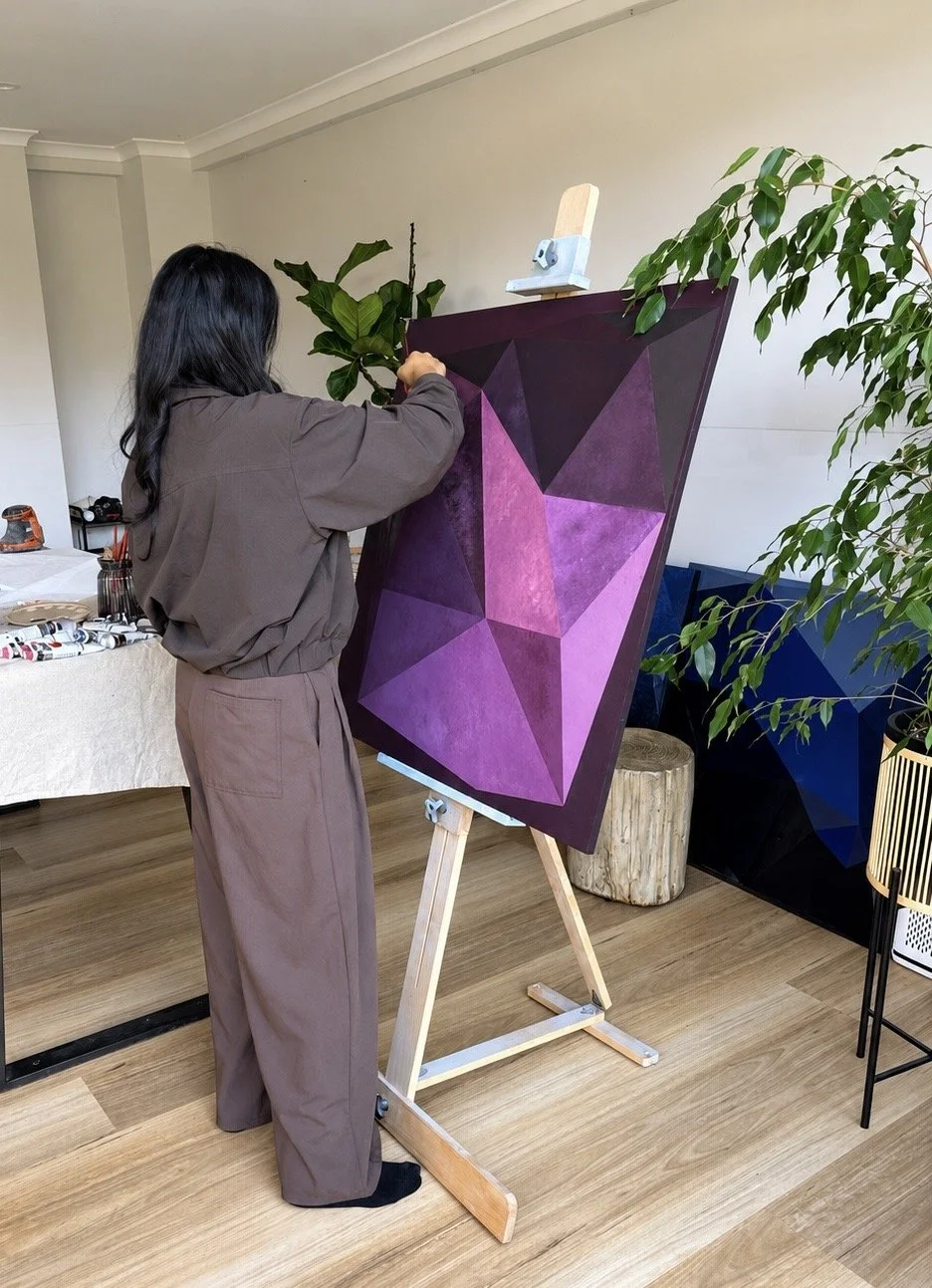
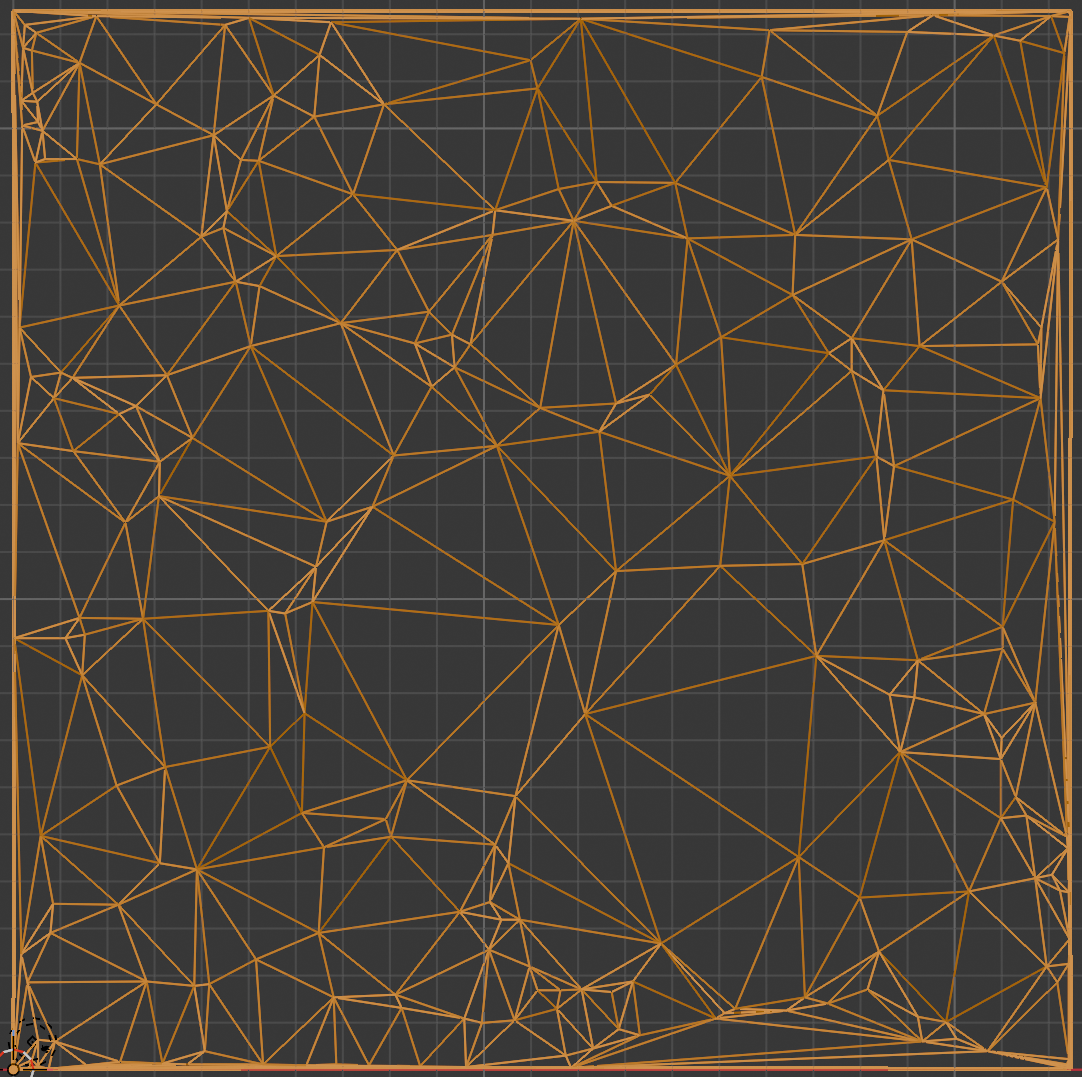
“Every piece begins with geometry. The sculptural form is designed digitally using a custom process developed with my husband Sunny, who has a software engineering background. This allows me to work almost architecturally by developing the geometry and studying how light will interact with different planes before the physical piece exists. I can simulate light moving across the surface and keep changing the geometry until the shadows and forms begin behaving the way I want them to. From there, the sculpture goes through a multi-stage construction process. Eventually I arrive at what I think of as my canvas except my canvas is already three-dimensional and unique before any colour touches it. Then the process changes completely. Painting is much slower and much more intuitive. Every surface is painted by hand. I will paint, look at it in different light, repaint, change colours and sometimes completely change the hierarchy of the piece. I tend to see the facets almost as characters. There will usually be a hero demanding attention, another facet trying to steal it, and quieter areas that allow those moments to exist. Colour, geometry, reflection and shadow all have to work together. Colour is the part I directly apply. Geometry determines how much light reaches it. The finish determines whether the surface reflects or absorbs that light. And shadow is the part I never actually paint. So although the process begins very technically, it ends quite emotionally. That balance is important to me. Engineering creates the possibility. The hand gives it its soul.”
What is an artist’s role in society and how do you see that evolving?
“I think artists make people look at familiar things differently. For me, that means questioning something as ordinary as a wall. We accept that wall art should generally be flat because that is what we are accustomed to. I'm interested in asking whether the wall itself can become part of the artwork. Technology is also changing the role of the artist. There is sometimes a fear that technology removes the human element from creativity. I see it differently. Technology can give an artist access to forms and processes that weren't previously possible. The question is what you choose to do with that capability. In my own work, technology doesn't replace the hand. It creates a structure that allows the hand to do something it couldn't otherwise do. I think that relationship will become increasingly important. Artists won't necessarily have to choose between traditional making and technology. The interesting territory is going to be what happens when the two are allowed to challenge each other. For me personally, I want to keep pushing the relationship between artwork and architecture. Eventually I would love relief to move beyond something that hangs on a building and become part of the material of the building itself. That's where I think the possibilities become really interesting.”
Have you had any noteworthy exhibitions you'd like to share?
“Altūm is still at the beginning of its public journey, so I don't have an exhibition history that I want to manufacture simply for the sake of having one. At the moment, I am concentrating on developing the body of work, refining the process and beginning to introduce Altūm publicly. I actually enjoy being able to document this stage because people are seeing the practice while it is still evolving rather than discovering it only after everything has been established. Exhibiting the work is absolutely part of where I want to take Altūm next, particularly in spaces where architecture and interiors are already part of the experience.”
Website: altum.gallery
Instagram: @altum.gallery