Interview
Jorge Cainas
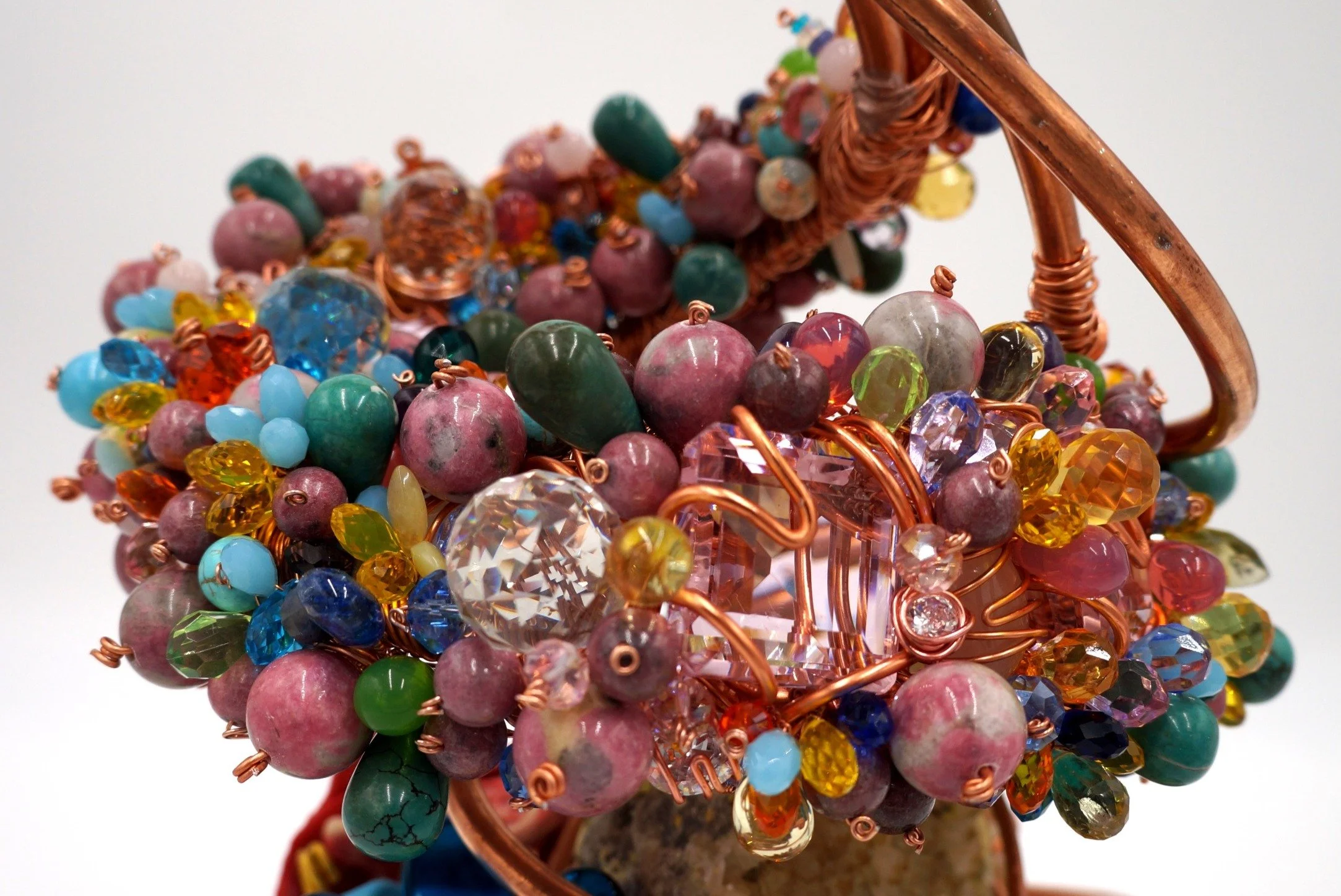
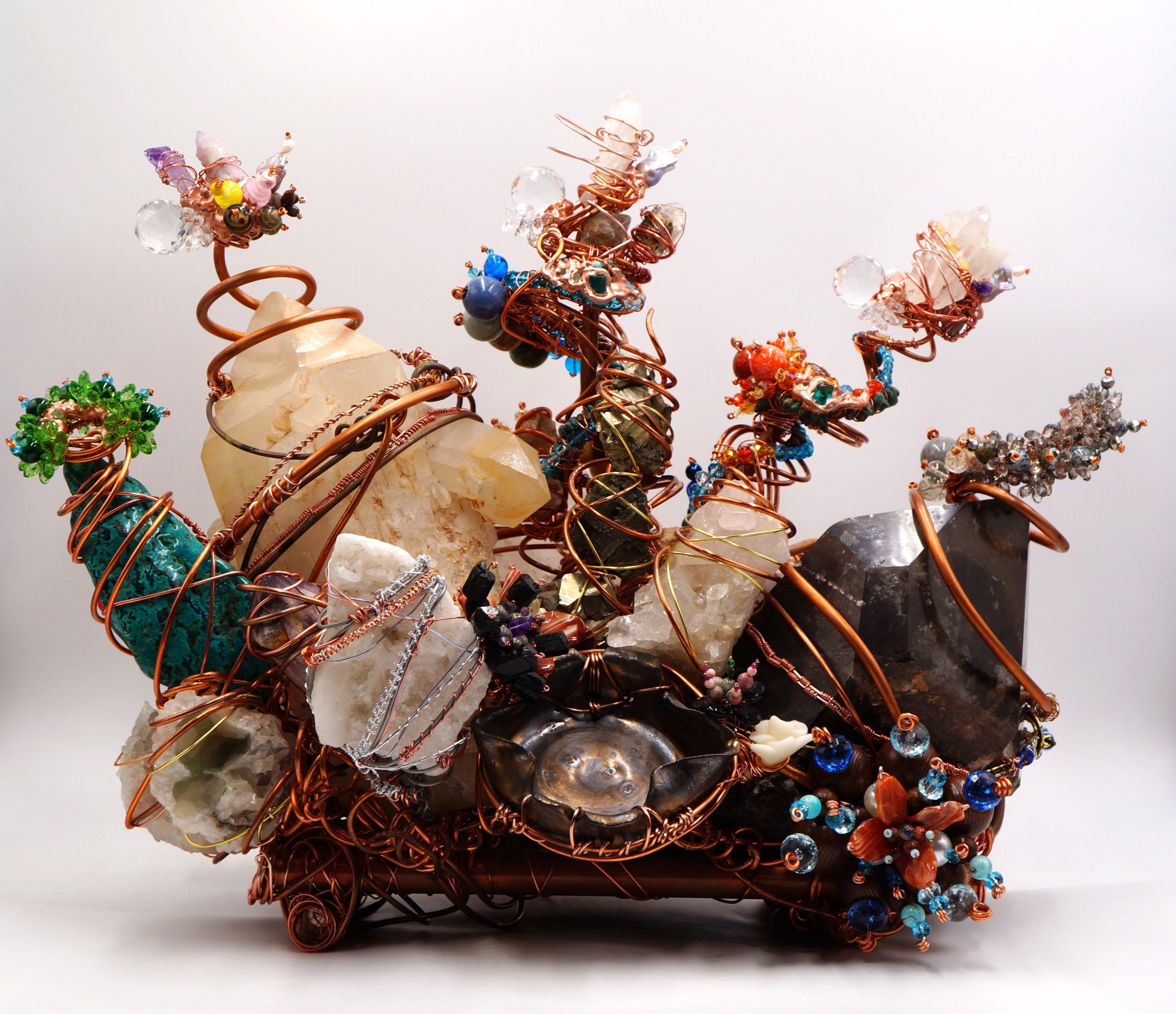
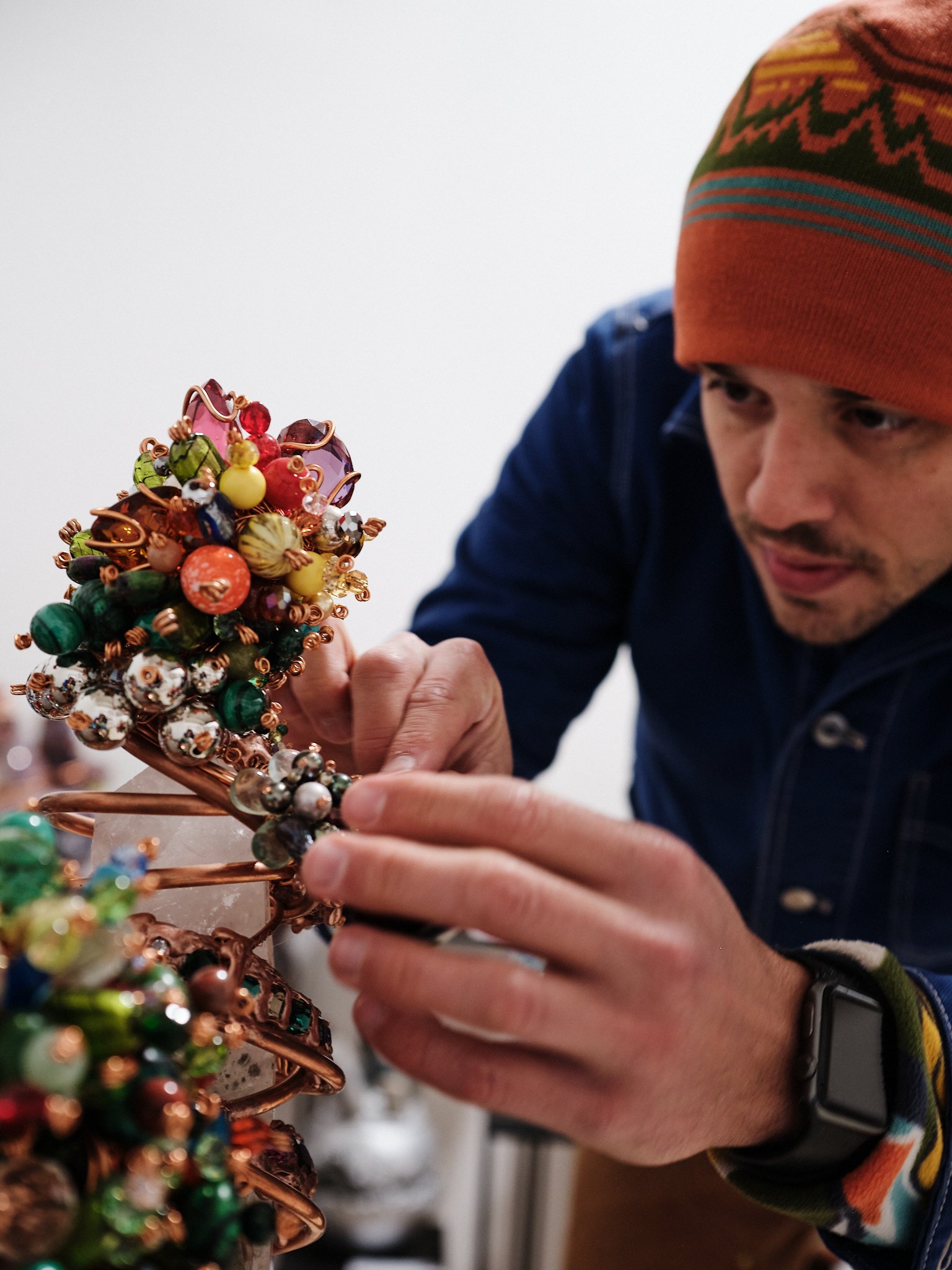
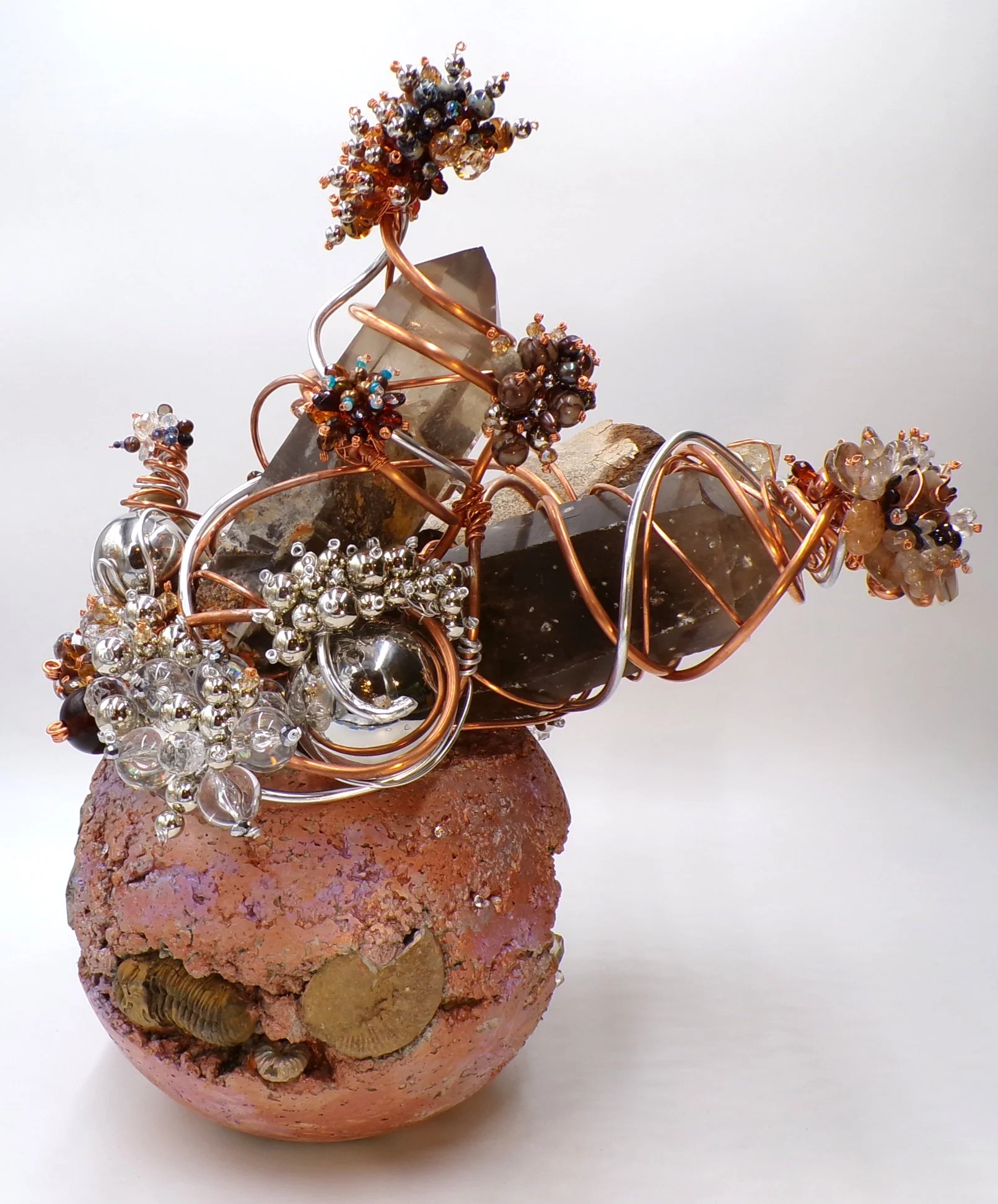
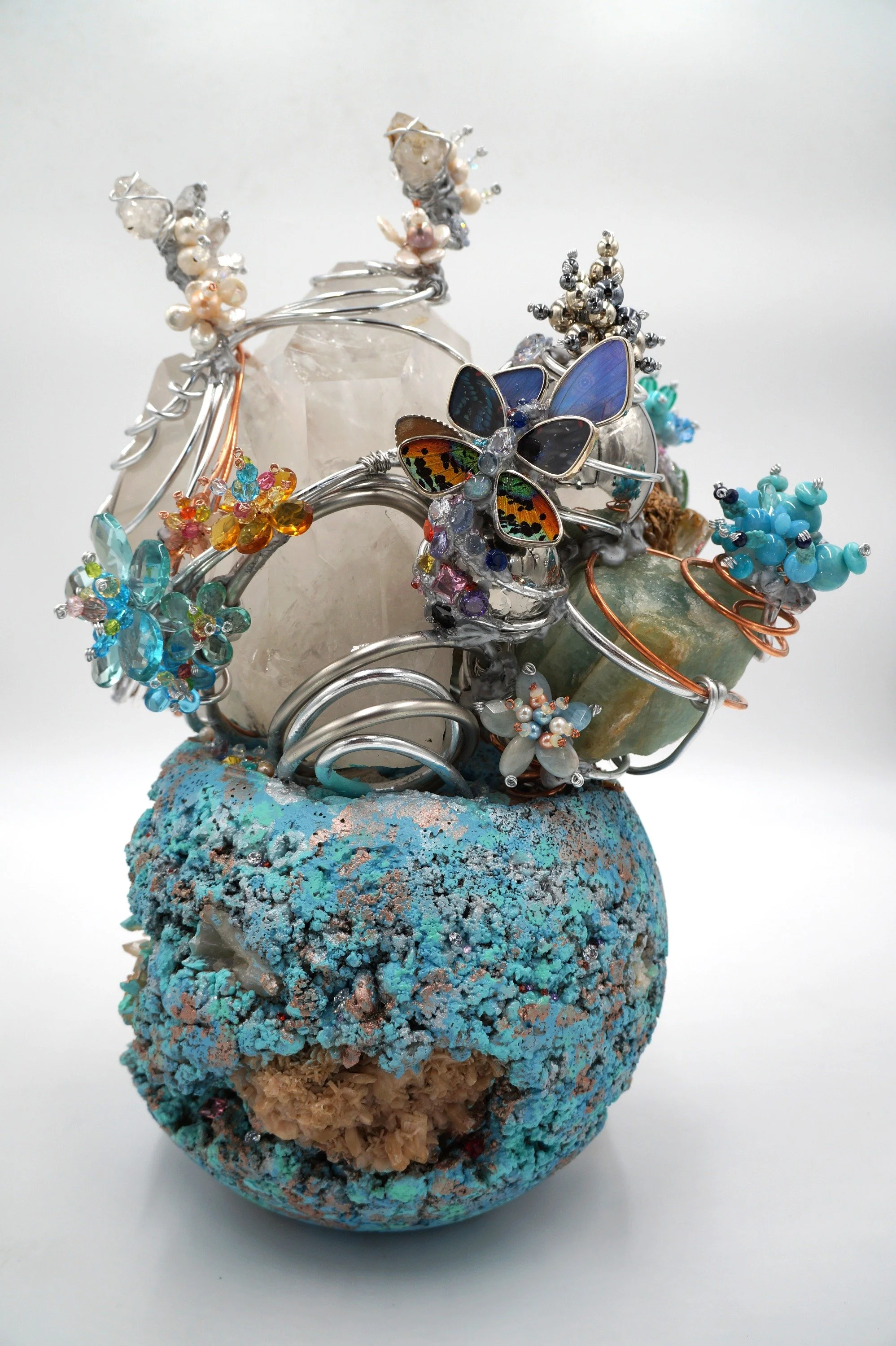
Meteorites from outer space, dinosaur bones, Woolly Mammoth fur, 2,000-year-old Roman coins, and bullets from the American Civil War find a home in mixed media sculptures by Jorge Cainas. Alongside these rare and unusual materials, there are commonplace items, spices, dried flowers, preserved insects, magazine clippings, and other artifacts of daily contemporary life. Artist Jorge Cainas bound them together using materials like concrete, resin, electrical wire, ceramics, glass, clay, and refrigeration tubing.
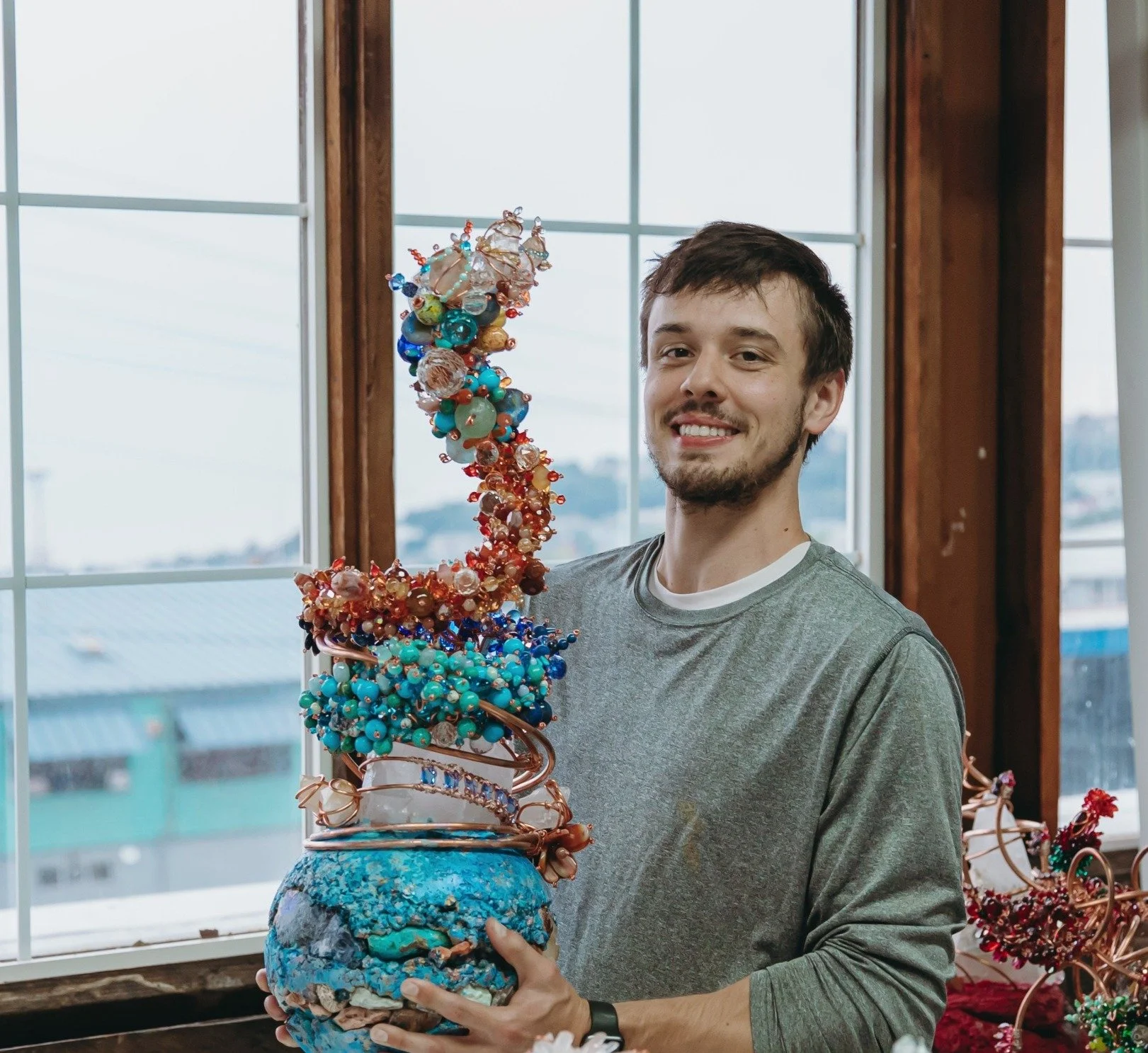
Jorge Cainas was born in 1993 in Tampa, Florida. His father, Jorge, was an immigrant from Cuba who started his own business before passing in 2004. His mother, Jennifer, raised him and his two sisters while working multiple jobs. Eventually, she became a professor with a doctorate. The work ethic of his mother and father, the fragility of life, and the preciousness of time are all major driving forces in his creative output. His father’s business was blue-collar. He used tools and materials of construction, electrical work, and satellite technology. When he passed, the tools of their home workshop were unused. When Jorge Cainas became interested in sculpture, he turned to these tools. His fascination with the natural world, along with the available tools, led him to create floral arrangements using copper wire and minerals. This innovative sculptural style became his main vehicle of expression, as he would title his pieces with poetry and wordplay. Many of the themes repeated in his work are related to science, nature, and the human experience. The intentional use and orientation of materials, along with the titles, express his meaning.
What is your background and how did you start your journey in the art world?
“I am half Cuban and half white, grew up in Florida. I’ve been interested in art since a very young age. In many ways it was always what I wanted to do with my life but did not pursue it seriously. During my first year in college I had a health scare, hospitalized for months and felt as though I was on the verge of death. During that time I decided that if I regained my health I’d spend my life pursuing art. I was experimenting with many different types of art but eventually I felt a calling toward sculpture. I wanted to do something that no one had done before. I wanted to cultivate a type of work that was uniquely me. After spending time researching and thinking about the type of artwork I wanted to see in the world I began creating large floral arrangement style sculptures using copper and crystals. I worked for 3 years creating a series of sculptures in this style before ever showing them.
Since my initial successful exhibition I have been refining my work, incorporating new techniques, materials, and aesthetics. I have worked with gem distributors, crystal wholesalers, paleontologists, geologists, gemologists, and jewelry designers to learn as much as I could about the materials and manufacturing of the world I had become a part of. I have also since graduated with my BA in Creative Advertising and an MFA in Media Design. During this time I also sought further training in ceramics, welding, jewelry manufacturing, and glass. After nearly 15 years since my near death experience I am a full time artist, I’ve exhibited with museums and have sold my work internationally. I’m proud of how far I’ve come, but I’m still pushing myself to grow, learn, and shape my career.”
What inspires you?
“I find inspiration in everything. I don’t shut anything out. I filter my lived experiences and inspirations through my artistic practice anyway I feel I should.”
What themes do you pursue? Is there an underlying message in your work?
“One major theme I often explore through my work is the vastness and interconnectivity of being. Through a wide array of materials from all over the world, I hope to create a connection with viewers of every background. Reading an artwork’s list of materials could conjure up memories of a trip to far away place, a story once heard, notions of deep space, or the history of our human past. I juxtapose these historic, rare, and exotic materials with paper clips, dried herbs, magazine clippings, and artifacts of daily modern life. Using this variety of materials, I attempt to tell a story about what it is to be human.”
How would you describe your work?
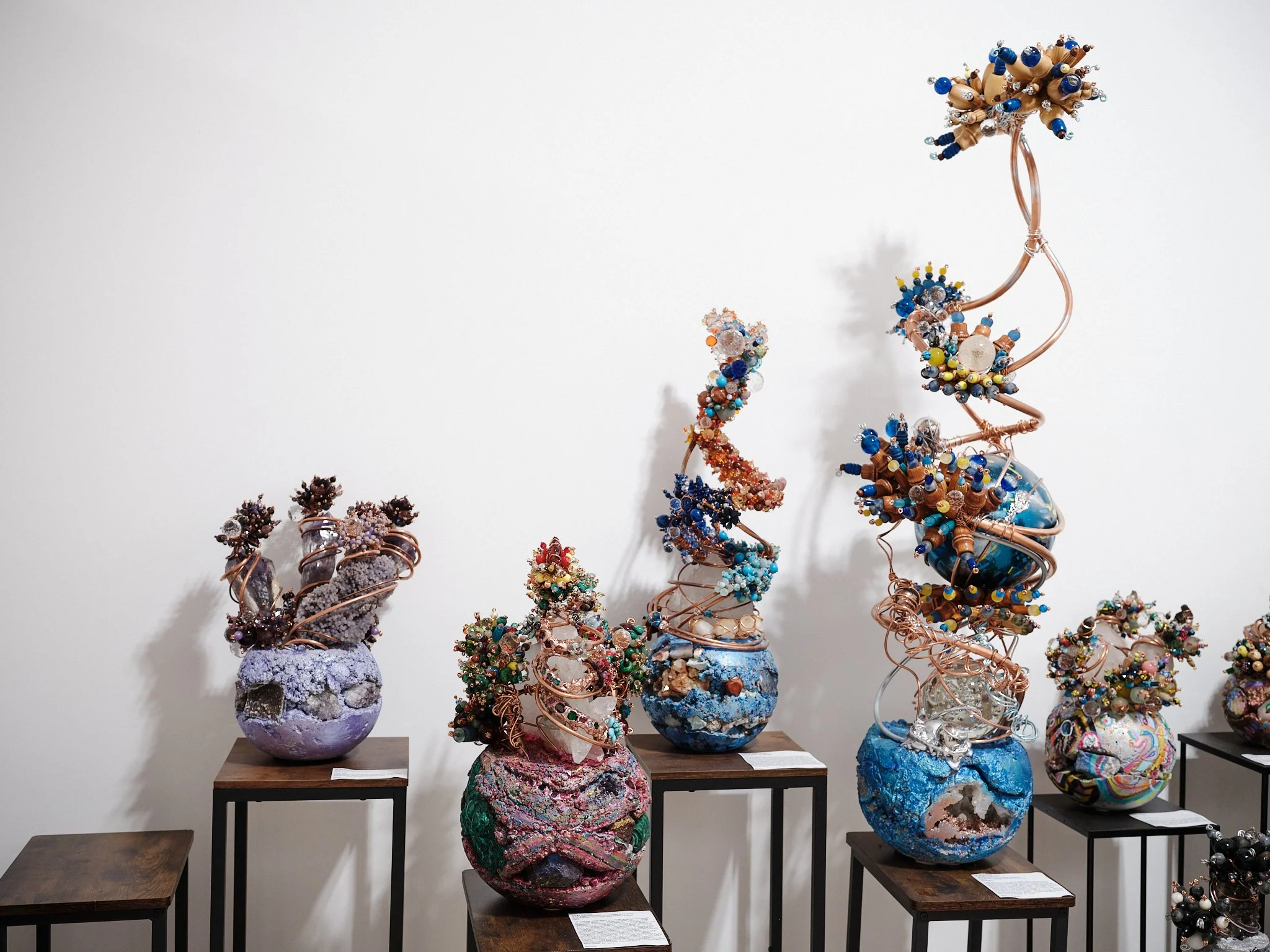
“In simplest terms, I would describe my sculptures as abstract three-dimensional mixed media.”
Which artists influence you most?
“As a multidisciplinary artist who takes inspiration from anywhere I can get it I’m inspired by many different artists. Writers like Walt Whitman, Ralph Waldo Emerson, Ernest Hemingway, Robert Frost, and Langston Hughes. Story-tellers like Pendleton Ward, Wes Anderson, and David Fincher. Musicians like Bob Dylan, David Gilmour, John Lennon, Isaac Brock, Regina Spektor, and Aesop Rock. Along with traditional visual artists like Ruth Asawa, Mary Lee Hu, Niki de Saint Phalle, Marina Abramović, Dale Chihuly, Gustav Klimt, Vincent van Gogh, Leonardo da Vinci, Salvador Dalí, Takashi Murakami, Damien Hirst, Mark Dion, and Andy Goldsworthy.”
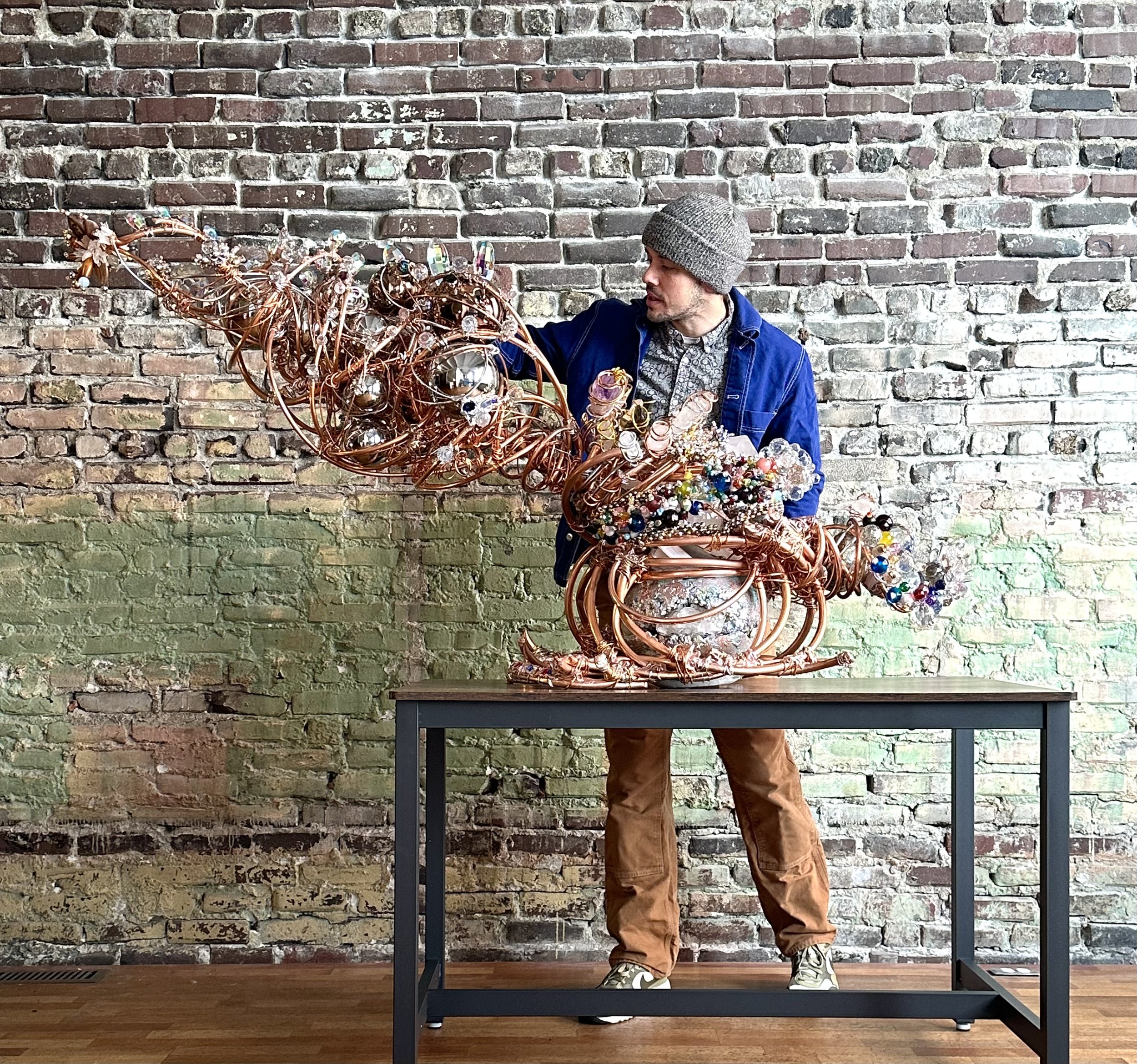
“One major theme I often explore through my work is the vastness and interconnectivity of being.”
What is your creative process like?
“My process often revolves around material, the most important of which is often time. Most of my work requires years to produce, including the time to acquire and store the various materials. I also enjoy creating work in which the vast amount of time required to produce the work is readily apparent. I have become accustomed to spending over 300 labor hours on a single art piece, while quickly creating numerous smaller works over the same period. The process itself is fairly organized, purposeful, task-oriented, and honed into an efficient order of operations. However, my mental state is meditative, intuitive, and free-flowing expression within my system. This allows me to create a few hundred artworks a year. I use the sales of smaller batched work to help fund larger works. Since I use such a variety of expensive and difficult-to-obtain materials, I need to create smaller works to fund material acquisition. For example, I was travelling throughout Alaska last month in search of Woolly Mammoth fossils and nephrite jade. The materials I’m able to find on these types of trips will inform art pieces for years. I’ll usually create some larger work that highlights specific large fossils or minerals, and many smaller works with smaller bits of materials.”
What is an artist’s role in society and how do you see that evolving?
“To me, artists have many roles in society. In some ways, it is to put beauty into the world and spark happiness through that beauty. In many ways, artists are responsible for explaining aspects of the world that cannot yet be explained in any other way. To channel creativity and innovation as a means of changing how people view the world around them. We're responsible for pushing the culture, perspectives, and ideas of humankind forward.”

Have you had any noteworthy exhibitions you'd like to share?
“I had a solo exhibition at Design Within Reach, an internationally renowned interior design brand, last year as part of the Refract Seattle Glass Experience sponsored by Dale Chihuly, Visit Seattle, and many others. This year, I was part of a yearlong art residency at Base Camp Studios and was shown alongside other art residency recipients during the Best of Base Camp exhibition. I have also shown my work with the Bellevue Art Museum and the Bainbridge Island Museum of Art.”
Website: www.jorgecainas.com
Instagram: @jorge.cainas.art