Interview
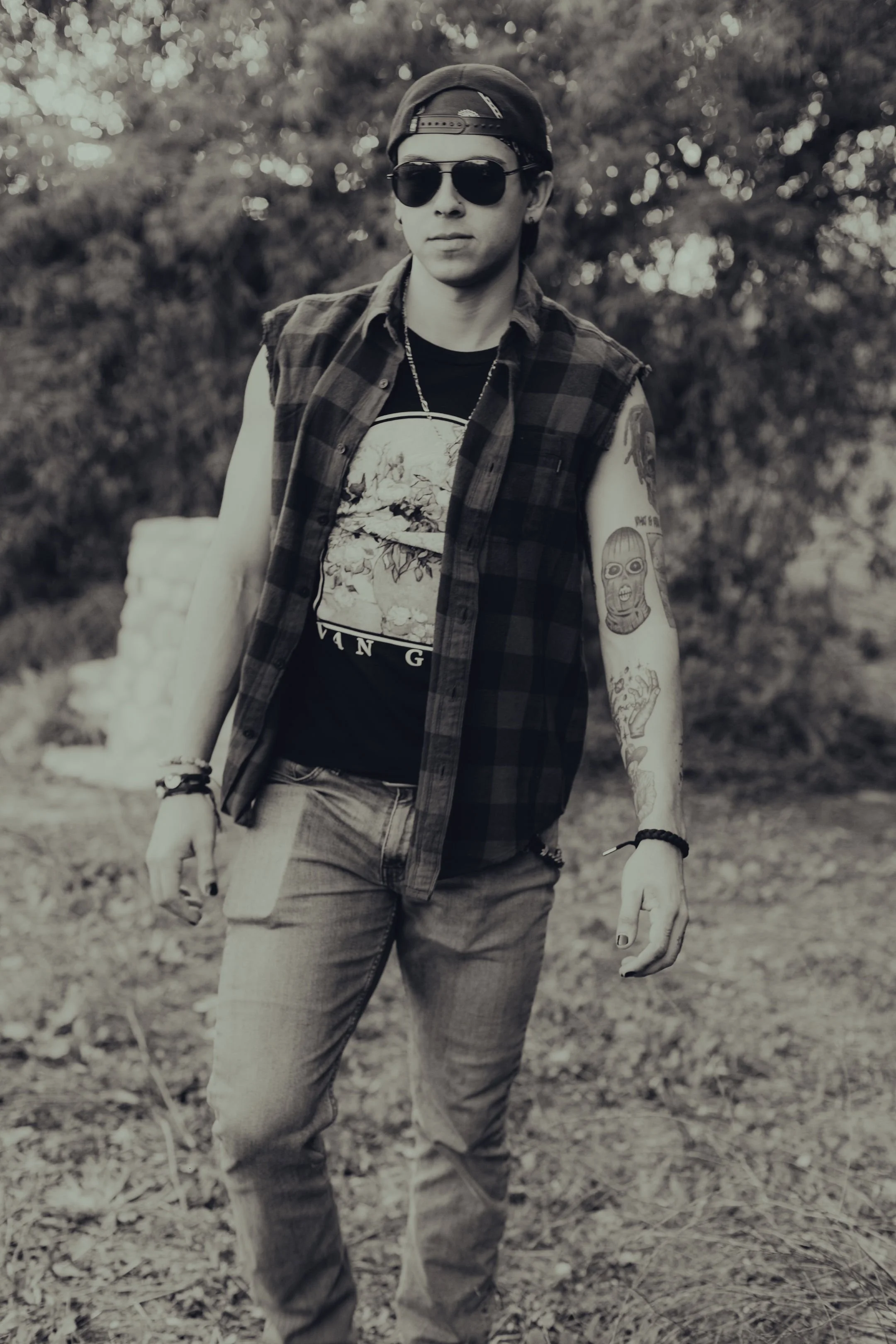
Johnny Alvarado
Johnny Alvarado is an artist whose work is defined by a commitment to authenticity and emotional depth. He does not paint for validation; he paints to offer an unfiltered, honest reflection of the human experience. If his work evokes a sense of understanding or connection in others, he has fulfilled his purpose.
What is your background and how did you start your journey in the art world?
“My name is Pigfarm. My background didn’t start anywhere near the arts—in fact, I used to think the art world was pointless. I saw it as infantile, useless, something people did when they didn’t have a ‘real’ direction in life. I barely crawled out of high school with a passing grade, dragging a ton of bottled-up childhood angst with me, and somehow got accepted into college by what felt like pure luck. I still have no idea what they saw in me. Not even a semester later, I had to drop out because I couldn’t afford it. Back to square one.
So, I enrolled at a community college and decided to major in Biology—science made sense to me, and at that point I still thought art was senseless. Then my three-year relationship ended, and everything in my life slowed down to a weird crawl. Days felt like weeks. I showed up to class, but mentally I was on autopilot. For my degree, I was forced to take an art class—drawing or theater. And there was no way I was acting, so drawing it was. I walked in expecting a room full of hippie, clueless, soft people. I was wrong. Completely wrong. That class cracked my worldview open. My professor, Robert Jew, wasn’t just an artist—he was a force. He’d worked for Disney, comics, oil portraits, you name it—but what hit me most was his intelligence and how grounded he was. This was the first time I’d seen art practiced at a level that demanded real discipline, real thinking, real life experience. At the time, I’d already taken organic chemistry, physics, population biology—serious classes. I thought art would be an easy AI could coast through on my way to a fancy career. That arrogance evaporated fast. The same people I dismissed were blowing past me like it was nothing. Their ideas actually lived on the paper. They didn’t ‘do’ art—they were art. Meanwhile, I was struggling to draw a bottle. Little by little, the ego I wore like armor just melted. My professor used to sit next to me as I worked, telling stories about art, life, the world, medicine—everything. He supported my dream of becoming a doctor. He believed in me before he even knew me. That class rewired something in my DNA. Till this day, I'm eternally grateful to him.
After that, I took every art class I could—drawing, painting, figure drawing, anatomy studies. It became my outlet, my therapy, my way of turning whatever pain I carried into something I could actually look at and understand. The daydreams about wanting to be someone else stopped. This gave me something solid to hold onto. Eventually I graduated with a degree in Cell and Molecular Biology. I still love science, and I’m still pursuing that path. But art never left. And it won’t. What started as a required class turned into one of the most defining parts of who I am today.”
What does your work aim to say? Does it comment on any current social or political issues?
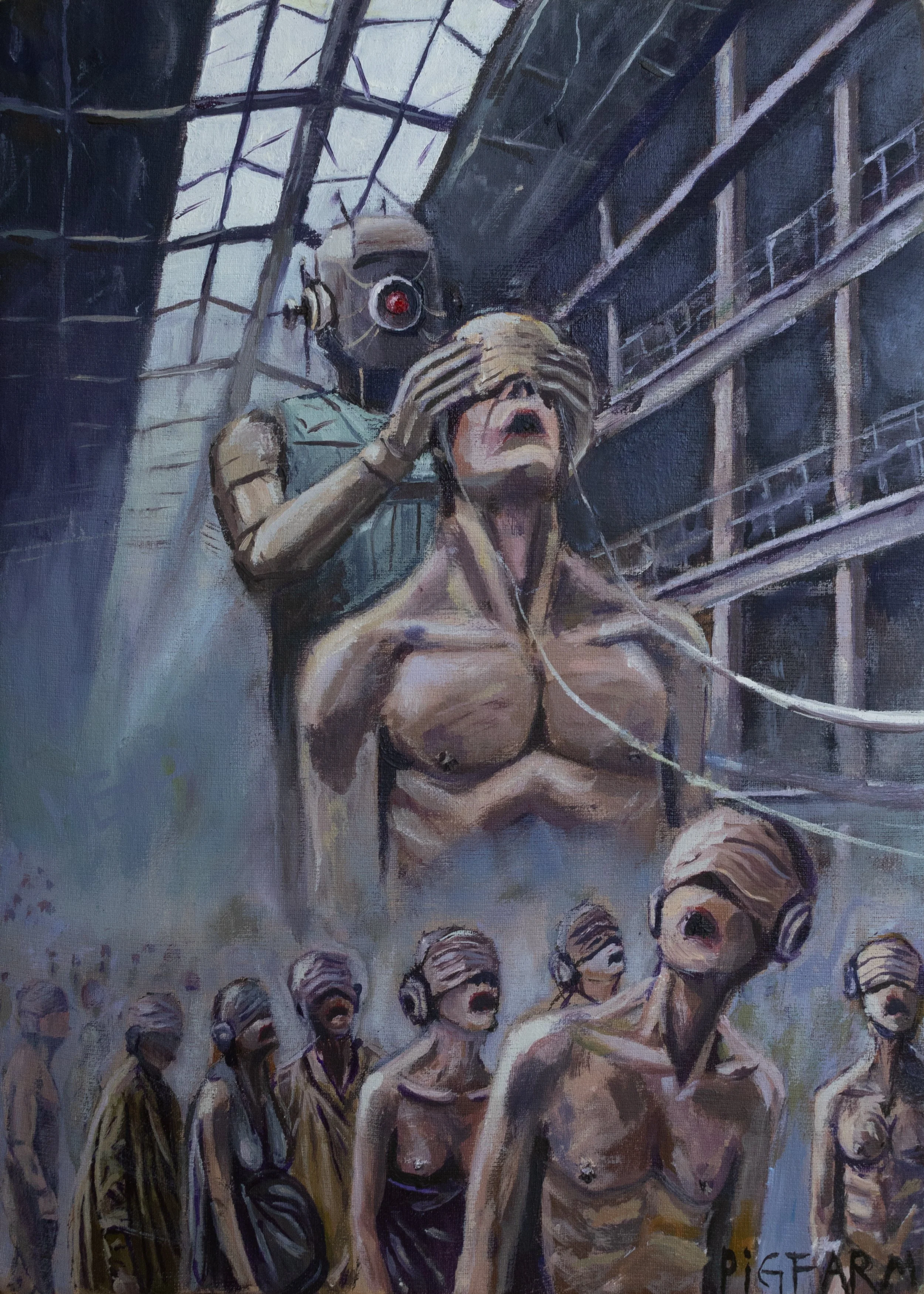
“To explain what my work aims to say, I'll explain my name: Pigfarm. People usually think it’s random or ironic, but it’s actually the backbone of everything I create. My life experiences have taught me that humanity is a strange, conflicted, almost contradictory species. I’m religious in a way that doesn’t fit the typical mold. I don’t buy into the polished version of religion the world tries to sell, but I do believe there’s something bigger than us. And here’s the irony: I’m saying this as someone who earned a degree in Cell and Molecular Biology—someone who spent years worshipping science. But the more you study life, the more you realize how limited our perception is. Everything we ‘know’ is just electrical signals firing in a slab of meat. Our entire reality is a translation of language running through biological wires. Hot, cold, fear, desire, morality—just signals. A pig is a creature that starts out cute but grows into something that will eat anything put in front of it. Pigs consume. They don’t question. A farm is a controlled environment—land managed by an owner. Put them together and you get the metaphor I built my work around: most people live like pigs on a farm. We consume without thinking. We let society, addiction, culture, politics, and our own impulses ‘manage’ us. Different people have different owners—porn, drugs, ego, fear, hatred, validation, the phone in their hand. But the pattern is the same.
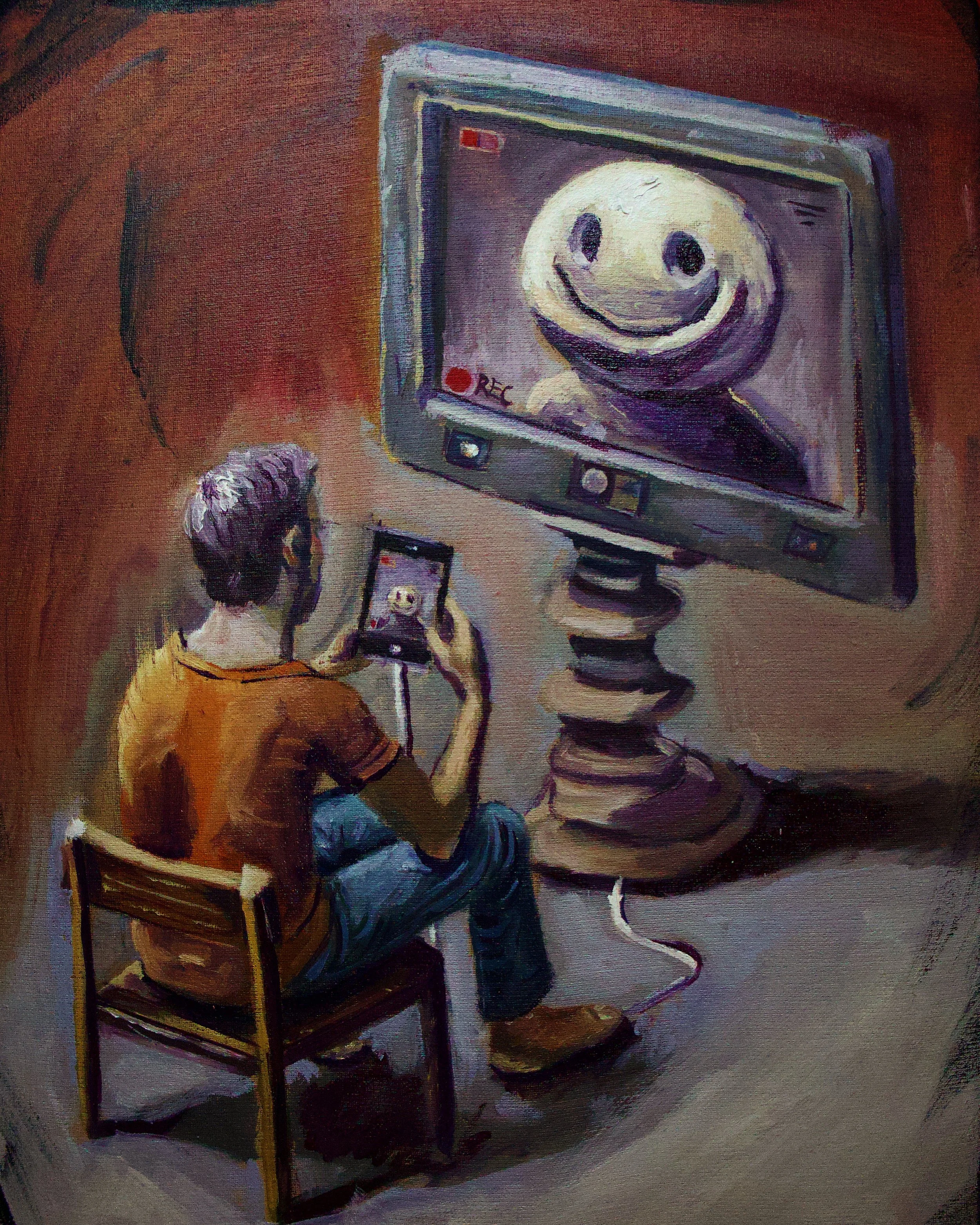
My art is my way of breaking that trance. I want people to look at my work and feel confronted. I want them to question why they think the way they do, why they want what they want, why they obey impulses they didn’t choose. My paintings are reminders to wake up, to decipher, to say yes with intention and say no with discipline. Do I comment on social or political issues? Yes—but I’m not loyal to any one side, ideology, or movement. I’m loyal to truth as I see it. One of the issues I touch on the most is phone addiction—the way technology is swallowing reality and numbing the actual human experience. But overall, I’m less interested in preaching and more interested in exposing the traps we willingly fall into. That’s what Pigfarm is about. It’s crude on purpose. It’s a mirror—one people don’t always want to look into.”
Do you plan your work in advance, or is it improvisation?
“I almost always plan my work in advance. I’ll do several mockups, have certain references in mind, test different compositions, and figure out which layout communicates the idea best. But when it comes time to actually paint, I switch gears. I usually paint à la prima—no sketches, no underdrawing, no tracing. I like starting on a blank canvas with nothing but the idea in my head. It forces me to paint freehand, and that’s where the work feels the most alive and expressive. The planning gives me structure, but the execution is instinct.”
Are there any art world trends are you following?
“I do follow some trends—mainly the ones that circulate on social media, because realistically that’s where most artists get seen today. Personally, the trend I’m most drawn to is the resurgence of technical mastery. I’m obsessed with artists who treat art like a skill to sharpen, not a shortcut. People who study anatomy, perspective, light, form, color theory—artists who build worlds and beings that never existed, but feel real because of the discipline behind them.
I’ll be honest: I have a complicated relationship with abstract art. I understand its purpose. I understand the emotional language behind it. But in my opinion, if you’re truly committed to evolving as an artist, you’re always pushing your abilities, breaking your habits, stepping into discomfort. Abstract art as a temporary detour or a way to experiment is totally valid. Abstract art as a default, repeated endlessly without developing other skills—that’s where it feels lazy to me. What excites me are artists who keep learning, who push their technical boundaries, who don’t rely on vagueness to carry the meaning. I’m infatuated with creators who treat art like a craft—something to study deeply. Anatomy, physiology, linear perspective, atmospheric perspective… all the tools that turn imagination into something that feels alive. That said, everyone has their own path. If someone makes abstract work because it’s what they love and it’s how they express themselves, more power to them. But for me personally, growth comes from discipline, curiosity, and constantly expanding what my hands and mind are capable of.”
What process, materials and techniques do you use to create your artwork?
“I primarily work in oil paint. That’s my main language. I’ve used acrylic, gouache, and charcoal, but oil is where the real expression comes out. Even so, I draw far more than I paint. I’m a big believer that drawing every day sharpens your skill in a way nothing else can. I keep multiple sketchbooks—life drawing, figure drawing, quick studies. Most of it is pure practice, never meant to be seen, just me refining and trying out new things. When it comes to finished work, I almost always paint à la prima. I like going straight onto the canvas without any sketching or imprinting because it forces me to be present and decisive. But if I’m working on a piece that requires precision, I’ll do a full drawing on paper first. Then, I’ll put pastel on the back, transfer the drawing to a primed, toned canvas (usually burnt sienna), and use that as my guide so I can skip the proportion stage and focus purely on execution. I only use nontoxic solvents—traditional turpentine gives me headaches and kills my working flow. Music plays a huge role in my process too. I usually paint to heavy metal or fast techno; the intensity keeps my brain sharp and my hand moving. Once the piece is finished, I wait a couple of weeks for it to cure, then varnish it and build the frame myself. The whole process from start to finish is very hands-on, very intentional.”
What does your art mean to you?
“My art means everything to me. At this point, it’s basically my identity. Life constantly hands me ideas—moments, thoughts, emotions—that end up becoming the next piece. It’s my way of expressing myself, my way of showing love, and honestly one of the main reasons I wake up in the morning. I know I’m just a blip in the grand timeline of humanity, but I hope the work outlives me. There’s something beautiful in the idea that hundreds of people might have my art hanging in their homes—the places where they love, rest, argue, plan their futures. I want my work to spark conversations, connections, and lifelong thought. My art is my strongest attempt at showing the world what I think and what I feel. I never set out to offend anyone, but sometimes the truth I’m carrying is sharp. Painting is the only way I can express it honestly. It’s not just something I do—it’s the clearest version of who I am.”
What’s your favourite artwork and why?
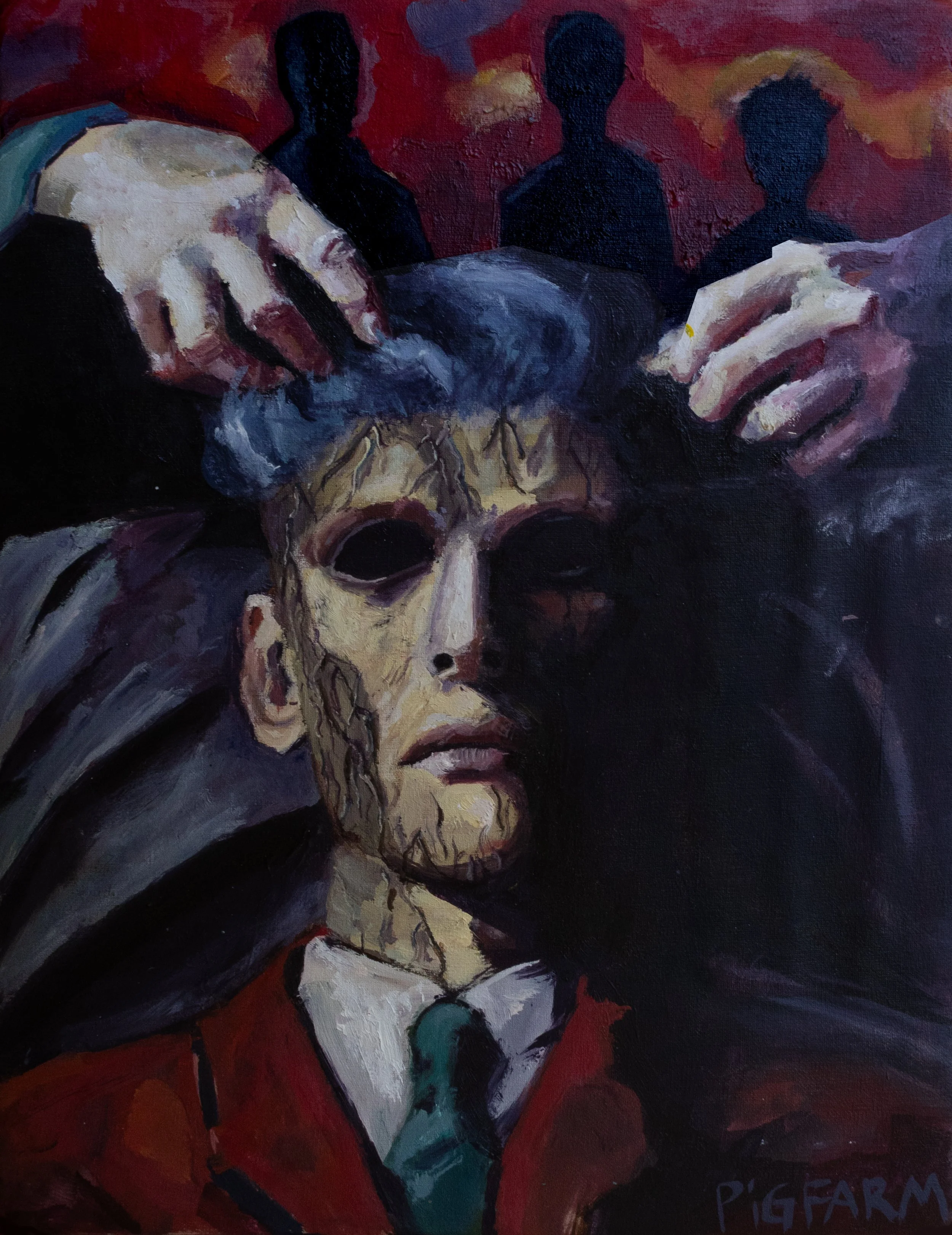
“It depends on whether we’re talking about my work or someone else’s. If I had to choose from my own pieces, I’d say Deep Worship. I painted it during a time when I felt hollow—used, drained, expected to perform happiness for everyone around me. People don’t realize how exhausting fake smiling is until your face literally can’t do it anymore. In the painting, there’s a boy dressed in a bright, colorful suit, but his face is pale and worn-out. Behind him are hands reaching toward him, touching him, playing with his hair. It represents that moment when you finally break—when the things you’ve worshiped, chased, or depended on turn around and hurt you. For me personally, I was not referring religion; I mean the worldly things we cling to: validation, pleasure, relationships, distractions. Anything you elevate too high can become the thing that destroys you. That’s what the piece is about. If we’re not talking about my work, then anything by Zdzisław Beksiński is at the top for me. Yes, he’s popular, but there’s a reason for it. His story, his pain, and the way he translated the horrors and trauma of World War II into surreal, nightmarish worlds—it’s unmatched. Even his death was gruesome and senseless, its as if his whole life had to be surreal. You can see his architectural background in the structures he painted: intricate, towering, impossible, terrifying. He painted torment with a level of honesty I aspire to. I’d love to reach that level of expression someday.”
Have you had any noteworthy exhibitions you'd like to share?
“One of the most notable exhibitions for me was the Riverside County ArtScape in 2025. I was also featured at the Ontario Museum of Art and History, which was a big milestone in my early career. Outside of that, I’ve shown work at several local venues and community events—places like Artists in the Alley, Xzibit in Fullerton, and a variety of smaller pop-ups and galleries. Each one taught me something different and helped me grow my presence as an artist.”
Website: piigfarm.com
Instagram: @Piiigfarm