Interview
Jason Byron Nelson
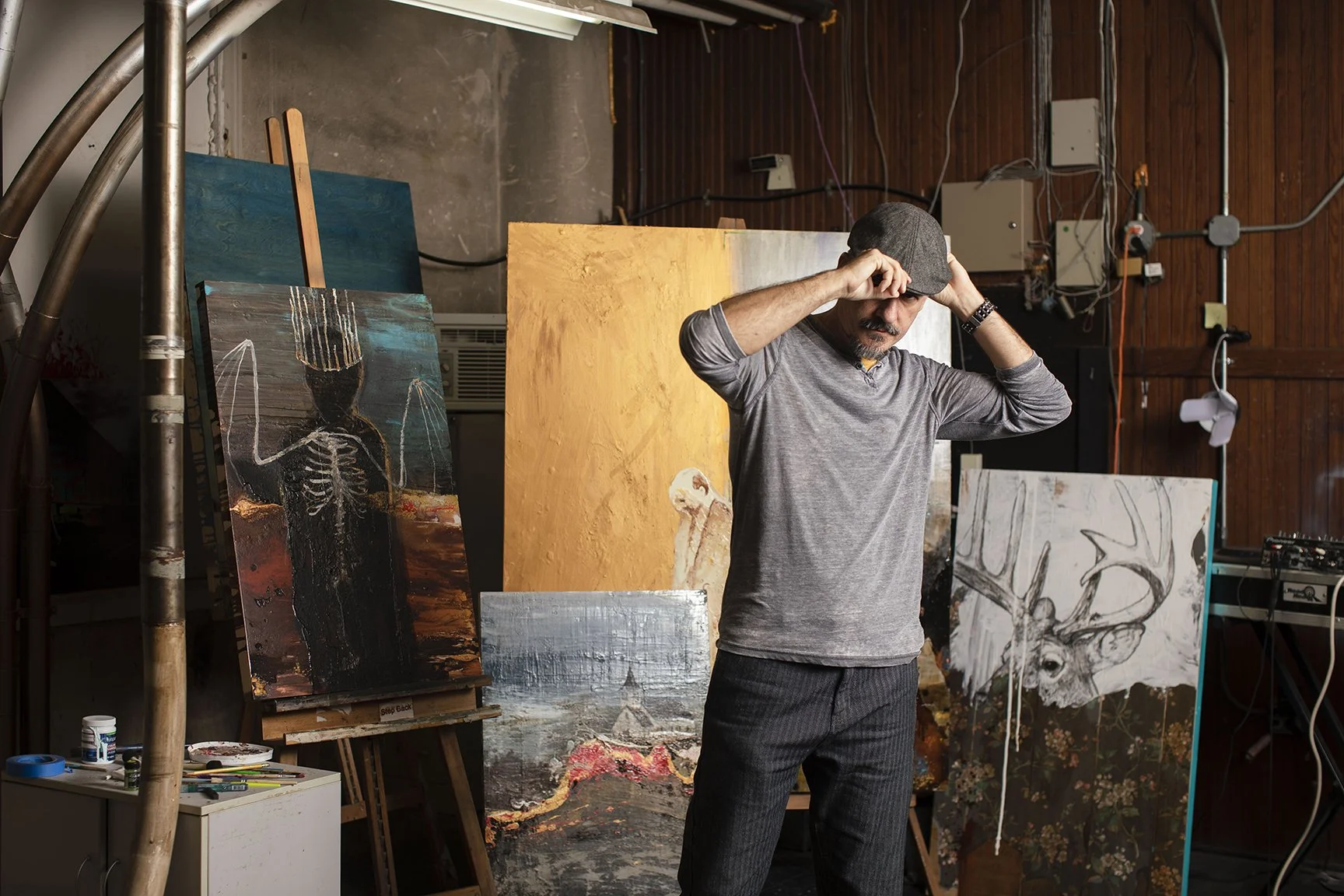
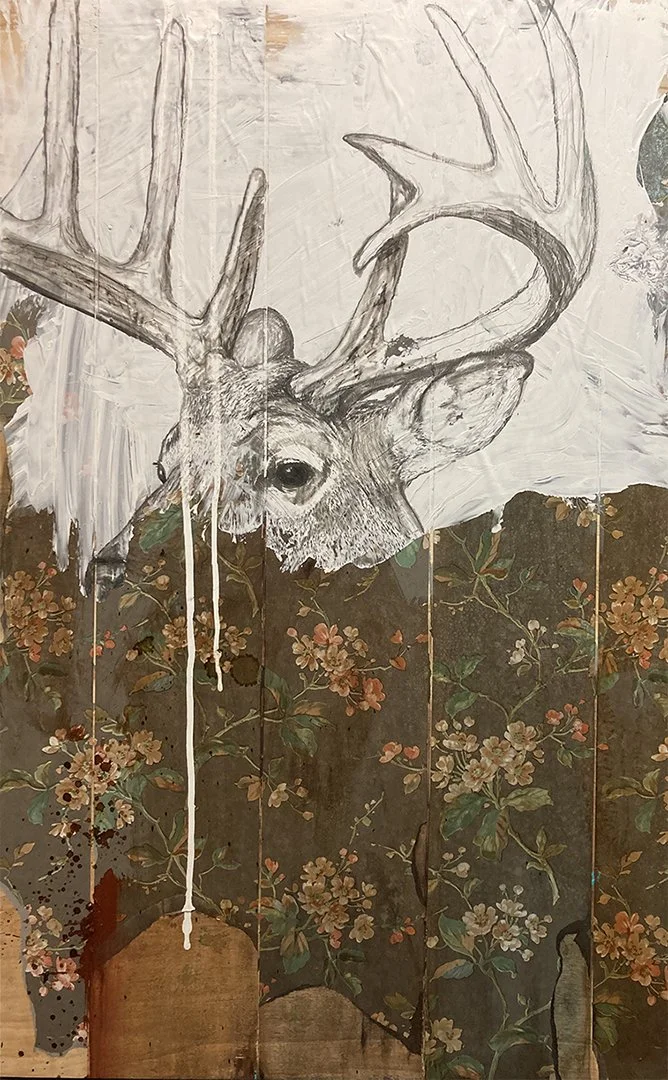
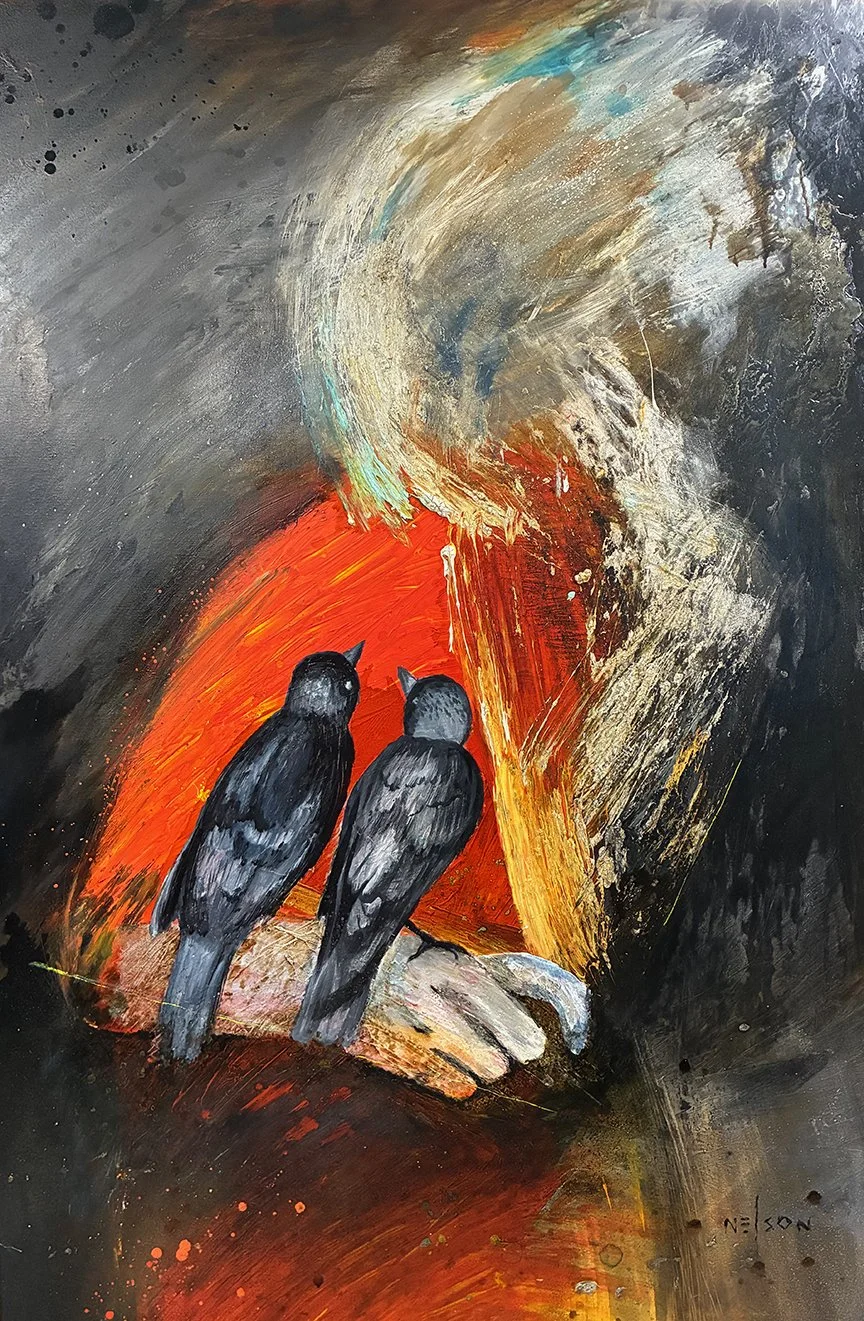
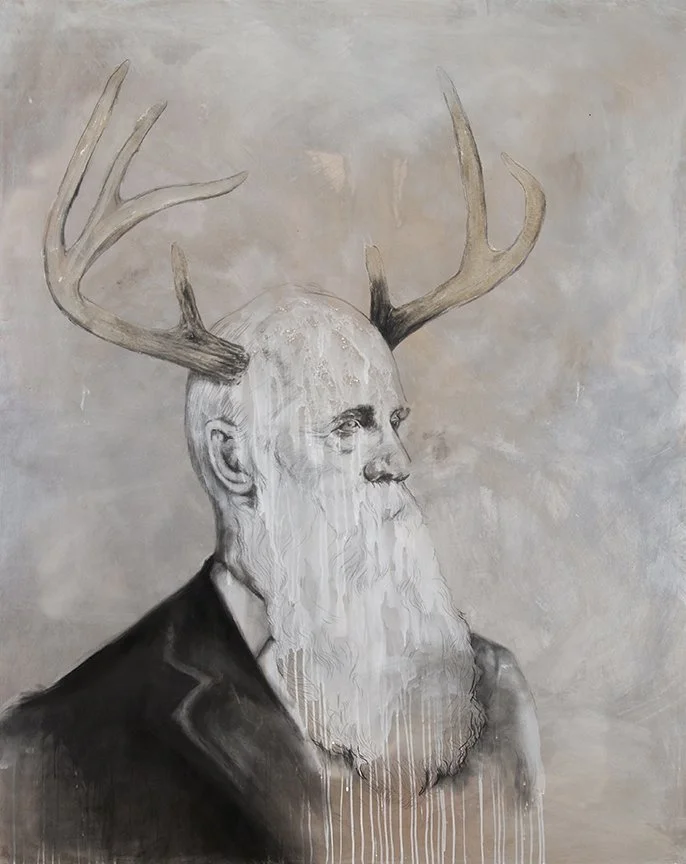
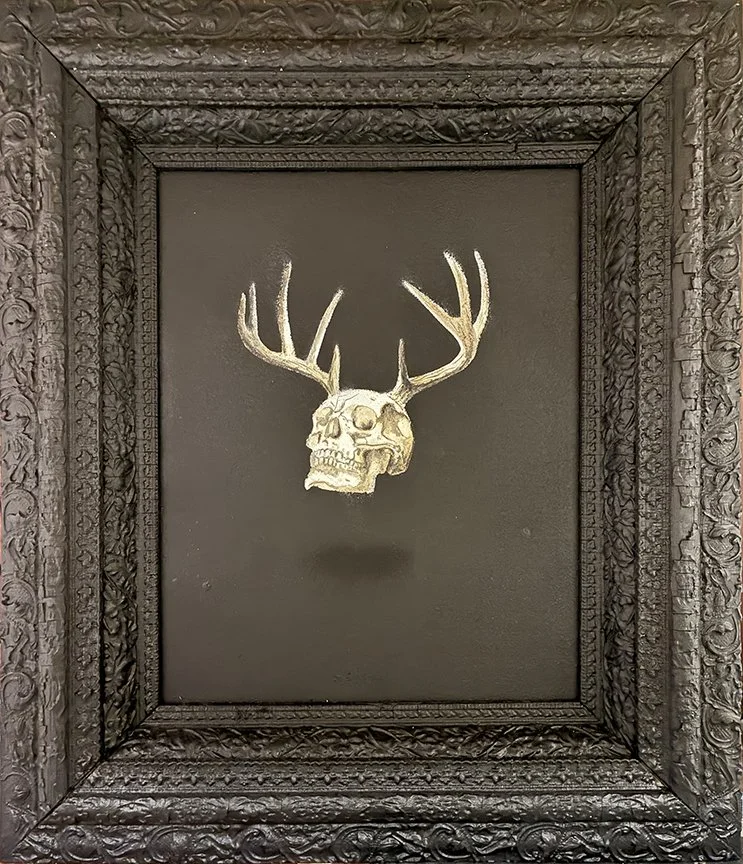
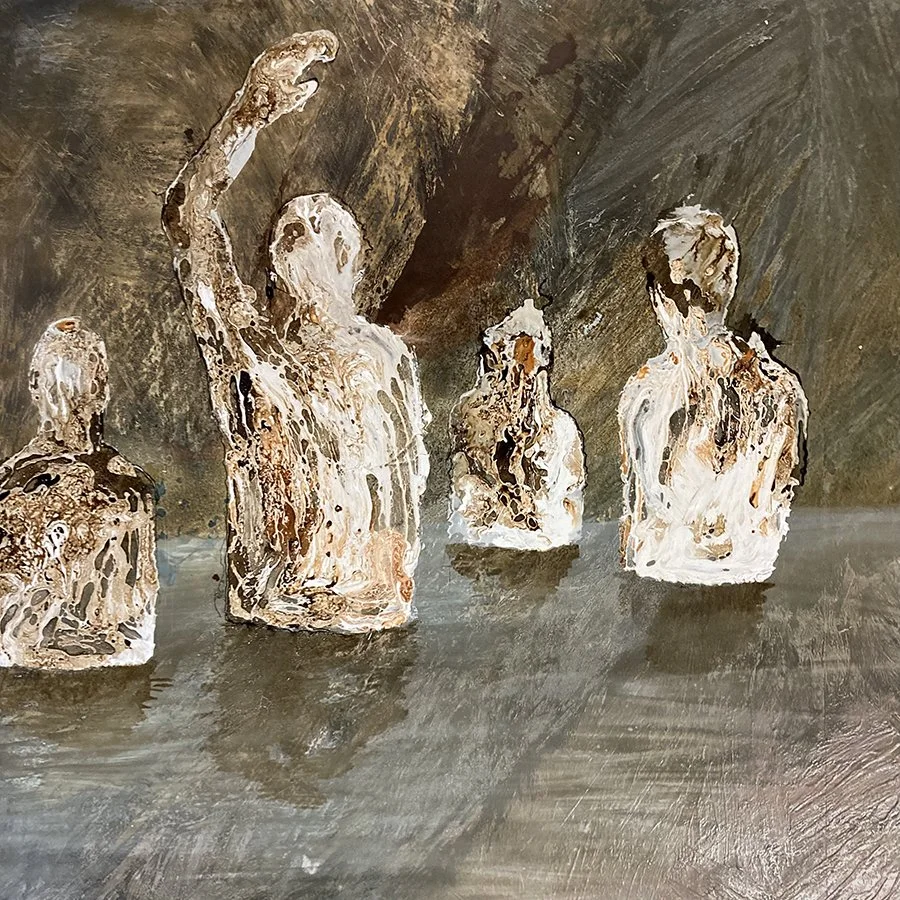
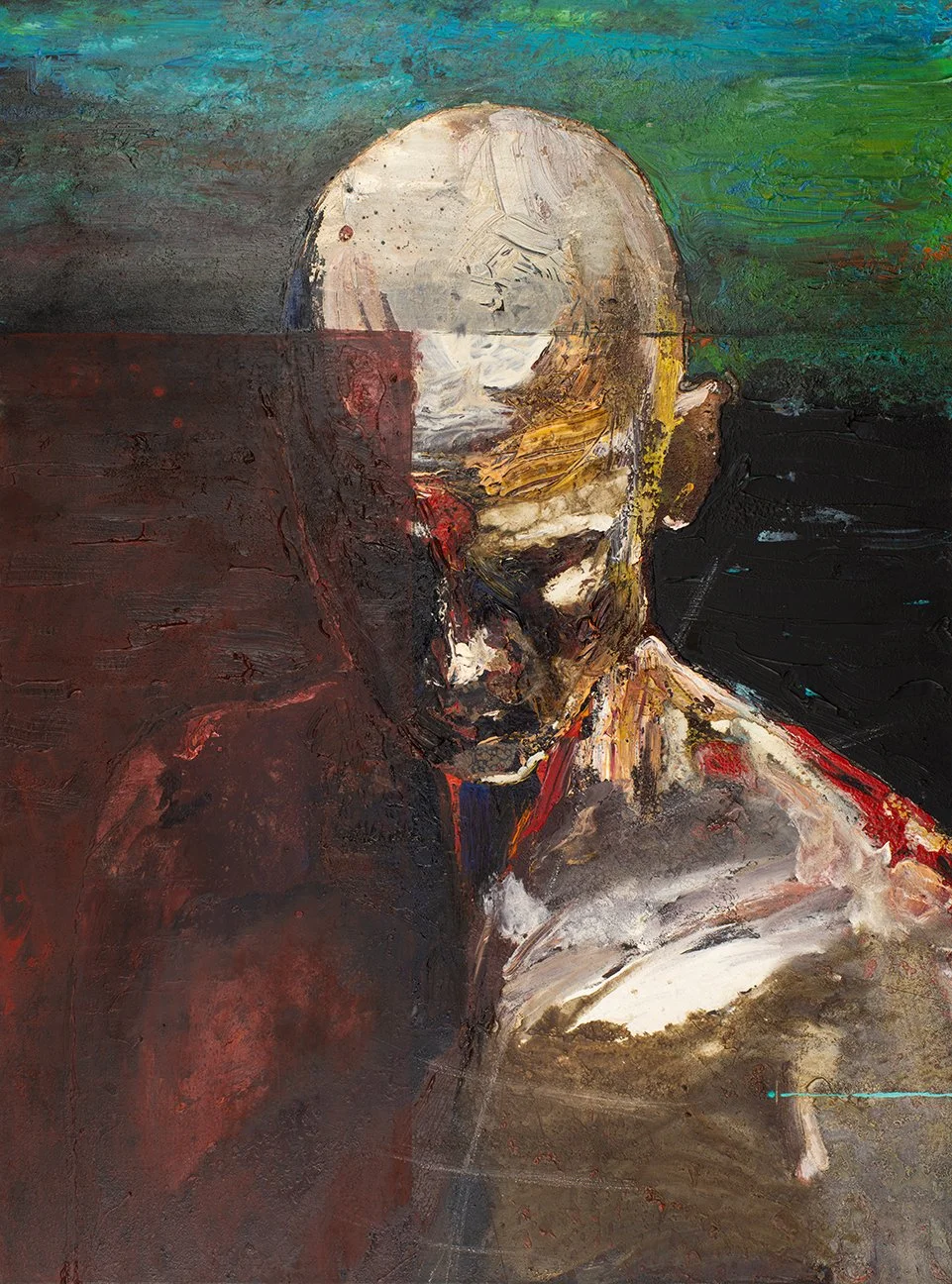
Born and raised in Louisiana, Jason Byron Nelson is an illustrator, fine-artist and writer who finds inspiration in design, texture and the diversity of everyday life. Embracing his heritage, he interprets religion, nature, hunting culture and all things Southern through his own skewed lens. His methods and mediums are nearly as assorted as his inspirations. From pixels to spray-paint, Nelson has adapted several unconventional styles on the path to creating his own. His interest in the multiple contradicting facets of human nature are always at the forefront of his work; presenting the light and the dark without judgment. Mainly focusing on abstract figurism, Nelson uses wood stain as if it were watercolors and peppers his acrylics with powdered concrete, making his work very textural, both literally and figuratively. “We’re complicated people in a complicated time. Expressing our thoughts can be as frustrating as the thoughts themselves. I’m blessed to have found an avenue of expression that people seem to respond positively to.” Nelson often returns to a collector-favorite series entitled “Deerwalkers” featuring abstract subjects with their signature antlers and vintage suits. This series began with Nelson’s interest in exploring the more animalistic instincts of man and how this related to the hunting culture of the south. The term “artist” is a subjective thing but as a contributor to culture, Jason Byron Nelson transcends what an artist can be.
What is your background and how did you start your journey in the art world?
“I went to university to study commercial design because I thought that path would be less risky than trying to be a fine artist at such a young age. Plus, I was aware enough to know that whatever type of fine artist I could become, I wasn't ready yet. So for several years I worked in advertising, all the while pursuing fine-art when I could. This meant submitting to shows and exhibiting my work at local venues with minor success. I assumed most of my peers had the same mindset - I thought that most artists' goals were to work without compromise. I could not have been more wrong. Most graphic designers were happy working within the limitations of their clients' needs, budgets and agendas - it narrowed their focus, which was a good thing. For me, it was just a limitation but one that gave me the motivation to keep exploring the fine art path. Along the way, I opened up my own design boutique, this allowed me to pick and choose my clients while giving myself more free time to paint. Nowadays, those two worlds take up an equal part of my creative time. And while this is certainly a good thing, my goal is to do nothing but fine art before the decade ends.”
What inspires you?
“That's a big question. The short answer is almost everything. I'm interested in music, film, food, dance and pretty much any form of expression. But the longer answer, the specific answer, is people and how we interact with one another, interpret one another, feed off each other. I see the world as a giant social experiment and it's fascinating. Our relationship to nature, God, our past, our ever-changing perspective of the present and each other; these inspire the concepts of my work. I like work with texture, I love graffiti and work that challenges categorization. I tend to be drawn to work that projects the darker side of human nature and how we express anger and sadness and doubt. I connect with work that features the human form in all its complicated madness (and goodness). As someone who works in commercial art, it's important for me to stay ahead of the trends and I learned long ago that I could do this by keeping up with musical trends - something I would probably do anyway - so music has become an enormous source of inspiration in itself. Like most people, I often go down the rabbit hole of the internet looking at artists' work that I enjoy and admire.”
What themes do you pursue? Is there an underlying message in your work?
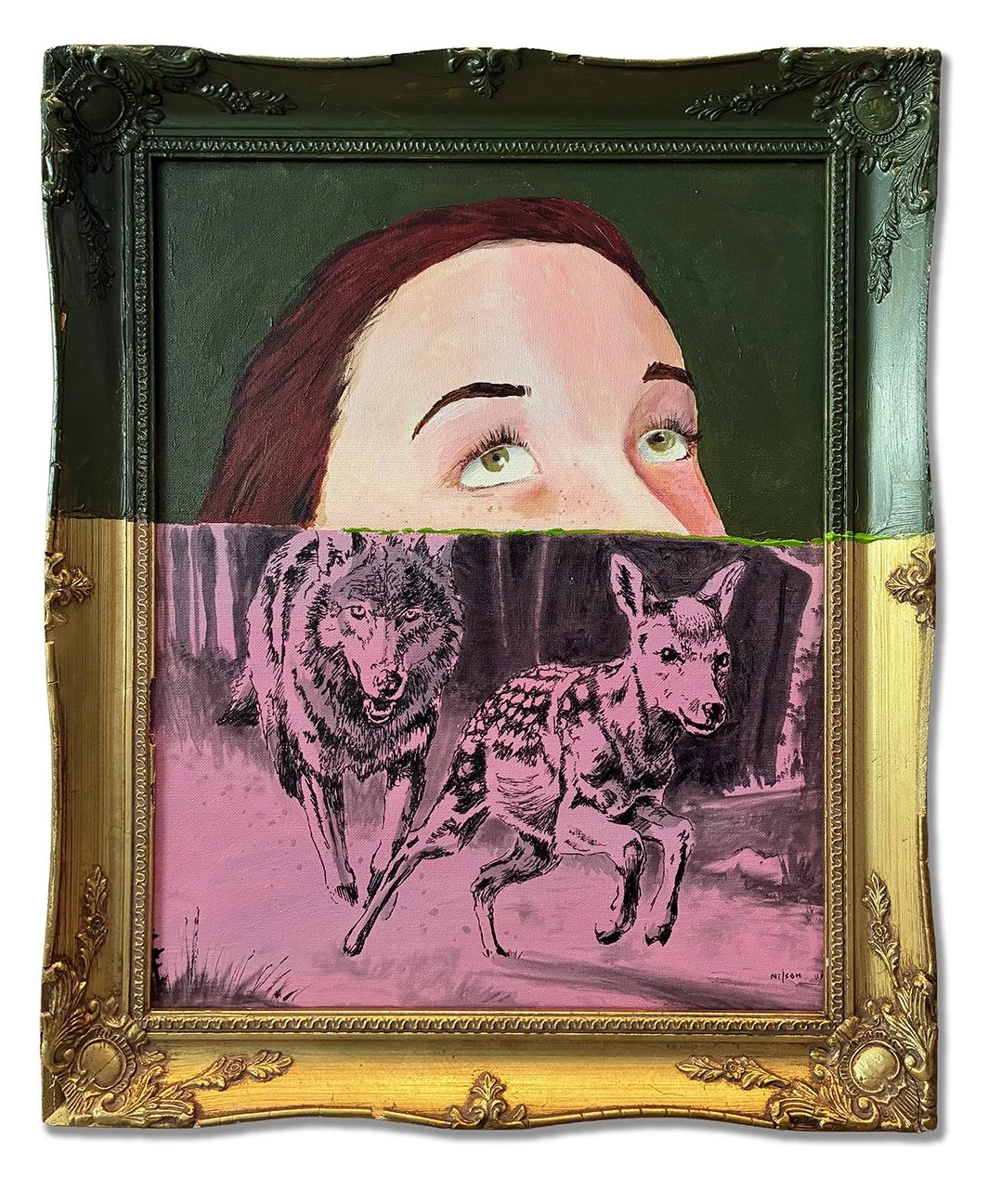
“I don't know if there's an underlying message in my work. I'd much rather the viewer come to their own opinions regarding my messaging, something that I think helps bring them back to the work. So, with this in mind, I tend to be purposefully vague with any reoccurring themes. But with that said, there are certainly topics that thread throughout my work. As I mentioned before, the human connection to nature, God, ourselves and each other are probably the most common themes in my work. I touch on the duality of man a lot - the animal inside of us all - sometimes I do this literally by using animal imagery. I like to focus on transition, meaning that most of us are in a state of constant flux - capturing that idea in a painting is important to me and one that I think other's relate to. Oh, and I would be remiss if I didn't mention my own heritage and the reinterpretation of what I think Southern Gothic means. It's probably only been in the last 10 to 15 years that I began to understand the importance of using the world I grew up in as a source of inspiration. I tend to use deer and hunting culture in my work because it's such a big part of the area where I live. Personally, that culture has evaded me but that's exactly what makes my perspective on it unique. So, I definitely dive into that and have probably had my biggest success doing so.”
How would you describe your work?
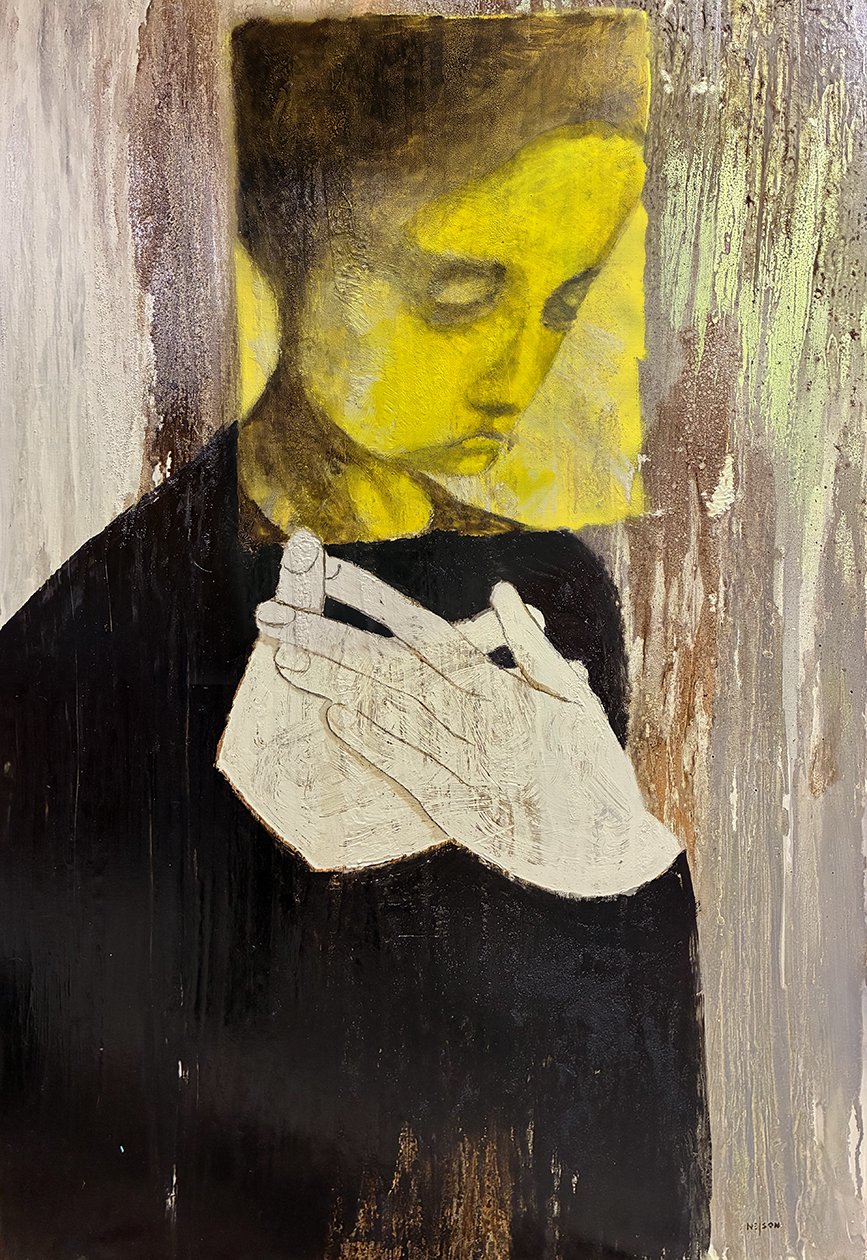
“As someone who appreciates forms of art that defy categorization, I often have trouble describing my own… maybe I feel like if I can describe it, I'm doing something wrong. The easy answer is ‘abstract figurism’ but hopefully it's much more than that. I work using many mediums and techniques that create texture and chemical combinations that are barely under my control. I do this on purpose so my method can be reactionary to the process; this allows each painting to be unique in ways that go beyond a simple choice. Folks often use the word ‘dark; when describing my work and I can't disagree with that but I try to balance the light and dark in ways that avoid judgement or at least show that the darkness is in a state of change. I get philosophical with my work as I know a lot of artists do - but I try not to hide behind academia when talking about my process. Although I did go to school for art, I was very late in finding myself and discovering my process - something I did on my own through trial and error.”
Which artists influence you most?
“Oh, so many. Although, I don't think there's a single artist whose influence on my work would encompass my entire process but I could easily pick and choose those who have made an impact on me. David Harouni is an artist in New Orleans, not far from me; his figure work and texture is certainly an influence. Then, there's David Choe who seems to have such an irreverence for the art world and its process as a whole, that I can't help but love him. Then there are the clean lines of James Jean who, like me, works commercially as much as he does for gallery walls. I've always loved his themes, techniques and color palette. And last but certainly not least is Ashley Wood. His work is brilliant. He uses the computer in a way that blurs the approach between pixel and paint. His work is very sexual, sensual and playful. He also comes from a sequential art background which I also have an affinity for.”
What is your creative process like?
“I like to say that I work in controlled chaos. My studio is a disaster and it's not uncommon for me to literally choose colors based on what I'm tripping over. Generally, I sketch out a concept before photographing it and moving it into the computer to move things around and play with color. Once I have a vague idea of where it's going, I begin on what I consider to be the background. This is usually a combination of wood stain, gesso, and charcoal. I learned years ago that I could mix colored chalk into light wood stains to affect the color; that along with inks and spray paints, interesting things begin to take shape. I work on the floor and rarely use an easel until I'm ready to project my composite. Although, that's really just to get my scaling correct - the difference between my initial computer composite and the final painting could not be further apart.”
What is an artist’s role in society and how do you see that evolving?
“I think an artist's role has been the same from the beginning - to process and reflect the world around us. We all do this through our own personal filters which is what makes art unique. These filters include experience, observation, opinions, choice and are own genetic makeup. The importance of this role is a matter of perspective and in some cases what the artist chooses to do with their work. Personally I don't take an activist role with the work I create. I'm not trying to change minds or start a revolution - I just want to make people think, possibly connect through conversation - and if I can do this while sustaining a comfortable and positive lifestyle, then I'm at peace with that.”
Have you had any noteworthy exhibitions you'd like to share?
“My career has only started to significantly veer from the commercial work of my past. I've had several shows over the last decade including a handful of solo shows. I'm proud to say that these shows went well and led to commissions and other opportunities. They were all noteworthy in that they allowed me to have conversations with art lovers and collectors of various ages and backgrounds which certainly contributed to the evolution of my work. My last show was entitled ‘Gods & Ghosts’ and was themed around the idea of personal and spiritual transformation and whether we were in a state of holding onto the past or moving towards a higher consciousness. This was a weighty theme considering the show before that was an ongoing series of mine where I mix deer and human form, although this show too was based on the idea of duality.”