Interview
Isa Oli (OliGoshi)
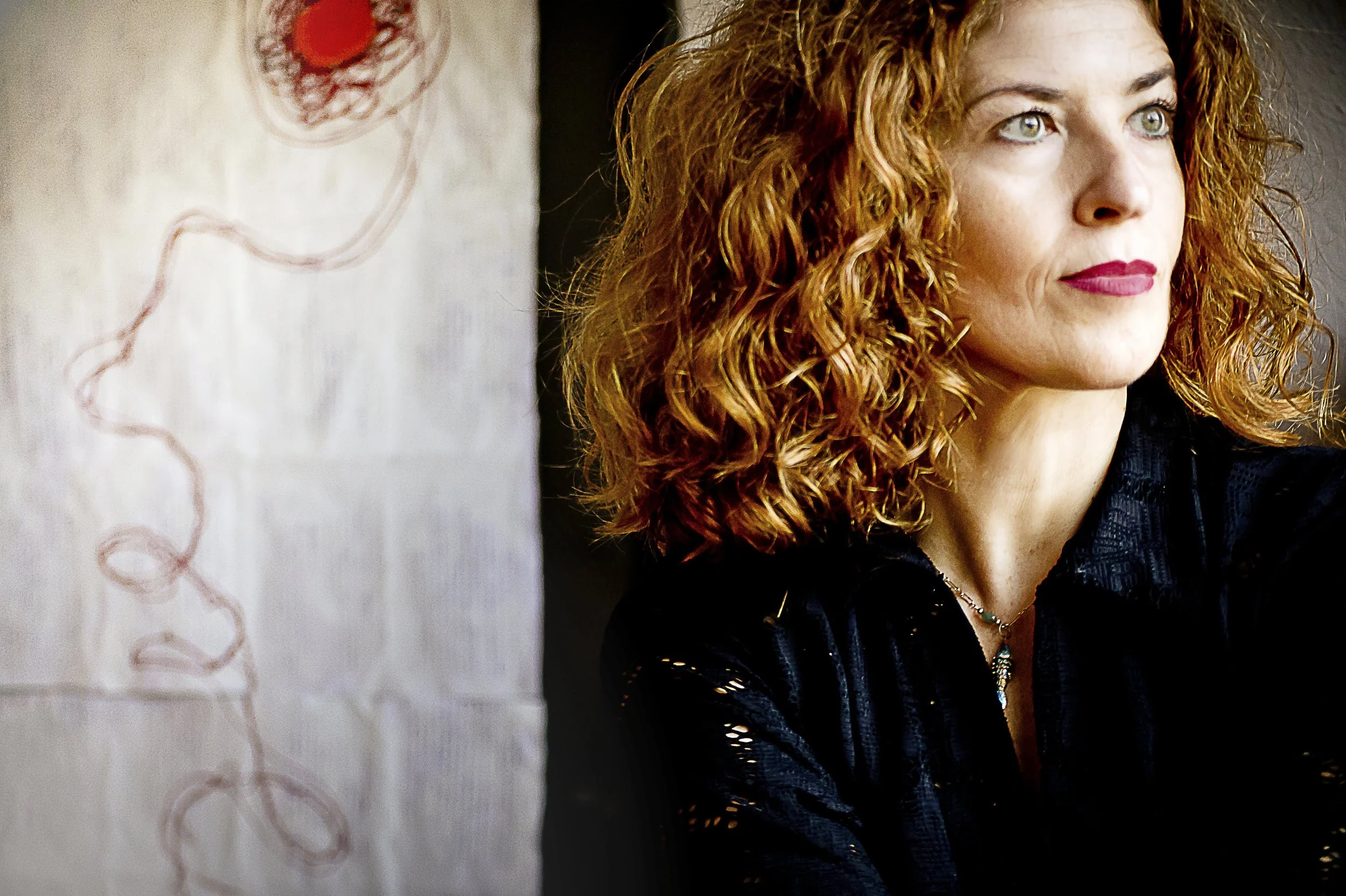
Isabel Oli (Oligoshi) was born in Cádiz in 1972 and resides in Zaragoza. She graduated in Applied Arts (Graphic Design-Illustration) from the School of Arts in Zaragoza in 1989. She developed a successful career as a designer and art director, receiving prestigious awards, including Gold at the Anuaría Design Awards. Her photography became professional with the co-founding of the Silver Moon studio, achieving national recognition with the LUX Silver (2012) and LUX Gold (2013) awarded by the Association of Professional Photographers of Spain. Her artistic work combines the two spaces she navigates with ease, photography and painting, pushing the boundaries of photography and fusing media.
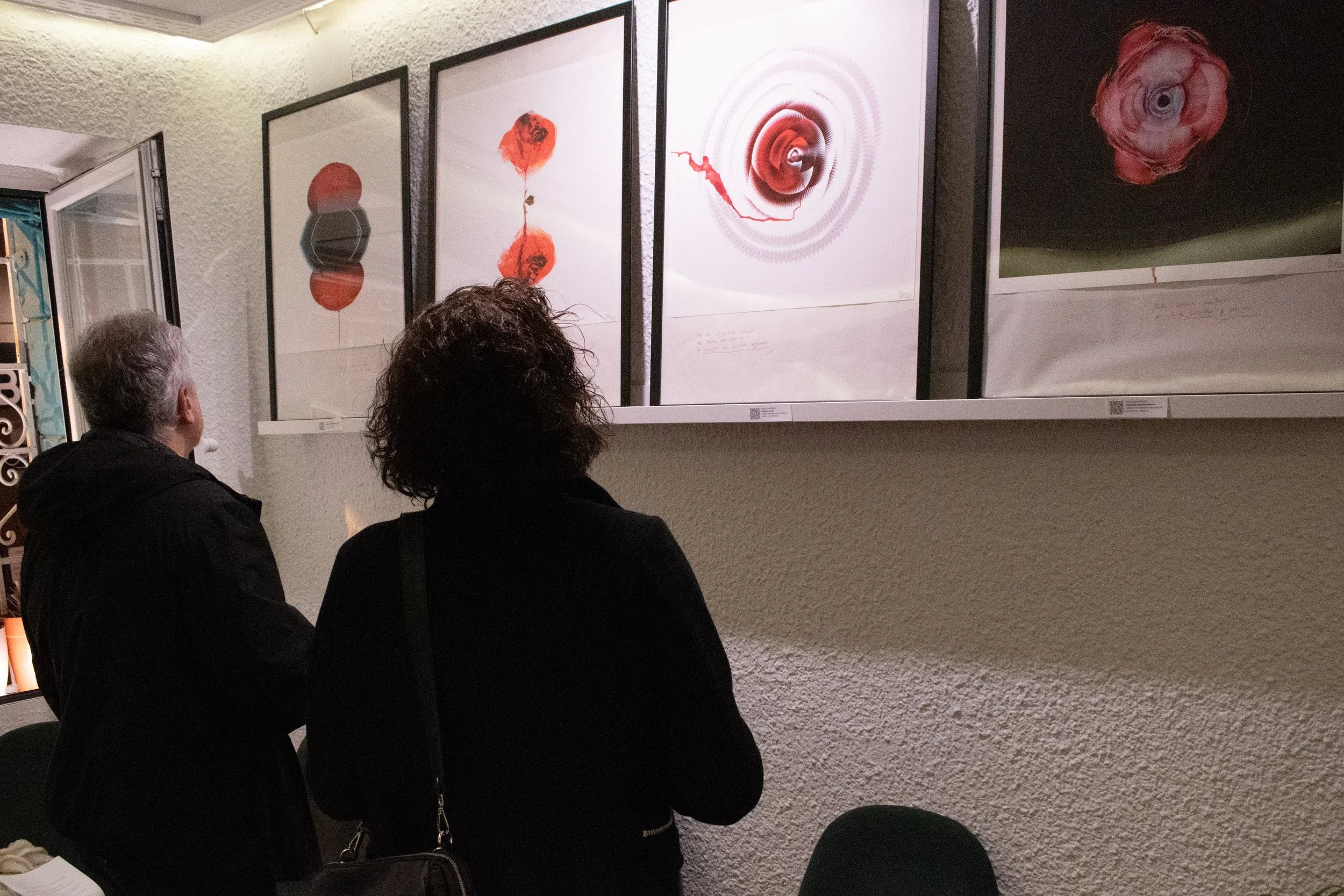
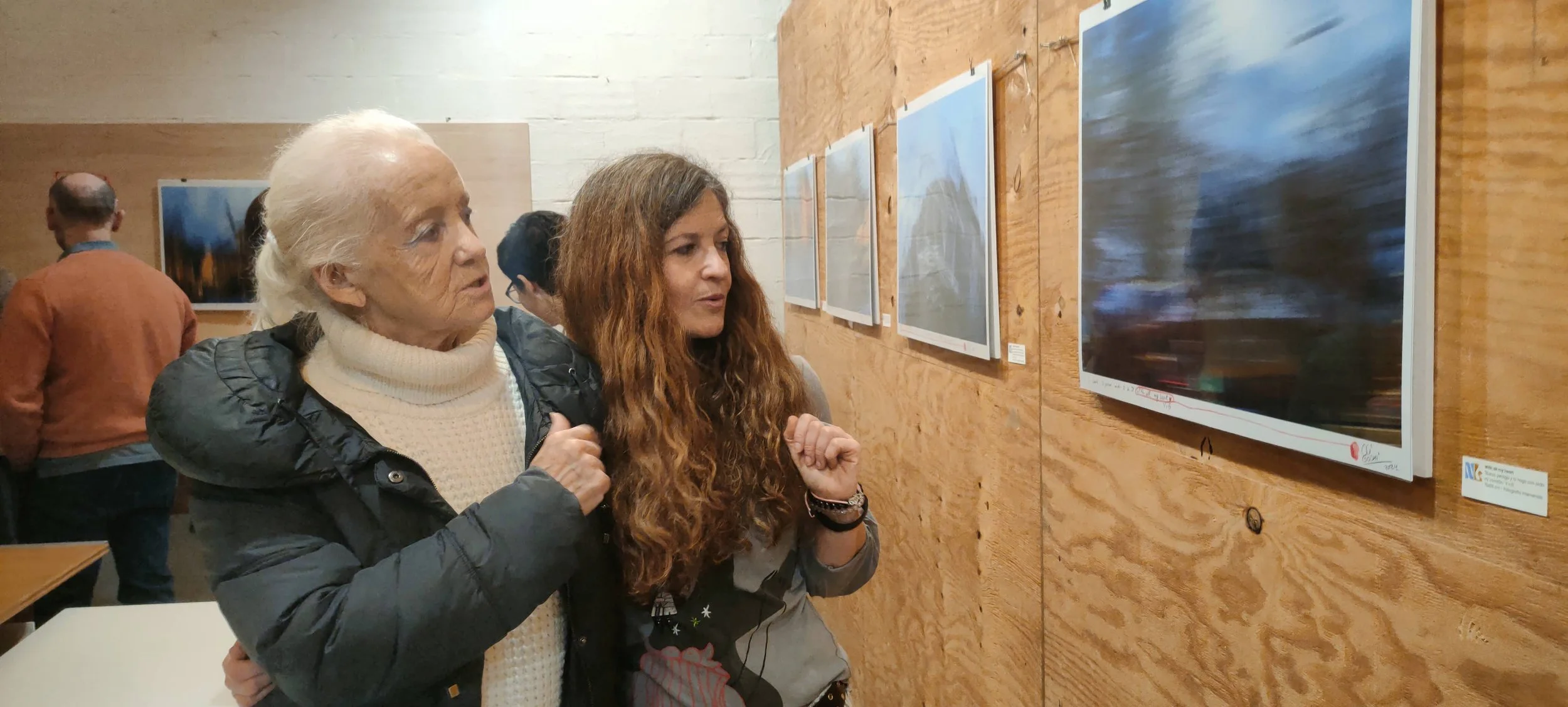
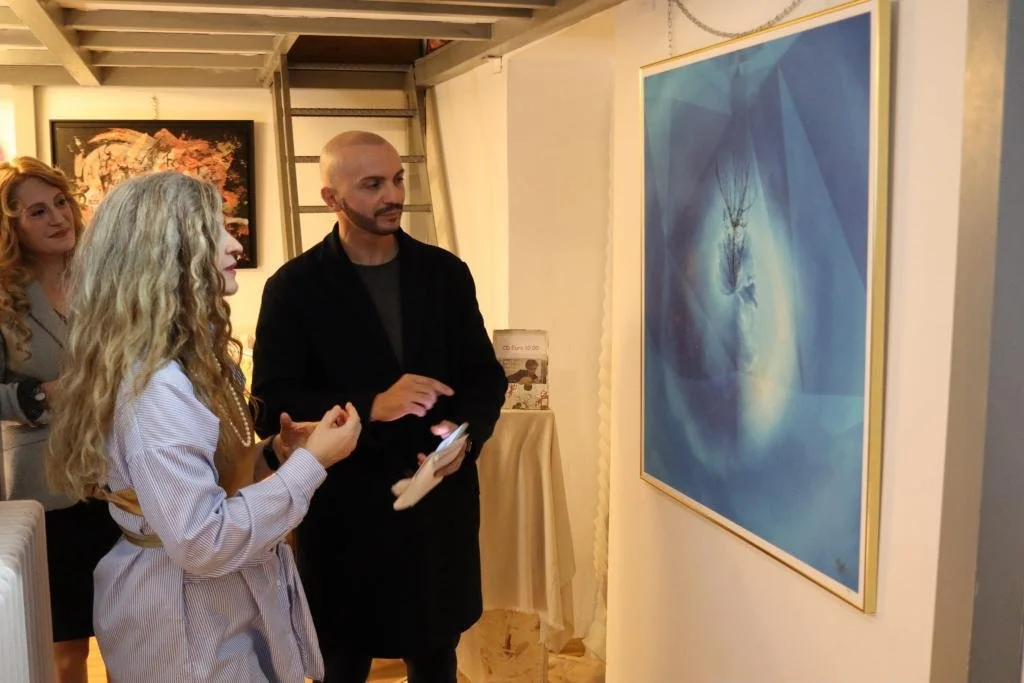
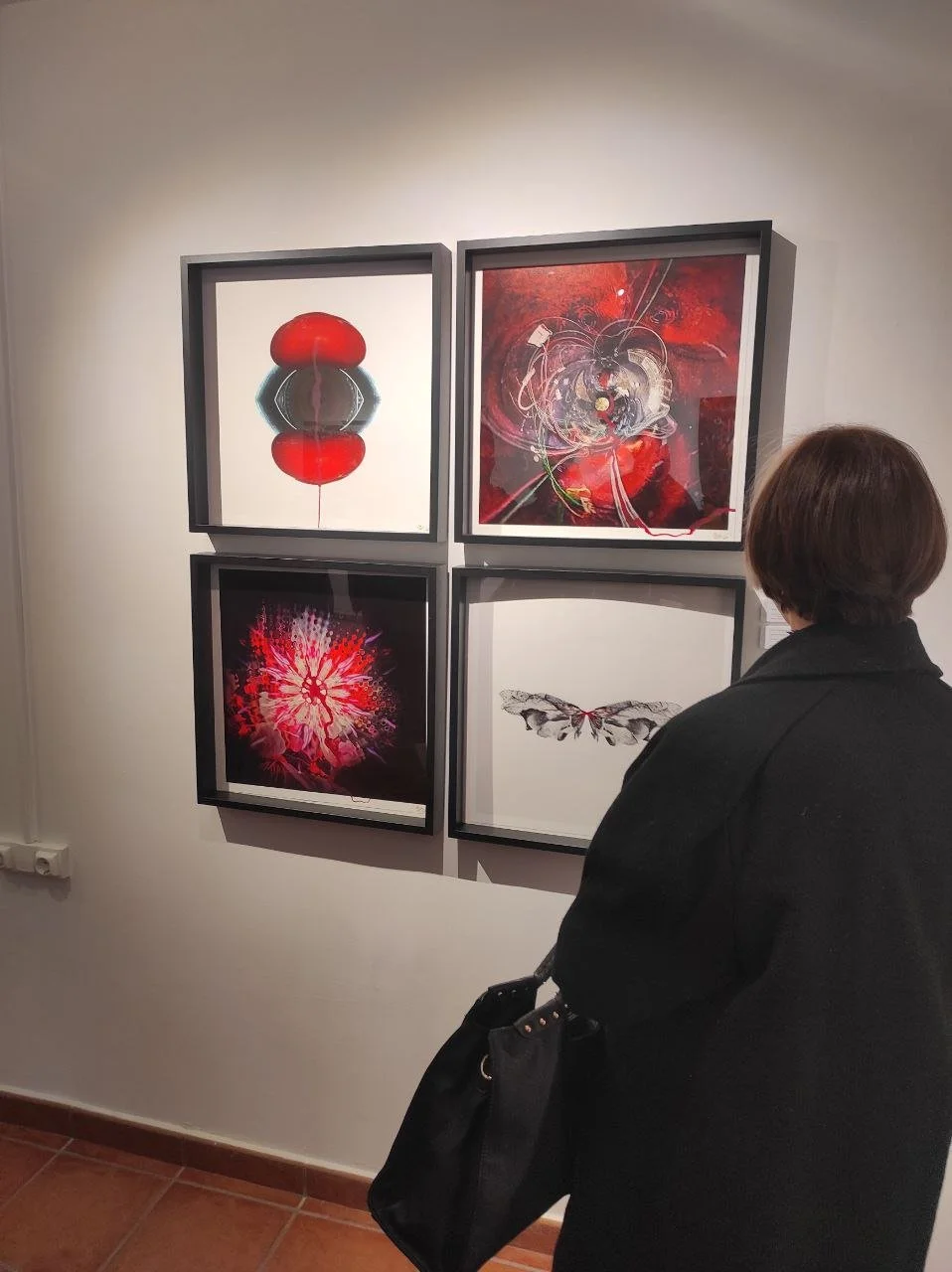
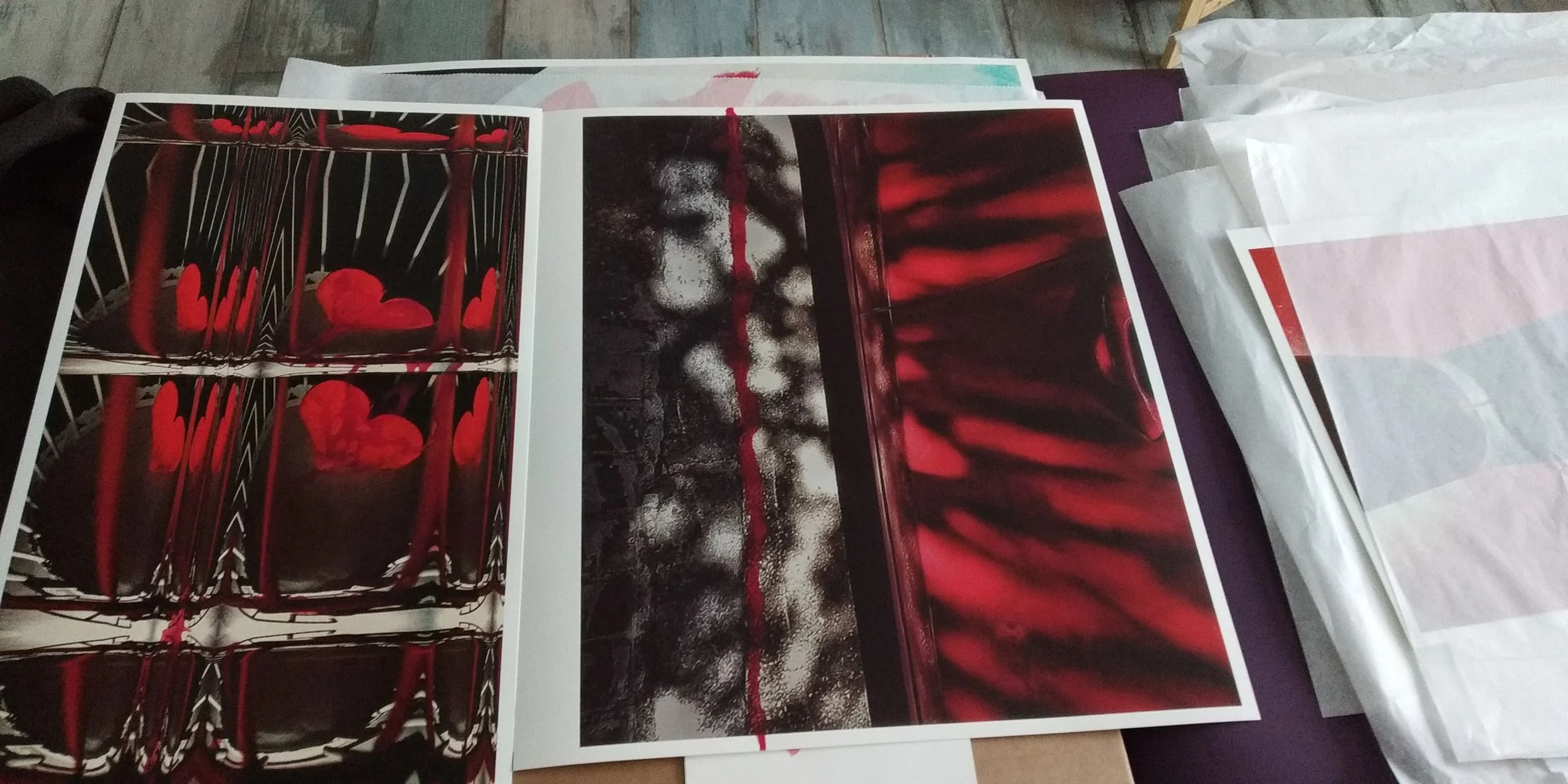
Her work is characterized by the technique of “painting with light,” where light paints in series such as “Luz del Norte” (influence of Vermeer and Dutch painting), “Light is Painting” (pure abstraction inspired by Fauvism). Other times she resorts to digital alterations to fractalize the image and break the form, reminding us that the reality our eyes see is only a part of something greater. Manual interventions are another characteristic of her work, as in “The Pink Club” (photography intervened with contemporary pop aesthetics). She has exhibited collectively in the Brera district (Milan 2025), Palazzo Pucci (Florence, 2025), Museo Pablo Gargallo (2018), and multiple solo exhibitions.
What is your background and how did you start your journey in the art world?
“I think I’ve been making art for as long as I can remember. As a child, I was very sensitive, with a strong yet fragile character, the kind who gets moved by everything. My imagination was overflowing: I could spend hours lying down, staring at the clouds, inventing stories with the characters I saw forming up there. I was deeply drawn to beauty. I collected wildflowers and made homemade perfumes. I also took, whenever my mother was not looking, the large scissors from her sewing box — strictly forbidden — and cut flowers or shapes I liked from the fabrics I found around the house. Later, I started cutting out photos from hosiery boxes, from magazine ads. I cut them with passion, tirelessly, and created entire collections of clothes: jeans, party dresses, coats. It was like dressing my imaginary characters. Before I turned ten, I was already clear that I wanted to study fashion design. But life took a turn: we moved to another city, and the public school didn’t offer that option. Paying for a private school was impossible, so I ended up enrolling in the Zaragoza School of Art, in the illustration track within the graphic advertising studies. And that’s where everything truly changed. The building itself was amazing: huge classrooms with very high ceilings and cast iron columns, walls painted with frescoes and trompe-l’œil French gardens, clipped hedges, fountains. It was a place where art was literally in the air. In the hall, there were two exhibition rooms: one dedicated to professional Aragonese artists, and another to students or former students. For the first time, I stepped into a real exhibition space, and I think, in secret, I gave my heart to art. I studied art history, held a reflex camera in my hands for the first time, discovered the magic of the photographic lab, and learned how light can transform anything. After finishing my studies, at 23, I held my first solo exhibition: oils and gouaches. It was a key moment, because that’s when I understood it wasn’t just about drawing or painting beautifully, but about telling something that burned inside me. Since then, I haven’t stopped. Art is not something I ‘started; at a specific moment; it has always been there. It has just changed form, tool, and urgency. But the girl who cut forbidden fabrics and talked to the clouds is the same one who continues creating today.”
What inspires you?
“I am inspired by anything I see. I think I see with my heart, not just with my eyes. Anything that moves me —and that can literally be anything— becomes a subject. It can be a flowering tree, full of explosive and fragile beauty, but then I see those same flowers torn by the wind, lying on the ground, turning into a river of tears in the city, as if mourning the death of fragility. I am inspired by an unexpected smile on someone else’s face, or even on an object where I see a smile; something found in the street, like a heart-shaped confetti trampled next to a cigarette butt, or maybe a moldy lemon forgotten in my fridge, or a small flower growing stubbornly in the crack of an old wall. Dewdrops on a window at dawn, broken by the marks my son makes with his fingers, or my usual clouds surrounding me in a square meter of sky, as if the universe had shrunk just for me in that instant. Pure light entering and painting directly on the sensor of my camera. My art seeks the beauty of simple things, of what surrounds me every day. I don’t go far looking for inspiration; it’s on the sidewalk, on the kitchen table, in the reflection of a puddle. I need to find it for myself, to avoid losing myself in the noise of the world, and at the same time share it with others. Because when I see something that touches my soul, I feel I have to capture it, transform it, so it doesn’t escape me. And in the end, what moves me most is this need to feel connected with someone else.”
What themes do you pursue? Is there an underlying message in your work?
“The themes I pursue always revolve around emotion: the kind that passes through me and I try to capture before it evaporates. I look for beauty in everyday things, in what goes unnoticed but suddenly overwhelms me. The care of the fragile is constant: how to protect what is delicate in a world that crushes it without noticing. I reflect a lot on what it means to be human, on who we really are beyond the perfect images we want to share, beyond the masks we wear to feel less exposed. Light is another thread running through everything: not only the light that illuminates, but the one that vibrates in pure color, the reflections that distort, the light and shadow that create other worlds. I am fascinated by the poetry I find by chance: a shoe hanging from a tree, any object decontextualized that suddenly tells a silent story. And also the beauty that breaks me, broken fragility: a dead bird at the foot of a tree, wilted flowers on the asphalt, something that was alive and is now a metaphor for life. I approach these themes in an abstract, almost dreamlike way. I question the reality seen by the eyes —the one that seems so solid— and from there I build other things: realities different from what we see with our eyes, but no less true, metavisions, I like to call them, and I feel they are real, as expansions of that limited ‘truth’ we perceive with our eyes. I am not one to shout slogans; I am more of someone who launches questions, like invitations in the form of whispers saying: look more slowly, feel deeper, take care of what breaks easily, remember that we are all fragile behind the pretty photo. And perhaps, by sharing it, someone feels less alone in that same emotion that passes through them. Because in the end, I think my work is a way of saying: ‘I see this too, I feel moved too, do you too?’”
How would you describe your work?
“My work is a constant search to express the intense way I observe the world. I don’t know how to do it any other way: I work with light, with paint, sometimes integrating found objects, always with a purpose. The technique is usually mixed because the medium is part of the message. Color is also a subject, and for me color is light: emitted, reflected, captured by the camera sensor, vibrating in everything it touches, reflecting, breaking, constantly changing. I need to fuse the tools I feel comfortable with —photography intervened with paint, especially— and push the limits of photography, taking it beyond what is ‘a photo,’ towards something more tactile, more alive, more unpredictable. But technique is not the central point; it’s only part of the language I use to talk about what burns inside me. I could do a performance and become the work myself, or paint with my finger on a fogged-up window, or attach a piece of something broken to a support. I don’t care about the ‘how’ as long as it serves to capture the emotion that passes through me. My work seeks to express; it’s a vital necessity, like breathing. It’s intimate, sometimes fragile, sometimes raw, but always honest: I try for whoever sees it to feel a bit of what I feel when I look at the world with an open heart.”
Which artists influence you most?
“My influences are not a fixed list; they are more like an emotional map. They come from many places and many eras, and they are all about a way of being in the world rather than a particular style. I was deeply marked by Dalí and Buñuel for their absolute freedom to imagine without asking permission, for daring to create from the dreamlike and irrational. Lorca, for his passion and ability to turn pain and beauty into something almost tangible. Picasso, for his courage to change, never to stay still, for that constant search of the inner child who does not settle. Frida Kahlo, for making art an intimate space where life and wounds become image. Marina Abramović, for exploring the limits of the body and the human without fear. Van Gogh, for his total dedication, living art as a vital need. From the Renaissance, I am inspired by balance and the idea of beauty as something profound, not superficial. Velázquez, for his silent grandeur. Fauvism and color theory taught me that color does not accompany form: it is the protagonist, pure emotion. Le Corbusier and Chagall helped me understand space and poetry through other languages. The Abstract Art Museum of Cuenca was key to learning to dissolve forms and stay with the essence, with what cannot be named. But I am also influenced by people who are not in books: my mother, my son, the people I love who teach me every day to feel deeper. And many anonymous contemporary artists who create from honesty, who research, who share images with immense generosity. And in a very special place is Lita Cabellut, because she embodies many of these qualities: strength, fragility, humanity, beauty, and truth. Ultimately, more than styles, I am inspired by attitudes: dedication, freedom, passion, the ability to look at the world without anesthesia. That is what I try to breathe into my work.”
What is your creative process like?
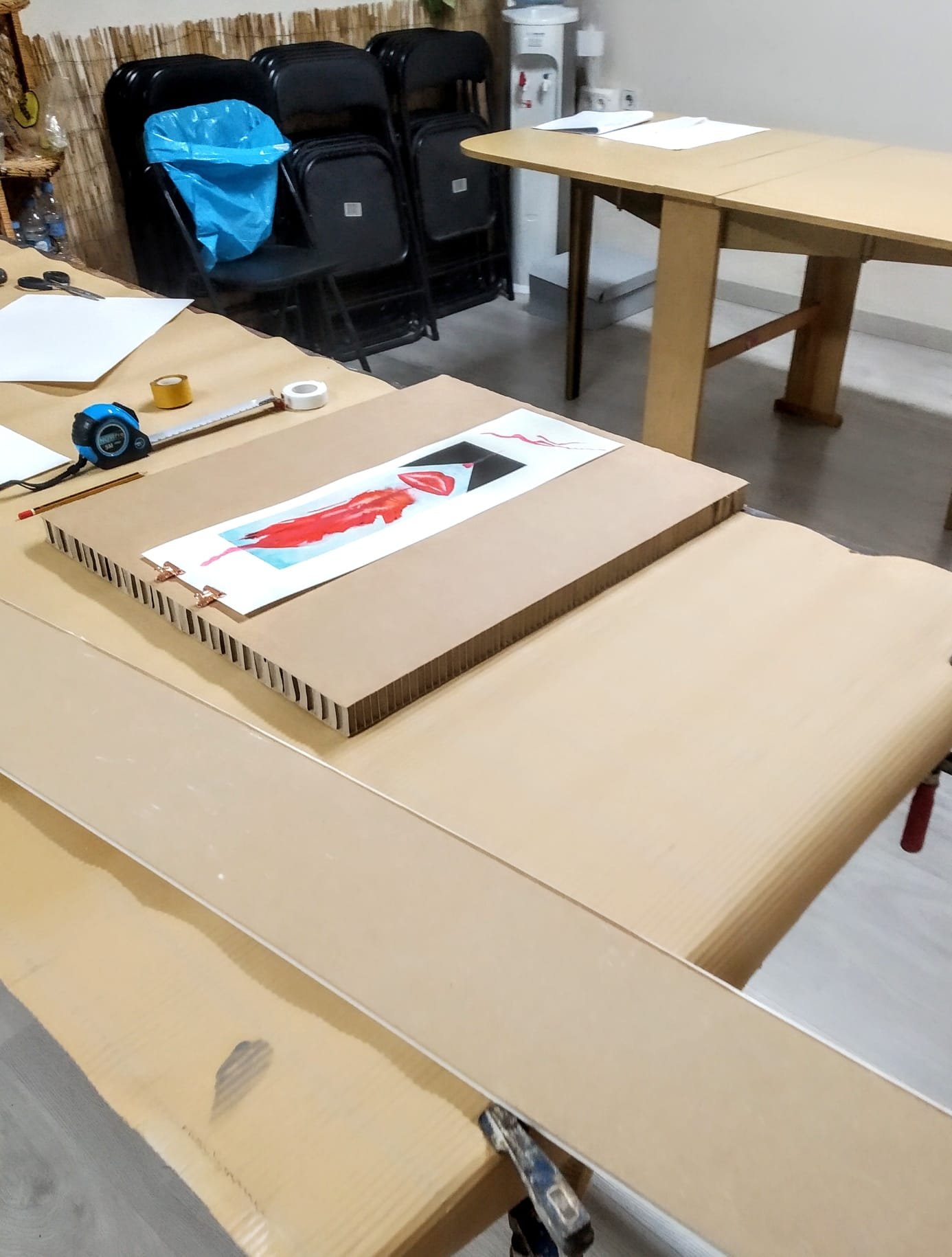
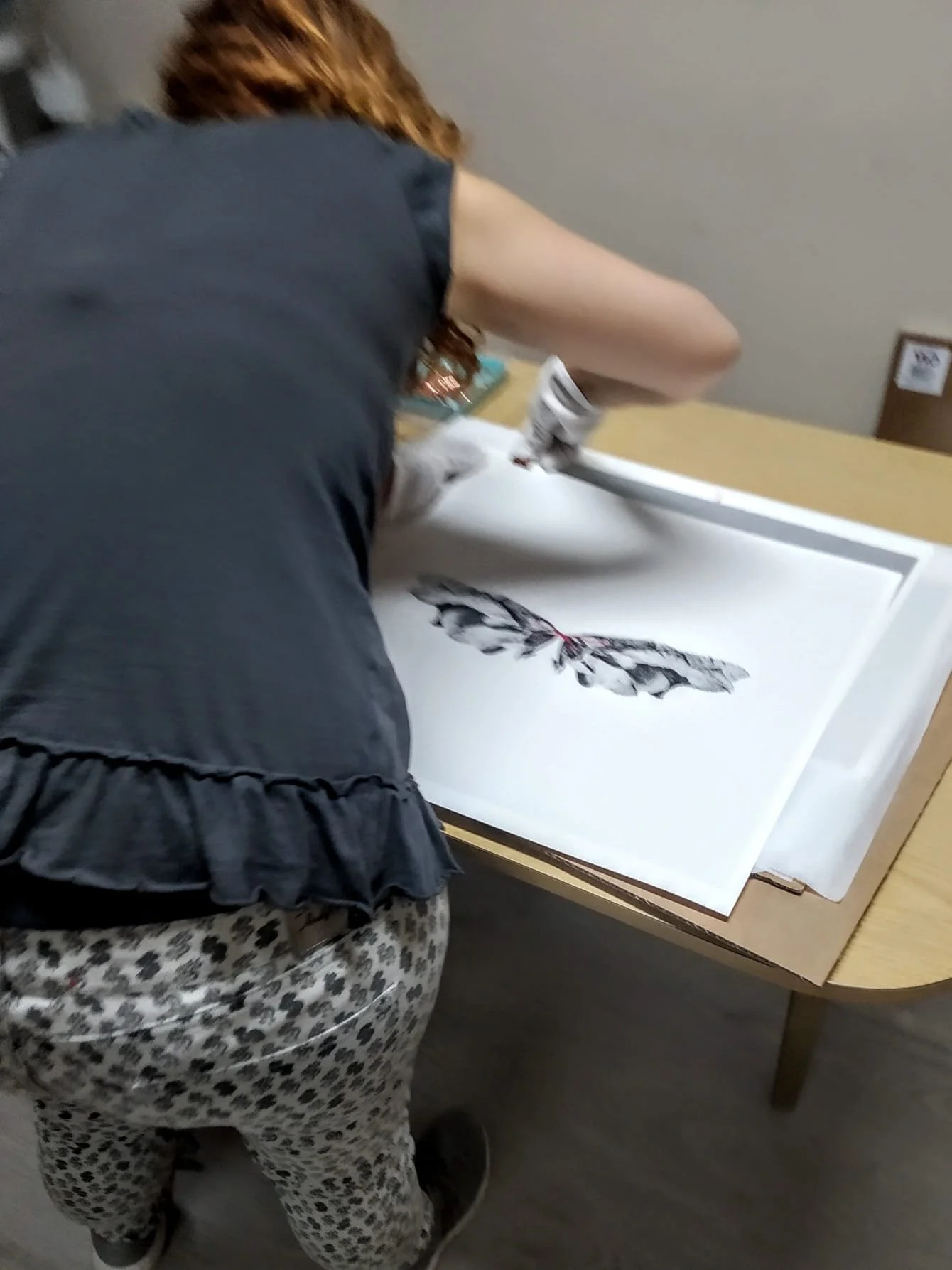
“My creative process works the opposite way to many artists or classical painting: artists would lock themselves in a studio to create; I live and create at the same time. Sometimes the works find me while I am living. I go out living, and emotions seize me, and I have to catch them. That’s why the foundation of my work is photography, because it allows me to translate into ideas colors, shapes, that which I observe and draws my attention. Sometimes those images remain on my computer for a long time because I don’t yet know how to translate what they are telling me and I need to look at them with perspective. My work questions ‘reality’ because I suppose I have sometimes wanted to question it myself, taking refuge in my ‘metavisions’ of that reality of the eyes, sometimes painful. In those cases, I look through the camera’s viewfinder and from there I can manipulate light, time, movement, break established limits, paint with light on the sensor. Then I work the image, discovering what it tells me, what resonates within me, what part of me it represents. Finally, when I materialize it on paper or a support, I intervene in it, giving it ‘life,’ so that it stops being something reproducible by a mechanical process and becomes something more human, where emotion, chance, doubt, and even ‘mistakes’ are part of its essence. I never fear making mistakes because the unexpected is part of the process and what makes us human. Thus, each image is unique and unrepeatable. From the photographic part, I materialize a maximum of seven originals —most of the time three + four AC— and I work them manually so that each one has its own personality. Then I close the process and never reuse the original image.”
What is an artist’s role in society and how do you see that evolving?
“I think we live in a society saturated with images, full of noise, full of information. Each of us has the ability to create, but this noise turns us into consumers, into people who swipe. We scroll through images without asking anything, repost what we like, use apps to alter our photos, but we don’t think about it; we consume these resources as objects or decoration, disposable images that are replaced the next day. I also believe that feeling art is something ‘from museums’ or a luxury keeps us from seeing it as part of our daily life. I think art, more than ever, feeds the soul, makes us feel connected, gives us different visions of everyday things. It invites us to stop, reflect, enjoy beauty, to feel that something that tightens your chest or makes your heart leap. Art also invites us to question ourselves, makes us feel human and connected, helps us understand life. I think without art we lose an important part of our humanity. For me, the artist’s role is not just to create beautiful or impressive images: it is to remind us that we need to feel, to stop, and look. It is to put into the world something that makes us feel, question, dream. It is to hold a space where the human and the real can appear, even amid the noise, and remind us that without that, life loses intensity and meaning.”
How do you approach prompt-writing and authorship in your AI-based work?
“My first exhibition was at 23 or 24 years old, at the Boston Hotel in Zaragoza. I presented oils and illustrations that represented all the emotions I had kept since childhood. I felt emptied and that I didn’t want to tell the same story again. It was a kind of catharsis for something I had kept for a long time. I spent a long time silent afterward, creating but not exhibiting. In 2016, my life broke, and I broke the reality I didn’t like through my camera. This led to a collection I called POP FOOD, because I basically photographed food from my fridge in a very peculiar way, breaking shapes, fractalizing. Two of these images, New Sweet and Coke Spirit, were exhibited in Barcelona in 2017 and were the seed of my first solo collection of intervened photographs, which sought connection obsessively because the link was a red thread (like the red thread of destiny) that reacts to the touch of visitors. My Chalaúra marked the beginning of my current creative language. In 2019, I traveled alone to the Netherlands for the first time in my life, taking my son by the hand. There, I created Light of the North, a series of landscapes that allowed me to fall in love with Dutch light and connect with Van Gogh and Vermeer. But those images stayed on my computer for five years due to the pandemic.
Only later did I intervene them with Van Gogh’s melancholic letters to Teo, finding my own feelings in his words. Light is Painting was my way of giving light absolute protagonism. I made those images between 2022 and 2023, and although the full collection has not yet been shown, I am deeply moved that a small selection will be exhibited this year in Korea as part of the Photography Now group exhibition. I continue creating every day because my goal is to show my work in spaces where art dialogues with life and invites anyone who approaches to observe the beauty of everyday things, question reality, or rather, discover other realities that may be more suggestive and no less true.”