Interview
Hans Jørgen Henriksen
Hans Jørgen Henriksen, known professionally as Gian Giorgio, is a Danish painter whose work blends scientific precision with expressive artistic exploration, creating a unique approach he terms 'zonation painting.' Early Life and Background Born in Vordingborg, Denmark, Hans Jørgen Henriksen grew up in Western Jutland with a deep connection to flowing rivers and natural water cycles, which profoundly influenced his approach to line, rhythm, and spatial understanding in art Trained as a civil engineer and later a hydrologist, Henriksen worked extensively with water systems at the Geological Survey of Denmark and Greenland (GEUS), modeling freshwater cycles, groundwater dynamics, and urban waterways. His scientific career informed a meticulous understanding of structures, systems, and patterns that later became central to his visual art Artistic Development and Style Henriksen is an autodidact painter who transitioned from croquis drawing (1985–2000) to oil and acrylic painting (2001 onward), integrating his scientific method into a creative process. Under the alias Gian Giorgio—the Italian version of 'Hans Jørgen'—he explores a distinctive style known as zonation painting, which harmonizes figurative and abstract elements, geometric and organic forms.
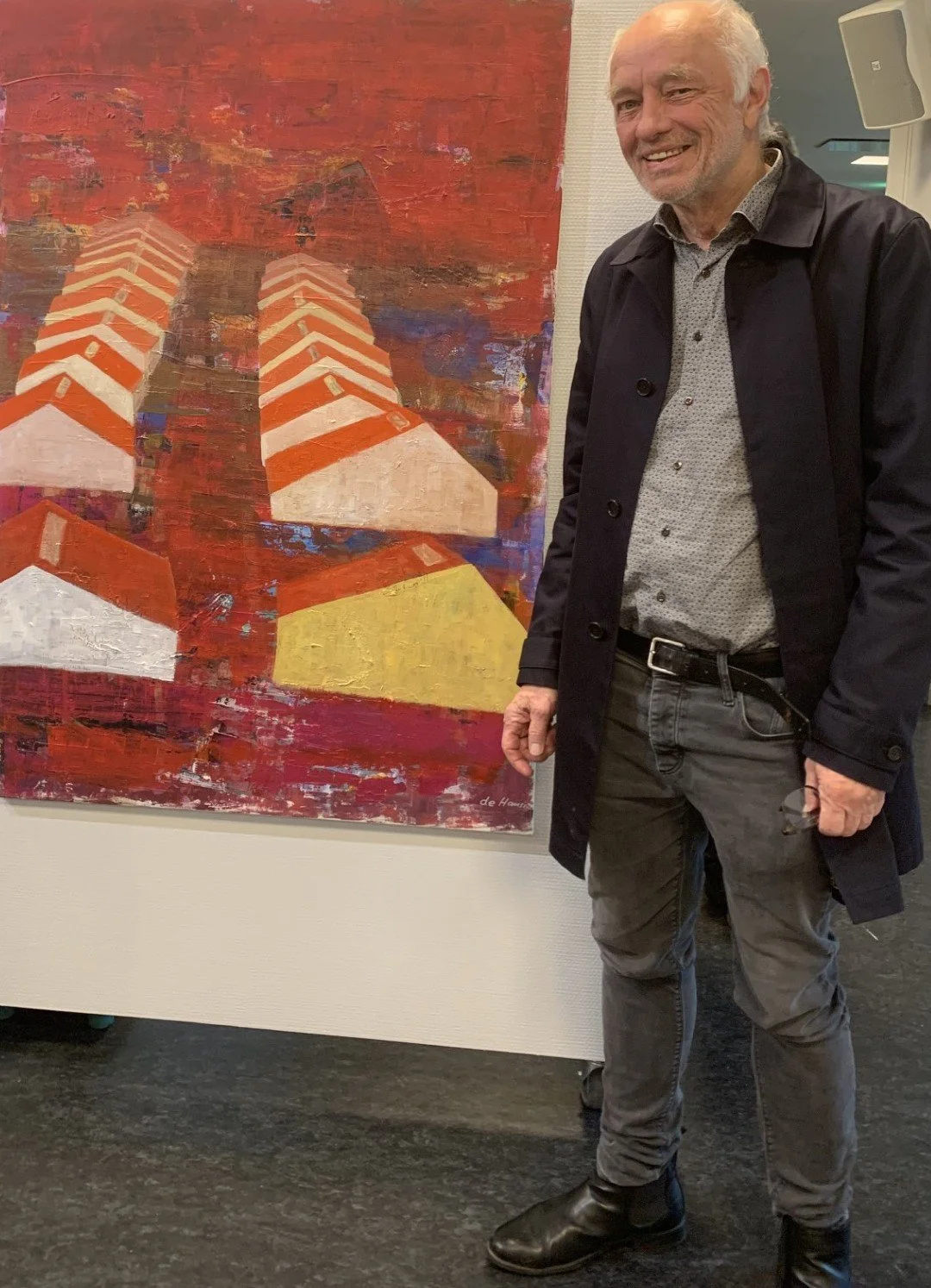
His technique emphasizes layering, calibration, and revision, reflecting a scientific model-building mindset while remaining expressive and intuitive . Color, structure, and spontaneous decision-making play a key role in evoking emotional resonance and visual engagement. Drawing inspiration from artists such as Cézanne, Klee, Matisse, and van Gogh, Henriksen balances composition, tone, and brushwork to create artworks that are both intellectually stimulating and emotionally rich. His subjects often include urban landscapes, human activity, and natural systems, ranging from Copenhagen streets to cities and landscapes in Tuscany and Lanzarote. These works explore human-environment interactions, climate, water dynamics, and the interplay of natural and constructed spaces.
Henriksen works with oil paints, acrylics, charcoal, oil sticks, and brown paper mounted on sturdy panels. He sometimes uses painter’s tape to frame motifs naturally, integrating drawing, sketching, and overpainting with layered color to achieve depth and complexity. This innovative methodology allows a simultaneous exploration of precision and spontaneity, rendering visible the invisible networks within landscapes and urban systems. Henriksen has exhibited internationally, participating in the Florence Biennale (2011 and 2023), the London Biennale (2021), the Amsterdam Art Fair (2023), and numerous group shows in Cannes, Versilia, Innsbruck, and Italy. Solo exhibitions include Gallery Bredgade 22 in Copenhagen (2019), Møllers Gallery Ordrup (2024), and Merlino Bottega d’Arte Galleria in Florence (2025). His works have been collected internationally, and his inclusion in the 100 Artists of Europe project situates his oeuvre within broader European contemporary art discourse.
Henriksen approaches painting as a dialogue between abstraction and figuration, merging intellectual rigor with expressive freedom. His zonation painting method reflects a layered understanding of space, environment, and social dynamics, emphasizing interconnectedness, rhythm, and emotional resonance. He seeks to engage viewers with visual experiences that prompt reflection on humanity’s relationship with natural systems, particularly emphasizing water as a life-sustaining and organizing force. Under the Gian Giorgio alias, Henriksen continues to experiment with integrating drawing and oil painting, exploring classical aesthetics with contemporary conceptual ideas, pop culture references, and dynamic textures. His work remains committed to international engagement, combining Danish cultural heritage with global environmental and artistic concerns. Henriksen’s career represents a rare synthesis of science and art, where hydrology, engineering, and environmental insight inform a sophisticated and emotionally compelling visual language.
What is your background and how did you start your journey in the art world?
“I am originally from Vordingborg and I was raised in Western Jutland near a river, experienced an early connection with water systems that profoundly influenced my artistic sensibility. The constant flow and dynamics of the river shaped my perception of movement, rhythm, and structure—elements that would later underpin both my scientific and artistic practices. My fascination with water naturally guided my educational path, initially towards civil engineering and later to a career as a hydrologist, where I studied freshwater cycles, groundwater, and environmental systems.
I worked extensively with hydrology and modeling of aquatic ecosystems at the Geological Survey of Denmark and Greenland (GEUS). My expertise in environmental systems, numerical simulations, and water modeling provided me with a unique analytical lens I later integrated into my visual work. Rather than viewing painting as a departure from science, I approached it as a parallel exploration, bridging scientific precision with creative expression.
I began formal artistic practice alongside my professional career, largely as an autodidact. From 1985 to 2000, I focused on croquis and drawing classes to build foundational skills. Between 2001 and 2025, I advanced into oil and acrylic painting, consistently refining my urban and landscape compositions with feedback from group painting courses and urban drawing sessions in Copenhagen. My early exposure to the textures, rhythms, and organic forms of nature—combined with my scientific background—shaped a distinctive approach to painting that integrates both structured order and spontaneous dynamics.”
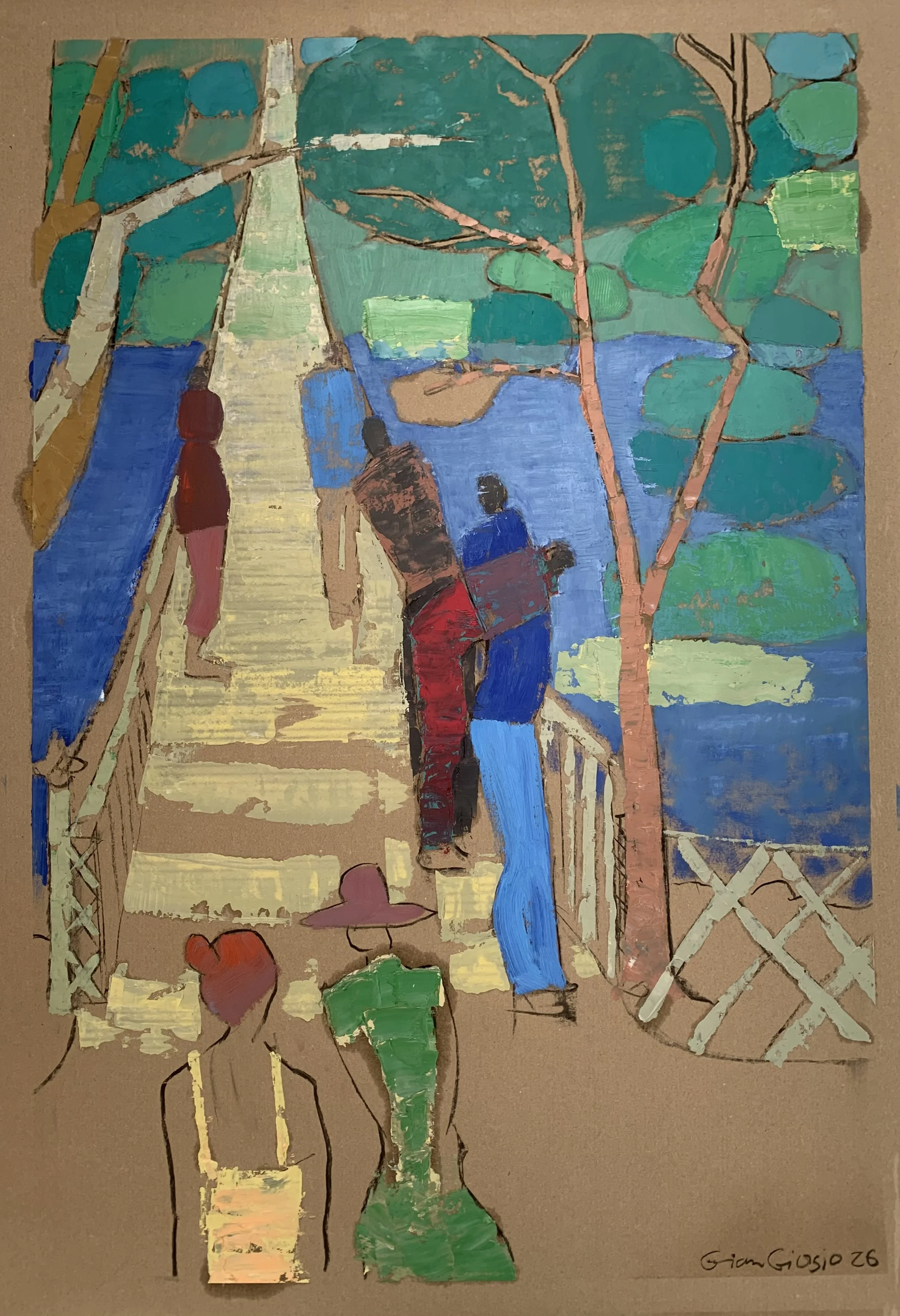
What inspires you?
“I find my inspiration for arenas of action in the American economist Elinor Ostrom. Her research showed that common resources like water, forests, and grazing lands are best managed by the people who rely on them themselves. In that sense, the Common becomes an image of self-management. Not as a romantic idea of harmony, but as a living network of relationships, negotiations, and shared responsibility. We are all connected through the resources we share.”
What themes do you pursue? Is there an underlying message in your work?
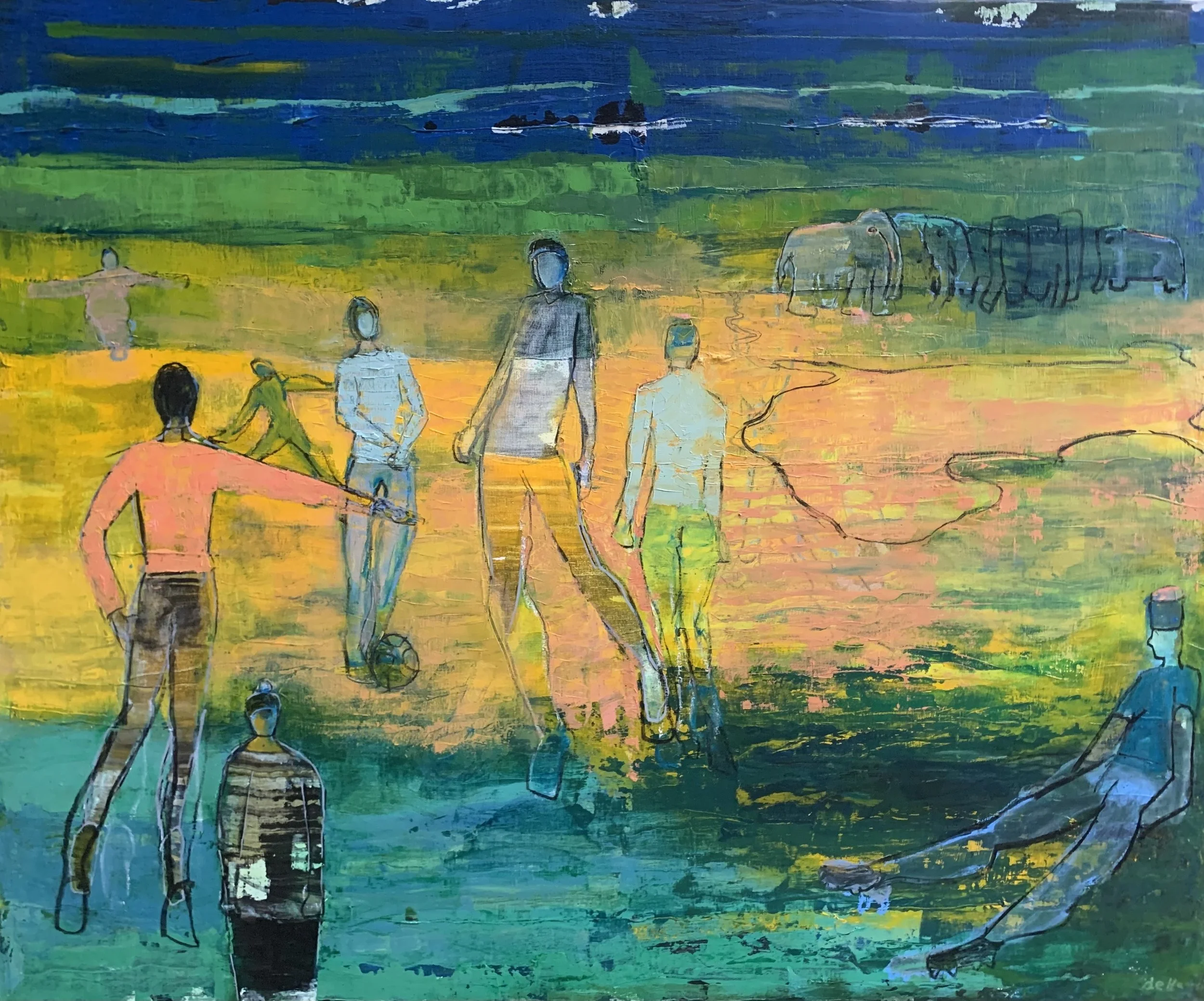
“Water as a democratic space: In my works, water is a symbol of the commons—no one owns it alone. It becomes a matter of democracy, where Hannah Arendt's ideas about the public sphere as a place of shared responsibility come into play. The city spaces, beaches, and parks in my pictures are such spaces, or arenas of action, where people meet and create a shared reality. Water is perhaps the most fundamental shared resource we have. No one owns the groundwater, the lake, or the fjord alone. No one can isolate themselves from the cycle that connects us. Water thus becomes both physical and symbolic. It represents the shared world that no one can opt out of, and that therefore requires dialogue, participation, and responsibility.
Here Ostrom's ideas meet Hannah Arendt's political philosophy. Arendt described the public space as the place where people come together as equals and act together. Politics doesn’t first emerge in parliaments or institutions. It arises when people step forward together and take responsibility for the world they share. These are exactly the processes that Ostrom described as crucial for the sustainable management of common resources. Trust doesn't just appear on its own. It's created through relationships. Rules only work if they are seen as legitimate. And communities only last if people feel like participants rather than objects. The hope in a new beginning: Hannah Arendt described humans' unique ability to start something new. She called it natality or being born – that is, the ability to create new beginnings. In a time marked by climate crisis, biodiversity loss, and growing social tensions, we need exactly this ability. Not just technical solutions, but new ways of seeing the world. Art can make visible the connections we've forgotten. It can open up space for reflection. Art makes visible what zoning maps and models overlook: the sensory, relational, living, and the new.”
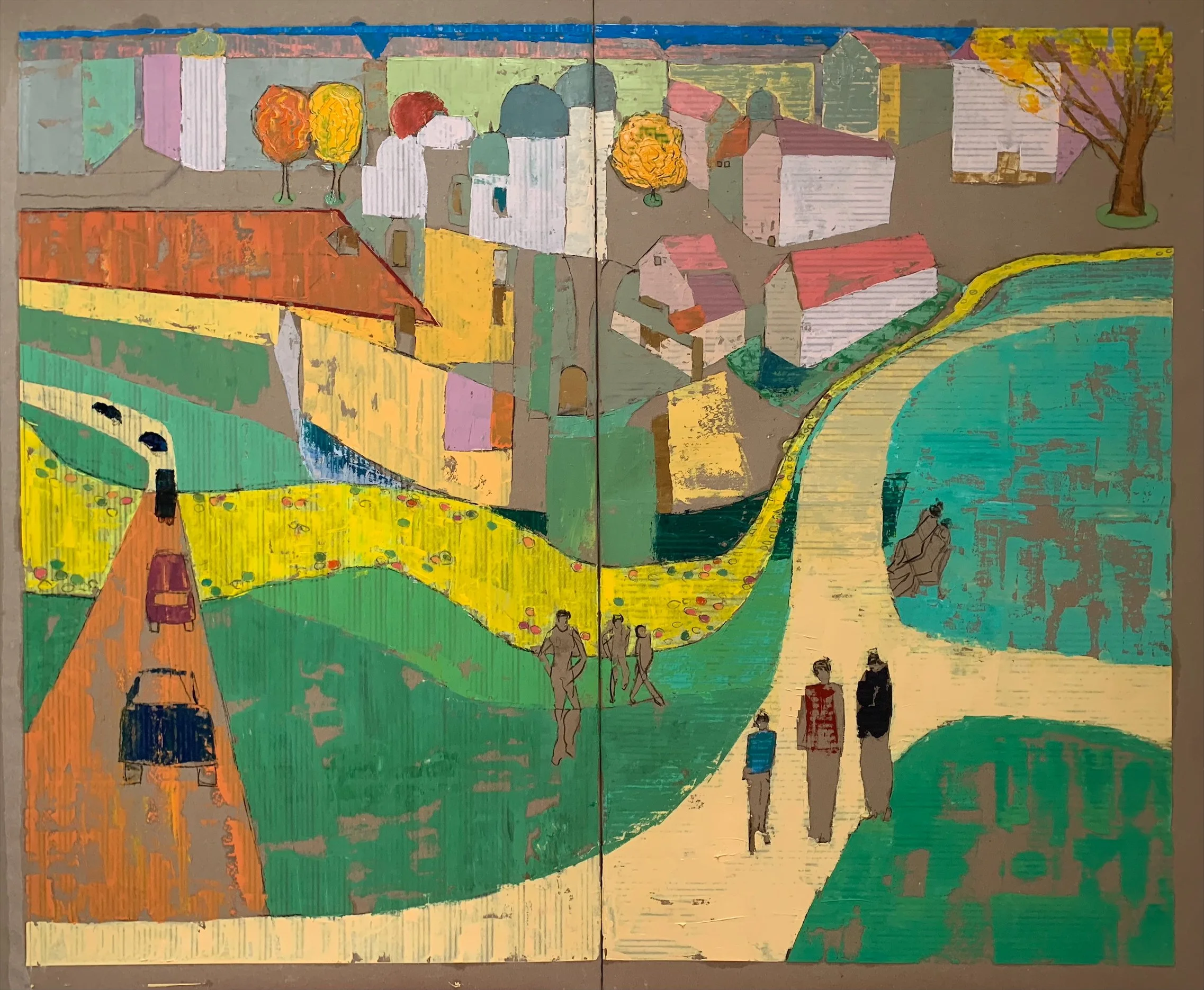
How would you describe your work?
“I have developed a method known as ‘zonation painting,’ which organizes visual space into layered areas blending geometric and organic motifs. This reflects his desire to map environments rather than simply depict them, mirroring his scientific modeling of landscapes and water systems. My works balance abstraction and figuration, integrating structured geometric foundations with fluid, organic layering, evoking urban environments, landscapes, human presence, and ecological systems. My paintings—oil, charcoal, and pigment on paper or canvas—explore the invisible connections between people, nature, and power. I work with oil, acrylic, charcoal, and on brown wrapping paper on board or in oil on canvas, on top of older acrylic paintings. The material is chosen because it allows spontaneity and undercurrents to come through. An attempt to open up cracks to the deeper layers in the mental models we usually view the world through.”
Which artists influence you most?
“Artists such as Paul Cézanne, Matisse, and van Gogh influenced my approach. Cézanne inspired my structural and compositional rigor, Matisse informed my use of vibrant color for emotional impact, and van Gogh inspired my textural dynamism. Beyond traditional art influence, my works are informed by urban and natural environments, travel in Tuscany and Lanzarote, music, and film, all contributing to the rhythm and emotional cadence of my paintings.”
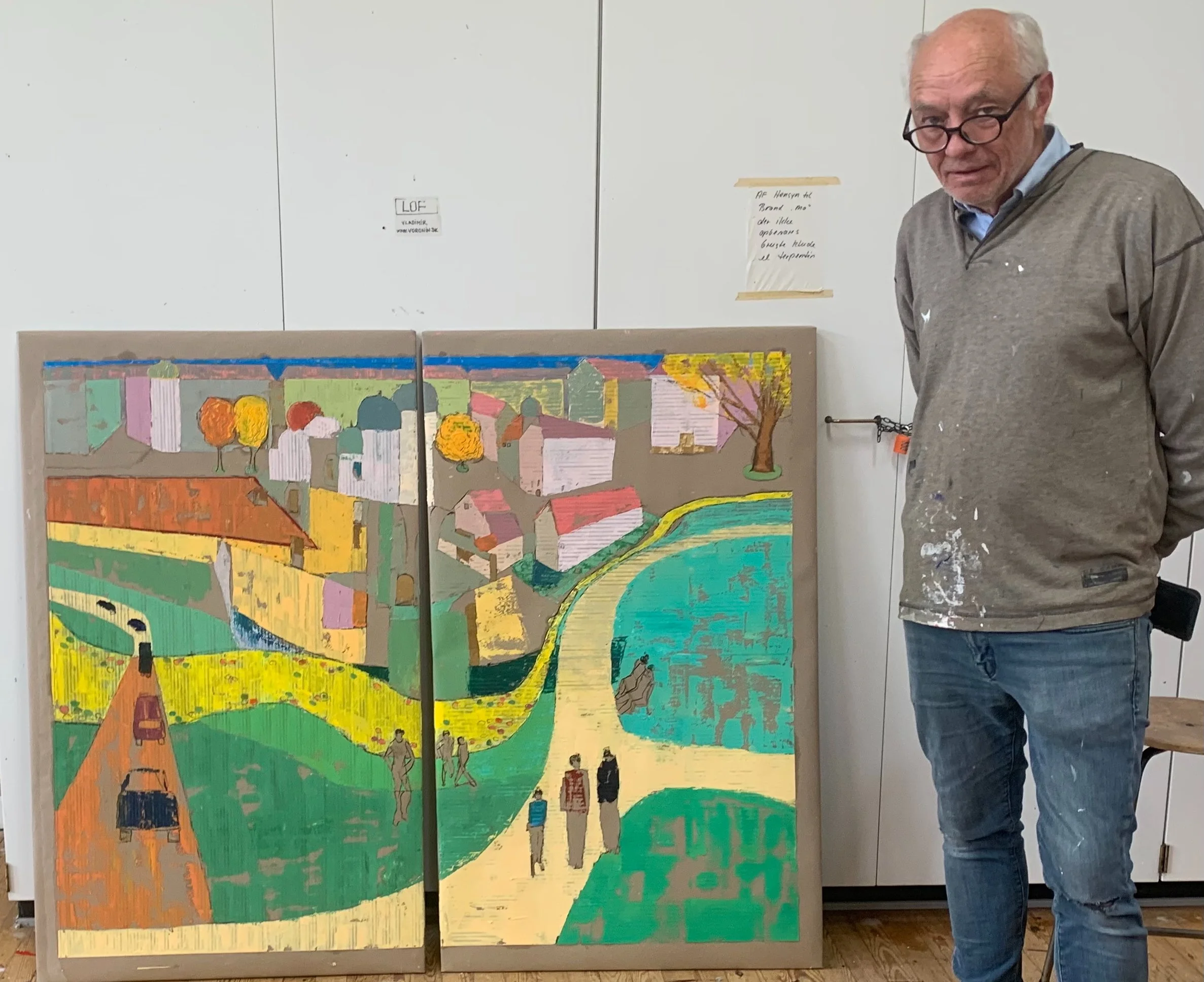
What is your creative process like?
“My paintings—oil, charcoal, and pigment on paper or canvas—explore the invisible connections between people, nature, and power. I work with oil, acrylic, charcoal, and on brown kraft paper on board or in oil on canvas, on top of older acrylic paintings. The material is chosen because it allows spontaneity and undercurrents to emerge. An attempt to open cracks to the deeper layers in the mental models through which we normally see the world. My paintings can be seen as landscapes, urban spaces, or human communities. But they can also be read as investigations into the invisible connections between people, nature, and power.”
What is an artist’s role in society and how do you see that evolving?
“I unfold my visual art with a view of the artist’s role as a balance between tradition and modern challenge. Through my work with zoning painting – a technique that integrates oil paint and drawing on brown paper mounted over a strong backing – I emphasize how the artist should not just reflect the surroundings but actively process them. My motifs, inspired by the streets of Copenhagen, Tuscany, and Lanzarote, show that I see the artist as a creator capable of transforming concrete landscapes and everyday life into something both aesthetic and conceptual. My approach blends classical beauty with modern brutality, pop culture, and darkness. This suggests that I see the artist’s role as a critical agent who can comment on and ‘disrupt’ cultural heritage – one who not only observes but also provokes and sparks reflection. The use of materials like painter’s tape, charcoal, and overpainting on acrylic supports my view of the artist’s responsibility. The artist's responsibility is therefore to experiment and push the boundaries of what is traditionally understood as painting. At its core, my view of the artist's role comes across as both creative and critical: the artist should combine technical skill and creative discipline with a willingness to highlight and confront modern cultural trends, making the artwork a space for both beauty and reflection.”
Have you had any noteworthy exhibitions you'd like to share?
“I was featured as a guest artist at the Morild Sommer exhibition. Havnevej 16, Nykøbing Sjælland: 21 June - 23 August 2026. My work was also shown at the Vadehavets Censurerede Udstilling. Skærbæk. Tønder municipality in 2025 and at the Merlino Gallery. Firenze. Gian Giorgio in 2025.”
Website: zonering.dk
Instagram: @dehansi.art