
Interview
Greg Johnson
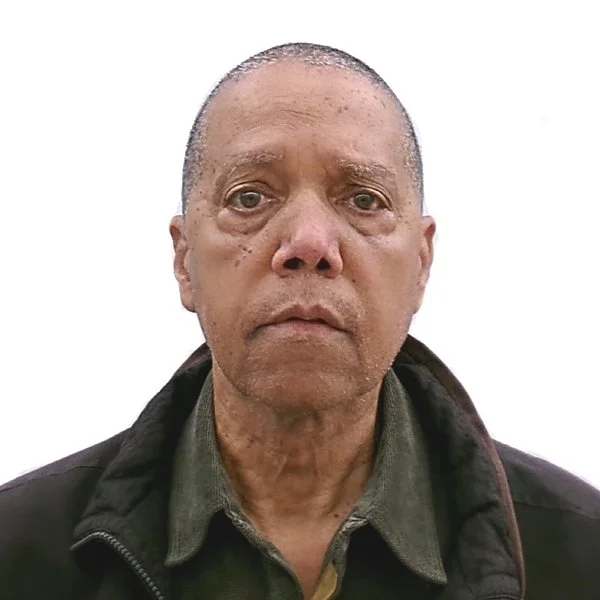
Greg Jognson went to the college of Wooster in Oakland, Vancouver. He did mural work for NDP government in Vancouver and mural work in Madison Wisconsin. He has had four art exhibits at the Commonwealth Gallery.
What is your background and how did you start your journey in the art world?
“I come from a family of educators and I think that bisexuality is reflected in my art work. In college, I was an art history major. I did some studio work but at that time I was more focused on video and music. After school, I moved to California and studied at CCA and met some older artists that gave me some direction. I left Berkeley and moved to Vancouver BC, where I found myself playing music and doing photorealistic and surrealistic artwork. I moved to Madison Wisconsin and started to focus in on abstract collage and owned a restaurant gallery. I worked with a dance company and formed a group with two other painters and we did shows and grant work with kids. I moved back to California and began to study physics and cosmology. I wrote and did art work in 4 anthologies under the STEAM designation. I published my first solo book ‘An Artist’s tale on the Sciences.’ My artwork and interpretation of astrophysics and cosmology are for a wider audience. I am currently working on a second book with my art work and original poetry.”
What does your work aim to say? Does it comment on any current social or political issues?
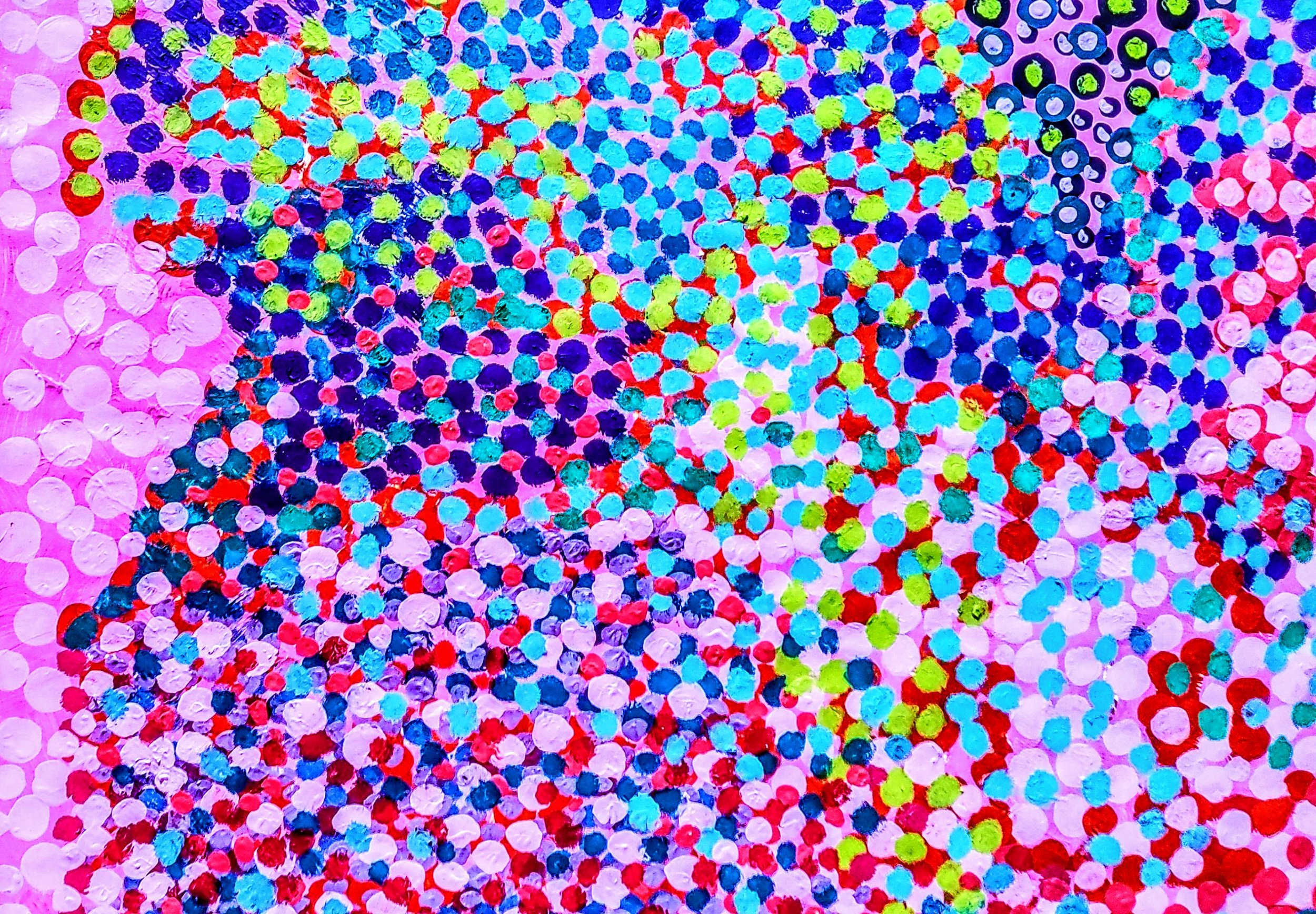
“My work is based on my my influences. My father was a scientist and I started out in school as a science major switched to art history. In art history, I was heavily influenced by the Russian supremacists Malevich, Kandinsky, and Katlin, but I was also influenced by the impressionist especially the colorists and the the pointillist Seurat. The work has evolved through different stages muralist, photorealistic, collage to my current cosmos. With the current political climate in the USA, you could say my work is controversial or political because it features science as a major feature and there is a strong anti-science trend currently. As a black artist, I also stand out as an abstract painter but Sam Gilliam and Roamer Bearden and to some extent Jean Michelle Basquiat comes through in the paintings.”
Do you plan your work in advance, or is it improvisation?
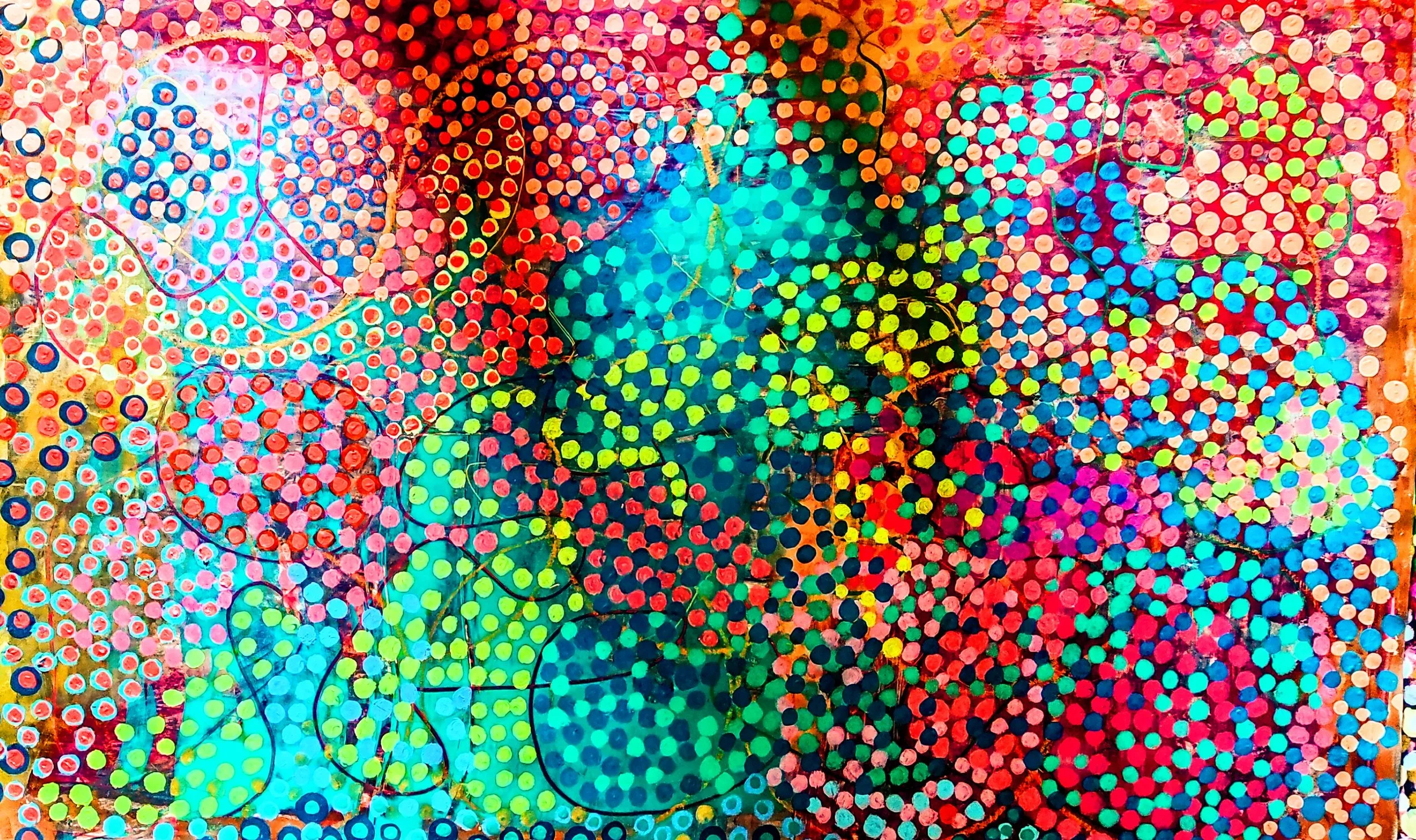
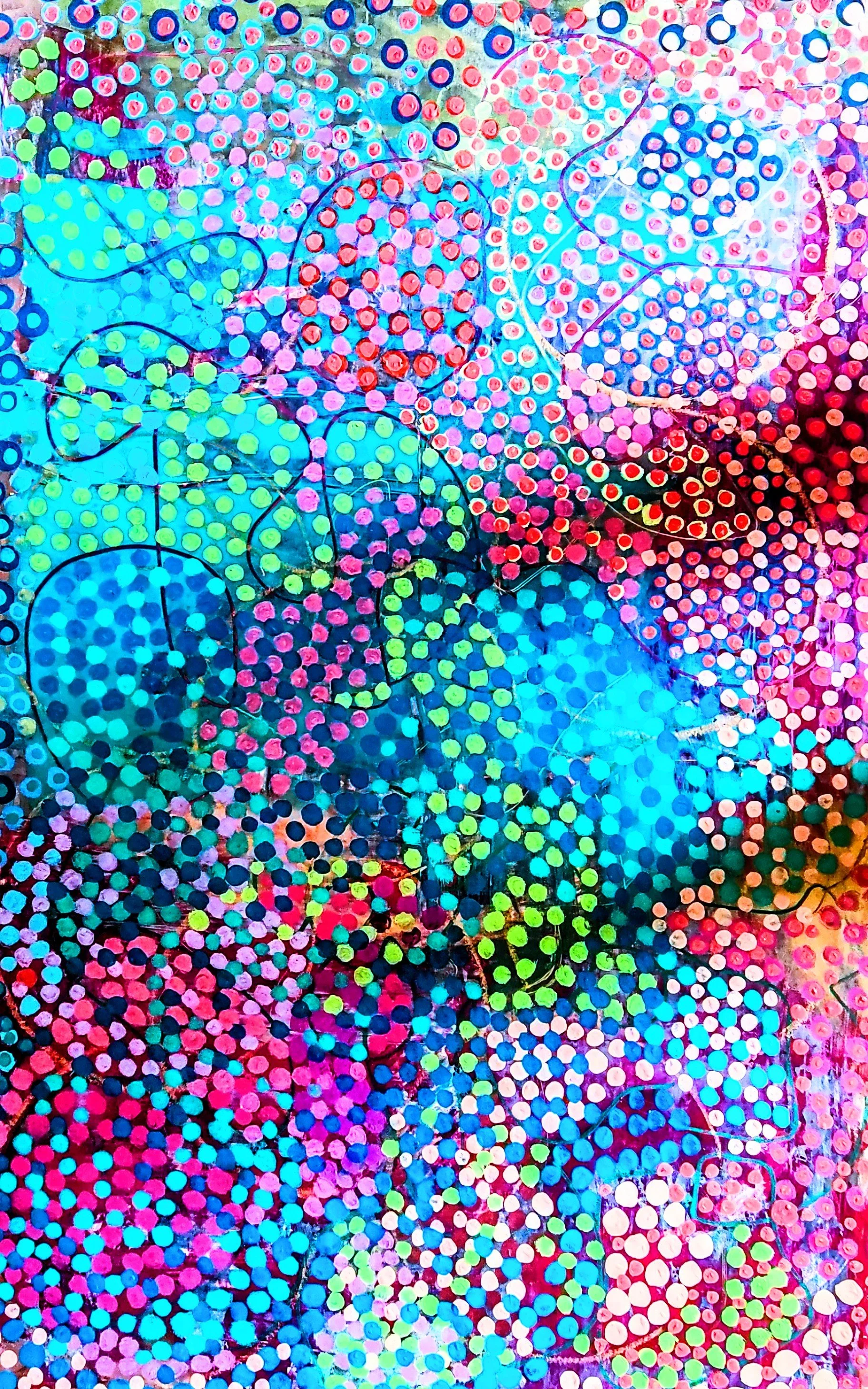
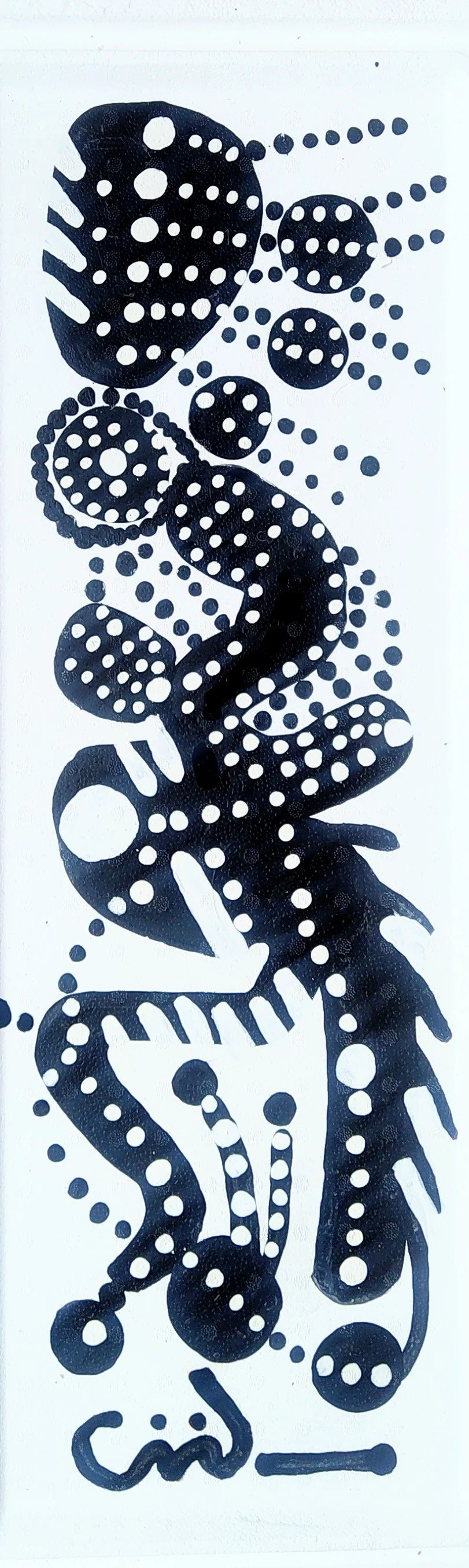
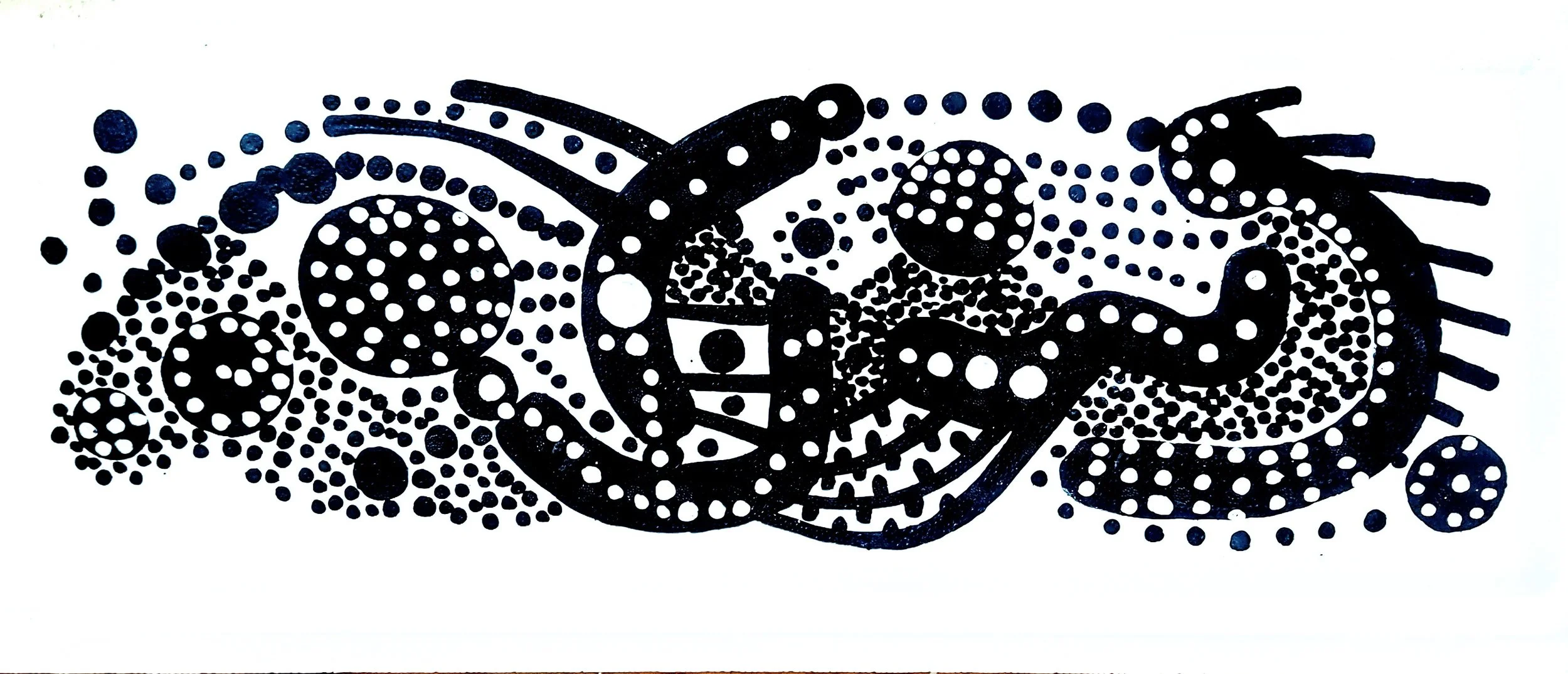
“I don’t plan the work, but I have a format and the dot paintings have an underlying geometry. I am currently doing a series of black and whites based on my study of indigenous at specifically the the Haida, the Ojibwa, the hopi and the makunda. Those black and whites happened spontaneously but now have an rhythm of their own.”
Are there any art world trends are you following?
“There are a number of artists who incorporate some of the ideas that I am working with (using science and math). I can’t name them specifically but I’ve seen a number I like. I am really myopic and don’t really get futon the scene that much. I am more into trends in astrophysics.”
What process, materials and techniques do you use to create your artwork?
“I have gone through a number of transitions. I don’t use oil except oil pastels but use acrylic, ink, and I will occasionally insert collage elements into the mix. I found a box of discarded jigsaw puzzle pieces and I’ve used them cut into pieces as a texture. I paint on canvas but I also paint on ceramic, masonite, and heavy paper usually print paper. I also use marker pens and pastel crayons. The base is usually more liquid acrylic on a gloss medium gesso ground. The brushes I use are mostly round nibs with natural fiber, but I occasionally use knives to mark the fine lines.”
What does your art mean to you?
“Art is one of the oldest expressions of man's understanding of the environment. That includes the emotional and social environment as well as the natural environment. I always compare it to science especially physics as they both are a process of trial and error. The great scientist like the great artist had that imagination and the ability to make that imagination a reality. I think it is a necessary step in development in children because it opens their minds to possibilities. Hopefully we can hold the line and keep science as an important step in development for future generations.”
What’s your favourite artwork and why?
“When I was a kid, Guernica was at the Met in New York and my aunt took me to see it. As a kid seeing that huge painting in stark blacks and whites blew me away! I did a lot of copies of Picassos cubist work in my aunt’s little apartment for my whole summer vacation.”
Have you had any noteworthy exhibitions you'd like to share?
“I am bad at documenting but the two that I really got into was 4 huge paintings I did for a dance performance at the university theater in Madison Wisconsin because of the collaboration. The other was a city arts grant working with at-risk kids on a series of murals around the walls of a gallery. Those kids weren't intimidated by older artists and we just painted over each other like a painting war.”
Instagram: @artbygregjohnson