Interview
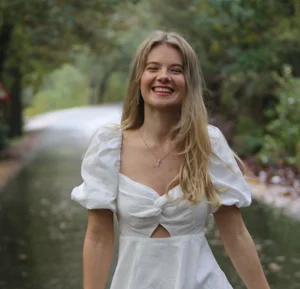
Gabriella Widgerow
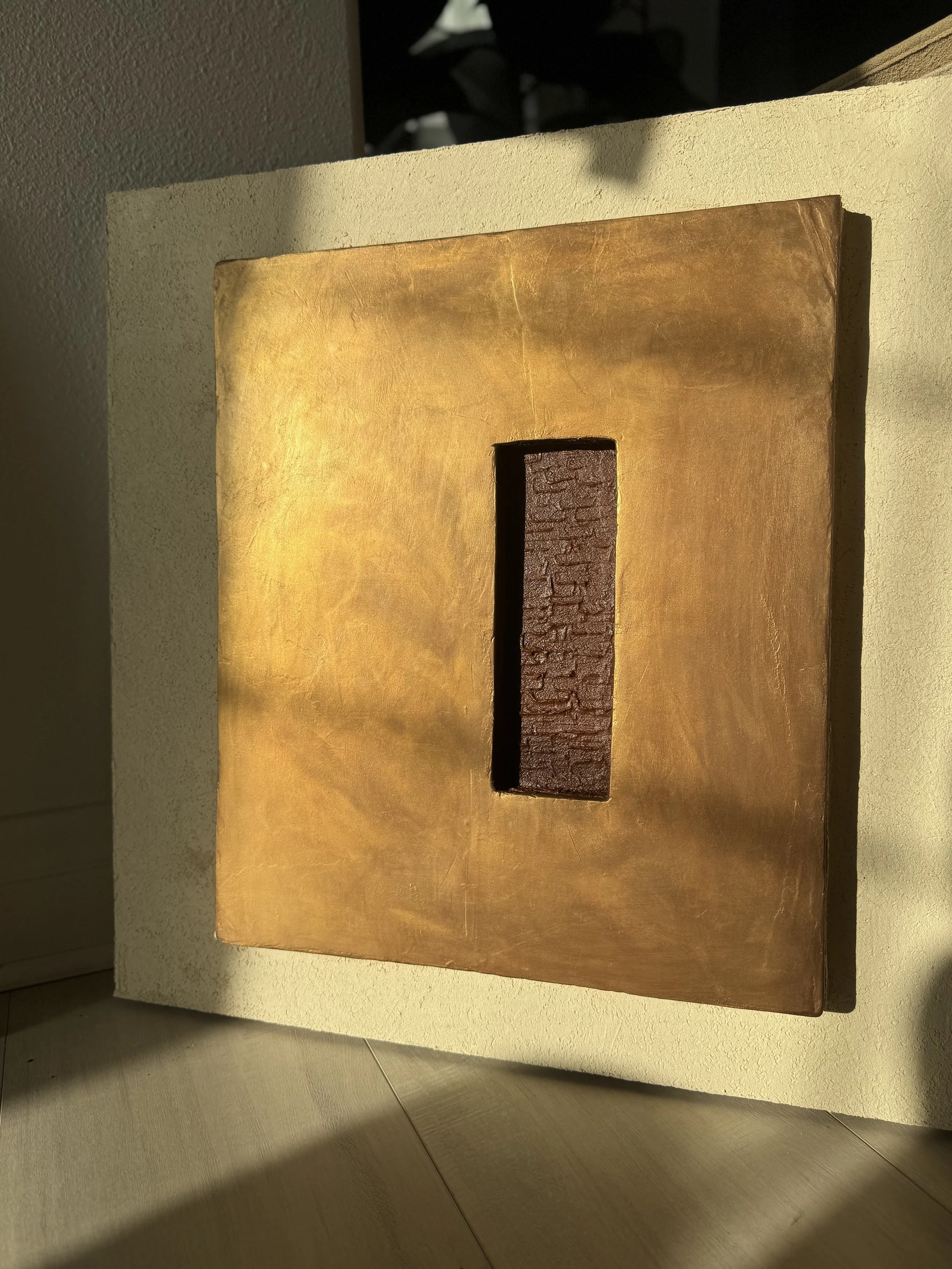
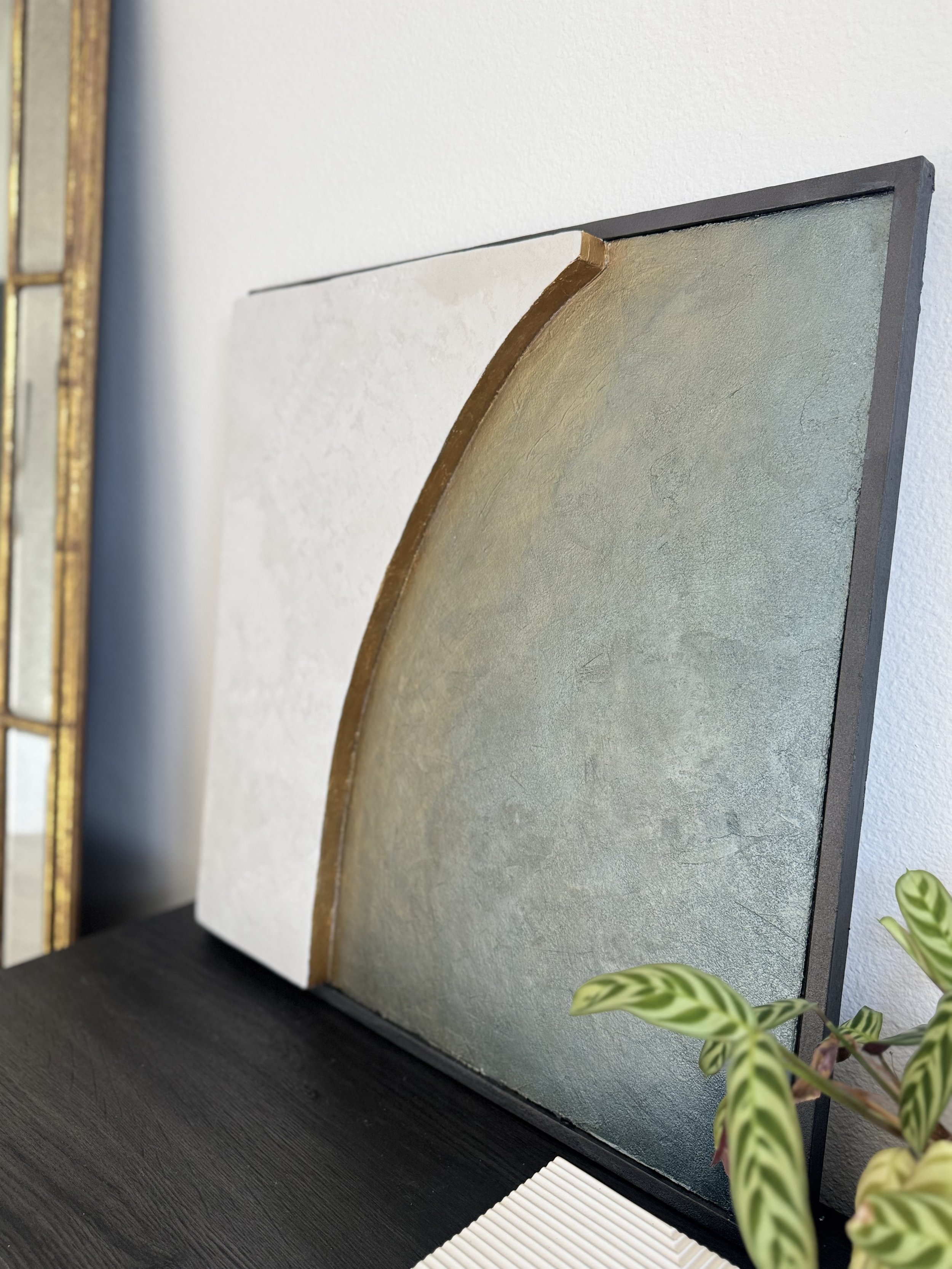
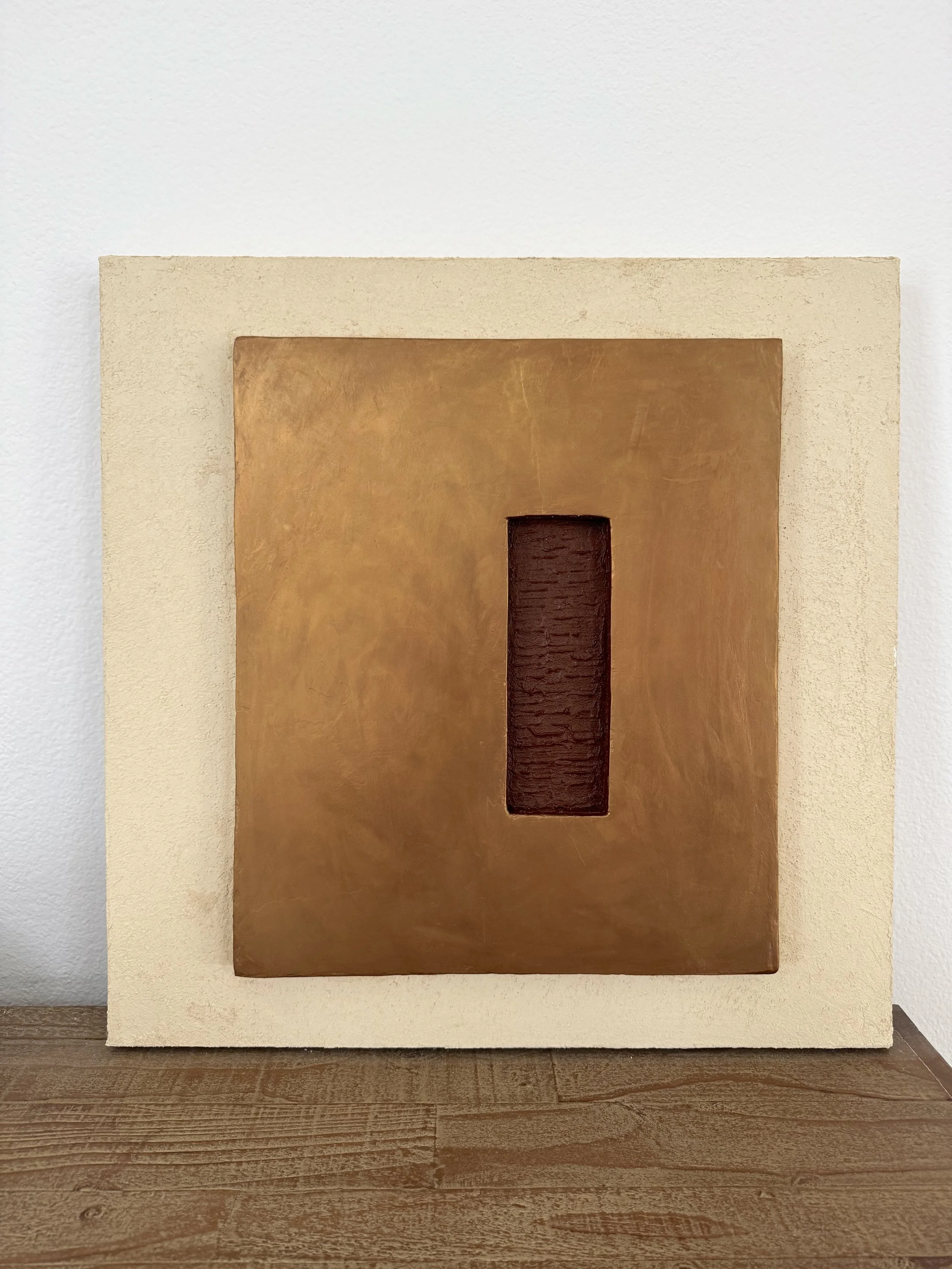
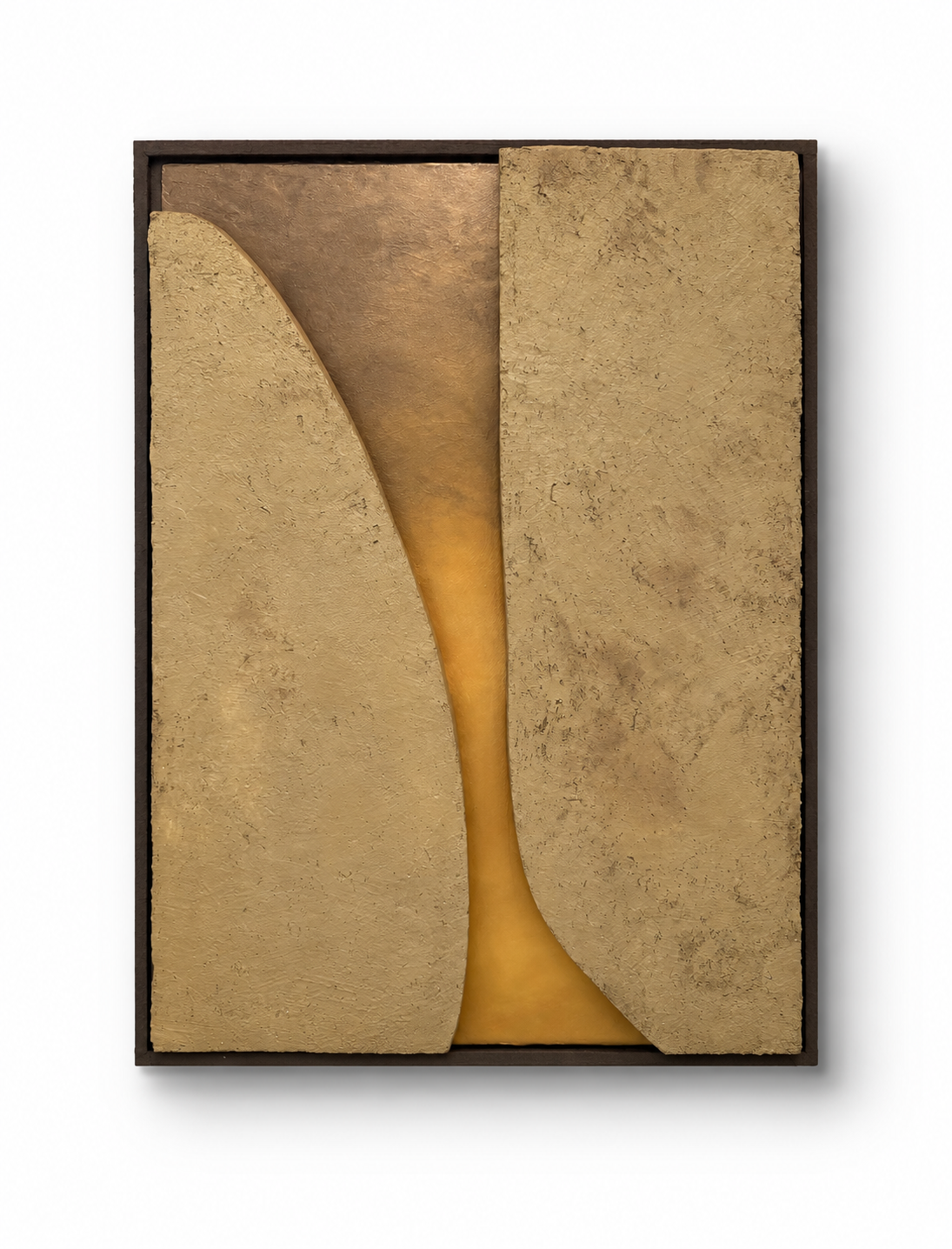
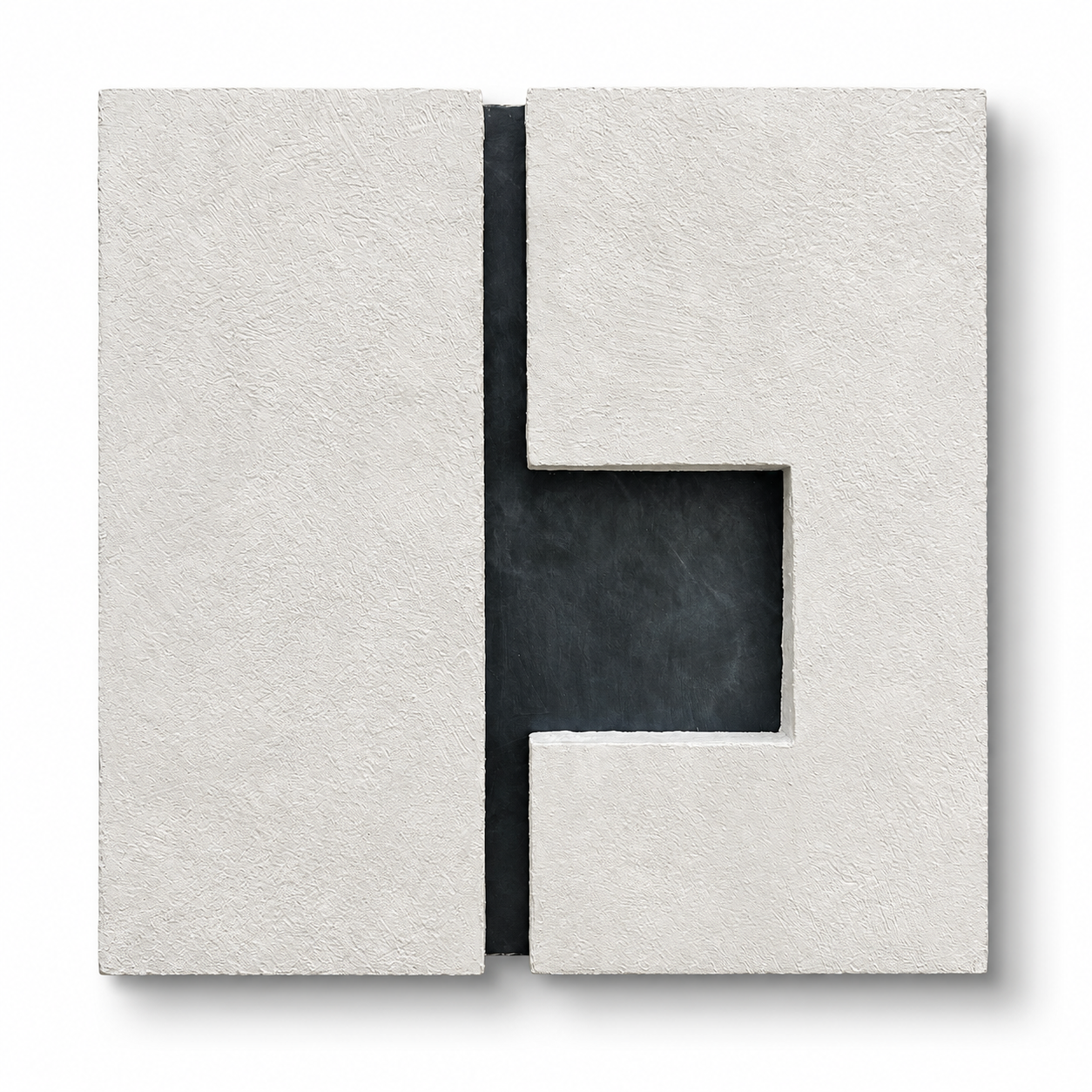
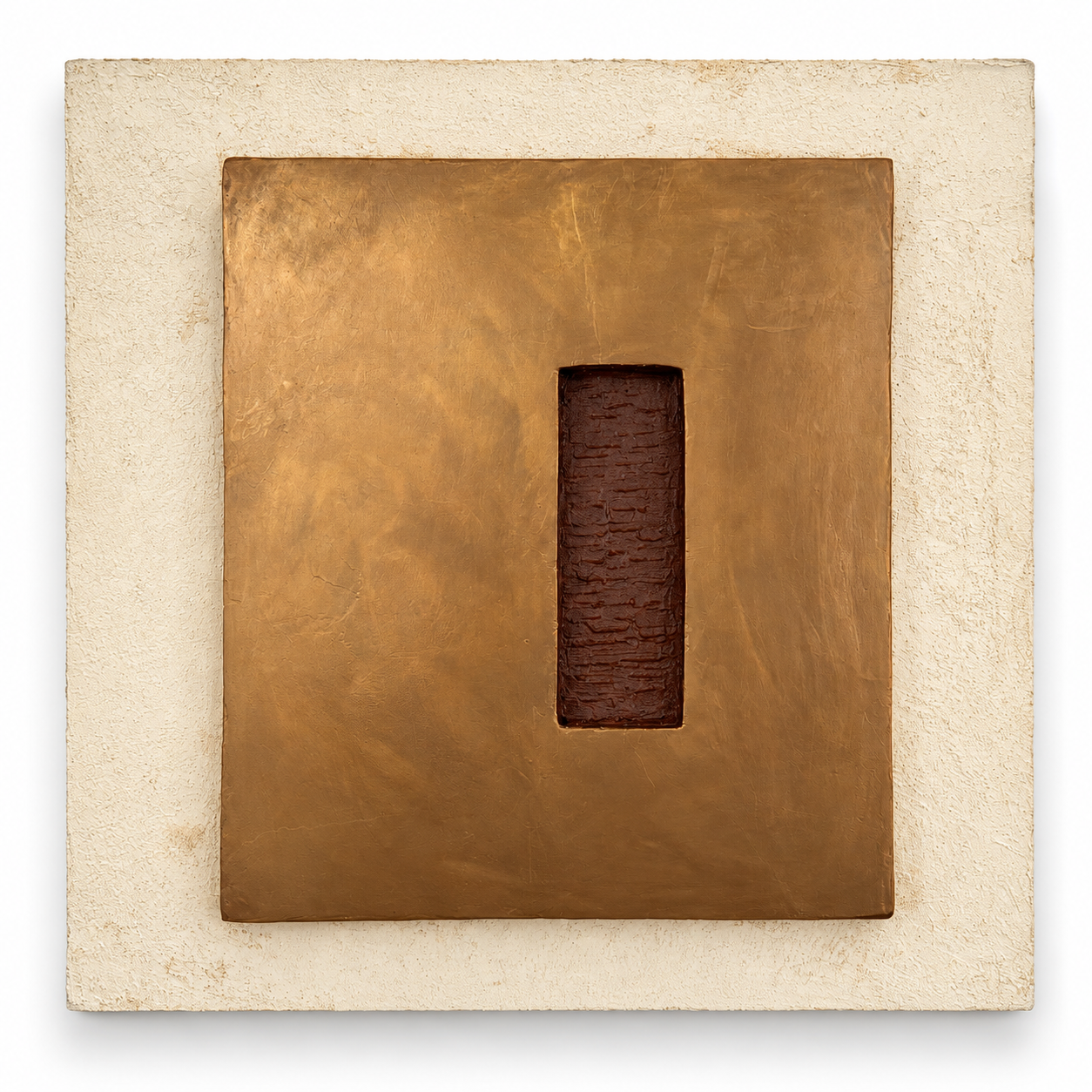
Gabriella Widgerow is a South African-born artist and the founder of ACAYA Studio, a practice built around hand-sculpted plaster, lime wash, and metallic pigment work. Raised in South Africa — where her grandfather's work as an architect shaped an early instinct for form, material, and space — Gabriella's connection to the natural world was cemented by countless hours in the bush on safari, an experience she credits as one of her deepest sources of inspiration. Gabriella's formal training is in graphic and visual communication design, and she has spent over a decade as a creative director in brand and executive communications, working with organizations including Apple/Beats by Dre, Expedia, and Comcast. It was alongside that career — not instead of it — that ACAYA began, as a “passion portfolio” built in whatever spare time she could find. Each ACAYA piece starts as a sculpted foam-core form, built up in canvas and layered plaster before a second material — usually a metallic pigment in gold, bronze, or gunmetal — is introduced through a carved channel or recessed void.
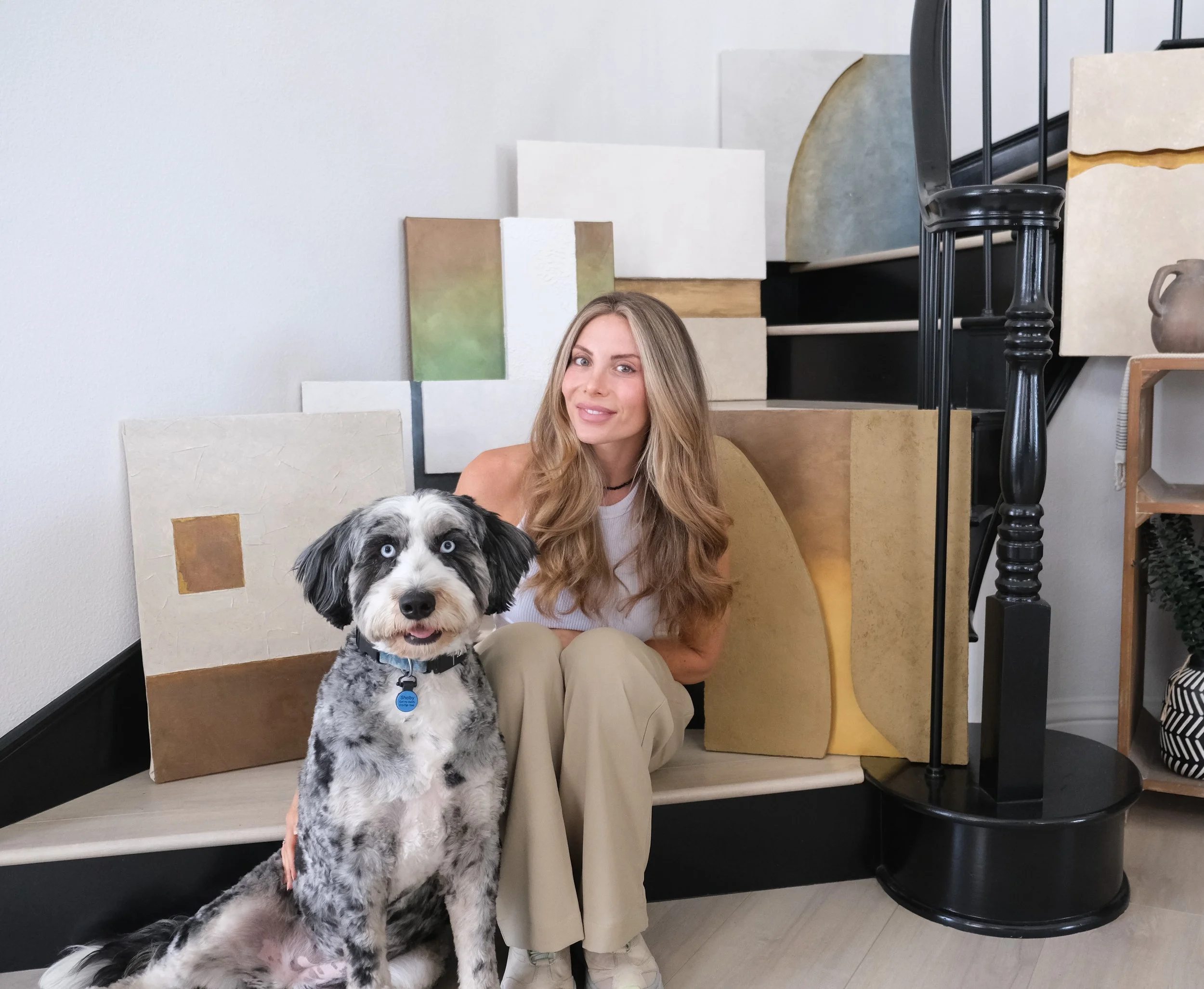
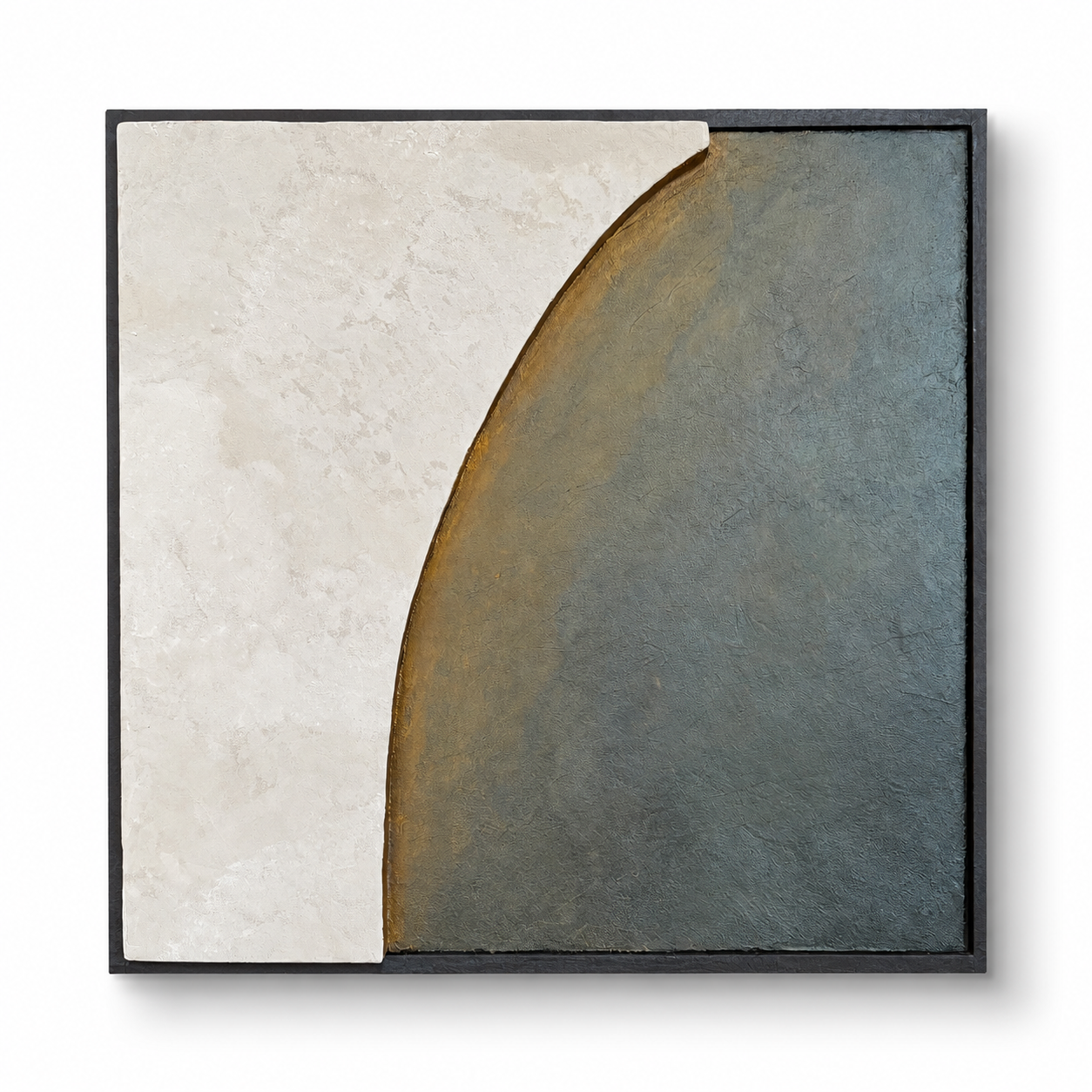
The work is organized into palette families spanning a warm-to-cool spectrum, named for South African landscapes: Kruger, Tsitsikamma, and Fjord. Every piece is one-of-one, formed and finished entirely by hand. Named for the acacia tree — resilient, rooted, and native to the landscapes of her childhood — ACAYA is, in Gabriella's words, a way of returning to something elemental: material honesty, restraint, and a quiet reconnection to the earth.
What is your background and how did you start your journey in the art world?
“I was born and raised in South Africa, and I think that's really where it all started — even if I didn't fully understand it at the time. My grandfather was an architect, and growing up around that kind of thinking — how form, material, and space hold meaning — left an imprint that surfaced much later in life. My formal path into ‘art’ actually ran through design. I studied graphic and visual communication design and spent over a decade building a career in brand and creative direction — first in corporate communications, then leading keynote and brand marketing content at Apple/Beats by Dre, and more recently in executive communications and live experiences at Expedia and now Comcast. But somewhere along the way, I felt a pull toward something rawer — work that wasn't about solving someone else's problem, but about my own hands in material. A few years ago, I started carving out whatever spare time I had to build a small studio practice at home: plaster, lime wash, metallic pigment, texture built up in layers. I called it my ‘passion portfolio’ — work that exists purely because it wants to. That practice grew into ACAYA. The name comes from the acacia tree — resilient, rooted, native to the landscapes I grew up around in South Africa. Being out in the bush on safari is genuinely my favorite place in the world to be, and I think ACAYA is my way of reconnecting to that.”
What inspires you?
“A lot of it comes down to texture and wear — surfaces that look honest about their age rather than polished into perfection. Weathered stone, cracked earth, oxidized metal, the way light shifts across a rough surface over the course of a day. Photography plays a bigger role in this than people might expect. I take a lot of photos when I travel, and it's taught me to really look — to notice color relationships, framing, and the specific way material catches light, rather than just admiring a view in passing. Those instincts translate directly into how I build a composition: what to leave out, where to place a single point of contrast, how much restraint a piece can hold before it goes flat. I'm also inspired by the discipline of not adding more. My design career runs on precision and polish; this practice is almost the opposite impulse — trusting one quiet gesture instead of reaching for more.”
What themes do you pursue? Is there an underlying message in your work?
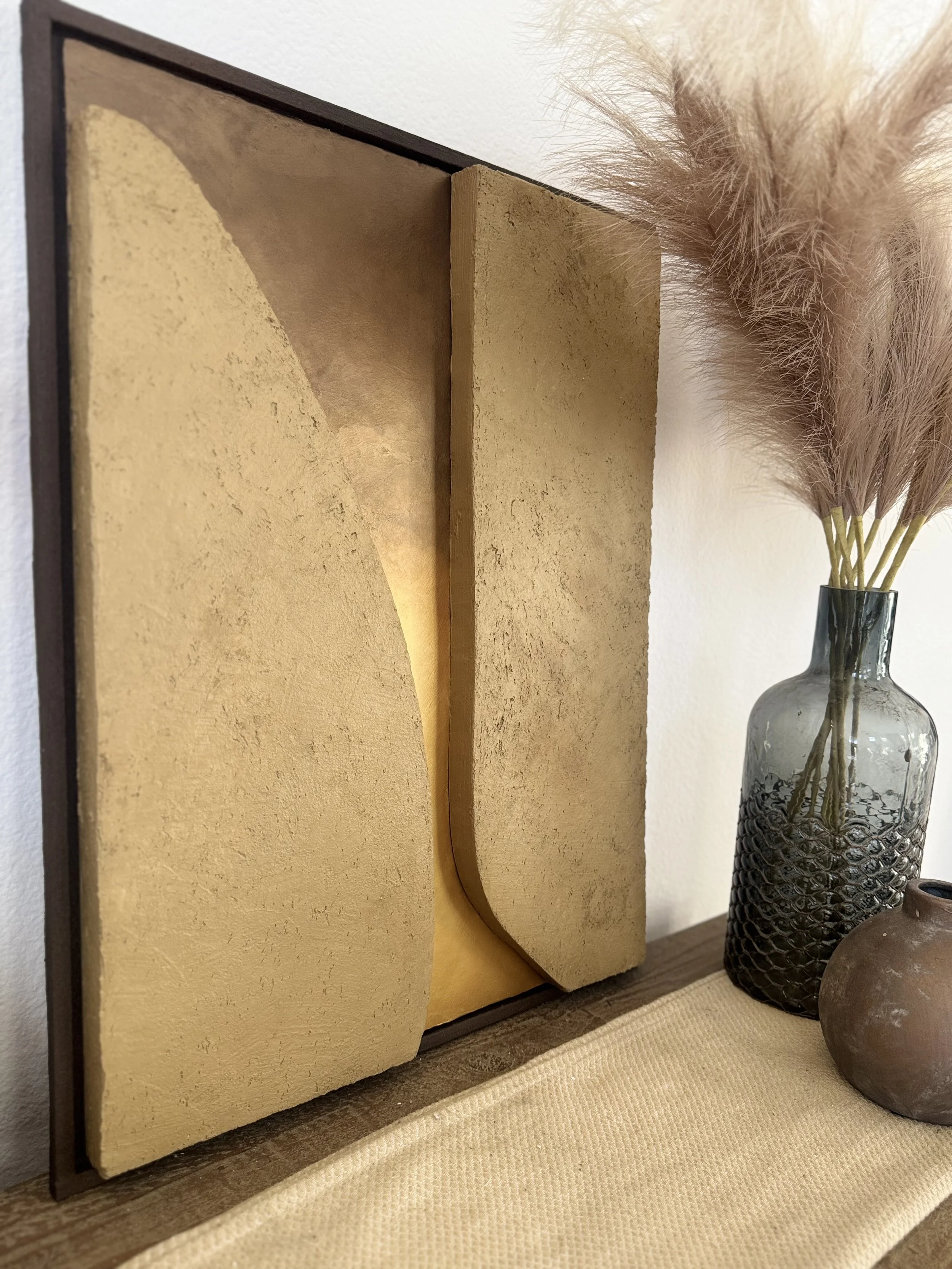
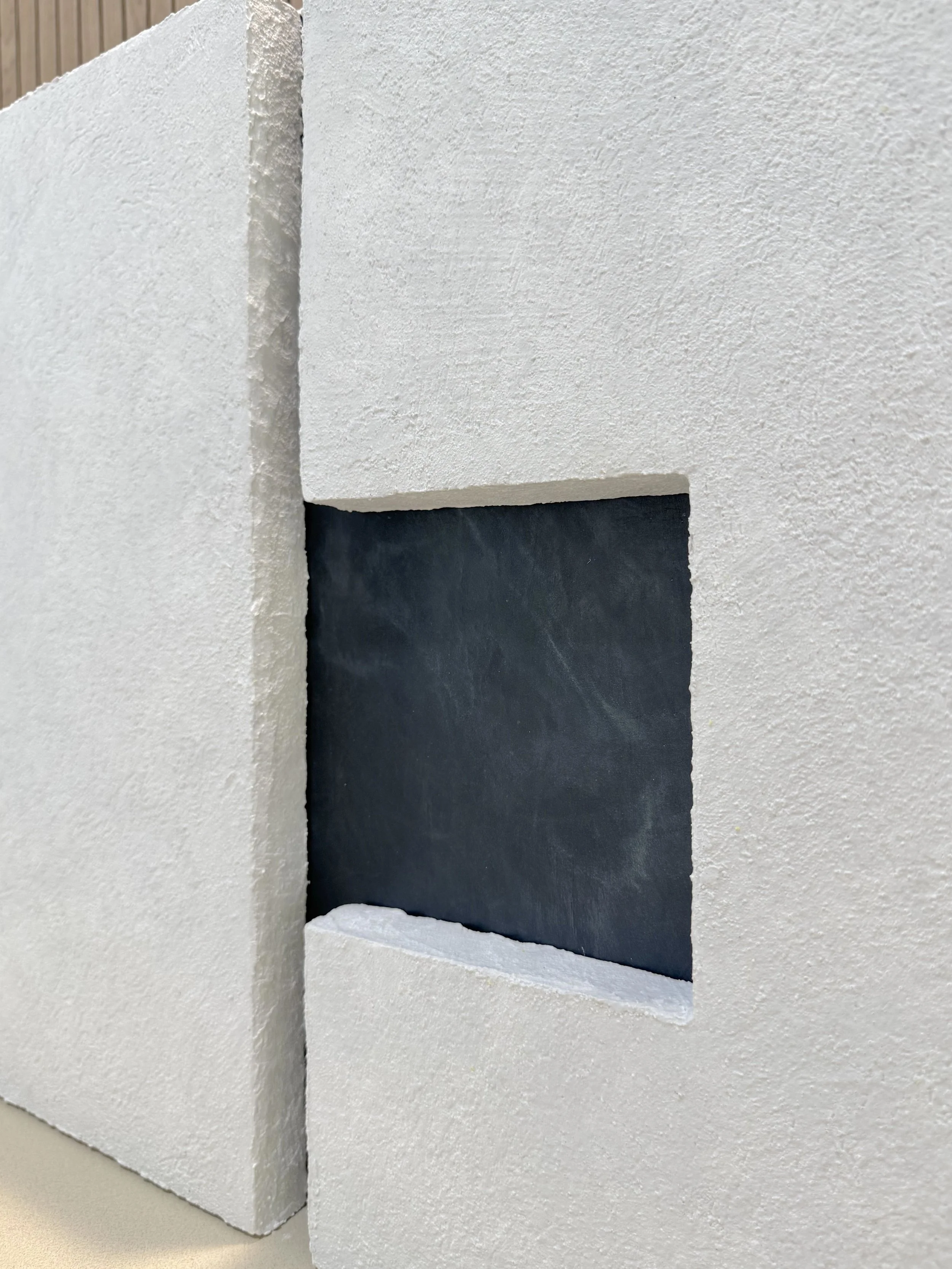
“The core theme I keep returning to is material honesty — letting a surface show exactly what it's made of, rather than disguising it. I want the plaster to look like plaster, the metal to look like it's been worked by hand, the void to actually be a void. Structurally, my work leans on a small vocabulary I keep coming back to: plane, void, line, curve, layer, and what I think of as ‘material reveal’ — a moment where one surface gives way to another underneath it, usually metallic. That reveal is probably the closest thing I have to a signature — less about decoration, more about tension: weight against opening, restraint against a single bright seam breaking through. I don't think there's one grand message I'm trying to hand someone. If anything, I hope the work makes a viewer slow down for a second — the same way I have to slow down to make it. In a world that moves fast and looks manufactured, I want these pieces to feel unhurried and real.”
How would you describe your work?
“I'd describe it as sculptural, material-first abstraction. Each piece starts with the underlying form — I sculpt foam-core into the shapes I want, then apply it to canvas so the whole thing reads as one continuous surface rather than separate pieces. From there, the plaster and lime wash go on in layers, built up and sanded back until the surface has real depth and history to it. Into that, I introduce a second material: usually a metallic pigment in gold, bronze, or gunmetal, set into a carved channel or recessed void so it reads as something revealed rather than applied. Compositionally, the pieces are quiet and architectural — geometric planes, a single line or curve, a deliberate opening — rather than busy or painterly. I organize the work into palette families that sit on a warm-to-cool spectrum: Kruger leans into warm earth tones, Tsitsikamma pairs a cooler plaster body with a warm metal reveal, and Fjord moves further into cool blues and slate. Each piece is one-of-one, formed and finished entirely by hand, so the small variations — a rougher edge here, a deeper patina there — stay part of the work instead of being sanded away. If I had to sum it up in a sentence: it's earth and metal in conversation, built by hand, and left honest about how it was made.”
Which artists influence you most?
“It's an interesting mix, and I think it says a lot about the fact that I came to this through design rather than fine art. Frank Lloyd Wright and Mies van der Rohe were huge for me in art school — that idea of form following function, and material used with total intention, rather than decoration for its own sake. I think that's still the backbone of how I build a piece today: nothing goes in unless it's doing real work. Piet Mondrian is probably the most literal influence — I actually use his grid logic constantly in my corporate design job, breaking a layout down to essential lines and blocks of color. That same instinct shows up in my studio work: the way I think about plane and line is much closer to Mondrian's discipline than to anything painterly. Rothko, I love for the opposite reason — the calm, the soft tonal transitions, the way a piece can hold you without demanding anything. My work is harder-edged and more architectural than his, but I'm always chasing a bit of that same stillness. And then there's Dalí, who I loved for a completely different reason — not for technique, but for how far outside the realm of ‘normal’ his imagination went. He's less of a direct influence on the work itself and more a reminder that art doesn't have to make conventional sense to be powerful.”
What is your creative process like?
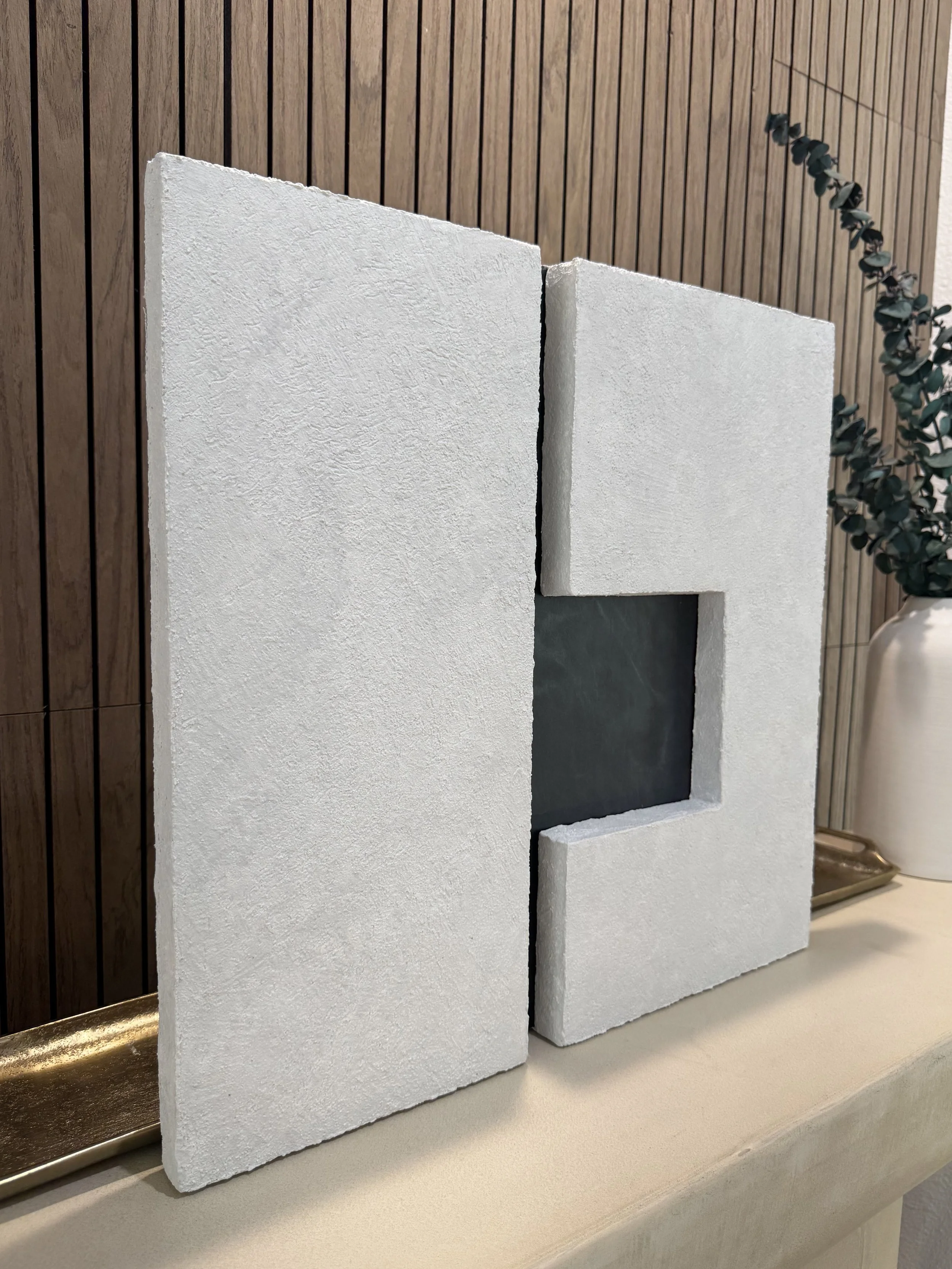
“My process actually splits into two quite different tracks, depending on which line I'm working on. For the one-of-one originals, it's intuitive and physical. I sculpt foam-core into the base form, apply it to canvas, and from there the piece really gets made in the moment — the plaster goes on in layers, I sand back, I build up again, and a lot of the decisions happen with my hands rather than on paper beforehand. I don't sketch these out in detail first; the material tells me what it wants as I go. The print line works almost in reverse. Those pieces are deliberately designed rather than reproduced — I don't want them to feel like a cheaper copy of an original. So, I work digitally in Illustrator and Photoshop, composing flat, considered arrangements of color and line that stand as their own thing, even when they're clearly part of the same visual language as the originals. What ties both processes together is restraint. Whether I'm working by hand or on screen, I'm always asking what I can take away rather than add — one line, one reveal, one shift in tone doing all the work instead of ten.”
What is an artist’s role in society and how do you see that evolving?
“I think an artist's role has always been to slow people down — to make them notice something they'd otherwise scroll past. What's changing is how much competition that role has now. I spend my days in a world of fast, polished, endlessly produced content — brand systems, keynotes, campaigns built to move at scale. It's taught me just how manufactured most of what we see actually is, and how rare it's becoming to encounter something made by one person's hands, imperfections included. I think that's where the artist's role is heading: less about producing more, and more about being proof that something real still exists. As more of what we see is generated, optimized, or automated, I think people will increasingly seek out work precisely because it wasn't made that way — because a hand touched it, took time with it, and left evidence of that time in the surface. For me personally, that's part of why the studio practice matters so much, even as a small, slow thing running alongside a much faster career. When I'm in it, I can actually tune out — no noise, no constant stimulation pulling at my attention. It's less about making something for someone else to see and more about a return to self. In a world engineered to keep us distracted, I think that might be one of the most important things art can still offer — both to make and to experience.”
Have you had any noteworthy exhibitions you'd like to share?
“Not yet — ACAYA is still very new, and I've been focused on building the studio practice and getting the work out into the world in its own right before pursuing exhibitions formally. It's something I'd love to grow into as the practice matures.”
Website: acayaliving.com
Instagram: @acaya_living