
Interview
Frank Ditta
Frank Ditta is a Houston-based abstract artist whose work is defined by bold color, layered surfaces, texture, movement, and controlled unpredictability. A self-taught artist, Ditta began exploring abstract painting while living in Sydney, Australia, drawing early inspiration from the energy and freedom of artists such as Jackson Pollock. His background is as varied as his work. Ditta was an All-American offensive lineman at Baylor University and was later inducted into the Baylor Athletic Hall of Fame. His professional career has included business, college coaching and recruiting, and residential real estate appraisal.
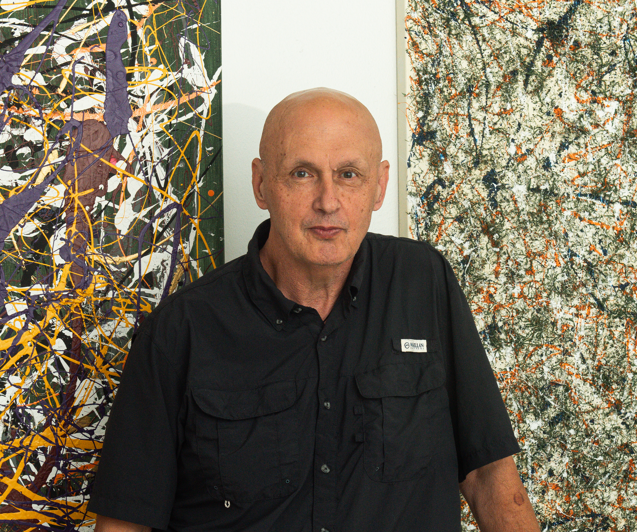
Ditta’s artistic process is highly experimental, using acrylic paint, wood panels, layered mediums, heat, air, scraping, pouring, and intentional cracking techniques. Rather than hiding imperfections, he often incorporates them into the finished composition, allowing underlying colors and textures to emerge. His work reflects themes of change, resilience, unpredictability, and renewal. Ditta does not try to dictate what viewers should see in his paintings; instead, he encourages each person to form their own connection and interpretation. He creates under the name Ditta Abstracts and continues to develop a distinctive body of contemporary abstract work from his studio in the Houston area.
What is your background and how did you start your journey in the art world?
“I’m an abstract artist based in Houston, Texas. My background is probably a little different from most artists. I played football at Baylor University, where I was an All-American, and I was later inducted into the Baylor Athletic Hall of Fame. I went on to spend much of my professional life in business, coaching and recruiting before eventually becoming a residential real estate appraiser. My journey into art really began while I was living in Sydney, Australia. I had always been drawn to abstract art, particularly the freedom and movement in Jackson Pollock’s work. I started experimenting with dripping and pouring paint and, over time, began developing techniques of my own. What started as experimentation became something much more personal. Today my work is less about following a particular style and more about discovering what I can make paint do.”
What does your work aim to say? Does it comment on any current social or political issues?
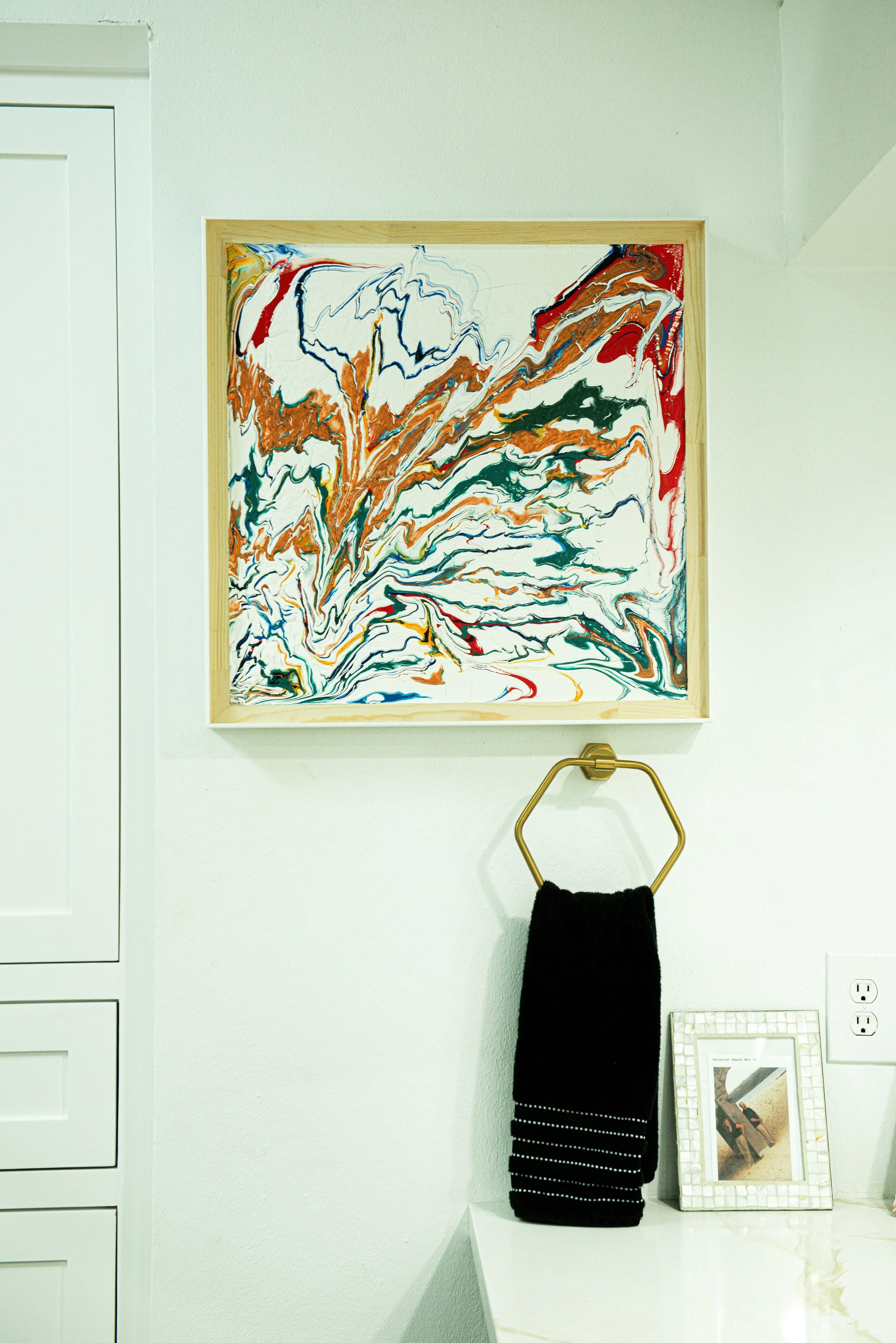
“I don’t create my work to make a political statement or tell people what they should think. I want people to have their own reaction to it. My paintings are much more personal. They deal with emotion, change, damage, recovery and the fact that life rarely happens exactly as we planned it. Cracks and imperfections have become an important part of my work because I think there is something beautiful about things that have been broken, changed or scarred and still become something worthwhile. I especially enjoy hearing completely different interpretations of the same painting. Someone may see a landscape, another person may see movement or a figure, and someone else may simply react to the colors. I don't want to tell the viewer what they are supposed to see. Their interpretation becomes part of the painting.”
Do you plan your work in advance, or is it improvisation?
“It’s a combination, but improvisation is a huge part of it. I normally begin with an idea about the color palette, contrast or general direction of a painting. After that, the painting starts dictating what happens next. Acrylic paint moves, dries, separates and reacts differently depending on how I apply it, how thick it is, the temperature and what I've placed underneath it. So I may have an idea when I start, but I rarely know exactly what the finished painting will look like. In fact, I don't want to know. Some of my favorite moments are when something happens that I didn't anticipate and I have to decide whether to change it, build around it or leave it completely alone. That unpredictability is one of the reasons I continue painting.”
Are there any art world trends you are following?
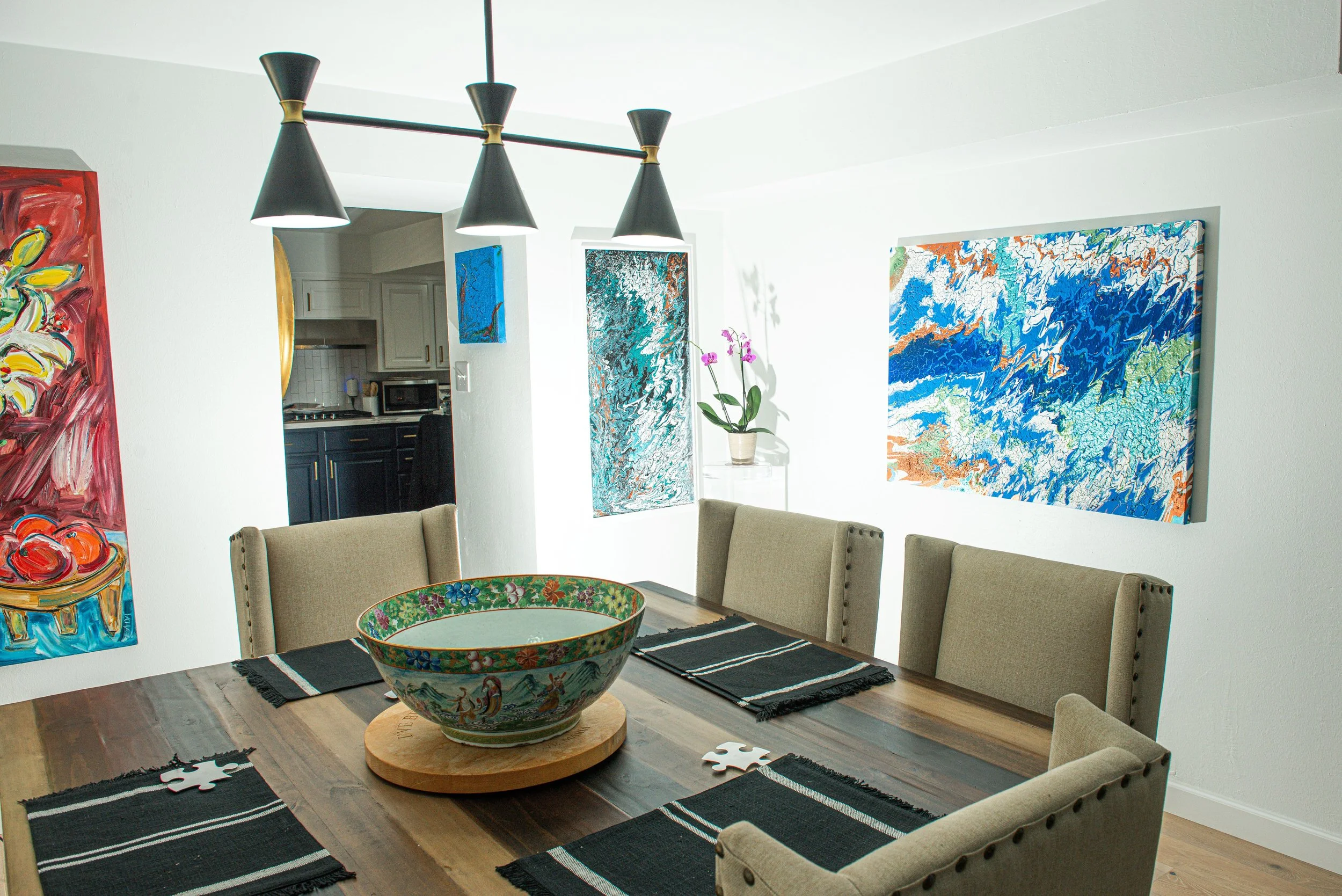
“I’m particularly interested in the movement toward highly textured, tactile and process-driven abstract work. I like artwork where the surface itself becomes part of the composition rather than simply being something that holds the paint. I'm also interested in artists who are experimenting with unconventional materials and surfaces and allowing chemistry, gravity, heat, drying time and even controlled accidents to participate in the process. At the same time, I try not to follow trends too closely. One of the things I enjoy most about being self-taught is that I don't feel obligated to work according to a particular set of rules. I'm much more interested in continuing to develop something that someone can look at and eventually recognize as a Ditta.”
What process, materials and techniques do you use to create your artwork?
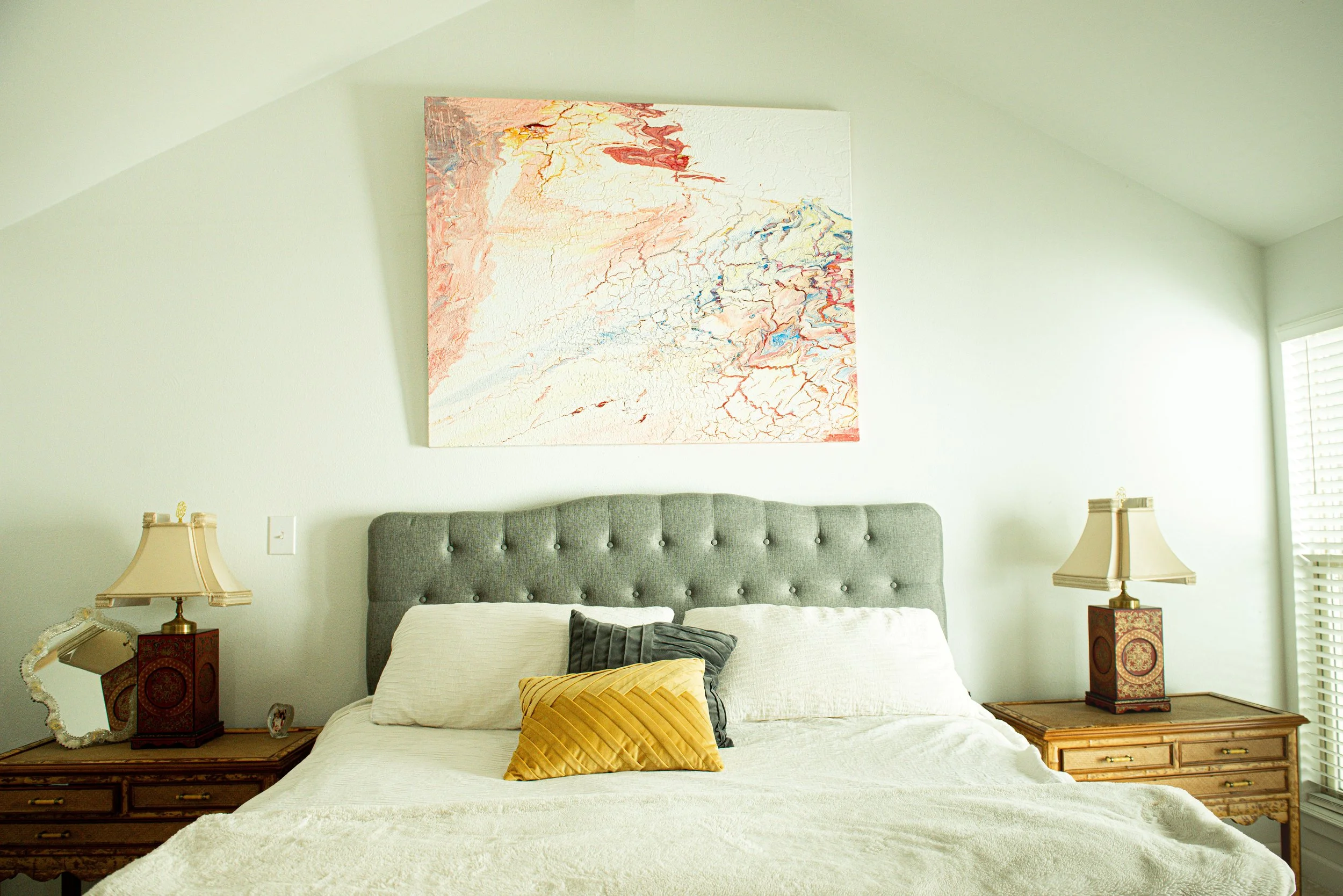
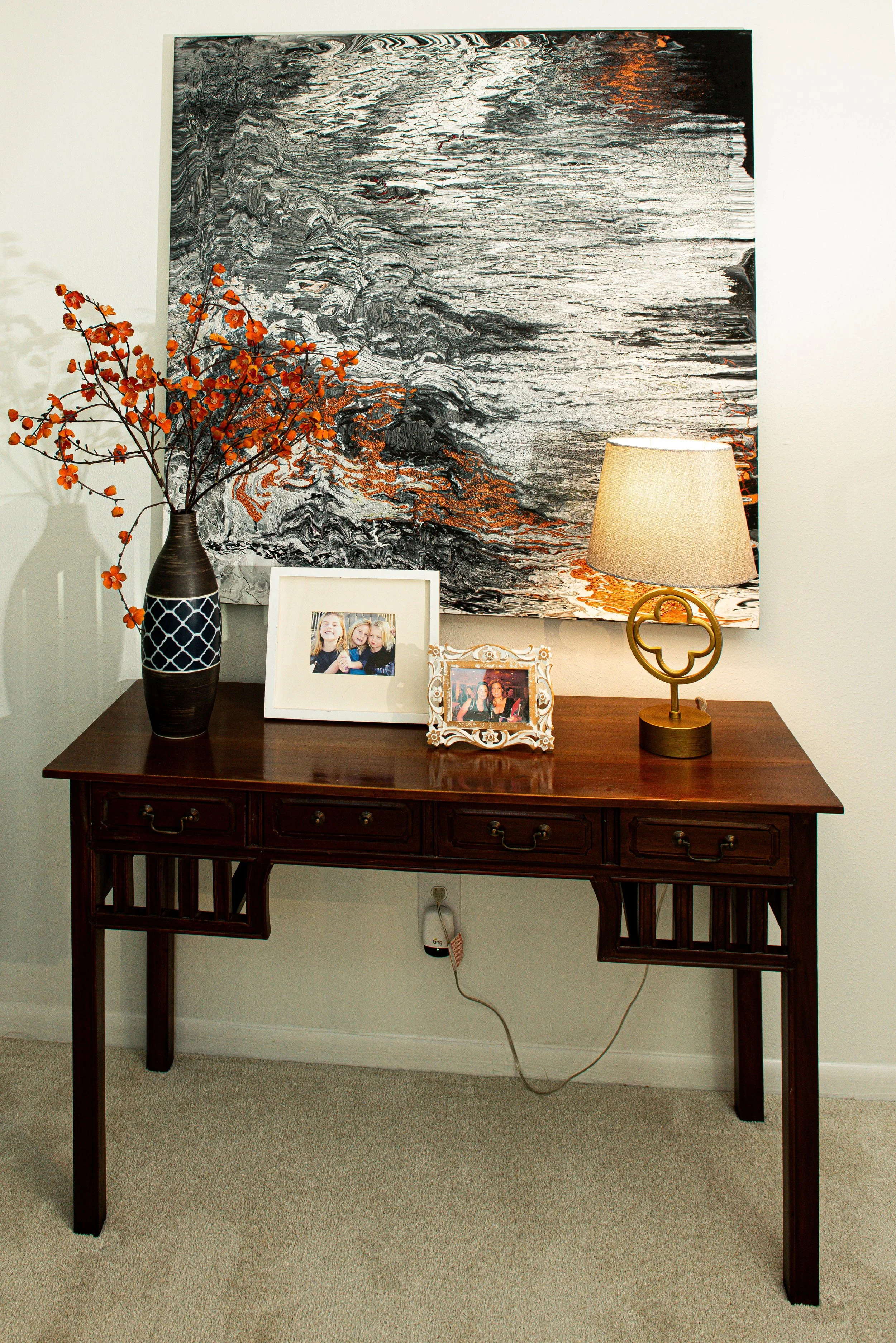
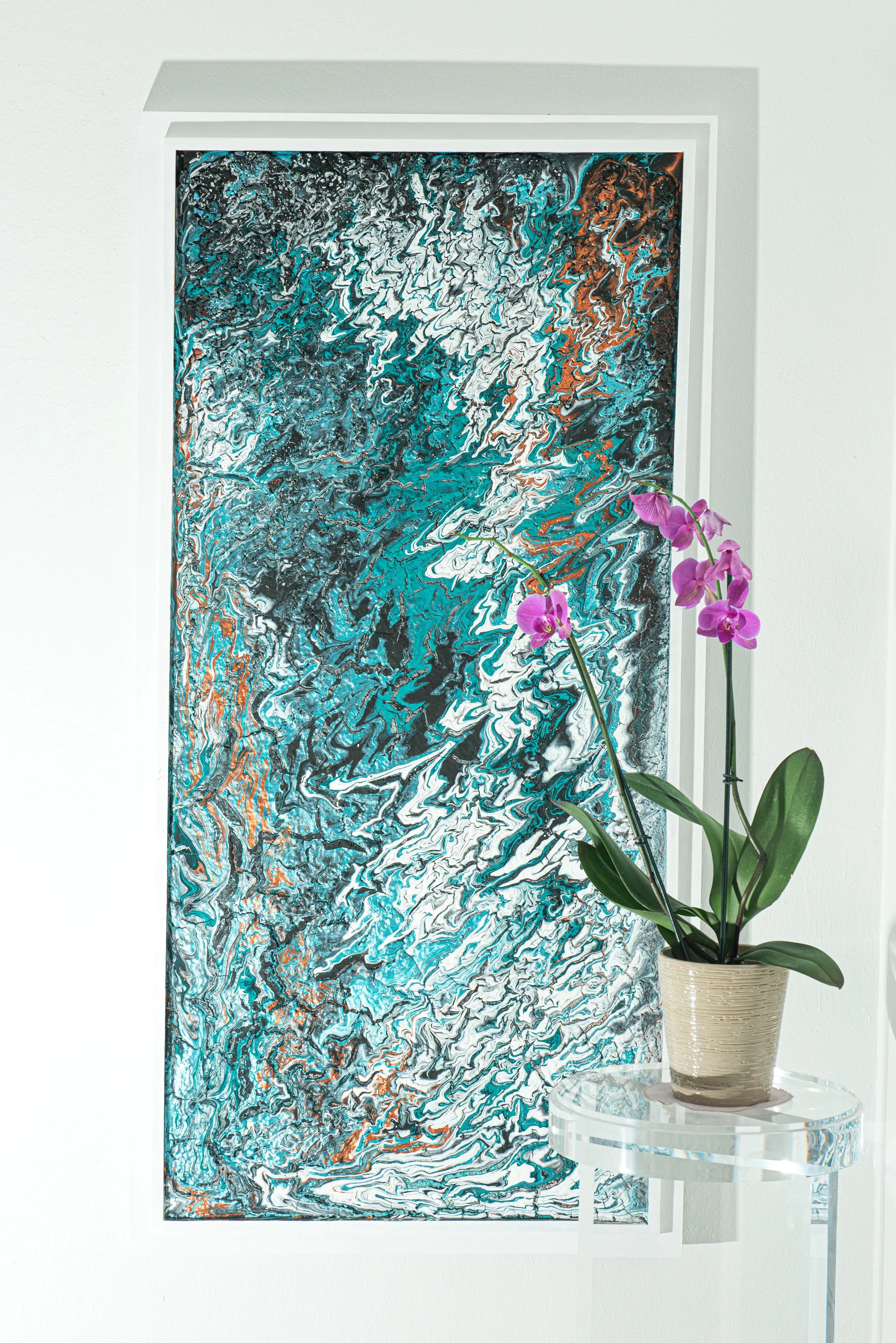
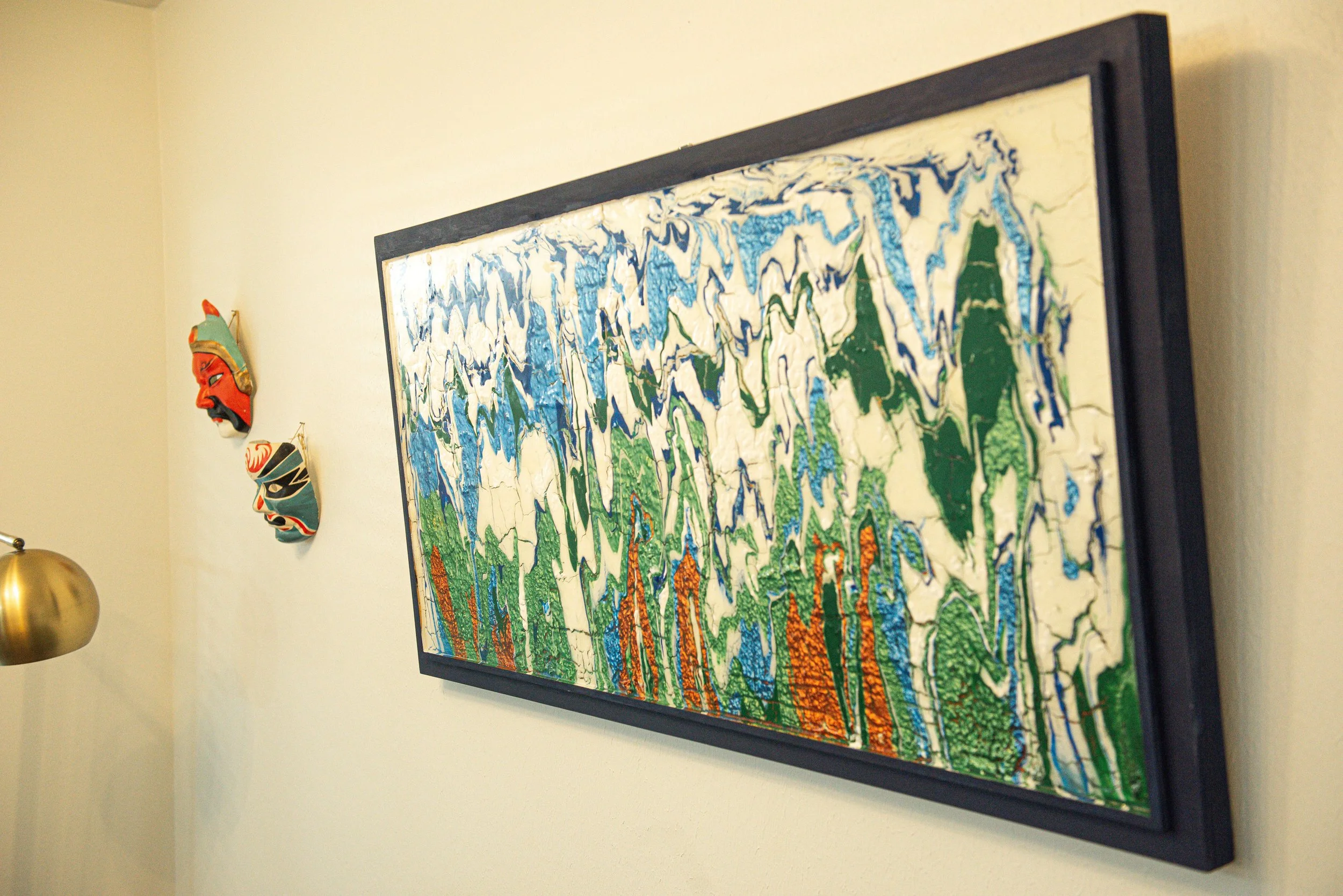
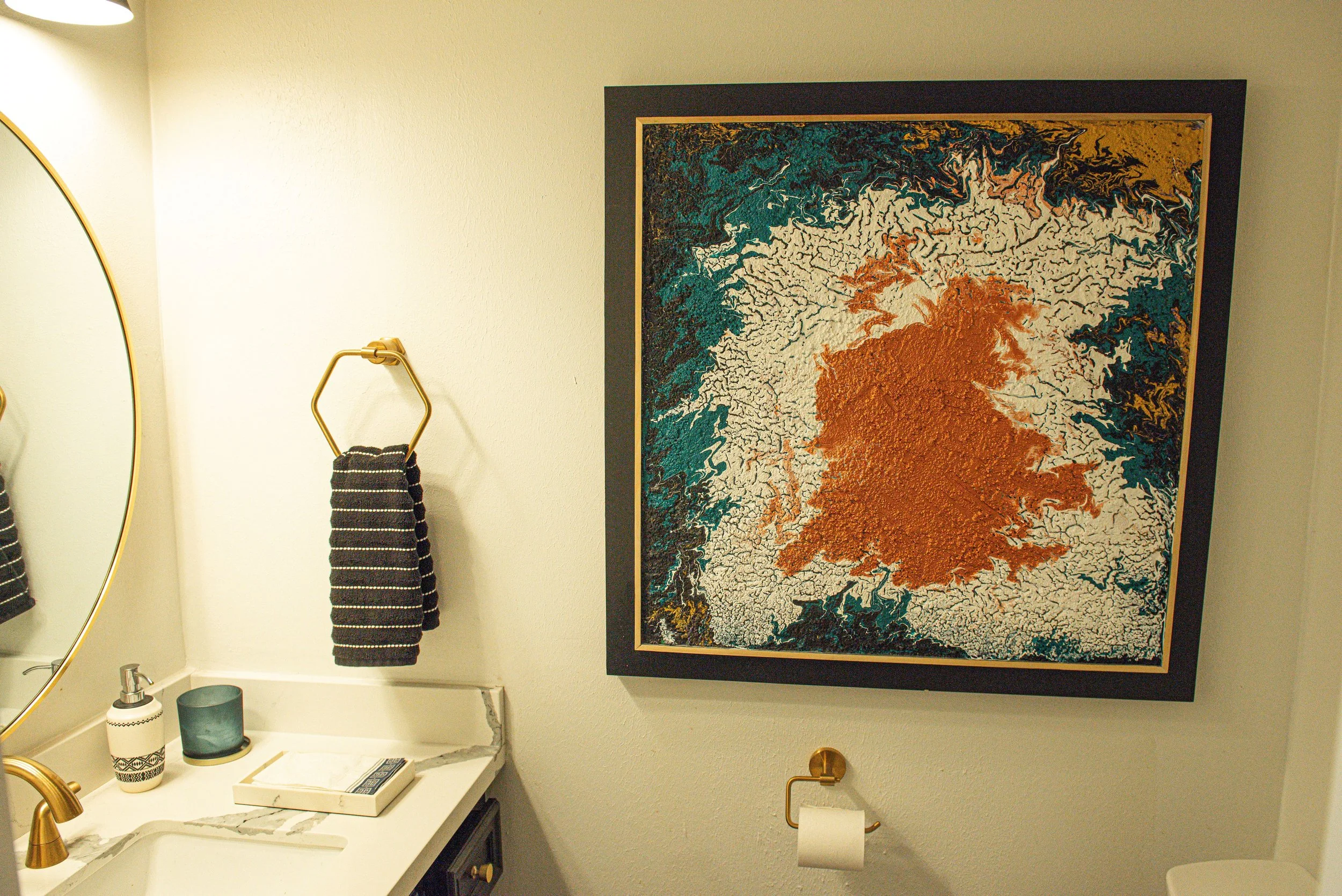
“I primarily work with acrylic paint, often on large canvases and increasingly on wood panels and other rigid surfaces. My process involves layering contrasting colors and manipulating the paint in a number of different ways. I pour it, move it, blow it, scrape it and work with different mediums to change its consistency and drying characteristics. I also use heat and moving air as tools rather than relying exclusively on brushes. Texture has become increasingly important in my work. I've experimented with incorporating different materials into the surface and with techniques that intentionally create cracks, separation and dimensional areas within the painting. One of the techniques that has become associated with my work is what I call my Cracking Series. I build contrasting layers so that cracking or separation in the upper surface can reveal completely different colors underneath. Instead of trying to hide the crack, the crack becomes part of the composition. There is a great deal of experimentation involved. Sometimes I'm controlling the paint and sometimes I'm creating the conditions and allowing the paint to do something on its own. That tension between control and unpredictability is probably the most important part of my process.”
What does your art mean to you?
“At this point in my life, art means far more to me than simply creating something attractive for a wall. Painting has become a way for me to process things that aren't always easy to put into words. I've been through enough in life to understand that things can change very quickly. Painting gives me somewhere to put some of that emotion. That is one reason cracks and imperfections have become meaningful in my work. I don't necessarily see a crack as damage. Sometimes, the crack is the most interesting part because it exposes something underneath that otherwise would never have been seen. There is probably a parallel to life in that. Painting gives me a sense of freedom. There are no referees, no scoreboard, no business plan and no correct answer. I can walk into my studio with a blank surface and create something that has never existed before. At this stage of my life, that means a great deal to me.”
What’s your favourite artwork and why?
“I don't know that I have one favorite painting. Usually, I'm most interested in the piece I'm working on now or the next idea I'm trying to figure out. The paintings that mean the most to me tend to be the ones where something happened that I couldn't completely control—where the colors separated, a crack opened, a hidden layer appeared or the paint moved in a way that I hadn't expected. Those paintings represent what I like most about abstract art. I can create the conditions, but I can't completely dictate the outcome. When a painting surprises me, I know I'm onto something.”
Have you had any noteworthy exhibitions you'd like to share?
“One experience that remains particularly meaningful to me was being selected as a featured artist for the Sammy's House Fall Charity Event while I was living in Austin. I donated three original paintings to help with the organization's fundraising efforts. That event was important because it showed me that artwork could do something beyond being displayed or sold. Something I had created could actually help an organization and the people it served. I've continued to enjoy opportunities where my paintings can be connected to charitable causes, and I particularly value showing work in settings where I can interact directly with people seeing it for the first time. For me, one of the best parts of exhibiting isn't standing beside a painting and explaining it. It's standing back and listening to people tell me what they see in it. That's when an abstract painting really becomes complete.”