Interview
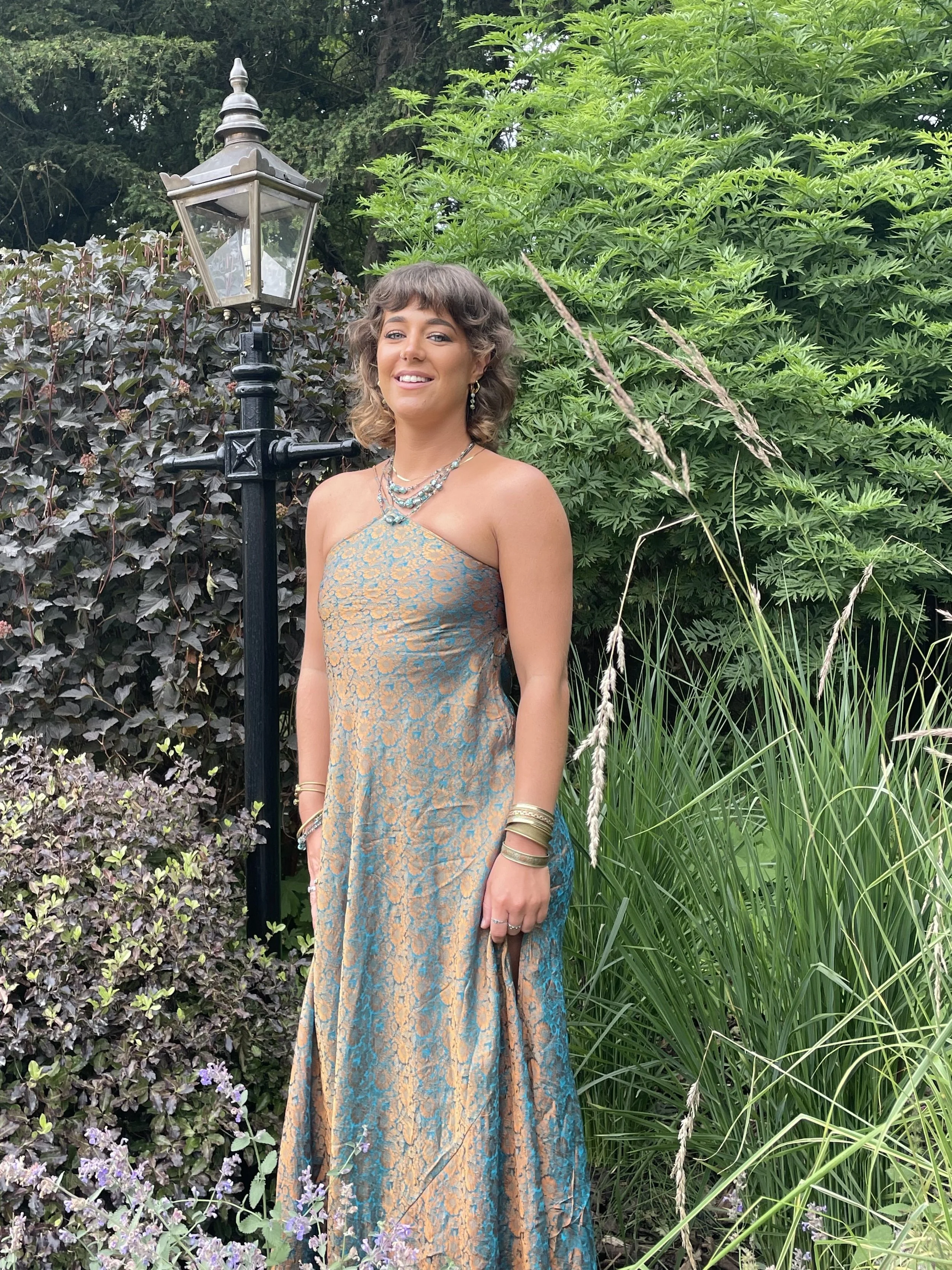
Dolly Vallance
Dolly blends fine art and pattern design to depict hidden meanings inspired by social perceptions, deceptions, prejudices and Southeast Asian culture. The viewer can jump into the world of wonderful and weird characters, and if they wish, challenge their own social perceptions.
What is your background and how did you start your journey in the art world?
“My journey in the art world began as a young child - it has always been my main interest and something I excelled in compared to other subjects. I studied fine art and pattern design at college (2015-2017) then continued studying pattern design, specialising in print at Huddersfield University (2017-2021). During my placement year at university, I worked at various pattern design studios and realised that this wasn’t the path that I wanted to pursue. The work seemed repetitive and I didn’t like that I couldn’t call it my own or follow my own design direction. I knew I wanted to sell original work at some point in the future. It took me a few years to begin building a portfolio but that goal has now been completed this year. My next move into the professional art world is to begin promoting my art work and selling prints.”
What inspires you?
“My internal dialogue and my own views on the world inspires the messages behind my work. Self expression motivates the art style - I want to make art I would put up on my own wall. Escapism inspires the imagery - I feel I have a whole other world in my head that am excited to share that can offer a form of escapism to others through weird and wonderful characters, shapes and colours. South East Asian culture and art is often referenced in my work as I am inspired by the messages and meanings.”
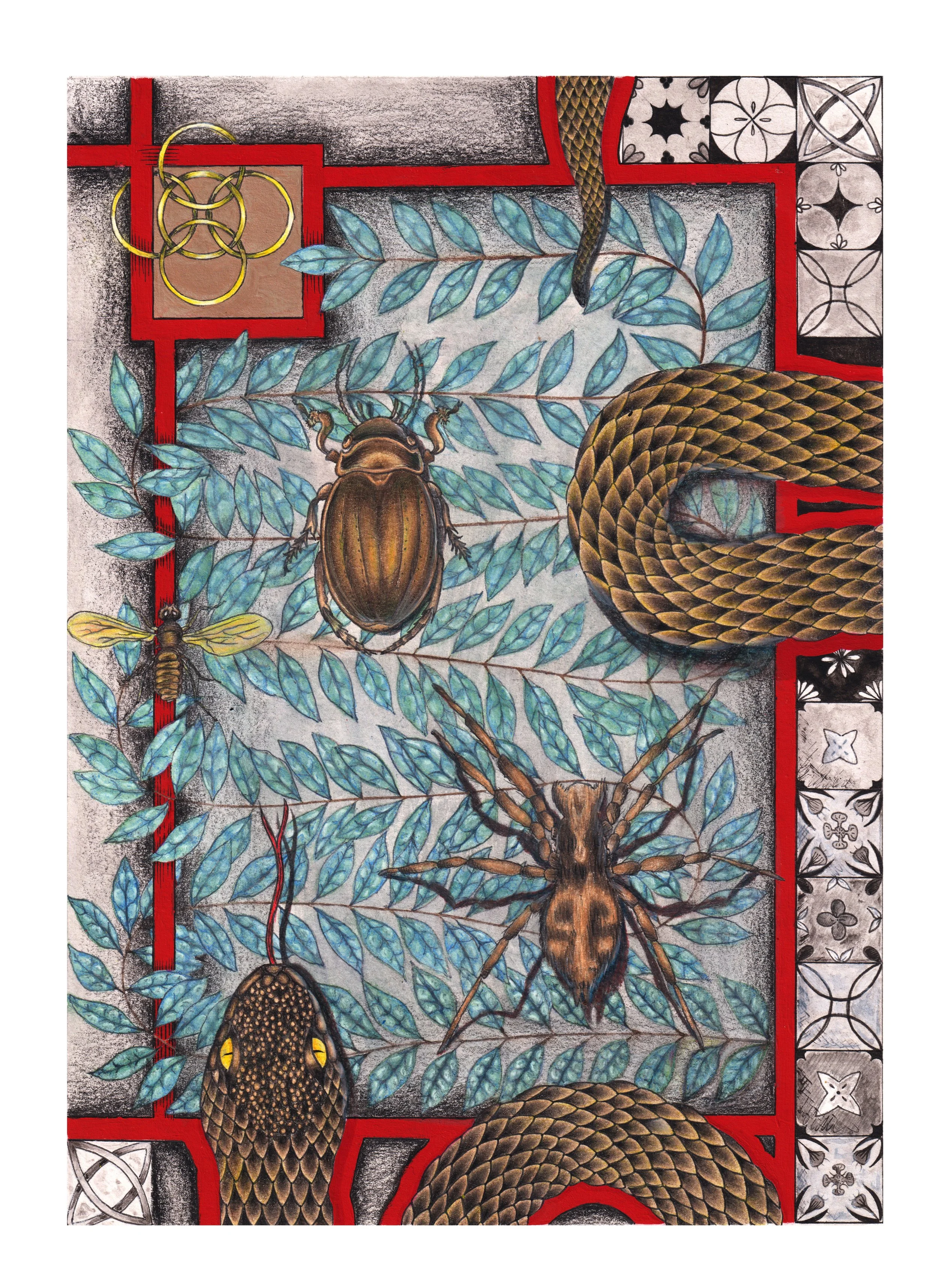
What themes do you pursue? Is there an underlying message in your work?
“The underlying messages behind my works often involve stark social contrasts, paradoxes, themes of perception, deception and prejudice. I purposefully give characters an unlikely story that contrasts their appearance aiming to make the viewer question their assumptions of the character once they have uncovered the characters story. I like the idea that this could lead on to inspire the viewer to reflect on their own life - how they may have incorrectly made assumptions in the past before digging deeper and asking questions - and if they would want to find ways of being less judgmental or assuming in the future, for example. I have created works on symbols from Thai or Japanese culture (yin and yang, dragons, statues) because the messages are important for me to integrate into my own life to keep balance and perspective.”
How would you describe your work?
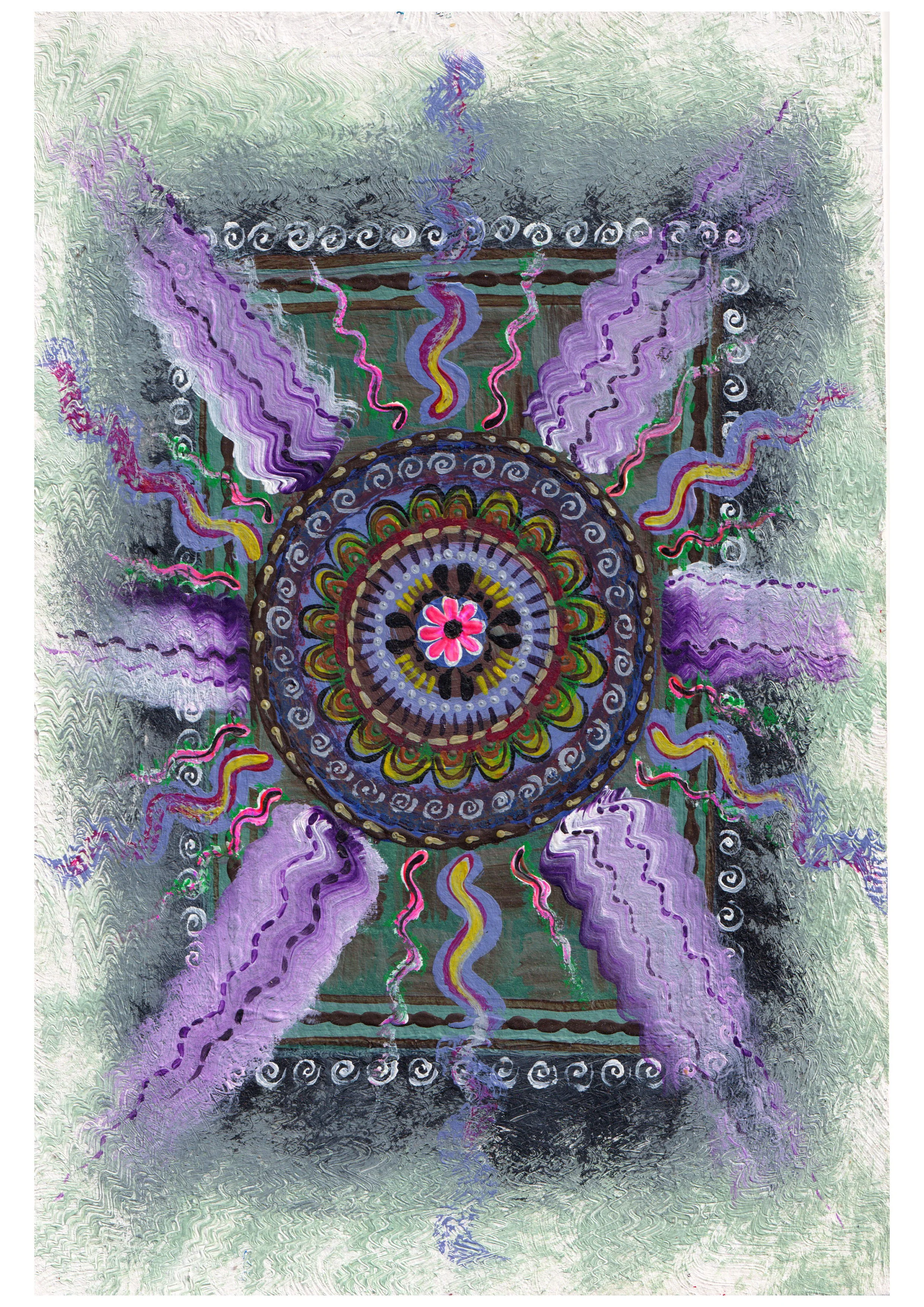
“My work can be psychedelic, magical, mythical and mysterious. It is fun, never too serious and I sometimes class it as a personal visual diary of my thoughts. I blend a fine art approach with pattern design to create a unique and alternative art style. There is often a visual focal point involving symmetry with pattern repeats in the background.”
Which artists influence you most?
“I am really in awe of Chalermchai Kositpipat’s use of colour, the immense detail, and the technique of his paintings. I love the composition, use of colour and style of an artist called Kazland who I discovered on instagram. I also read Ru Pauls memoire recently and loved his saying 'life is just one big joke, anyone who was taking it seriously was missing the point,’”
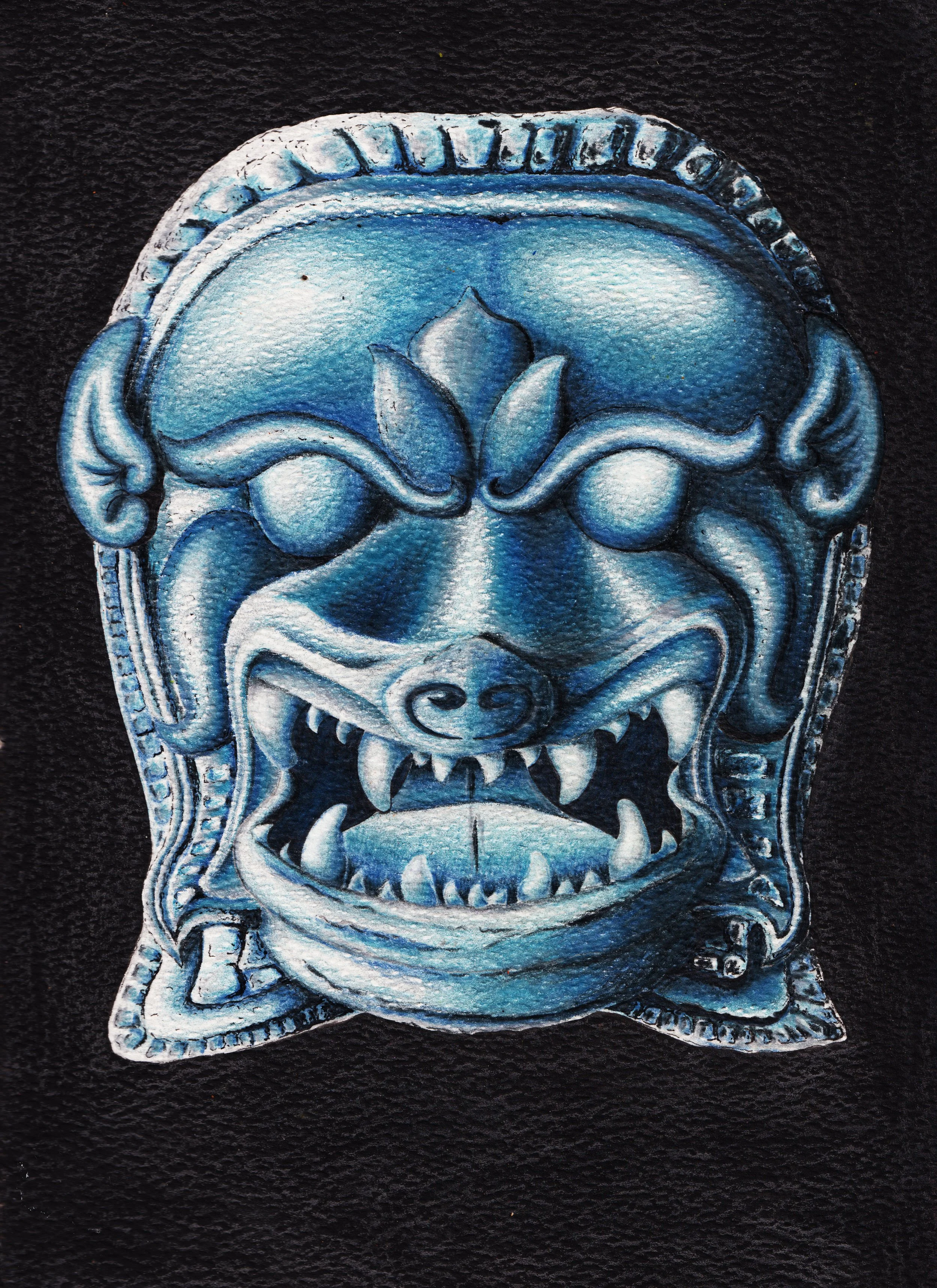
What is your creative process like?
“I begin with a loose idea of what I want to draw eg ‘creepy face’, ‘fantasy dragon’, or ‘psychedelic pattern’. I may look at my previous works or Pinterest for inspiration. The first thing I put down on the page is often a grid to centralise the centrepiece, or to map out the very basic geometrical composition to plan out the overall balance of the piece. Then I’ll use pencil to outline whatever characters, animal or motif/s will fill the page. I often don’t really know what these look like until I finish. I just say start with say a chin or an eye if I know I want to draw a face and see where it takes me. Once the outline is done I’ll sit with the idea for a while to mentally plan what the background could be, if I should do foreground or background first, if I could include a pattern repeat, what materials I will use and the colour pallet. Once I’ve planned this I go ahead. Sometimes I will do an under painting with water colour, other times I start with a blank wash. My mediums are pencil, watercolour, black fine liner, oil pastel, gouache and acrylic paint. There is usually at least a combination of 3 of these. Symmetry is a almost always used in my pieces but other than the basic grid at the beginning, which has usually disappeared by the time I get to the patterns, I don’t try to get the symmetry perfect. I go mostly by eye and a steady hand. If it’s not exactly the same on both sides I leave it. I think that this gives for of a hand drawn feel and also symbolises that things don’t have to be perfect to be just okay as they are. I may then use some digital aspects to make the piece print ready or to create completely new pieces in more of a commercial design style.”
What is an artist’s role in society and how do you see that evolving?
“A very good friend of mine who is a musician once said to me that art should never be kept to your self. If you have created something and you can show it to people, do it! Art should be shared and you should be proud of whatever you have created.”
Have you had any noteworthy exhibitions you'd like to share?
“I have not yet shown my work at any exhibitions as I have just begun my professional journey but I plan to start applying in the very near future.”
Instagram: @dollusion___