David Orban
David Z Orban is a New Jersey–based artist creating colorful still-life paintings that merge painterly realism with abstraction. Drawing from both representational and abstract traditions, his work highlights the overlooked beauty of utilitarian objects such as tools, toys, and balloons, inviting reflection on the everyday in a culture shaped by technology and high-gloss consumerism. Born in 1955 in Trenton, NJ, Orban received his AA in Visual Arts from Mercer County College, where he studied painting and printmaking with Mel Leipzig and Frank Rivera.
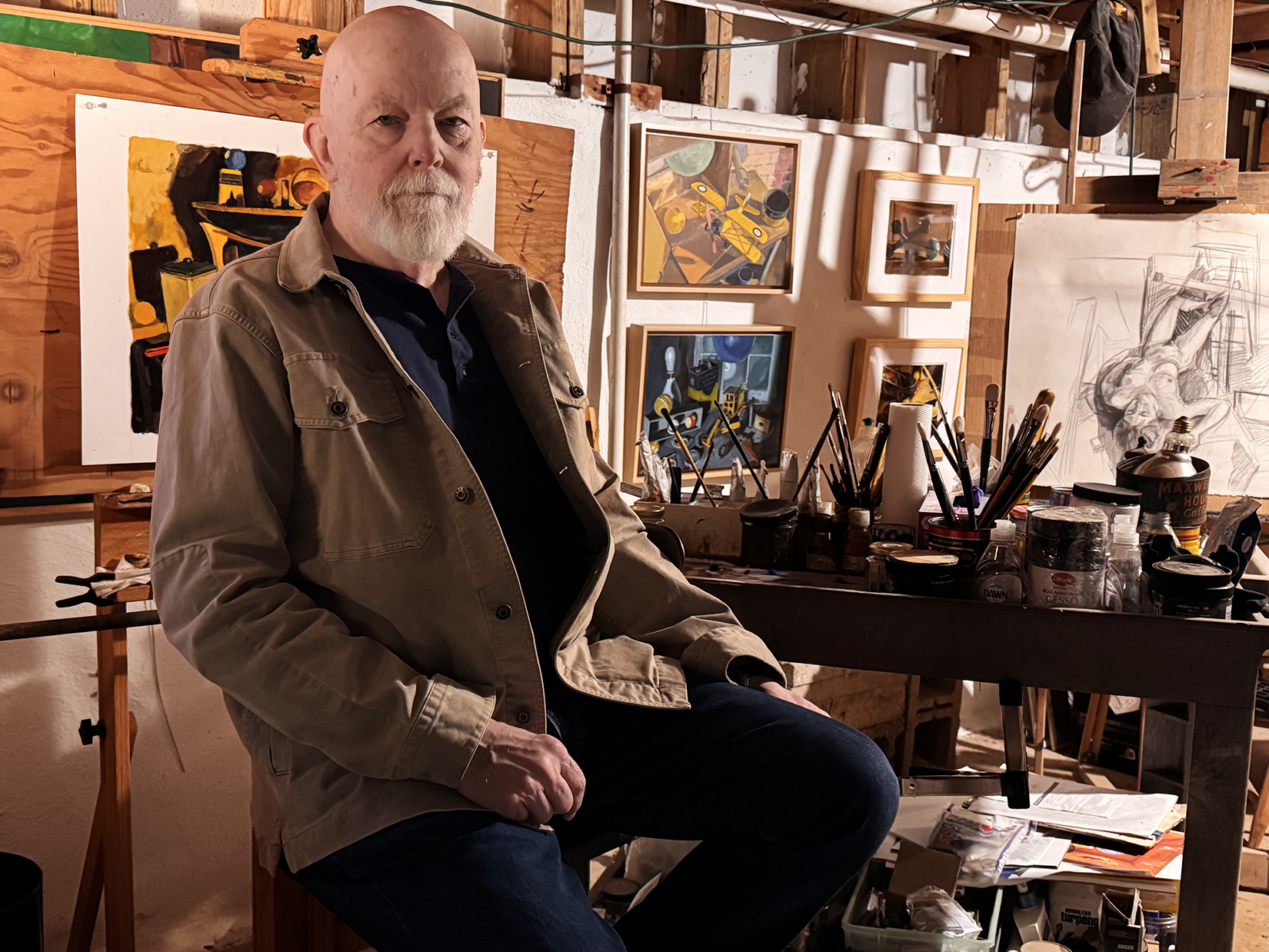
He received his BA and MFA degrees from Brooklyn College, where he studied with Philip Pearlstein, Lois Dodd, Sam Gelber, and Al Terris. He began exhibiting his work in 1975, and had his first solo exhibition in 1978 at The Sixth Estate Gallery in Brooklyn. That was followed in 1981 by a show at the Trenton City Museum at Ellarslie, in Trenton, NJ. Subsequent solo exhibitions included 1985, 1987, and 1988 at Blue Mountain Gallery, an artists’ co-op then located in SoHo in New York City. He went on to participate in numerous group and solo exhibitions in the Northeast corridor through 1992, including at the New Jersey State Museum, the Newark Museum, the Trenton City Museum at Ellarslie, the Jersey City Museum, the Hunterdon Art Museum, and at several colleges and universities. He has received several awards for his work, including a 2026 Individual Artist Fellowship award from the New Jersey State Council on the Arts.
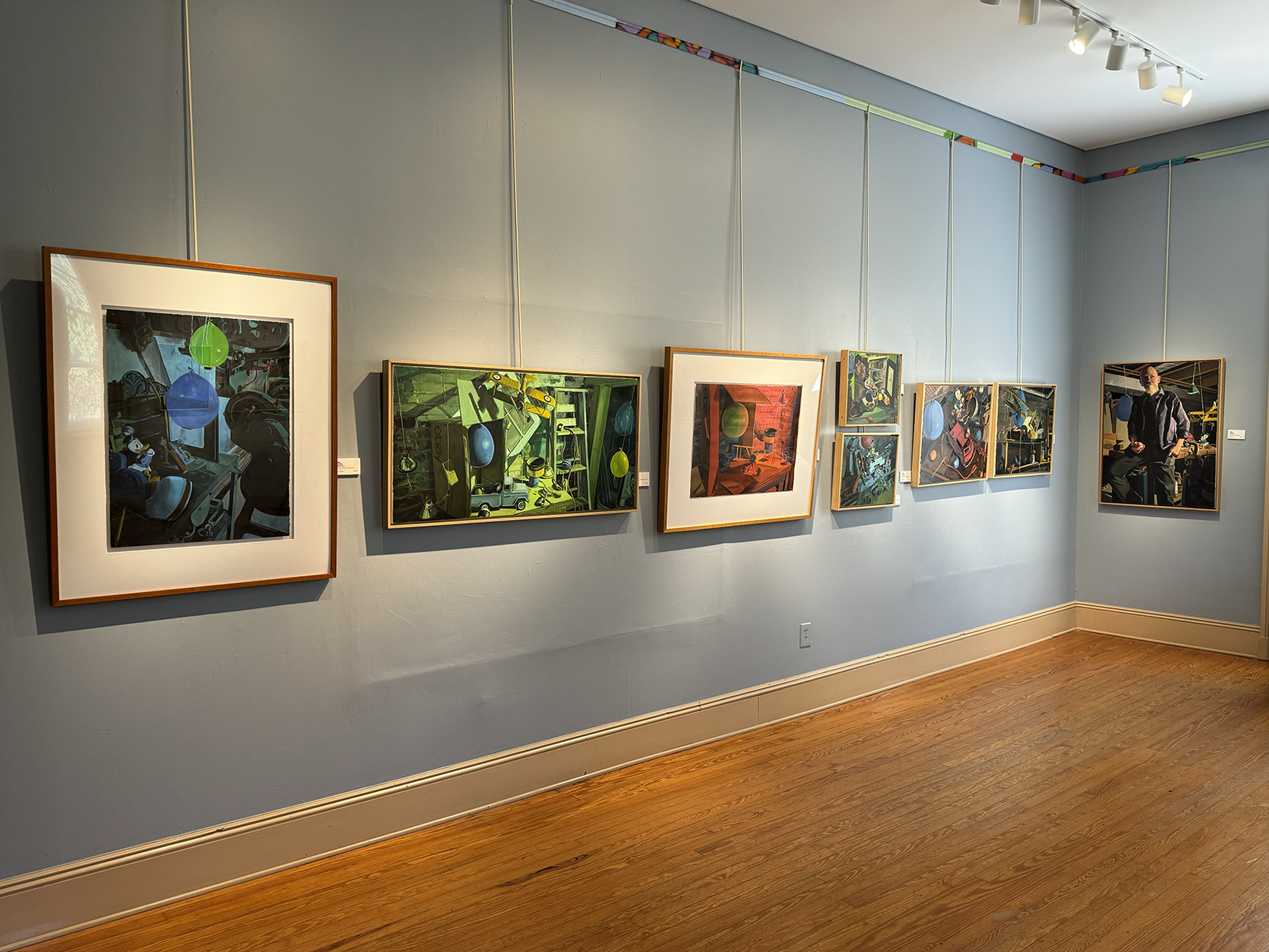
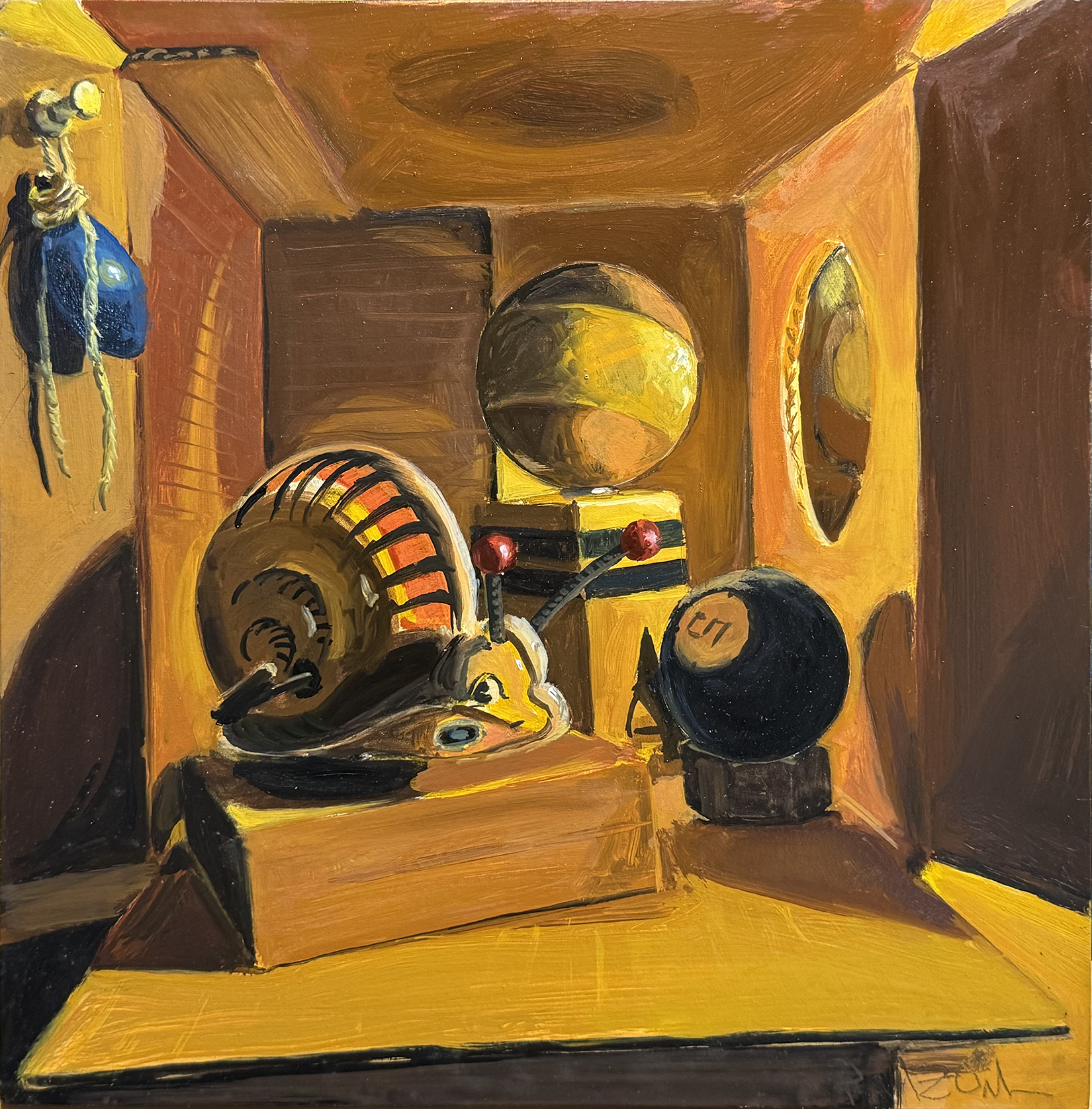
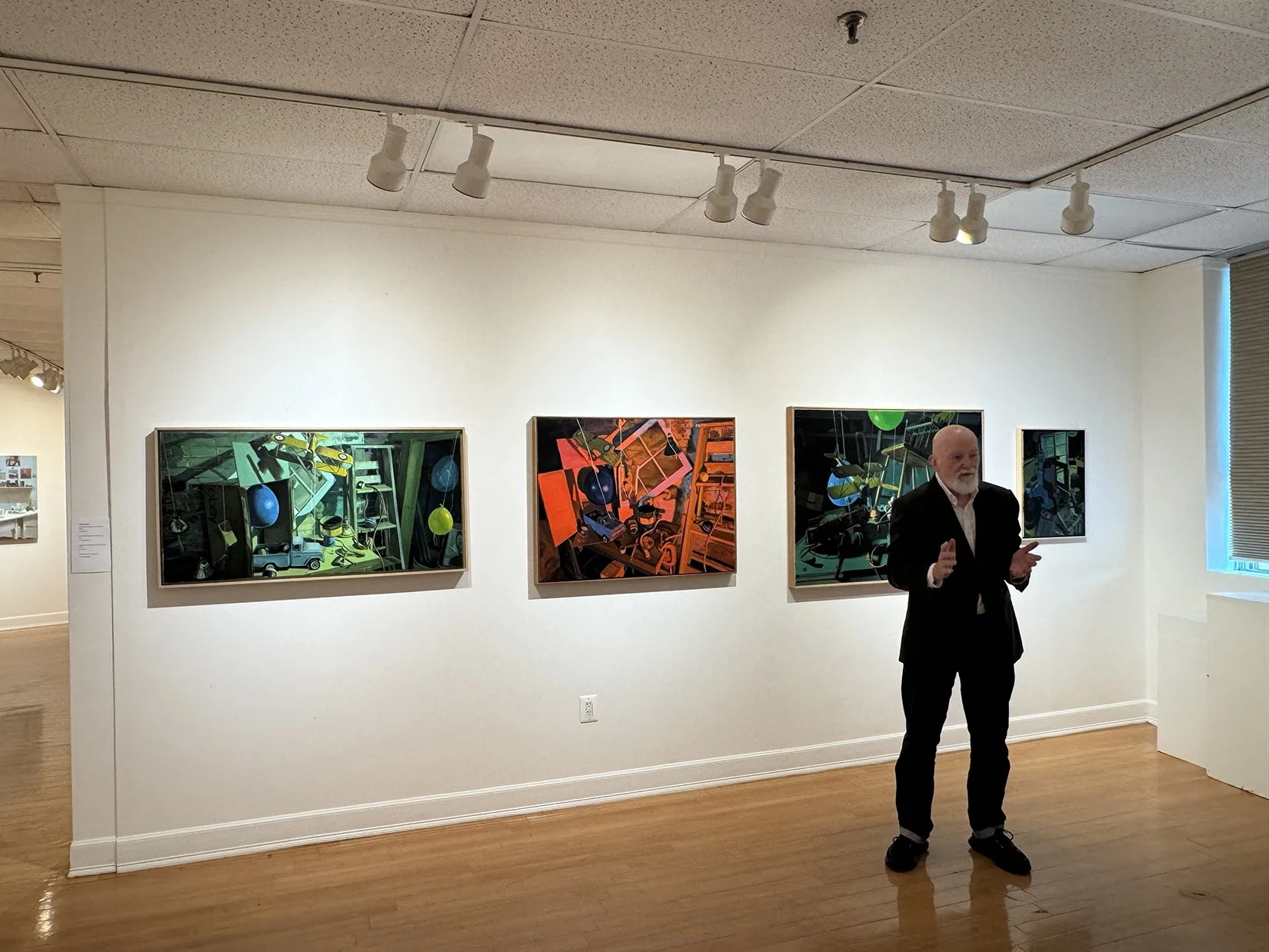
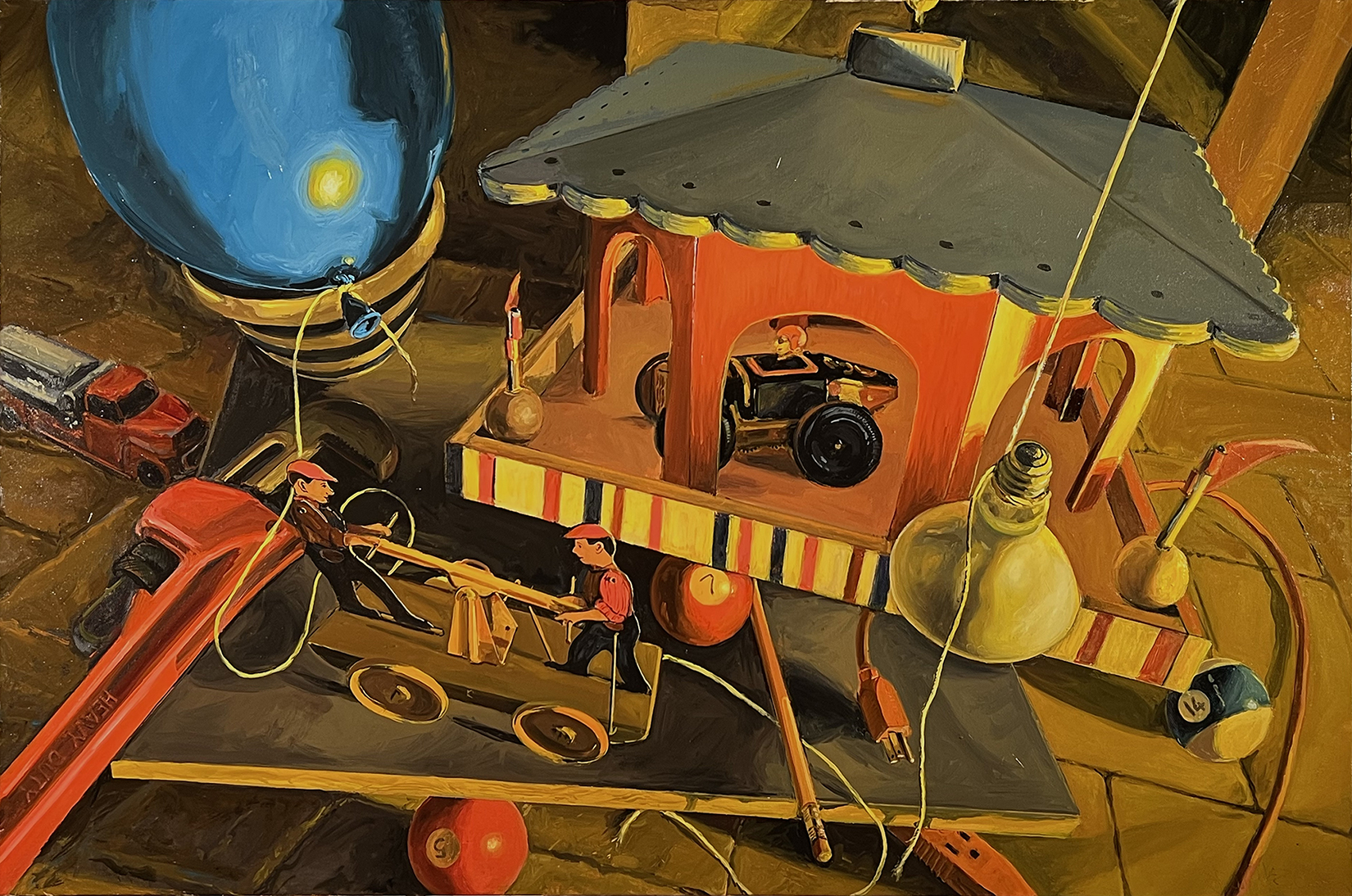
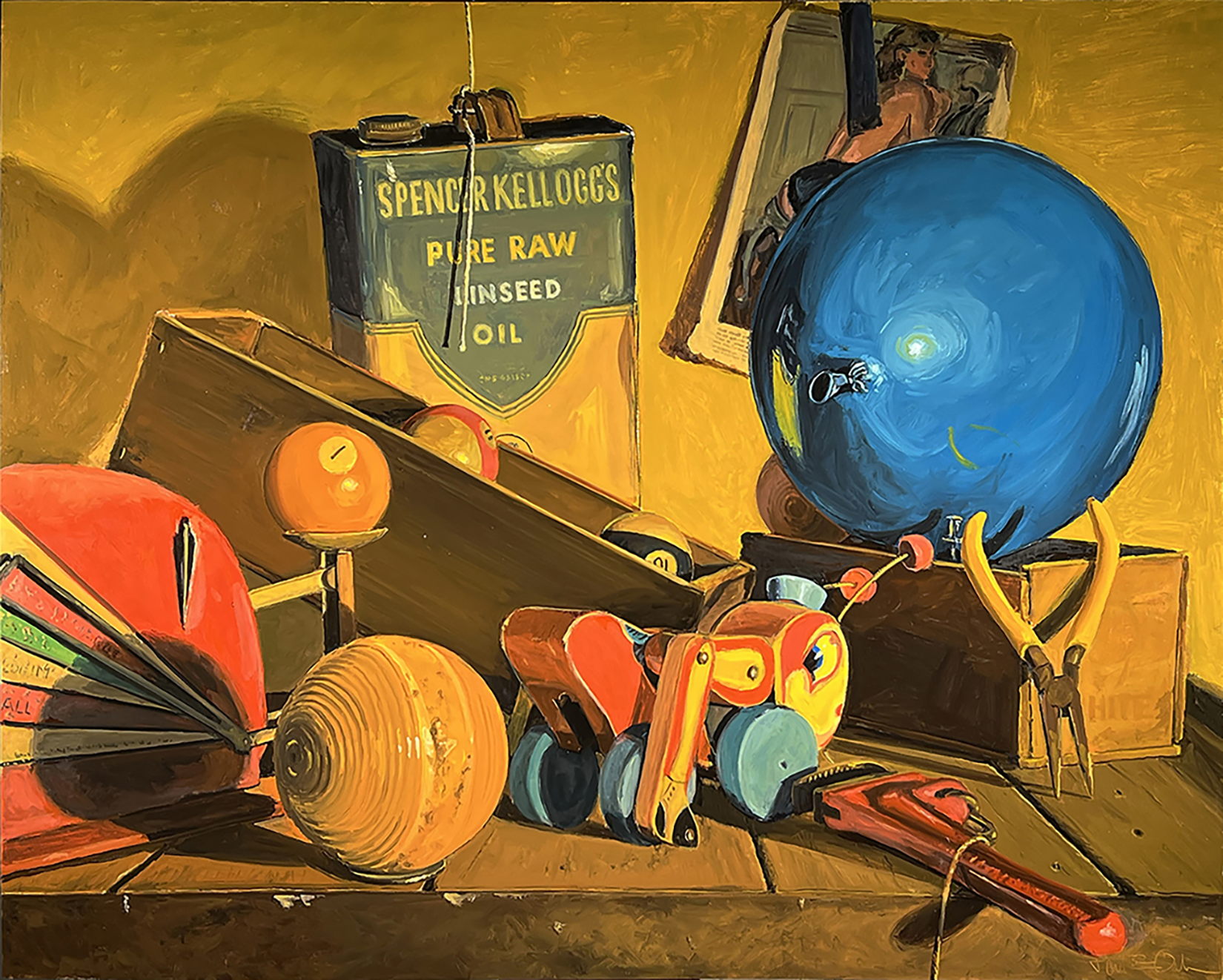
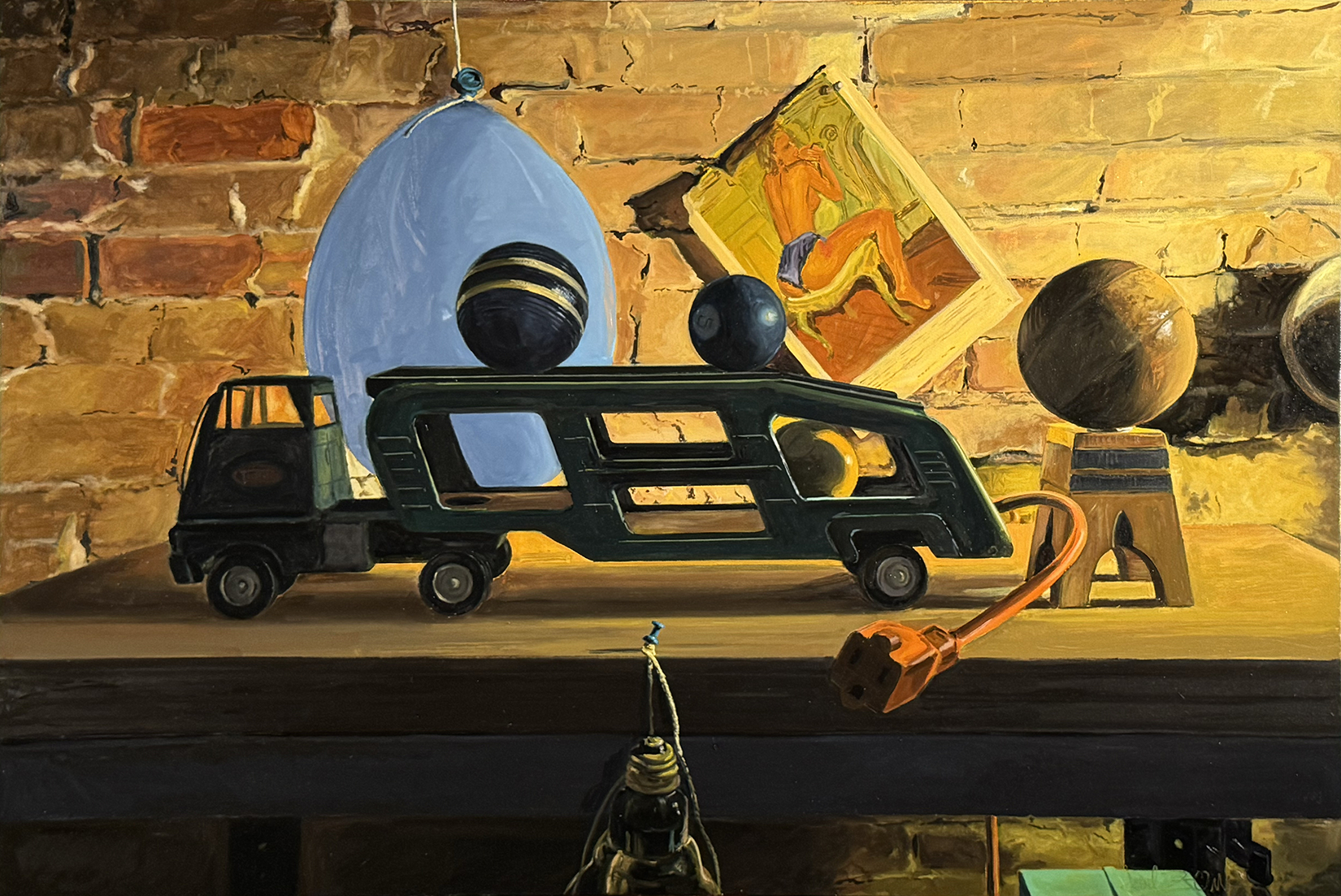
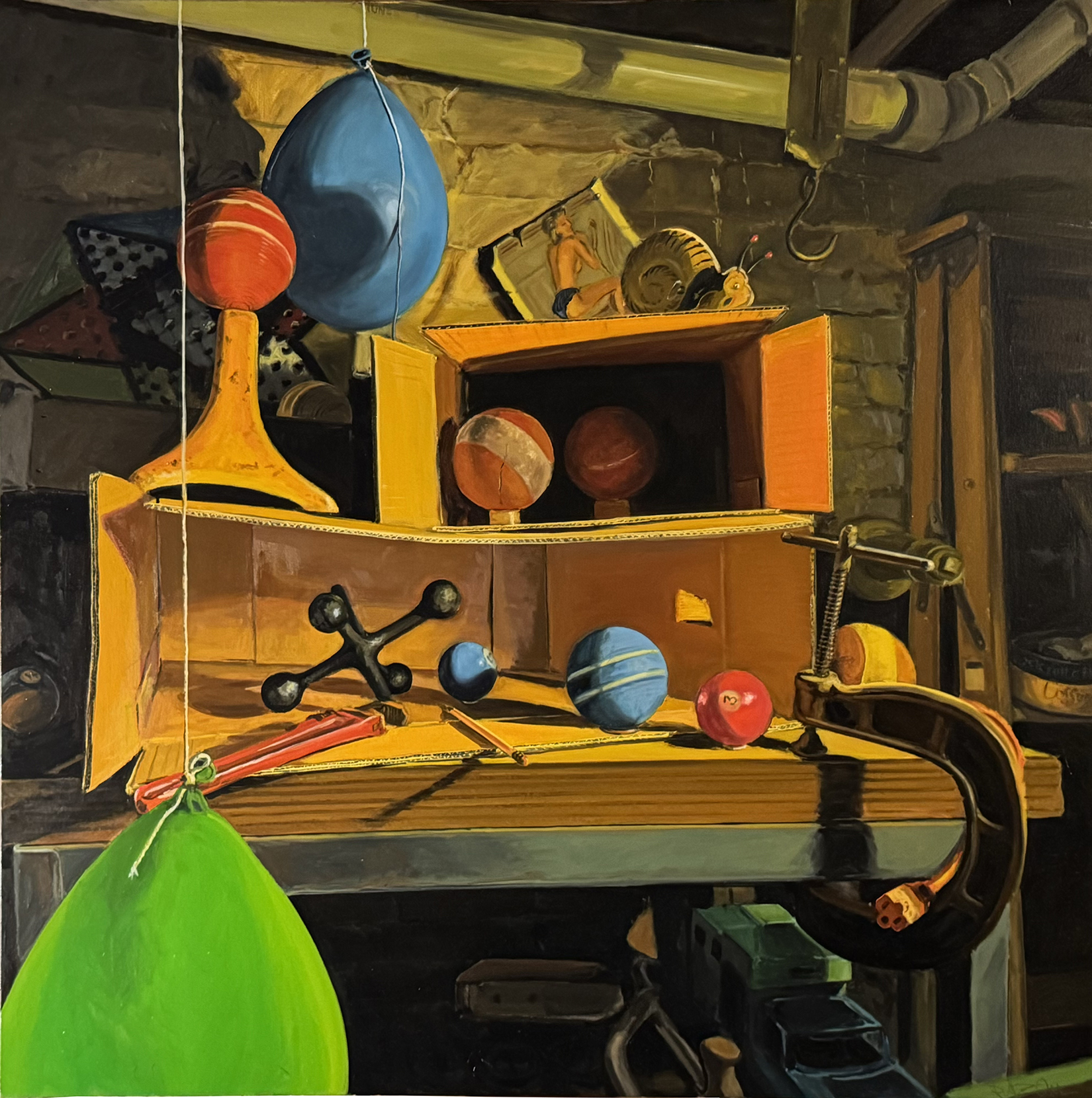
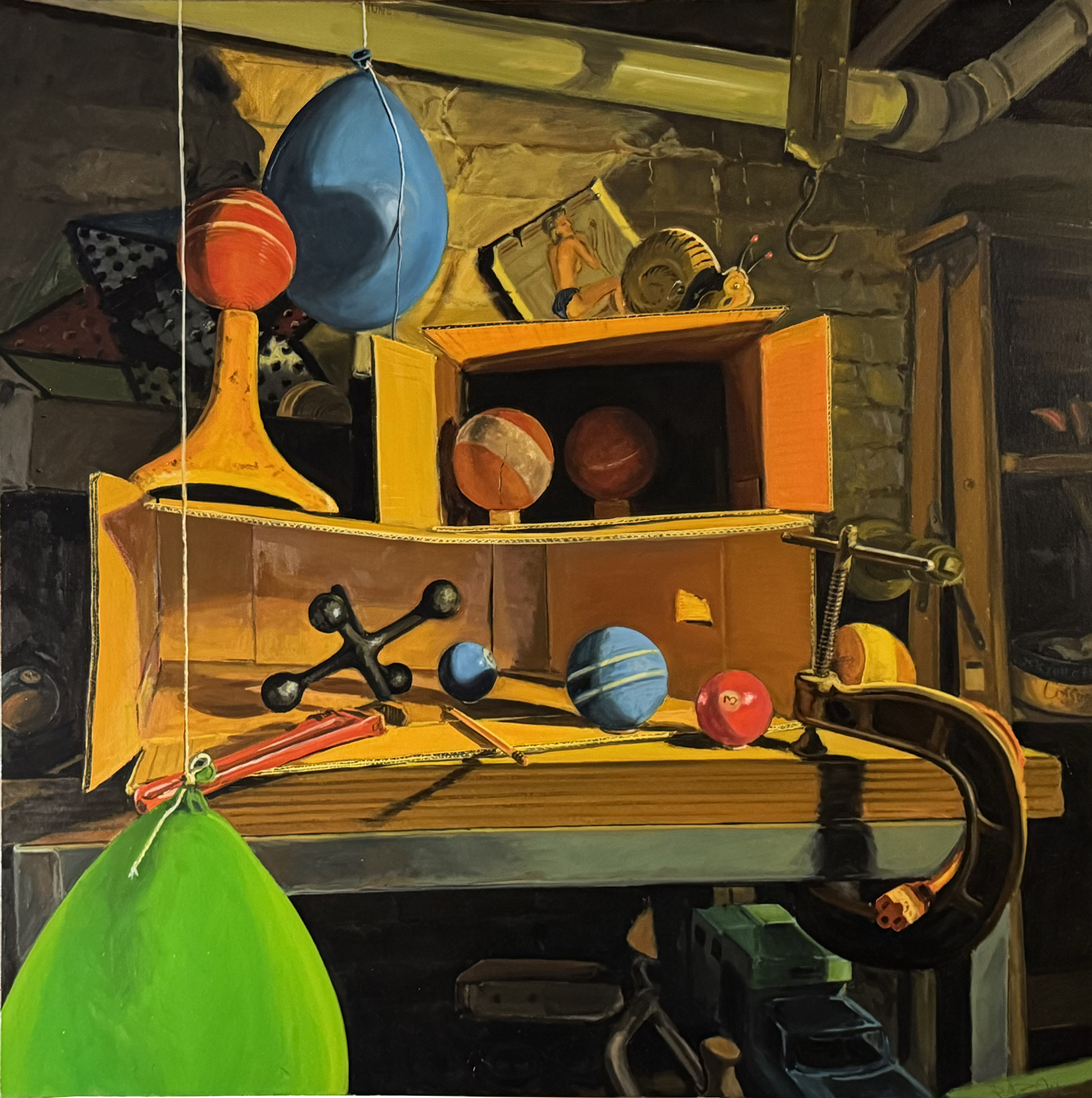
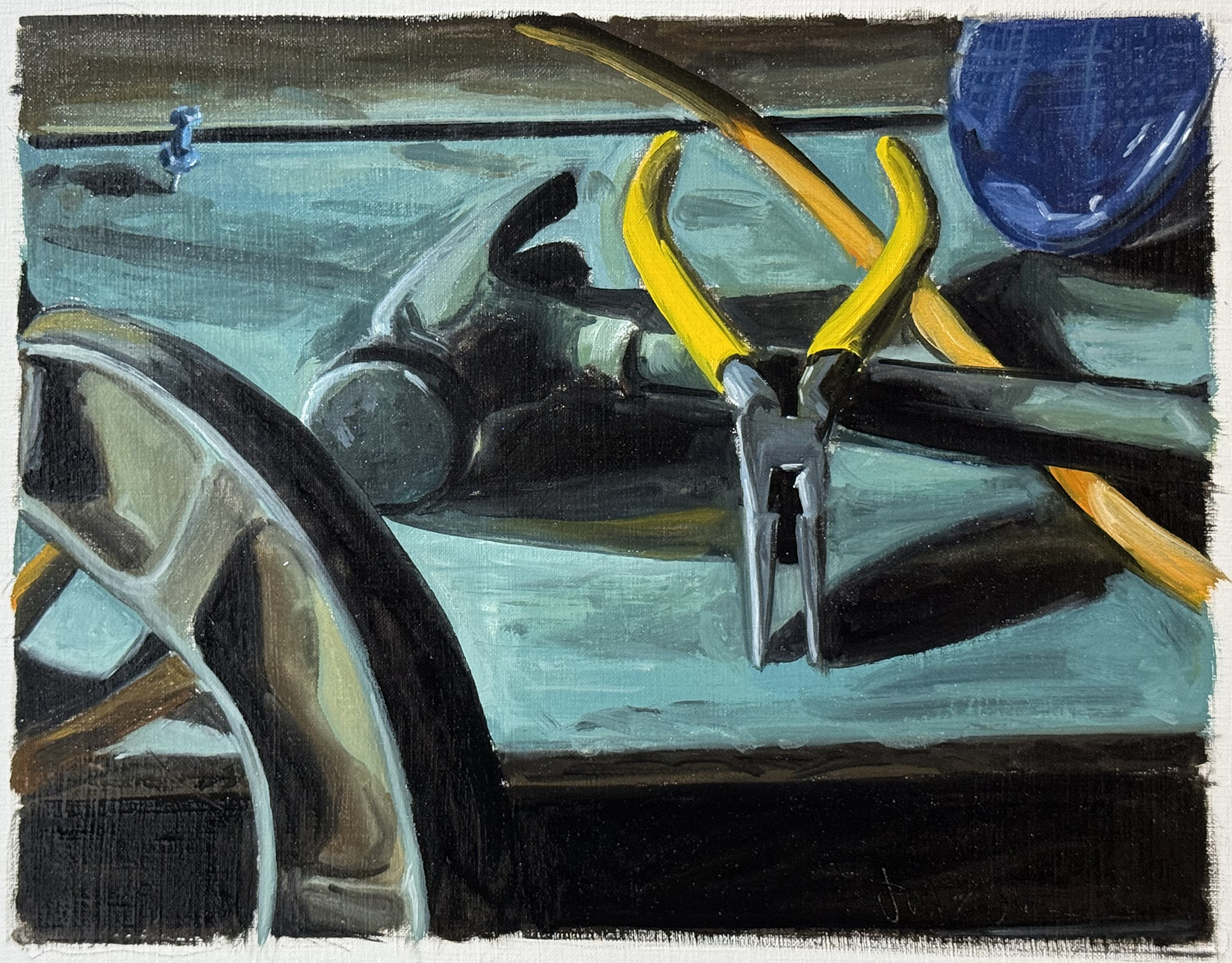
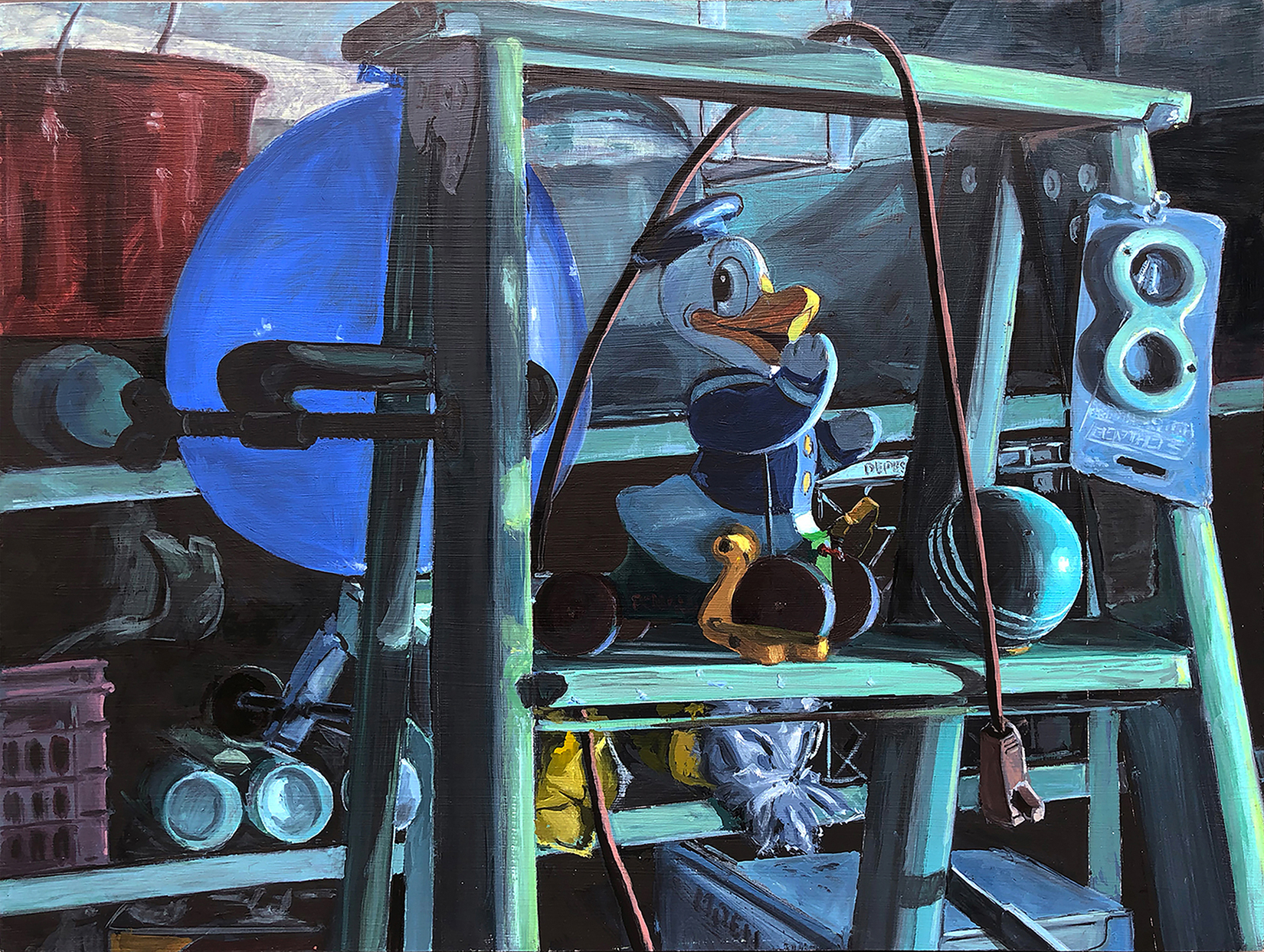
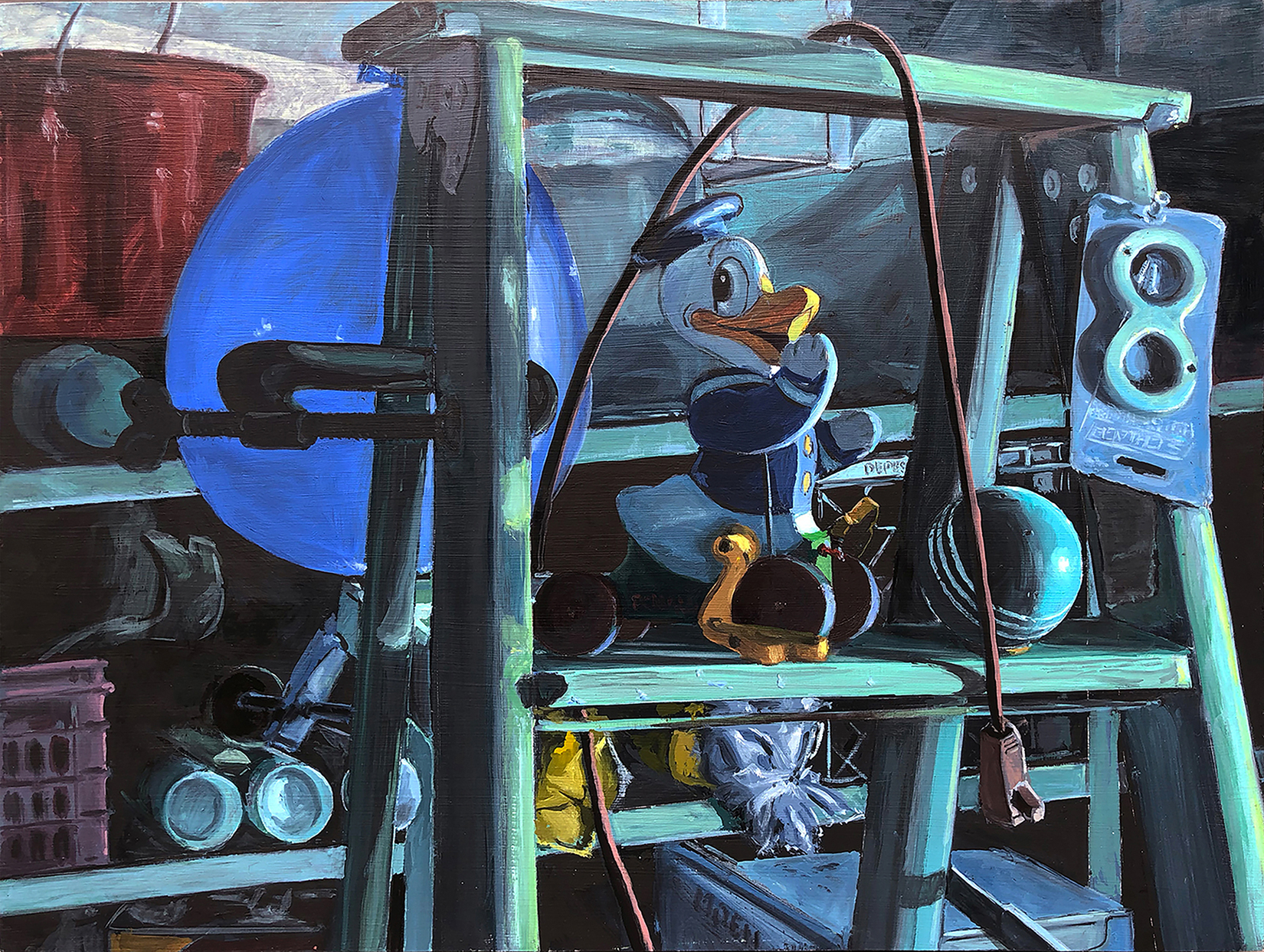
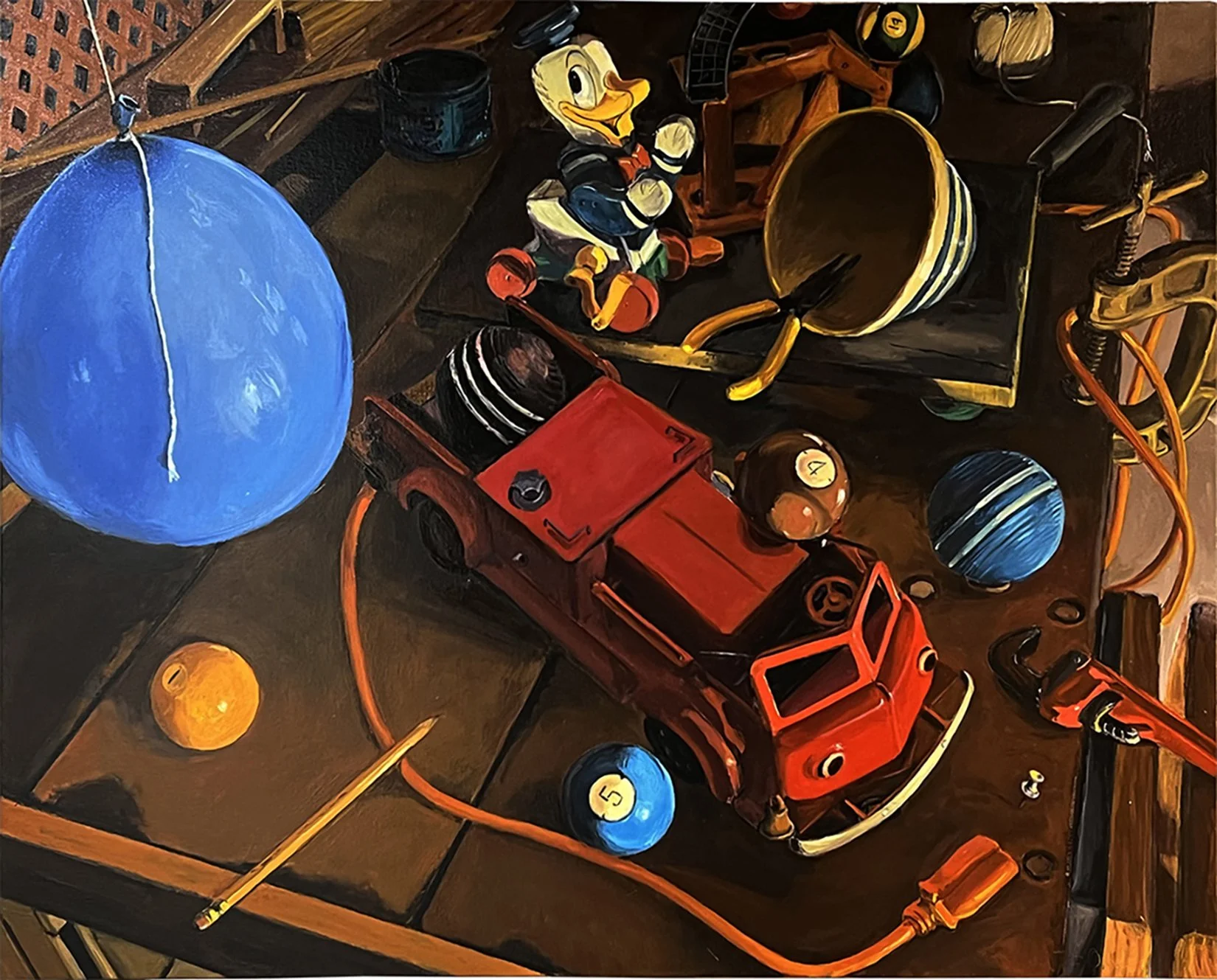
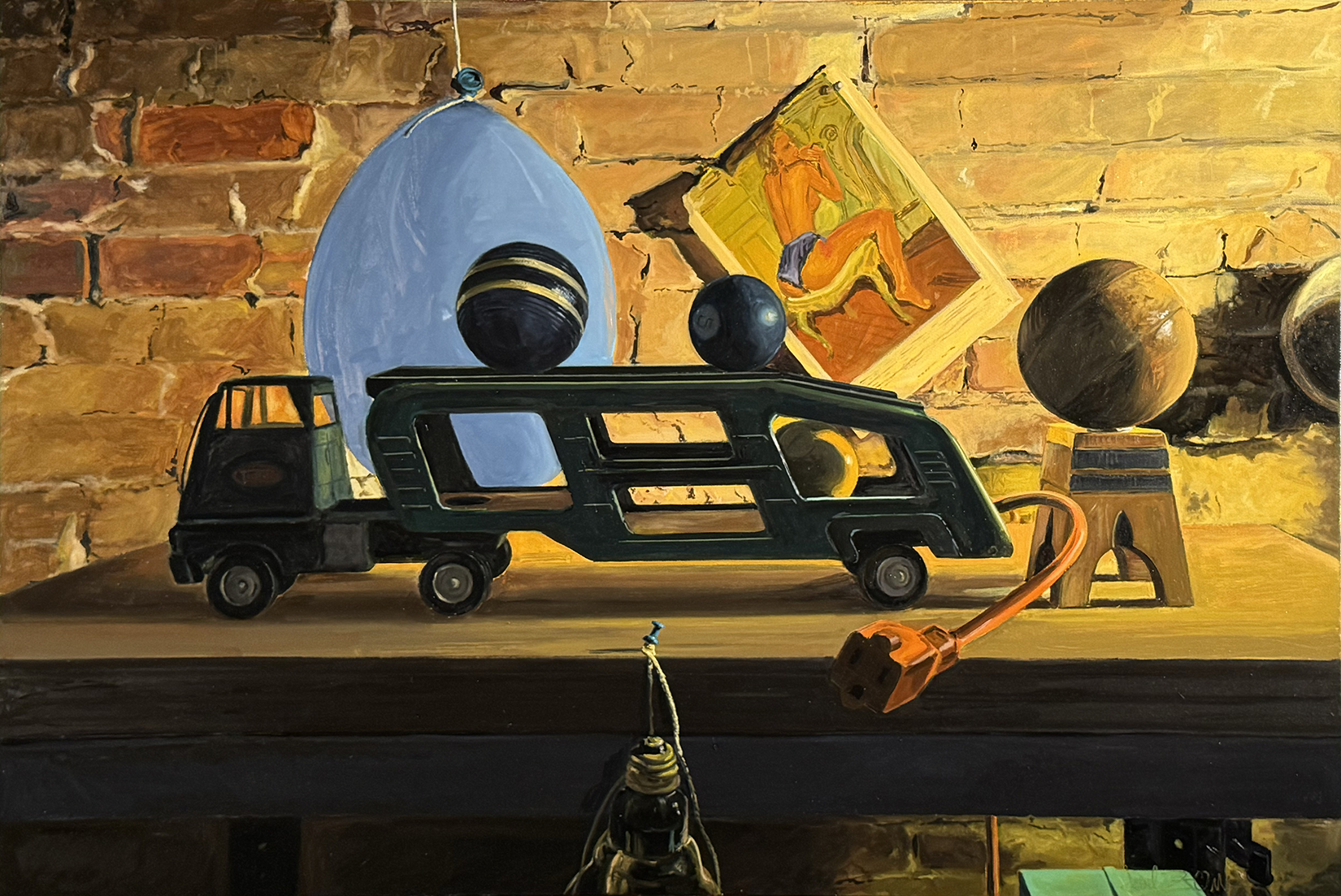
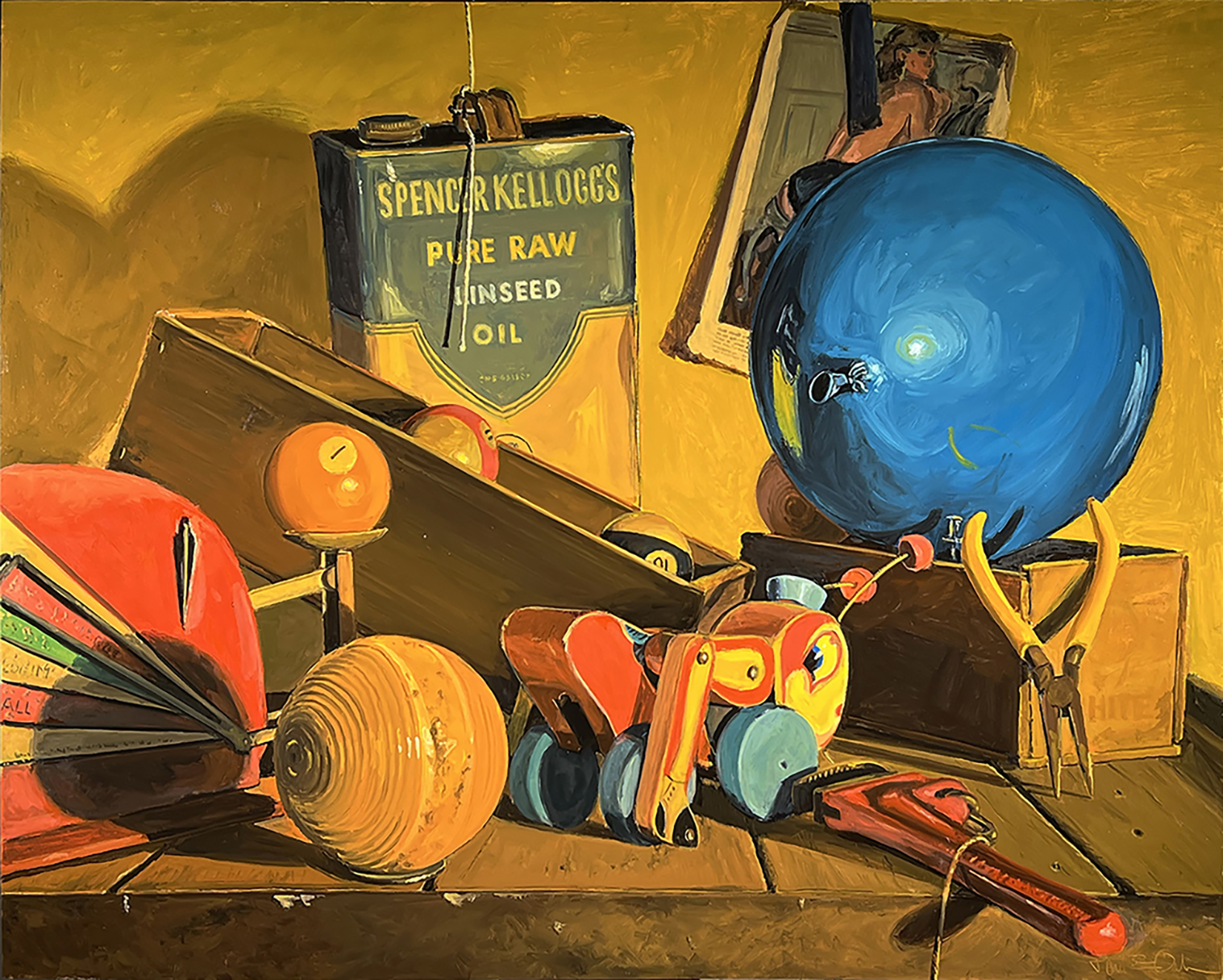
While his early work focused almost exclusively on the figure, for the last 40 years Orban has focused primarily on still life. His work combines antique toys, hand tools, and machine parts with balloons, billiard balls, croquet balls, and other unusual objects, typically in densely-packed compositions with colorful, theatrical lighting. While they are rendered realistically, there is no attempt to “fool the eye.” Rather, the physicality of the paint remains obvious, a gentle nod to his longtime appreciation for abstract expressionism. A retired B2B technology marketer, Orban is also an accomplished musician, leading The Mojo Gypsies, a blues/R&B quartet that he founded in 1998. In addition, Orban taught undergraduate-level classes for several years, at Mercer County College; Princeton Art Association; Artworks; and most recently at Rider University, where he taught advanced web and multimedia techniques. Orban works out of a small basement studio in an 18th century farmhouse just outside of Trenton, NJ, that he shares with his wife, the artist Mary Yess.
What is your background and how did you start your journey in the art world?
“My fascination with art began in grammar school, where I amused myself by drawing my own versions of popular newspaper comics. In high school, I explored photography, ceramics, and sculpture, which ultimately led me to study art in college. There, I focused on printmaking and painting and gained exposure to the contemporary New York art world. As an undergraduate, I studied with Mel Leipzig and Frank Rivera at Mercer County College, and later with Philip Pearlstein, Lois Dodd, Sam Gelber at Brooklyn College, where I completed my BFA and MFA. My early work consisted primarily of large-scale figurative paintings set in interior spaces—clearly influenced by Leipzig and Pearlstein. During graduate school, however, sculpture professor Al Terris encouraged me to develop my own voice. That guidance led me toward large-scale narrative paintings. The work became looser, more colorful, and more intellectually engaging. I created theatrical interior scenes with figures—often partially (or completely) undressed—using dramatic lighting and unusual props to suggest narratives that viewers could interpret for themselves. In 1990, after getting married, starting a family, and launching a new career, I found little time to paint. Following a 1991 solo exhibition at Rider University, I essentially stopped painting for nearly twenty years. In 2010, I was invited to participate in Blue Mountain Gallery’s 30th Anniversary exhibition in New York City. Without any recent work to show, I took the invitation as motivation to return to the studio. Fortunately, the process felt like riding a bike—I picked up right where I had left off and felt reenergized to create a new body of work. Without access to a formal studio, I began working in a portion of the basement of my 18th-century farmhouse. The limited space led me to shift from figurative work to still life—a direction I had explored briefly in the late 1980s. The house contained a trove of antique toys, tools, and machinery, which became the foundation of my compositions. Over time, I added more unusual objects, using colorful theatrical lighting to heighten visual interest and reinforce the illusion of space.”
What inspires you?
“Before focusing exclusively on painting, I worked as a designer, creating everything from corporate identity systems and fine china to brochures, catalogs, websites, and interactive media. My life has always revolved around visual design. Inspiration comes from everywhere—books, film, television, nature, and, of course, other artists. I often revisit works that moved me in the past and look at them with fresh eyes. I also pay close attention to emerging artists who are pushing boundaries, constantly considering how new ideas might inform and challenge my own work.”
What themes do you pursue? Is there an underlying message in your work?
“In a world shaped by rapid technological change and high-gloss consumerism, my paintings invite reflection on the everyday objects that quietly shape our lives. Antique tools and toys serve not only as compositional elements, but as markers of time—objects that existed long before me and will endure long after. I often imagine their histories: Who used them? For what purpose? Was it a toy cherished by a child in the 1930s? A tool used to build something meaningful for a family? These imagined narratives influence both my collecting and my arrangements. Ultimately, the work encourages viewers to reflect on continuity, memory, and their own place within the larger passage of time.”
How would you describe your work?
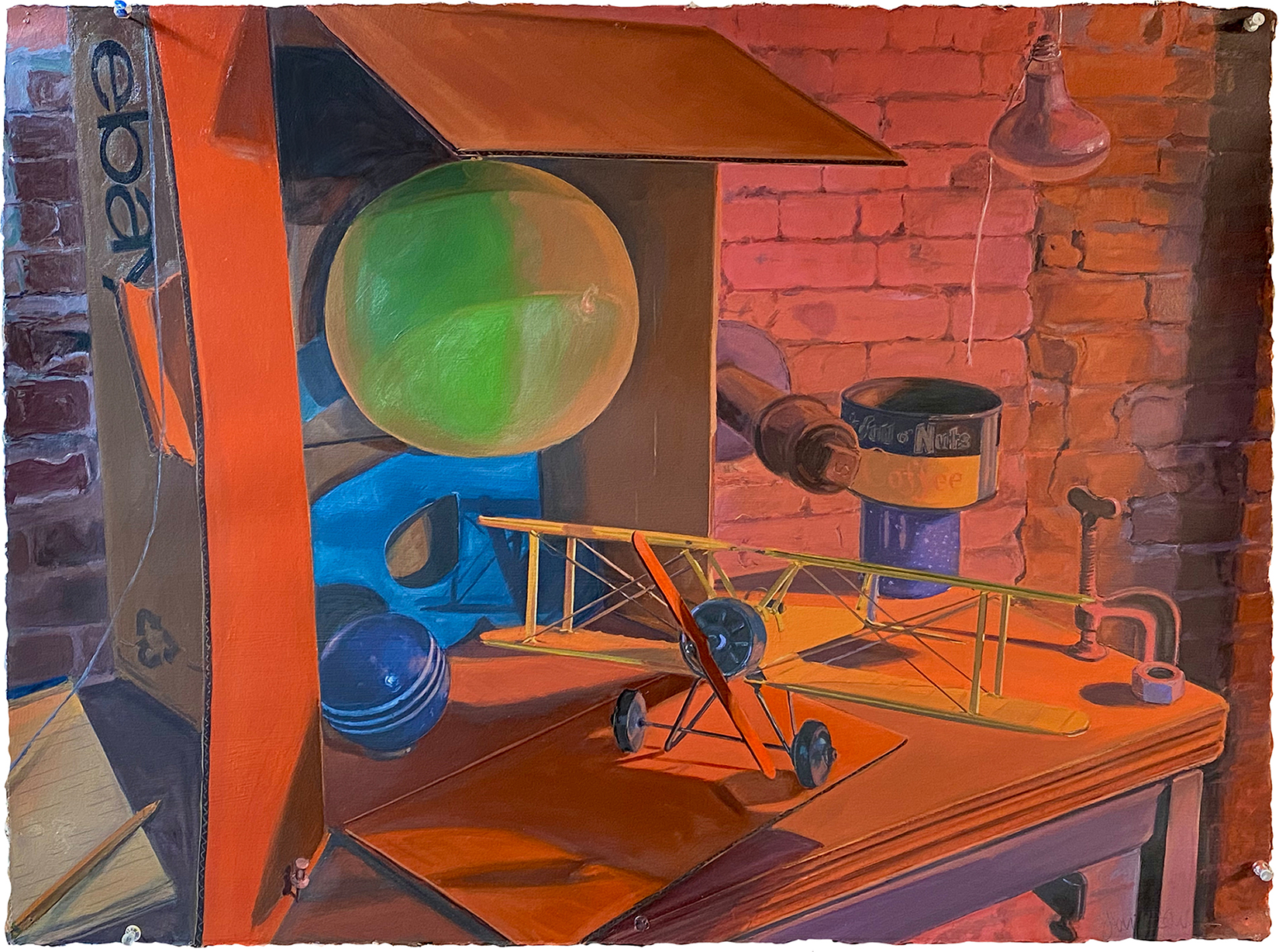
“I describe my work as ‘painterly realism.’ Intense, colored lighting transforms familiar objects into something heightened and slightly theatrical. My compositions are often dense and active, sometimes suggesting movement beyond the picture plane—a subtle nod to my longstanding admiration for Abstract Expressionists. While the paintings are representational, I strive to balance realism with visible process. From a distance, they may appear almost photographic. Up close, however, the brushwork and physicality of the paint become evident. Unlike my earlier figurative work, these paintings do not suggest a specific narrative; they allow viewers to engage on their own terms.”
Which artists influence you most?
“I’ve been fortunate to study with remarkable teachers, including Mel Leipzig, Frank Rivera, Philip Pearlstein, Lois Dodd, and Al Terris. Beyond them, my influences are eclectic: Abstract Expressionists such as de Kooning, Pollock, and Still, along with painters including Jerome Witkin, Neil Welliver, Fairfield Porter, Joan Mitchell, Perle Fine, William Bailey, Philip Guston, Richard Diebenkorn, Eric Fischl, Andrew Wyeth, Altoon Sultan, Gisela McDaniel, Lucian Freud, Genieve Figgis, and many others. Each resonates with me for different reasons, and all continue to shape how I approach my own work.”
What is your creative process like?
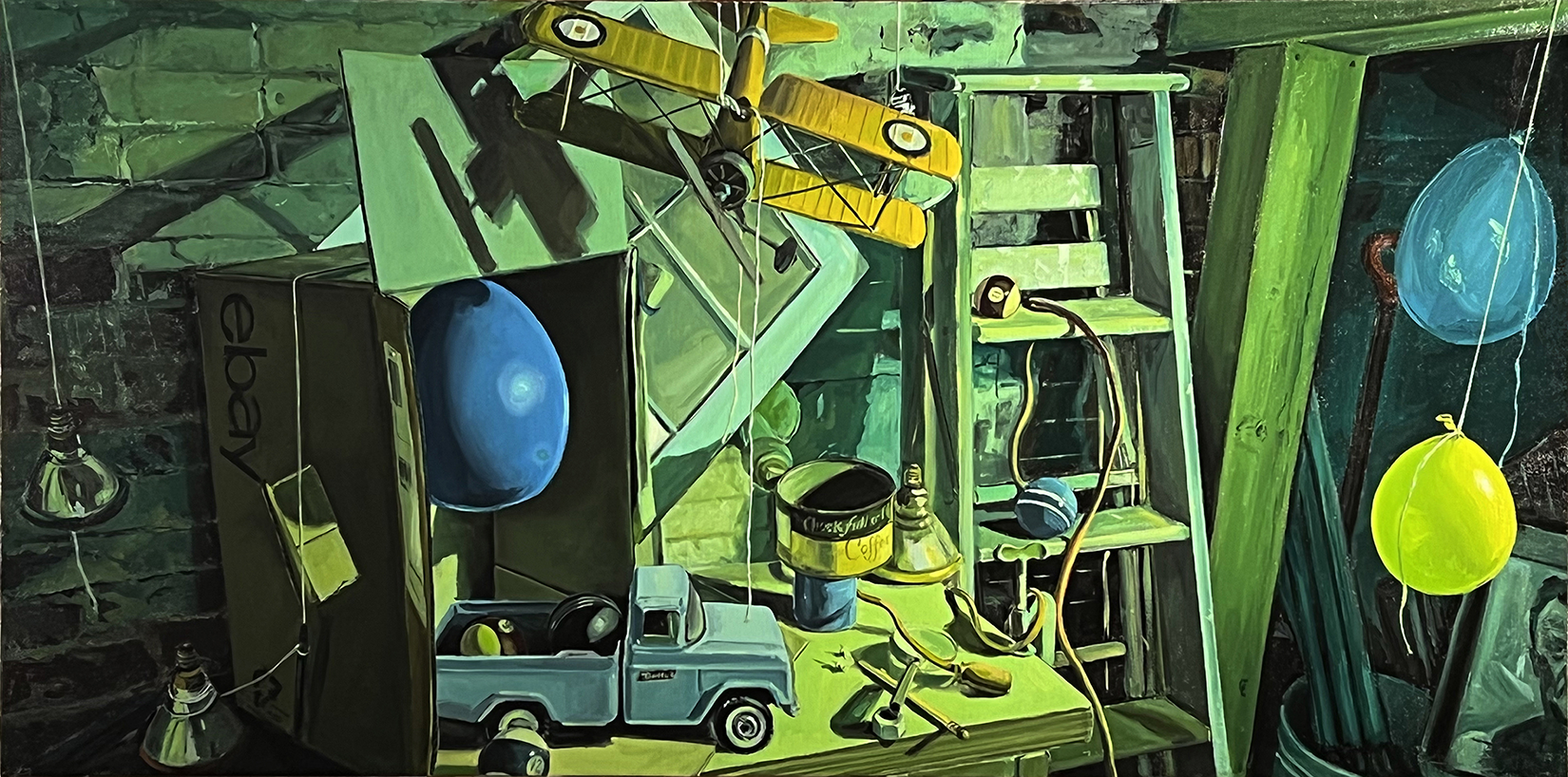
“I’m always thinking about painting—even during the two decades when I wasn’t actively making work. I often dream about discovering long-forgotten unfinished paintings waiting to be completed. Over the years, I’ve built a collection of antique toys and unusual tools that I store until a compelling composition presents itself. Once it does, I spend significant time arranging and rearranging objects, considering their shapes, colors, and spatial relationships. Many compositions are densely packed to keep the viewer’s eye moving across the canvas. Balloons frequently appear in my work, introducing complementary or unexpected color. Occasionally, I incorporate a heavy-duty orange extension cord, using its strong linear presence to guide the eye. Lighting is crucial: I carefully determine both its color and direction, adjusting until the atmosphere feels right. After finalizing the arrangement, I transfer it to canvas, prepared paper, or cradled wood panel. I begin with a thinned black underpainting, using a medium filbert brush and treating the stage like a tonal wash drawing. Once dry, I introduce color—some passages painted alla prima, others built up slowly in layers.”
What is an artist’s role in society and how do you see that evolving?
“The arts—visual, musical, literary, cinematic, and performing—anchor us in a world often marked by turmoil. They provide escape, insight, challenge, and connection. For those of us compelled to create, art is not optional; it is essential. Without the arts, life would be stripped of emotional depth, cultural identity, and creative expression. It would be unimaginably diminished.”
Have you had any noteworthy exhibitions you'd like to share?
“One of the first major exhibitions I remember seeing was the 1975 Whitney Biennial. My professor Frank Rivera had a piece included, and he brought our class to see the show. It was my first true immersion in the breadth of contemporary art and profoundly shaped my understanding of what art could be. Now, more than fifty years into my artistic journey, I remain fascinated by the discoveries each new painting offers. Those discoveries continue to keep the work fresh and meaningful for me.”
Website: www.davidzorban.net
Instagram: @davidzorban