
Interview
Dasha Wesel
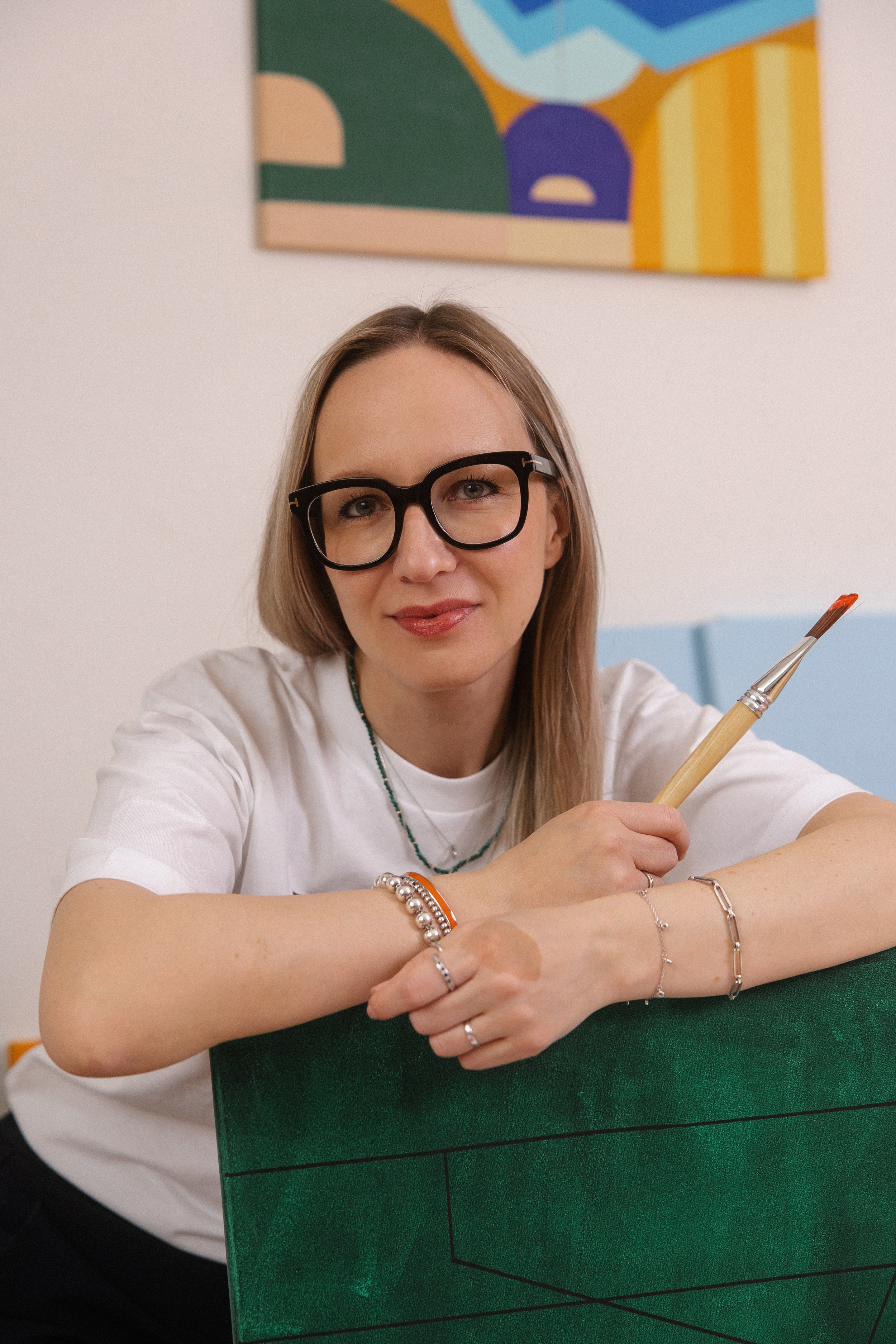
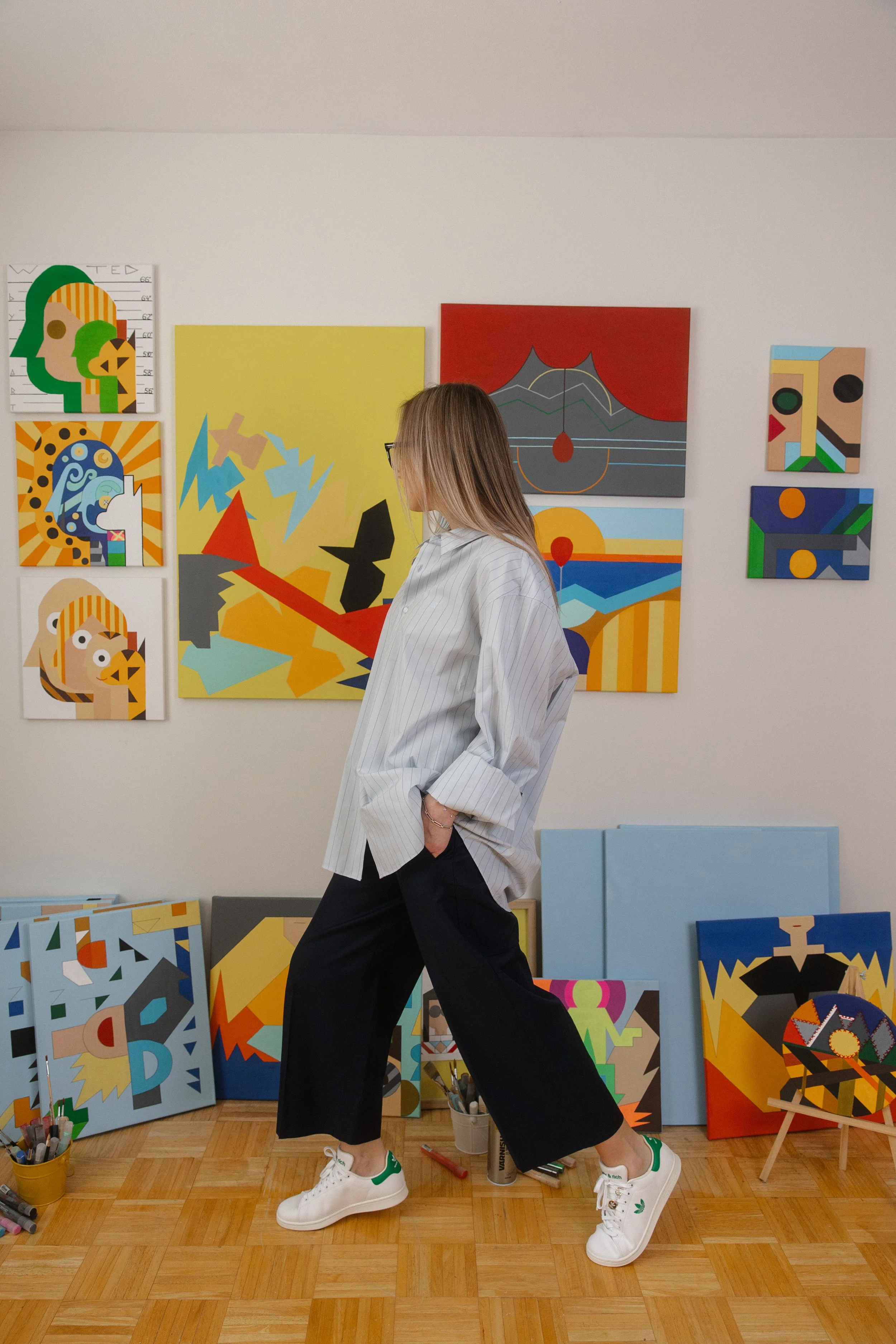
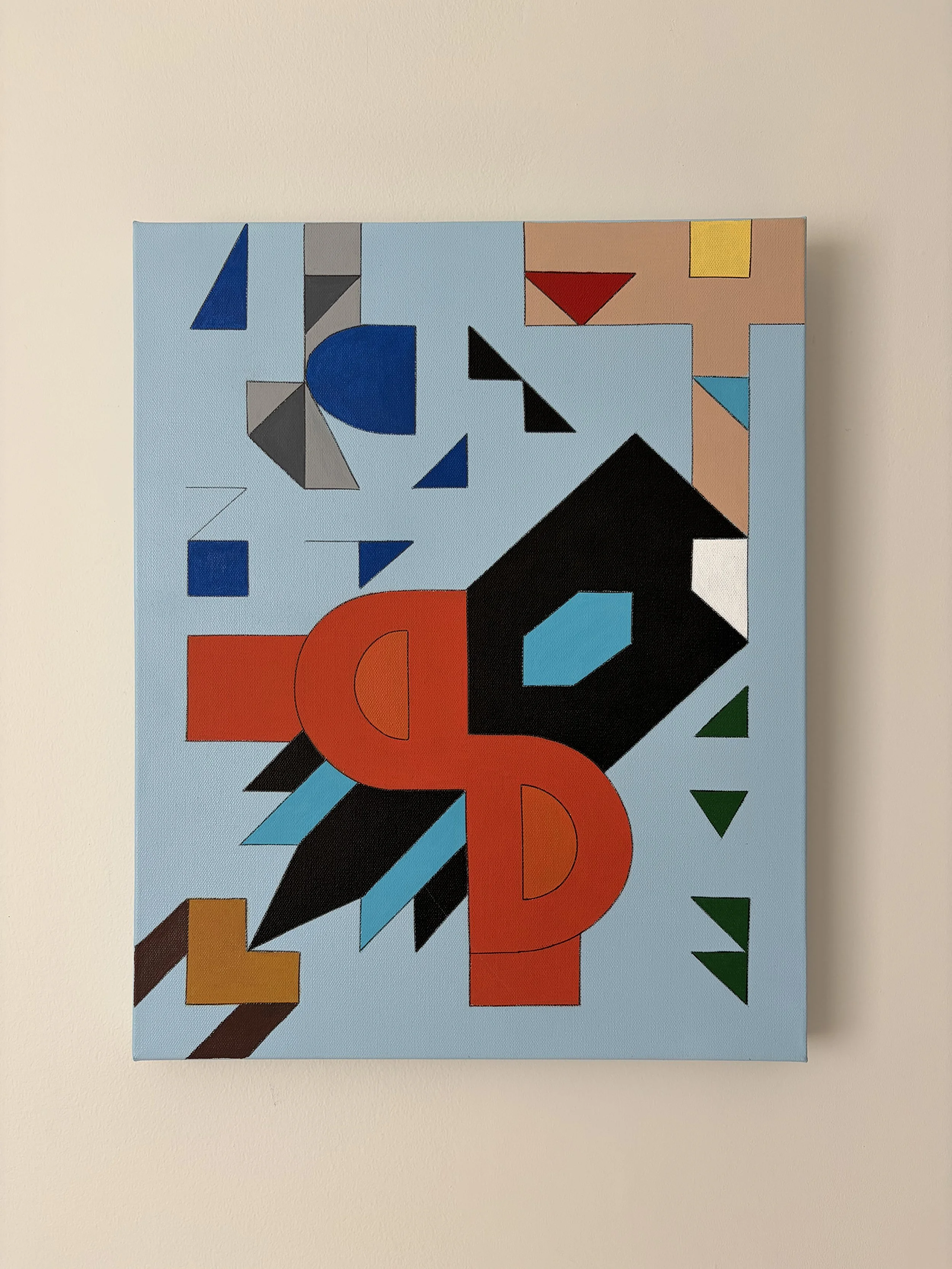
Dasha Wesel is a Philadelphia-based visual artist whose background in engineering shapes her precise, geometry-driven practice. Combining technical structure with a vibrant use of colour, she creates works that begin with a single drawing and evolve into layered series. Working primarily in drawing, Wesel develops puzzle-like compositions that balance order and expression. Her process transforms structured lines into immersive visual systems, inviting viewers to navigate each piece and discover their own interpretations. Her work has been exhibited at NoName Gallery in Philadelphia and Perseus Gallery in SoHo, New York, marking her growing presence in contemporary art spaces.
What is your background and how did you start your journey in the art world?
“I am primarily self-taught, though art has been the heartbeat of my life since childhood. I grew up in Smorgon, Belarus, in an environment that balanced the discipline of music school with the creative, free-flowing influence of my mother, who was an artist herself. She was my mentor and best friend; she saw my potential before I did. When she passed away when I was 17, I took a practical turn and studied engineering. For a long time, art stayed in the background, but my technical training, which encompassed drawing lines and structures with utmost precision, eventually became my artistic language. My ‘official’ entry into the art world actually started with a gift for my son. I drew a geometric ‘technical puzzle’ of a giraffe for him to color. Experimenting with that one drawing led to four different versions, and three years later, those kitchen-table sketches were hanging in a gallery in SoHo.”
What inspires you?
“Inspiration, for me, is a bridge between the past and the present. I am often inspired by my personal history and my own background in technical drawing. On a daily basis, my family is my greatest muse. My husband’s unwavering support and my son’s ‘fresh eyes’ keep me grounded. I’m also fueled by music; I can’t work without it. We have a rule in our house: ‘Do you hear music? Dance.’ That energy of creating your own mood, even during dark times, is exactly what drives me to the canvas.”
What themes do you pursue? Is there an underlying message in your work?
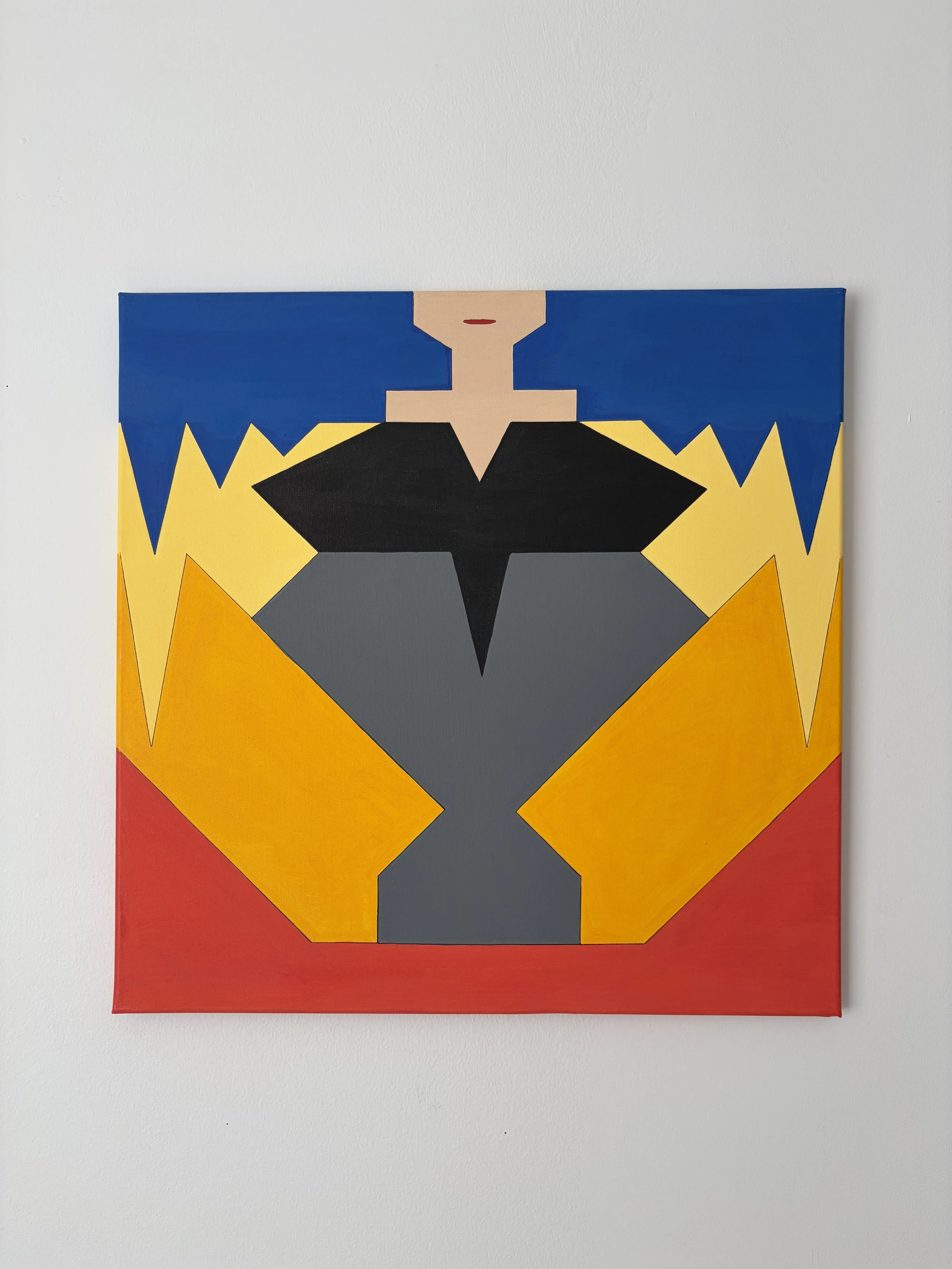
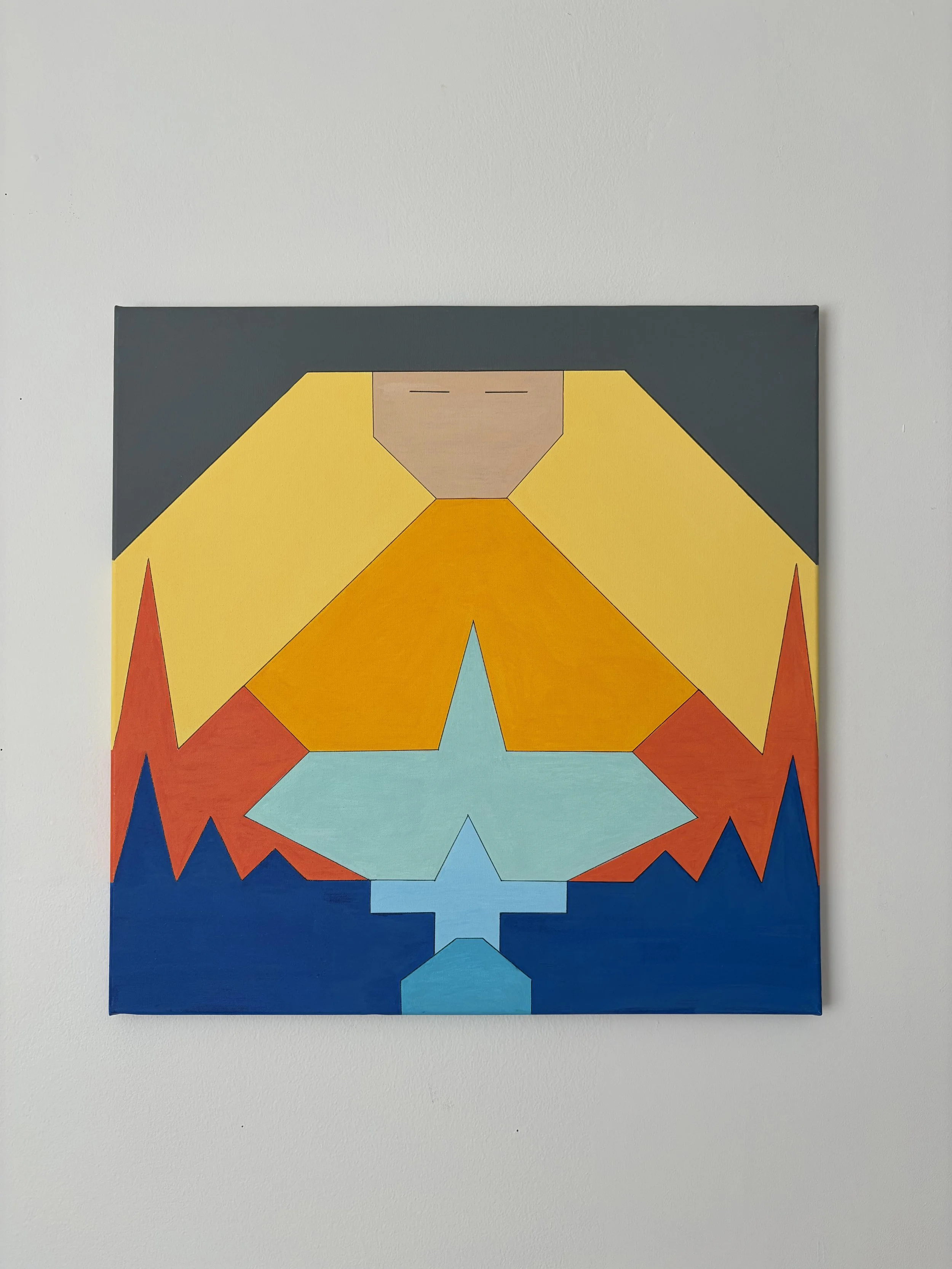
“I pursue themes of transformation and resilience. My work often explores how we try to maintain peace and personal choice amidst total chaos, a theme I’m currently exploring in my series ‘Big Brother is watching everyone.’ The underlying message is that we are the authors of our own vibrancy. Life can start as a rigid, black-and-white ‘technical drawing,’ but we have the power to choose our colors. I want to help people who feel stuck in a ‘grey’ moment realize that they can adjust the emotional tone of their own story.”
How would you describe your work?
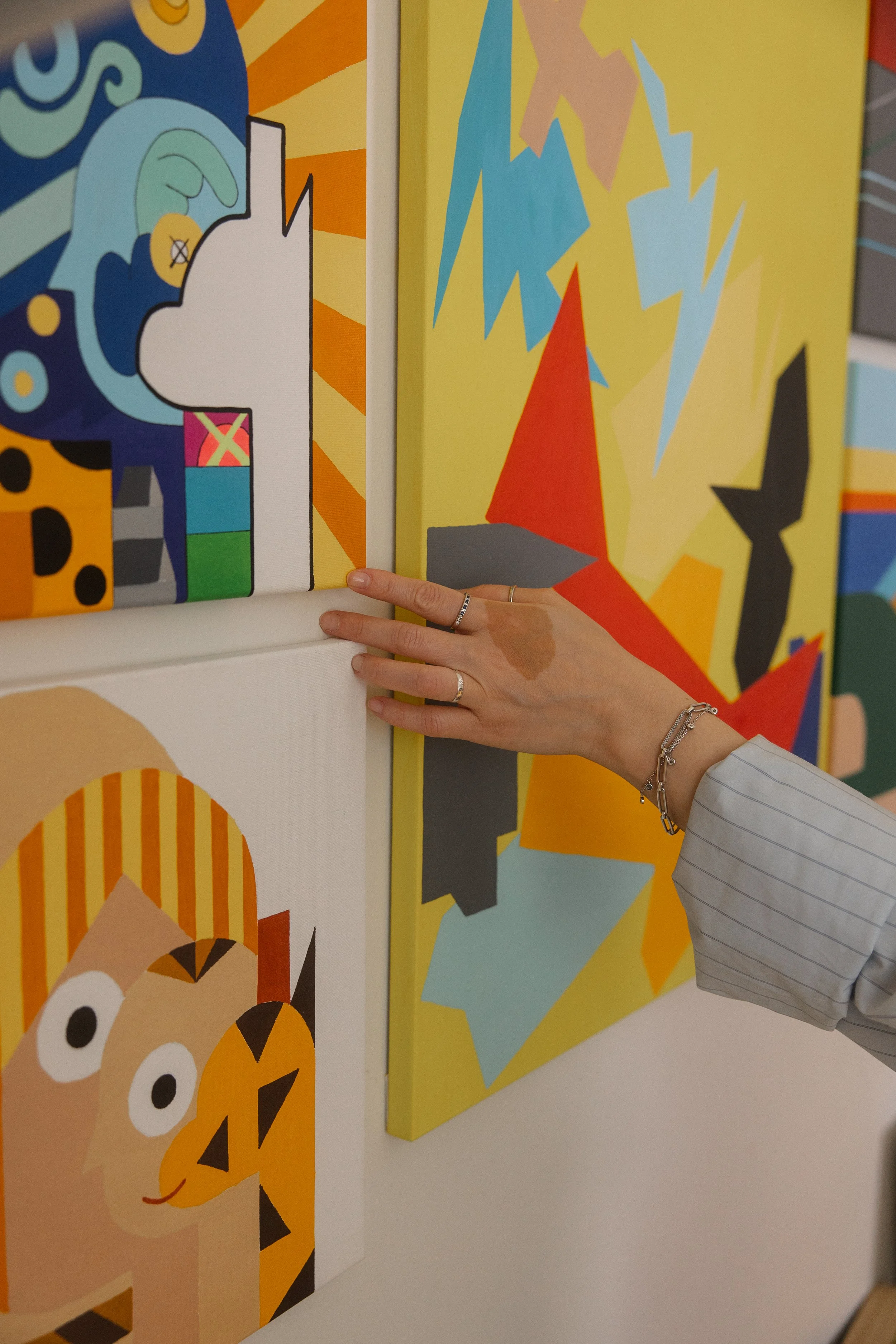
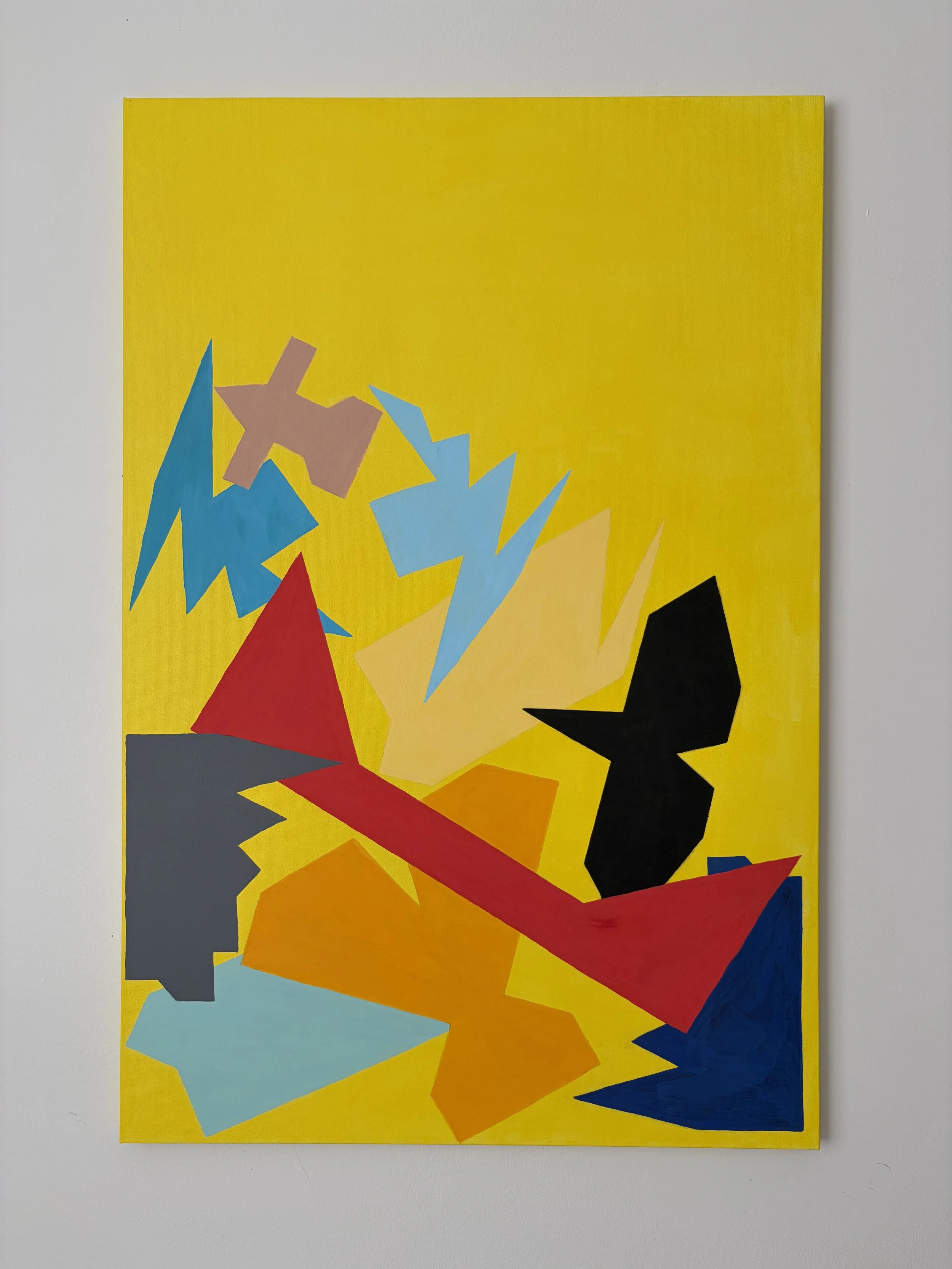
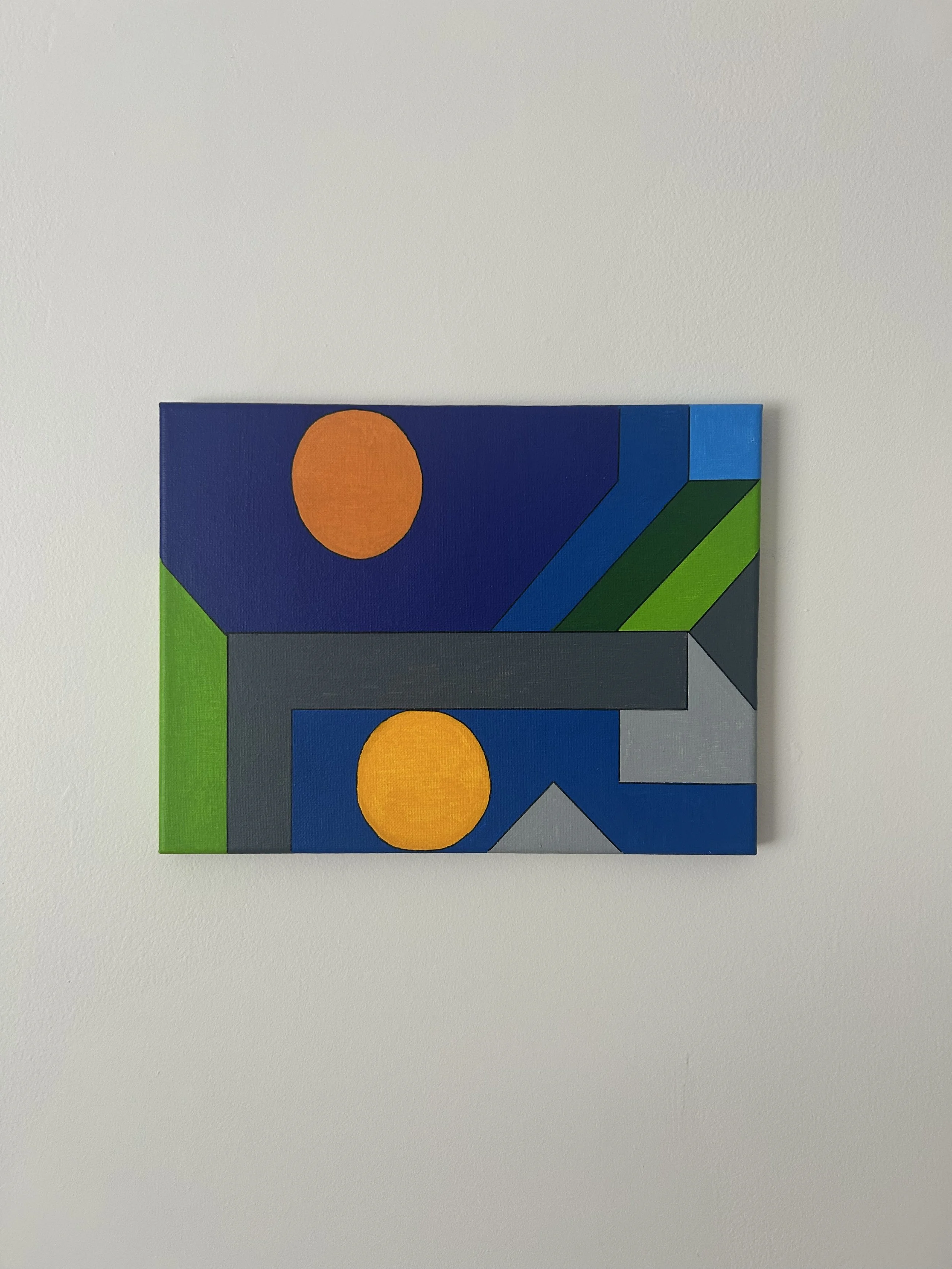
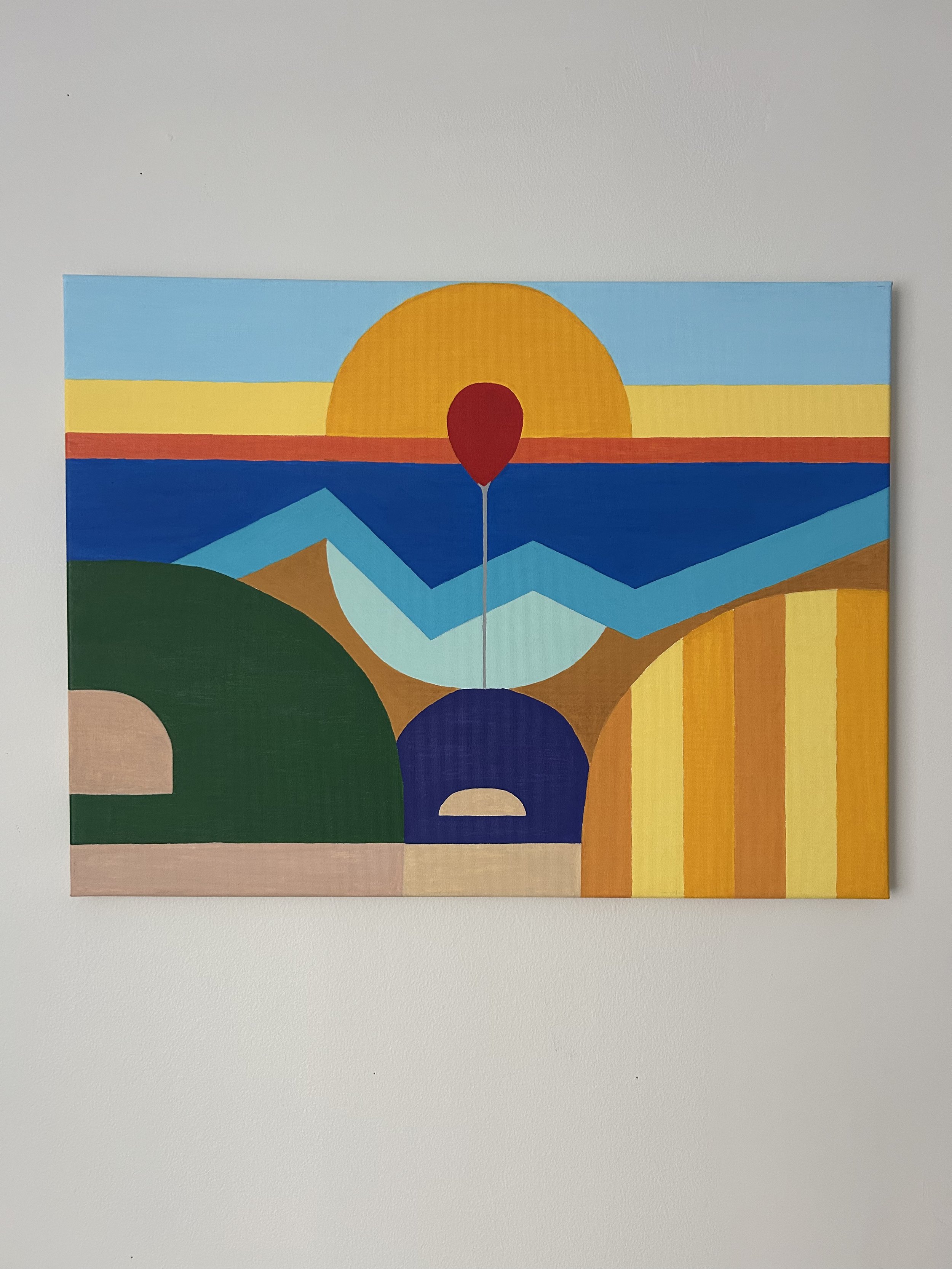
“I describe my work as a dialogue between structure and emotion, as it is built on the foundation of geometric shapes and minimal forms, which I then ‘humanize’ through color. I see my paintings as stories told through a technical lens — clean lines that evolve into narratives that can be humorous, melancholic, or deeply personal.”
Which artists influence you most?
“I look at artists more for their journeys and specific techniques than a single stylistic mimicry. René Magritte influences me with his clever, riddle-like compositions. I also admire Andy Warhol for his audacity. I love Van Gogh for his color and emotions, and Rothko for space and color, for his ‘simple’ expression of complex thought and his own style. Ultimately, I respect any artist who has successfully carved out a signature style in such a crowded world.”
What is your creative process like?
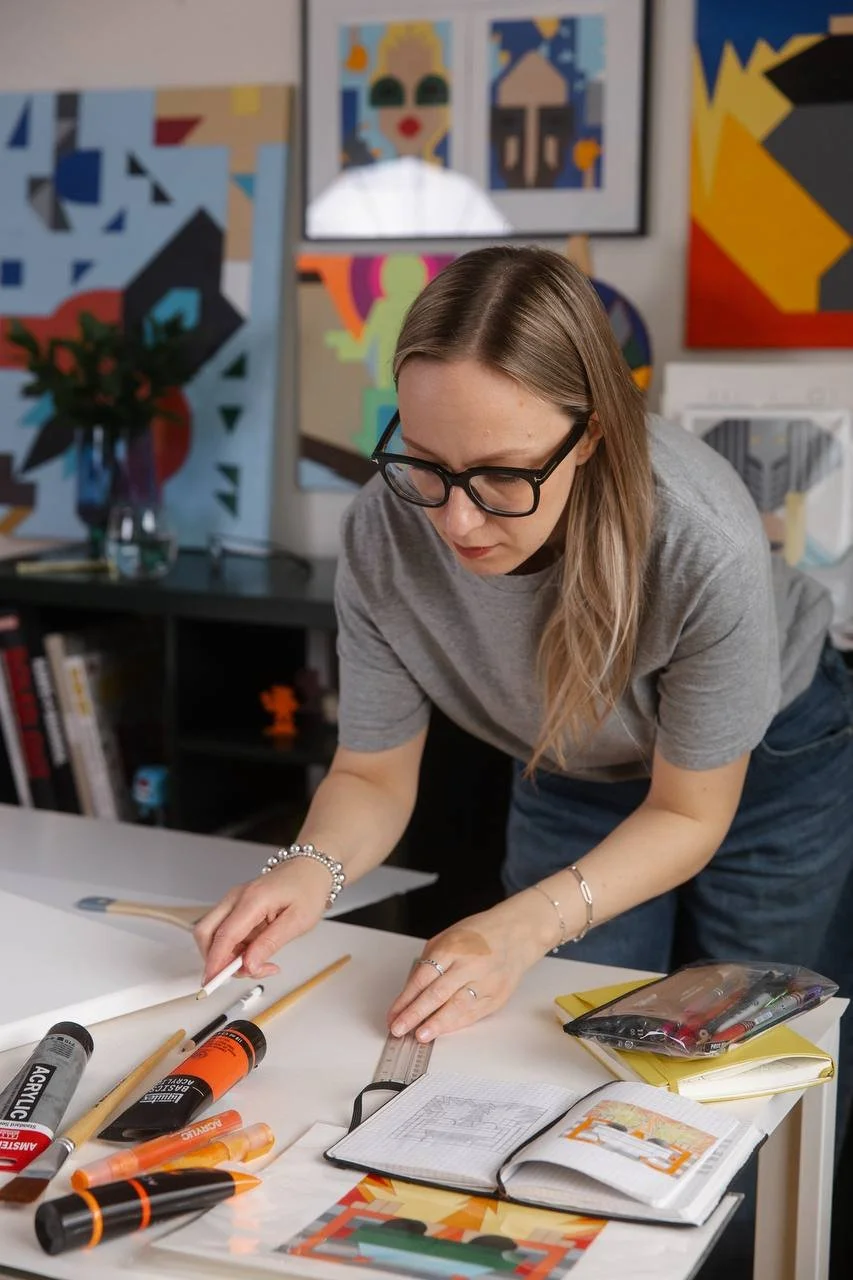
“I work in a series. A piece always begins with a story, which I then translate into a single black-and-white geometric sketch. Once the structure is there, I use color as my primary storytelling tool. The process is very intuitive: a single drawing can unfold into multiple paintings. Sometimes my son will look at a sketch and see something kind or pure that I hadn't noticed, and I’ll incorporate his perspective. And, of course, there are mandatory dance breaks! Movement helps me find the right rhythm for the brush.”
What is an artist’s role in society and how do you see that evolving?
“An artist’s role is to make people feel. A work of art may be loved or rejected; it may inspire admiration, discomfort, or even controversy, but what matters most is that it provokes an emotional response. In the constant pursuit of achievement and within the endless cycle of responsibilities and distractions, people have lost the habit of pausing long enough to truly notice life around them, to experience it deeply, and to appreciate the present moment. This is why artists create such diverse forms of work: to reach people in different ways, to help them slow down, even if briefly, and to reconnect them with those essential human emotions and experiences.”
Have you had any noteworthy exhibitions you'd like to share?
“The most noteworthy experience for me was seeing my work transition from a personal ‘puzzle’ to a gallery in SoHo, New York. It was a surreal validation of my path. Currently, I am focused on finishing the ‘Big Brother is watching everyone’ series. It’s a project that lay dormant for years until the current state of the world provided the final ‘vision’ I needed to complete it. It’s a series about surviving chaos while someone is always watching, and I’m very excited to share it soon.”
Website: dashawesel.com
Instagram: @dasha_wesel