
Interview
Dan Simoneau
Dan Simoneau was born and raised in Lewiston, Maine, where he began formal art classes at 11 and at 13 joined the Androscoggin Valley Art Association as its youngest member ever. By the time Dan was a sophomore in high school, he was exhibiting, winning awards, and selling his paintings in local summer art festivals. In 1980, Dan began studies at the University of Southern Maine. There, he was influenced by artists such as Caravaggio, Chuck Close, Richard Estes, and Philip Pearlstein. Of these artists, the influence of Caravaggio, Close and Pearlstein are still evident. Dan graduated in 1984 with high honors and a Bachelor of Fine Arts degree. His majors were painting, pottery, and printmaking; his minor, art history. Dan has continued exhibiting his work nationally and internationally, winning many awards. His paintings are in several public and private collections throughout the World, including three museum collections. His paintings have been published in many national and international publications such as Fine Art Connoisseur and the North Light Books series AcrylicWorks and Splash.
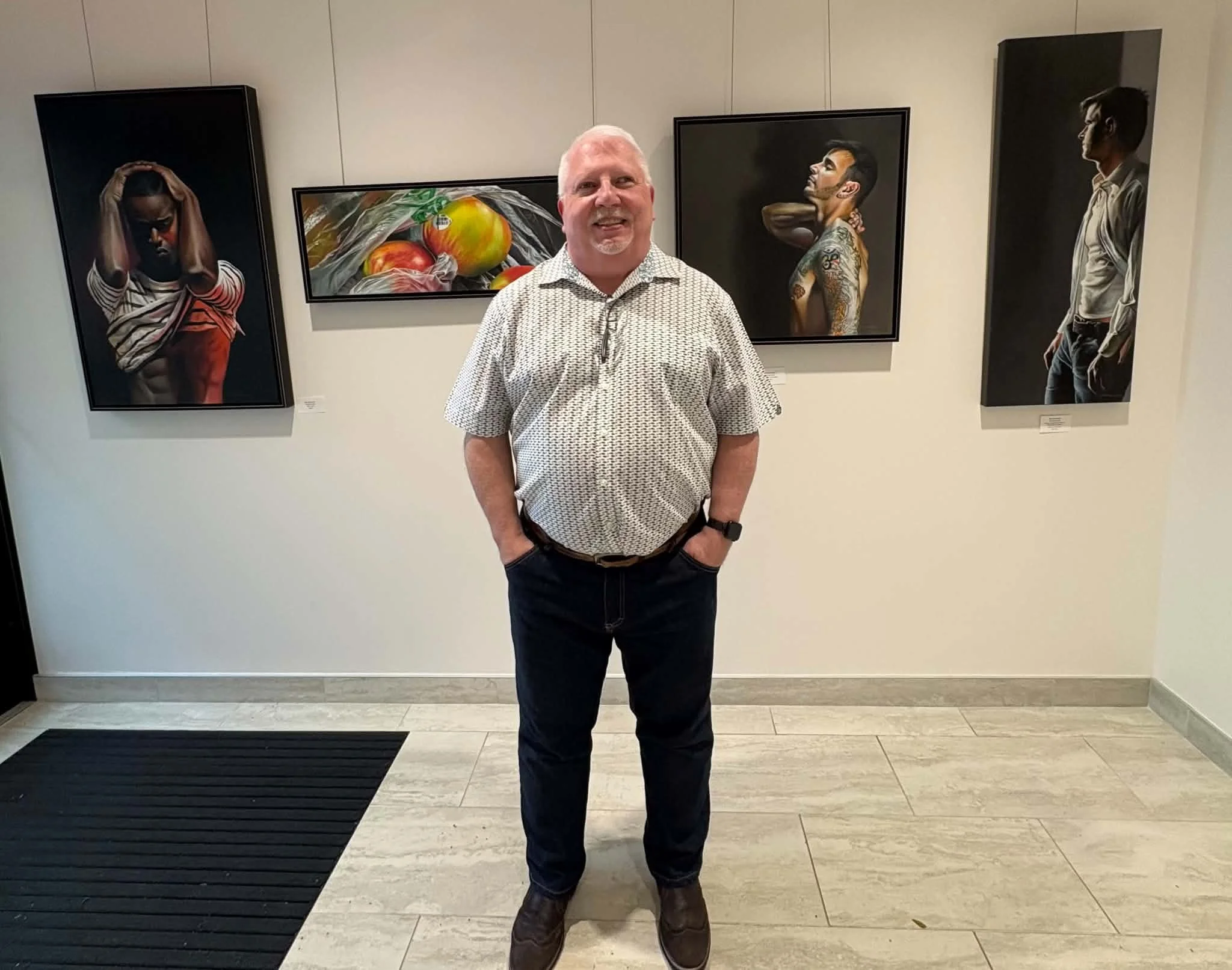
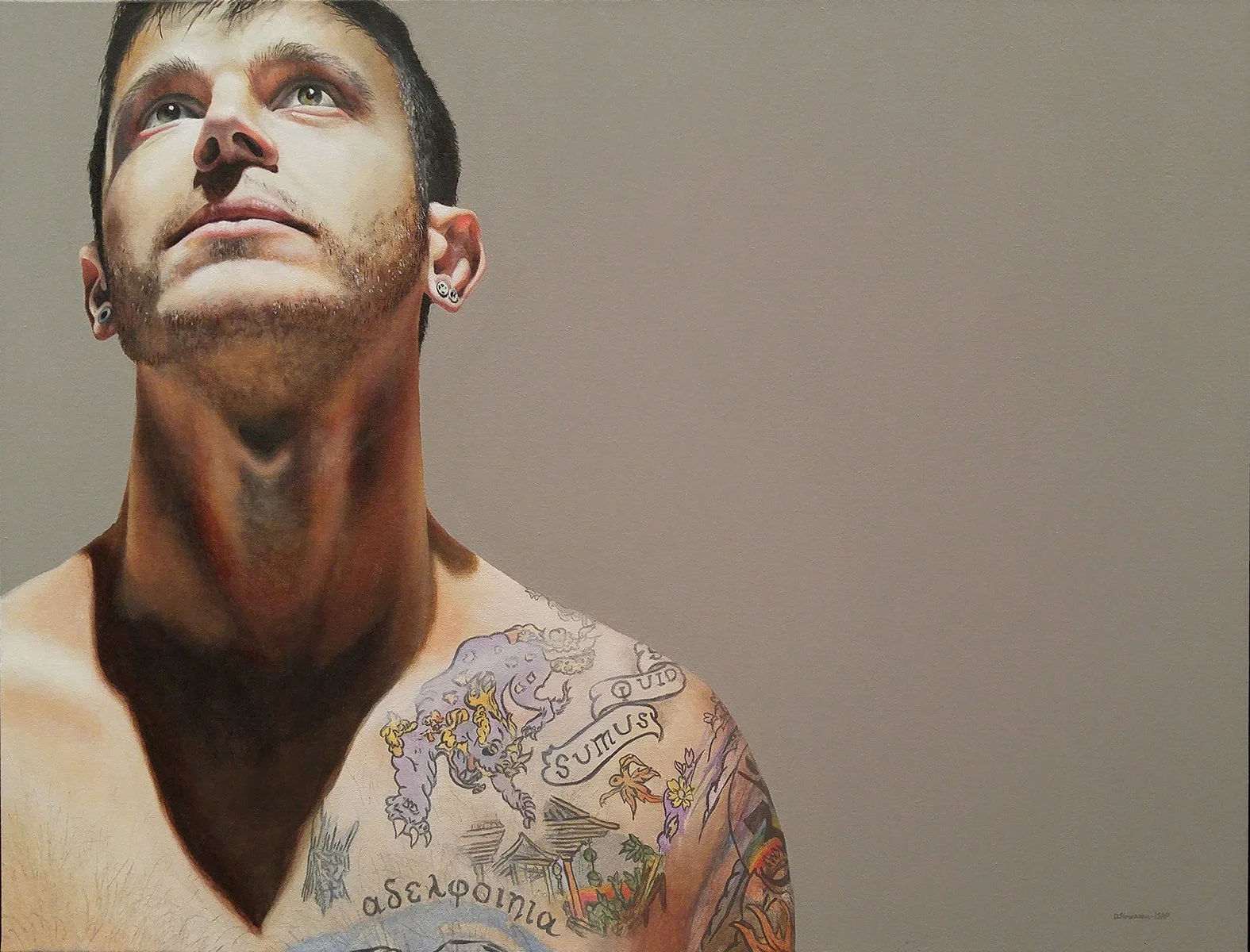
He is currently a Signature Master member and the former President of the International Society of Acrylic Painters (disbanded in 2020). He is also a Signature Member of the American Watercolor Society, the National Society of Painters in Casein and Acrylic, the National Watercolor Society, the San Diego Watercolor Society, and the Watercolor Honor Society (Watercolor USA). He is also a Fellow in the American Artists Professional League and an elected member of the Allied Artists of America and the International Guild of Realism. He has also been recognized as a Art Renewal Center Living Artist and has been listed in Marquis Who’s Who in American Art since 2005. Dan’s primary subject is light as it falls on objects. The object he uses most to represent light is the male figure. He prefers the male figure due to its musculature and sculptural qualities with its just under the surface tension and strength. Because no person looks like any other person, the multitude of expressions and body positions provides an infinite source of subject matter and inspiration.
What is your background and how did you start your journey in the art world?
“I began my art journey in my pre-teens. As a youngster, I was always drawing. My uncle, also an artist, took notice and bought me a set of art pencils and a drawing pad for Christmas when I was around 8 years old. He suggested I draw the Sunday comics to learn how to draw. At 12, I began formal art training from local instructors. By 15, I was exhibiting, selling work, and winning awards in local and regional art fairs. I received my Bachelor of Fine Arts degree in 1984 with majors in painting, printmaking, and pottery and with a minor in art history.”
What inspires you?
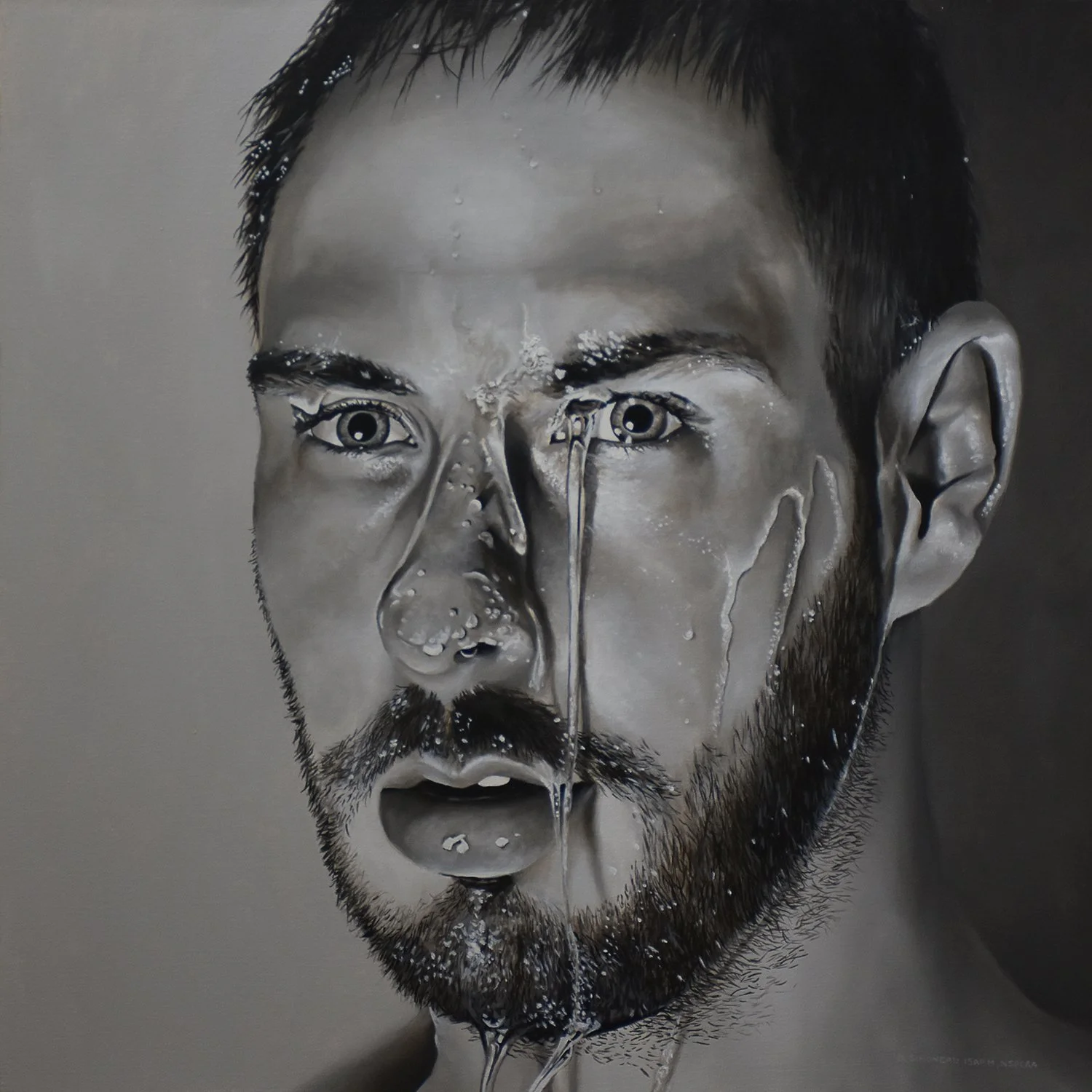
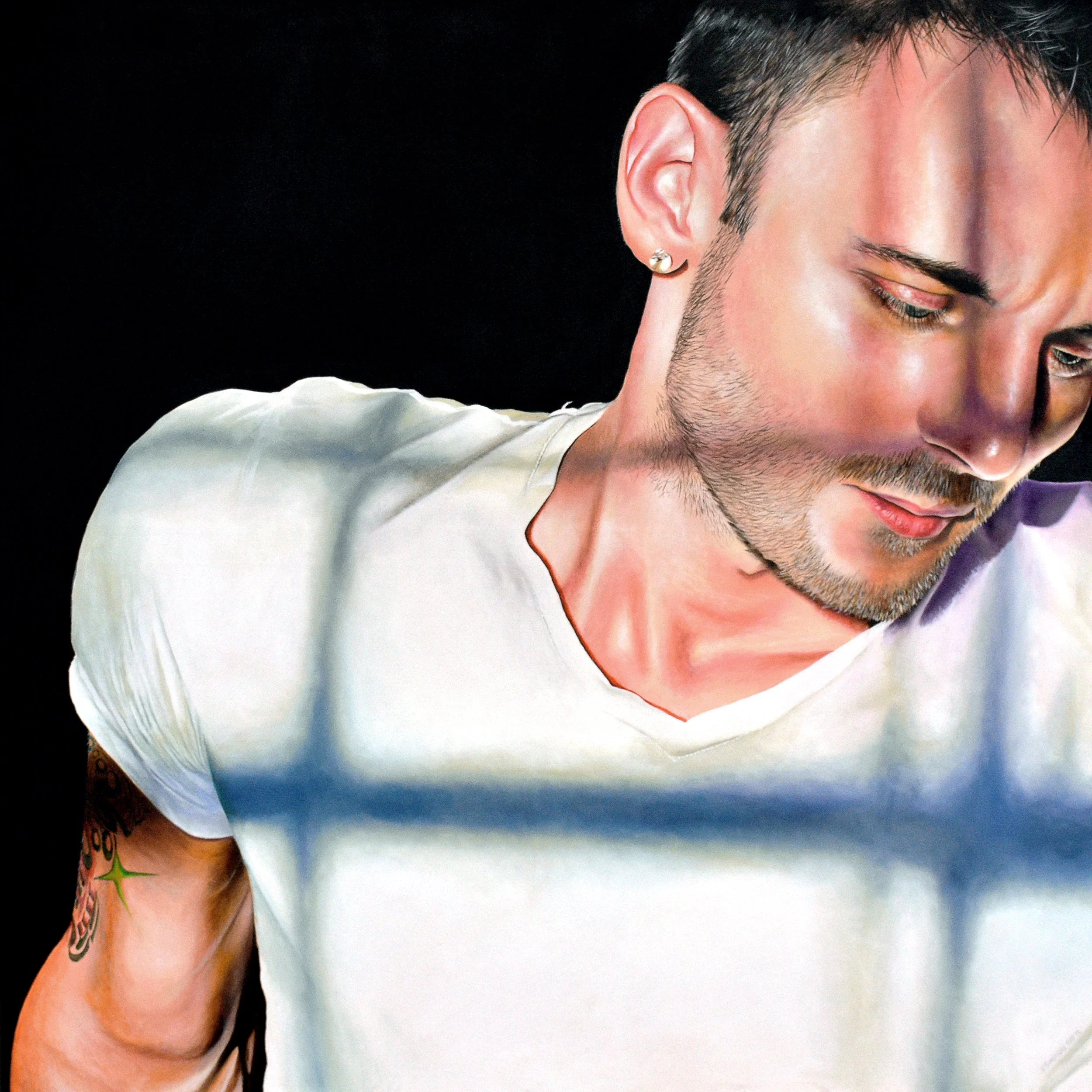
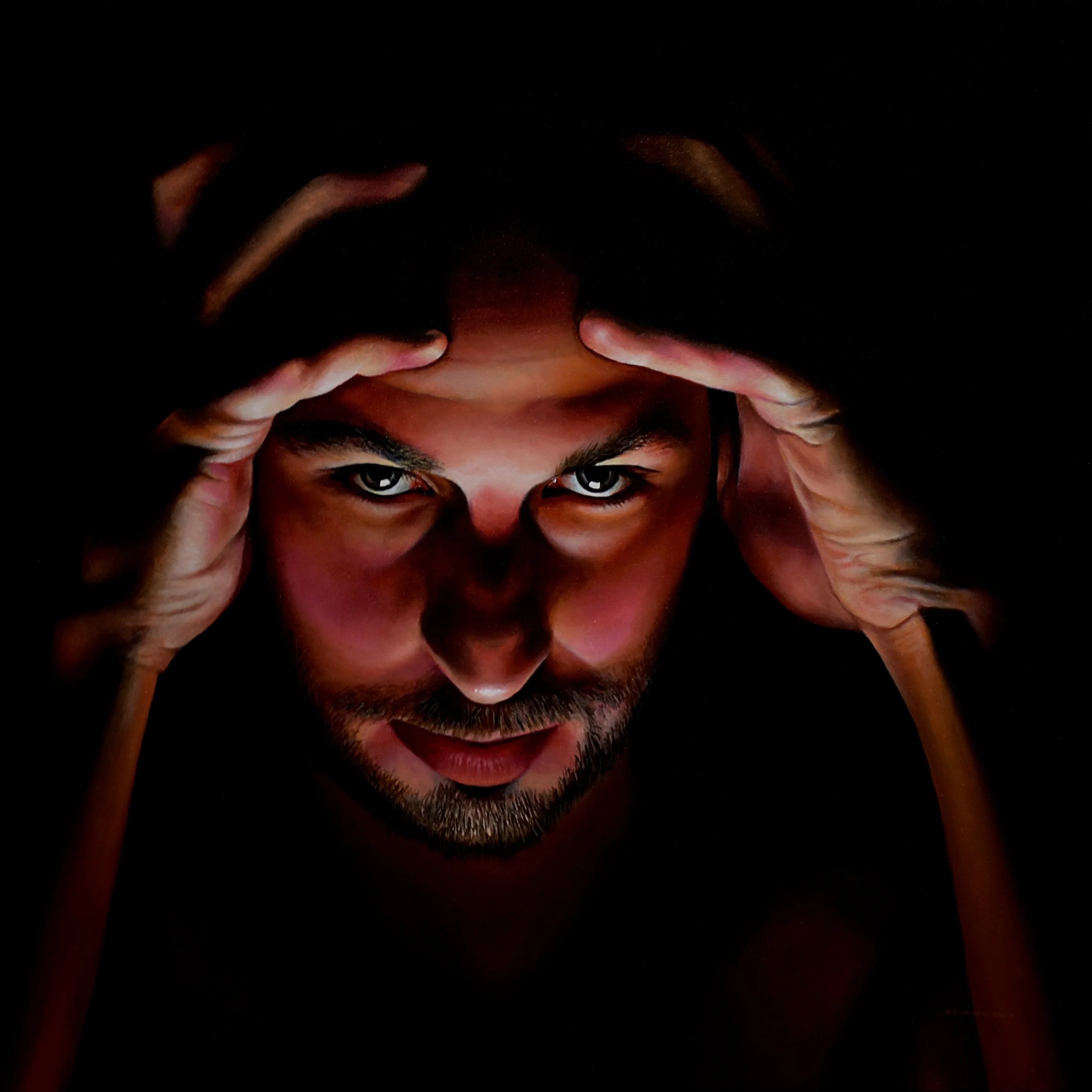
“A lot inspires me but I have three primary inspirations: Light as it falls on objects, the male form, and my models. I have always been fascinated by how light and shadow define form and, therefore, strong light/shadow contrast plays and large role in my work. I prefer the male form over the female form in my work for this reason. The male form is more sculptural with more light/dark contrast than the female form. My models, though they don't live close by, and I have been collaborating for over 10 years and they're all very special to me. I've painted one of my models almost 50 times now.”
What themes do you pursue? Is there an underlying message in your work?
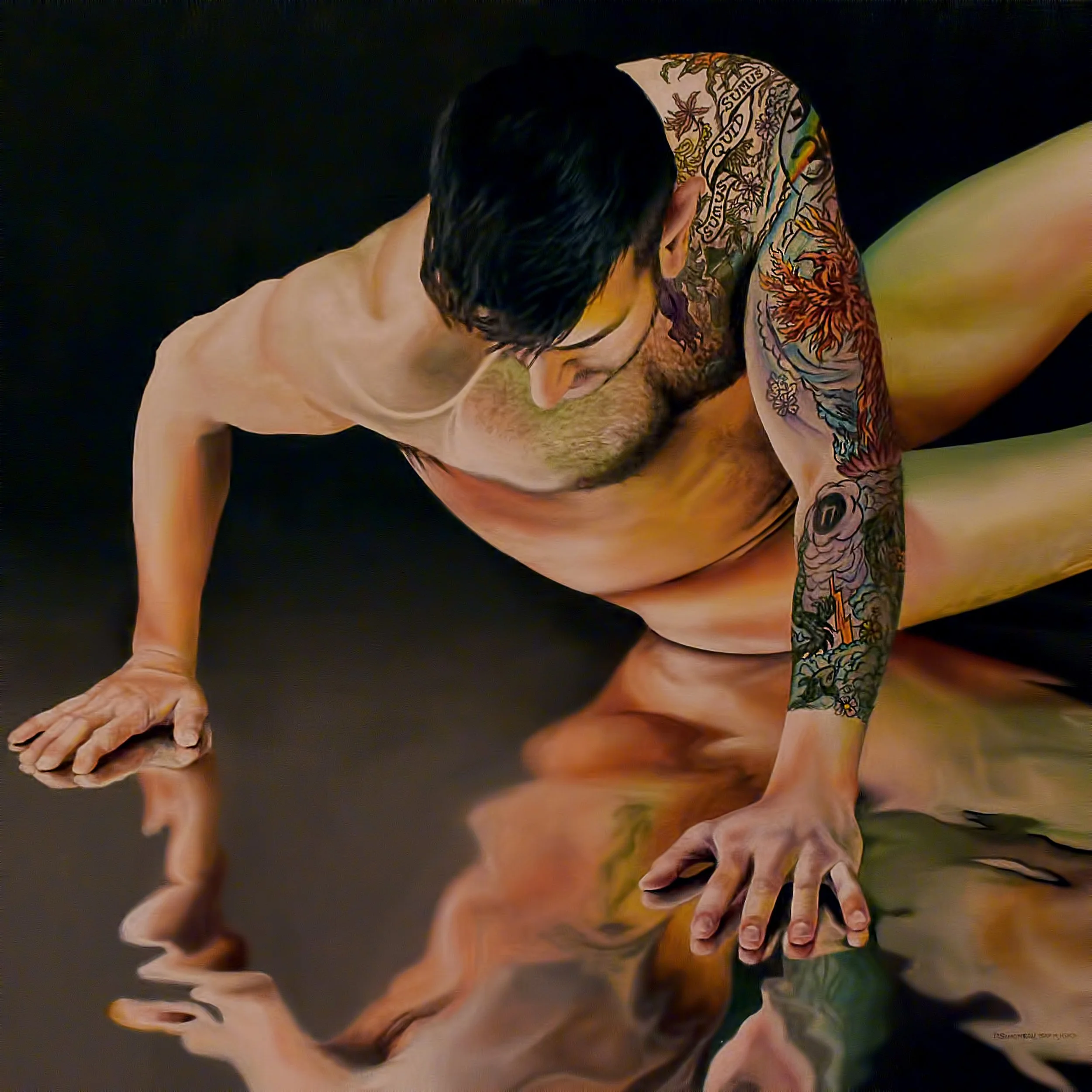
“The message beneath my work is that the male figure deserves to be seen with depth, tenderness, and respect. I am interested in challenging narrow ideas of masculinity by presenting men not only as strong or idealized, but as vulnerable, reflective, and emotionally present. The body in my paintings is never just anatomy; it is a vessel for identity, memory, longing, and self-understanding. I’m also trying to restore a sense of dignity to male figurative painting. There is a long tradition of the figure in art, but the male body is often overlooked, flattened, or reduced to stereotype in contemporary imagery. My work pushes against that by treating the male form as worthy of close observation, beauty, and emotional complexity. I want each painting to affirm that masculinity can hold softness, uncertainty, grace, and introspection without losing strength.”
How would you describe your work?
“I would describe my work as a meditation on the male figure — one that explores strength, vulnerability, and inner life with honesty and care. Through painting, I aim to reveal not just the physical presence of my subjects, but their emotional complexity, quiet dignity, and humanity. My work is rooted in classical figurative tradition, but I approach it with a contemporary sensibility, using light, color, and expressive brushwork to create paintings that feel both timeless and immediate. I’m drawn to moments of introspection, gesture, and presence — to the ways a figure can hold memory, tension, tenderness, and resilience all at once.”
Which artists influence you most?
“Several artists influence me, all for different reasons. First, I would mention Caravaggio. Caravaggio's use of chiaroscuro fascinates me as it enhances the drama of the final work and it adds to the emotional focus being conveyed. Second, Philip Pearlstein's representation of the ‘every man’ and ‘every woman’ and his use of non-conventional composition draw me in. I want to express the men I paint as men, not as heroes and not as some ideal. Next would be Richard Estes. I saw an exhibition of Estes work in New York City where they had sources images, sketches, and final works. What influenced my work most is Richard's ability to make an image appear photographic at a distance while still looking painterly close up. I use this in my body of work.”
What is your creative process like?
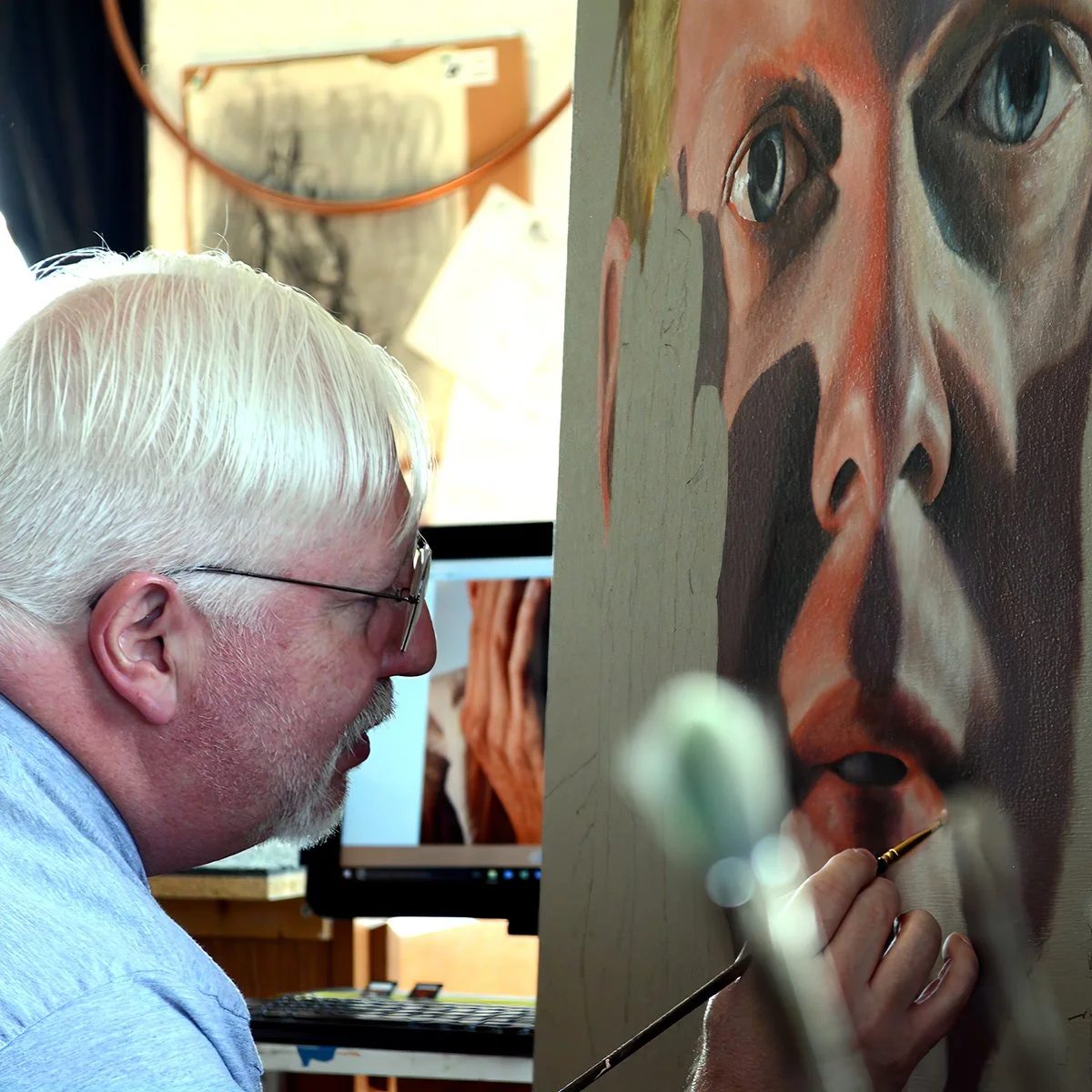
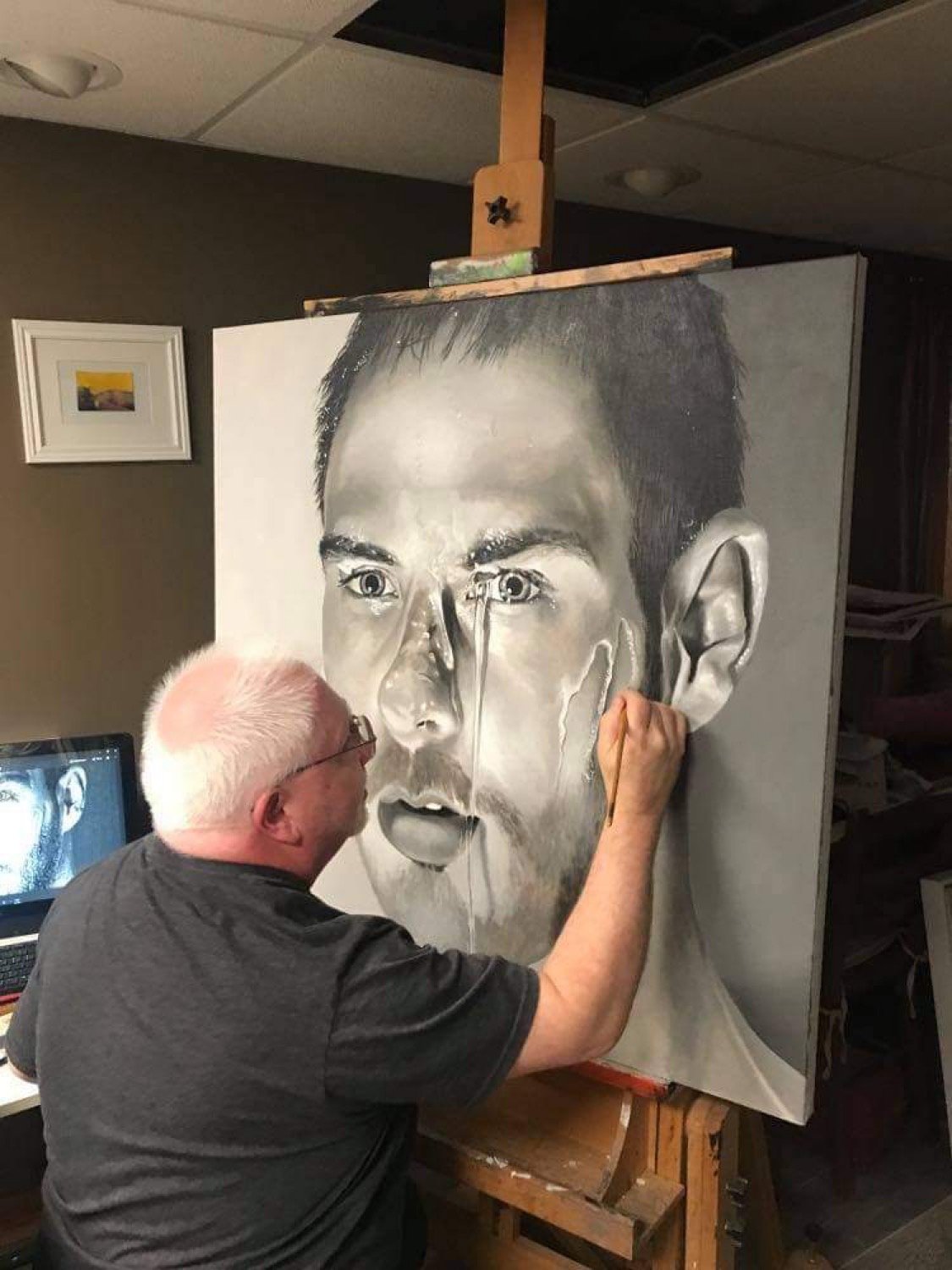
“Being a project manager, I have a very disciplined approach to my art and, when I teach my course on the business of art, I teach my students to view art creation as a job and not as a whim when inspiration hits. I try to get at least 30-40 hours of painting in a week. With my models not being local, we schedule weekends where I either go to them or they come to me. During the weekend, we do several photo shoots exploring concepts, inspiration, and lighting/color variations. From these shoots, I then cull down to images I feel could work as final paintings. When I choose one to paint, I will bring it into PhotoShop and crop and adjust the color, contrast, saturation until I'm satisfied with the composition. From here, I tint a canvas and draw the image onto the canvas. I then block in all colors roughly to determine proper color balance, contrast balance, and values. From here, my approach to acrylic painting and watercolor painting converge. I will next paint glazes of color over the rough painting, getting more and more detailed with each successive glaze. I prefer this method because glazing gives depth to a painting more than a one stroke and done approach would. Each painting typically takes me 40 to 50 hours to complete. At times, I will challenge myself with what I call "Express Paintings". Express paintings are small paintings, usually 11 x 14 or 12 x 16 inches, where I will only allow myself 1 hour from bare canvas to completed painting. This eliminates all consideration of intricate detail from the work and forces me to make decisions to convey the final work in a very minimal time period. I actually completed one painting in 40 minutes during a demo at the local museum.”
What is an artist’s role in society and how do you see that evolving?
“In my opinion, the artist's role in society is to aid people in seeing what they wouldn't see otherwise. Artists are and have always been communicators, painting scenes which reflect the political, social, or environmental lives we are all part of. I've typically focused on painting what I considered the unseen. With everyone's lives moving so fast today, they miss so much of the beauty in the world. Art captures that beauty but it also captures the grit and the more unpleasant events in the World. Lately, with all the turmoil existing in the world at this time, I've seen artists pushing their voice louder, as has happened in the past.”


Have you had any noteworthy exhibitions you'd like to share?
“I've had several. Over the years, I was a member of the Salmagundi Club in New York City, one of the oldest art organizations in the United States. I exhibited there many times as a member but also as a member of the American Watercolor Society, the National Society of Painters in Casein and Acrylic, and the American Artists Professional League. I've also exhibited in several regional Biennial Exhibitions in Illinois and Ohio. I had a solo exhibition at the Kenosha Public Museum in Kenosha, WI in 2017 when 41 of my paintings were on display for a summer. I've also exhibited twice at the Butler Institute of American Art in Ohio as part of the Allied Artists of America annual exhibition. I also exhibited in the International Biennial Portrait Competition held annually at the Wausau Museum of Contemporary Art in Wausau, WI.”
Website: www.dansimoneauart.com
Instagram: @dansimoneauisapnws
Brush Bio: www.brush.bio/dansimoneauart